-
-
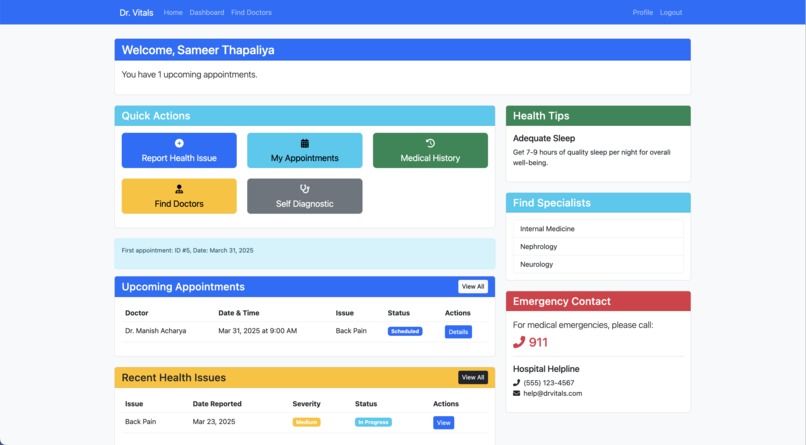
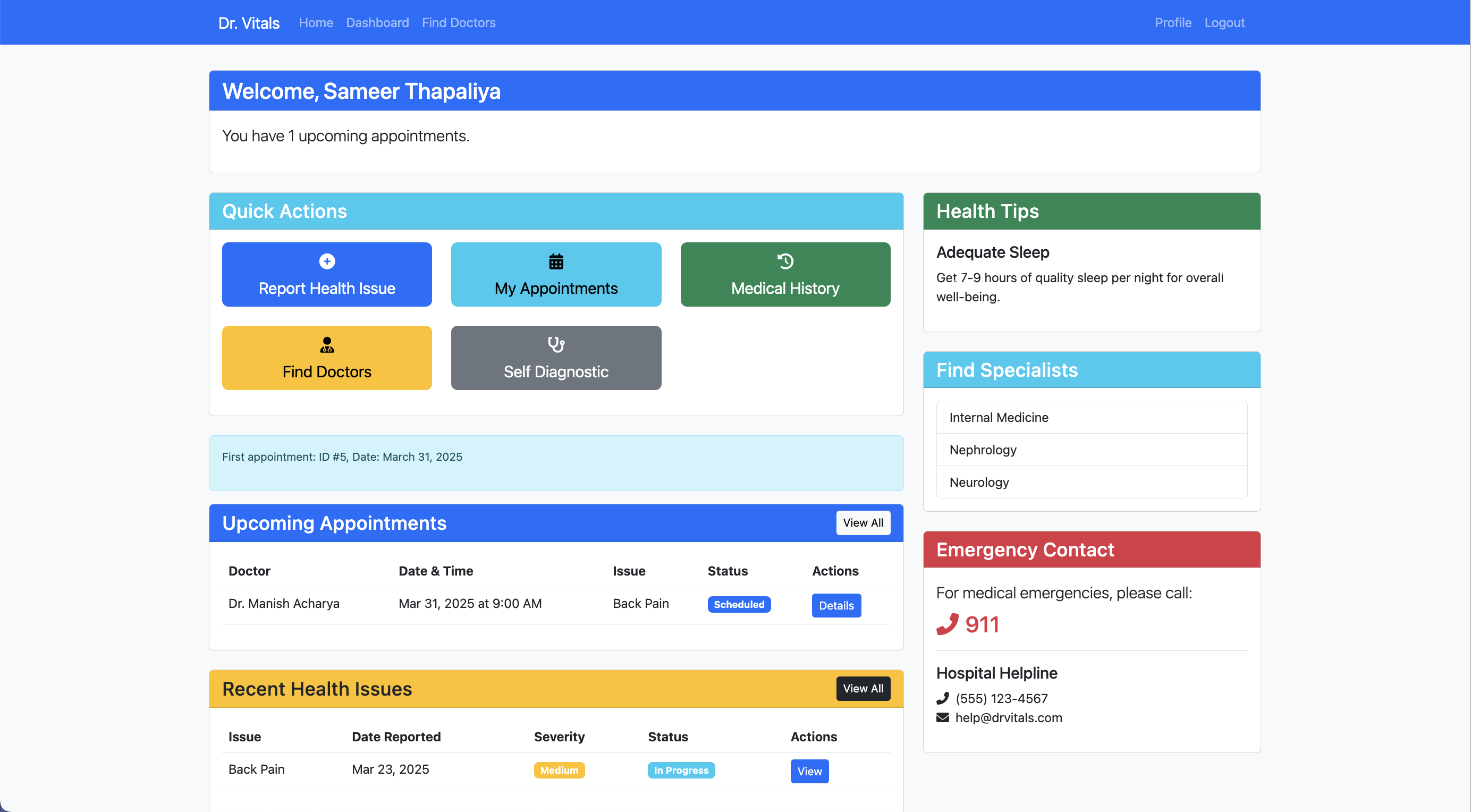
Dashboard for patient
Inspiration
Hospital readmissions are a major challenge in healthcare. For example, patients with heart failure patients face a 25% readmission rate within 30 days, costing billions each year. We were inspired to build a CRM system that uses real-time monitoring and AI to empower patients with clear health insights and equip providers with actionable data, aiming to make healthcare more proactive and reduce unnecessary hospital visits.
What We Learned
This project taught us a lot about:
- Designing a clean user interface while accommodating many features.
- The critical importance of real-time data for early detection of health issues.
- Ensuring compliance with HIPAA regulations and prioritizing patient privacy.
- Efficient handling of streaming data alongside real-time AI inference.
- Integrating multiple AI tools—natural language processing (NLP), computer vision, generative AI, and ML algorithms—into a cohesive, functional system
How We Built It
We created a dual-sided CRM platform:
For Providers:
- Real-time monitoring of vital signs with phone call alerts for anomalies.
- Clear visualizations of historical patient data along with concise, AI-generated summaries.
- Centralized, intuitive dashboard for efficient management of patient care and appointment scheduling.
- A speech-enabled agentic AI agent for doctors to quickly pull up patient info from the portal
- A Decision Tree Classifier with a veery high accuracy/f1 score to predict the harm level and generate alerts on the doctor's profile. If the alerts cross a certain threshold within a certain time interval, it will call the doctor to notify them about the alert.
For Patients:
- Easy appointment booking with RAG-powered AI recommendations based on described symptoms
- An intuitive AI symptom checker that automatically generates concise medical notes for doctors
- An interactive, self-diagnostic AI tool enabling patients to ask questions via video/audio about their medical reports or X-rays.
We pieced it together with front-end and back-end tech, plus a suite of AI models. It’s built to be scalable, easy to use, and focused on delivering insights that matter.
Challenges We Faced
- Integrating multiple AI models and ML algorithms (Decision Trees, OCR, NLP, and speech recognition, llms) while maintaining system stability.
- Ensuring real-time data streaming was accurate and timely for reliable alerts.
- Successfully implementing phone-call alerts using the Twilio API.
- Simplifying complex medical data into user-friendly, actionable information.
- Generating realistic mock patient data to effectively demonstrate our platform’s capabilities.

Log in or sign up for Devpost to join the conversation.