-
Display
-
Review # 1
-
Review # 2
-
Review # 3
-
Review # 4
-
Review # 5
Inspiration
Back when we were second-year students at McGill, picking the right courses felt like trying to decode a secret message. Reddit, RateMyProf, and random surveys just left us scratching our heads. So, we thought, “Why not build something to cut through the chaos?” That’s how Dr. RateMate was born. We used machine learning and AI to turn upto 850 reviews from RateMyProf, Reddit, and student surveys into straightforward insights. Now, picking courses and professors is as easy as pie—or at least, a lot easier!
What it does
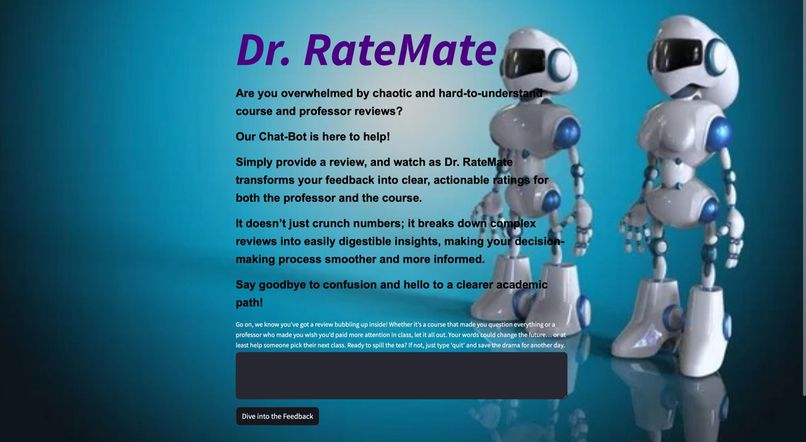
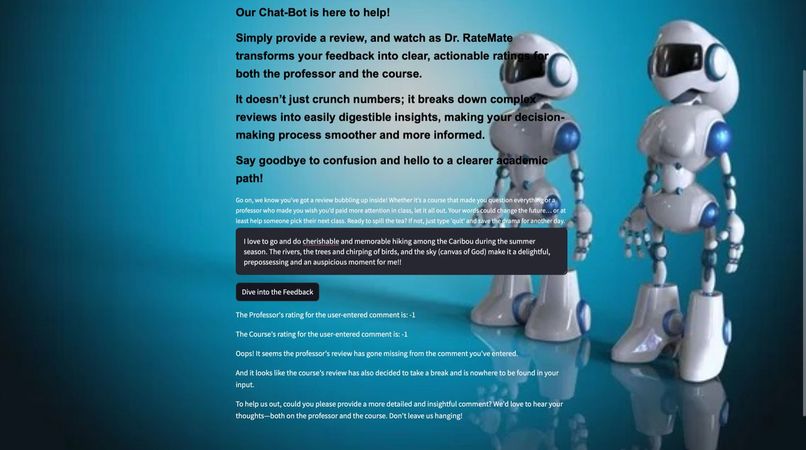
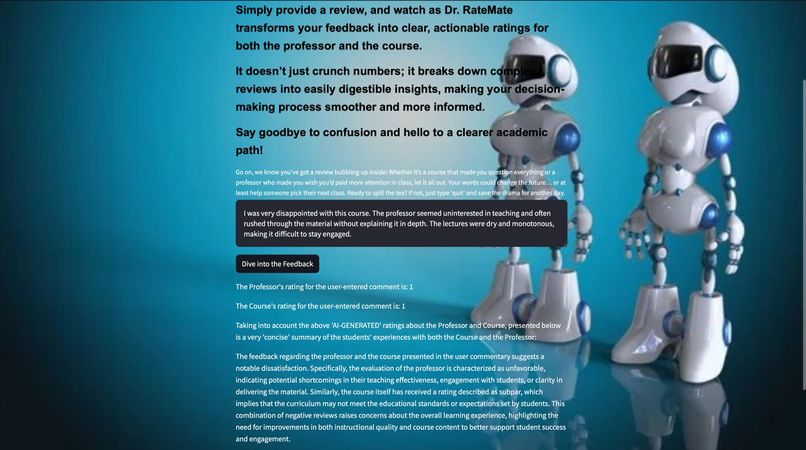
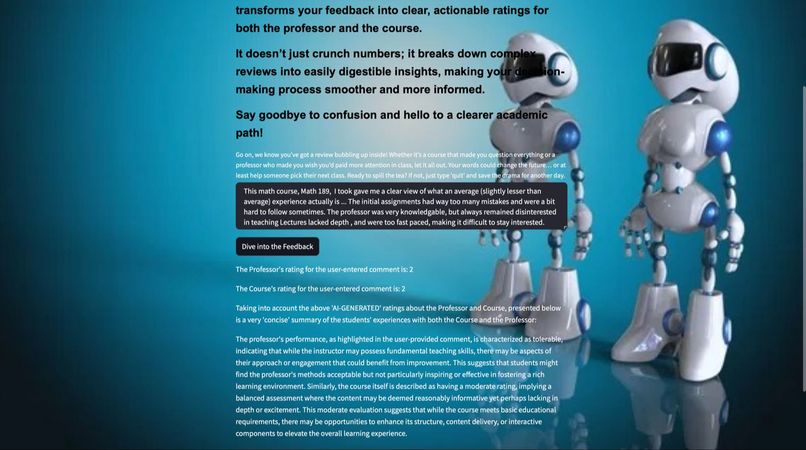
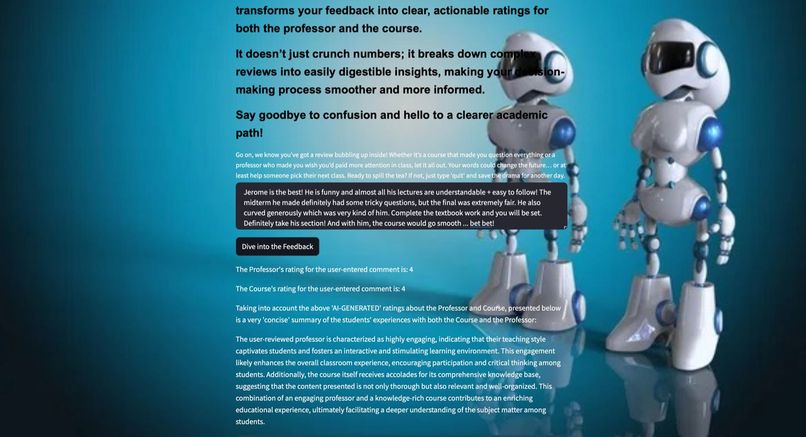
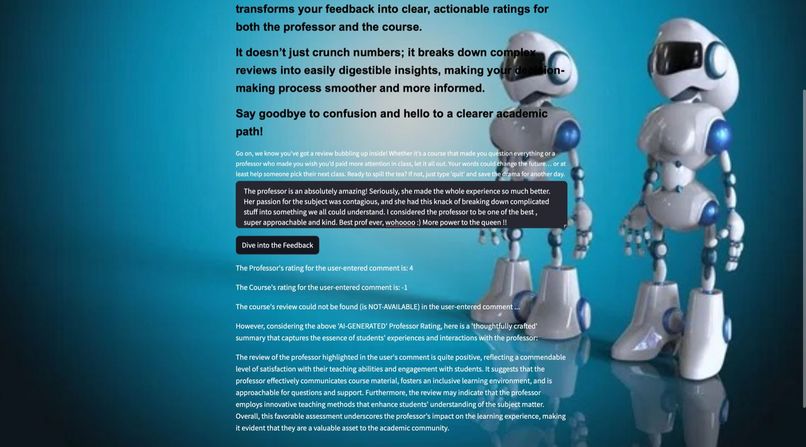
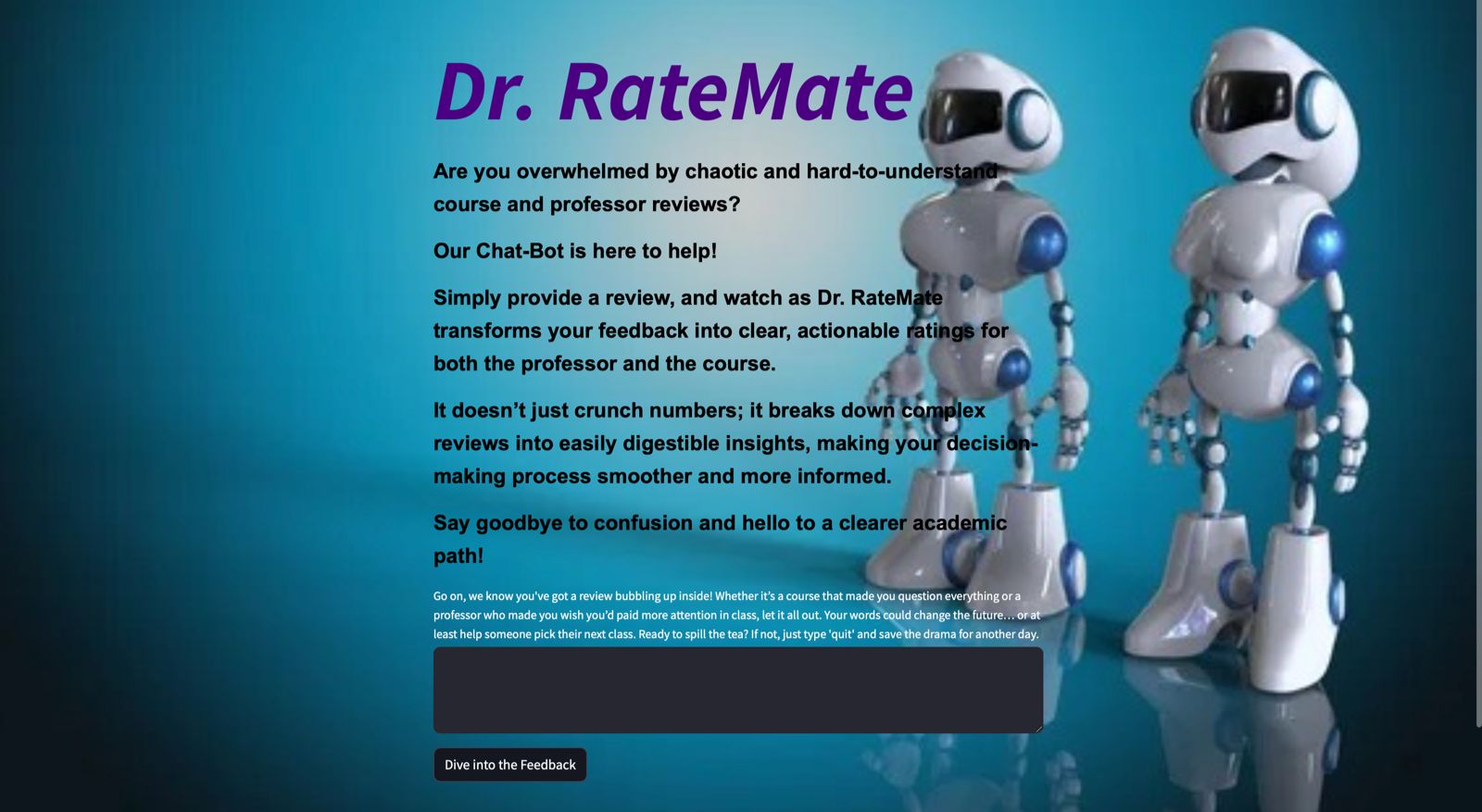
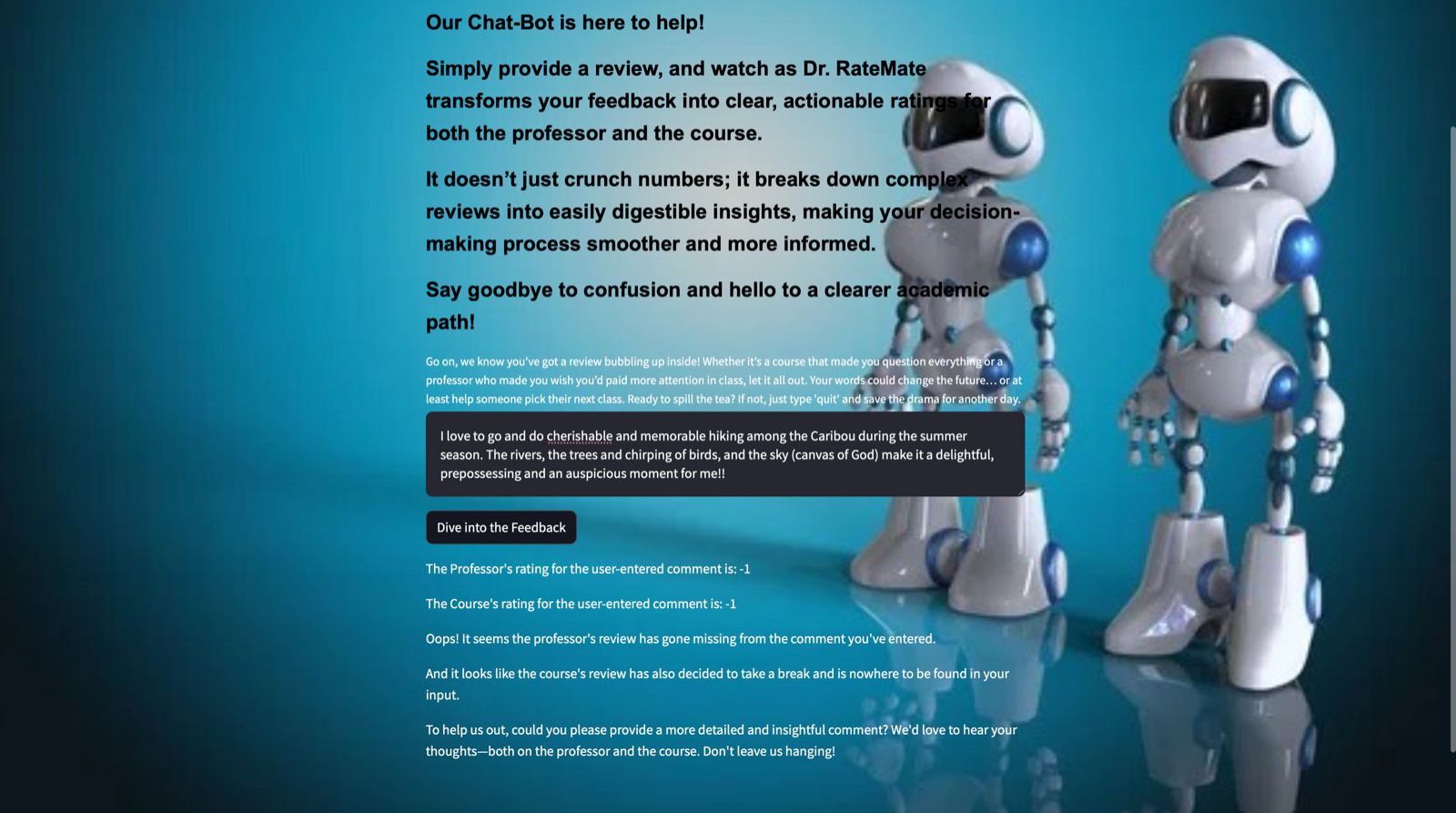
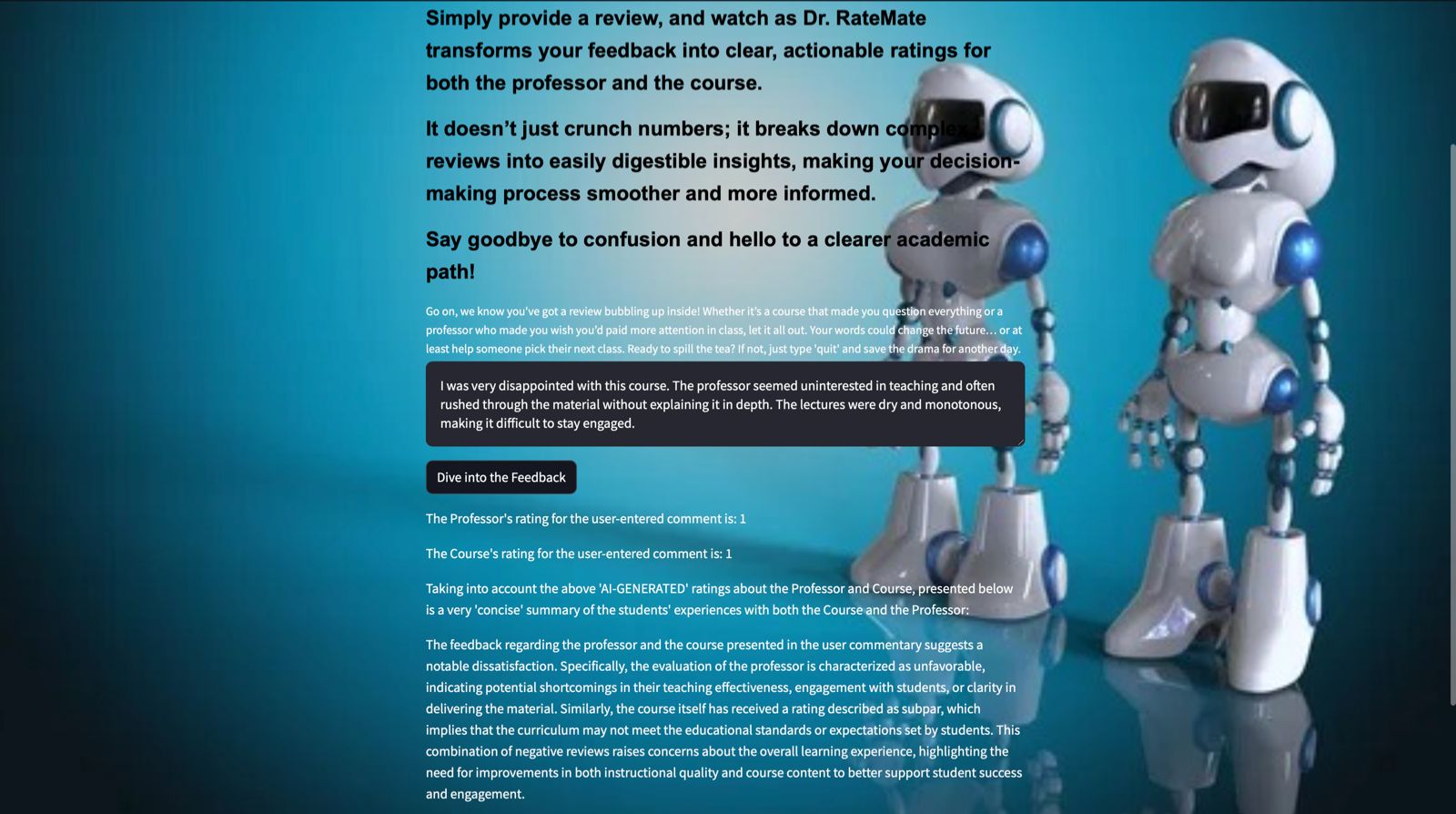
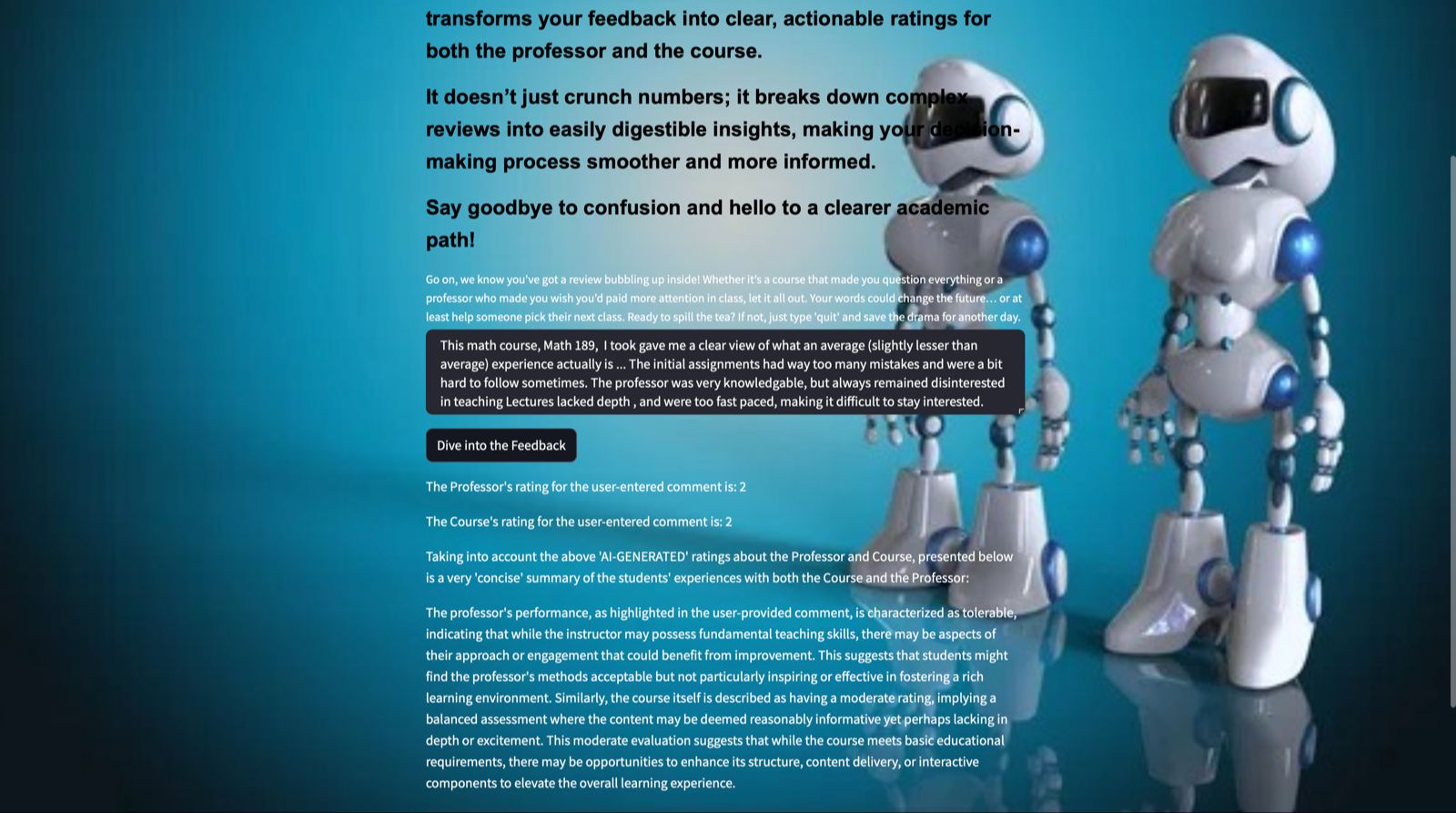
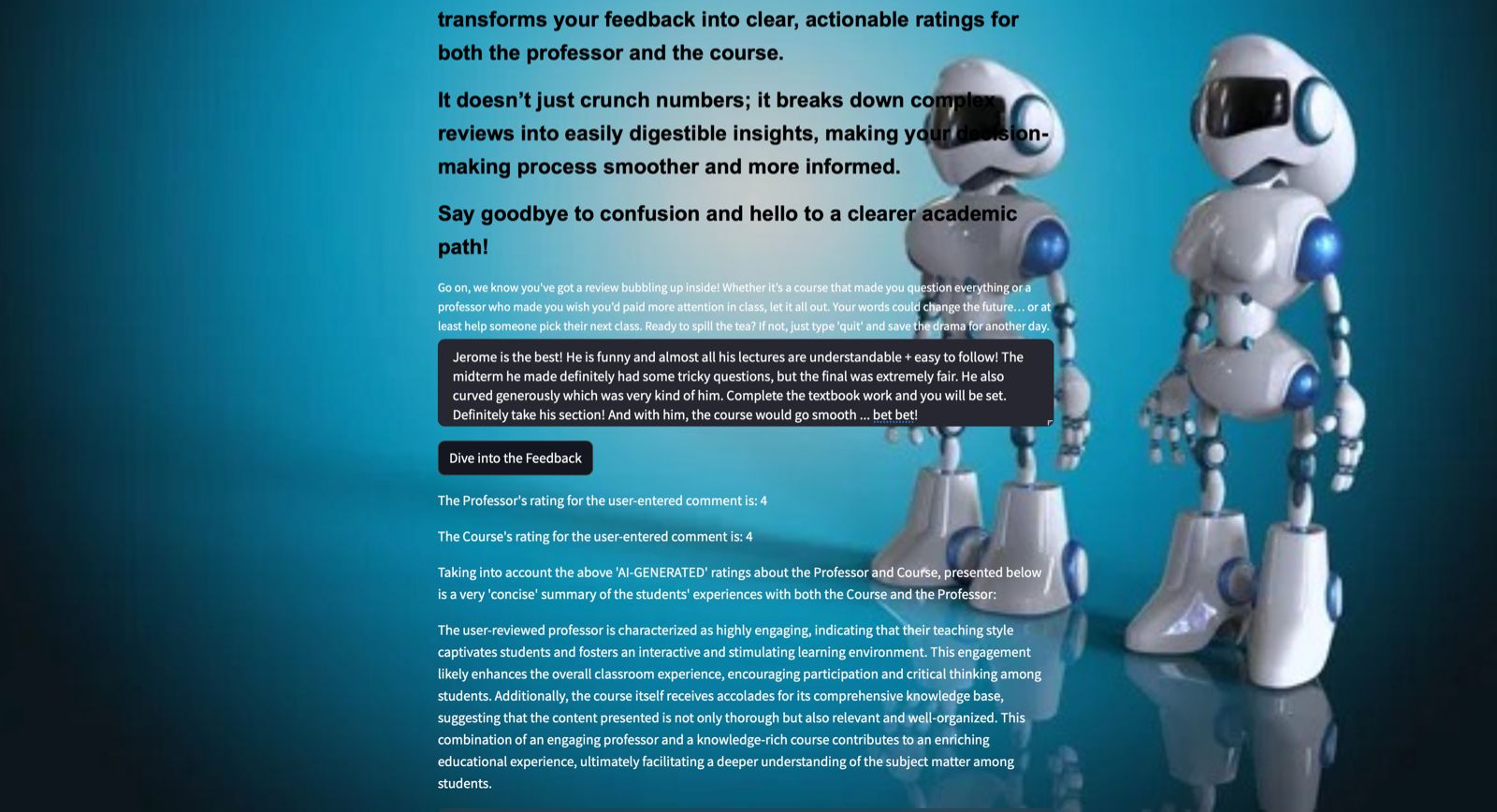
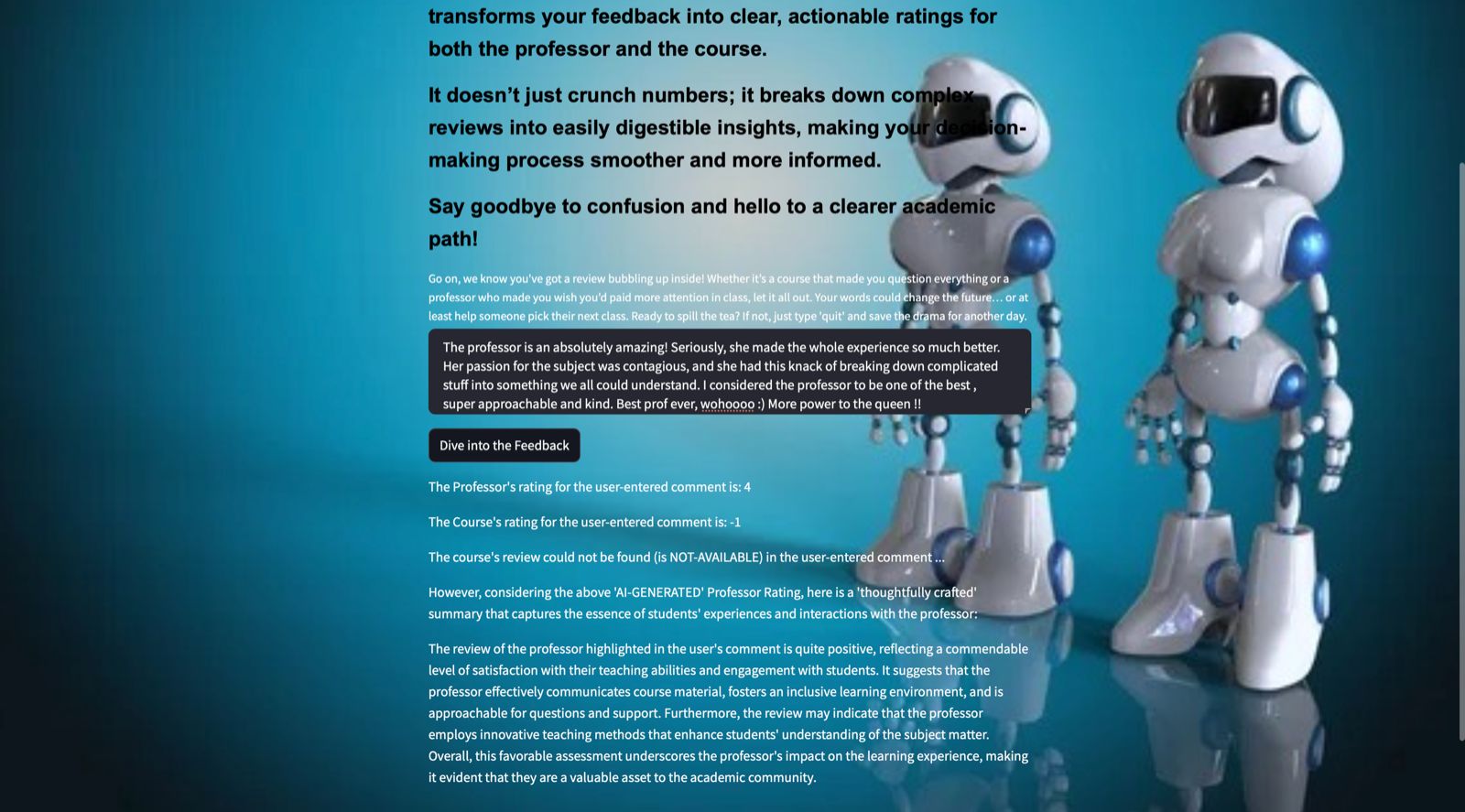
Dr. RateMate is like your own personal course detective! You throw in a review, and it spits out a professor rating and a course rating on a scale of 0 to 5. If you forget to mention the prof or course, it’ll hit you with a -1 (because come on, we need details!). Plus, it breaks down the review so you actually get what it means—no more head-scratching!
How we built it
Our journey began with a mountain of about 1000 course reviews from various sources. We cleaned up this data like we were on a spring cleaning spree, then crunched it with TF-IDF to make sense of it all. We tested different algorithms—Gradient Boosting, Random Forest, and Support Vector Machines—until we found the ultimate combo with a Stacking Classifier.
We added OpenAI’s API to make our model super smart and built a sleek Streamlit site where you can chat with our bot, which also reads responses out loud. It’s like having a virtual TA who’s always ready to help!
Challenges we ran into
Our project had its fair share of challenges, like trying to find a needle in a haystack. Collecting and cleaning about a 1000 reviews felt like a never-ending game of Jenga. The real kicker was getting our model to be accurate. We juggled algorithms like CatBoost, Neural Networks, and Random Forests, fine-tuning every setting like we were tuning a guitar. To speed things up, we borrowed some GPU power from MPS on a Mac.
And balancing all the models in a Stacking Classifier? Let’s just say it was like trying to keep a dozen plates spinning. Integrating OpenAI and building an interactive interface with Streamlit was the cherry on top of this tech sundae.
Accomplishments that we're proud of
We’re pretty stoked about what we’ve pulled off with Dr. RateMate. Our goal was to make sense of course reviews, and it’s awesome knowing we’ve done just that. Teamwork was key, and we learned that bouncing ideas off each other was just as important as the tech itself. We also got some cool insights from the actual students who gave the reviews, helping us understand their course-picking woes.
Tech-wise, we dived into AI and machine learning like pros, exploring everything from Gradient Boosting to OpenAI APIs. We polished our research skills and figured out how to put it all together into a slick app that’s actually useful. It’s been a wild ride, and we’re proud of both the tool and the tech growth we’ve achieved.
What we learned
This project was like a crash course in tech skills and teamwork. As a duo, we quickly realized that clear communication and smooth collaboration are key—definitely lessons that’ll stick with us.
On the tech side, we went deep into machine learning, tweaking hyperparameters like mad scientists to squeeze out the best accuracy. We played around with algorithms like Gradient Boosting, Random Forest, and Support Vector Machines, and even brought in OpenAI APIs to take our NLP game to the next level. We got knee-deep in data cleaning, feature engineering, and experimented with tools like TF-IDF and VADER for sentiment analysis.
Plus, we dabbled with frameworks like XGBoost, LightGBM, CatBoost, and Torch, all wrapped up in a slick, user-friendly app built with Streamlit.
What's next for Dr. RateMate
We’ve got some ideas brewing for Dr. RateMate’s future. One possibility is expanding our database to include more schools and platforms, making sure we’ve got a wider range of courses and professors covered. We’re also looking into sharpening our AI to provide even more accurate ratings and summaries.
Another idea we’re toying with is adding personalized course recommendations and improving the chatbot’s ability to understand your questions. Who knows, maybe down the line, we could even integrate Dr. RateMate into university course systems to make it even easier for students to pick the right classes.
Of course, all of this also depends on the further skills we develop in AI and machine learning. As we continue to grow our expertise, we’ll be able to explore even more innovative features to enhance the Dr. RateMate experience.

Log in or sign up for Devpost to join the conversation.