-
-
Home
-
Report
-
Dashboard
-
Authentication
-
What it is
-
Prompts
-
Suggestion Board
-
Perfomance by category
Inspiration
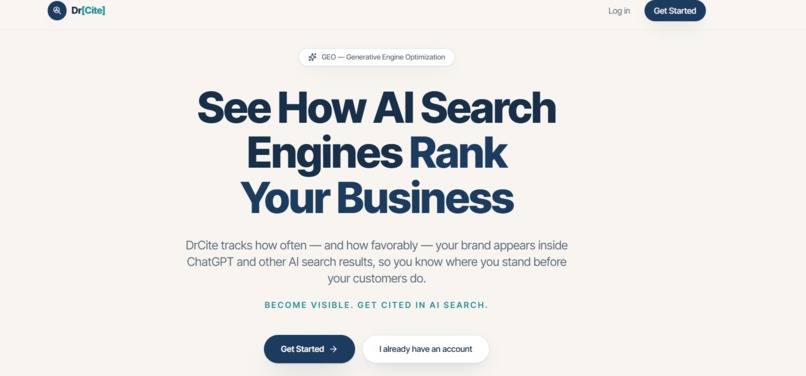
Your customers are already asking AI. The question is whether you show up.
Right now, someone is asking ChatGPT for a recommendation in your industry. Maybe it's a buyer comparing tools; maybe it's someone searching for a service near them. Either way, an AI model is quietly deciding who gets mentioned, and most businesses have no idea whether they made the list.
I saw this up close before Dr Cite existed. Early on, we tested the idea on something small and local: a handful of neighbourhood cafes just to see what AI actually says when someone asks, "Where's good coffee near me?" The pattern was obvious almost immediately: a few places came up again and again, most never did, and none of the owners had any idea why. The good ones weren't always the ones getting picked. The visible ones were.
That's the real shift. SEO taught businesses how to rank in search results people scroll through. AI doesn't give people a list; it gives them one answer. If you're not part of that answer, you don't lose a ranking spot. You disappear entirely.
I'm also familiar with the other side of that problem. As someone who builds products, I know how frustrating it is to put serious work into something and then realise that being good isn't enough if nobody can find it.
What it does
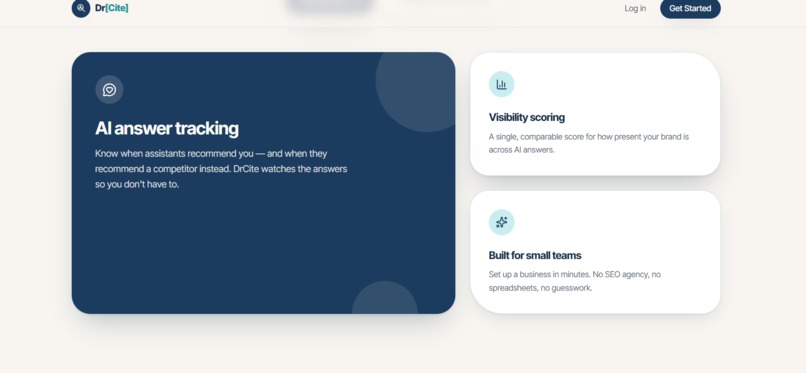
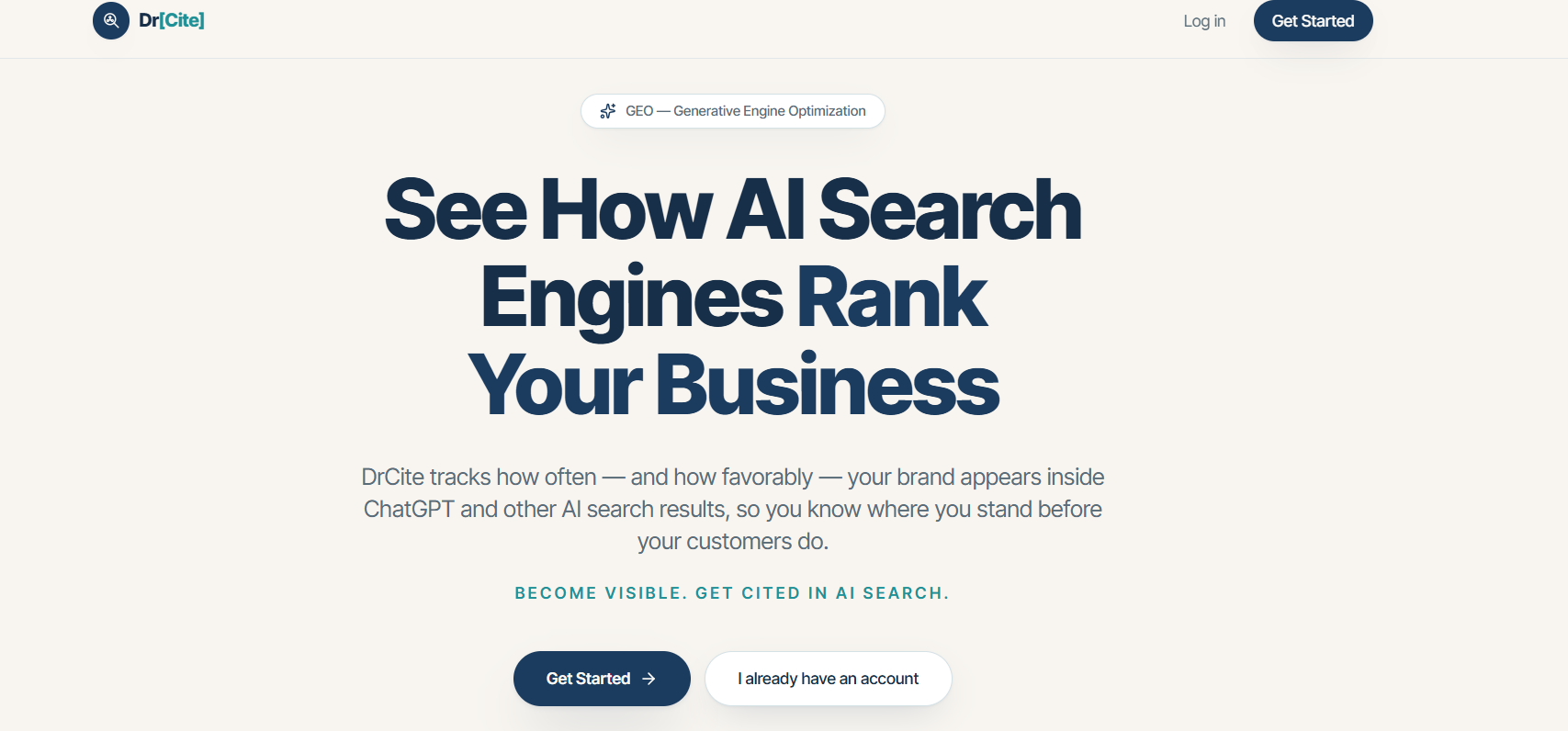
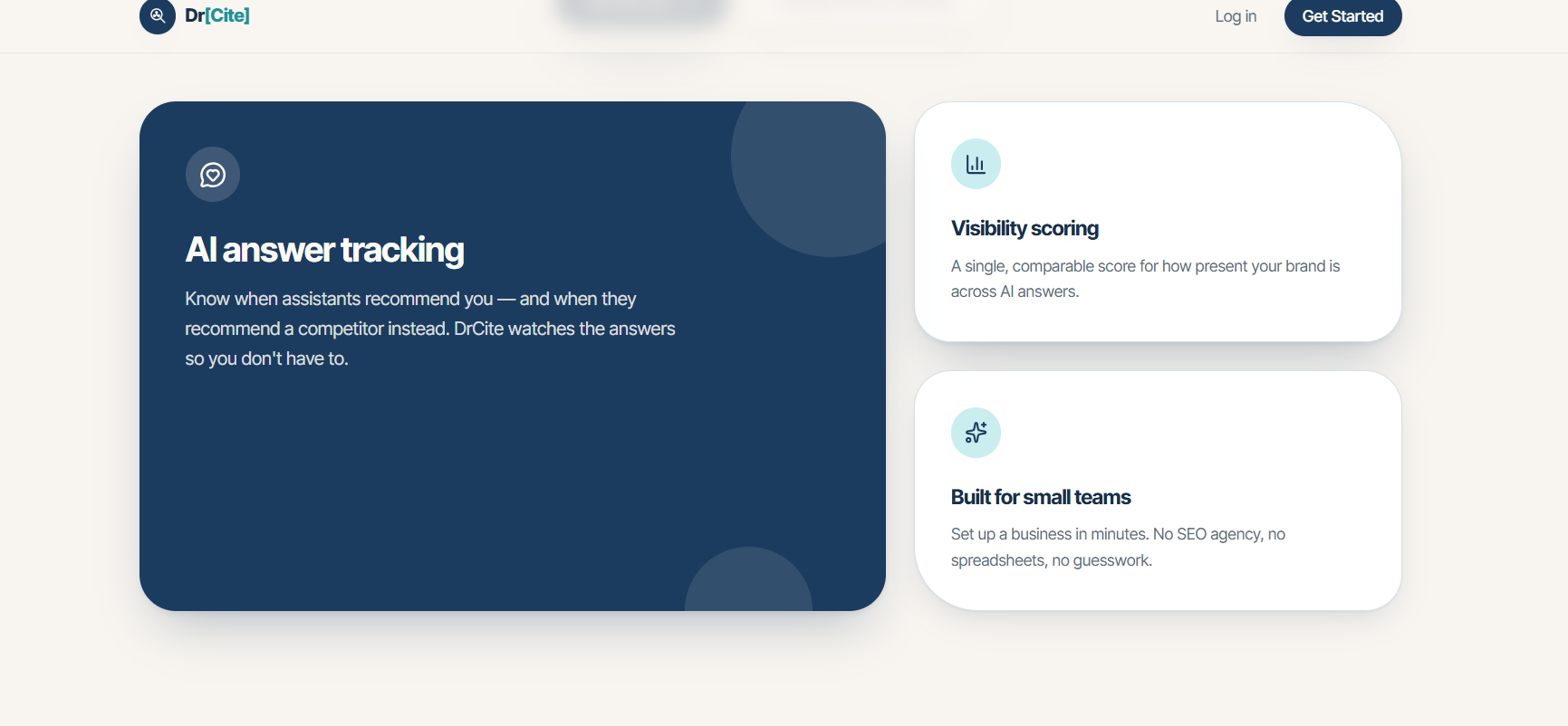
Dr-Cite lets a business test how it appears or doesn't appear when customers ask AI the questions that matter to its business.
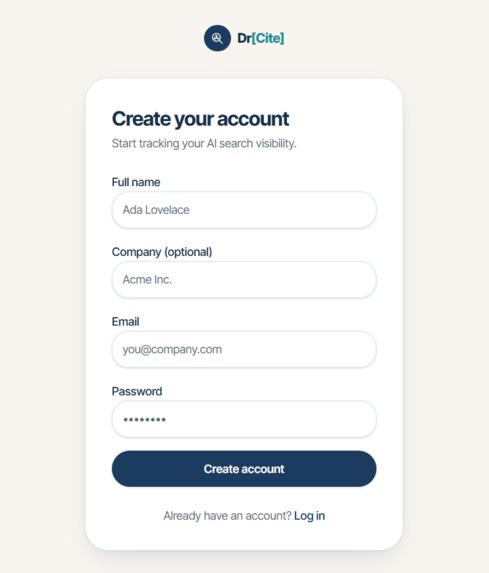
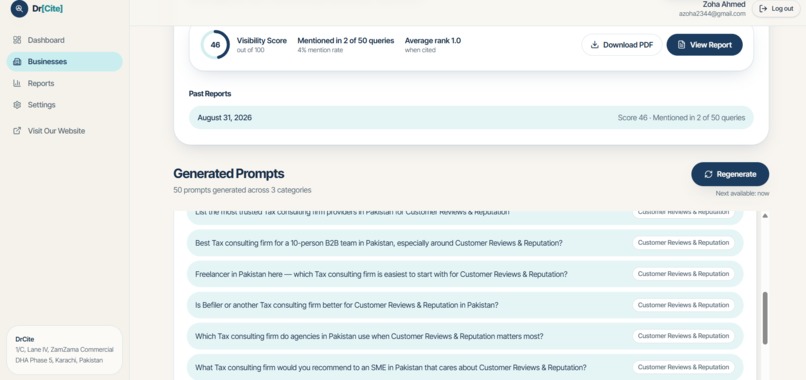
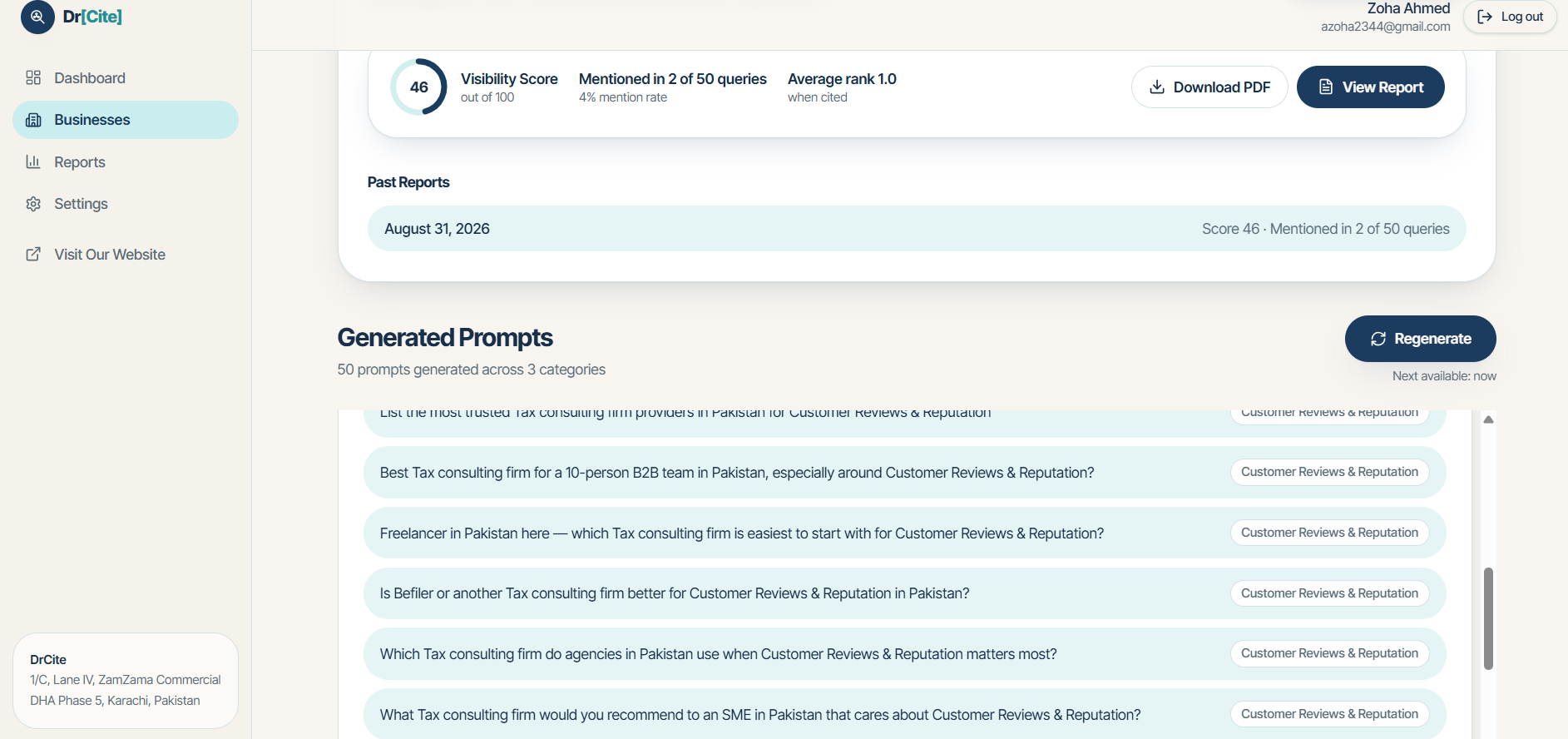
A user enters their business information, and Dr-Cite generates relevant prompts designed around the kinds of questions potential customers might ask.
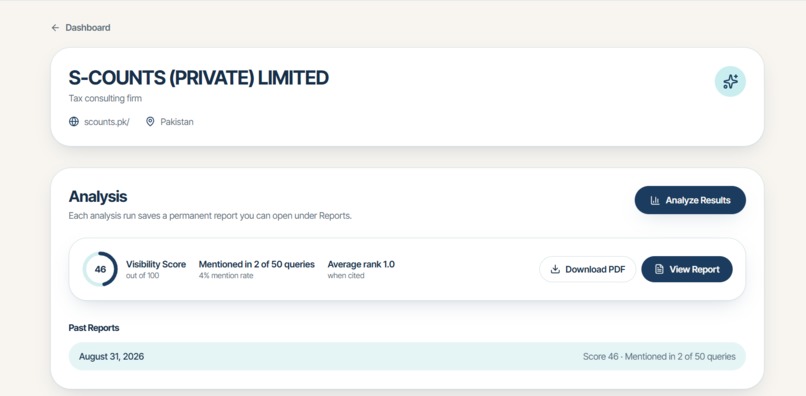
Those prompts are sent to an AI model, and the responses are analyzed and organized into concise, useful results.
Instead of leaving the user with a wall of AI-generated text, Dr. Cite turns the results into:
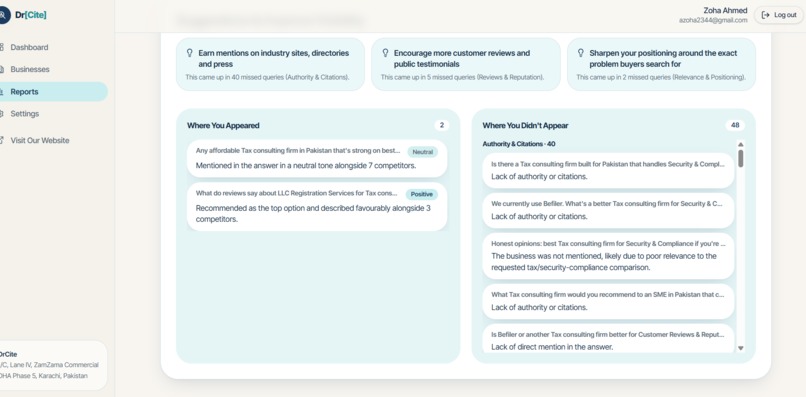
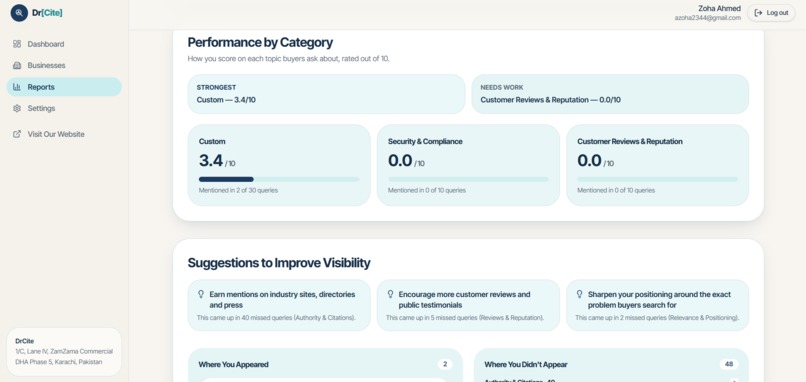
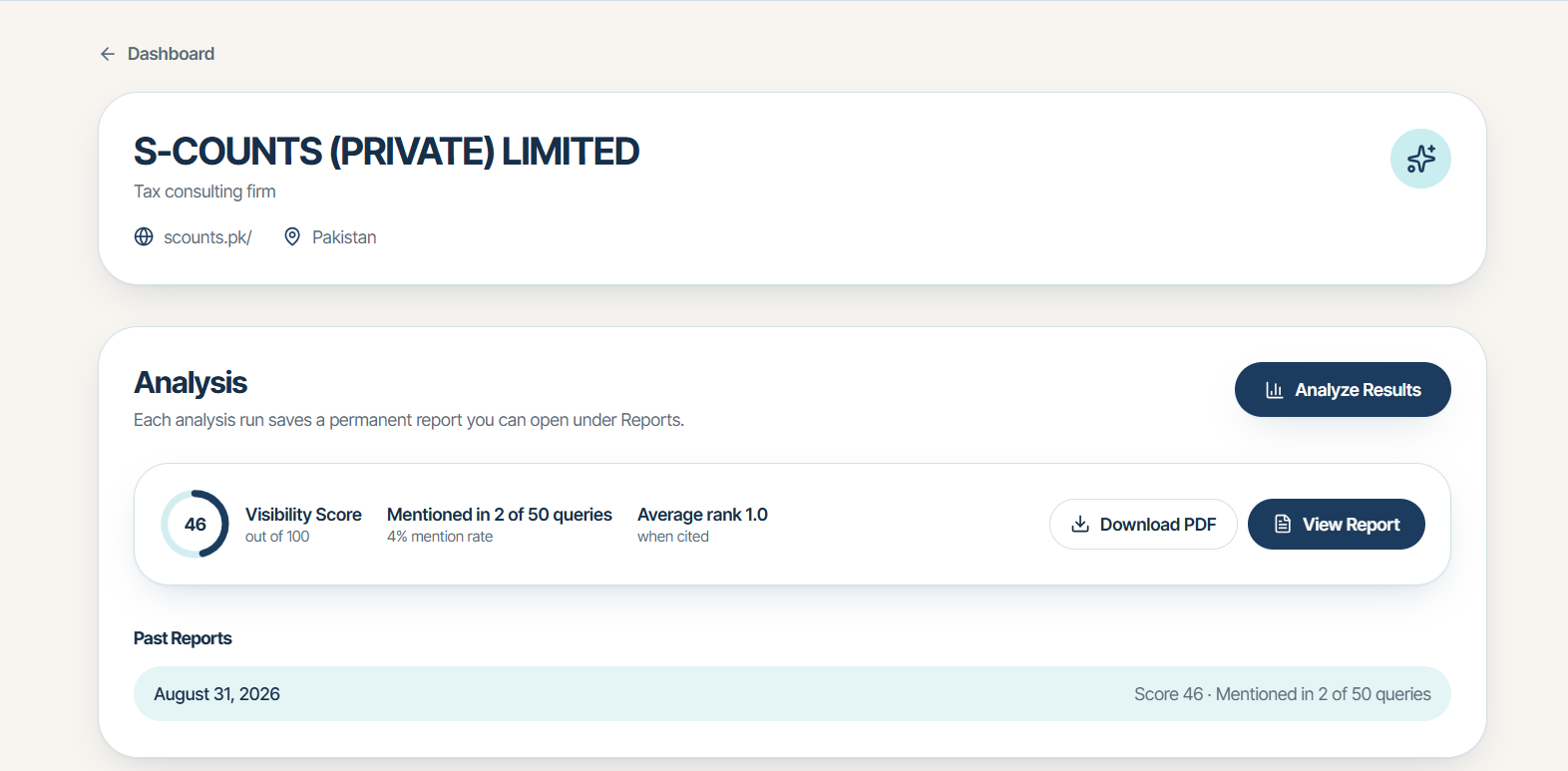
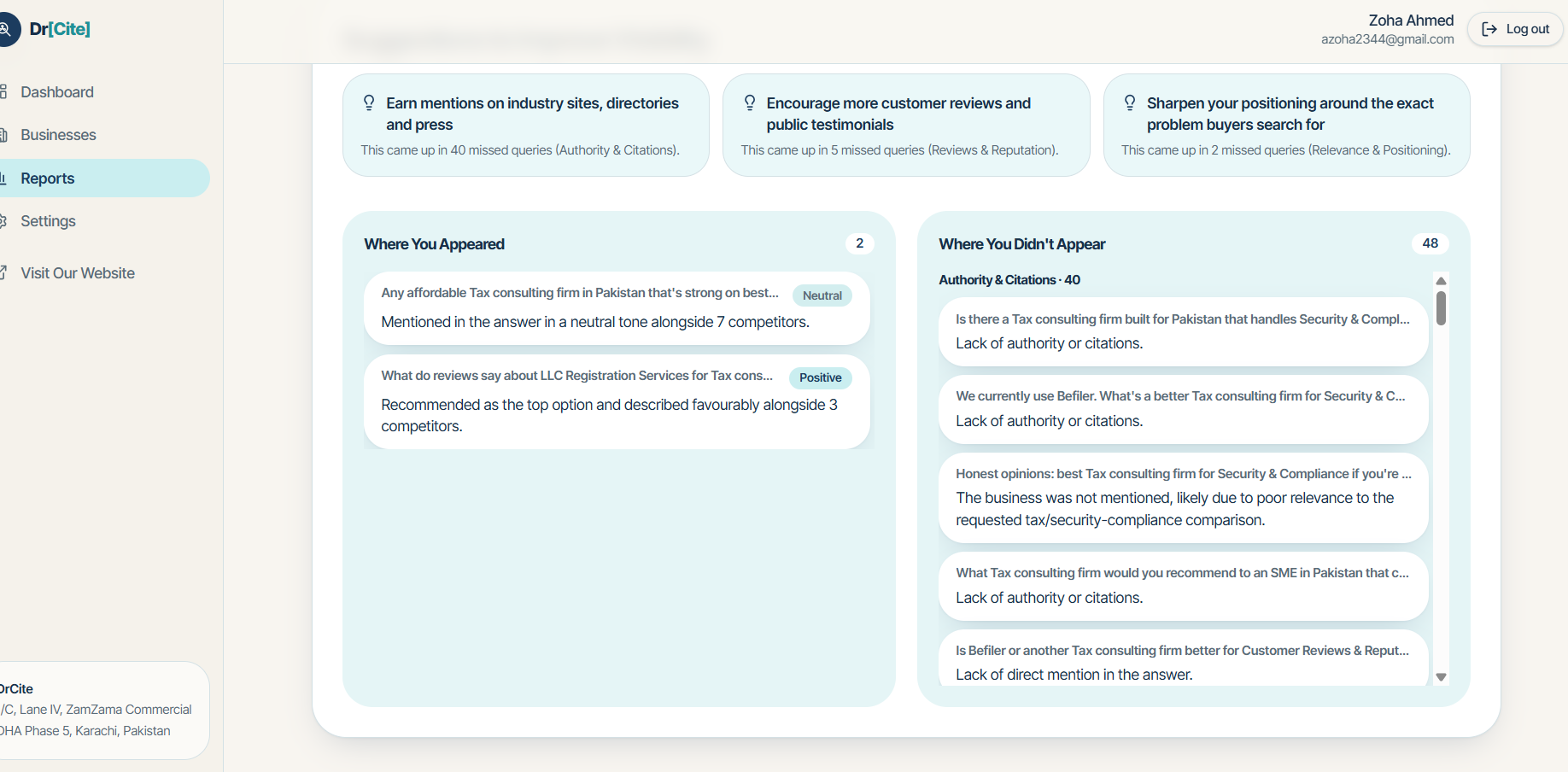
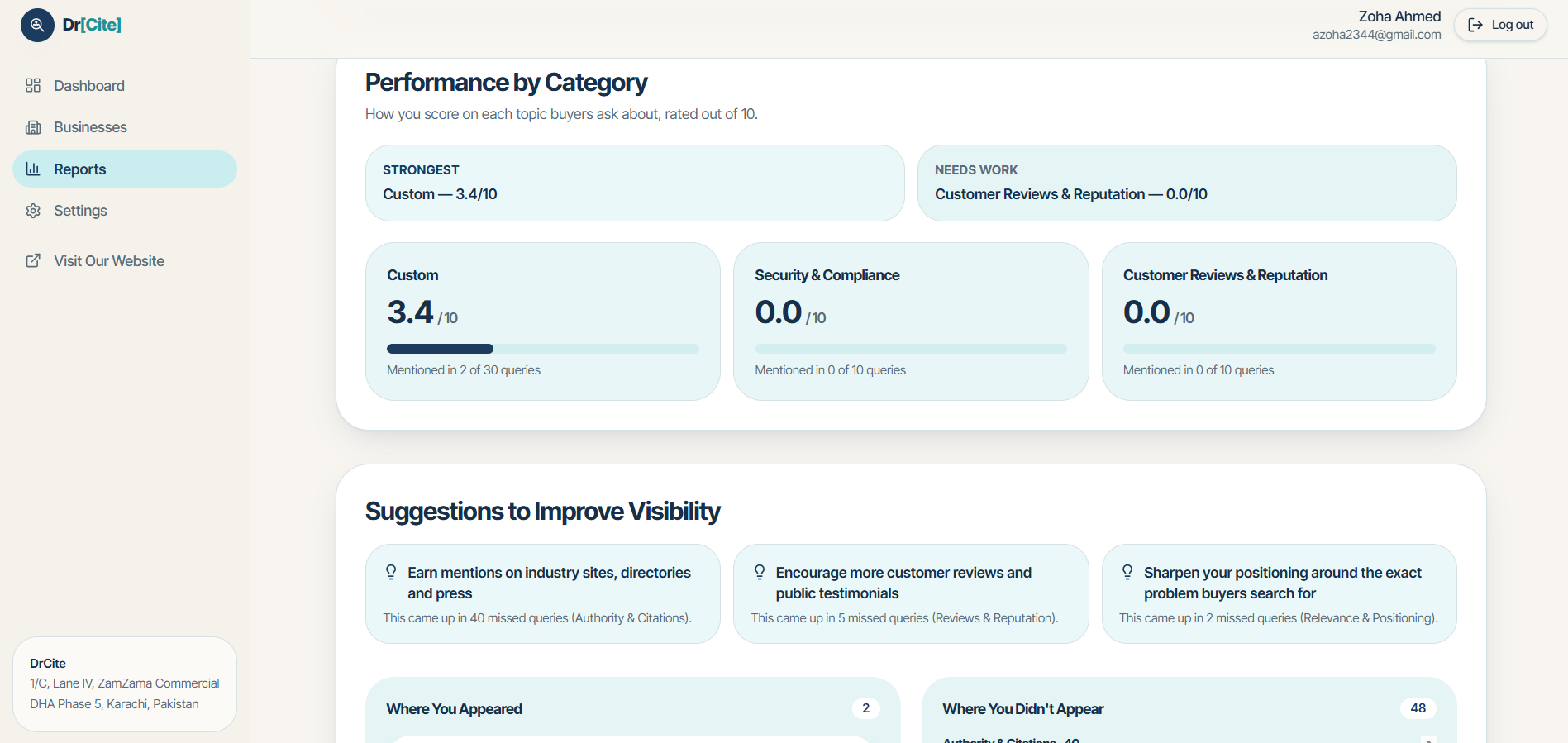
A clear one-line answer for each prompt A summary of the overall findings Detailed analysis of how the business is being represented A downloadable PDF report Specific recommendations for what the business should do next
The goal is simple: answer the question "Does AI know you exist?" and, if it doesn't, give you a practical path toward changing that.
How I built it
Dr-Cite was built as a working web application with an AI-powered analysis pipeline.
The workflow starts with the business information provided by the user. Dr-Cite uses that information to generate relevant customer-facing prompts, sends those prompts to an AI model through its API, receives the responses, and processes them into structured results.
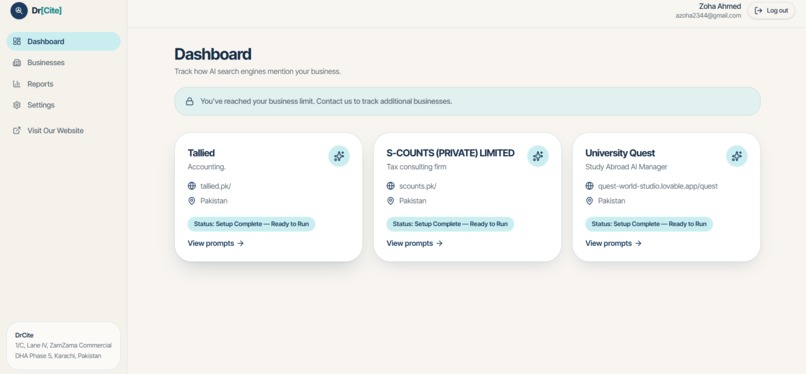
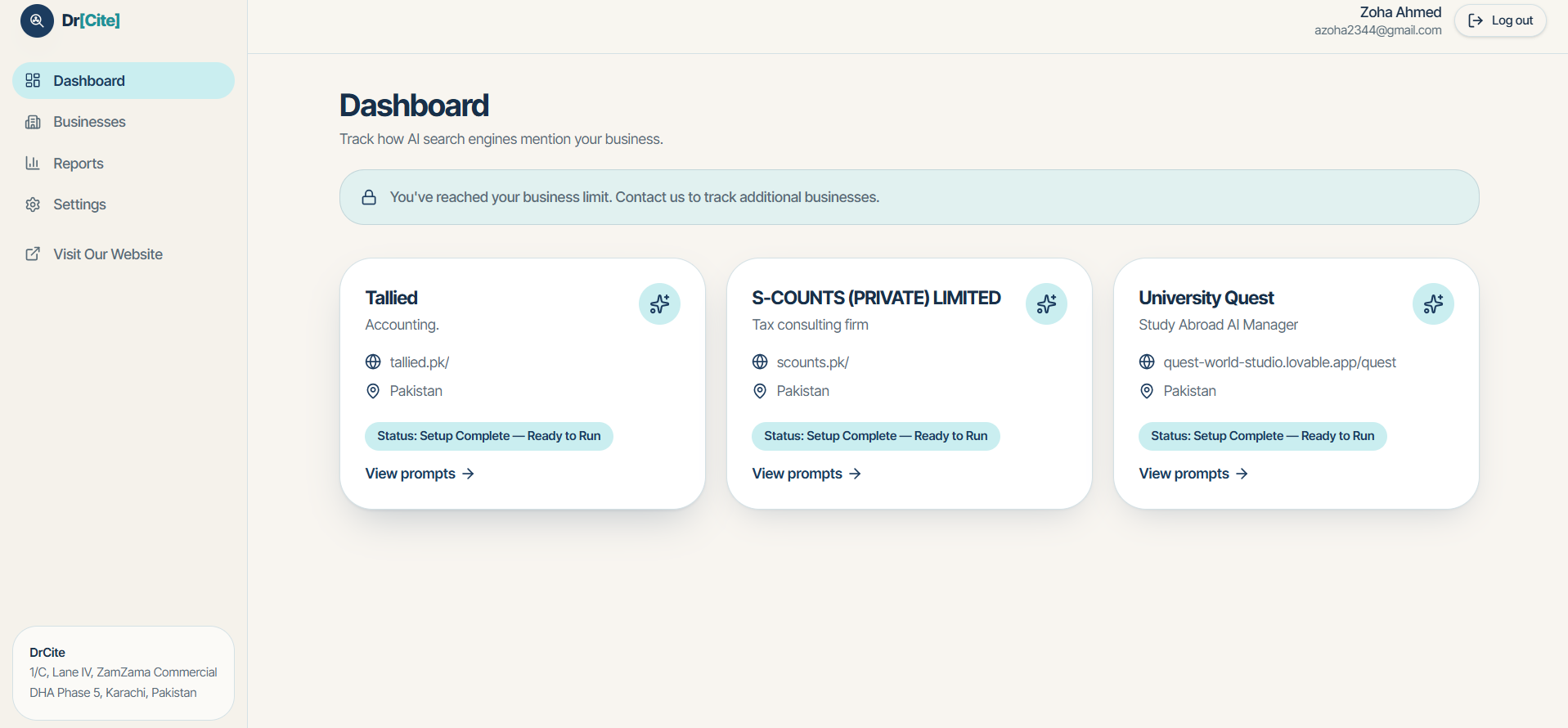
The application then turns those results into a dashboard-style experience, with concise answers, summaries, deeper analysis, recommendations, and a detailed PDF report.
A major focus throughout the build was making the output useful rather than simply impressive. The system isn't meant to give businesses another page of AI-generated text. It is designed to turn raw model responses into information a business owner can actually understand and act on.
Challenges I ran into
One of the biggest challenges was turning open-ended AI responses into something consistent and useful.
An AI model can produce long, unpredictable answers. Simply displaying those responses would leave the business owner with the same problem they started with: too much information and no clear conclusion.
I therefore had to think about how to structure those responses into concise answers, summaries, detailed findings, and recommendations without losing the underlying information.
Another challenge was designing the experience around a business owner's actual question rather than around the technology itself. The product needed to answer something practical: "What is AI saying about my business, and what should I do about it?"
Accomplishments that I'm proud of
I'm proud that Dr-Cite went beyond being an AI concept and became a working product with an end-to-end workflow.
A user can provide business information, generate relevant questions, run them through an AI model, analyse the resulting answers, and receive a structured report with recommendations.
I am especially proud of turning a relatively abstract problem of being visible inside AI-generated recommendations into something that can actually be measured, explored, and acted upon.
The project also received real-world validation during development, which gave me confidence that this wasn't just an interesting technical experiment but a problem worth solving.
What I learned
I learned that building with AI isn't just about getting a model to produce an answer.
The difficult part is often everything around the model: deciding what questions to ask, structuring the output, handling unpredictable responses, and presenting the result in a way that a real person can actually use.
I also learned how quickly the way people discover information is changing. Search visibility used to be primarily about ranking pages. As people increasingly ask AI for direct recommendations and answers, businesses need to understand a new kind of visibility.
Most importantly, I learned that a good product starts with a problem that is easy to recognize once someone points it out — even if the problem itself is relatively new.
What's next for Dr Cite
The next step is to move beyond diagnosing AI visibility and help businesses actually improve it.
I want to introduce marketing services built around the insights Dr Cite finds, helping businesses address the gaps that keep them from being mentioned, recommended, or accurately represented by AI.
We're also looking to expand beyond a single AI model by integrating more AI APIs, giving businesses a broader picture of how they appear across different AI systems.
And visibility shouldn't be limited to text. As AI search becomes increasingly multimodal, we want Dr-Cite to explore how businesses appear across images, visual search, and deeper AI-powered discovery, not just traditional text-based questions.
The long-term goal is simple:
Don't just tell businesses whether AI can find them. Help them become easier for AI to find, understand, and recommend.
Built With
- css3
- gpt-5
- html5
- jspdf
- lucide-icons
- nitro
- node.js
- openai-api
- postgresql
- radix-ui
- react
- recharts
- rest-api
- search
- supabase
- tailwind-css
- tanstack-query
- tanstack-router
- tanstack-start
- typescript
- vite
- web
- zod
Log in or sign up for Devpost to join the conversation.