-
-
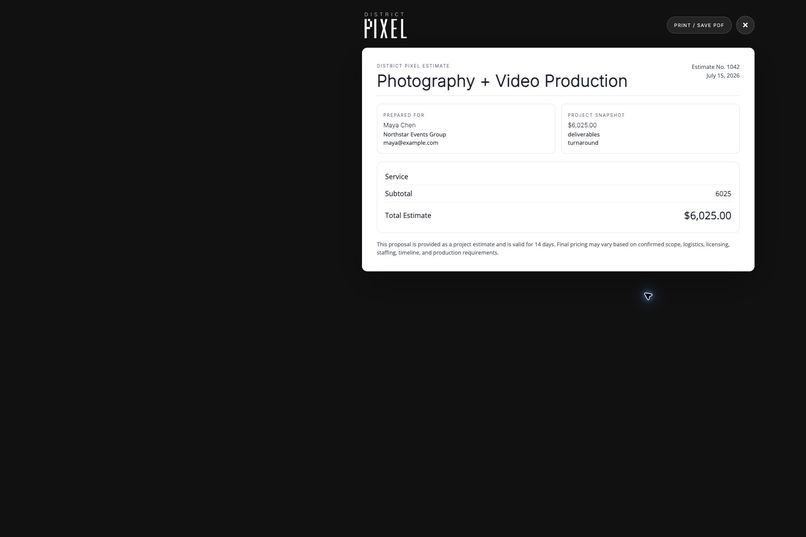
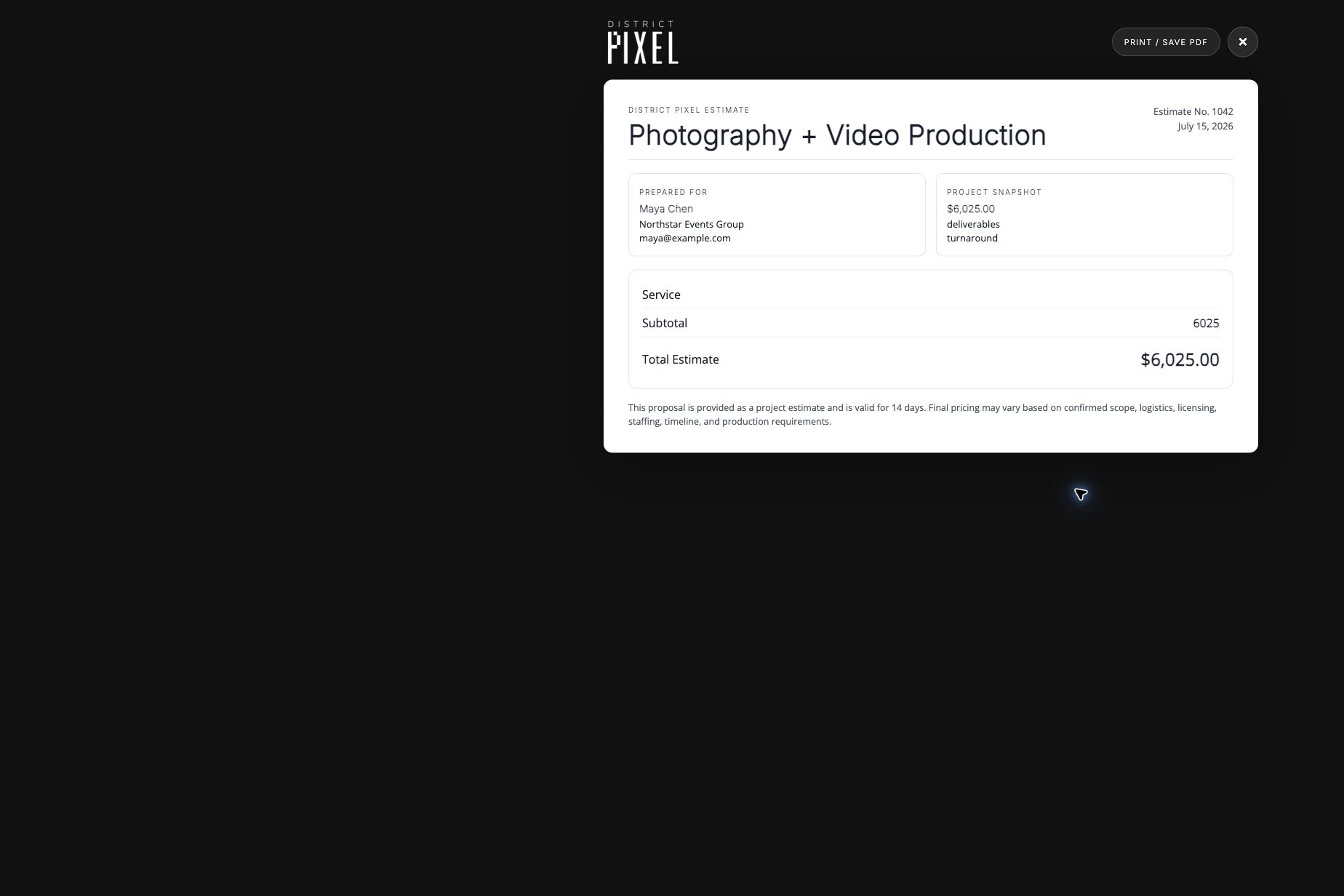
Accepted Estimate: Studio Calculator creates client-ready pricing that stays connected to the project.
-
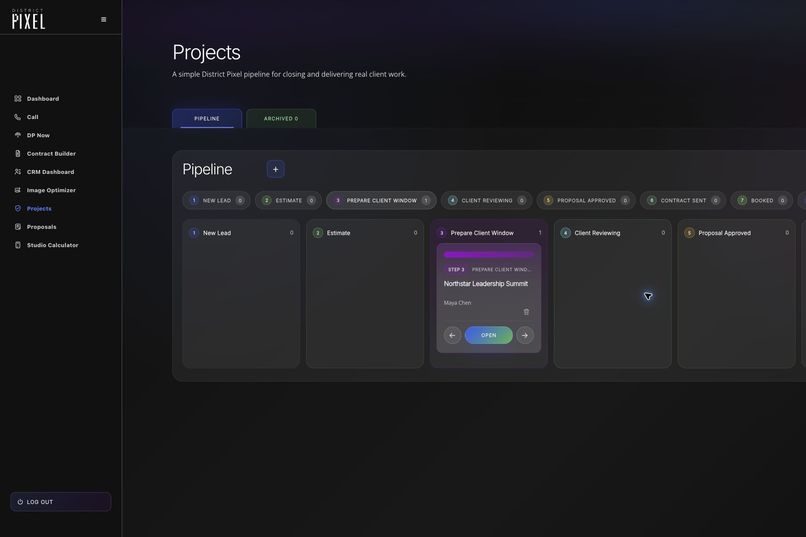
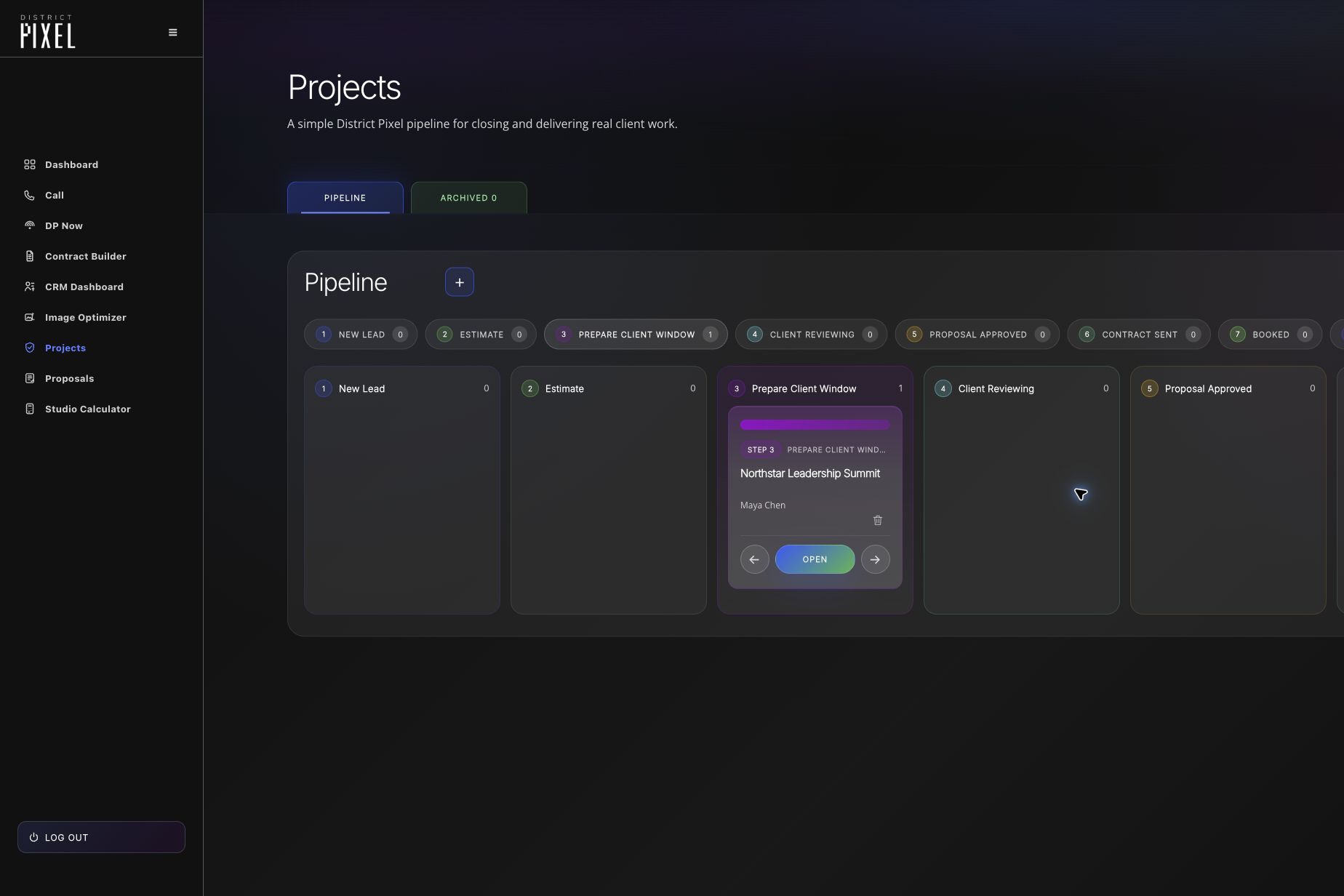
Projects Pipeline: active work, value, tasks, next actions, and delivery status in one place.
-
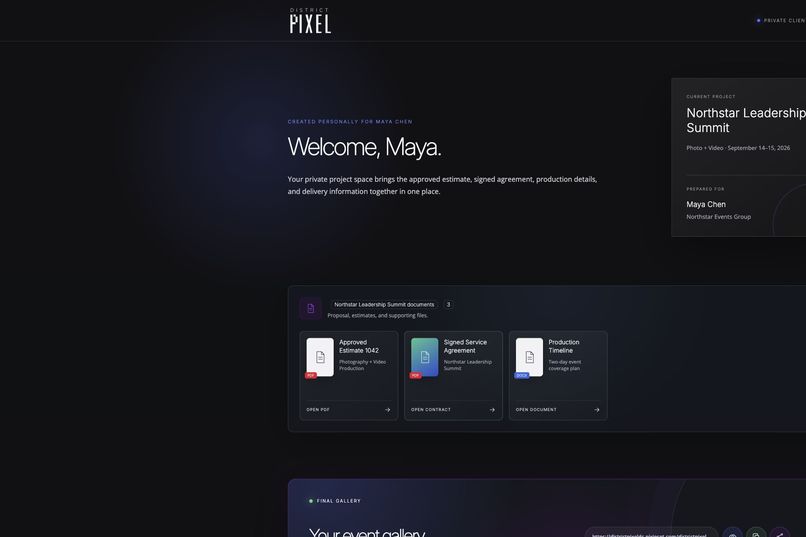
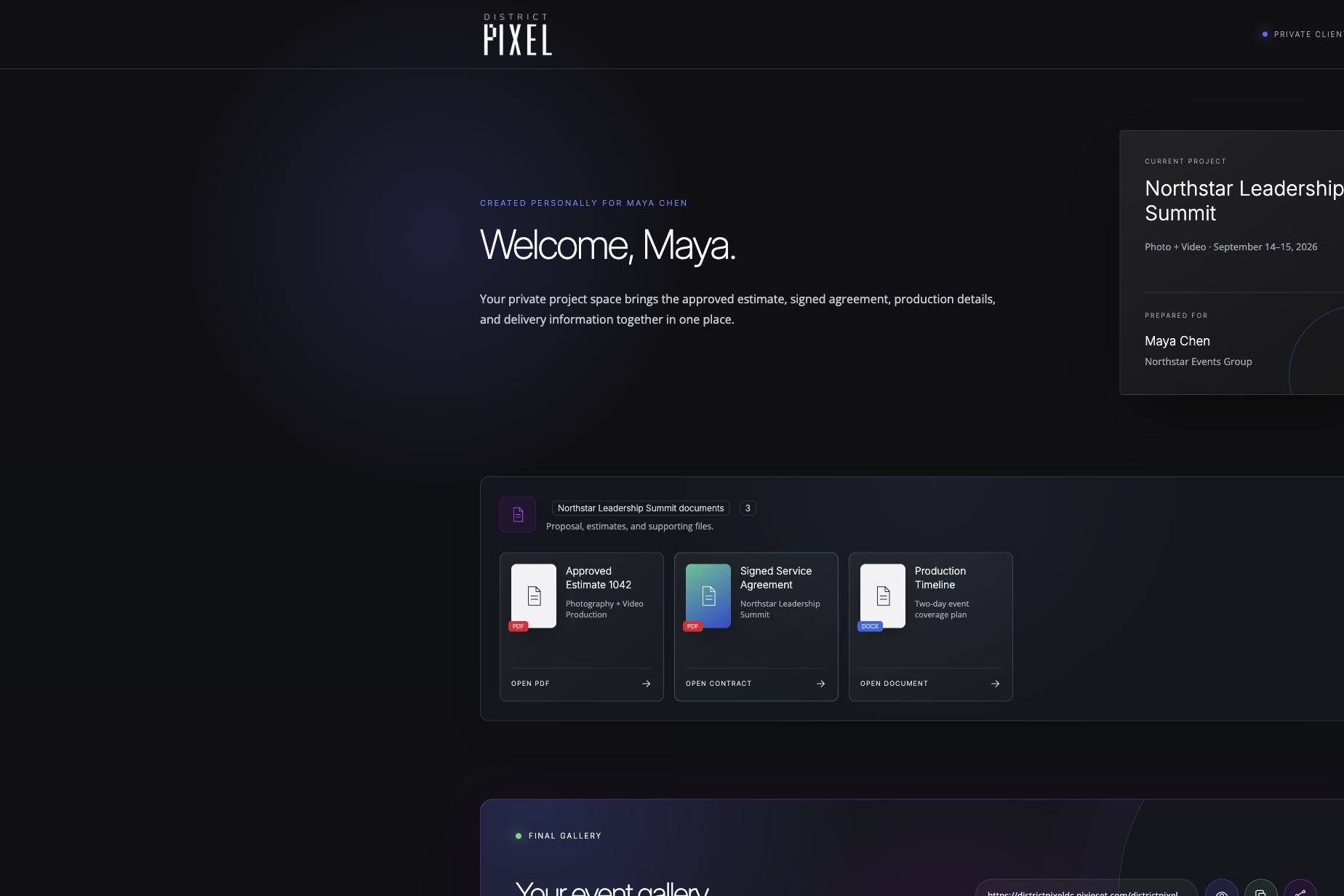
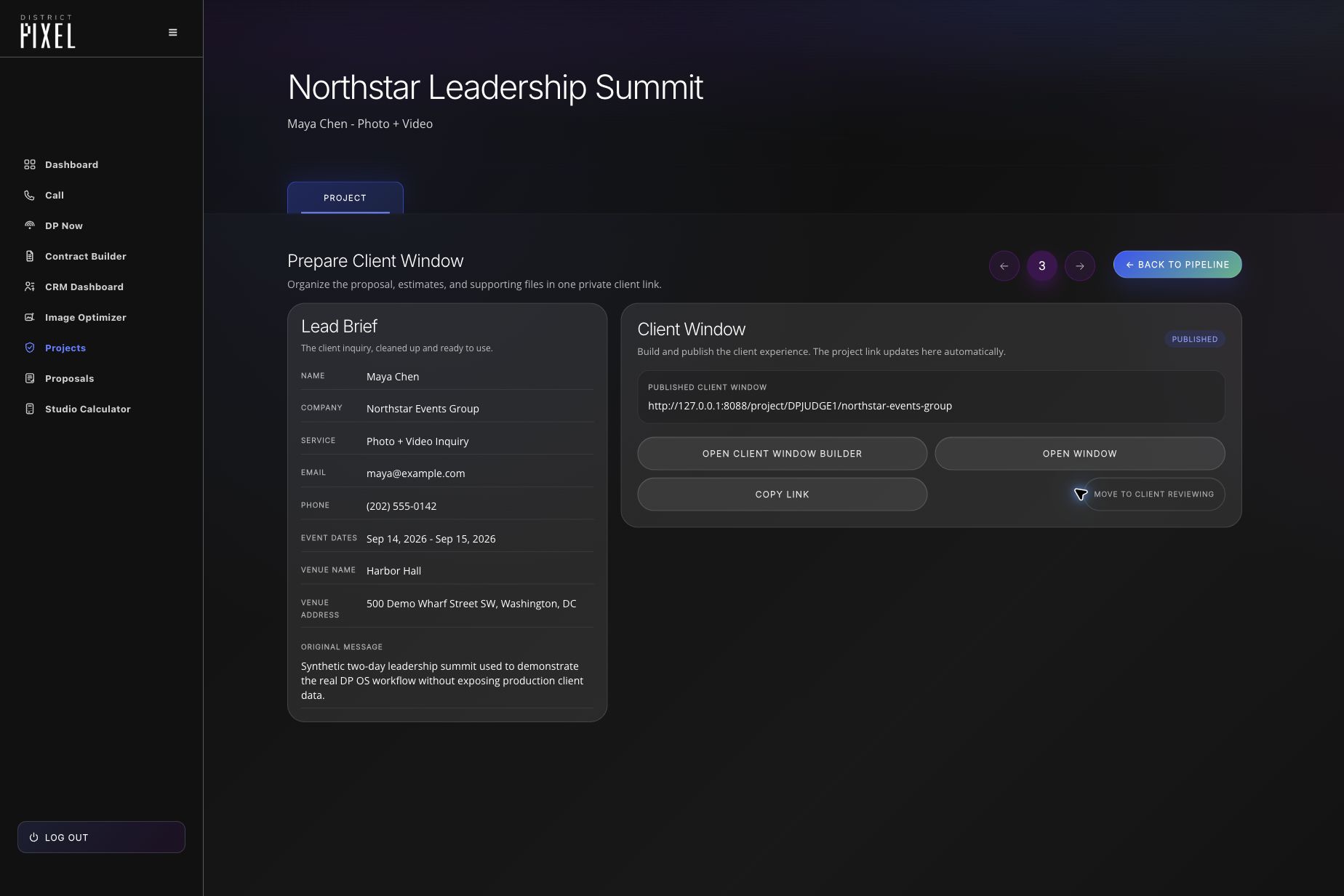
Client Window: a private branded space for the estimate, signed agreement, timeline, gallery, and communication.
-
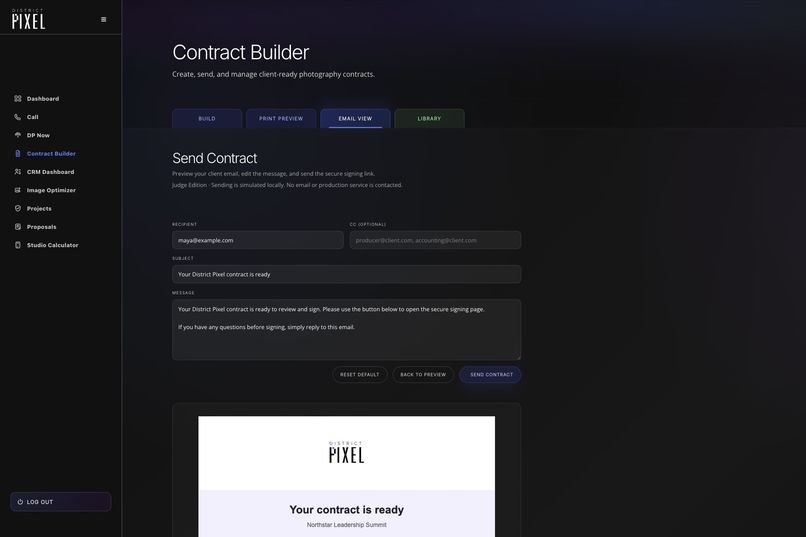
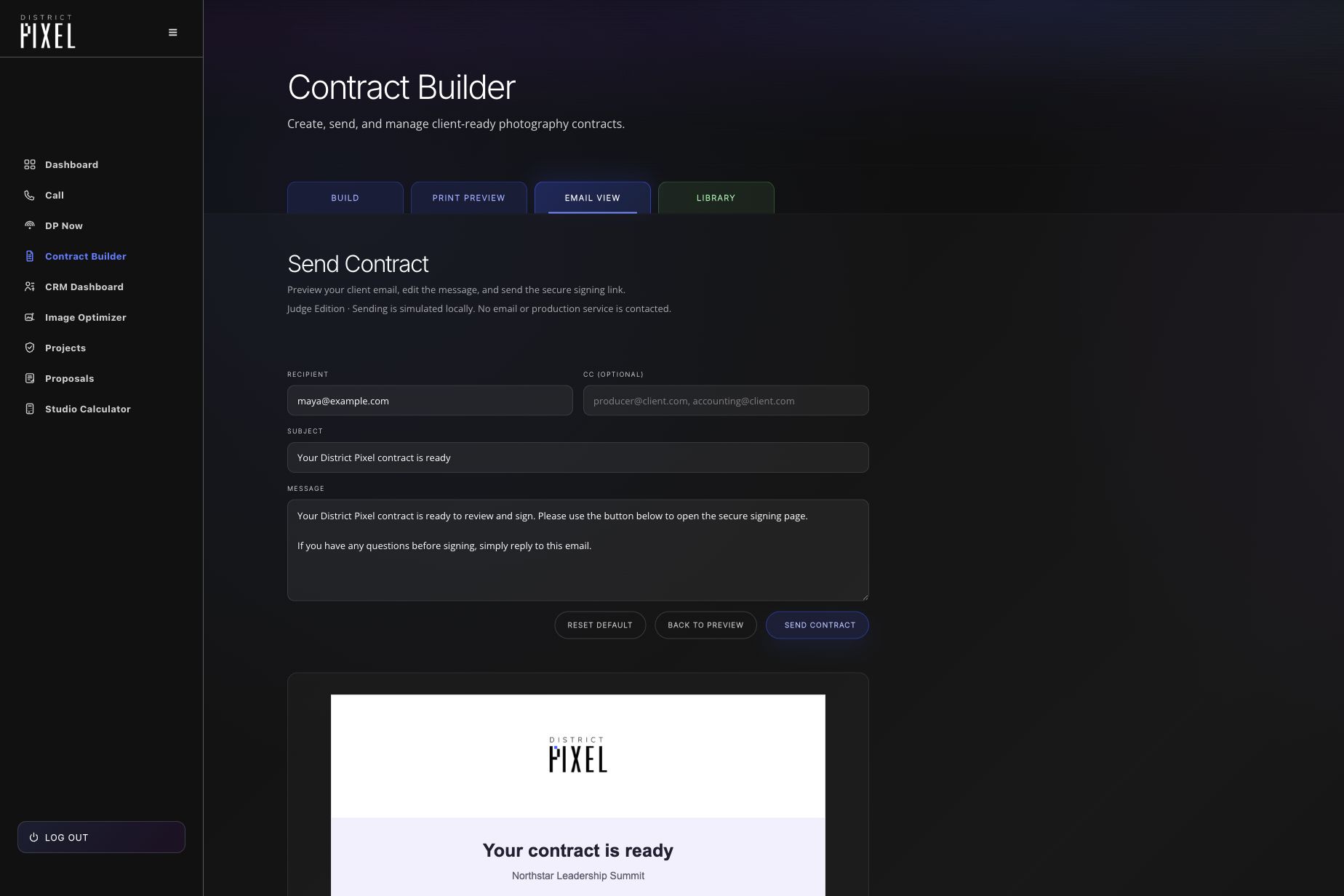
Contract Builder: project and pricing data flow into the agreement and client email without re-entry.
-
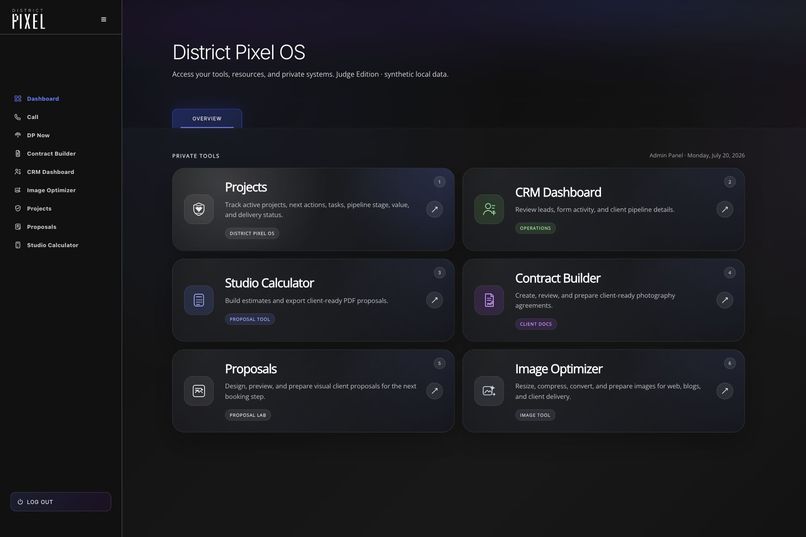
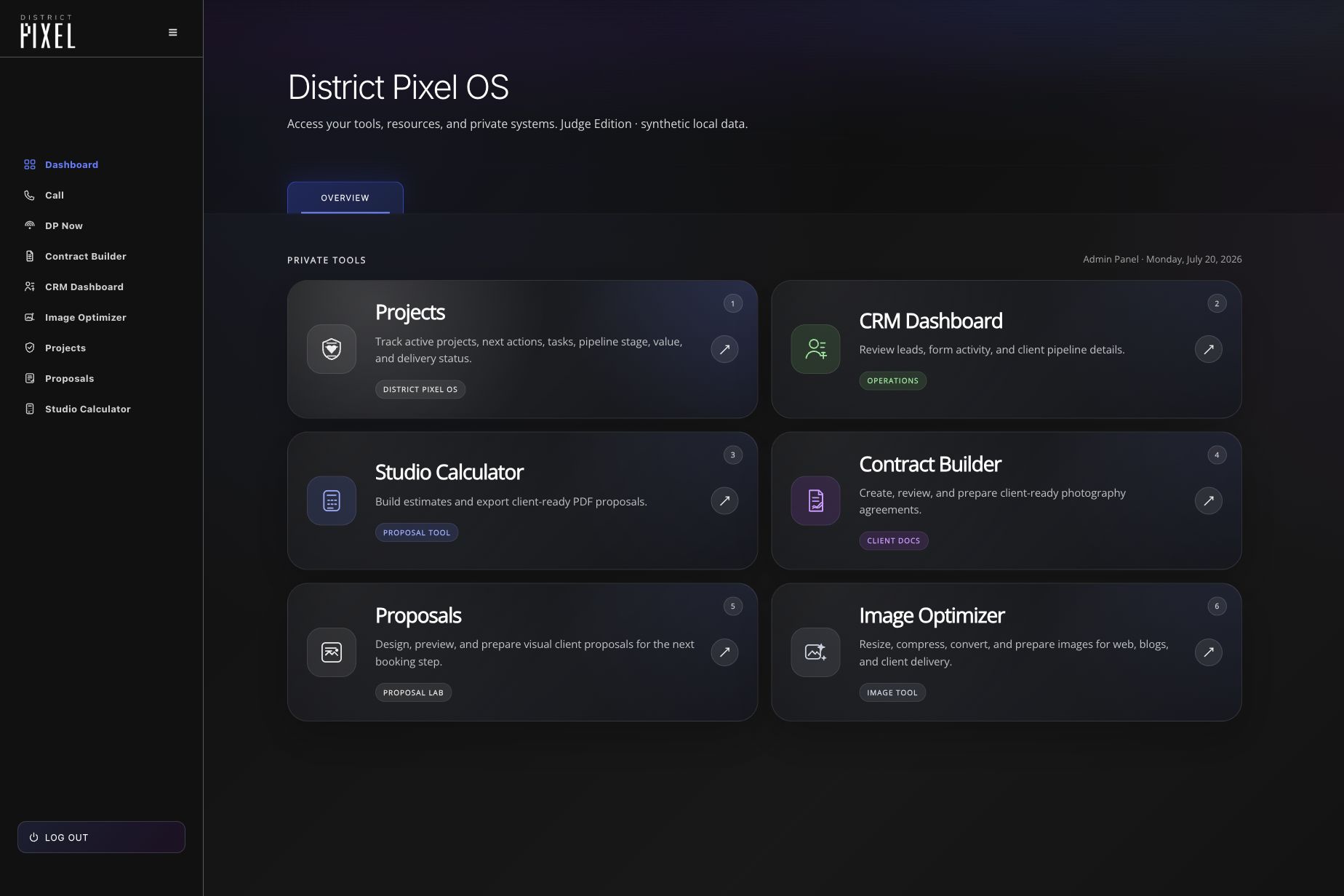
DP OS Command Center: one connected workspace for projects, clients, contracts, production, and media.
-
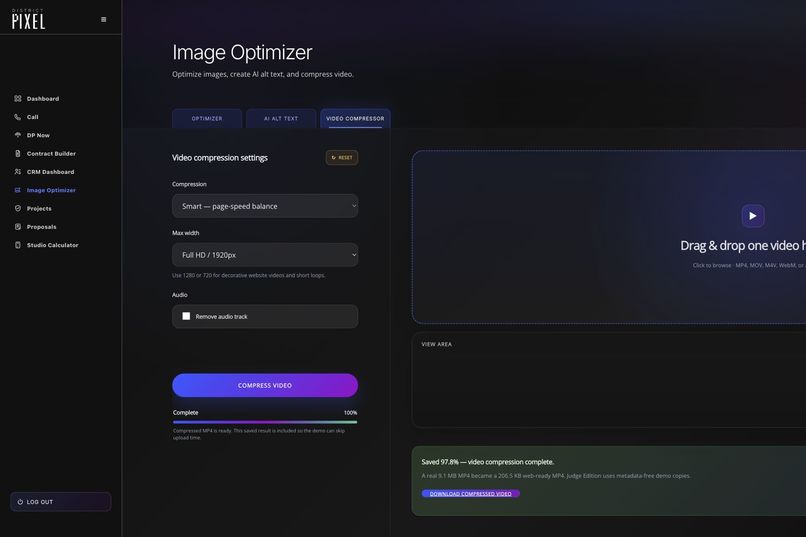
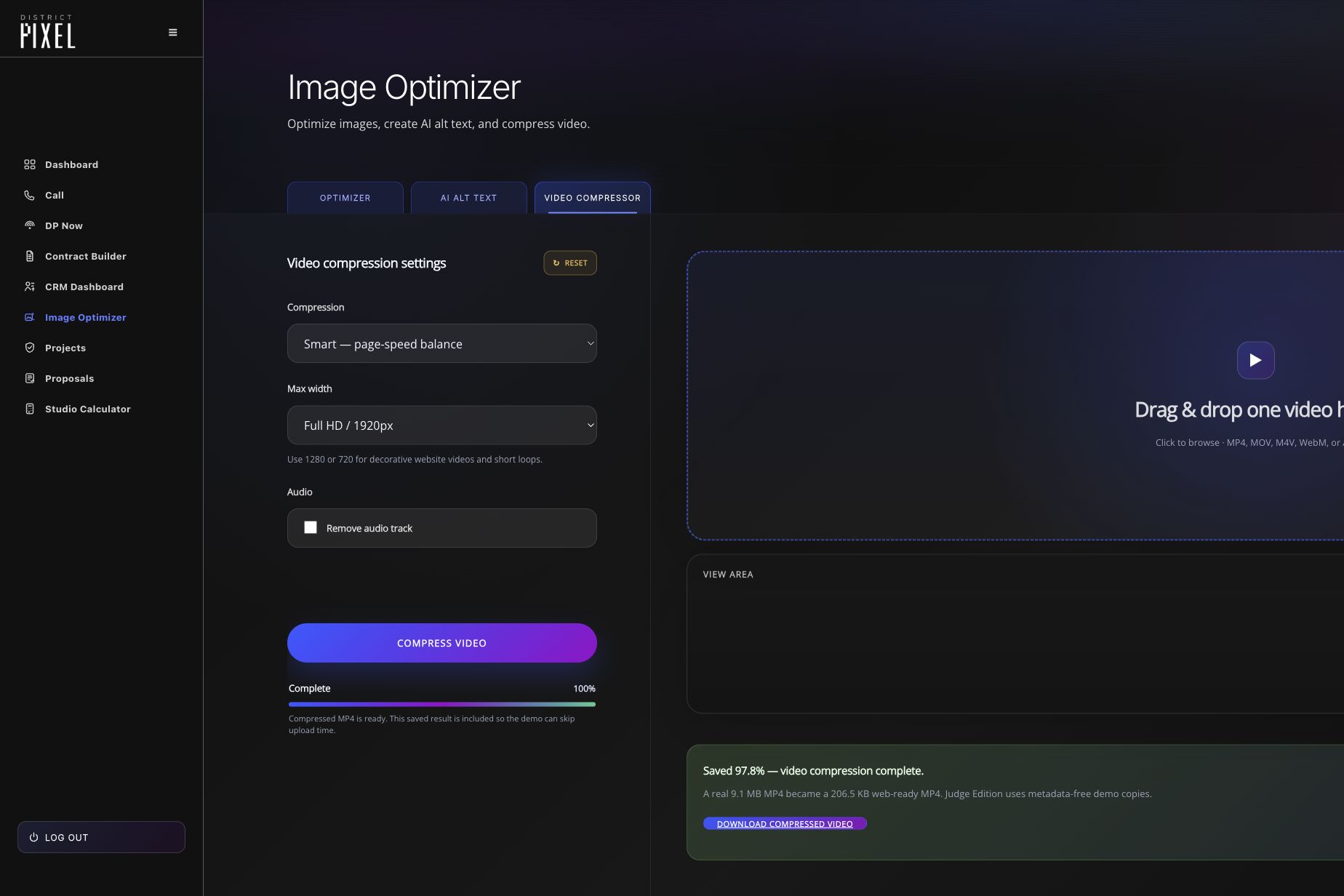
Image Optimizer's Video Compressor: a real 9.1 MB video became a 206.5 KB web-ready MP4, a 97.8% reduction.
-
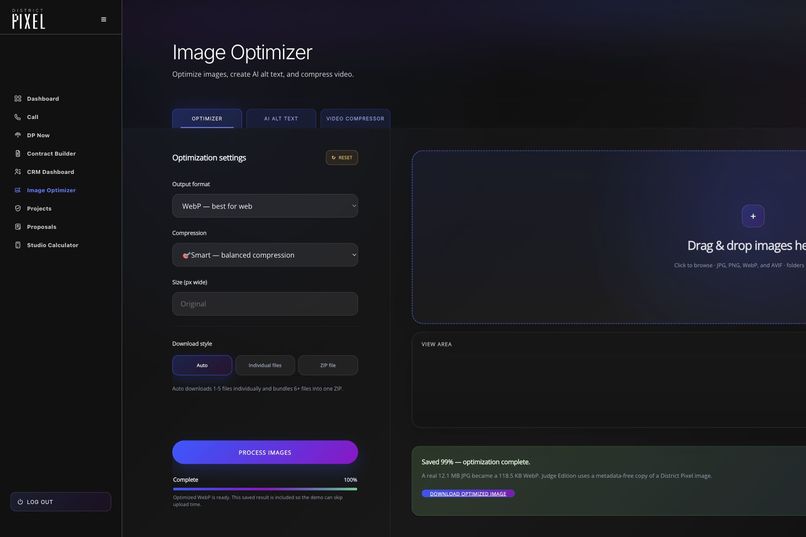
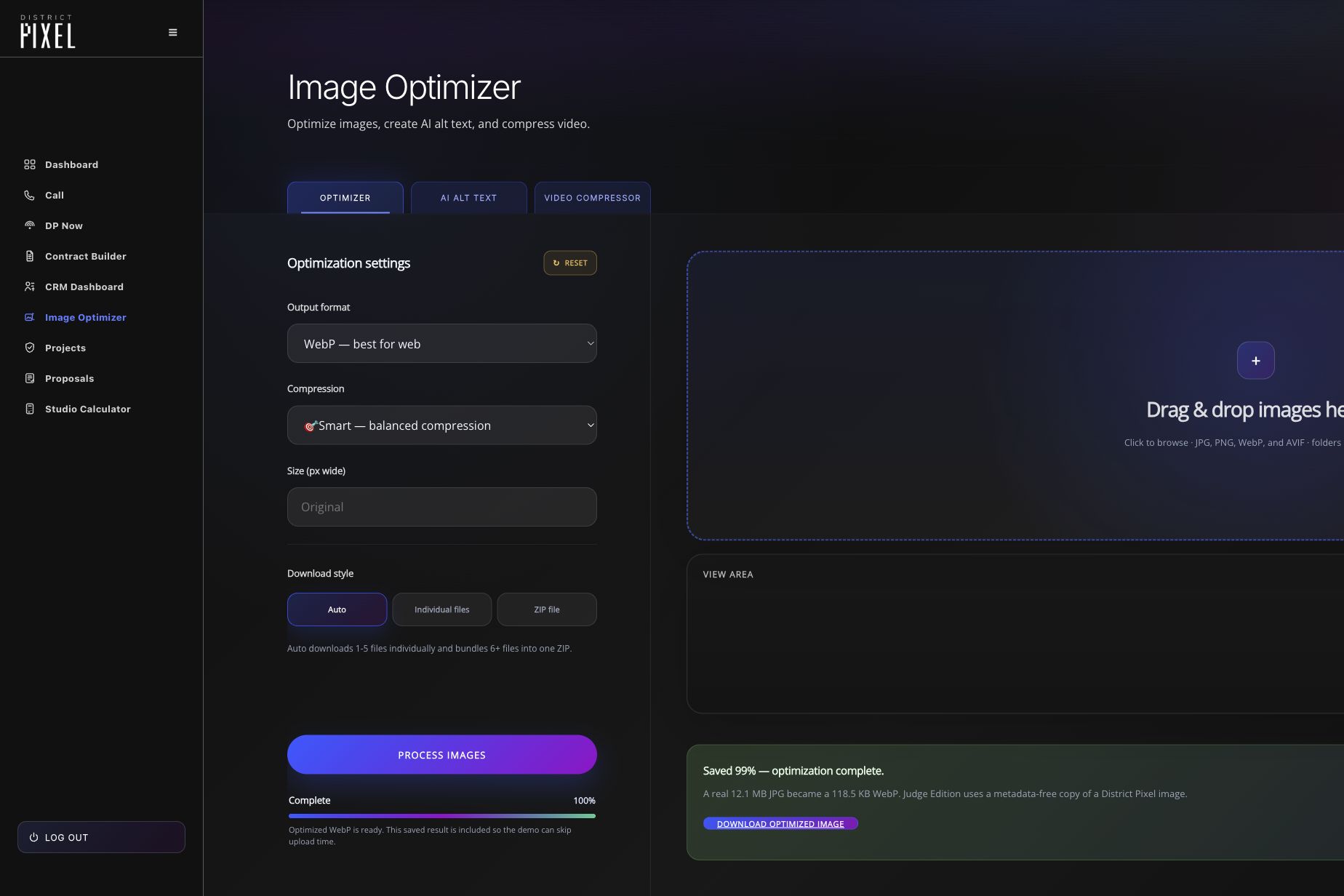
Image Optimizer: a real 12.1 MB photo became a 118.5 KB WebP, a 99% reduction.
-
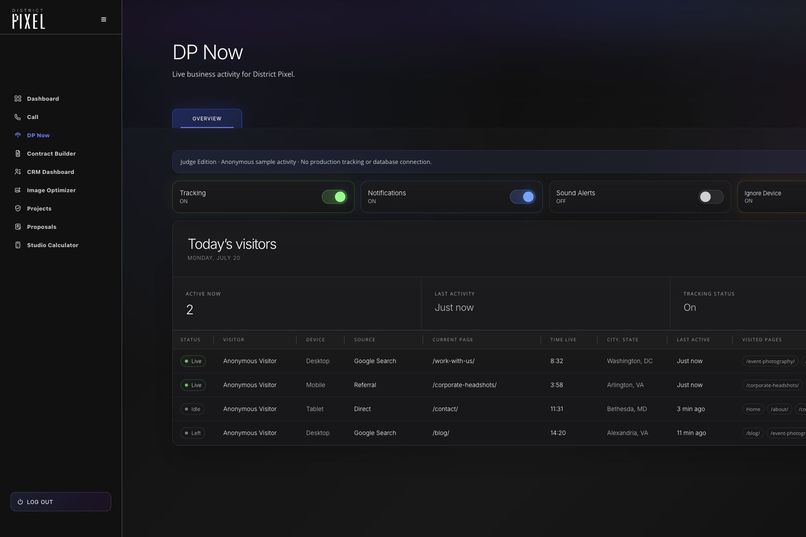
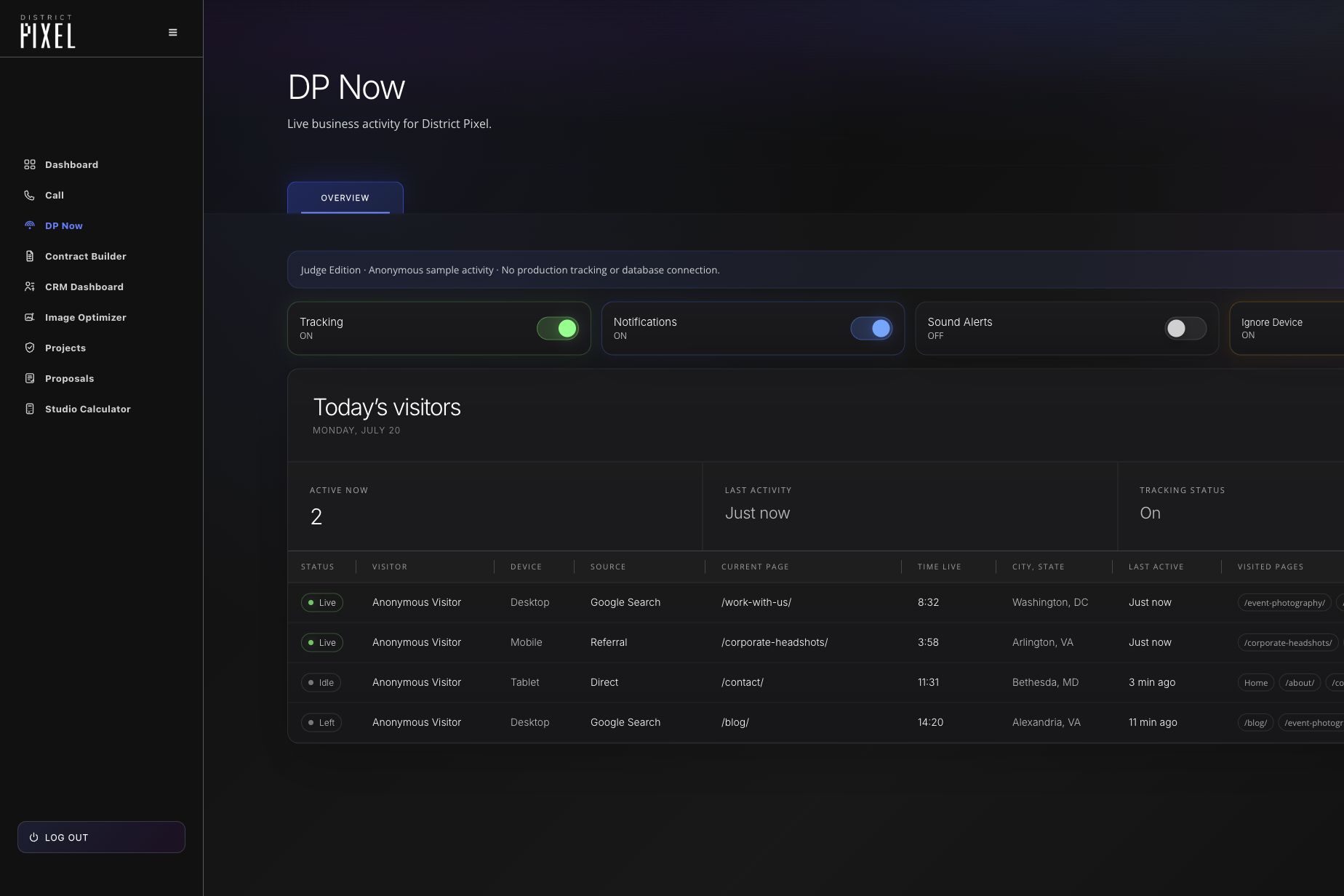
DP Now: anonymous website activity signals help District Pixel understand visitor intent.
-
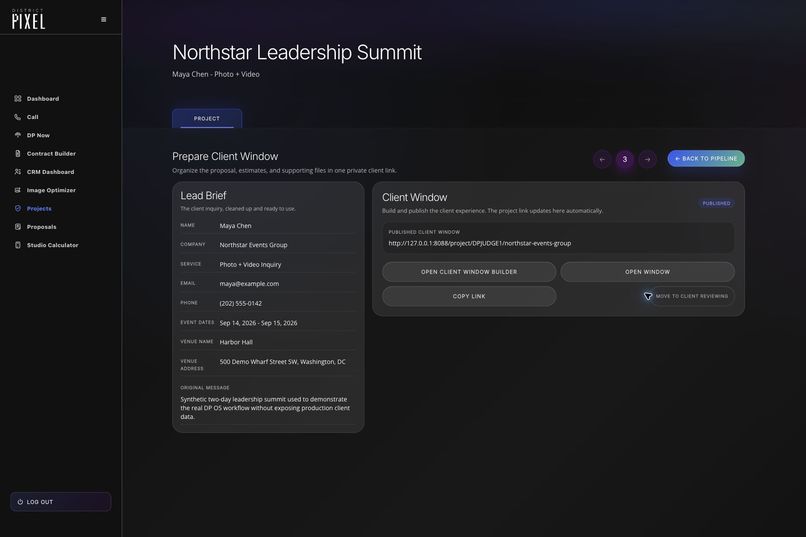
One Connected Project: client, estimate, contract, production details, and workflow stage share the same context.
-
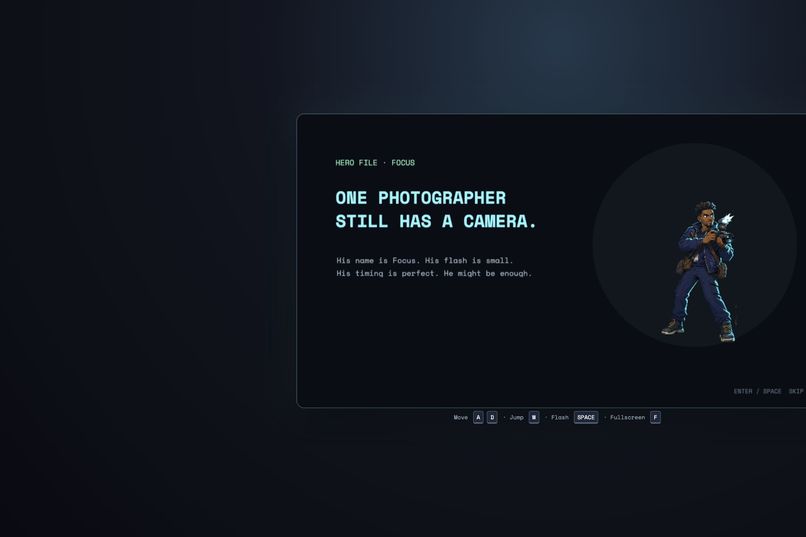
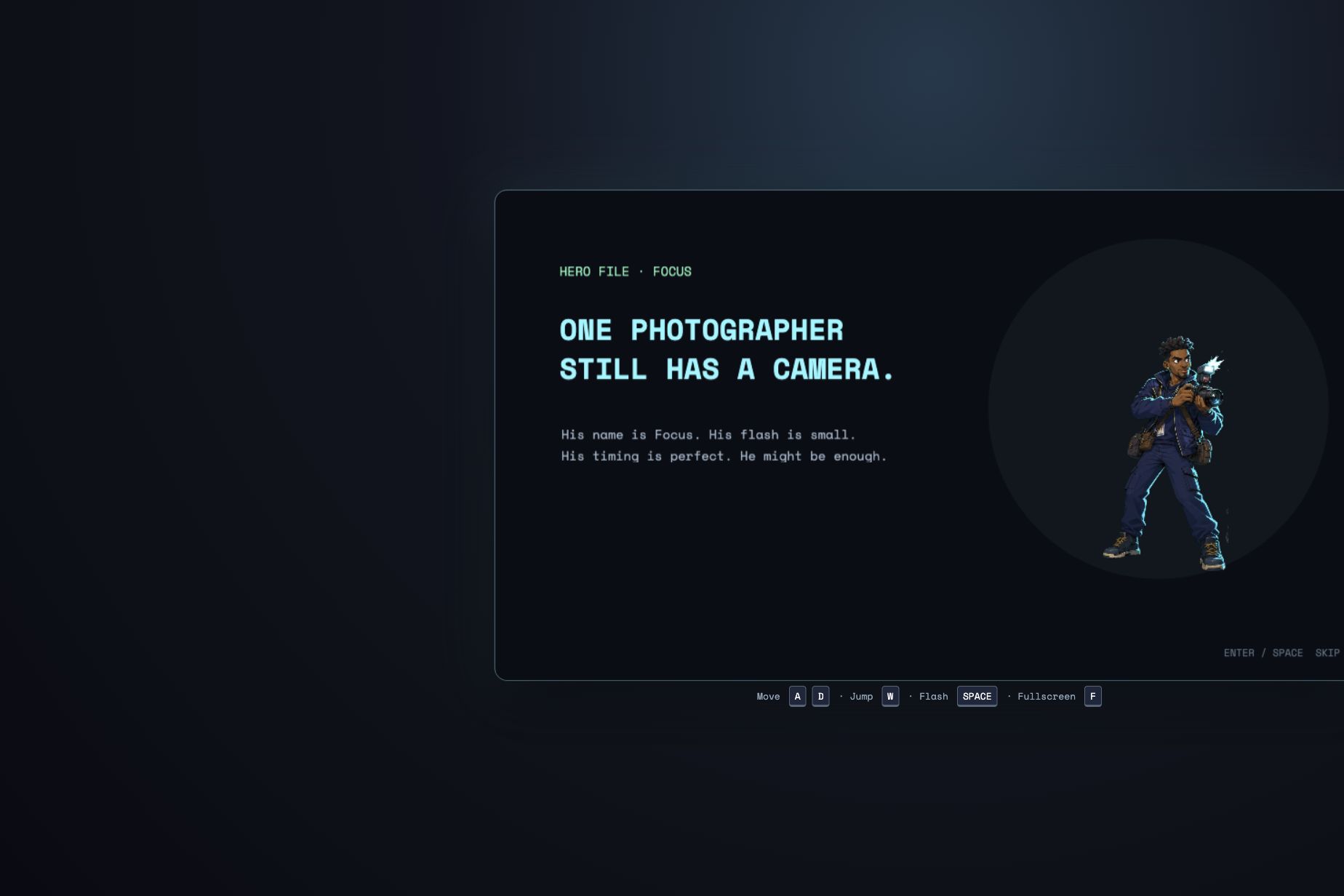
Codex also helped me build Flash Outbreak for my 14-year-old gamer son, showing how quickly a new idea can become real.
Inspiration
A great portfolio can win attention. But it cannot answer inquiries, prepare estimates, create contracts, organize projects, follow website activity, or deliver a complete client experience.
I am Luis Rivas, a corporate event photographer, father, and solopreneur working in Washington, DC, one of the most competitive photography markets in the country. I regularly leave home to photograph demanding events while also carrying every other part of the business: marketing, sales, communication, pricing, contracts, production, delivery, and administration.
My challenge was not simply taking better photographs. It was finding a way to operate differently, present my work more powerfully, and turn my strongest asset, my portfolio, into a better business experience.
That is how DP OS began.
I have no traditional software-development background. My world is photography, video, audio, and multimedia creativity. After experimenting with AI tools, I discovered Codex in May 2026. It gave me a way to translate the systems I imagined into working software.
DP OS is not about asking AI to replace my creativity. It is about using AI to remove the technical limits around it.
What it does
DP OS is a connected operating system for my solo photography business.
Instead of managing the client journey through disconnected generic platforms, DP OS brings the essential workflow together:
- Projects organizes the client, schedule, value, tasks, estimate, contract, production details, and current stage.
- Studio Calculator creates detailed estimates connected to each project.
- Contract Builder carries project and pricing information forward into a professional agreement.
- Mobile Signing allows clients to review and sign a contract by typing or drawing with a finger.
- Client Window gives every client a private, branded space containing their estimate, signed agreement, timeline, gallery, video, and communication.
- DP Now provides anonymous website activity and intent signals.
- Image Optimizer and Video Compressor prepare high-quality media for a faster, more powerful photography website.
The goal is simple: stop rebuilding the same information across multiple platforms and give both the photographer and the client one coherent experience.
How we built it
I collaborated with Codex and GPT-5.6 as a product, engineering, and verification partner.
I provided the business problems, workflow priorities, creative direction, safety boundaries, and final product decisions. Codex helped me inspect the existing architecture, plan controlled changes, implement PHP, JavaScript, HTML, and CSS, connect information across applications, debug complete workflows, and verify the result in the browser.
DP OS existed before the official submission period, and I want to be completely transparent about that. The work submitted for Build Week is the meaningful extension created after July 13, 2026.
During Build Week, I conceived and fully implemented Client Window; connected structured project information across Projects, Studio Calculator, Contract Builder, and Client Window; synchronized contract status and signing activity back into Projects; improved estimate-to-contract mapping; created a shared interface system; extended DP Now; and redesigned and stabilized Image Optimizer and Video Compressor.
The private repository includes dated commit evidence separating the earlier foundation from the Build Week additions. The Judge Edition uses fictional client data and disables production databases, authentication, email, and tracking.
Challenges we ran into
The first challenge was personal: I began with no background in software development and no established engineering system. I had a clear vision and a strong eye for design. I know when something feels right, fits my brand, and serves the client, but I did not yet know how to express that vision in technical language or organize the work into a reliable build process.
With Codex, I learned how to turn an idea into requirements, follow a system, make design decisions consistently, inspect code, test complete flows, and improve features without losing sight of the original experience. Codex became the bridge between what I could see in my mind and the technical implementation required to make it real.
The hardest product challenge was not creating another screen. It was preserving the same project context across multiple applications. A client name, service, event date, venue, price, estimate, contract, signature, and project stage all need to remain consistent. Connecting them without breaking working tools required careful inspection and end-to-end testing.
Privacy was equally important. The real DP OS contains business and client information that should never appear in a contest repository. I created an isolated Judge Edition with synthetic data, disabled external services, and pre-completed selected states so judges can understand the workflow within the three-minute video limit.
Accomplishments that we're proud of
DP OS is not simply a concept or interface mockup. It has become a working system that helps me operate District Pixel.
Client Window is especially meaningful because it went from a completely new idea to a working client experience during Build Week, and I put it into real use immediately. It was not created as a theoretical demo; it became part of the way I present projects and communicate value to clients.
This week, I also closed two clients using the experience supported by DP OS. Those client wins are business outcomes, not features I am claiming as Build Week development, but they are early evidence that clients are choosing District Pixel when they have many other options.
I am also proud that someone with no traditional development background could use Codex to build, understand, test, and improve a system grounded in real professional experience.
As a small personal bonus, I also used Codex to build Flash Outbreak, a game for my 14-year-old gamer son. It is not a core DP OS feature, but it shows how quickly the same creative workflow can turn a completely different idea into something real.
What we learned
I learned that AI can dramatically expand who is able to build software, but product judgment, creative direction, and real-world experience still matter.
Codex can move extremely quickly, but I still need to define the real problem, protect working functionality, decide what the client should experience, test the complete journey, and remain transparent about what was created and when. I also learned how important a consistent design system is: it gives every decision a structure and keeps a growing product coherent.
Most importantly, I learned that I no longer have limits on my creativity. If the new Codex experience integrated with ChatGPT can already help me transform ideas into real tools in only a few hours, I can barely imagine what I will be able to create in one year.
What's next for DP OS (District Pixel Operating System)
DP OS will continue growing as the operating system behind District Pixel.
My next goals are to deepen workflow automation, improve business and SEO intelligence, connect more production and delivery tools, and continue refining the client experience.
Eventually, I want to explore whether DP OS can become something larger: a focused operating system for other solo photographers and creative entrepreneurs who are talented at their craft but overwhelmed by everything required to run the business around it.
Built With
- codex
- css3
- ffmpeg
- ffprobe
- gd
- gpt-5.6
- html5
- imagemagick
- javascript
- json
- jspdf
- openai
- pdf.js
- php

Log in or sign up for Devpost to join the conversation.