Inspiration
In Pakistan you book a cleaner, a car wash or a barber by phoning around and haggling, then pay in cash. Ride-hailing apps here already let people bid on a fare, so negotiating in an app is familiar. Nobody enjoys doing the negotiating. That is agentic commerce: an agent that holds the customer's budget, talks to the other side, closes the deal and moves the money through PayPal, inside limits the customer sets.
What it does
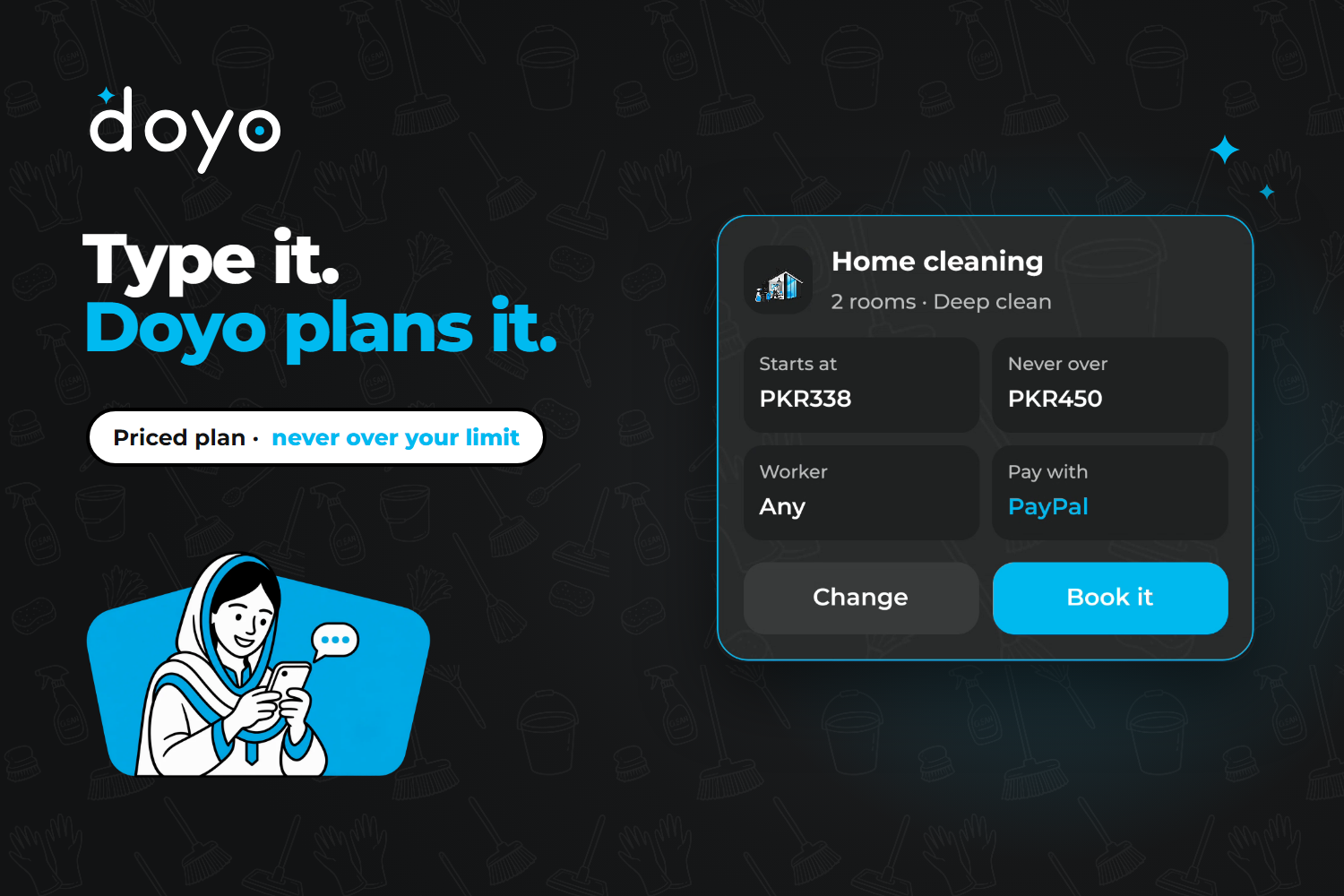
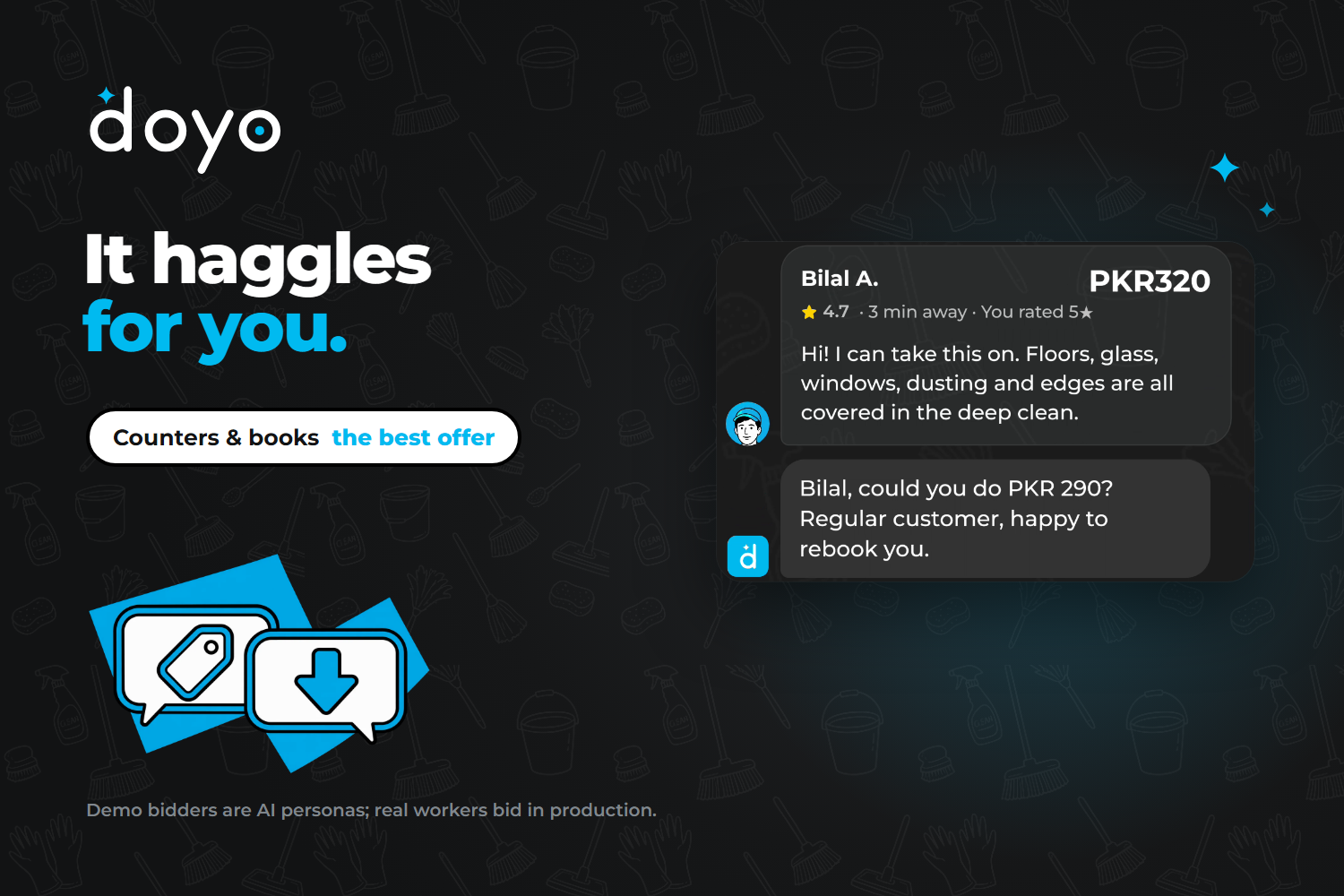
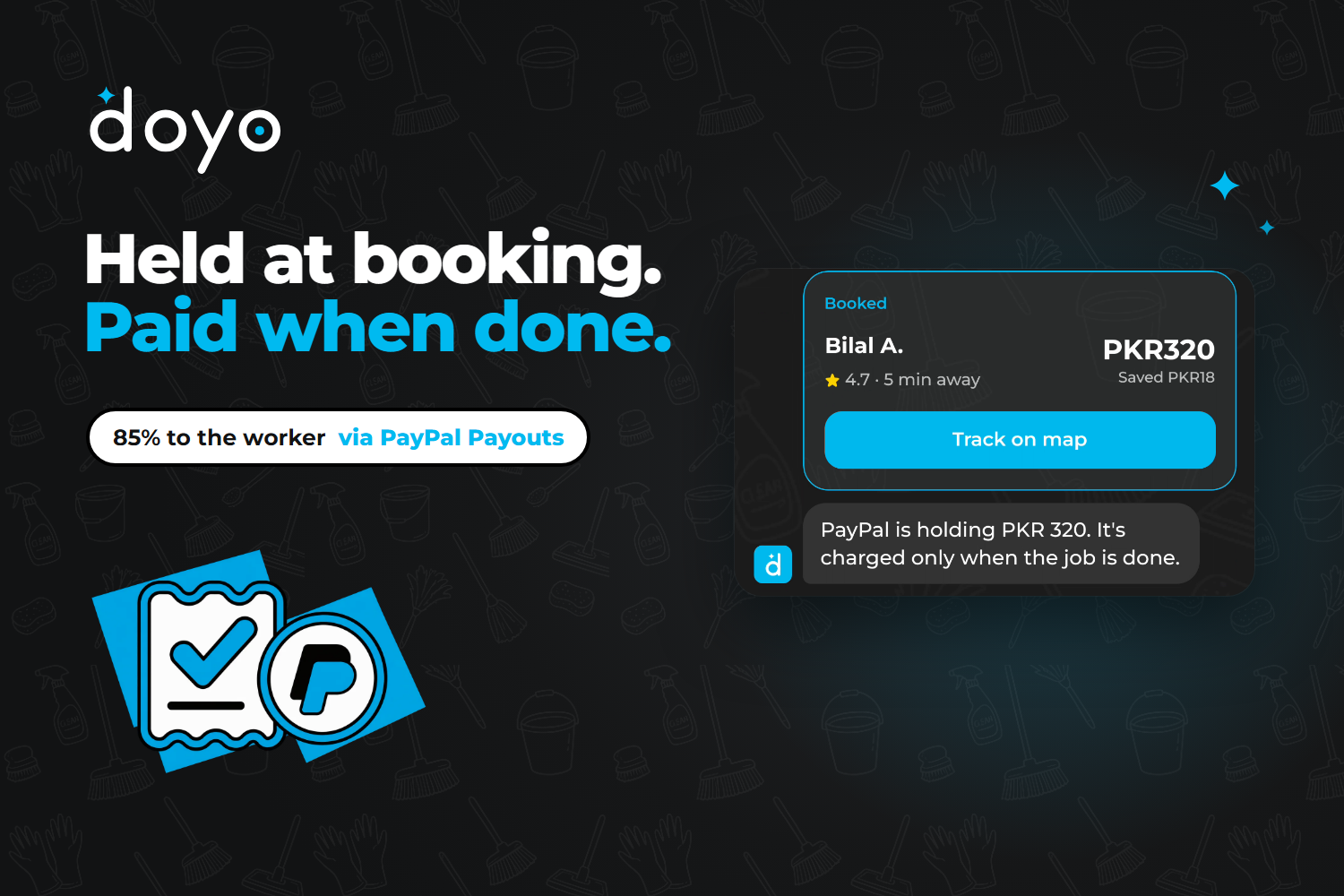
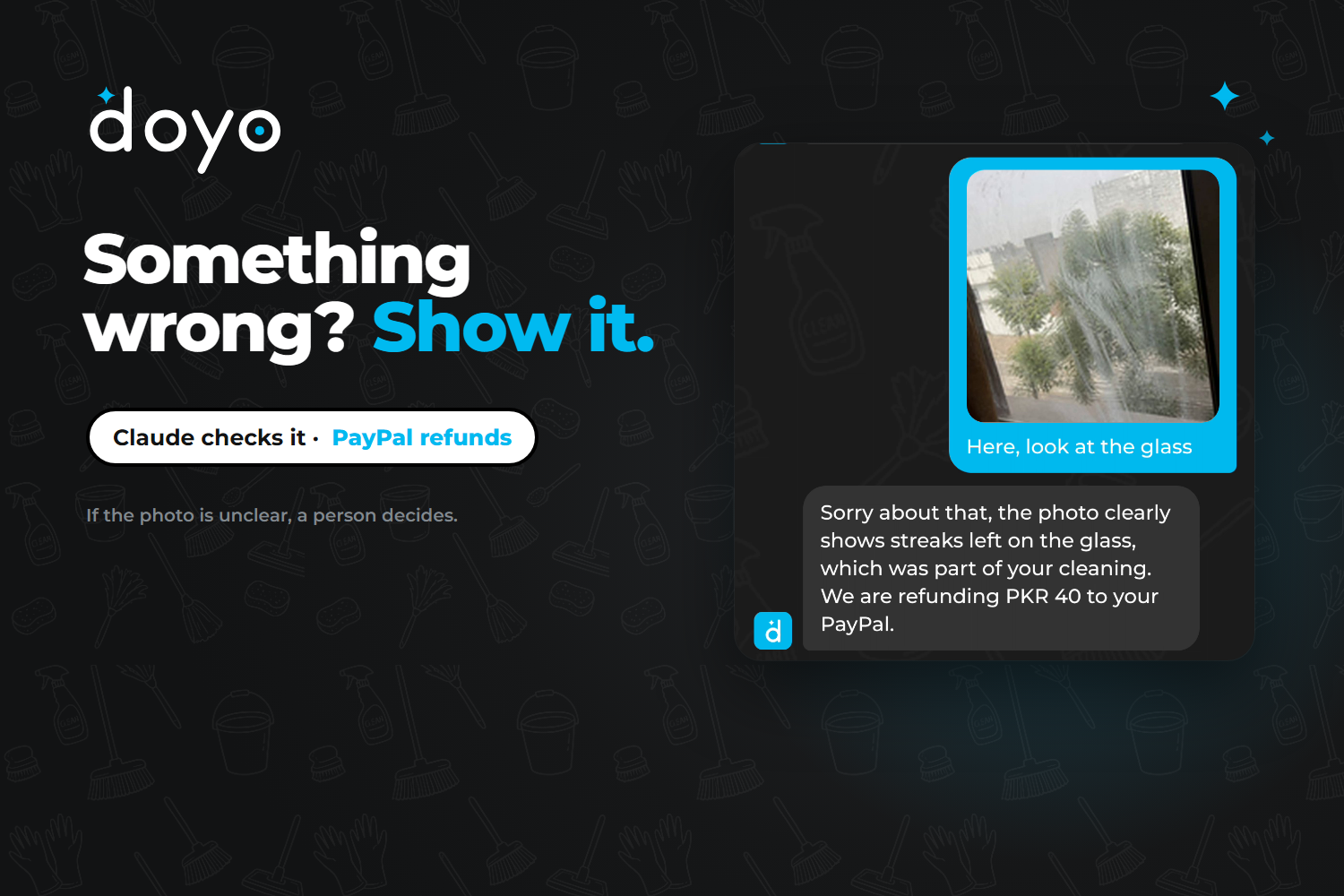
Customer. The home screen is a chat, in English, Urdu or Roman Urdu. Doyo turns "deep clean 3 rooms" into a job card with a starting price and a Never over limit. It posts the job, and workers' offers arrive in the chat as cards with photo, rating, distance and price, plus the customer's own history with that worker ("You rated 5★"). Doyo counters by name and books the best offer, weighing that history and what the customer paid last time. The customer can take over at any point to counter or accept, then hand back. When the deal is struck, PayPal holds the agreed price; it is captured when the job is done and released if it's cancelled. If something was wrong, the customer says so in the chat. Doyo asks for a photo, Claude checks it against what the job included, and refunds the fair share through PayPal. A photo that doesn't show the problem goes to a person, who sees it with Claude's note on the operations dashboard and can refund from there.
Worker. In production every bid comes from a real worker; a switch in Settings turns the demo's AI bidders off so only real workers bid. Requests arrive live. Accept the price or send your own. A counter shows on your card as "Customer offers PKR 450". Your share is paid to your PayPal when you complete the job.
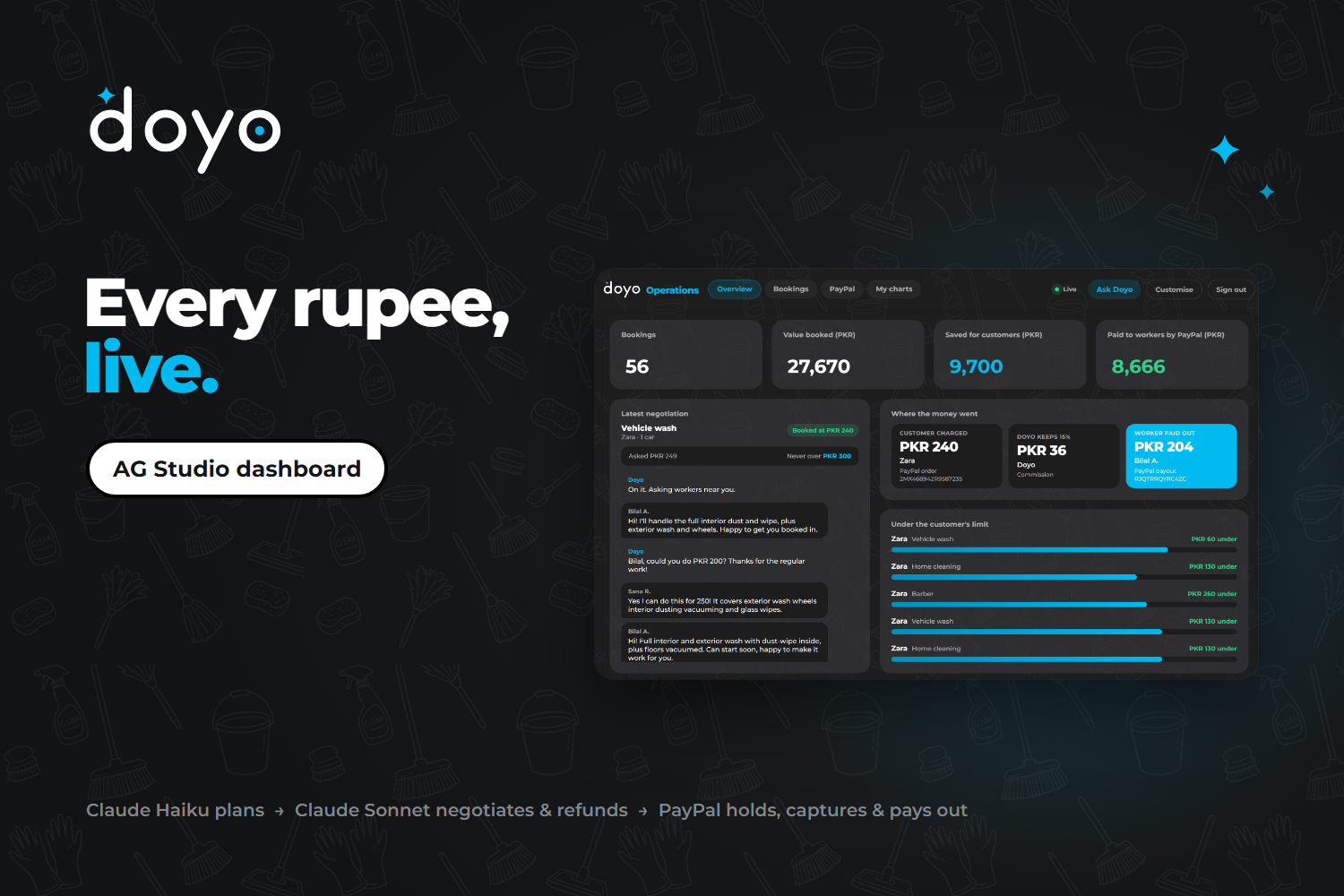
Operations. An AG Studio dashboard shows bookings, negotiations and PayPal money flow live, with an assistant that answers questions and builds widgets on request. A Reviews page (AG Grid) lists complaints that need a person, with the photo and Claude's note.
How we built it
- App: Expo / React Native, MapLibre, one app for both sides. Updates ship over the air from our own expo-updates server.
- Backend: Node 24, TypeScript, Fastify, WebSockets, SQLite, on one VM; GitHub Actions deploy everything.
- Booking agent: Claude Sonnet with tools that are real marketplace actions:
wait_for_offers,counter_offer,raise_price,accept_offer,hand_back. Each call carries the line Doyo says in the chat. - Planner: Claude Haiku with structured output turns text into a plan, reads it in the context of the conversation, and answers scope questions from the same service scope the app shows.
- Simulated workers (demo only): four Claude Haiku personas with their own price floors stand in for real workers so the market is live for judges. Real workers bid through worker mode on the same job; the agent treats both the same. Persona messages state only true facts about the job.
- Dashboard: AG Studio with six custom widgets and a Claude-backed agent built on its agent framework.
How we used PayPal
| Moment | PayPal |
|---|---|
| Customer links PayPal once | Vault: setup token → approval → payment token (Server SDK) |
| Doyo books a worker | Orders: AUTHORIZE with the saved token, so the agreed price is held (Server SDK) |
| Job completed / cancelled | Payments: capture the authorization / void it (Server SDK) |
| Customer complains | Payments: partial refund of the capture, amount decided by the agent (Server SDK) |
| Worker paid | Payouts API, batch id = job id, so a job can't pay out twice |
| Worker settles commission on cash jobs | Orders: create → approve → capture |
Vault is what makes the agent useful: the customer approves PayPal once, and Doyo can hold, settle and refund later without another checkout, inside a limit the server enforces.
How we used AI
- It is agentic commerce end to end: it plans, negotiates, books, pays and settles disputes, and explains every action in the chat. The agent decides; the customer's mandate (budget, price rule, refund cap) bounds it, enforced on the server like the mandates in Google's AP2 and Visa Intelligent Commerce.
- It decides with the customer's history: how often they booked each worker, the stars they gave, and what they paid last time for the same job.
- The mandate is enforced in code, not just in the prompt: no booking over the customer's limit or more than 5% above the cheapest open offer, no refund over half the price, and no refund for a repeat complaint without a photo that shows the problem. A refusal goes back to the agent, which decides again. A turn limit, a daily call cap and a rule-based fallback keep bookings working.
- It is cheap where it can be: small talk ("hi", "salam", "thanks") is answered without a model call, and the agent only calls the model when the offers have changed.
Challenges
- Trusting an agent with money. Prompts alone weren't enough: in testing the agent once picked a pricier worker. Hard rules moved into server checks.
- Negotiating with people. People answer in seconds, models in one; the agent waits for humans and its counter appears on the worker's own card.
- No PKR in PayPal. Amounts are shown in PKR and converted at a fixed demo rate in the sandbox.
What's next
Standing mandates ("wash my car every Friday under PKR 600") that the agent books and pays on its own, and local payment rails next to PayPal.
Built With
- ag-grid
- apimatic
- claude
- expo.io
- fastify
- github-actions
- maplibre
- node.js
- paypal
- react-native
- sqlite
- typescript
- websockets