-
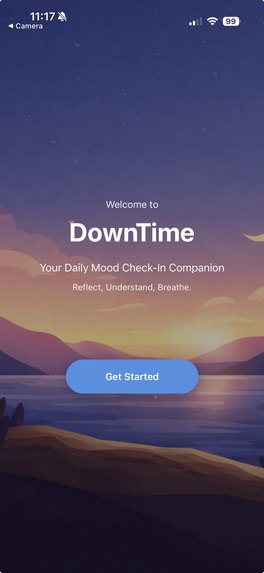
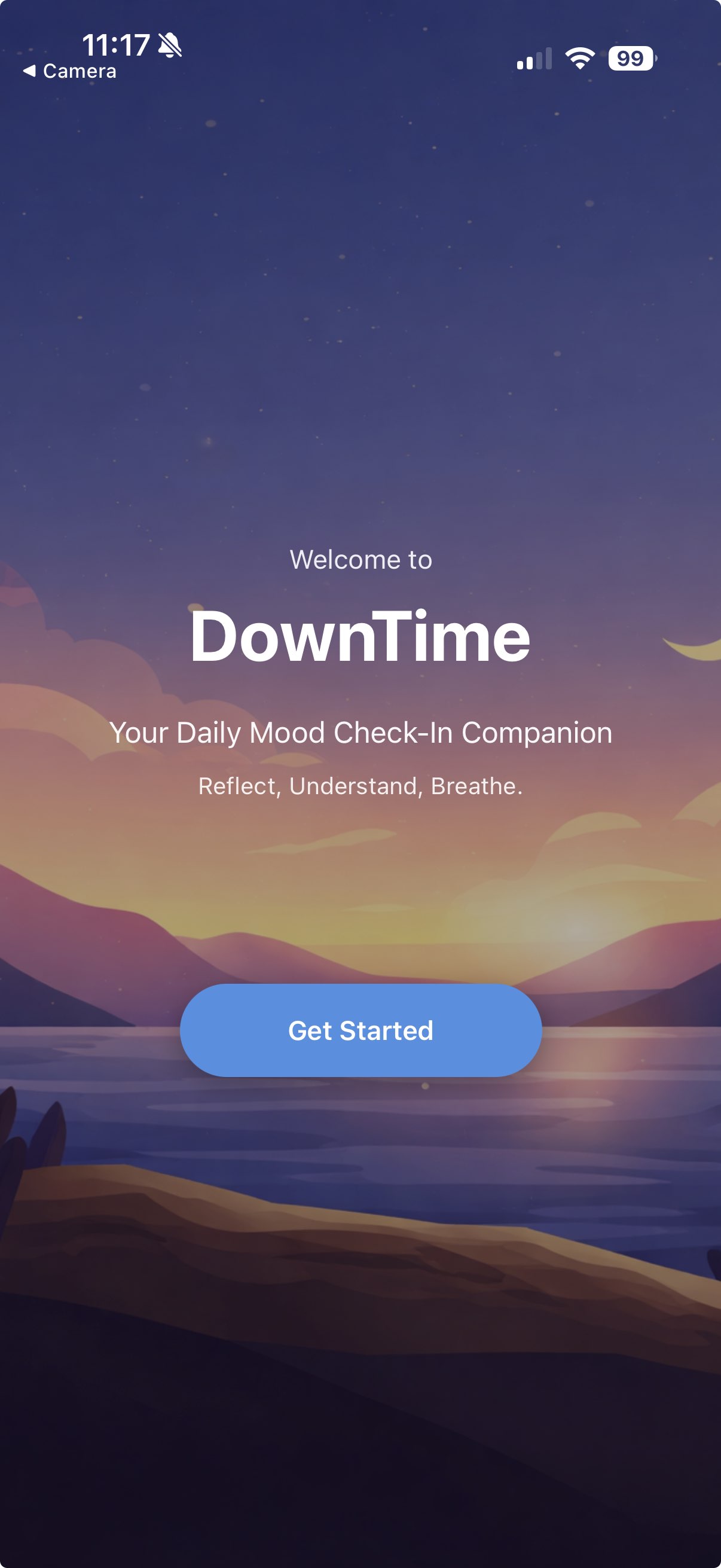
Welcome
-
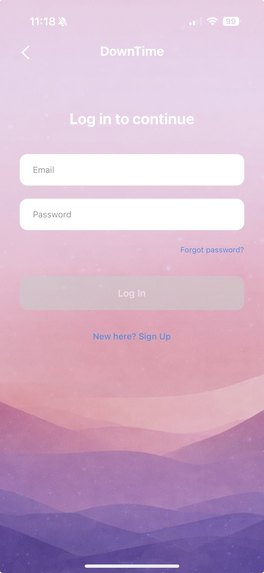
Login
-
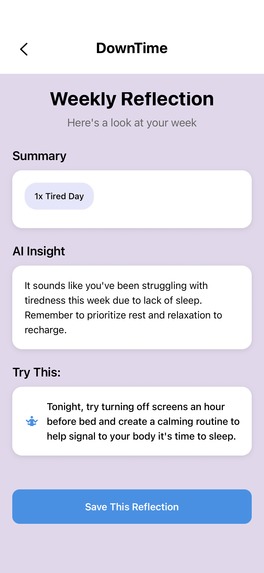
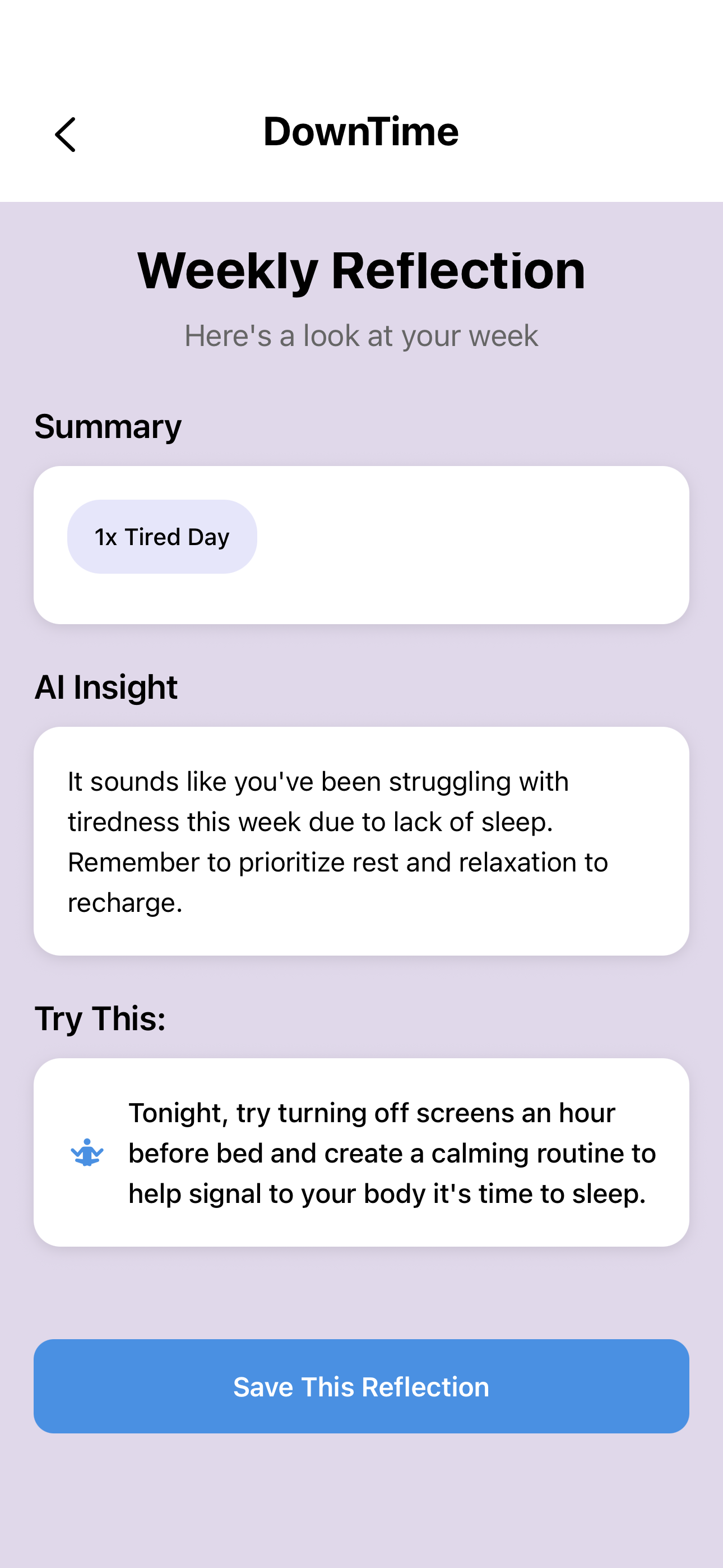
Weekly Reflection
-
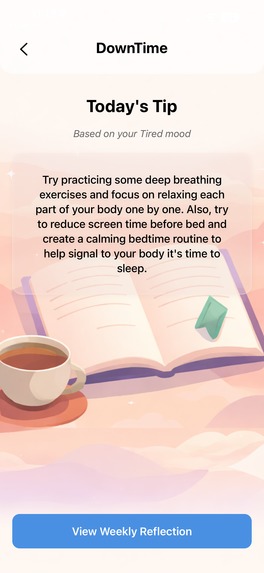
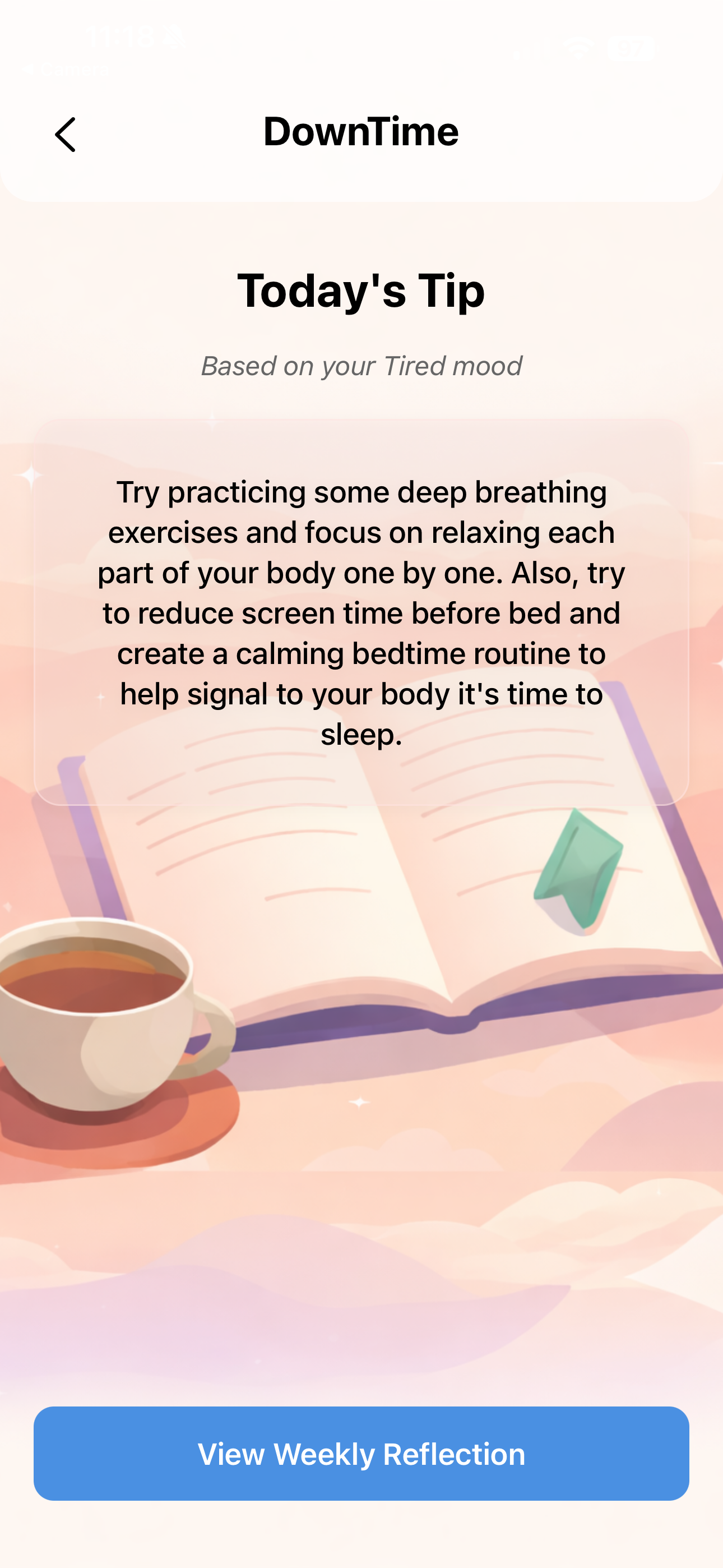
Today's Tip
-
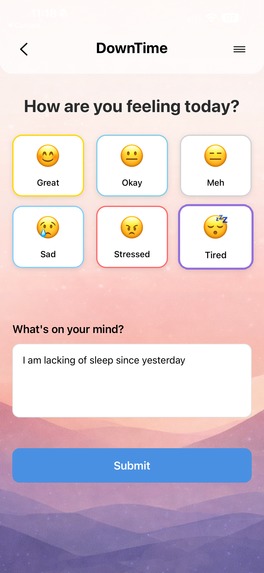
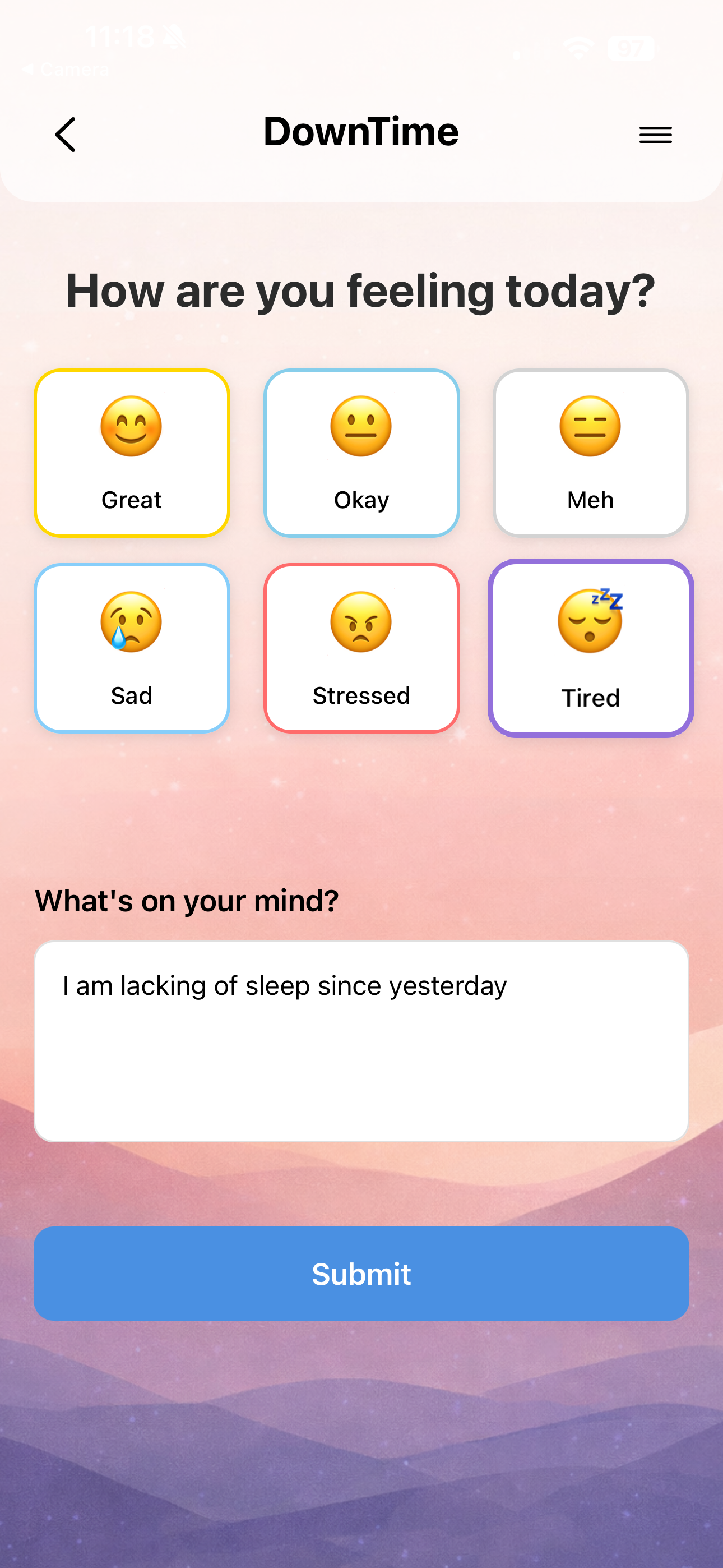
How are you feeling?

Inspiration
Many sleep apps focus on tracking sleep duration or optimizing routines, but they often overlook the real reason people struggle to fall asleep: an overactive mind. People are usually tired at night, yet are kept awake by replaying conversations, worrying about tomorrow, or thinking about unfinished tasks.
DownTime was inspired by this gap — the need for a simple, gentle way to mentally “close the day” before going to sleep.
What it does
DownTime is a bedtime companion app that helps users mentally power down before sleep.
Users can quickly unload their thoughts through a short brain dump. AI then analyzes the emotional tone, summarizes key worries, and generates a calm closure message. After that, the app transitions into a low-stimulus night mode with gentle tips and no distractions. Weekly reflections provide high-level insights into mood patterns to support healthier sleep habits.
How we built it
DownTime was built as a full-stack mobile application.
The frontend uses React Native with Expo and TypeScript, designed with a calming, minimal UI. The backend is powered by Node.js, Express, PostgreSQL, and Prisma. Secure authentication is implemented using JWT, and the OpenAI API is integrated to generate mood-based tips and weekly reflections.
The app flow includes onboarding, authentication, daily mood check-ins, AI-generated tips, and weekly summaries.
Challenges we ran into
Time was the biggest challenge. With only 24 hours, we focused on delivering a solid MVP instead of adding more features.
We also did not strictly divide frontend and backend roles, which increased context switching, but was necessary given the time constraint. During development, we ran into merge conflicts that temporarily caused code loss, but GitHub version control allowed us to recover and continue.
Accomplishments that we're proud of
- Building a complete end-to-end MVP within a hackathon timeframe
- Successfully integrating AI in a meaningful, user-centred way
- Designing a low-stimulation UI aligned with mental wellness goals
- Implementing secure authentication and structured backend APIs
What we learned
This project reinforced the importance of scope control during hackathons and the value of strong version control practices. We also learned how to design AI features that support mental well-being without overwhelming users, and how to prioritize psychology and user experience alongside technical execution.
What's next for DownTime
Future improvements include deeper personalization, guided wind-down routines, richer long-term AI insights, and accessibility enhancements. With more time, we would also explore integrations that help users mentally close unfinished tasks before bedtime.


Log in or sign up for Devpost to join the conversation.