-
-
Downtime Logo
-
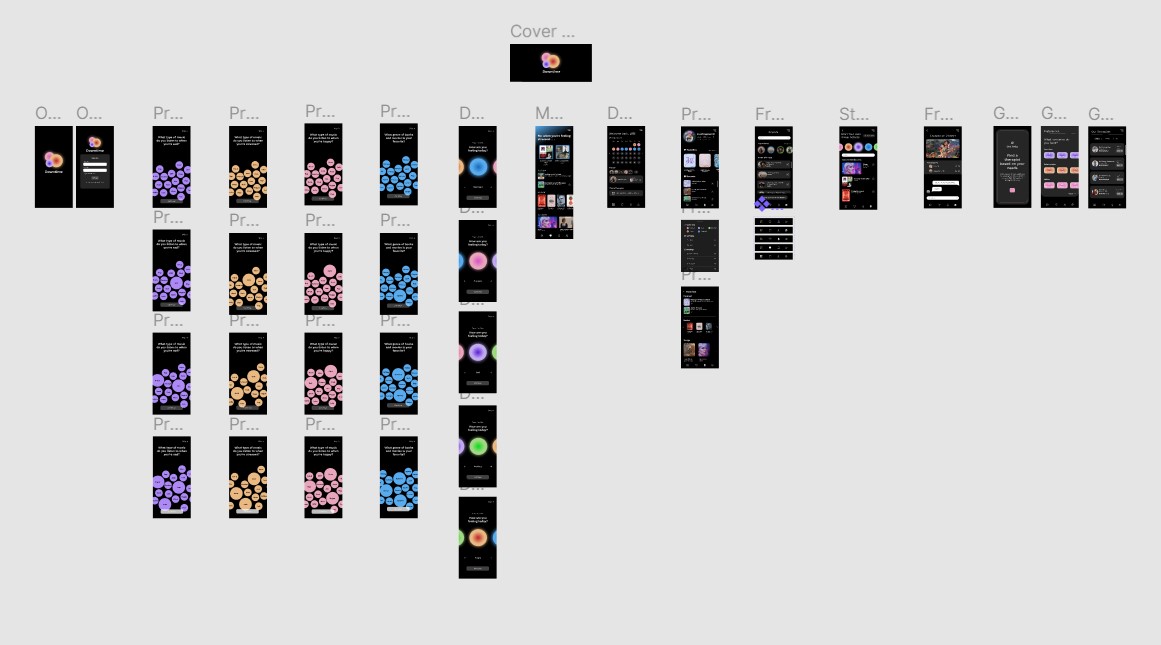
Figma Wireframes
-
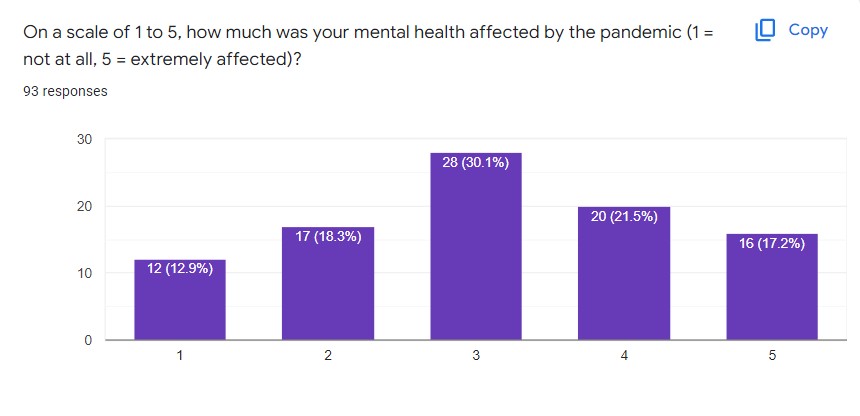
Google Form Responses (Part 1)
-
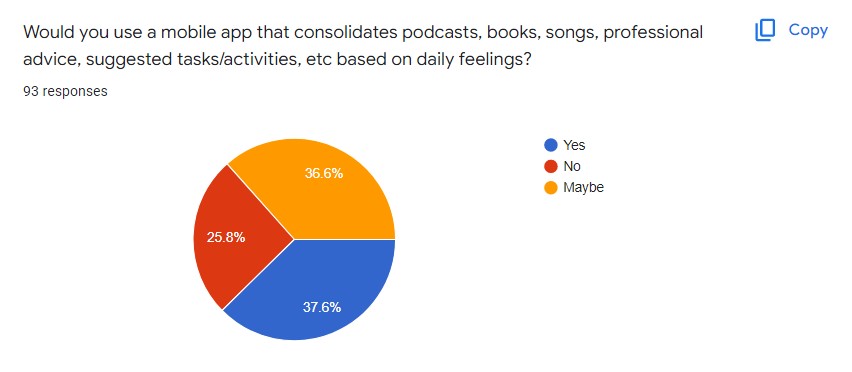
Google Form Responses (Part 2)
Introduction Hello everyone! Our names are Sabrina, Evelyn, Lilli, and Eunice, and we chose the physical and mental health theme for our SWE hackathon project.
Inspiration Mental health has become an extremely serious issue in the past couple years due to pressures relating to work, school, social life, and economic struggles that resulted from the COVID-19 pandemic.
User group Our user group will be focused on 18-25 year olds who are struggling with mental health.
Validating Data Prior to prototyping, we sent out a survey to our friends, family, and the udub reddit page to get a sense of mental health trends and inform our design decisions when creating our solution.
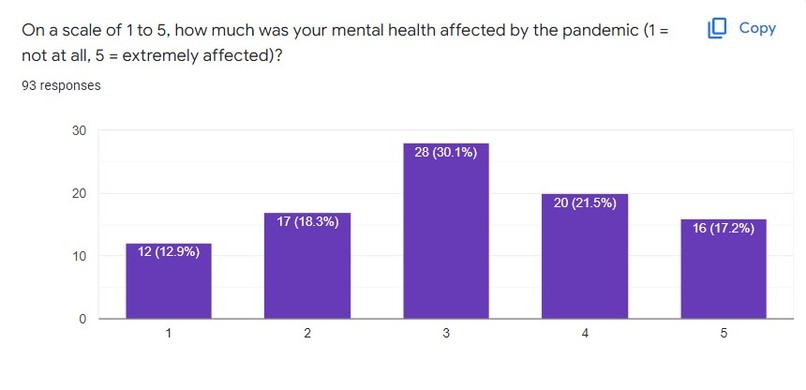
We found that on a scale from 1-5 (1 being no mental health problems from the pandemic and 5 being mental health extremely affected by the pandemic), 70% of our 87 respondents rated a 3+
People feel most negative when they’re isolated and bored
Some coping strategies people use include... Taking walks Listening to music Reading, podcasts movies Hanging out with friends
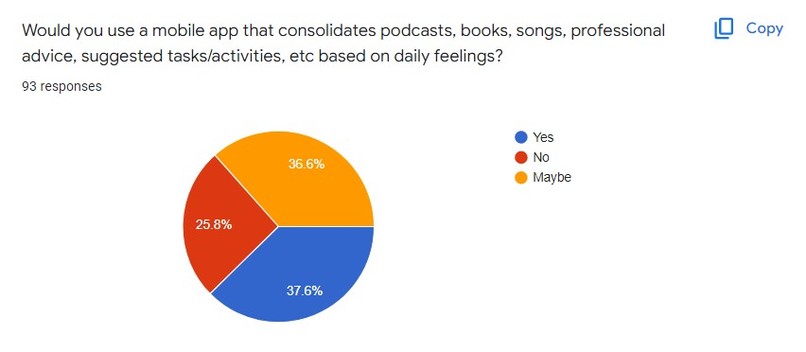
72.4% of the 87 respondents responded “yes” or “maybe” to using a mobile app that consolidates podcasts, books, songs, professional advice, suggested tasks/activities, etc based on daily feelings.
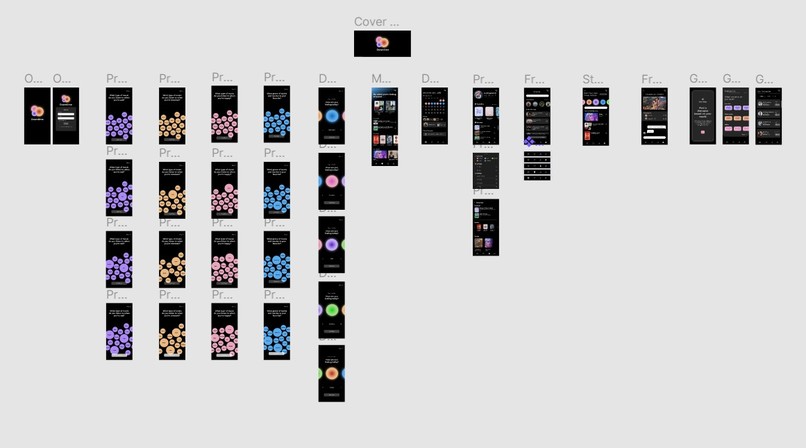
Solution In our mobile application “Downtime”, we strive to address common user pain points like social isolation and being bored by creating an application focused on improving mental health. The app would allow users to partake in recommended activities based on mood for the day, and connect with friends through activities, like listening and watching parties. We used Figma and our design inspirations came from Apple Music, Discord, Netflix Watch Party, todomate, and Dribbble.
User Flow During onboarding, users are asked to sign up and specify their song, movie, and book preferences so the app can generate customized recommendations. The bubbles get bigger when selected, and when the user is done choosing their selections, they can press continue. This feature was inspired by Apple Music. Here, it asks what type of music you listen to when you’re sad and we’ll choose jazz, r&b, and indie. Next it asks you for music when you’re stressed and we’ll go with edm, metal, and indie. Then, there will be a daily mood selector, which will show up every 24 hours to give the algorithm more information on possible recommendations for the user based on mood for that day. The options are blue for stressed, pink for content, purple for sad, green for anxious, and orange for angry. The first page the user will encounter after onboarding, preferences, and daily mood selector will be the mood page with recommendations. The top right corner color will change based on the mood the user selected for that day (in this case the user chose stressed). On this page are recommended playlists, podcasts, books, and movies to watch based on mood. Using the bottom navigation, we can go to the dashboard, where there is a monthly mood tracker, real-time information on what friends are doing (which was inspired by Spotify), and resources if someone needs more professional mental health help. When you press the “Find a therapist” button, it will take you to pages that will ask about the problems you’re having and will direct you to real therapists nearby through three different mediums: call, text, and in-person. Next we have a profile page, where people can see your favorited songs, activites, etc and recent things you’ve listened to or watched. There is also a “see more” option for favorites, with more in-depth information on favorited podcasts, songs, books, etc. The hamburger menu on the top right is accessible through all screens, and provides a color coding key for moods and settings options. Lastly, we have the friends page where we can see the daily mood of friends (if they decide to make that information public). Users can also start or join group activities, which addresses the loss of social connection resulting from the pandemic. There are listening parties, watch parties, and more incorporated into the friends tab. These features were inspired by Discord and Netflix Party. Here, we have an example of what it looks like when you want to create your own group activity.
Challenges and Accomplishments We struggled with the figma prototyping tools to make our solution interactive, but were able to figure it out in the end using trial and error and Google. We were able to make use of the tools at our disposal.
Something new we learned Something we learned was how to make a broad solution with personalized aspects and centralized outcomes. We also spent a lot of time experimenting with figma tools and interactions, and more specifically, we learned how to create a glow, gradient, and interactive bubbles for our app.
Next Steps If we had more time, we would create more screens for specific options (for example, a screen that would show the playlist view), add more exercise and meditation recommendations, as well as quotes and advice to broaden the scope of possible mental health coping mechanisms our app will provide. We would also animate more buttons to make it more interactive and add more mood options. If this were to become a real product, we would incorporate user testing and feedback to improve user experience.
Thank you for listening to our pitch!
Built With
- figma

Log in or sign up for Devpost to join the conversation.