Inspiration
In today’s always-on digital culture, being offline is rarely neutral, especially for teenagers. Through our own experiences and research, we noticed that many teens don’t stay online because they want to, but because silence can be misinterpreted as disinterest or rejection. Group chats, read receipts, and constant notifications turn availability into a social requirement.
We were inspired to design Downtime to address this gap: not by limiting screen time, but by making it socially safe to step away. We wanted to help teens take breaks without the anxiety, guilt, or awkward explanations that often come with disconnecting.
What it does
Downtime helps teens take breaks from digital platforms while maintaining social clarity. Users can set a status (e.g., studying, sleeping, resting), which automatically notifies selected friends when messages are received so silence is never misinterpreted.
The app reframes being offline as intentional and respectful, rather than avoidant. It also includes a lightweight “catch-up” experience, allowing users to see top trends in a span of a couple minutes without feeling the need to scroll endlessly.
How we built it
We began with secondary research and survey responses from teens aged 16–18 to understand their digital habits, social pressures, and barriers to rest. From there, we developed user personas, mapped key pain points, and iterated through wireframes and prototypes.
Design decisions focused on:
- Social safety over productivity
- Low cognitive load and calming visuals
- Affirming language instead of restrictive or clinical terminology
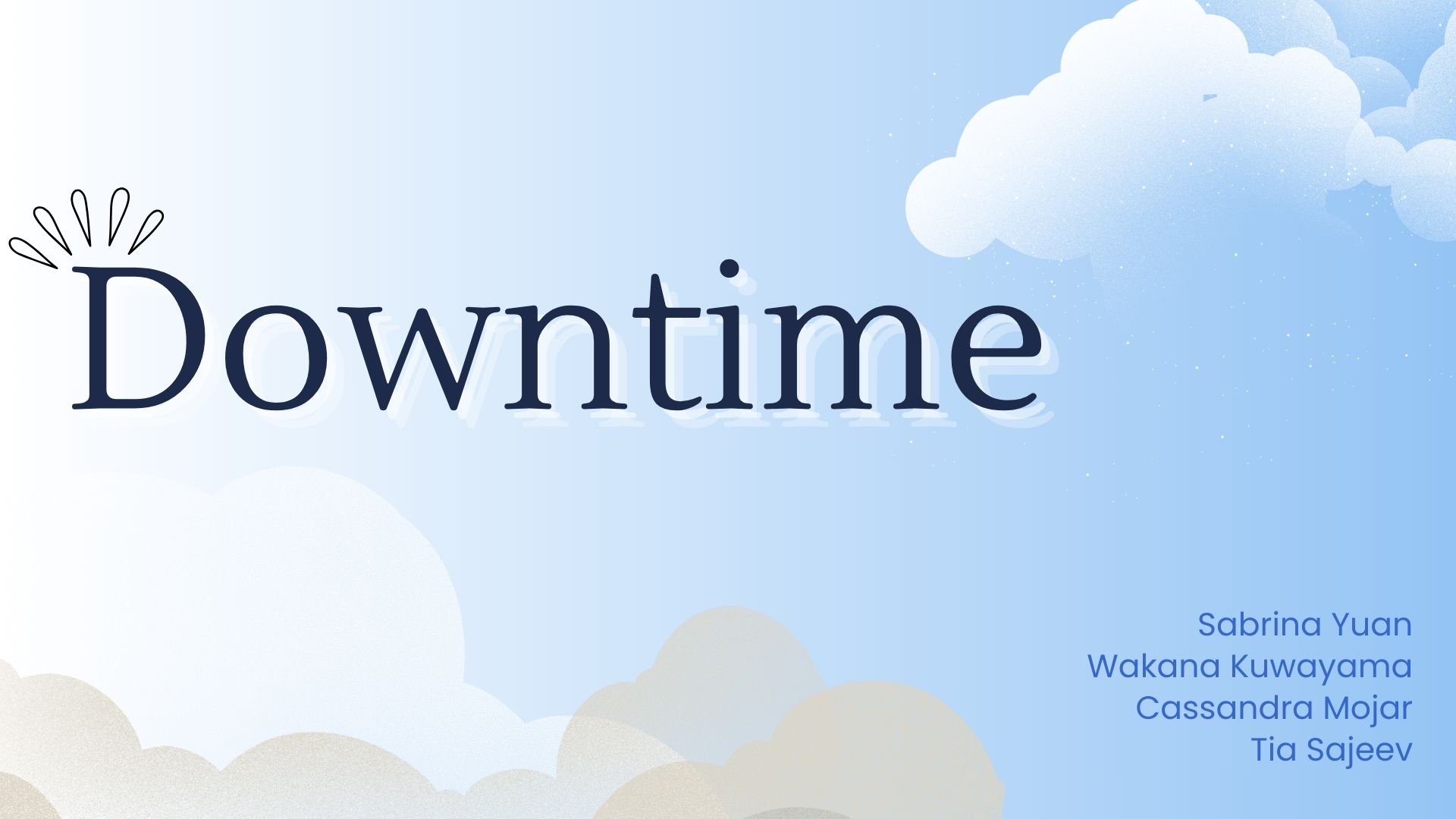
Visually, we used soft pastel blue gradients and cloud motifs to reinforce a sense of calm and reassurance. Functionally, we prioritized simplicity and clarity to ensure the experience felt supportive rather than overwhelming.
Challenges we ran into
One major challenge was balancing minimalism with meaning. We wanted the interface to feel calm and uncluttered, but not empty or boring. Every element had to clearly support the core goal of making downtime feel safe.
Another challenge was language. Terms like “boundaries,” “recovery,” or “wellness” can feel adult-oriented or clinical, so we spent significant time refining microcopy to ensure it felt natural, teen-friendly, and non-judgmental.
Accomplishments that we're proud of
Identifying social risk, not screen time, as the core problem Designing an experience that prioritizes emotional safety and peer perception Creating a cohesive visual system that reinforces calm without distraction Translating complex social dynamics into a simple, intuitive interface
What we learned
We learned that designing for well-being isn’t about restriction; it’s about changing context. Teens often know they need breaks but lack systems that make disconnection socially acceptable.
This project reinforced the importance of empathetic, human-centered design, especially when building for younger users navigating identity, belonging, and constant connectivity.
What's next for Downtime
Next steps include:
- Expanding platform integrations and status customization
- Conducting usability testing with a broader range of teens
- Exploring group-based downtime features to further normalize collective rest
- Refining accessibility features and privacy controls
Long-term, we see Downtime as a model for how digital platforms can better support healthy boundaries through social transparency rather than control.
Built With
- figma

Log in or sign up for Devpost to join the conversation.