Inspiration
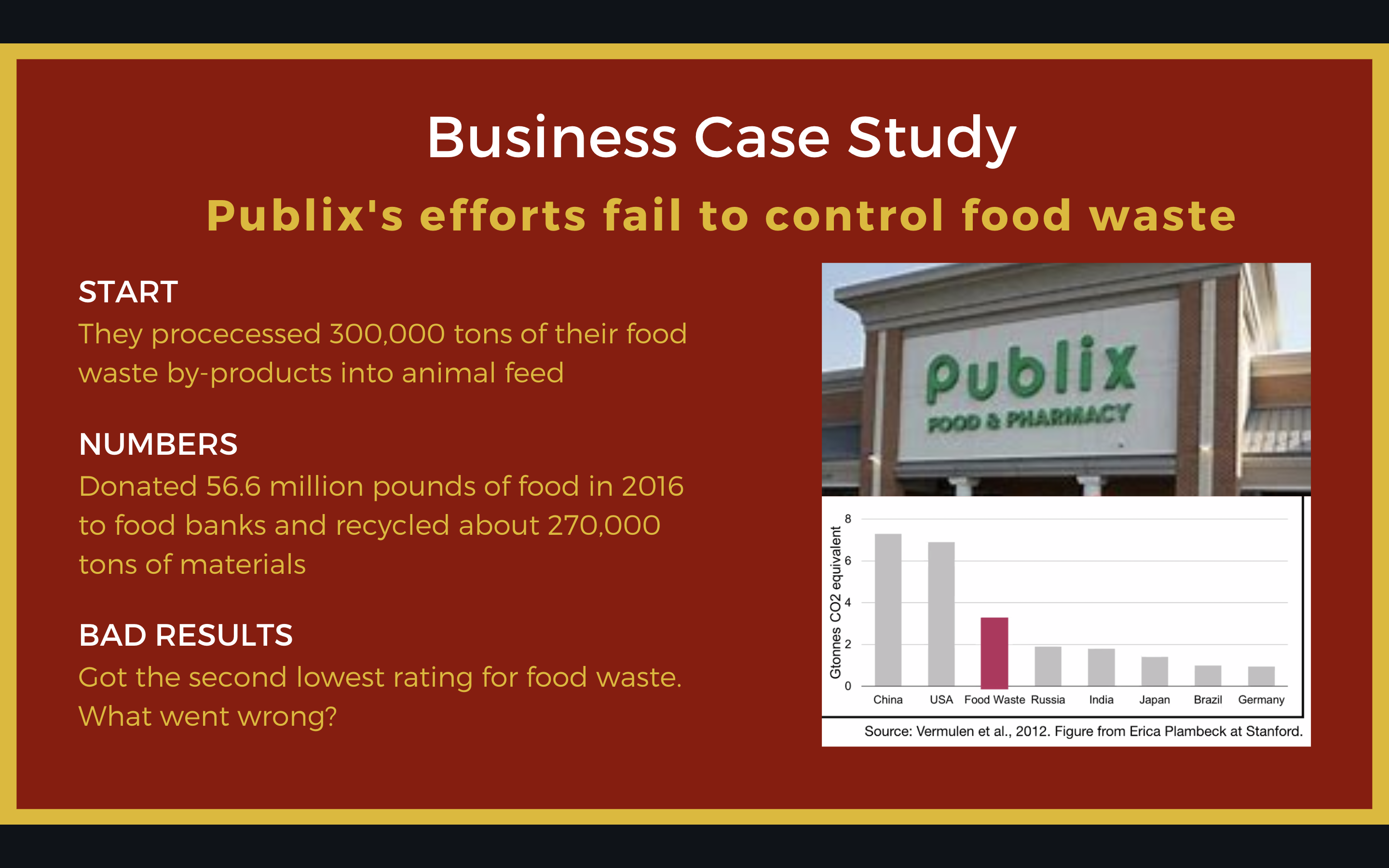
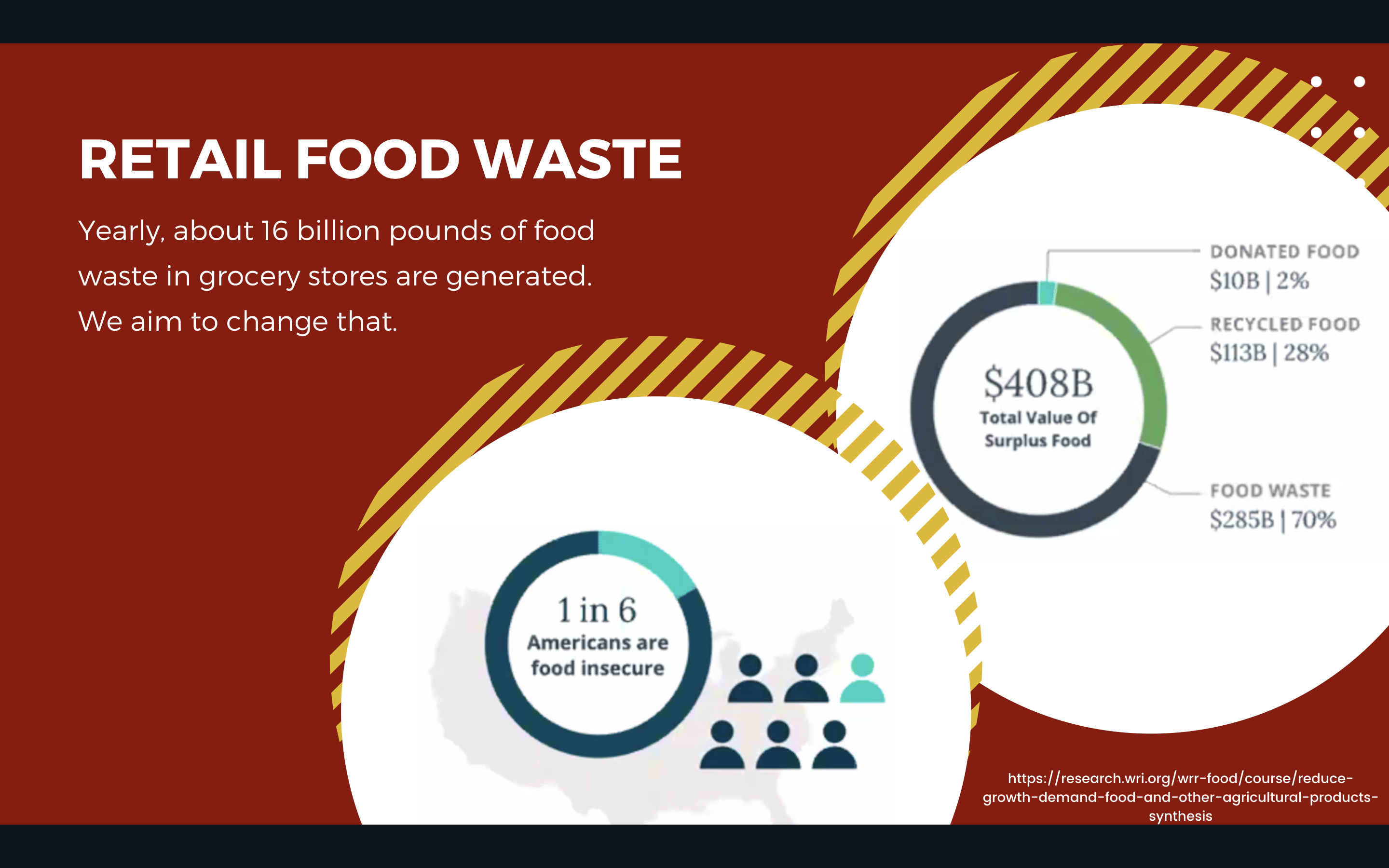
_Honestly working on this project is what inspired us. We found out just how horrible of a problem food wastage is, and wanted to do whatever we could to help fix it. We looked at Florida's Publix's successful efforts to control food waste where they donated 56.6 million pounds of food in 2016 to food banks and recycled about 270,000 tons of materials. Reducing food loss and waste can improve food security and nutrition, lower greenhouse gas (GHG) emissions and reduce pressures on natural resources such as land and water.
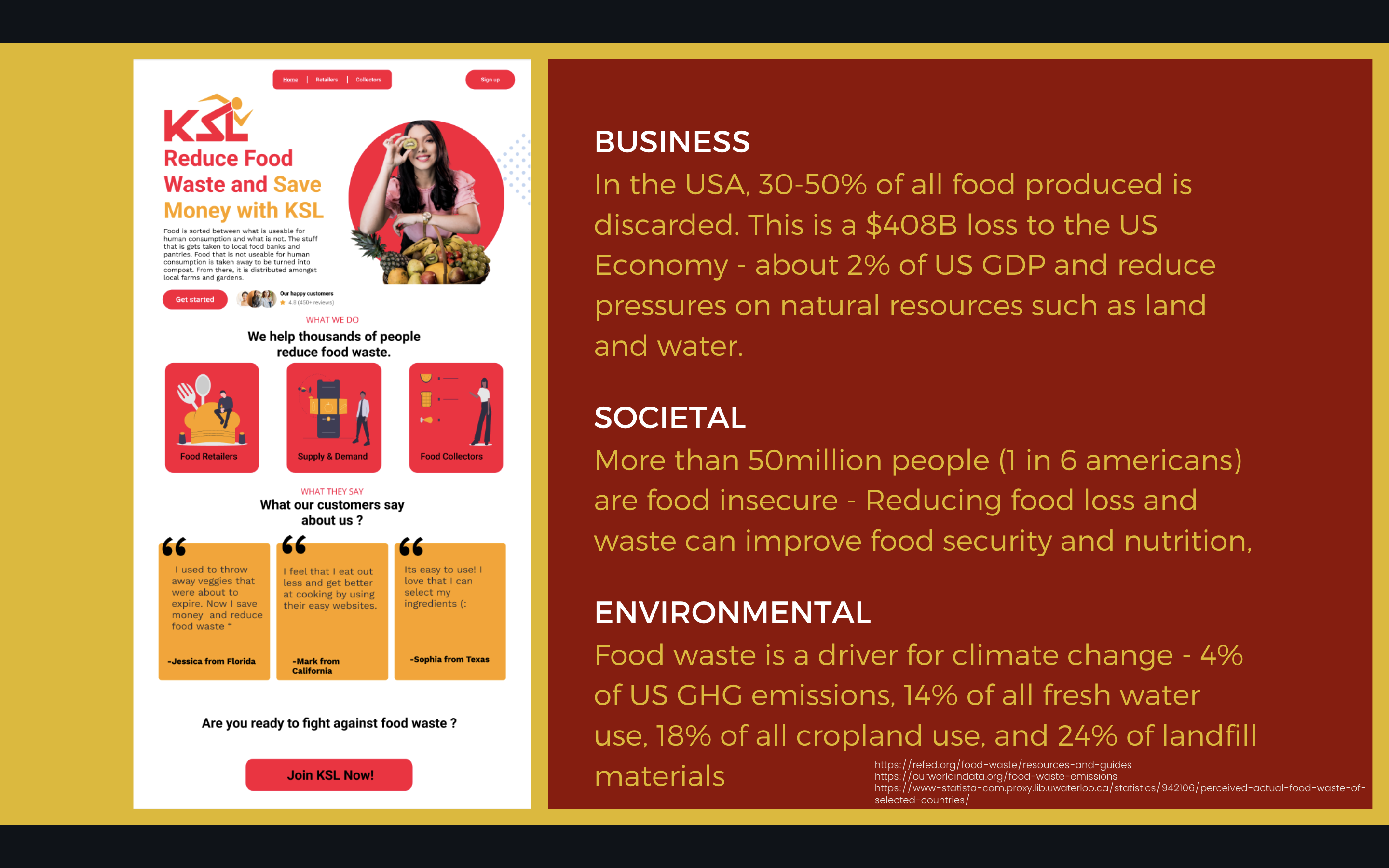
Looking at the business, societal, and environmental impacts of food waste:
- In the USA, 30-50% of all food produced is discarded. This is a $408B loss to the US Economy - about 2% of US GDP and reduce pressures on natural resources such as land and water.
- More than 50million people (1 in 6 americans) are food insecure - Reducing food loss and waste can improve food security and nutrition,
- Food waste is a driver for climate change - 4% of US GHG emissions, 14% of all fresh water use, 18% of all cropland use, and 24% of landfill materials
What it does
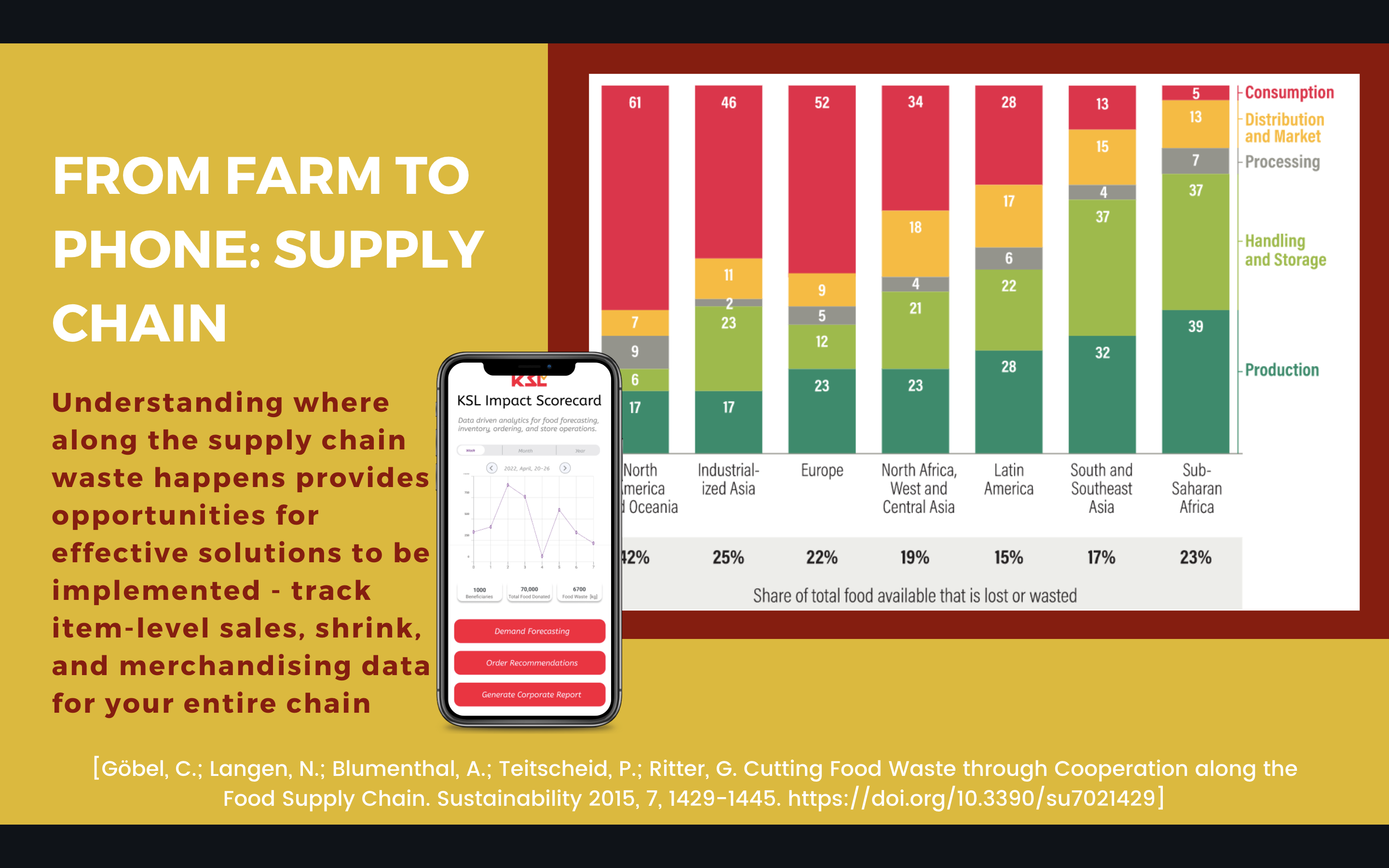
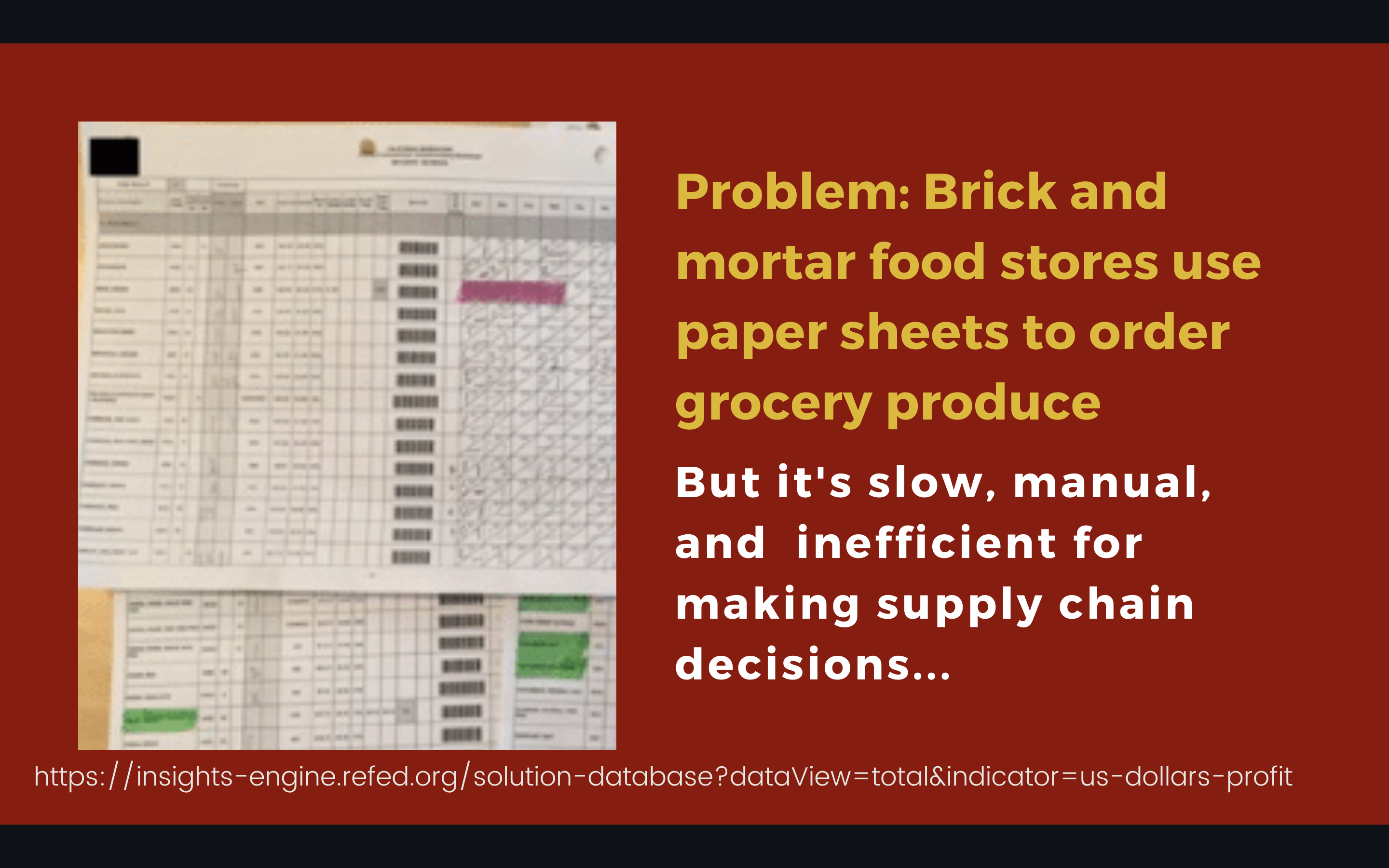
Problem: Brick and mortar food stores use paper sheets to order grocery produce But it's slow, manual, and inefficient for making supply chain decisions. Most supply chain decisions are manual and highly inefficent with dusty grocery aisles. Example: paper sheets used to manually order grocery produce at a large US grocery chain. Understanding where along the supply chain waste happens provides opportunities for effective solutions to be implemented.
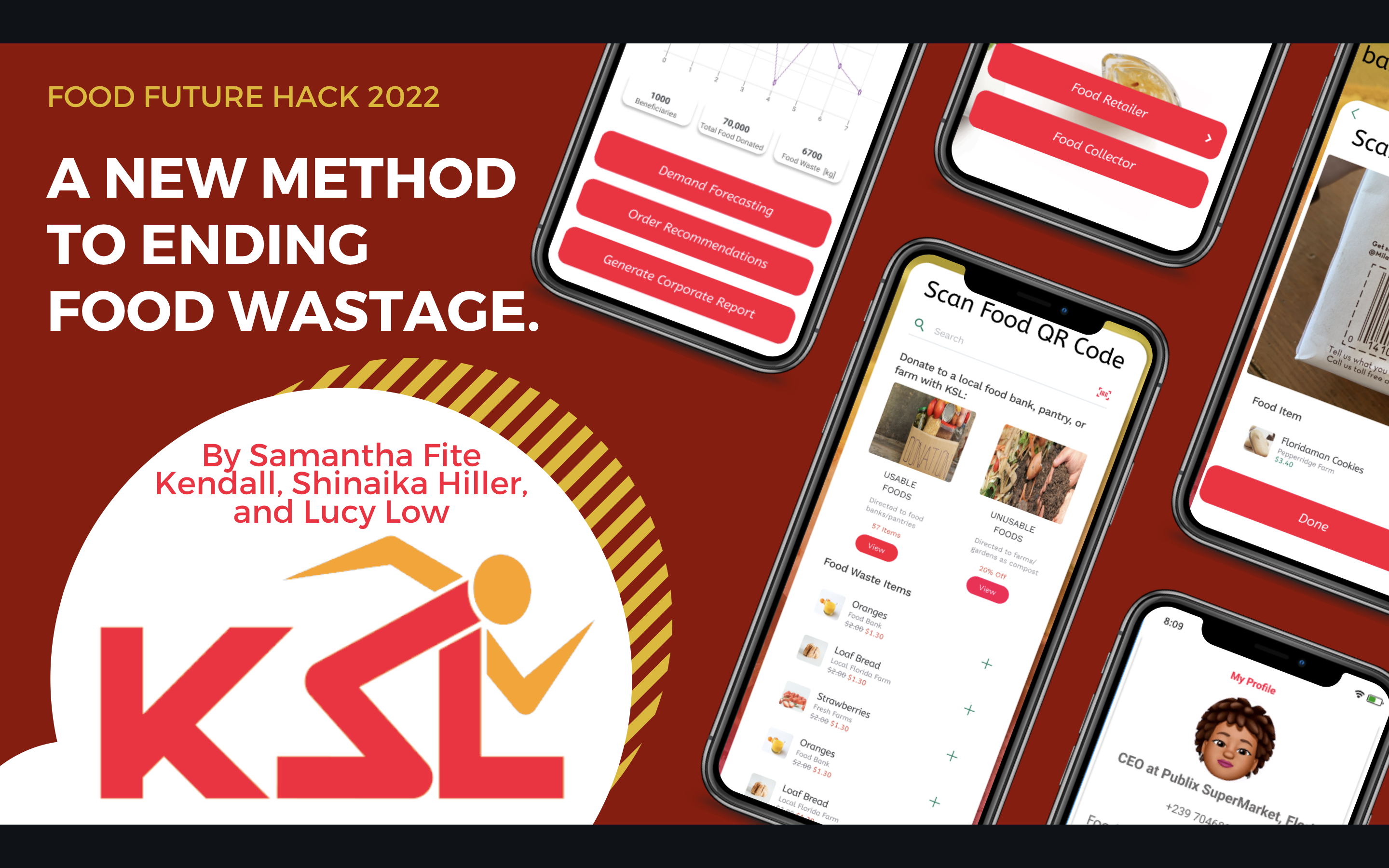
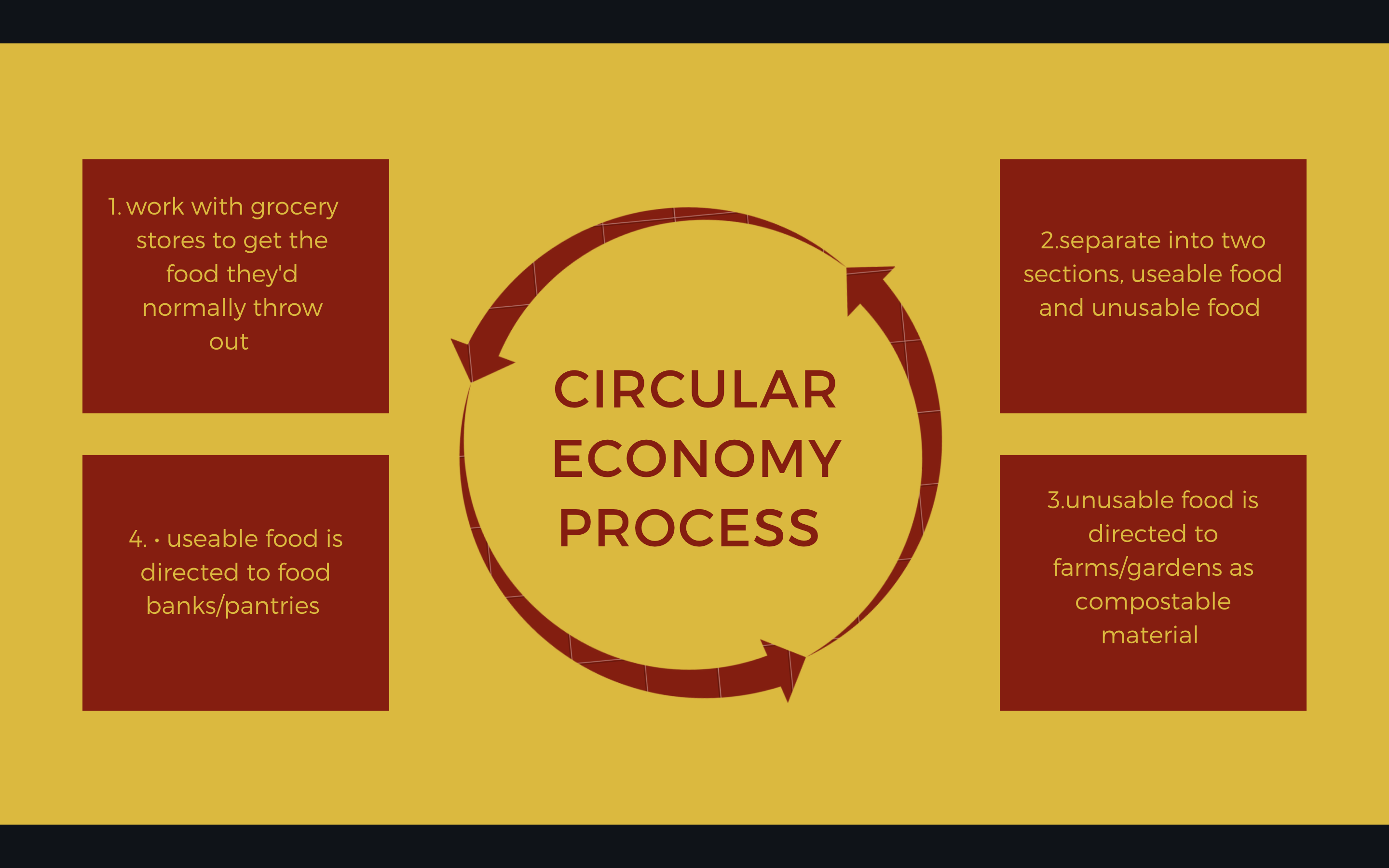
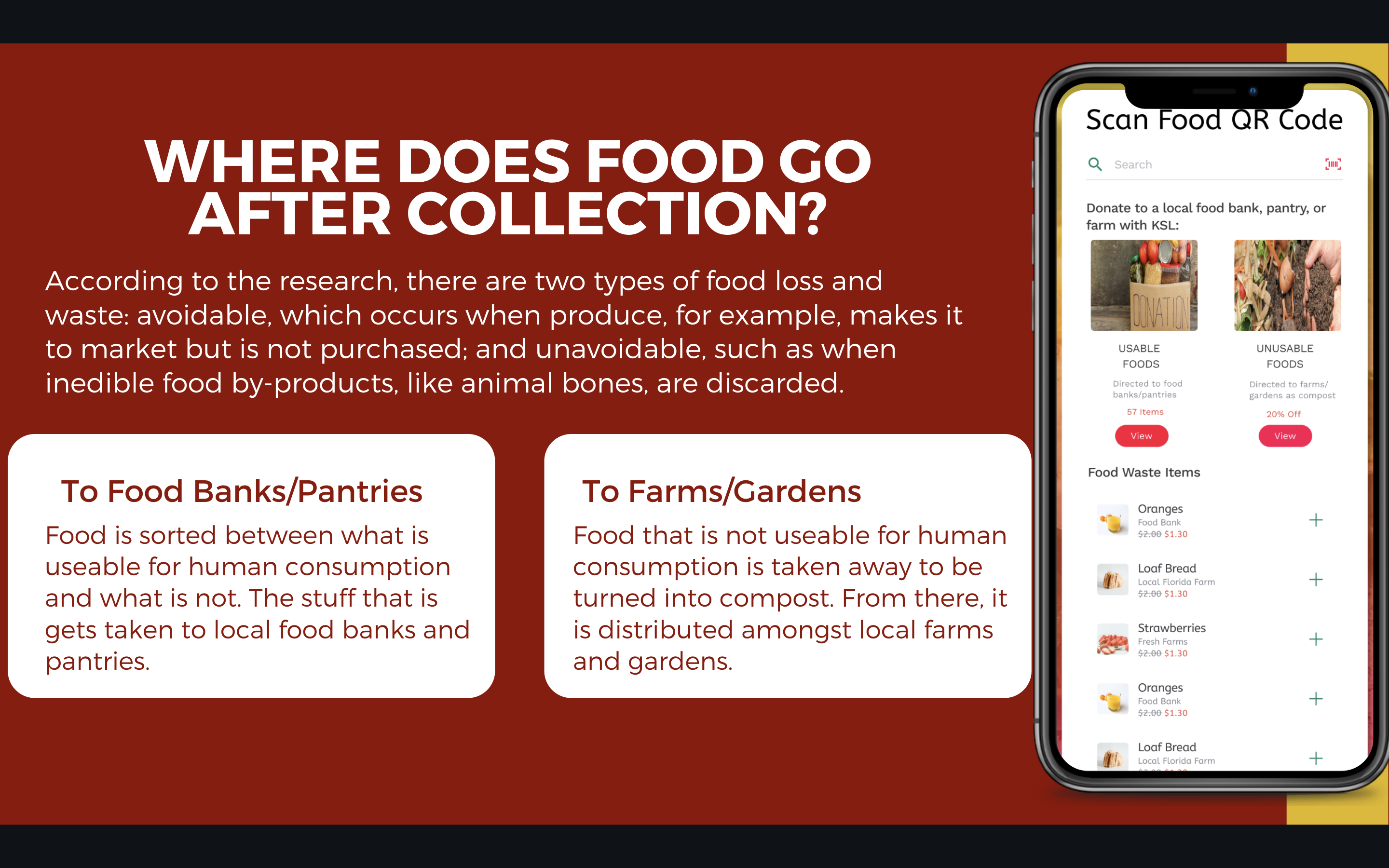
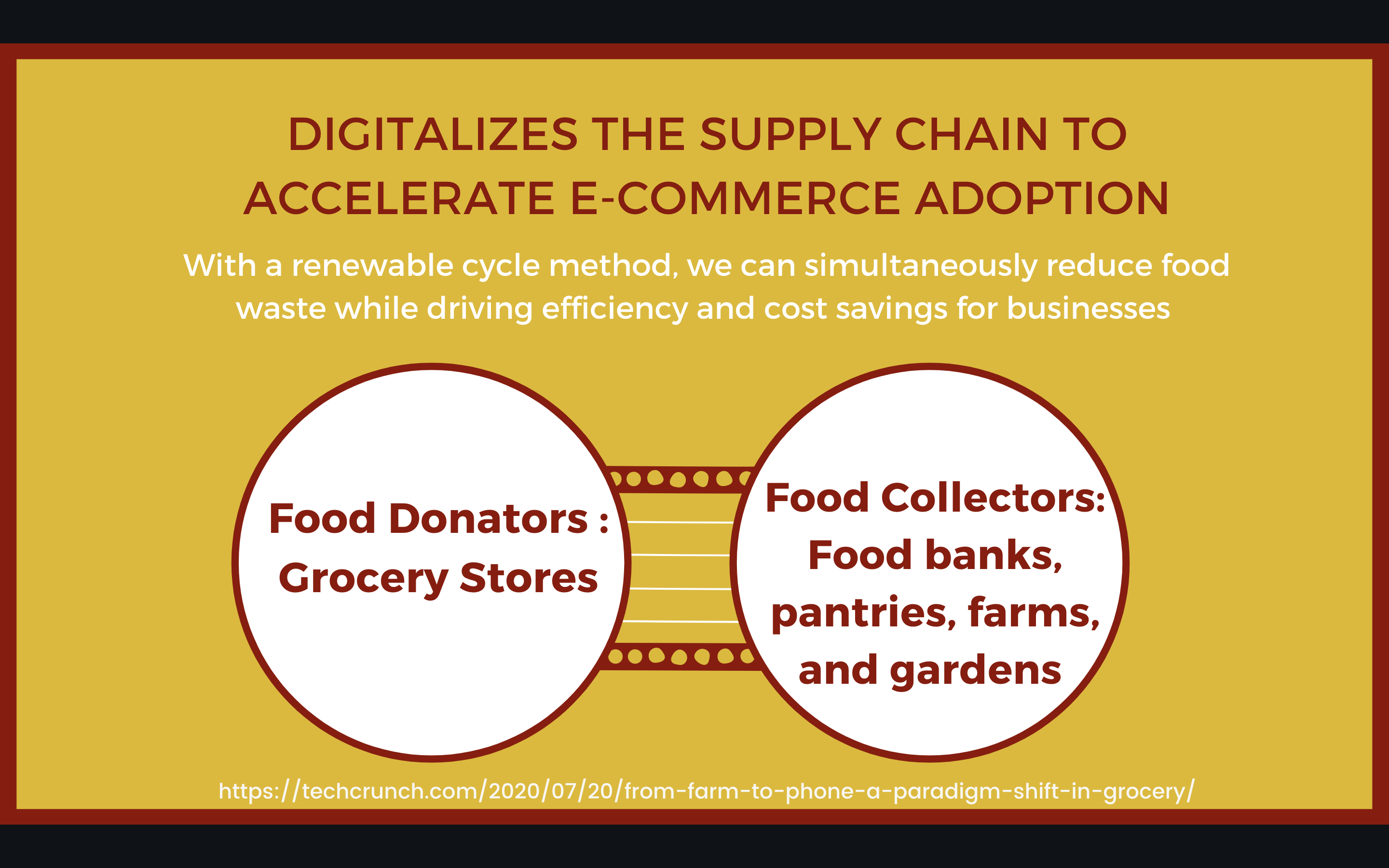
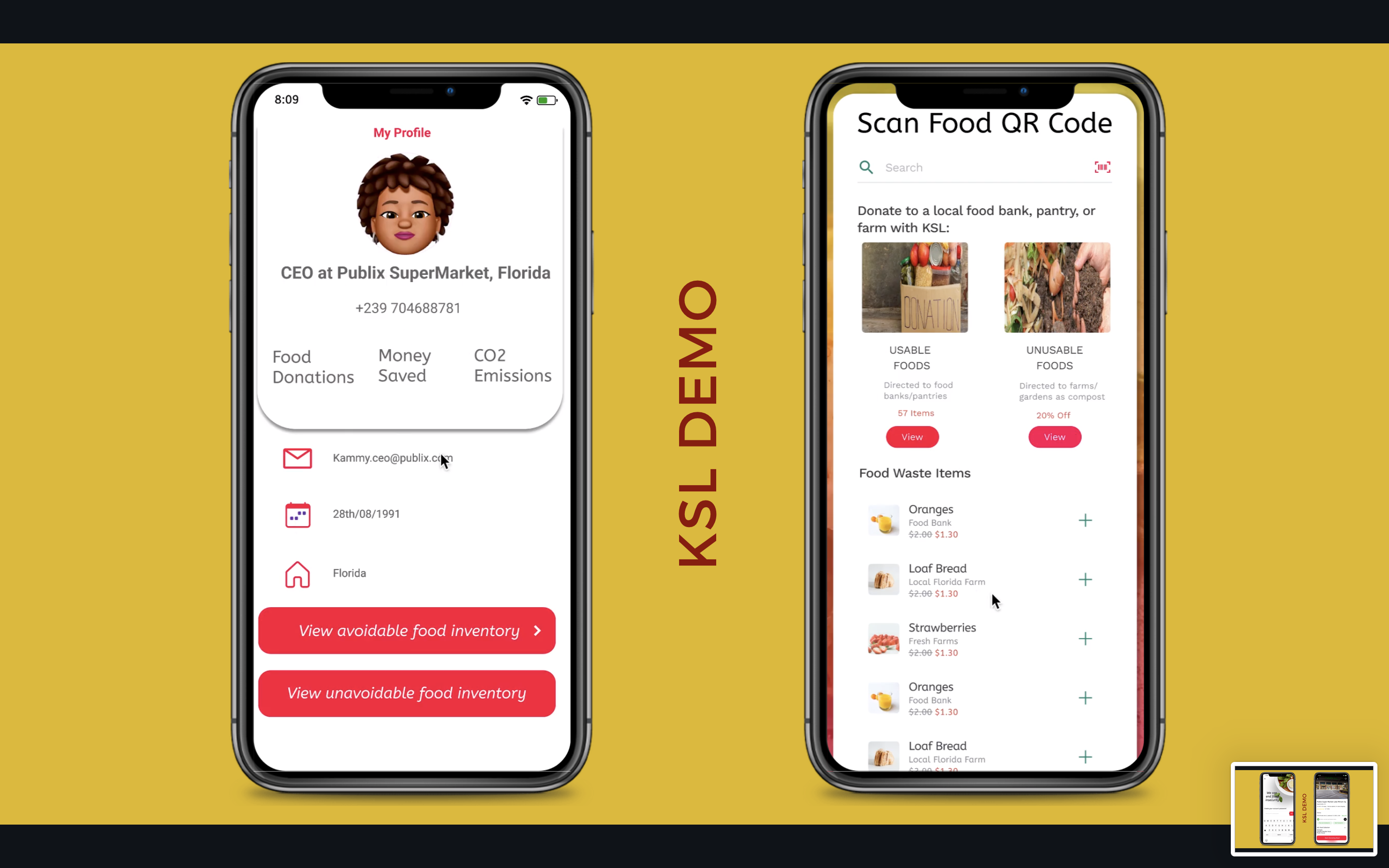
IDEA CIRCULAR ECONOMY In essence it connects food producers to sellers. According to the research, there are two types of food loss and waste: avoidable, which occurs when produce, for example, makes it to market but is not purchased; and unavoidable, such as when inedible food by-products, like animal bones, are discarded. With a renewable cycle method, we can simultaneously reduce food waste while driving efficiency and cost savings for businesses - We collect food from grocery stores, and separate it into two sections: useable and unusable food. Useable food (which is safe for human consumption) is taken to local food banks and pantries, while unusable food is turned into compost to be taken to local farms and gardens. Once we get the compost to them, they give us a portion of their crops to take back to the grocery stores for selling. Using KSL's renewable cycle method, we can simultaneously reduce food waste.
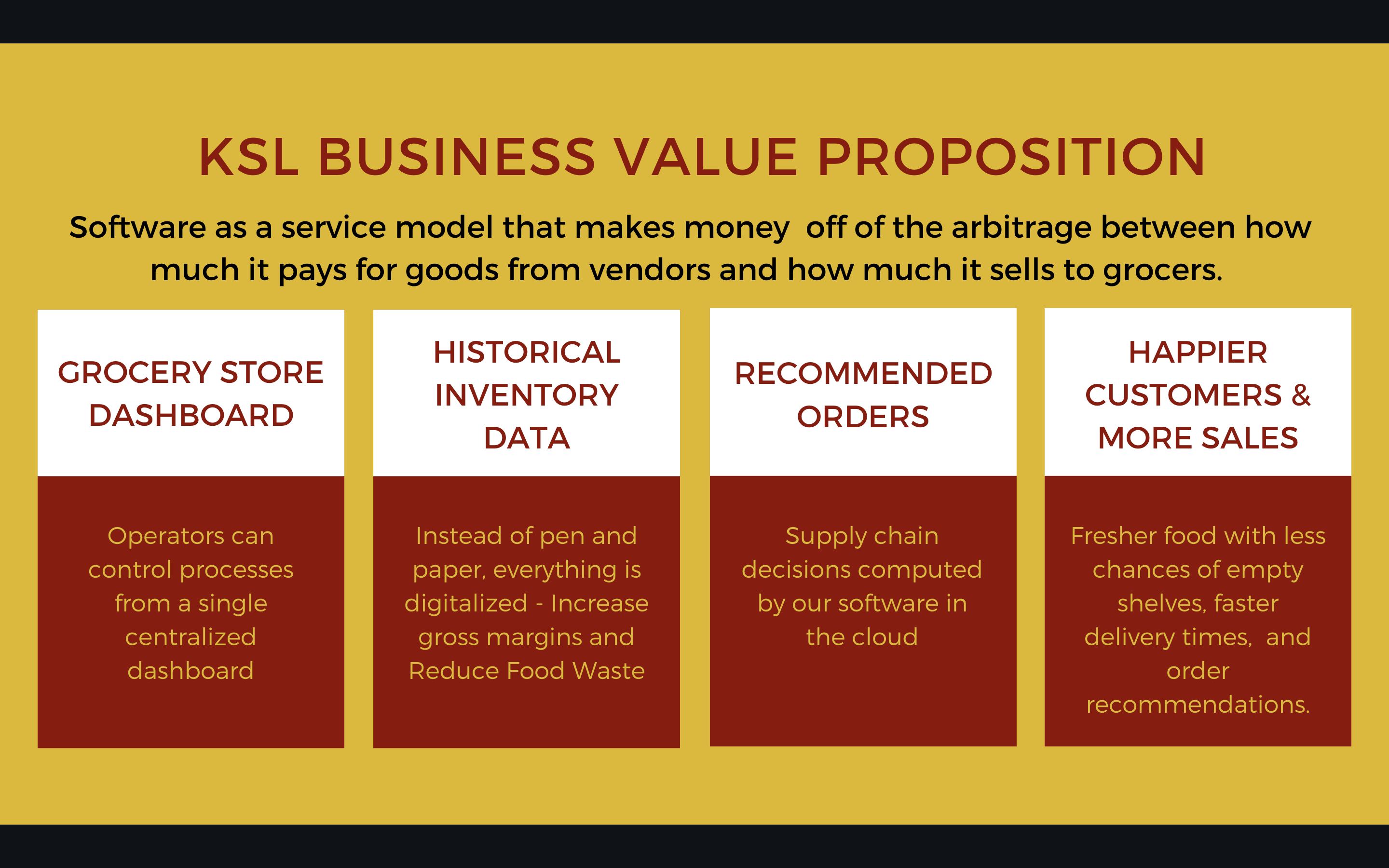
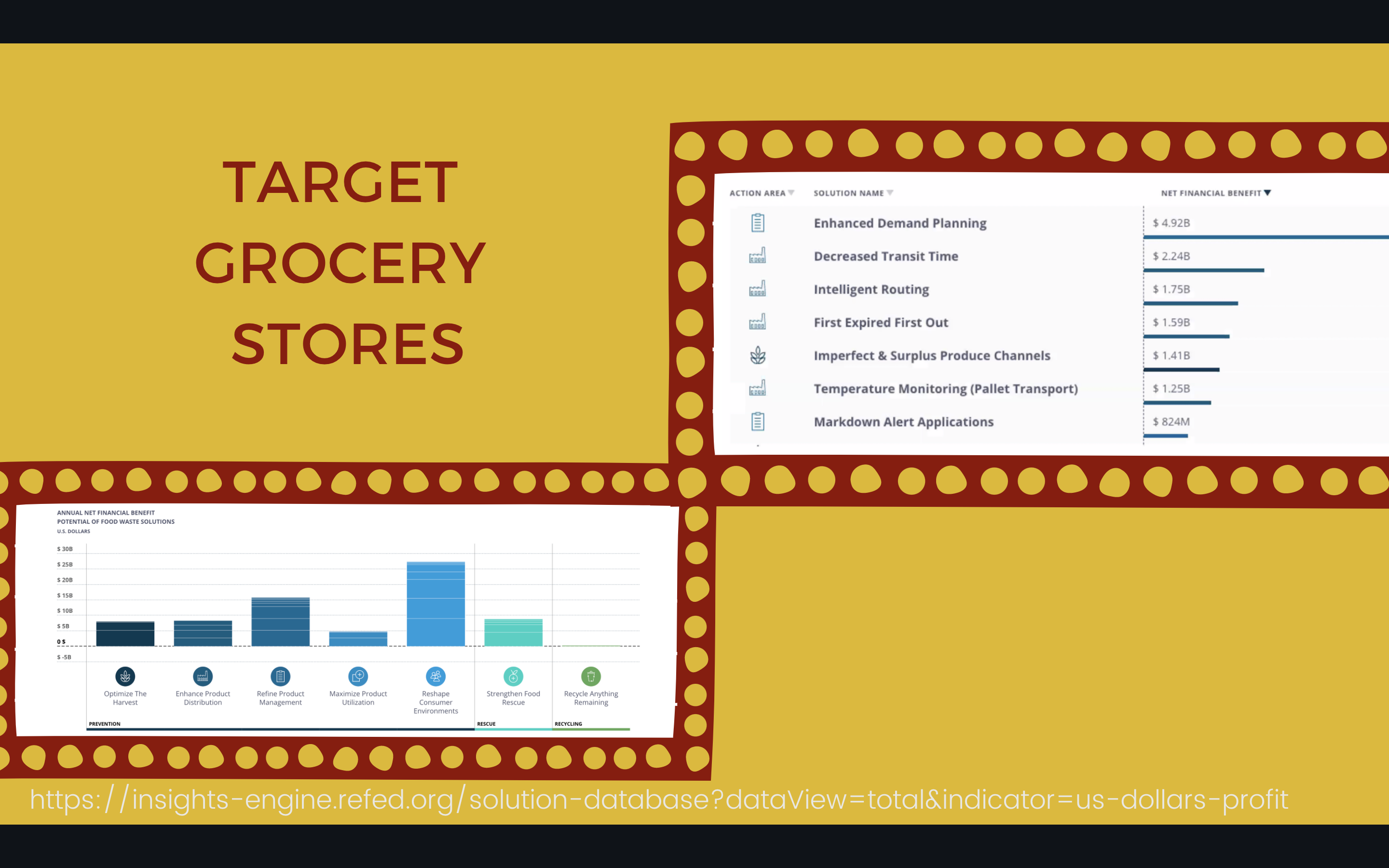
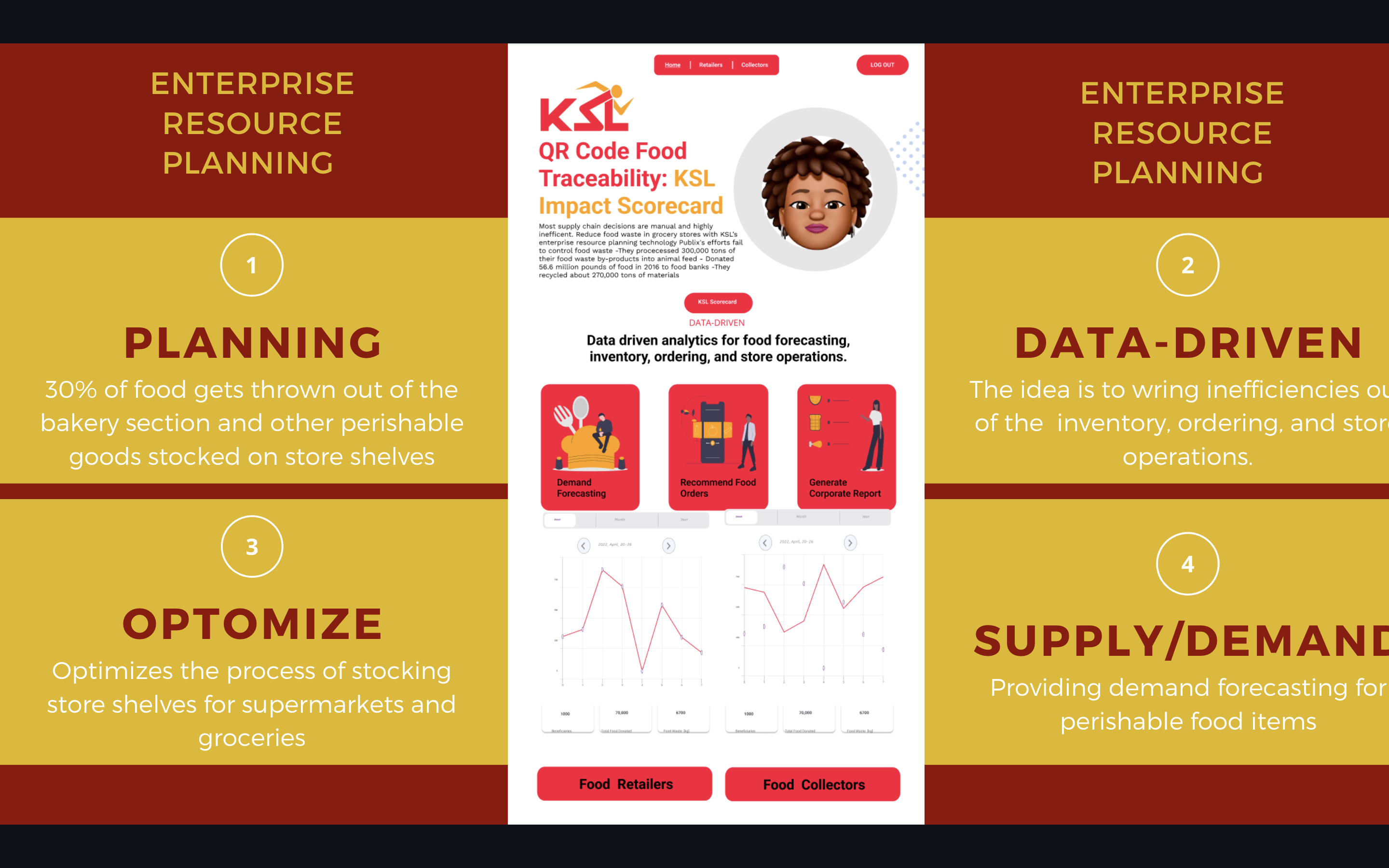
Target Segmentation: Typically about a third of food gets thrown out of the bakery section and other highly perishable goods stocked on store shelves. KSL optimizes the process of stocking store shelves for supermarkets and groceries, providing demand forecasting for perishable food items and track item-level sales, shrink, and merchandising data for your entire chain. The idea is to wring inefficiencies out of the ordering system with forecasting, inventory, ordering, and store operations. Operators can control processes from a single centralized dashboard, Instead of pen and paper, everything is digitalized , and Supply chain decisions computed by our software in the cloud. Better food supply chain management is the #1 way to reduce food waste. This can be done with software automation in grocery stores:
Grocery Stores: Higher Profits
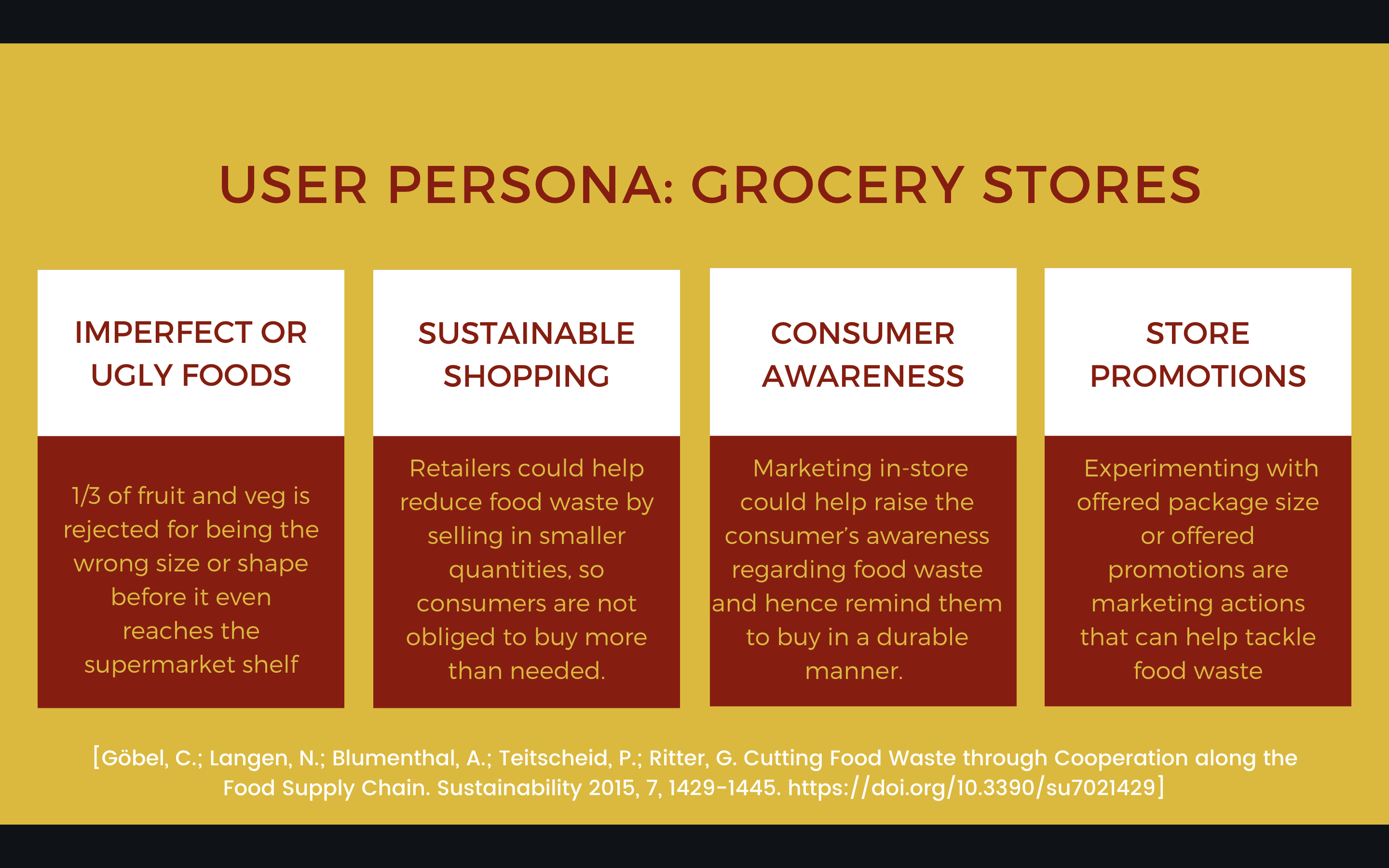
- 1/3 of fruit and veg is rejected for being the wrong size or shape before it even reaches the supermarket shelf
- Fresh vegetables and salad = 25% of edible household food waste in the UK; but only account for 12% of the ghg emissions from wasted food. Meat and fish = 8% of wasted food; but 19% of ghg emissions.
- 2015 study on food waste in Swedish supermarkets: the fruit and vegetable department = 85%; made up 46% of the total carbon footprint from wasted food. Meanwhile, meat made up 3.5% of food waste, but 29% of the carbon footprint."
- Retailers could help reduce food waste by selling in smaller quantities, so consumers are not obliged to buy more than needed.
- Marketing communication in-store (e.g., information screens) could help raise the consumer’s awareness regarding food waste and hence remind them to buy in a durable manner.
- An important role in sustainable shopping and eating behavior is reserved for (food) marketers: experimenting with offered package size or offered promotions are marketing actions that can help tackle food waste.
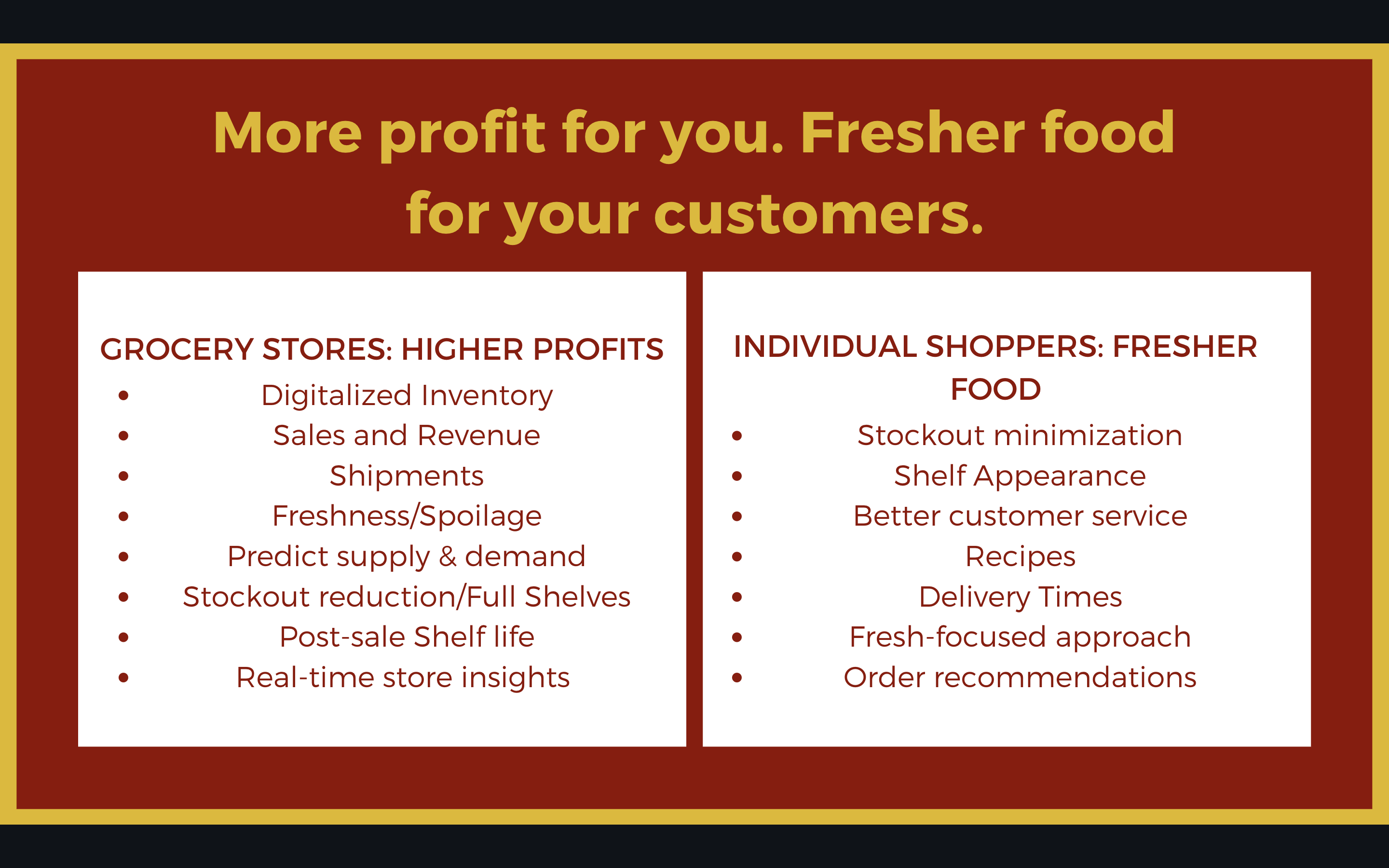
Grocery Stores: Higher Profits
- Digitalized Inventory
- Sales and Revenue
- Shipments
- Freshness/Spoilage
- Predict supply & demand
- Stockout reduction/Full Shelves
- Post-sale Shelf life
- Real-time store insights
Individual Shoppers: Fresher Food
- Stockout minimization
- Shelf Appearance
- Better customer service
- Recipes
- Delivery Times
- Fresh-focused approach
- Order recommendations
Individual Shoppers: Fresher Food
- Developed countries → easy access to abundant supplies of cheap produce has made consumers less thrifty ";
- Consumers buying food at the grocery store, particularly when there's a sale, and throwing the surplus away.
- Consumers and retailers throwing out food near or past its best-before date, despite the fact product dating practices "have no correlation to food safety" and the food can often still be eaten or donated.
- Produce being left to rot in the field due to labour shortages, or low prices creating an environment in which it is no longer worth it for farmers to harvest. Thousands of acres of produce being "plowed under" due to cancelled orders.
- Key barrier to food diversion/donations is the meaning behind expiration dates and the "stigma" feeding people with diverted food Dates identify the "key freshness" of a product, not it's safety, and the dates are very conservatives. Their only a few foods where expiration date matters: Boost, Baby formula, protein bars and a couple of prescriptions
How we built it
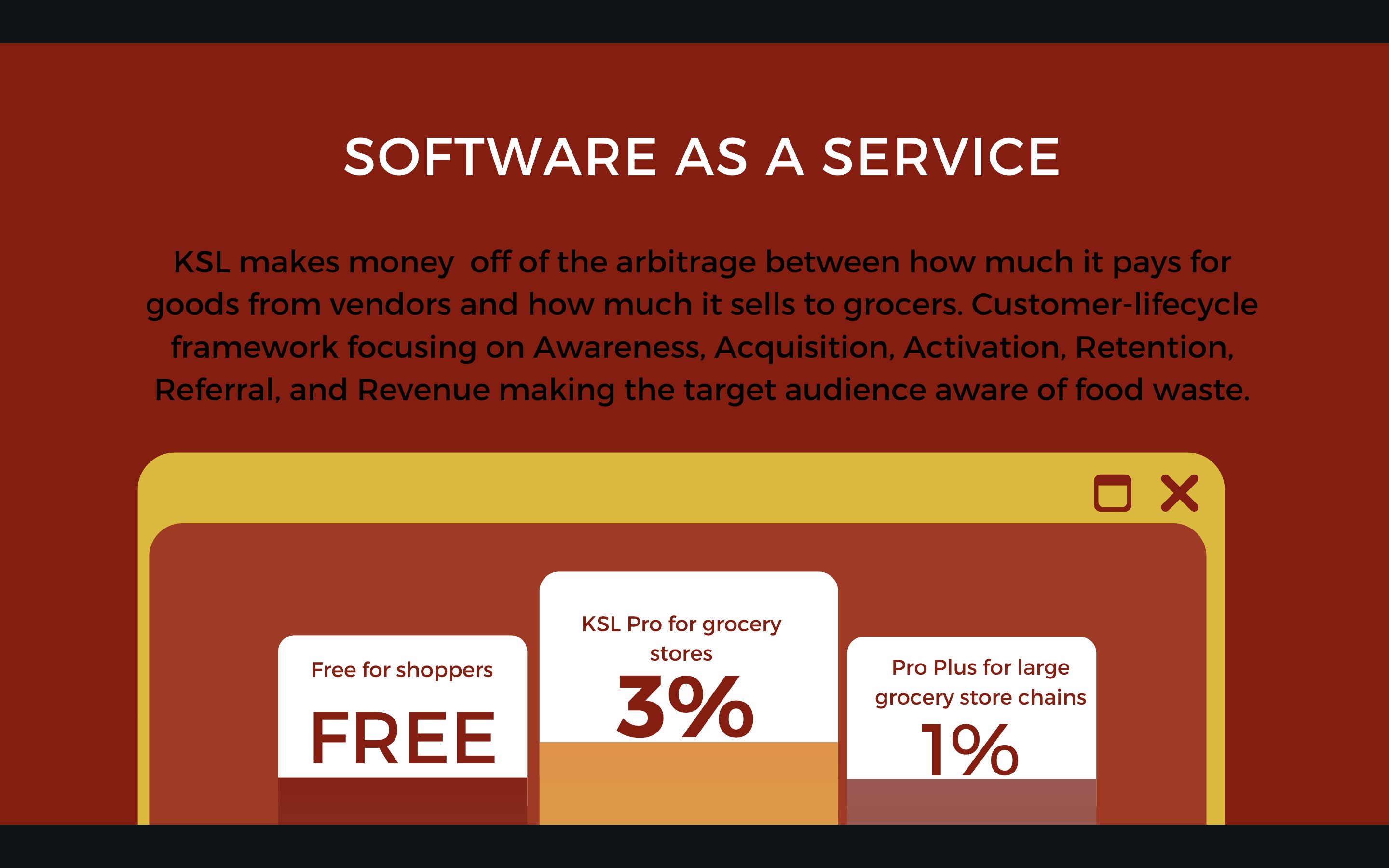
_With just a bit of brainstorming and research, we came up with what we think is a good, profitable idea. Software as a service model that makes money off of the arbitrage between how much it pays for goods from vendors and how much it sells to grocers and monetization.
TECHNOLOGY DIGITAL FOOD SUPPLY CHAIN
Understanding where along the supply chain waste happens provides opportunities for effective solutions to be implemented - track item-level sales, shrink, and merchandising data for your entire chain. Operators can control processes from a single centralized dashboard, Instead of pen and paper, everything is digitalized - Increase gross margins and Reduce Food Waste, Supply chain decisions computed by our software in the cloud, Fresher food with less chances of empty shelves, faster delivery times, and order recommendations.
Challenges we ran into
Our biggest challenge was time constraints. We think if we had more time, we could've perfected our idea even more.
Accomplishments that we're proud of
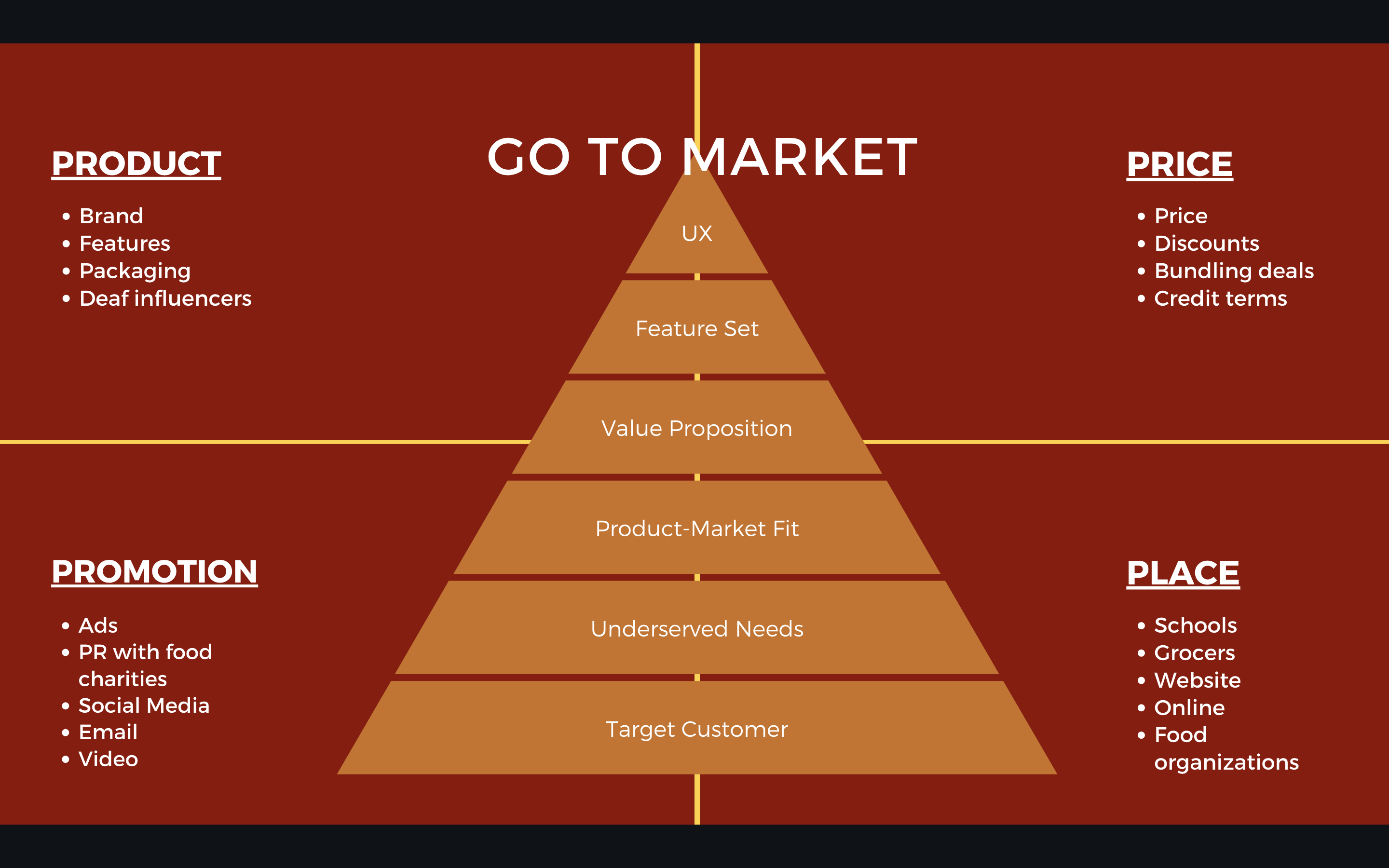
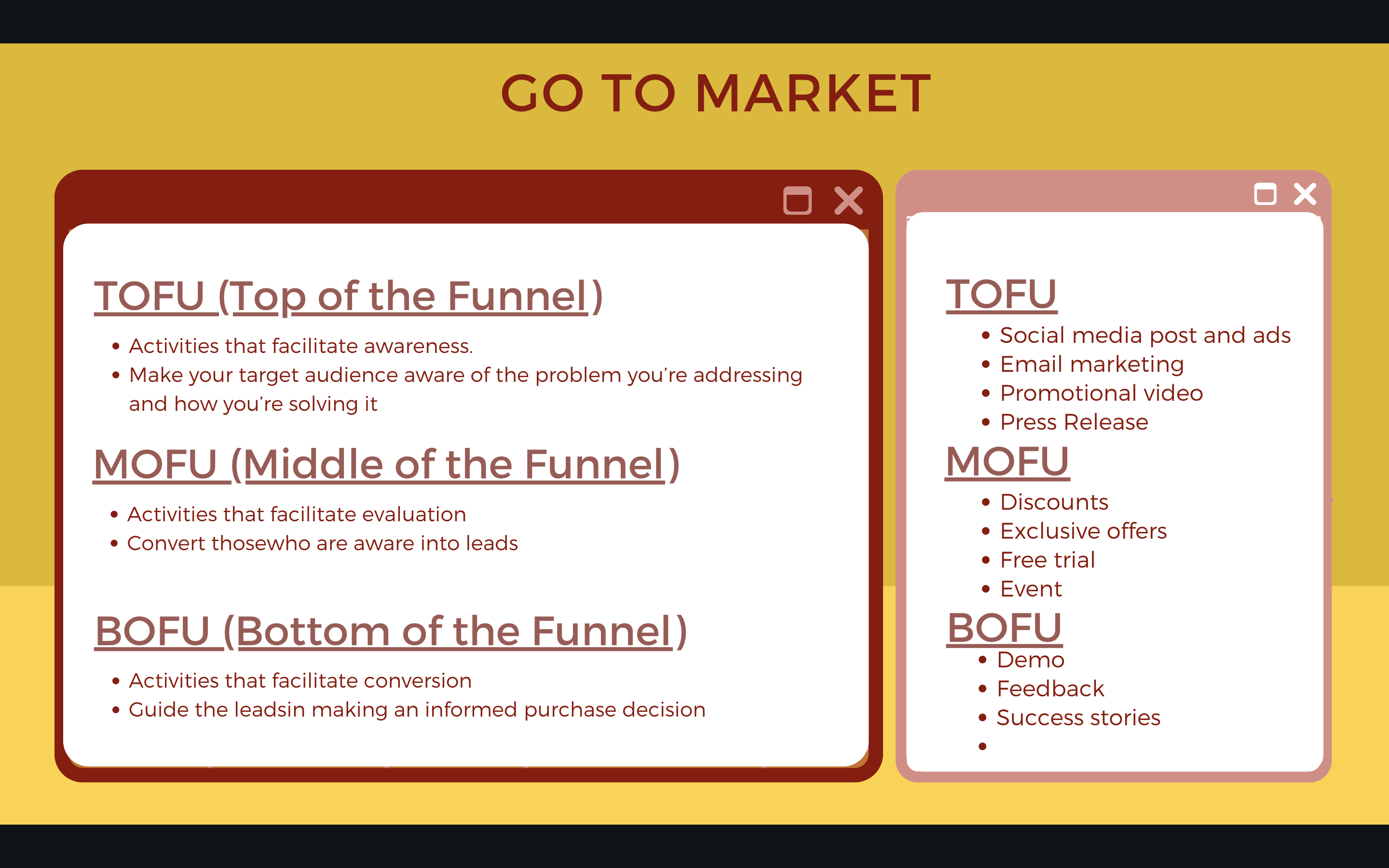
_We're proud of how much we were able to do in under 48 hours like our go to market strategy: TOFU (Top of the Funnel) • Activities that facilitate awareness. • Make your target audience aware of the problem you're addressing and how you're solving it MOFU (Middle of the Funnel) • Activities that facilitate evaluation • Convert thosewho are aware into leads BOFU (Bottom of the Funnel) • Activities that facilitate conversion • Guide the leadsin making an informed purchase decision TOFU • Social media post and ads • Email marketing • Promotional video • Press Release MOFU • Discounts • Exclusive offers • Free trial • Event BOFU • Demo • Feedback • Success stories
What we learned
We learned that with just an idea plus some time, money, and effort, it can be really easy to combat food wastage.
What's next for KSL
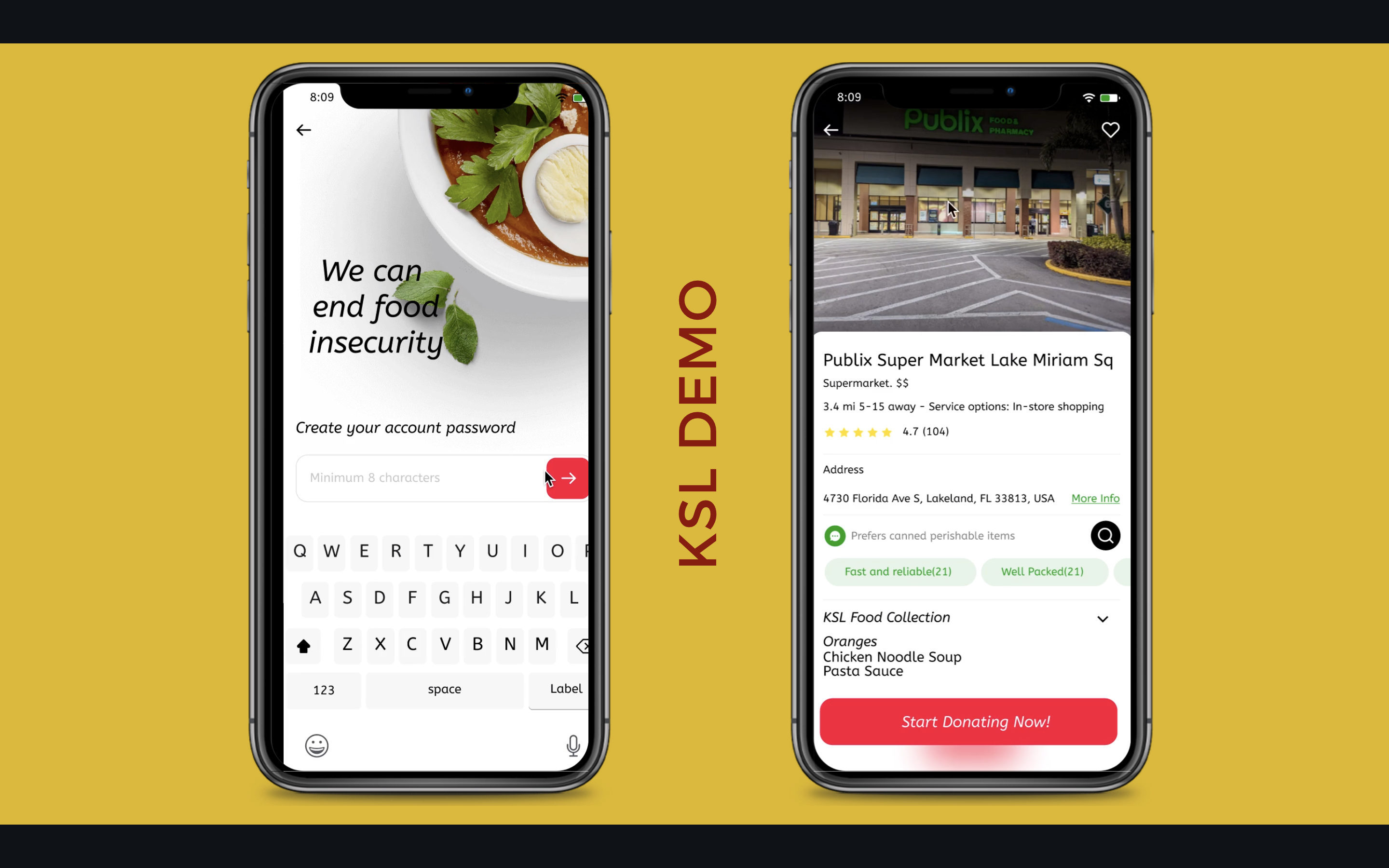
We hope to expand into more states and into larger grocery chains, while also expanding to consumers themselves. We would love to have an app that could help consumers with their shopping process in stores we're partnered with.
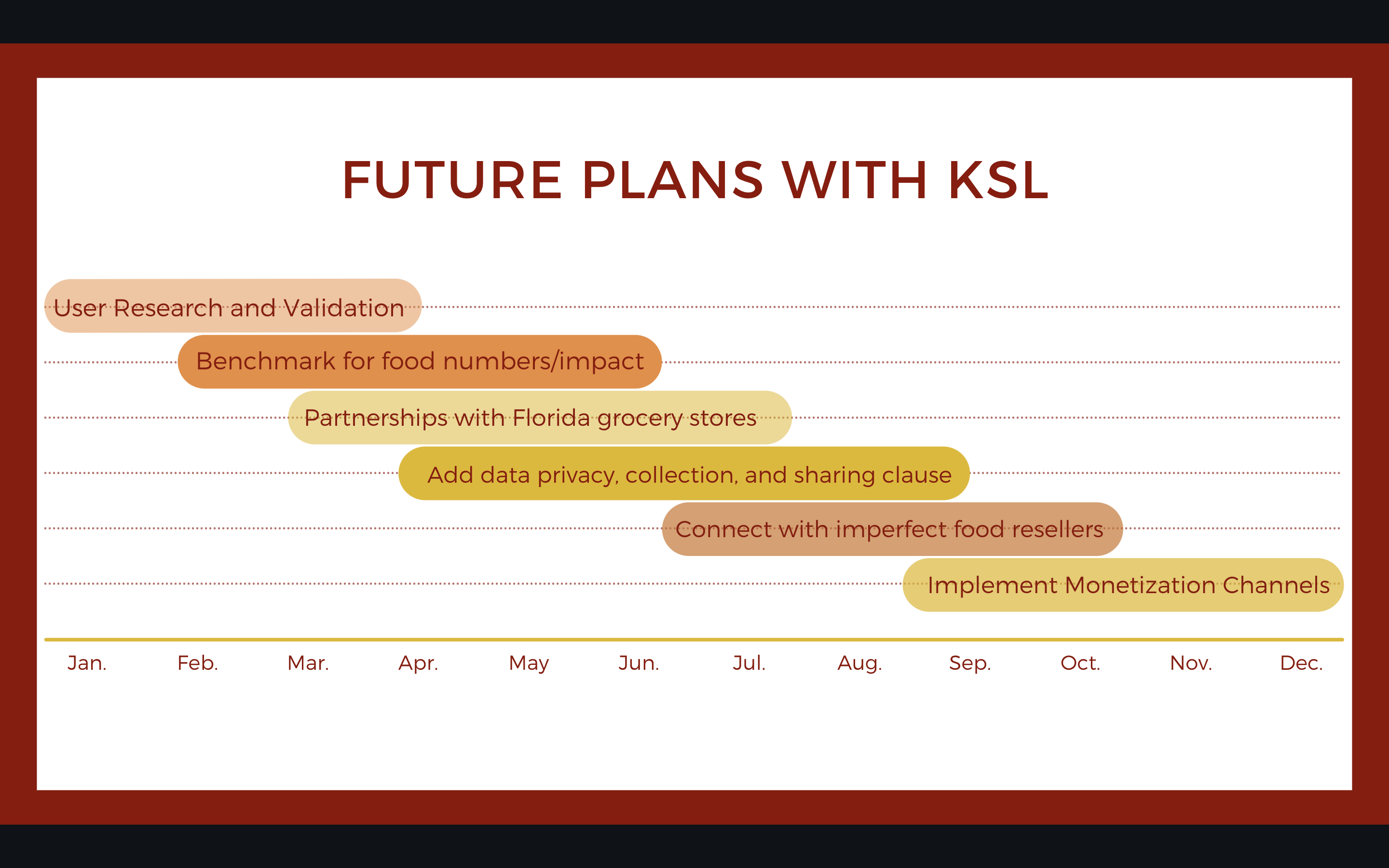
- Food research and validation
- Benchmark for food numbers/impact
- Partnerships with Florida grocery stores
- Add data privacy, collection, and sharing clause
- Connect with imperfect food resellers
- Implement Monetization Channels
Built With
- canva
- figma
- flutter

Log in or sign up for Devpost to join the conversation.