-
-
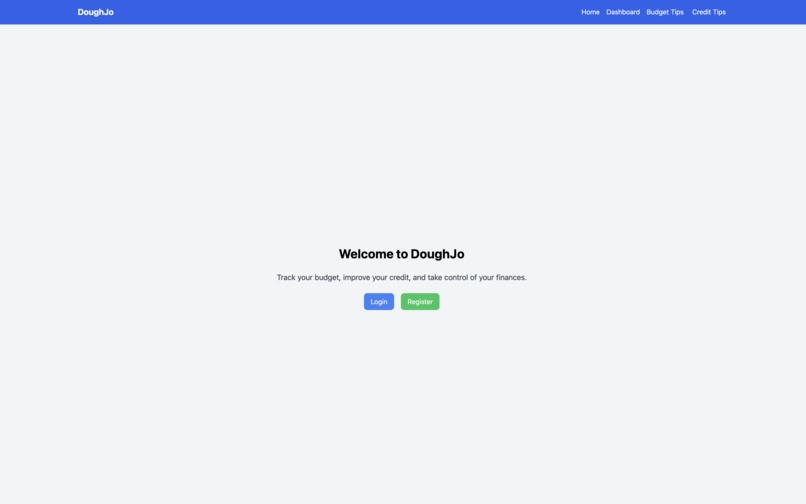
Login Page
-
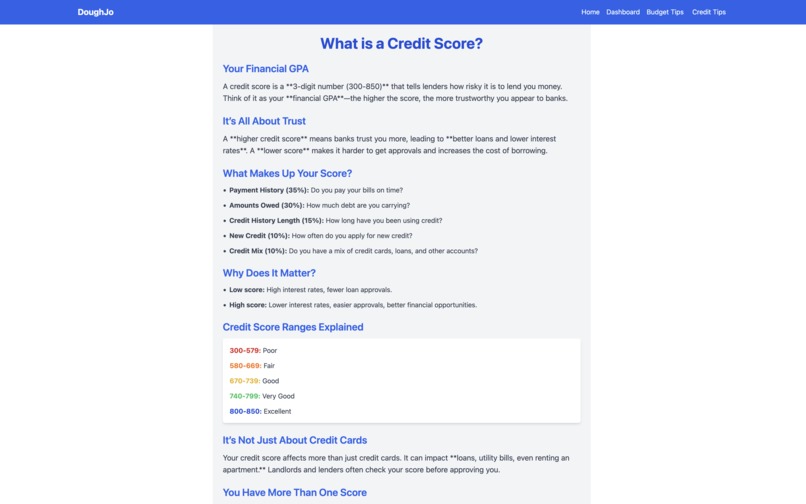
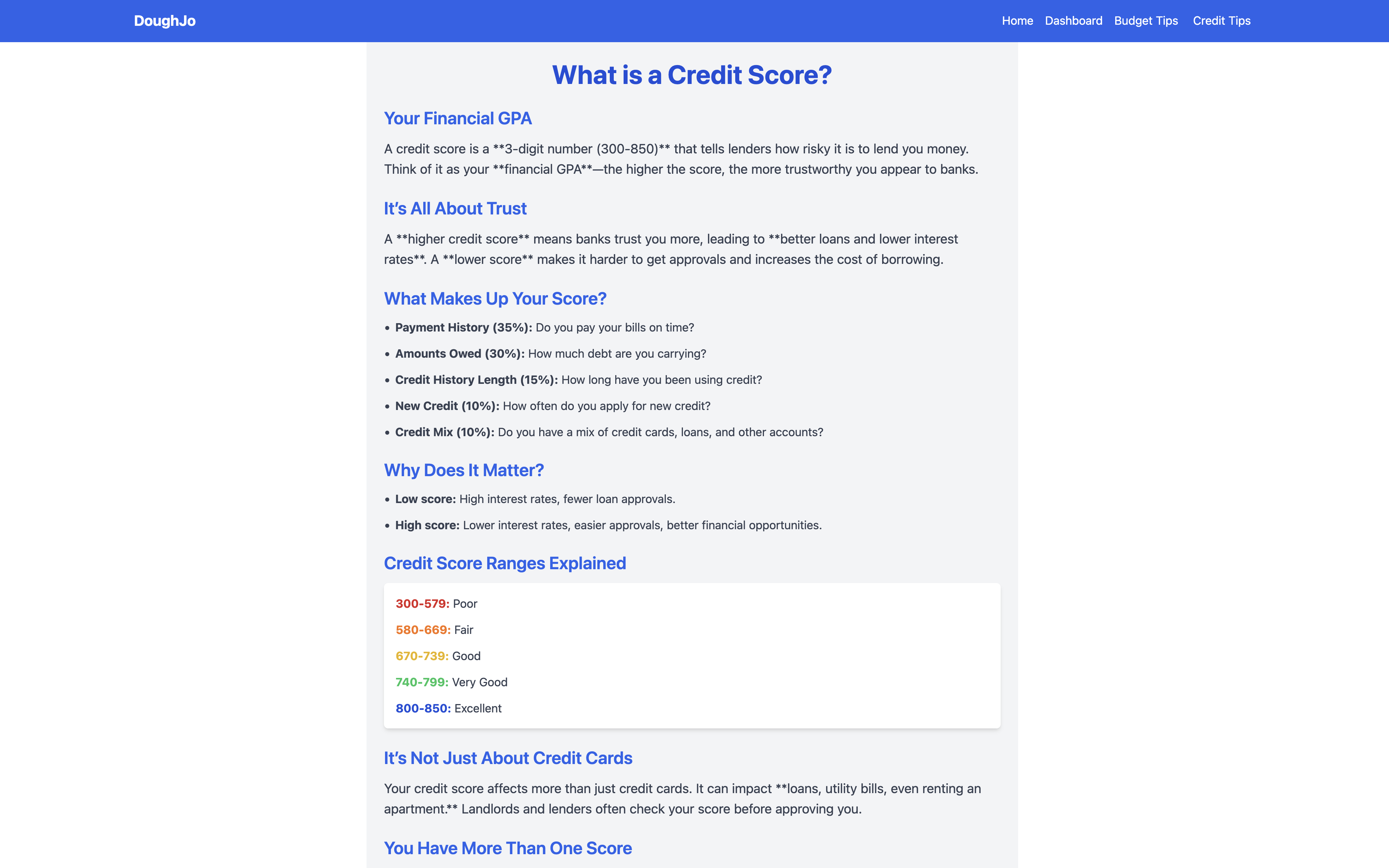
Credit Tips Page
-
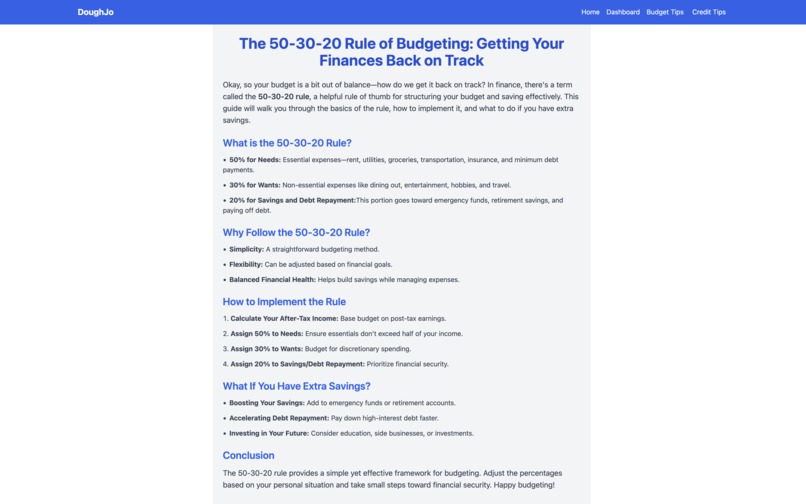
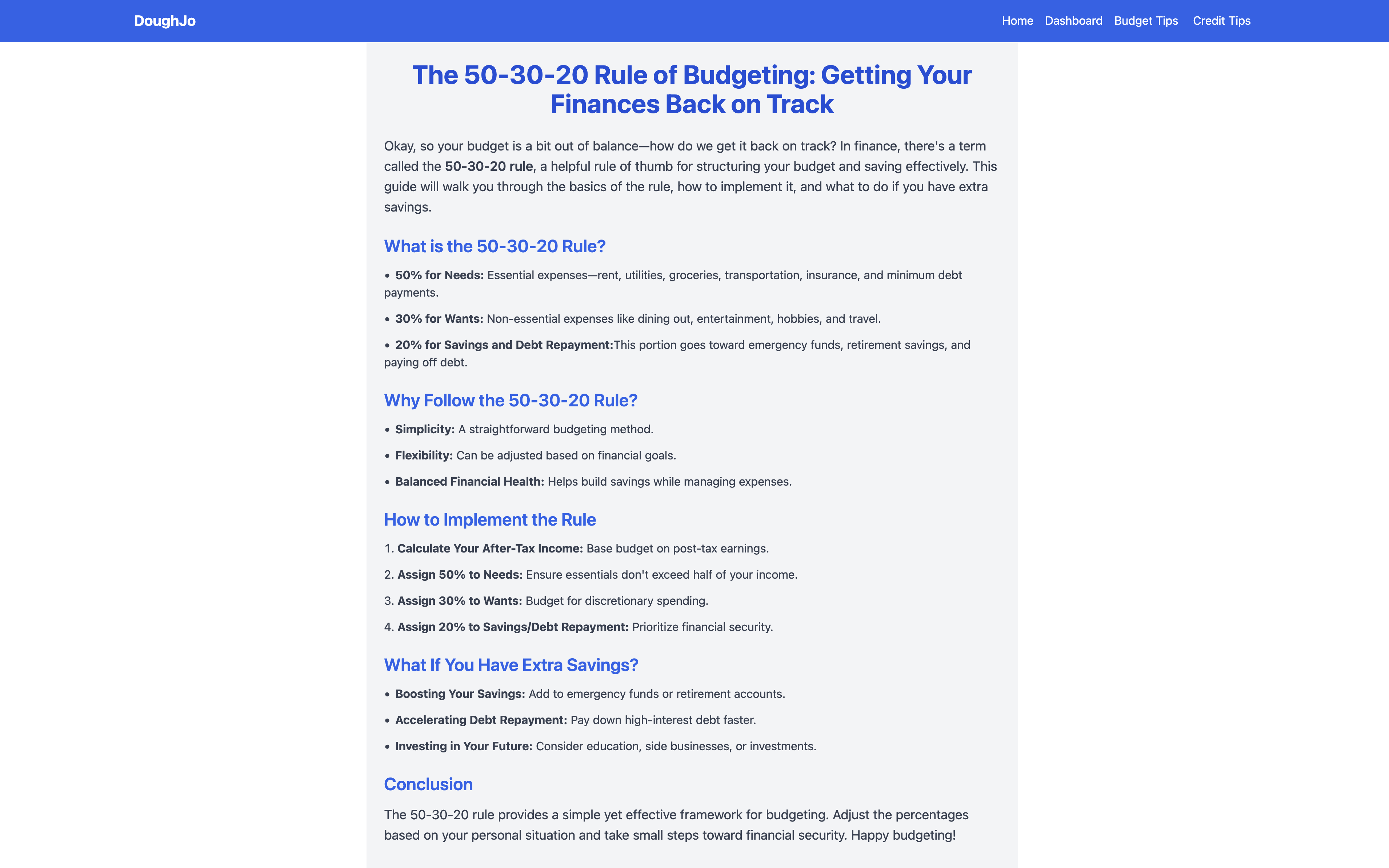
Budgetting Tips Page
-
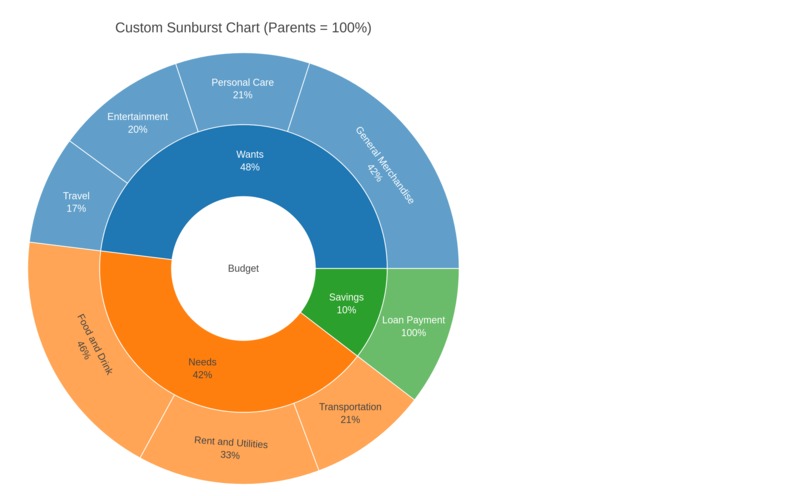
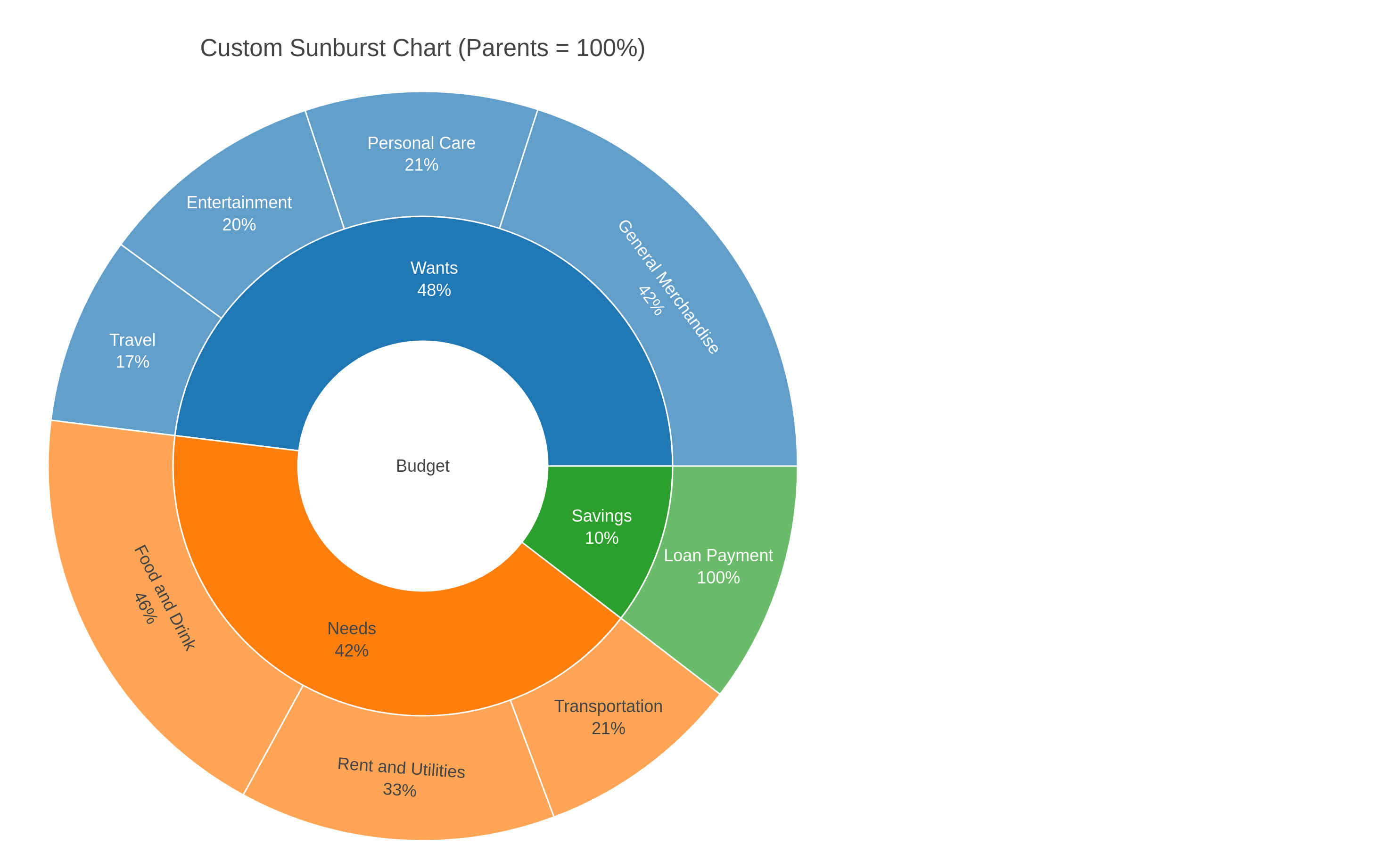
Sunburst Diagram of Budget
Inspiration
When we came across the "Best Financial Hack" track, it immediately caught our attention. The concept of a "Financial Hack" sparked an idea in us: what if we could improve people's financial situations? By helping individuals enhance their budgets and credit, we could potentially open up the financial industry to a new group of consumers who are less risky to lenders.
What it does
DoughJo is a full-stack app designed to help users improve their financial well-being. It compares their ideal budgets with their actual monthly expenses, providing insightful analysis of their financial habits. DoughJo also evaluates users' credit card transactions and calculates a unique "financial health" score (not an actual credit score). This score offers feedback on what users are doing well and highlights areas for improvement.
How we built it
The back-end was deployed on an Amazon Web Services (AWS) EC2 instance. The code was written in Rust, which made API calls to the US Census Bureau API to fetch household income data. This data was then compared to the user's income to provide tailored recommendations. The front-end is a multi-page website built with React, and we used plotly.js to create visual graphs that help users better understand their financial situation.
Challenges we ran into
As with any hackathon project, we faced several challenges, the most significant of which was time constraints. Due to the limited time, we had to scale back some of our features. Originally, we had planned to integrate the Plaid API, which would allow us to pull real transactional data from bank accounts and credit cards. However, we did not have enough time.
Accomplishments we're proud of
We are incredibly proud of our team's ability to design and build a full-stack application in such a short timeframe. This was our first time participating in HackIllinois and our first hackathon experience altogether, so successfully completing this project was a significant achievement for us. We are also proud of how much we learned throughout the process.
What we learned
Several team members were new to full-stack development, and during these 36 hours, we gained a lot of valuable experience. This project served as our first introduction to Rust and React, and we also explored various APIs and their use cases, expanding our technical knowledge.
What's next for DoughJo
Currently, our app doesn't gather real transaction data and instead uses test cases. In the future, we could improve DoughJo by integrating APIs like Plaid or Yodlee to pull and categorize actual financial data, making the app fully functional. Also, the current calculations of the ideal budget and predicted credit are based on simple formulas or fixed values. In the future, we would like them to be more dynamic. Since the API calls for geographic data are already being made, we could integrate that data into the ideal budget and make more complected estimators for credit in the future. One exciting feature we had originally planned was a leaderboard that would allow users to compare their financial progress with friends.


Log in or sign up for Devpost to join the conversation.