-
-
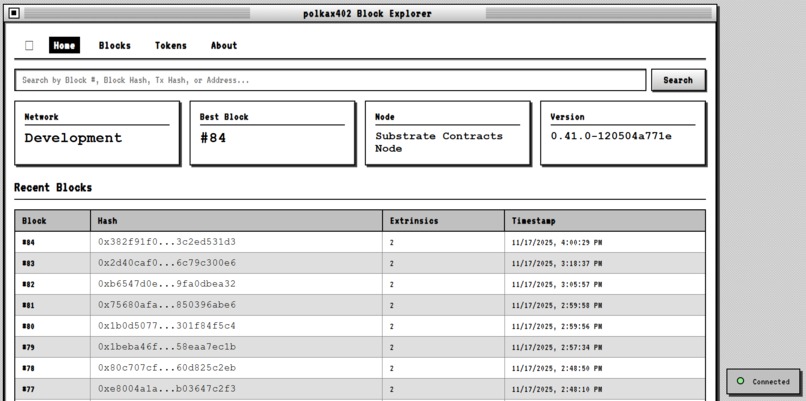
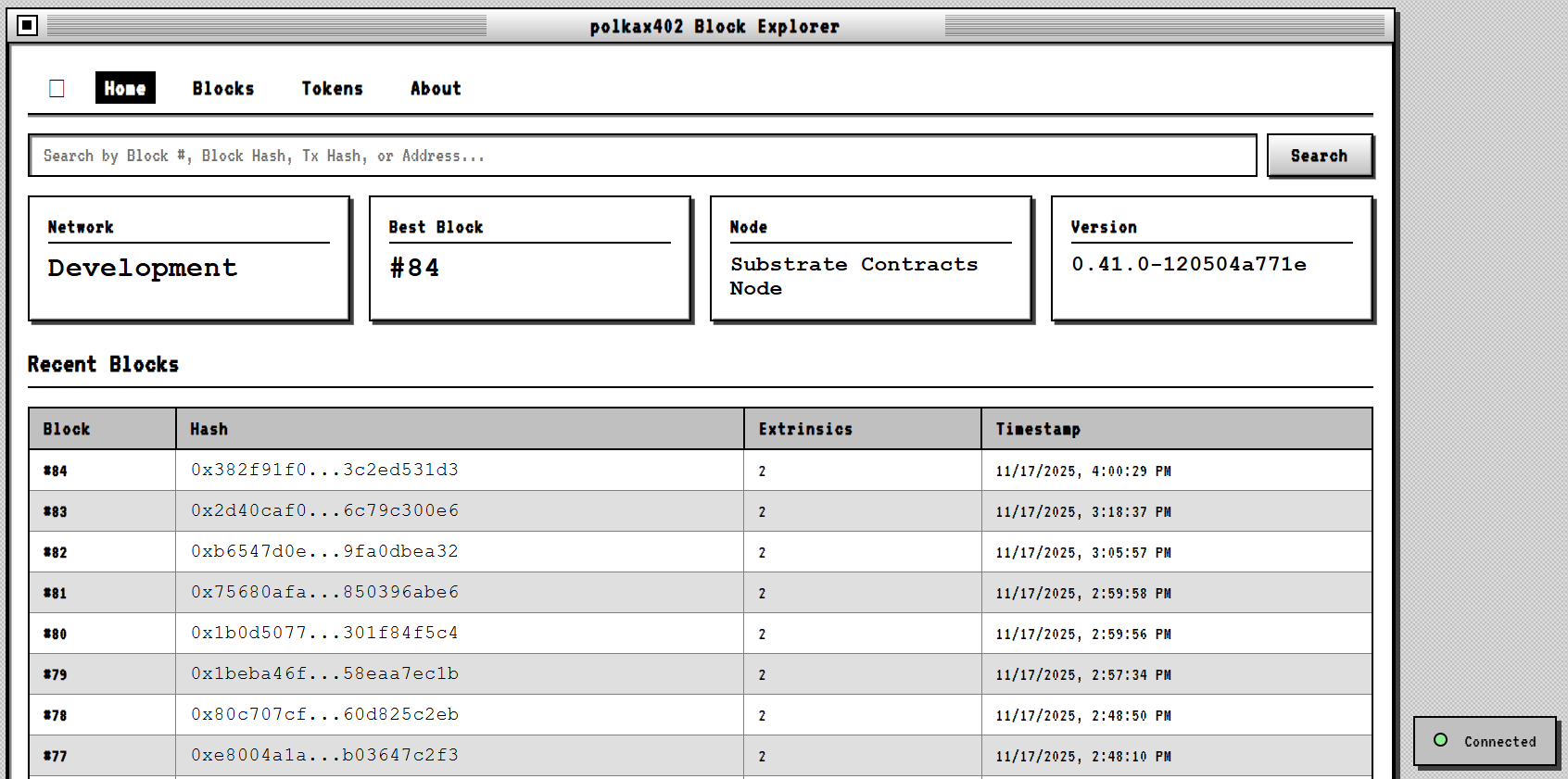
polkax402 blockexplorer homepage
-
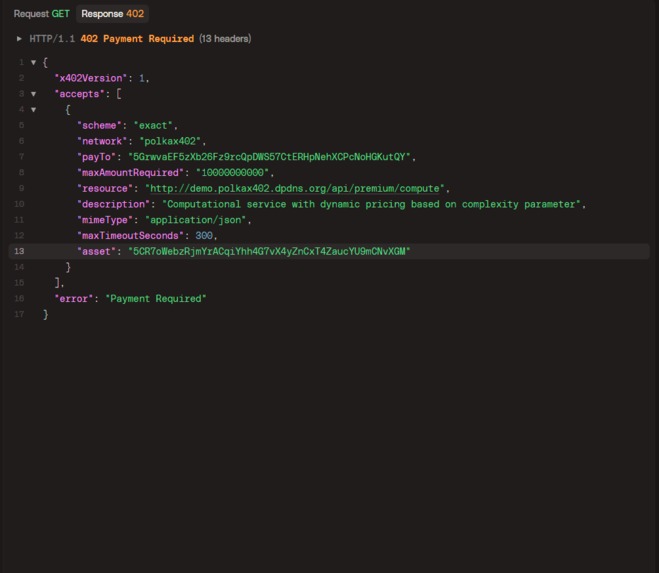
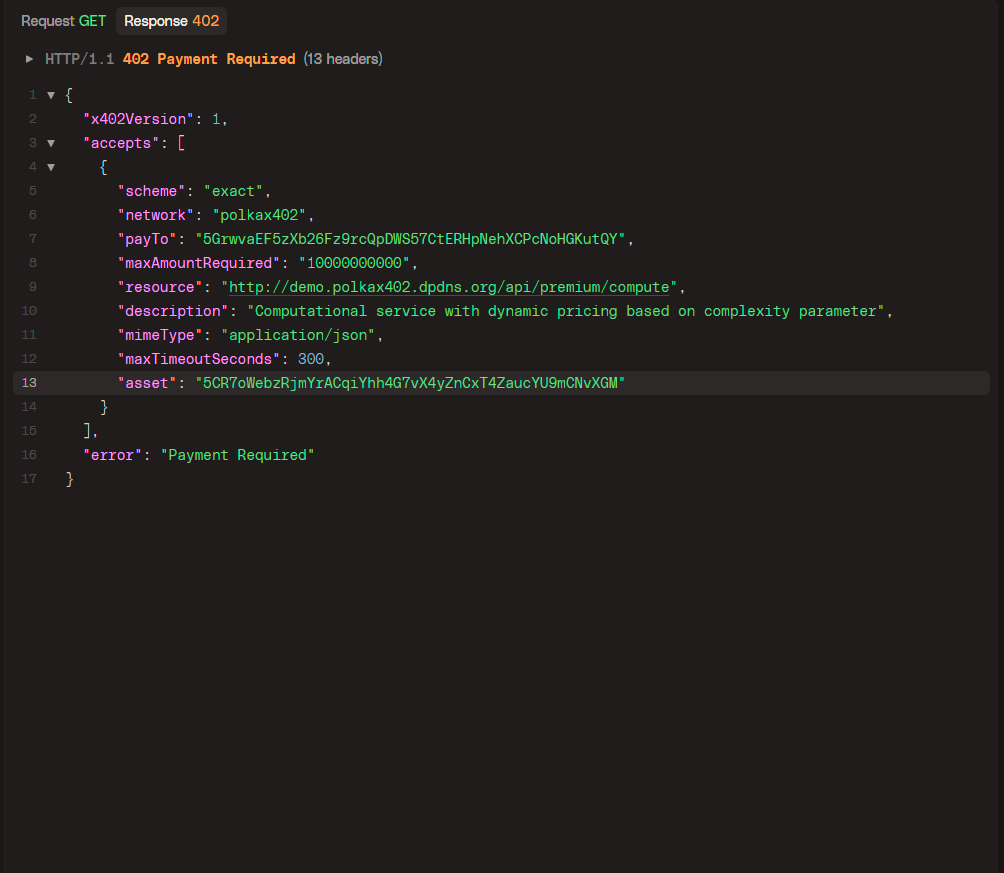
x402 payment instructions for polkax402
Inspiration
We wanted to bring HTTP 402 Payment Required into the Polkadot ecosystem in a native, Substrate-first way. Existing X402 tooling worked well for EVM chains, but not for chains built on FRAME or ink!. That gap became the inspiration:
create a fully-functional, cryptographically verifiable micropayment protocol for Substrate networks — no EVM required.
We were also motivated by real problems API builders face:
- Monetizing APIs without friction
- Pay-per-request economics for AI, data, scraping, and infra workloads
- Enabling wallets and chains to interoperate with HTTP-based protocols
polkax402 is our attempt to make that real for Polkadot.
What it does
polkax402 provides a complete X402 payment stack for Substrate networks, including:
- A TypeScript SDK for client & server payment flows
- A custom Substrate chain (polkax402) with built-in payment authorization logic
- An ink! HTTPUSD contract supporting
transferWithAuthorization - A Facilitator service that executes signed payments on-chain
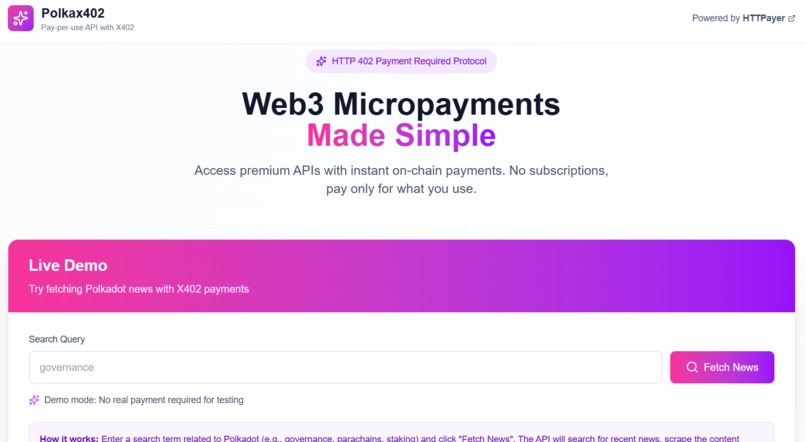
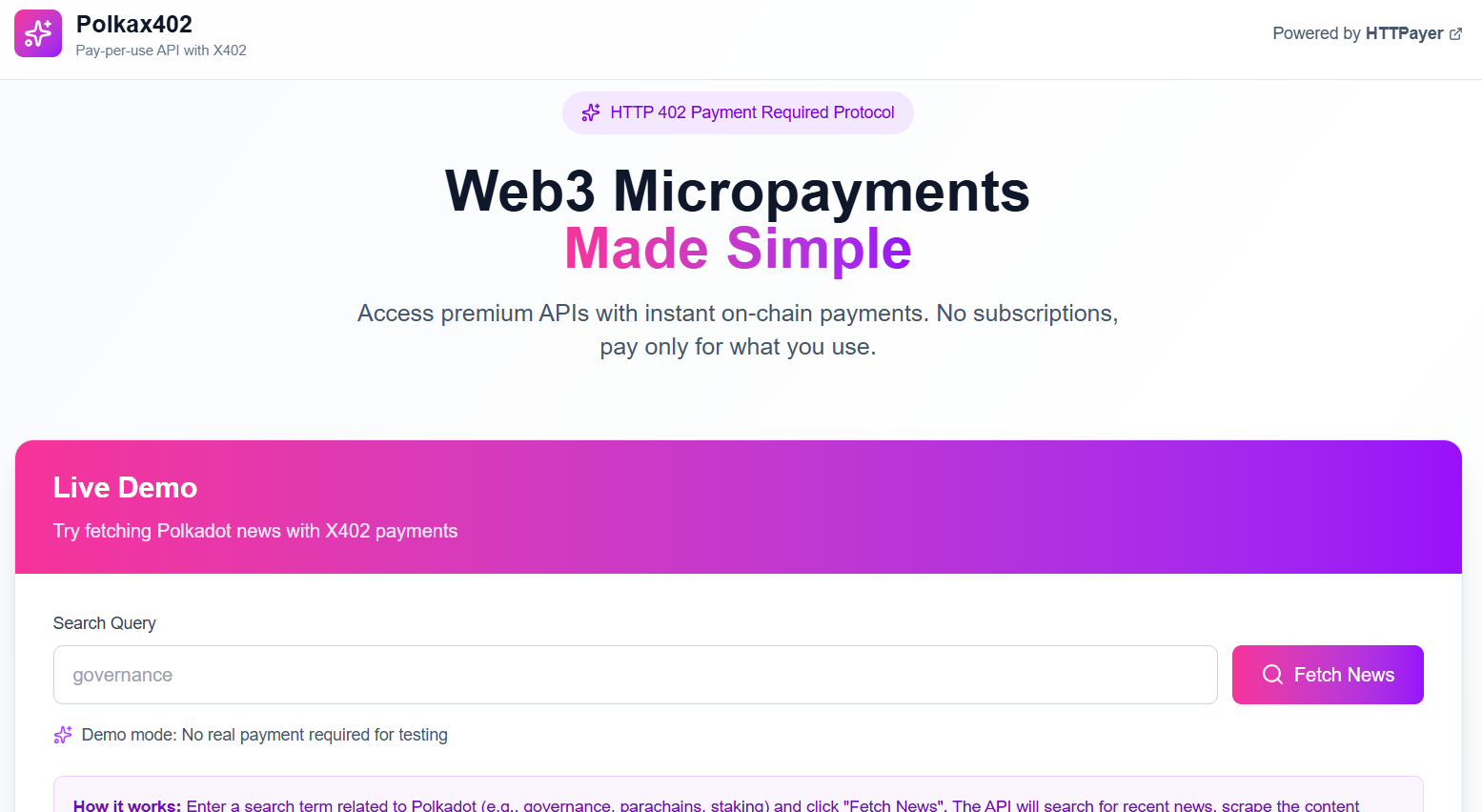
- A payment-gated Express server with dynamic pricing
- A block explorer API for inspecting blocks, accounts, and extrinsics
The result is a fully working pay-per-use API model:
- Request → server returns
402 Payment Required - Client auto-signs the payment
- Facilitator validates & settles it on-chain
- Request is retried automatically and returns
200 OK
It's the first turnkey X402 implementation for Substrate assets.
How we built it
We built polkax402 as a multi-component system:
🔶 1. Custom Substrate Chain
A minimal FRAME runtime with:
- custom pallets for signature verification
- ink! smart contract support
- RPC endpoints deployed on Akash
- HTTPUSD asset plumbing
🔶 2. ink! Contract (HTTPUSD)
Implements:
transferWithAuthorization- sr25519 signature verification
- nonce replay protection
- validity windows
- facilitator execution flow
🔶 3. TypeScript SDK
A full client library:
- wraps
fetchto auto-handle 402 flows - creates signed payment headers
- supports Polkadot.js extension
- supports multiple networks (Polkadot, Kusama, Westend, AssetHub, etc.)
🔶 4. Facilitator Service
A payment executor:
- takes signed authorizations
- submits transfers on-chain
- validates timestamps, signatures, and amounts
🔶 5. X402-Protected Express Server
Provides:
- dynamic pricing
- OpenAPI documentation
- endpoints protected by x402
- Firecrawl integration powered by HTTPayer relay
- LLM summarization pipeline
🔶 6. Explorer API
REST endpoints for:
- blocks
- extrinsics
- accounts
- search
All services run via Docker Compose.
Challenges we ran into
Testnet tokens were a constant hurdle — especially around:
- selecting networks that fully support ink!
- working around toolchains not built for non-EVM signature flows
- avoiding chains where contracts are disabled or frozen
- debugging sr25519 signature mismatch issues
We also had to design the payment flow without relying on EVM-specific semantics like permit(), forcing us to implement our own signature, payload, and nonce standards.
Accomplishments that we're proud of
- First true X402 implementation on Polkadot
- Working, signed, verifiable payment proofs for Substrate networks
- A fully deployed Substrate chain on Akash
- A cross-component system (SDK + chain + facilitator + server + explorer) running end-to-end
- Zero-friction TypeScript APIs that feel like using any normal fetch()
polkax402 demonstrates that Substrate chains can participate in modern, protocol-level payment flows — without needing EVM.
What we learned
- ink! smart contract tooling is powerful but requires careful network selection.
- Substrate signatures (sr25519) behave differently than secp256k1 and must be encoded consistently across client, facilitator, and contract.
- HTTP 402 becomes much more powerful when the payment proof is cryptographic instead of trust-based.
- Most chains underestimate the demand for request-level micropayments — but it’s becoming essential for AI, compute, and data APIs.
- Substrate’s flexibility made it surprisingly easy to build a chain purpose-built for a single protocol.
What's next for polkax402
- Cross-chain X402 payments via a bridge wrapper contract (likely powered by hyperbridge)
- Support for Asset Hub USDC and assets on Polkadot/Kusama
- Native Wasmtime compute payments for future DePIN workloads
- A Rust server SDK
- A browser-first SDK with fallback signatures
- Expanding the facilitator to support batching, refunds, and multi-resource pricing
- Deploying a managed X402 gateway for developers who want instant plug-and-play monetized APIs
polkax402 is just the first building block — we want to make Polkadot the best ecosystem for decentralized pay-per-use infrastructure.
Built With
- polkadot
- rust
- typescript

