Inspiration
The idea for DOTLOCK began during a flight to New York when there was no Wi-Fi. I had a small squared-paper notebook and a pen, so my travelling companion and I played Dots & Boxes.
While playing, I began imagining how the familiar paper game could become a mobile strategy experience. Instead of simply competing to complete boxes, what if the grid represented a defensive system under attack? Players could predict where an opponent might strike, deploy defensive devices and manage limited resources.
The concept gradually became a hybrid that I describe as “Battleships meets Dots & Boxes”: familiar line-drawing combined with anticipation, defensive planning and escalating danger.
What it does
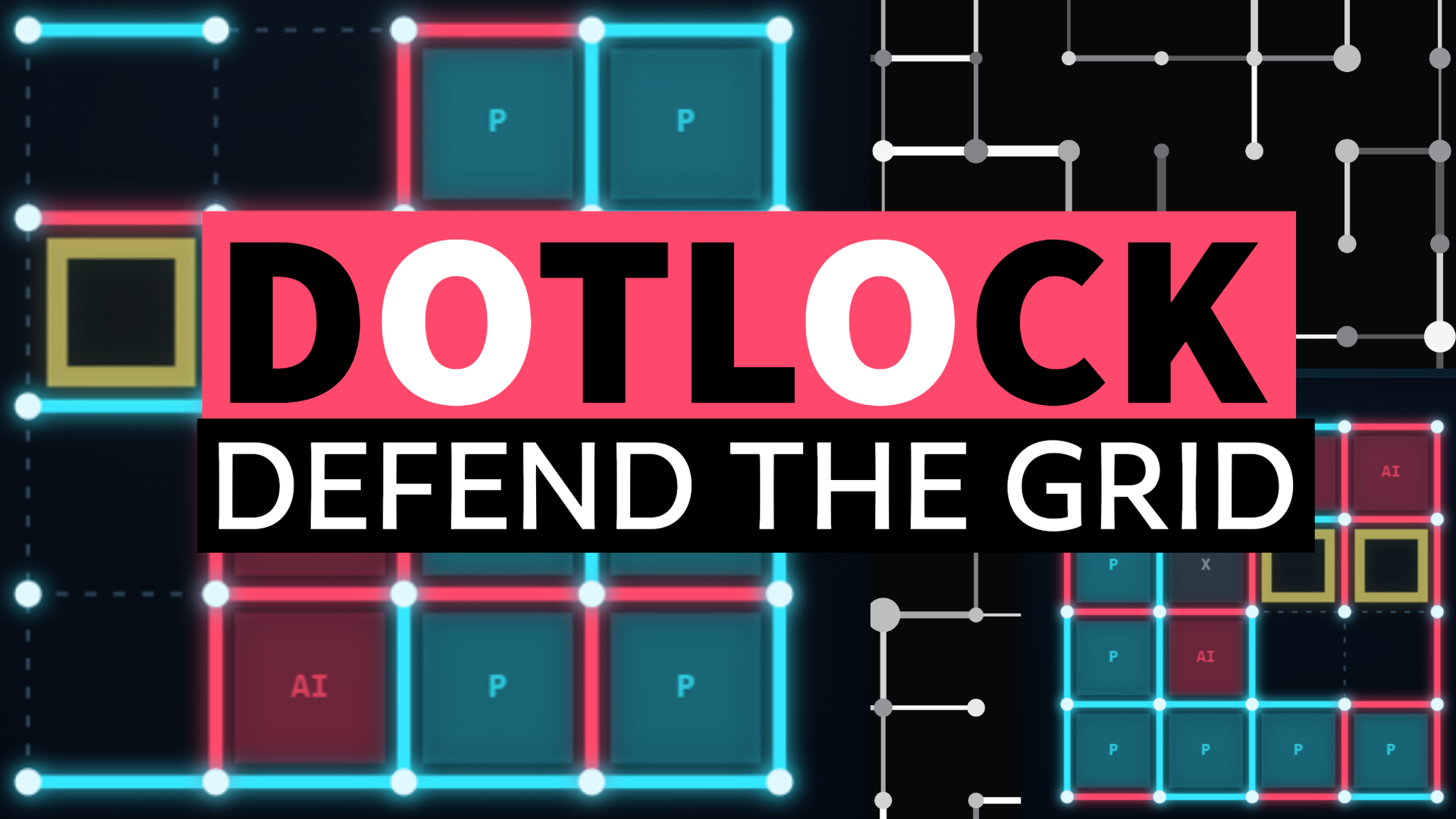
DOTLOCK: Defend the Grid is a single-player, turn-based grid-defence prototype for the Tower Defence & Strategy genre. It transforms the familiar line-drawing and box-completion play of Dots & Boxes into a defensive game against an escalating AI attacker. Escalating threats, managed defences and meaningful resource spending decisions.
How we built it
I developed DOTLOCK through an AI-assisted workflow using ChatGPT and OpenAI Codex.
I remained responsible for the original concept, creative direction, design decisions and playtesting. ChatGPT helped me evaluate the idea against the competition requirements, define the Tower Defence & Strategy direction, plan each development phase, create implementation specifications and analyse my playtest feedback.
OpenAI Codex implemented and modified the self-contained HTML5, CSS and JavaScript game, while also assisting with local testing and debugging.
The project was built in small playable phases:
Phase 1 established the basic Dots & Boxes grid, player turns, AI turns, sector completion, scoring and replay.
Phase 2 added three attack waves, Grid Integrity, Energy, Bombs and Shields.
Phase 3 introduced procedural sound, animations, warning effects and stronger audio-visual feedback.
Phase 4 refined interface clarity, rebalanced the defensive powers and introduced the Wave 3 Wild Sector.
The finished prototype runs completely offline from a single index.html file, with no external libraries, assets or network requests.
Challenges we ran into
The first challenge was making the concept clearly belong to the Tower Defence & Strategy genre. The original Dots & Boxes foundation was familiar and playable, but it initially felt like a traditional two-player paper game. Waves, Grid Integrity, Energy and defensive powers helped transform the AI into an escalating attacker and the player into the defender.
Another challenge was maintaining focus. Many possible mechanics emerged during development, but adding everything would have weakened the prototype. I deliberately kept the game centred on three waves, two defensive powers and one Wave 3 surprise.
Playtesting also exposed a balance problem. The original Bomb cost more Energy than the Shield but provided less value. I changed it into a rare emergency-recovery tool: when triggered, it neutralises the threatened sector, prevents damage and restores up to 20 Grid Integrity. The Shield remains the cheaper territorial option that converts an intercepted AI capture into a player sector.
Interface clarity required iteration as well. Contextual guidance was moved above the board and given a longer display time, while a short pause was added between waves so players could see the completed grid before it reset.
Accomplishments that I'm proud of
This is my first attempt at coding a game with AI assistance using HTML5 for the browser. I am happy with the game prototype and it is infinitely playable, each game is different and the visual and sound effects add depth and rhythm to the gameplay so it is both challenging and at the same time relaxing.
What I learned
I learned that a simple mechanic can support surprising depth when several understandable pressures interact. During playtesting, I had to monitor the evolving grid, available Energy, remaining Integrity, defensive devices and the Wild Sector. Becoming overconfident and overspending Energy could leave me without access to Bombs or Shields when I needed them most.
I also learned the importance of testing the smallest playable version before adding complexity. The project improved through repeated cycles of playing, identifying a specific weakness and making a focused change.
Most importantly, I learned that AI-assisted development still depends on human judgement. AI helped translate ideas into a working browser game, but playtesting determined what was enjoyable, confusing, unbalanced or worth preserving.
What's next for DOTLOCK: Defend The Grid
A future version could explore different grid configurations, specialised attack waves, new enemy behaviours, alternative defensive devices, challenge modes and additional Wild Sector effects. For this prototype, however, I chose to preserve the focused core that proved enjoyable during playtesting.
Built With
- chatgpt
- codex
- html5


Log in or sign up for Devpost to join the conversation.