-
-
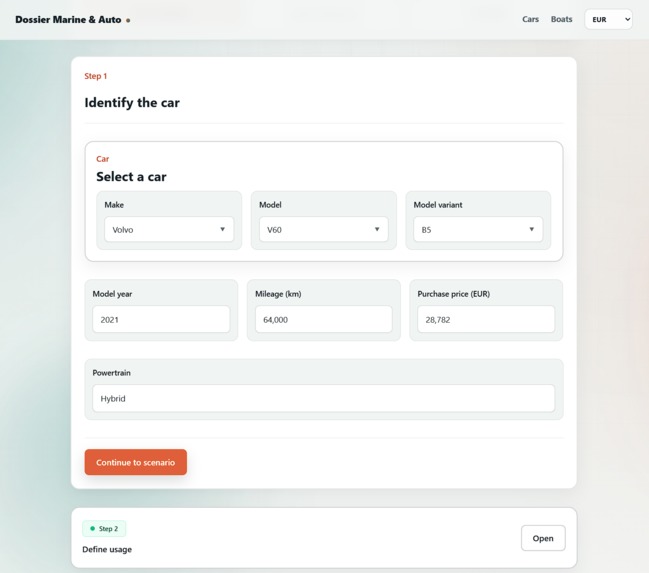
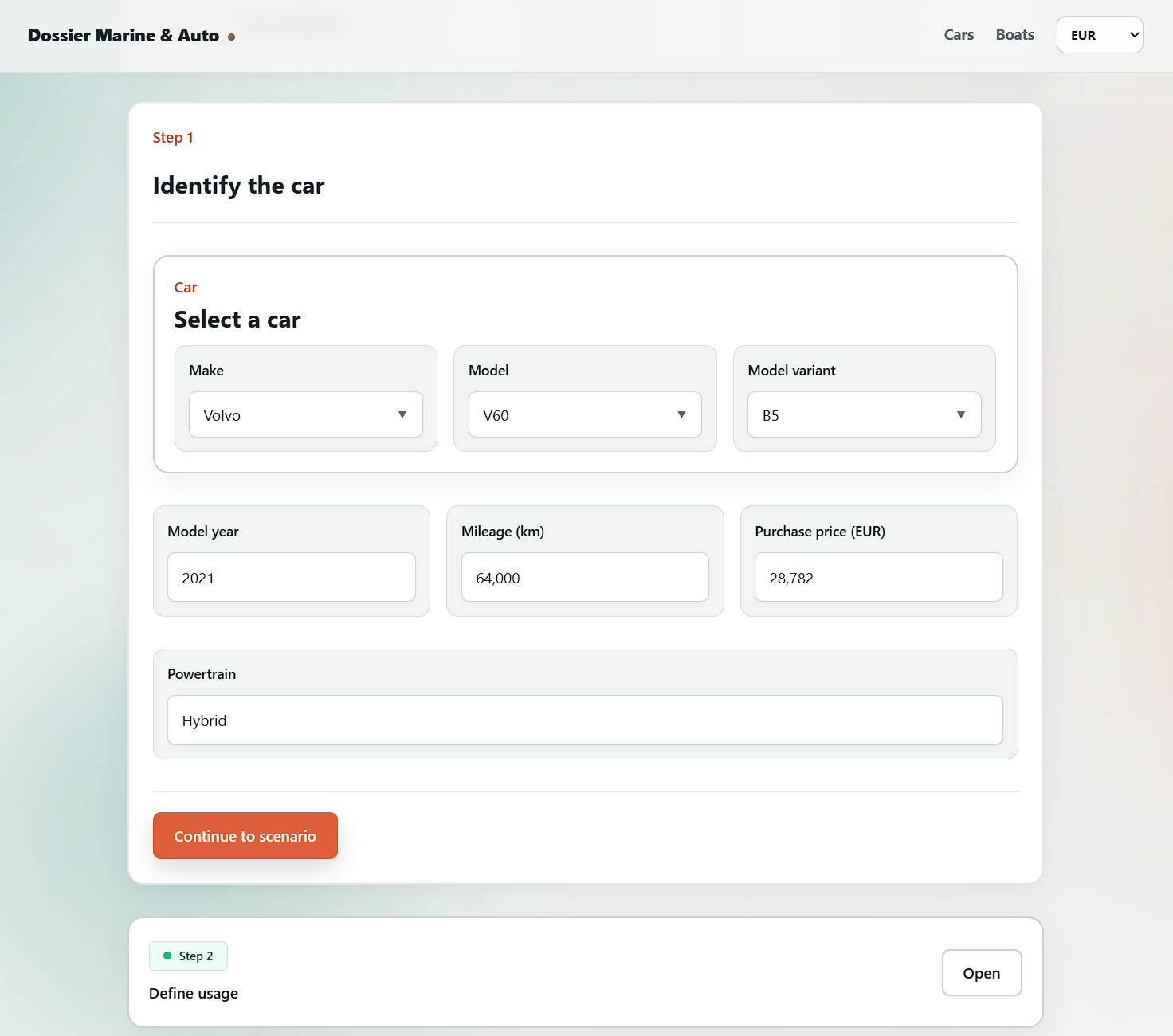
Application Page
-
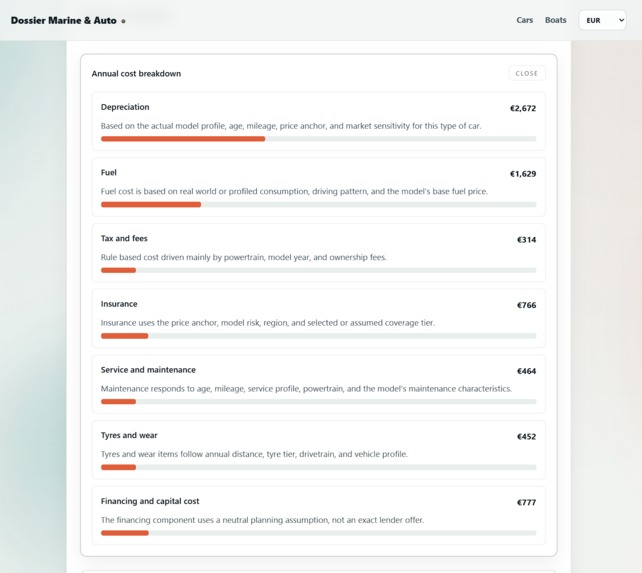
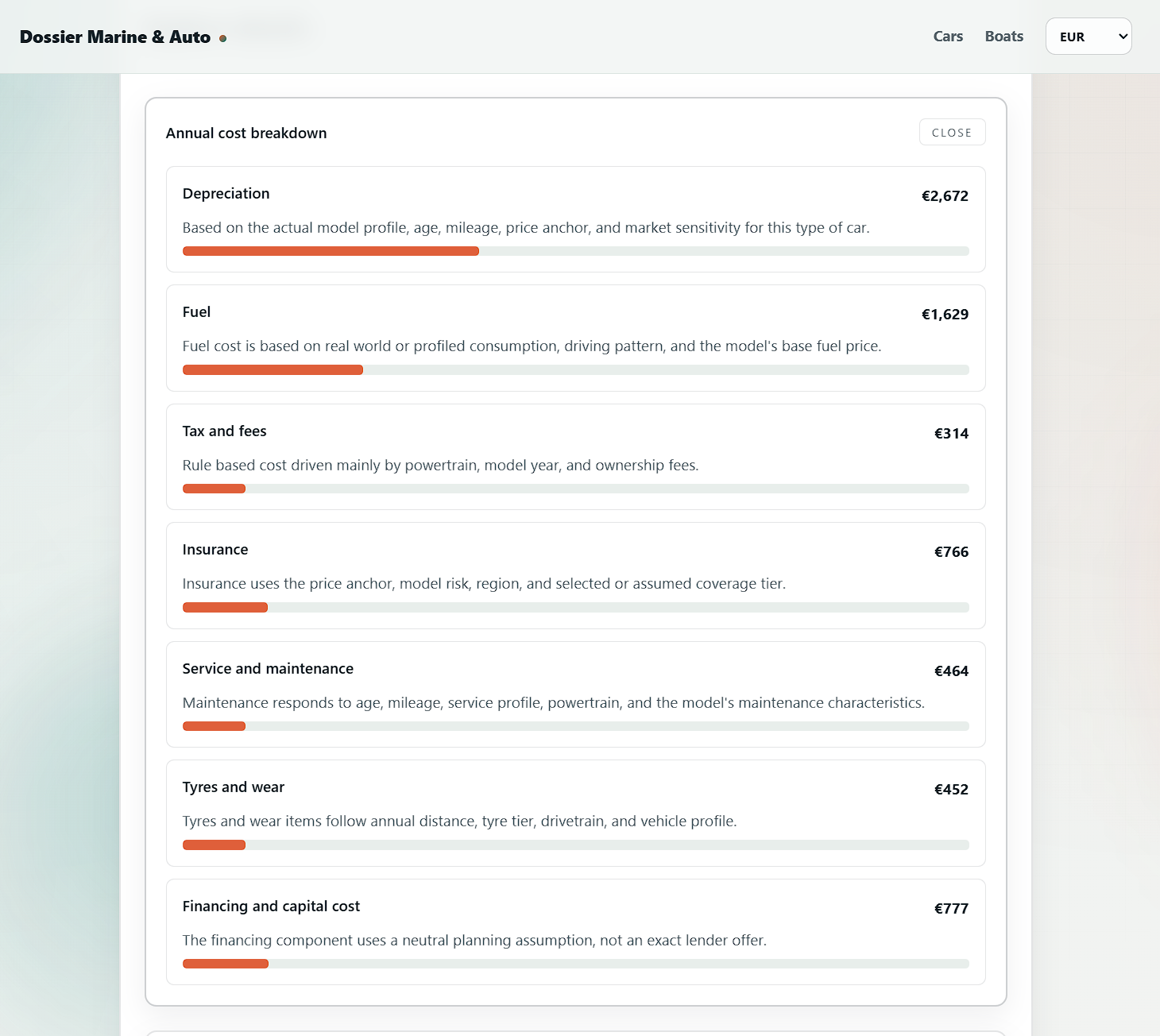
Price Summary Page
Inspiration
Dossier started because my younger brother, Yadid, wants to buy a car.
Like many young people, he could easily find the purchase price, a financing offer, and a monthly payment. What was much harder to understand was the actual financial commitment: depreciation, insurance, fuel, tax, maintenance, repairs, financing, and what the car might be worth when he eventually sells it.
As his older brother, I wanted to advise him properly. But we quickly realized that the information was fragmented, assumptions were often hidden, and most tools reduced a complicated ownership decision to one confident-looking number.
So we built the system we wished we had.
I study Computer Engineering at KTH and led the project, architecture, and implementation. Yadid was our Domain Research Lead. He is currently in a technical high-school program and plans to study Business Administration with a finance specialization. His technical background meant that our financial research could stay closely connected to how the model was actually implemented.
What we built
Dossier Marine & Auto estimates the real cost of owning a specific car or boat under a specific ownership scenario.
A user can start from a listing, let Dossier extract the available facts, and then add what the advertisement cannot know: how much they will use it, how long they plan to own it, and how they intend to finance it.
Instead of hiding uncertainty behind one precise number, Dossier gives low, base, and high estimates and shows what drives them.
Just as importantly, it explains where the result came from: the assumptions used, the source of important inputs, fallback reliance, confidence, limitations, and the factors that would change the result most.
How we approached it
We deliberately separated AI-assisted extraction from the financial calculation itself.
Extraction may suggest facts from a listing, but it never decides the financial answer. Once the inputs are normalized, the ownership model is deterministic: the same inputs and model versions produce the same result.
Cars and boats also have separate financial engines. They share the same reporting and validation structure, but we did not force two very different ownership models into one generic formula.
The project is calibrated for Sweden and models the costs that actually matter here, while keeping assumptions and uncertainty visible rather than pretending the model knows more than it does.
What we learned
The hardest part was not calculating ownership cost. It was deciding how to build a system people could actually trust.
We learned that reproducibility is not the same as accuracy, confidence is not the same as certainty, and a financial tool should be able to explain its answer rather than simply display it.
What began as two brothers trying to understand one car purchase became something broader:
a tool for people who are expected to make major financial decisions before anyone has properly taught them how to evaluate them.
Built With
- api
- codex
- github
- gpt-5.6
- next.js
- node.js
- npm
- openai
- react
- typescript
- vitest
- zod


Log in or sign up for Devpost to join the conversation.