-
-
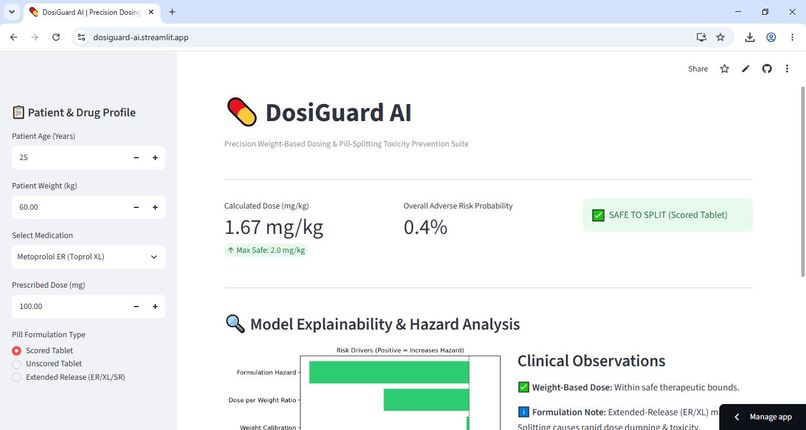
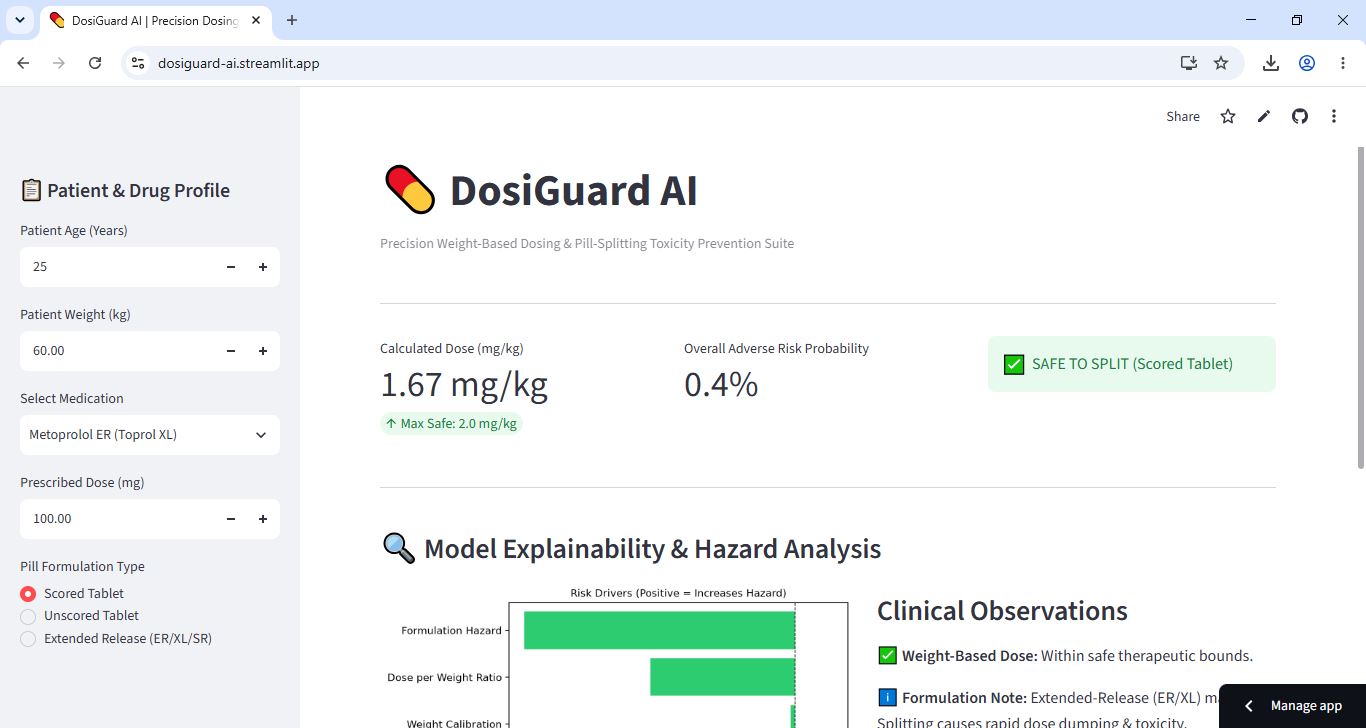
Dashboard Overview
-
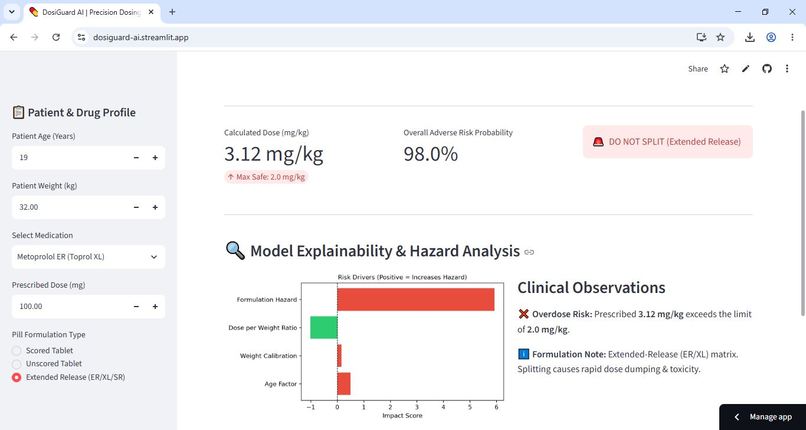
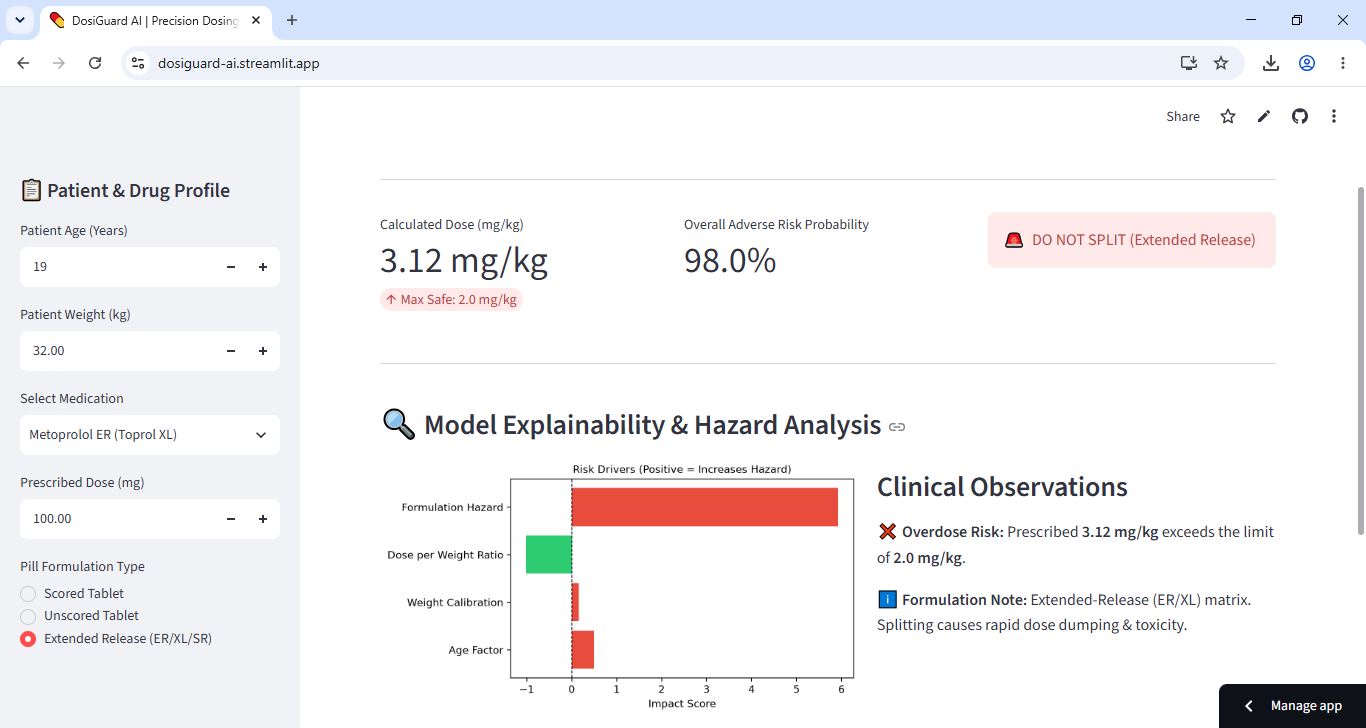
Safety Warning
-
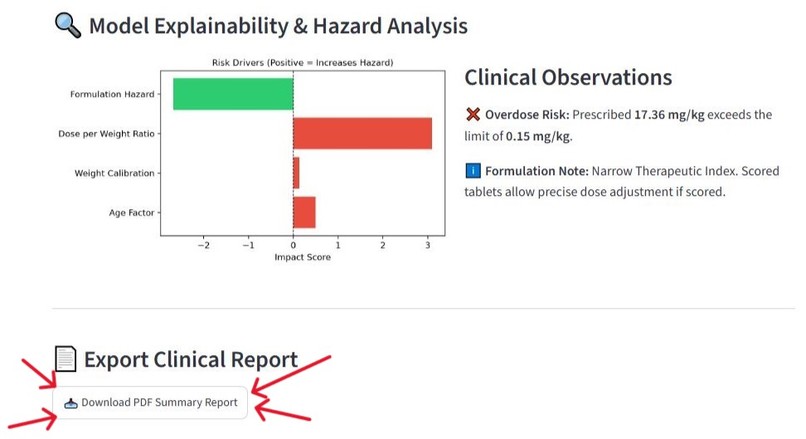
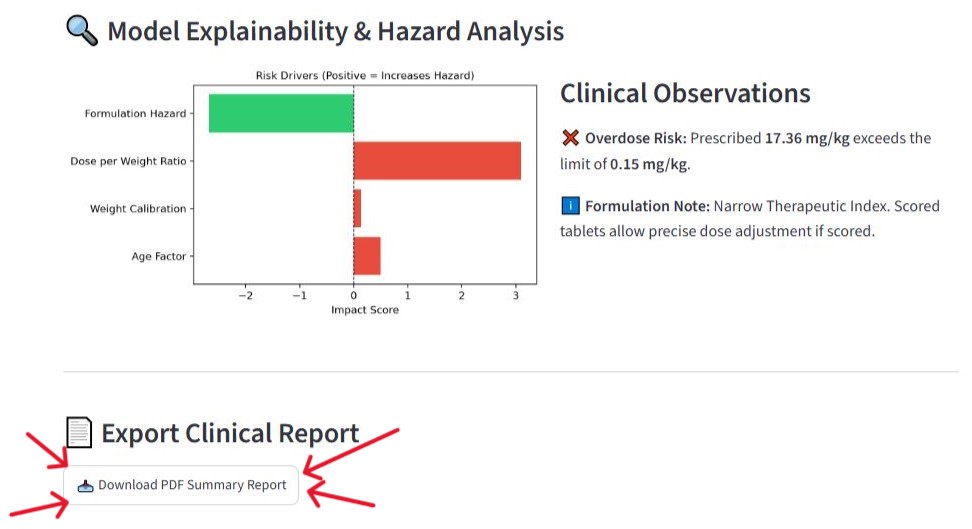
Data Chart and Report
-
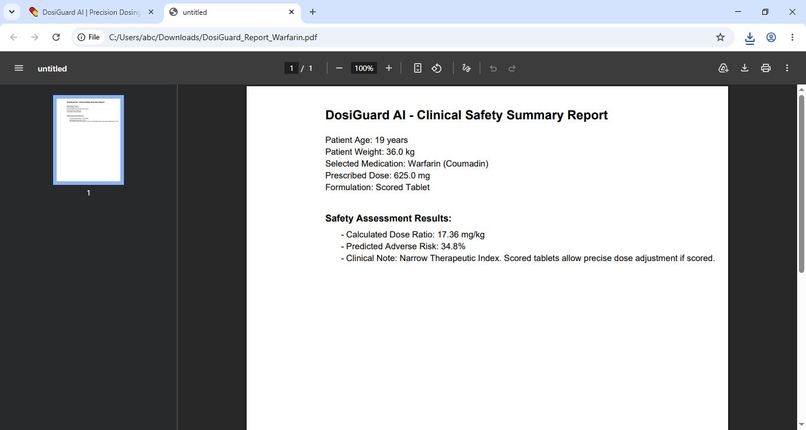
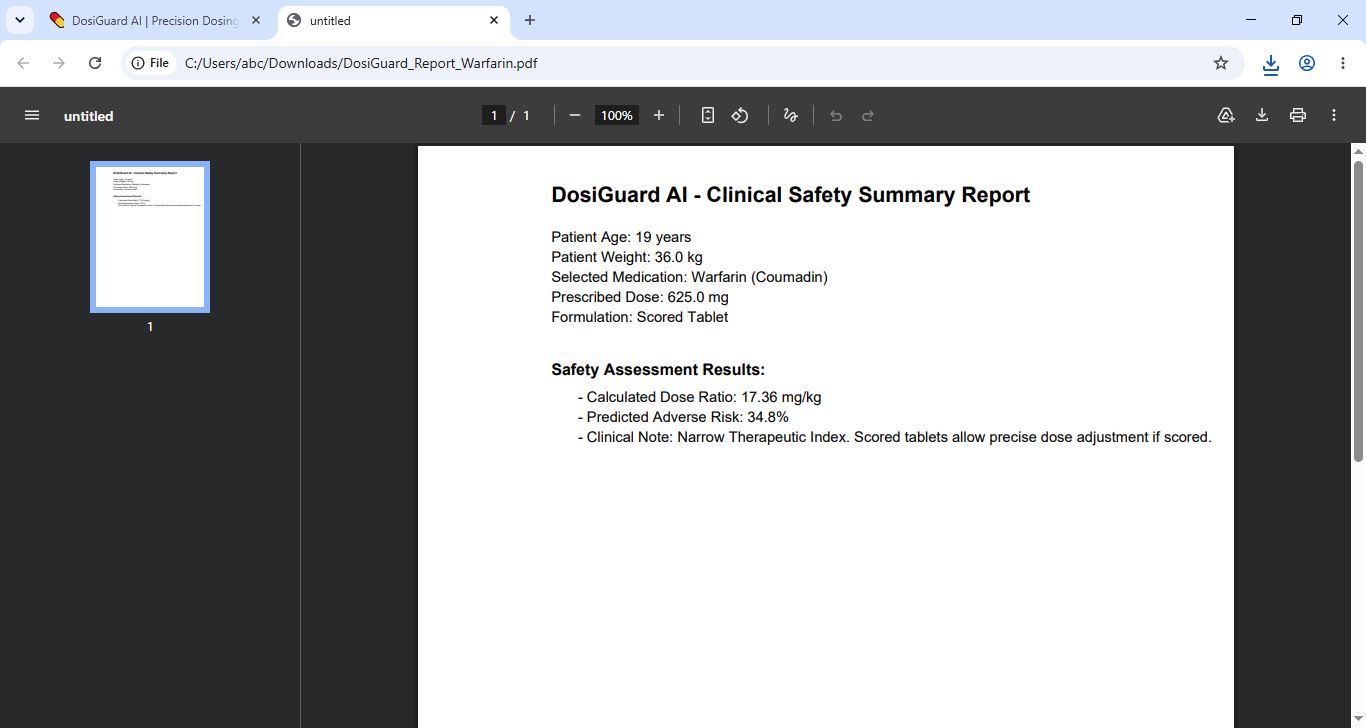
PDF Report
Inspiration
Most people don't realize how razor-thin the margin between a therapeutic medicine dose and accidental toxicity really is. We see pill bottles with generic instructions like "take one tablet twice a day," but clinical medicine is rarely one-size-fits-all. Weight variations, subtle formulation differences, and the common practice of splitting tablets without knowing if they are extended-release can lead to dangerous side effects or severe toxicity.
I wanted to build something that bridges the gap between raw prescription data and actionable patient safety—a tool that flags risks before a pill is ever taken.
What it does
DosiGuard AI is a clinical safety and precision-dosing suite designed to prevent medication toxicity.
- Precision Weight Dosing: Calculates exact mg/kg dosing based on patient age, weight, and specific drug limits.
- Smart Pill-Splitting Guidance: Instantly detects formulation types (Scored, Unscored, or Extended-Release) and issues critical visual warnings if splitting a pill will destroy its time-release mechanism.
- ML Hazard Engine: Uses a machine learning model to score overall adverse risk probabilities in real time.
- Explainable Risk Insights: Displays visual bar graphs showing which factors (e.g., dosage ratio, formulation risk) contribute most heavily to potential adverse events.
- Exportable Clinical Reports: Generates clean, downloadable PDF summary reports on the fly for healthcare providers or patients.
How we built it
- Backend & Logic: Built entirely using Python.
- Machine Learning & Analytics: Leveraged
scikit-learnto train a Logistic Regression hazard assessment model, alongsidepandasandnumpyfor data processing. - Visual Interface: Created an interactive dashboard using
streamlitfor seamless real-time user inputs. - Data Visualization: Built dynamic hazard attribution charts with
matplotlib. - PDF Engine: Used
reportlabto dynamically construct and export structured PDF clinical reports.
Challenges we ran into
Building this on a resource-constrained machine proved to be a real test of patience. Compiling heavy statistical libraries like scipy and scikit-learn triggered system freezes and terminal timeouts during setup. I had to pivot strategies mid-build, streamline backend dependency installations, and manually troubleshoot environment paths in Command Prompt to get the app running smoothly.
What we learned
I learned how to integrate machine learning inference with lightweight, real-time web frameworks, and how crucial it is to design clear visual feedback (like dynamic color badges and hazard graphs) when presenting complex medical predictions to users.
What's next for DosiGuard AI
- Integrating real-world FDA drug interaction databases and broader EHR (Electronic Health Record) standards.
- Expanding the model to account for kidney and liver clearance metrics (eGFR / CrCl) for hyper-personalized dosing safety.
Built With
- healthcare
- machine-learning
- matplotlib
- medtech
- pandas
- python
- reportlab
- scikit-learn
- streamlit


Log in or sign up for Devpost to join the conversation.