-
-
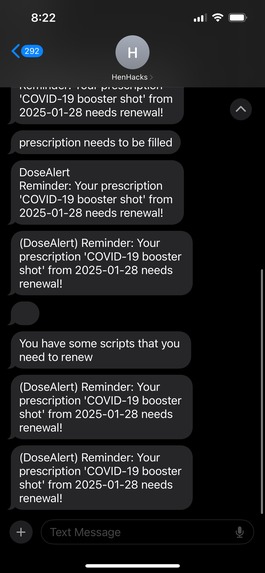
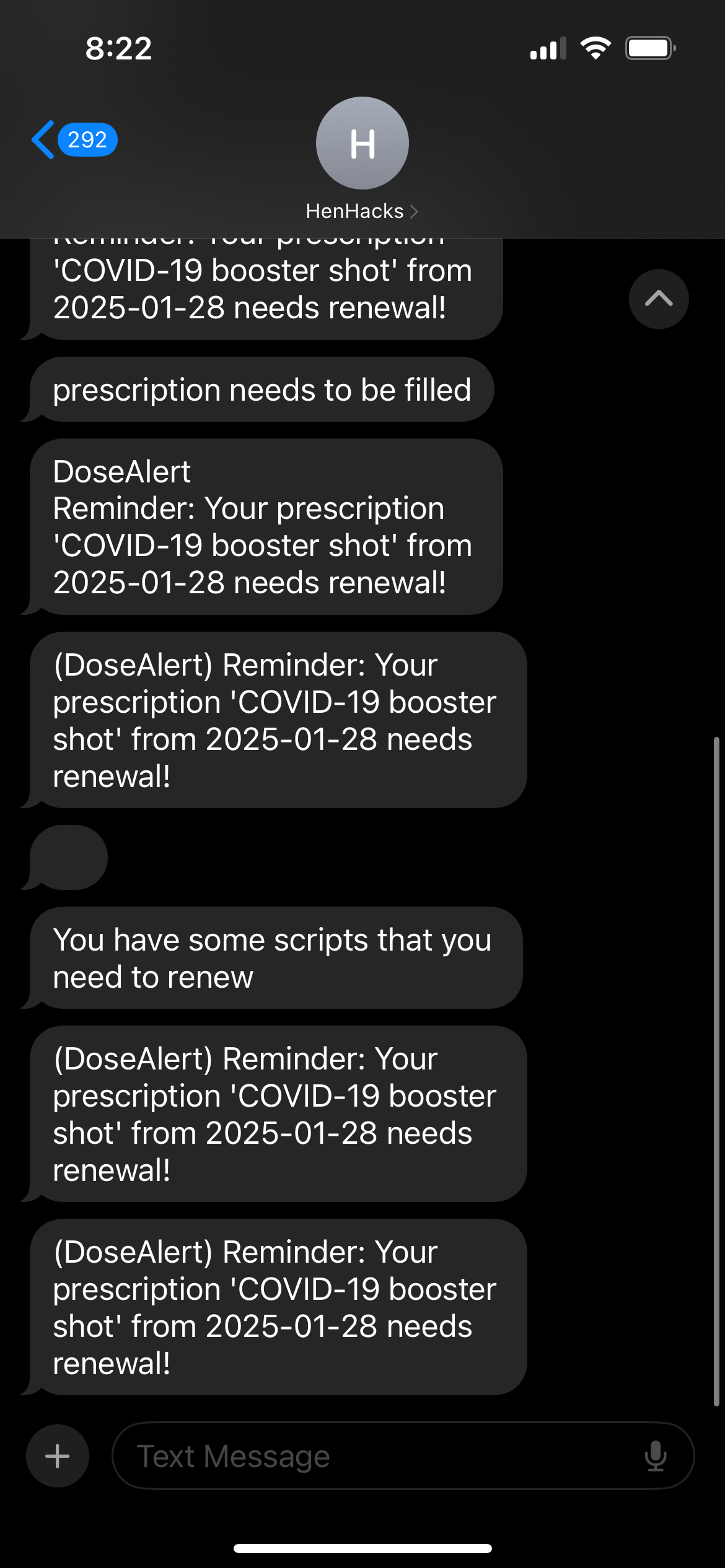
Showing the texts coming through to the iPhone
Building DoseAlert: A Journey in Solving Real-World Healthcare Challenges
Inspiration: Bridging the Gap in Medication Adherence
The spark for DoseAlert came from a conversation with Dylan's father, a healthcare professional who highlighted a critical problem: patients often forget about upcoming vaccinations and medications. This directly impacts treatment outcomes and public health. We realized technology could bridge this gap, creating a system that empowers patients through automated reminders and accessible health information.
What We Built: A User-Centric Solution
Core Features
- Automated SMS Reminders: Integrated custom email sms to send timely alerts
- Medication Tracking Dashboard: FastAPI backend with webez frontend
- AI-Powered Drug Insights: Laid groundwork for generative AI medicine descriptions (planned expansion)
- Health Entry System: Secure API endpoints for user data management
# FastAPI Scheduler for Daily Checks
@asynccontextmanager
async def lifespan(app: FastAPI):
    scheduler = BackgroundScheduler()
    scheduler.add_job(check_old_prescriptions, 'cron', hour=3, minute=0)  # 3 AM daily
    scheduler.start()
    yield
    scheduler.shutdown()
// Webez API Integration Example
async function getHealthEntries(userId: number) {
  const response = await axios.get(
    `http://128.4.102.9:8000/users/${userId}/health-entries/`,
    { headers: { "X-API-KEY": "secret-key-123" } }
  );
  return response.data;
}
Technical Journey: Lessons Learned
Frontend Evolution
React Deep Dive: Used Apple's Genius Bar approach to master component architecture
- Analyzed Apple's component patterns through Genius Bar documentation
- Implemented atomic design principles for reusable UI elements
Styling Breakthroughs: Implemented CSS Modules for cohesive designs
- Solved CSS namespace collisions through modular architecture
- Created theme variables for consistent color/font management
API Integration: Bridged TypeScript frontend with Python backend
- Developed type guards for safe API response handling
- Implemented axios interceptors for global error handling
Backend Challenges
First FastAPI Implementation: Created RESTful endpoints with JWT authentication
- Learned dependency injection patterns for database sessions
- Implemented middleware for CORS and request validation
Database Optimization: Learned PostgreSQL optimization techniques
- Added composite indexes for common query patterns
- Implemented connection pooling with asyncpg
Async Programming: Mastered background tasks with APScheduler
- Configured cron-style scheduling for daily SMS batches
- Implemented task locking to prevent duplicate executions
API Cross-Language Hurdles
// TypeScript Frontend Validation
interface HealthEntry {
  userId: number;
  medication: string;
  dueDate: DateString;
}
# Python Pydantic Model
class HealthEntry(BaseModel):
    user_id: int = Field(gt=0)
    medication: str = Field(min_length=3)
    due_date: date
Key Learnings:
- Implemented shared validation contracts via OpenAPI spec
- Understood how react simplifies the process of adding html to a site
- Created API key
What's Next: Expanding Impact
Future Roadmap
| Priority | Feature | Tech Stack |
|---|---|---|
| P0 | Multi-Language Support | i18next, Localazy |
| P1 | Doctor Network | Mapbox, Elasticsearch |
| P2 | AI Symptom Checker | YOLOv12, WebRTC |
| P3 | Medicine Wiki | GPT-4 API, RAG |
Built With
- css
- fastapi
- html
- python
- sqlalchemy
- typescript
- webez

Log in or sign up for Devpost to join the conversation.