-
-
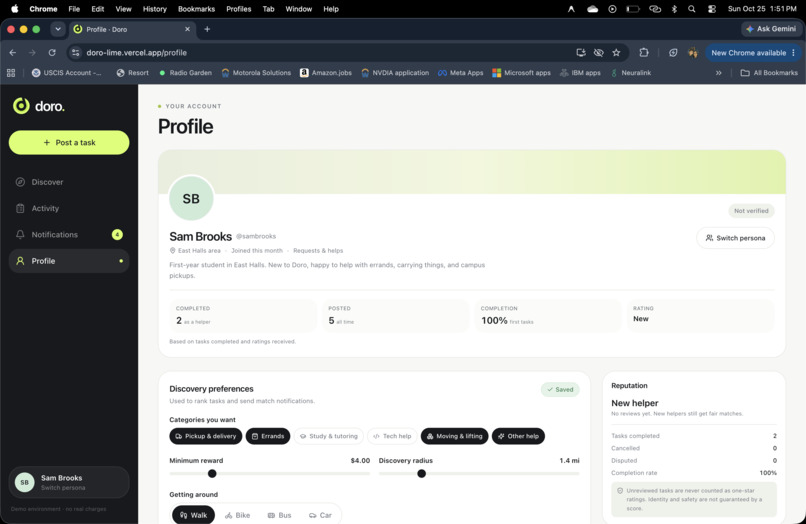
profile
-
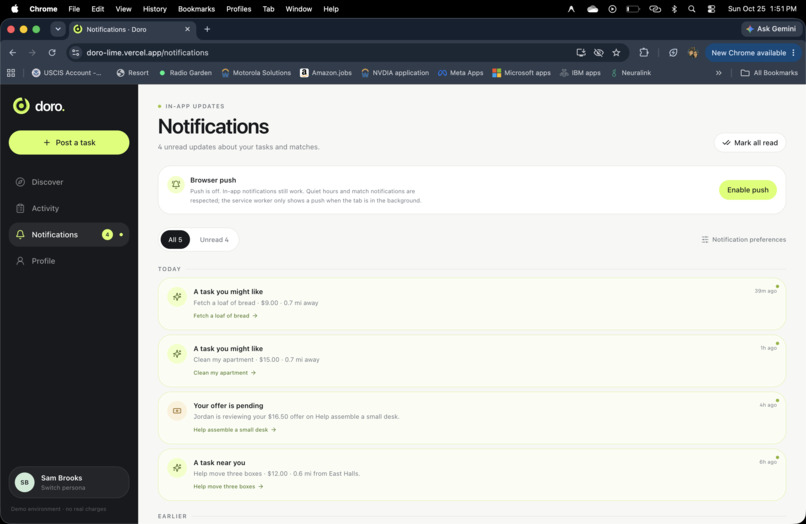
notifications
-
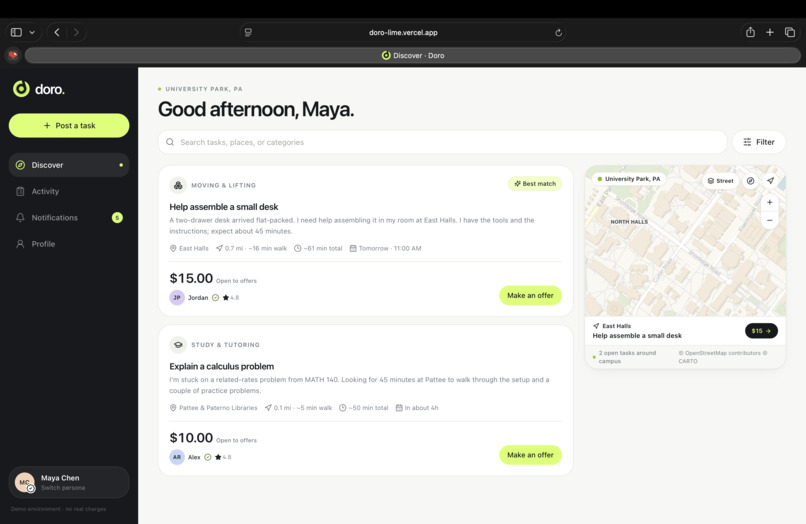
dashboard

Inspiration
Thousands of students walk between the same Penn State buildings every hour, like Pattee Library, the HUB, and East Halls. Meanwhile, students constantly need quick favors like grabbing a forgotten notebook, picking up a prepaid food order, or carrying studio boxes. We built doro to connect those everyday needs with students already walking that exact route, turning a 25-minute round trip for one person into a 3-minute paid detour for another.
What it does
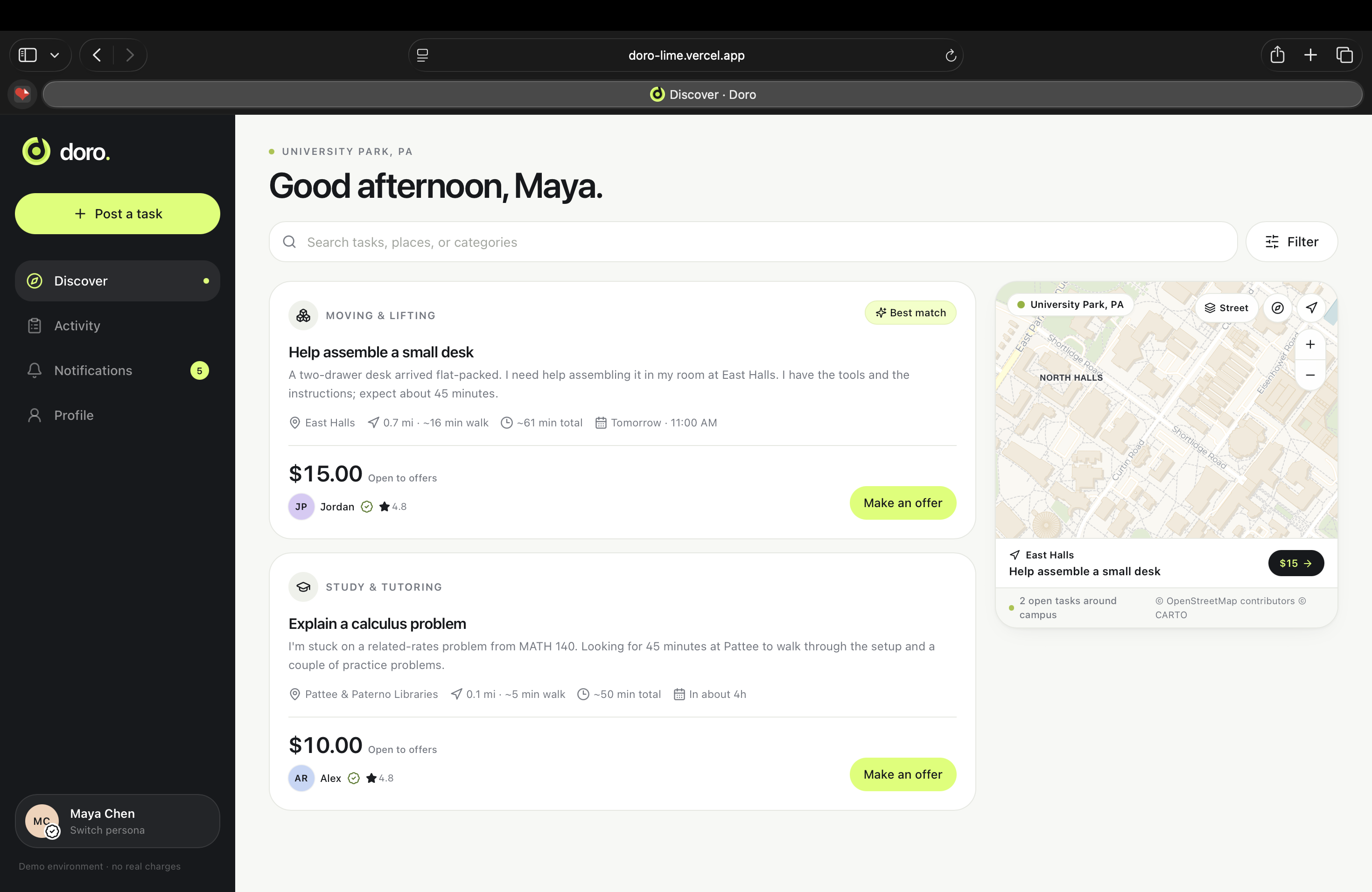
doro is a hyperlocal campus marketplace where students post small tasks between public campus landmarks and nearby students get paid to complete them along their walk. Users can browse tasks by category or on an interactive campus map that highlights tasks along their route. When posting a task, doro suggests a fair reward (around $3 to $18) while allowing helpers to accept right away or send a counteroffer. Once assigned, tasks move from open to completed using task-scoped chat, a 4-digit handoff PIN, and simulated escrow payouts.
How we built it
We built doro with Next.js, TypeScript, Tailwind CSS, Zod, and Vitest, keeping UI components separate from a typed repository and service layer.
Challenges we ran into
Making sure users couldn't accept their own tasks, assign multiple helpers to the same delivery, or skip steps required building a strict state machine in the backend service layer instead of just disabling buttons. We also had to simplify our interface after early versions felt too crowded, moving to a clean top menu ribbon, category cards, and a two-column task feed. Finally, we built a custom SVG campus map so the app runs offline without needing external map API keys.
Accomplishments that we're proud of
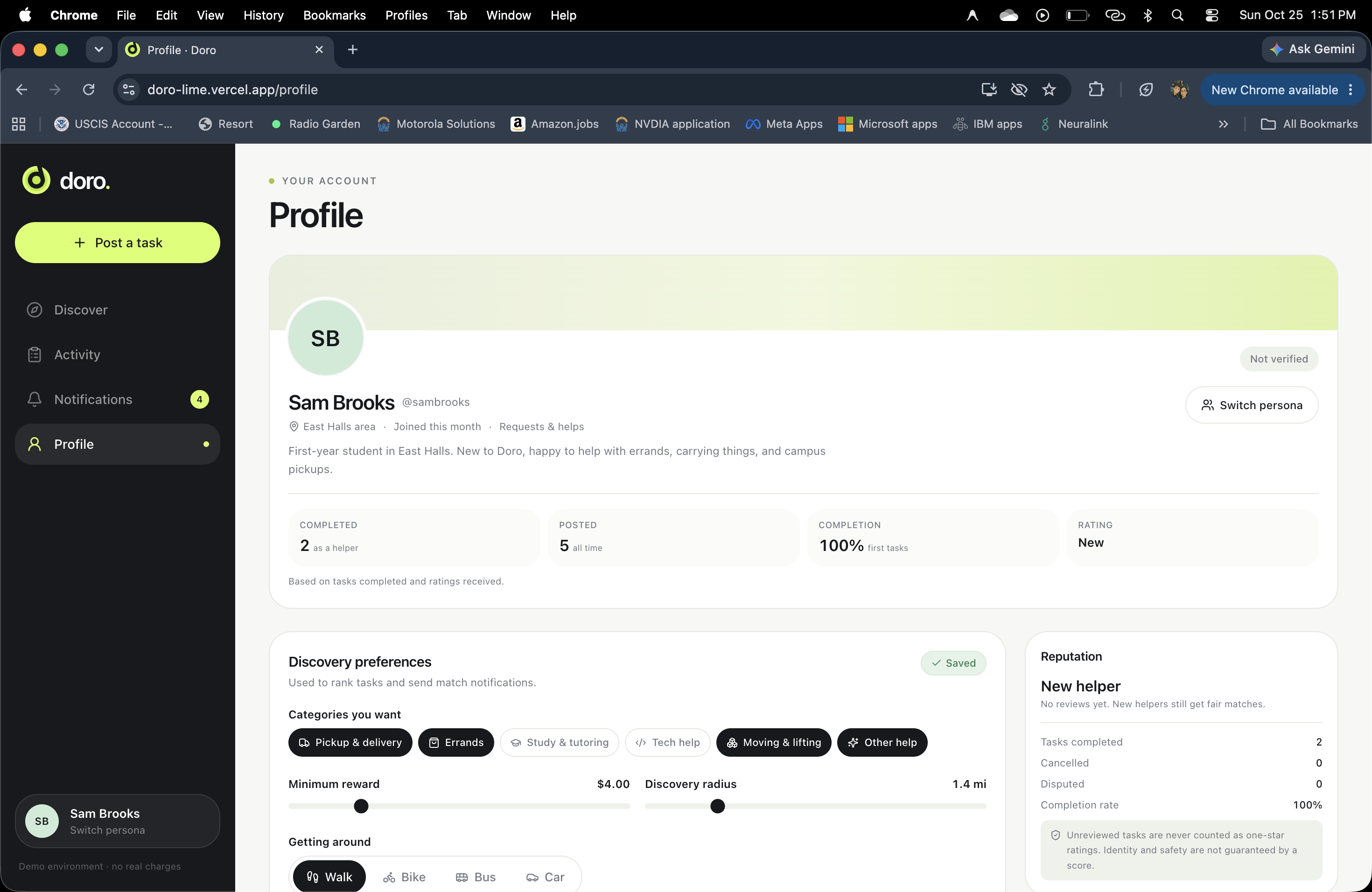
We built a complete, working marketplace where anyone can test both sides of a transaction in seconds using a built-in role switcher—posting a task, accepting it as a helper, verifying the handoff PIN, and settling the payout. We also wrote 108 automated tests covering our pricing logic, counteroffers, and state rules.
What we learned
On a college campus, routes matter much more than simple radius. A task half a mile along your walk to class is easy, while a shorter walk in the wrong direction feels like a chore. We also learned how much safer and simpler the product becomes when handoffs are restricted to public building lobbies and chat only opens after a helper is assigned.
What's next for doro
Next, we plan to add university .edu login for verified student profiles, sync with student class schedules to match tasks during 15-minute passing periods, and integrate Stripe Connect for real escrow payouts.
Built With
- nextjs
- typescript
- vitest
- zod
