Inspiration
DormMatch was inspired by a housing process where students must form groups of seven or eight before applying. One person withdrawing or paying late can put the entire group at risk.
What it does
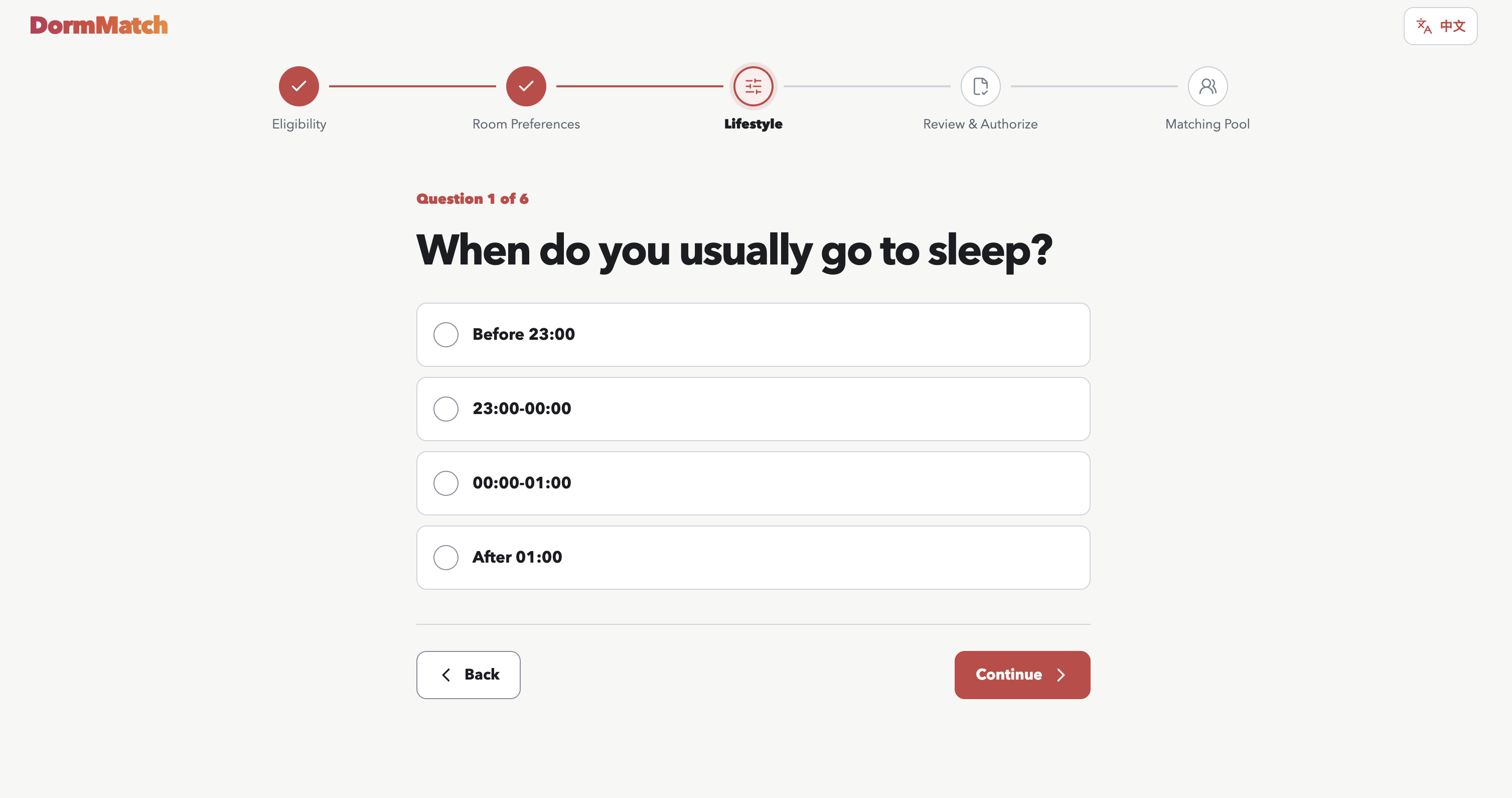
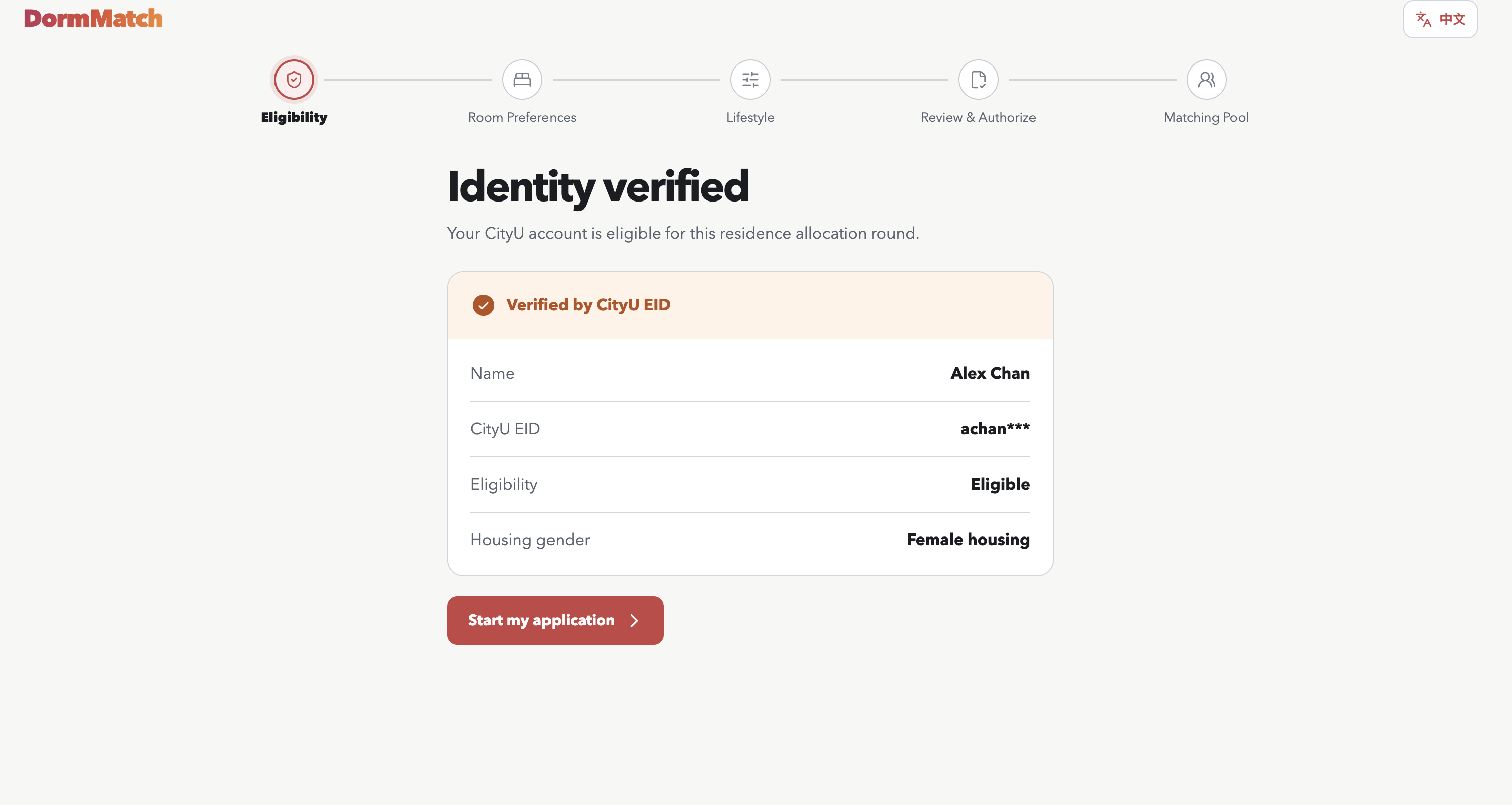
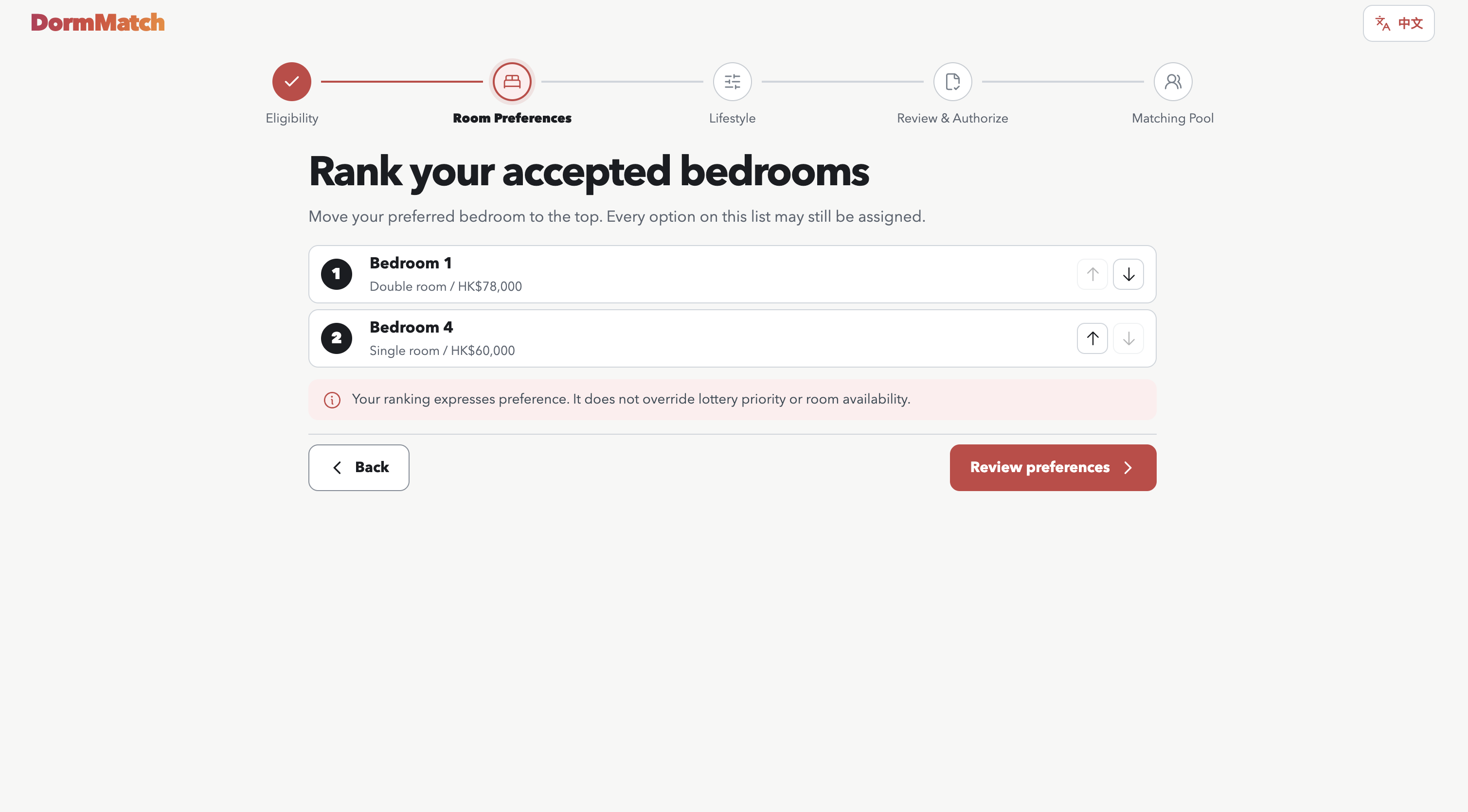
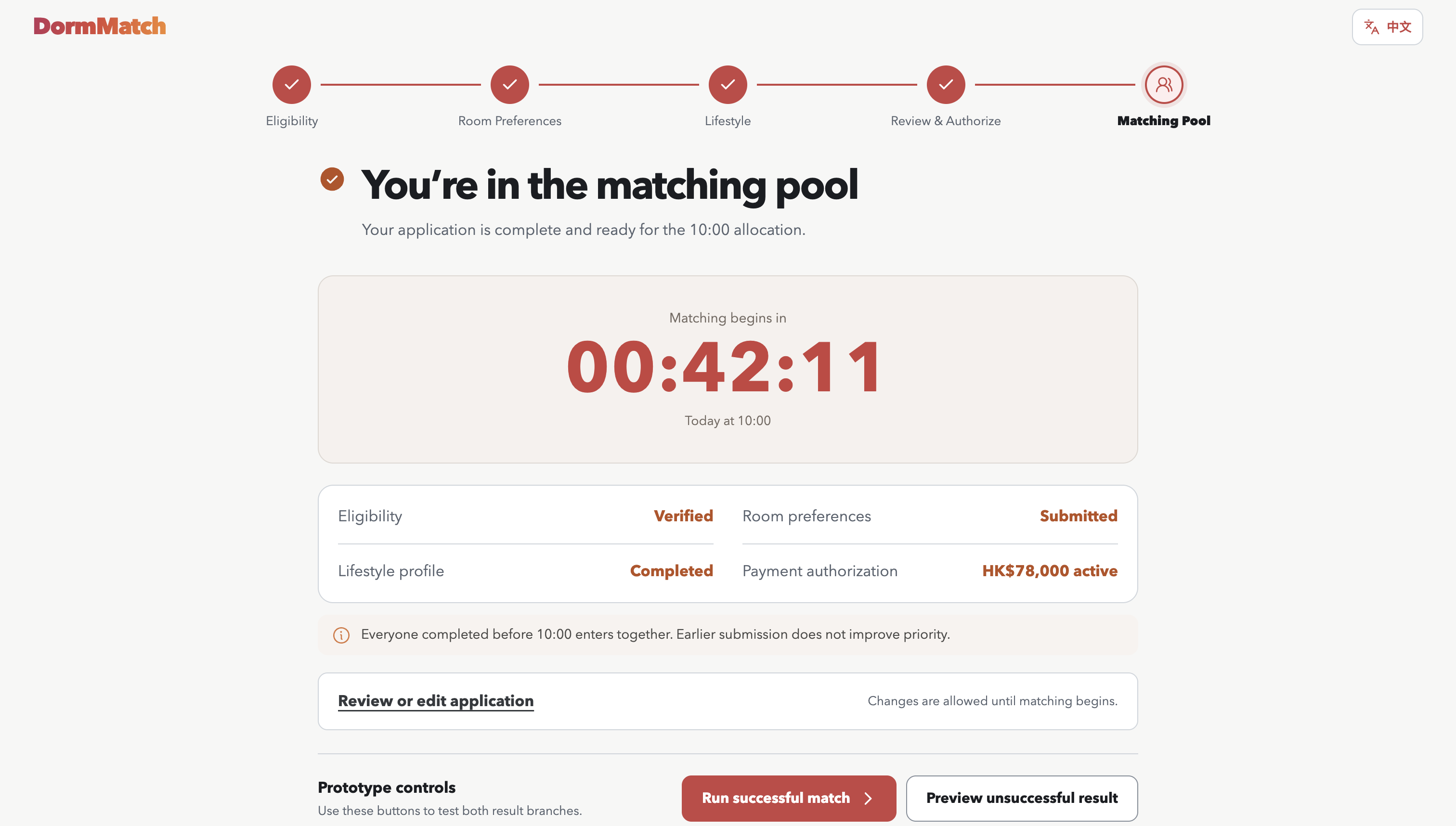
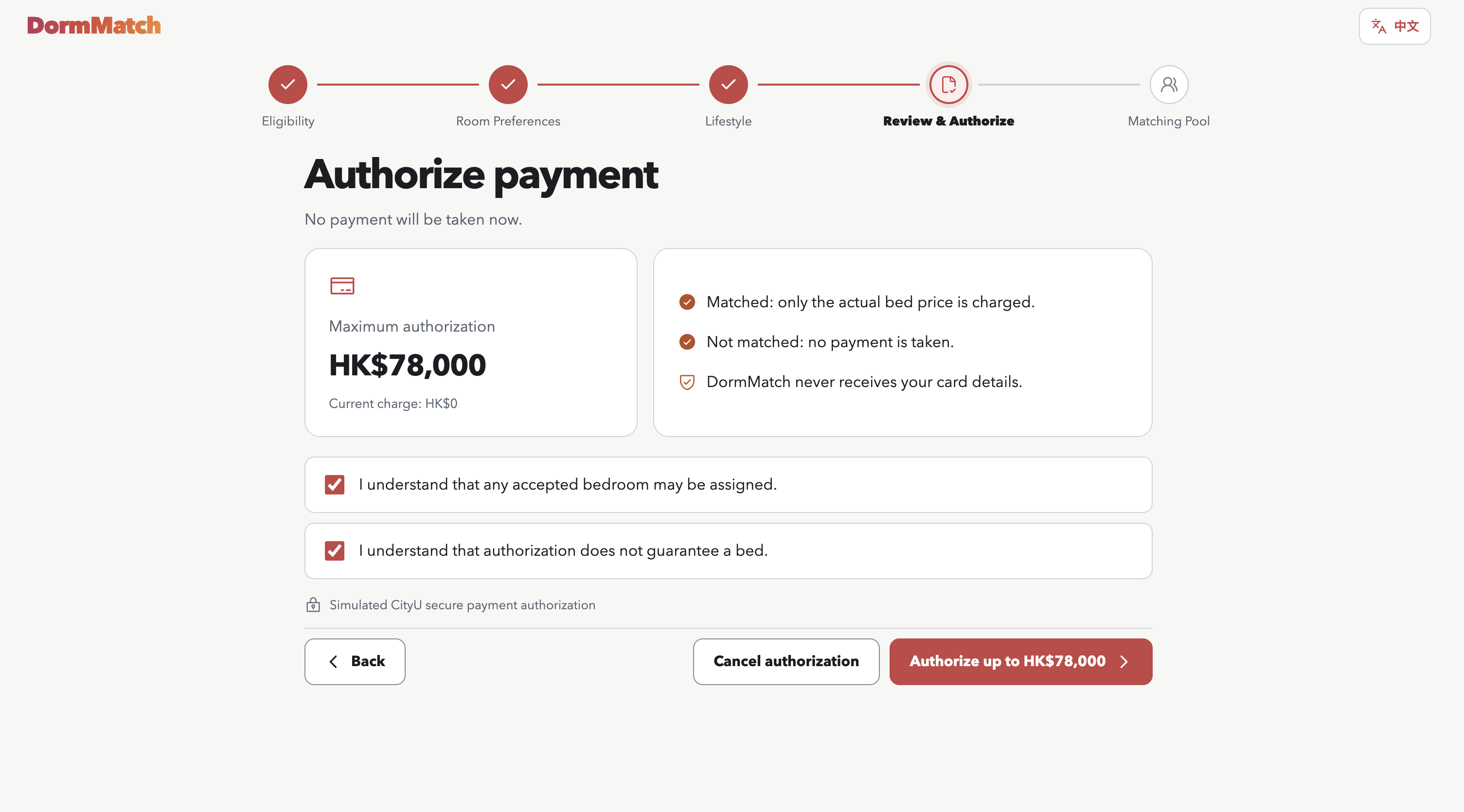
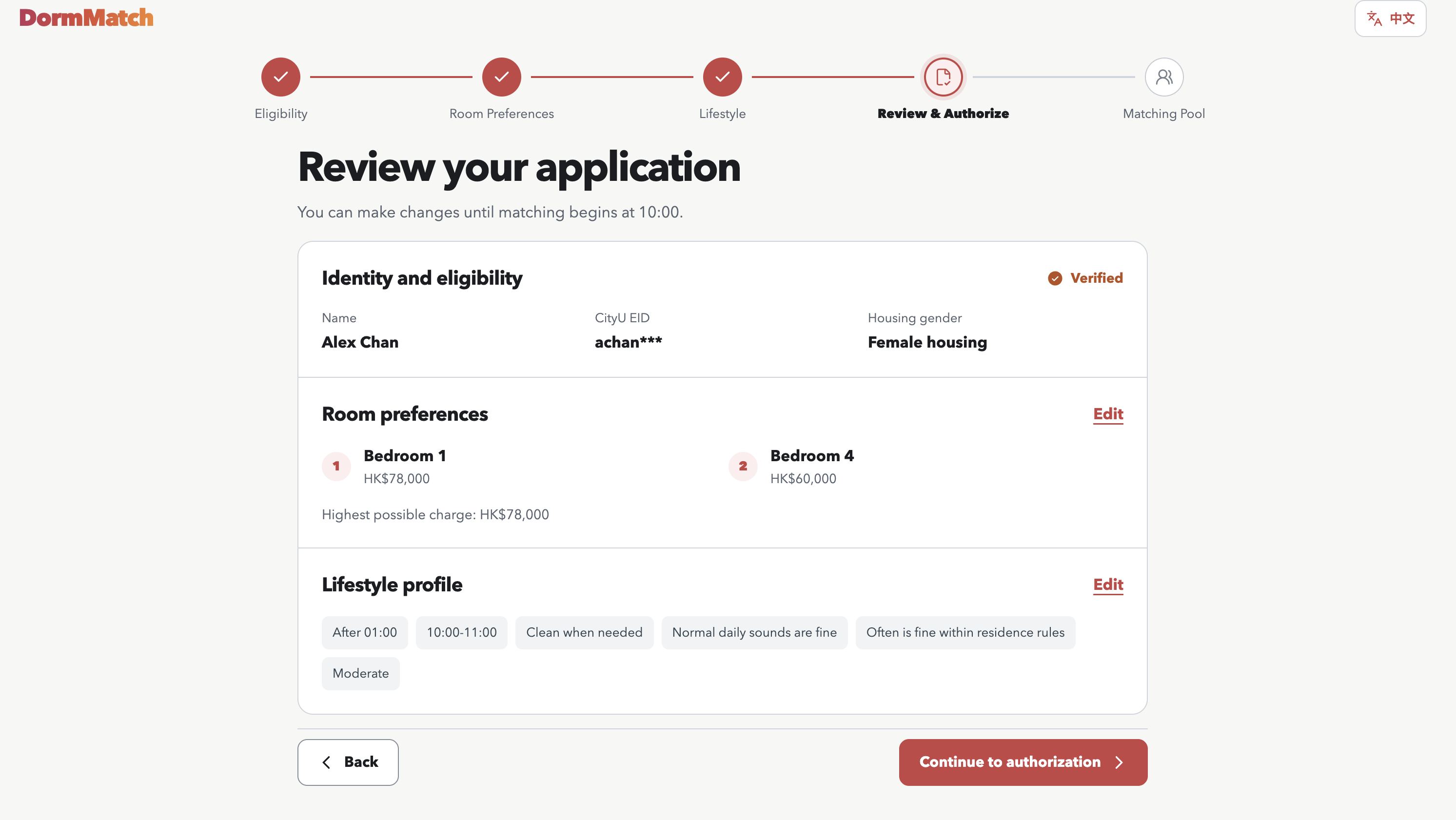
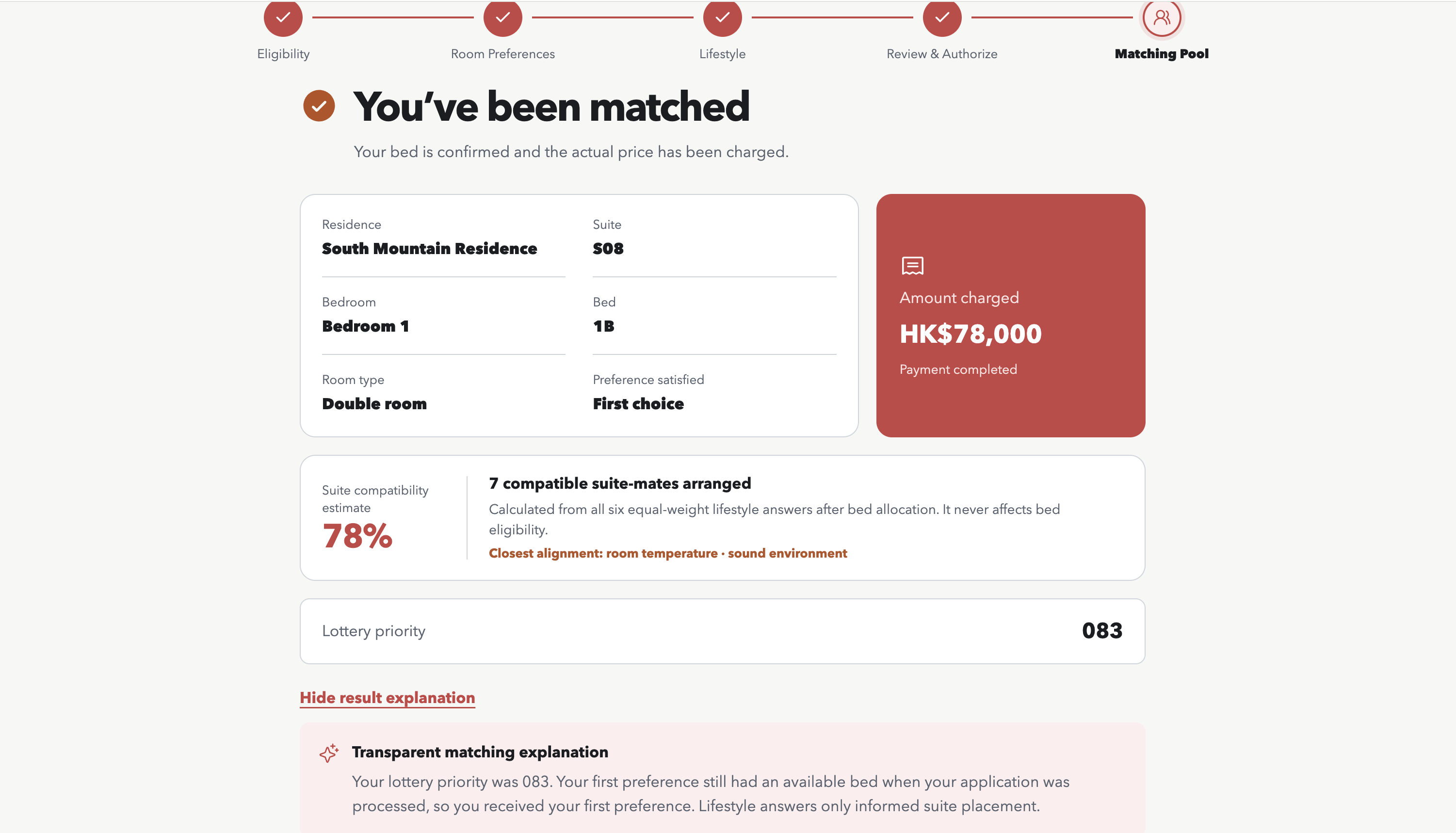
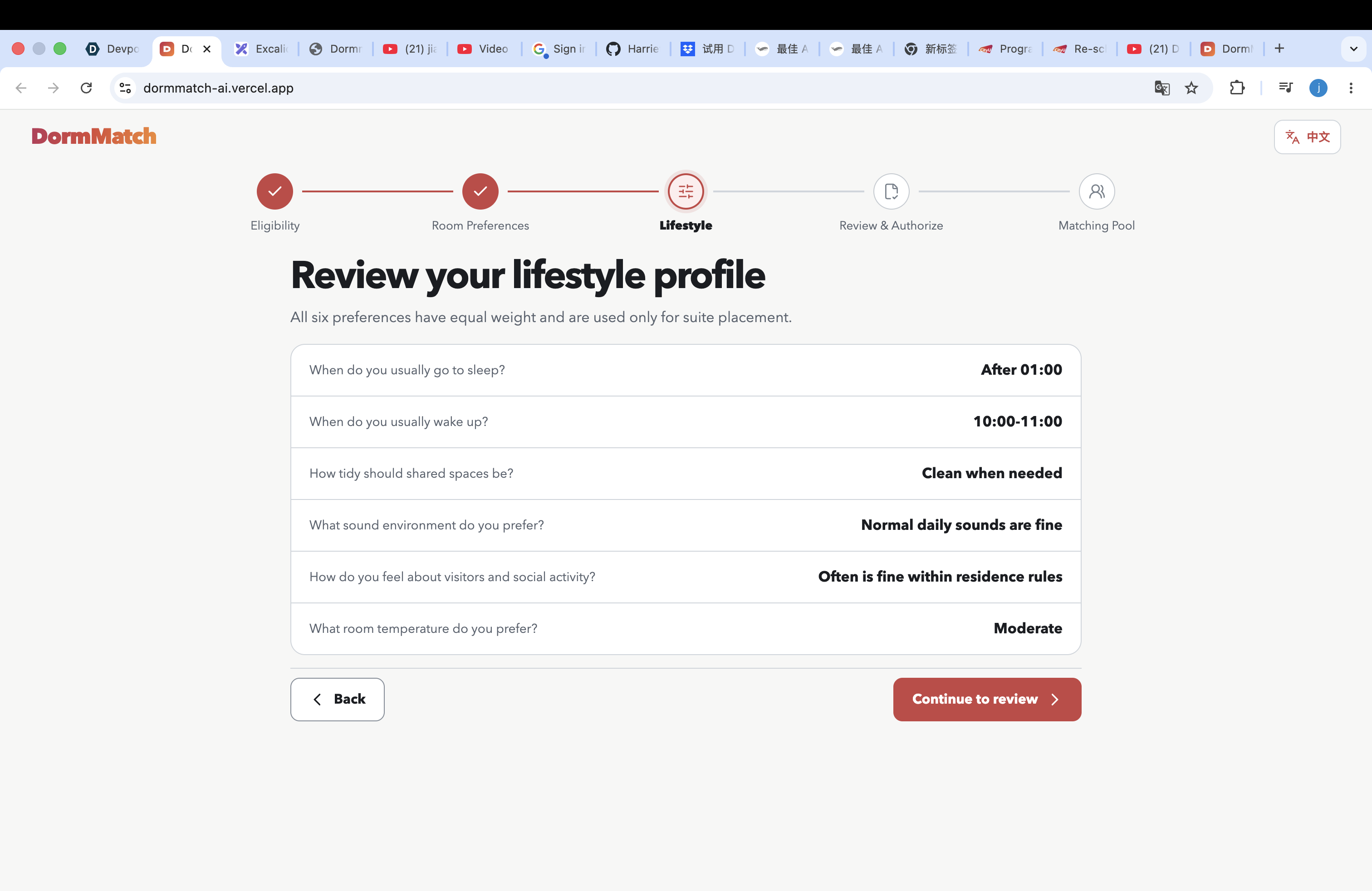
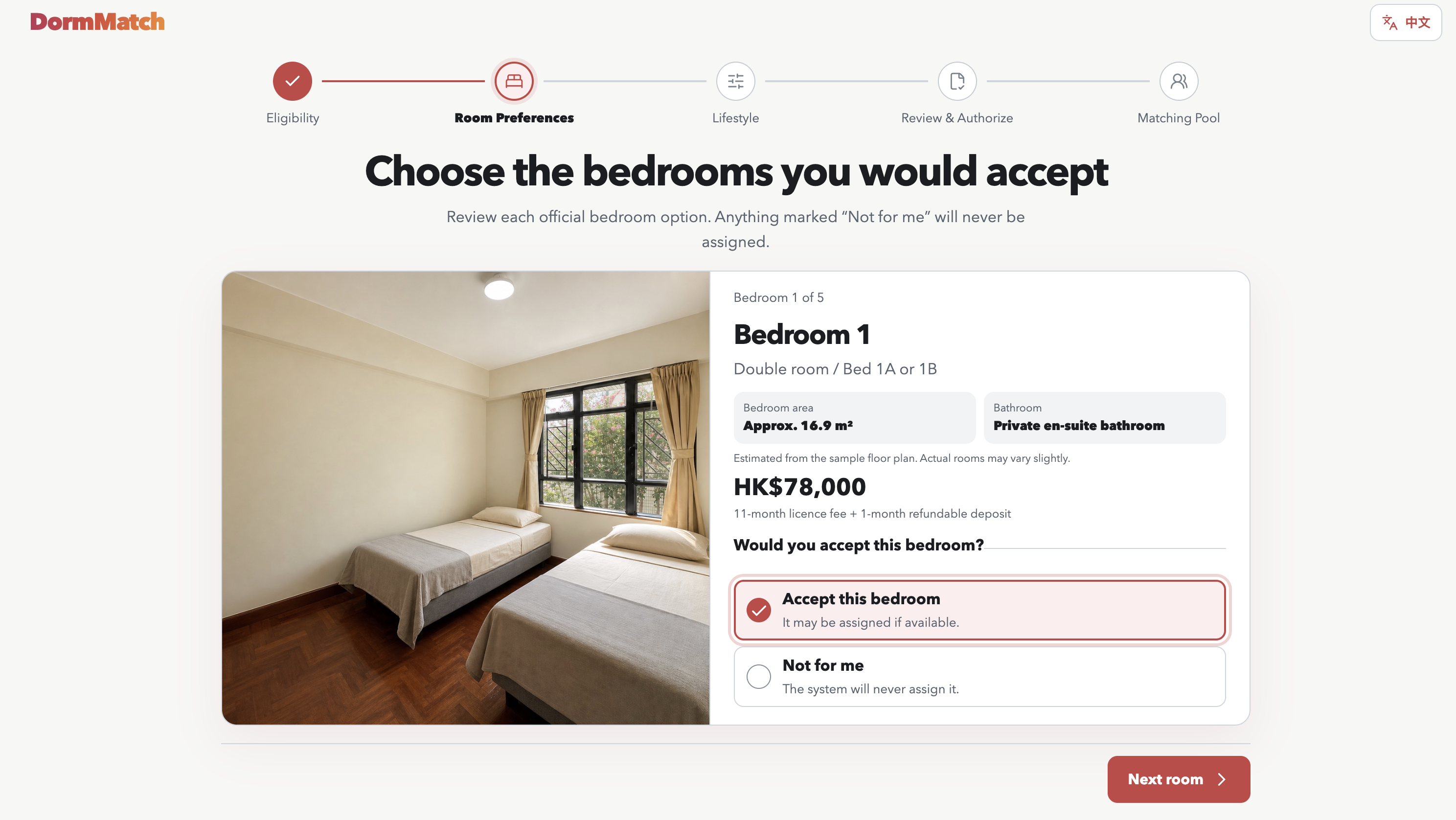
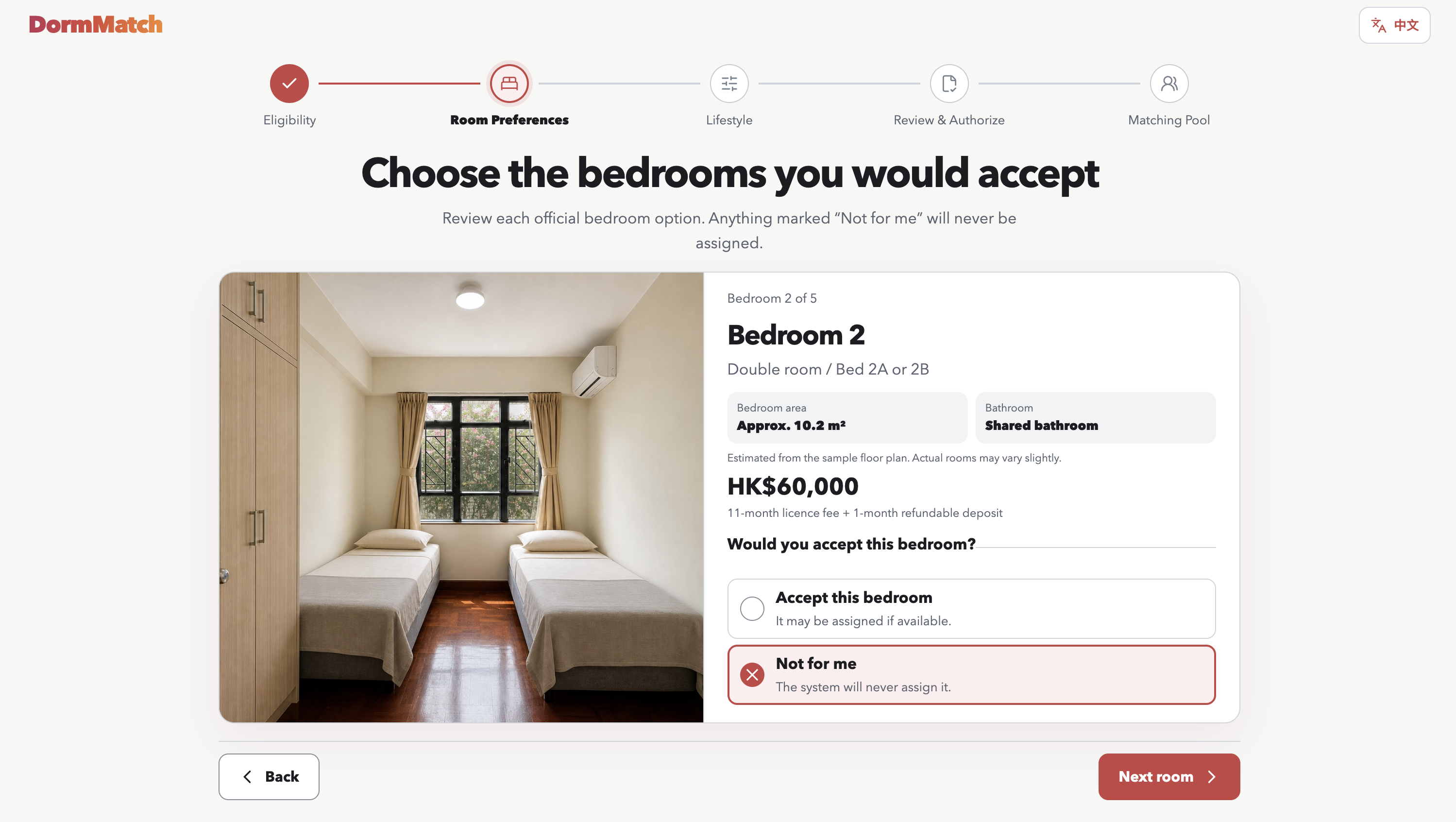
DormMatch treats every student as an individual applicant. Students verify eligibility, choose acceptable room types, complete a roommate-preference survey, and authorize payment. At the allocation time, a transparent lottery and matching system assigns rooms fairly. Payment is collected only after a successful match, while unsuccessful applicants remain on the waitlist.
How we built it
We built DormMatch with React, Vite, JavaScript, Lucide icons, and a deterministic allocation engine. OpenAI Codex supported product design, implementation, debugging, and test generation.
Challenges we ran into
The main challenge was balancing fairness, room preferences, roommate compatibility, and limited availability without forcing students into rejected rooms.
Accomplishments that we're proud of
We created a complete bilingual prototype and tested its allocation logic with automated cases, 10,000 randomized simulations, and large scenarios containing up to 498 applicants.
What we learned
We learned that trustworthy allocation requires not only an algorithm, but also clear rules, understandable outcomes, and careful testing.
What's next for DormMatch AI
Next, we would integrate university authentication, real housing inventory, secure payment authorization, and administrator tools.
Built With
- css
- gpt-5.6
- javascript
- lucide-react
- openai-codex
- react
- vercel
- vite

Log in or sign up for Devpost to join the conversation.