-
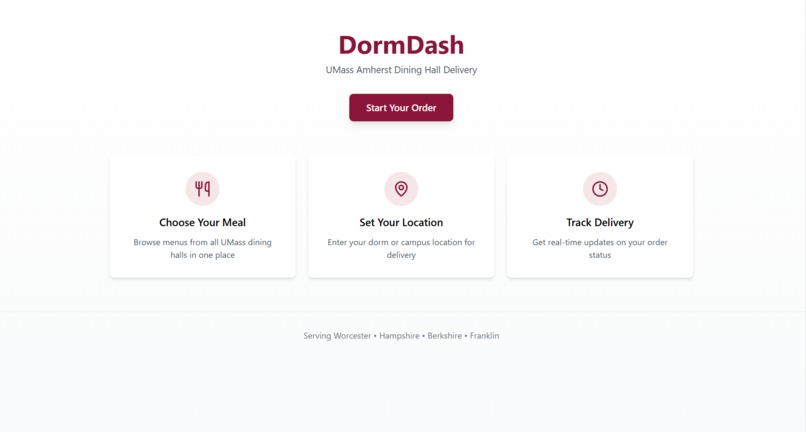
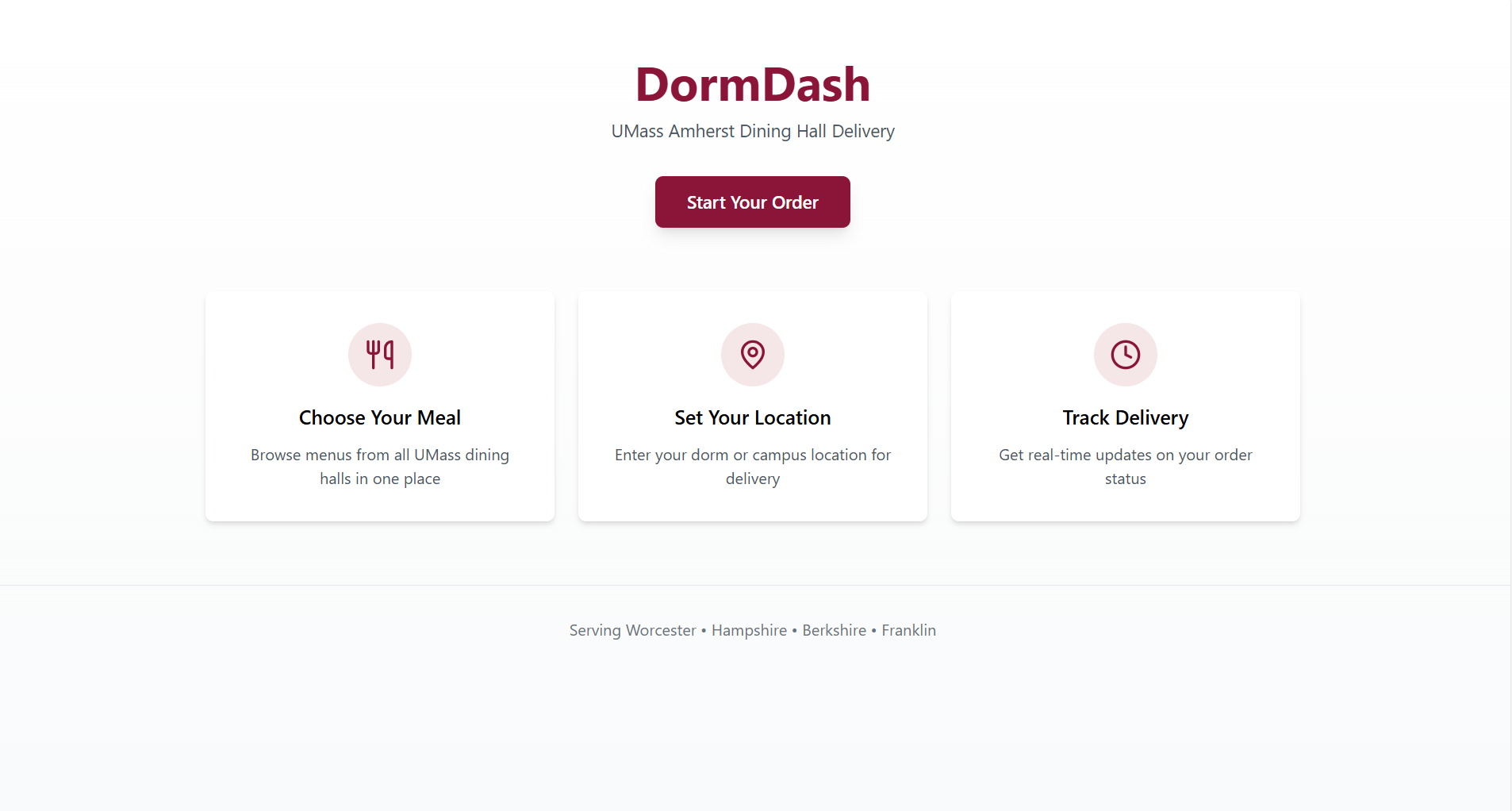
Home Screen
Inspiration
Our inspiration was the constant challenge students face balancing academic demands with basic needs like food. Getting a meal from the campus dining hall often requires a significant and time-consuming trek, especially during bad weather or late-night study sessions. We were inspired to solve this by bringing the convenience of established delivery services like DoorDash directly to the college community.
What it does
ormDash is a campus-specific food delivery application that connects students in dormitories with available food from campus dining facilities.
Student Order: A student browses real-time dining hall options on our website, selects items, and pays using a checkout cart.
Dasher Pickup: The order is sent to a "Dasher" (another student) who is near the dining hall.
Dorm Delivery: The Dasher picks up the pre-ordered food and delivers it directly to the customer's dorm room.
How we built it
We used a classic, robust technology stack to build a functional Minimum Viable Product (MVP) rapidly:
Backend & Logic: Primarily built using Python for server-side logic and application control.
Database: We structured a complete database schema using PostgreSQL to handle user data, menu items, orders, and Dasher assignments.
Data Acquisition: We built a dedicated web scraper to pull menu options and availability from the campus dining websites.
Frontend/Website: We designed and integrated a functioning front-end and back-end website to allow for browsing, ordering, and administrative management.
Challenges we ran into
Our primary challenges centered on real-time data integration and user flow:
Scraping Complexity: Dining hall websites are not standardized, making the initial web scraping logic complex and brittle to changes.
Accomplishments that we're proud of
We are most proud of establishing a complete, end-to-end technical foundation in a limited timeframe:
Working Data Pipeline: Successfully building and populating a PostgreSQL database with a functional web scraper to get real-time menu data.
Full-Stack Functionality: Establishing a connected front-end and back-end website that allows users to browse and place an order, proving the core concept is viable.
What we learned
We gained significant experience in:
Rapid Database Design: Structuring a normalized, high-efficiency database schema (PostgreSQL) under tight deadlines.
Data Engineering: The practical difficulties of creating and maintaining a reliable web scraping solution for non-API-driven data sources.
What's next for DormDash
Our immediate next steps will focus on refining the user experience and preparing for campus-wide testing:
Developing the specific Dasher application module for order acceptance and tracking.
Implementing payment gateway integration.


Log in or sign up for Devpost to join the conversation.