-
-
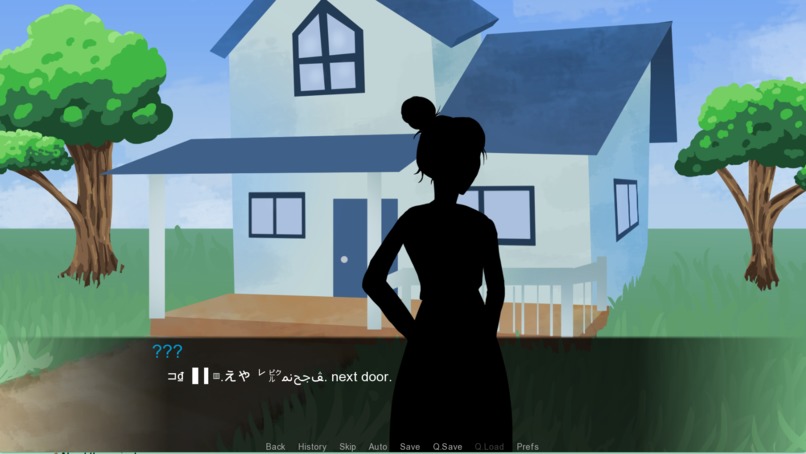
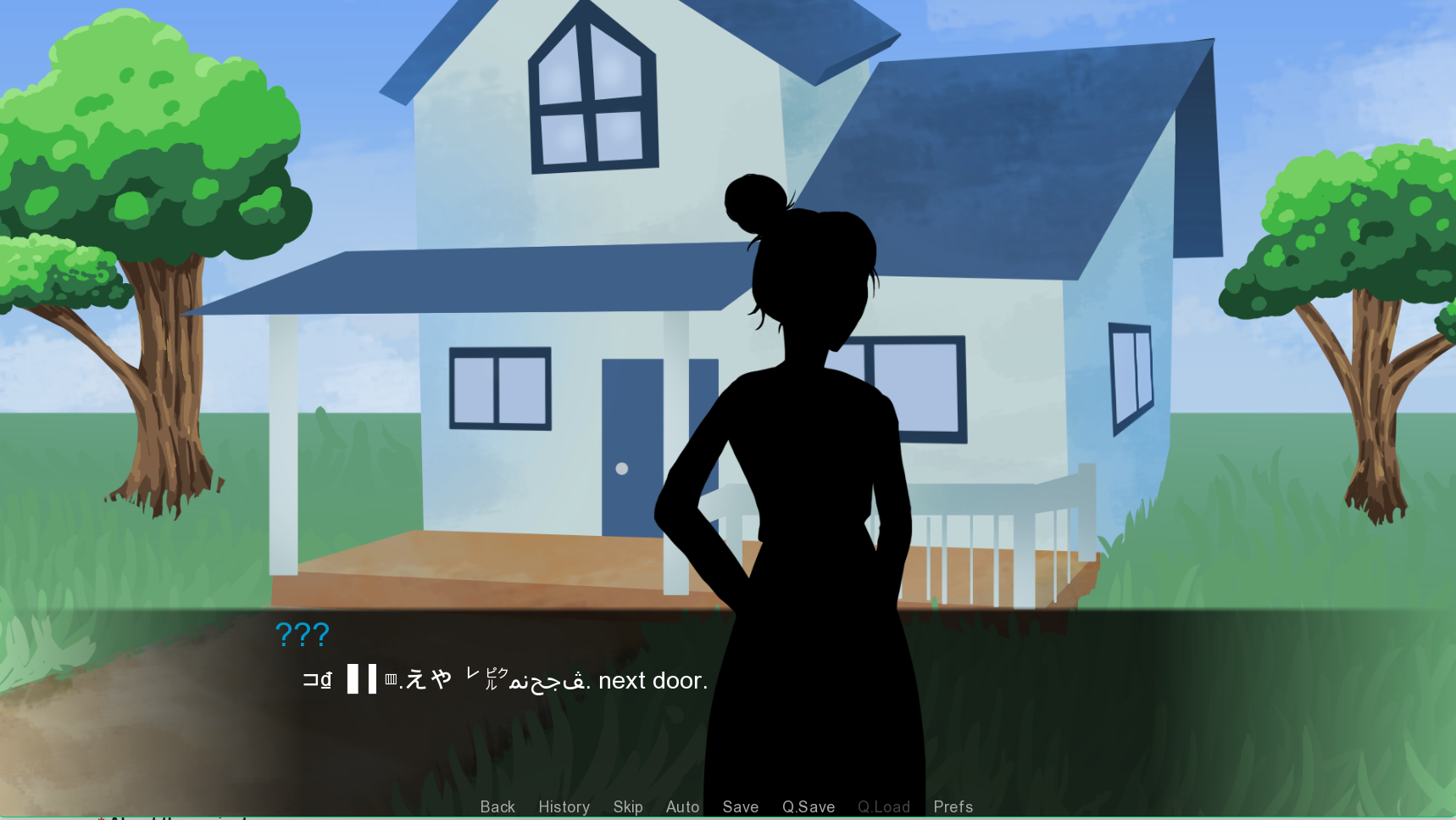
Opening dialogue with non-english speaking neighbour
-
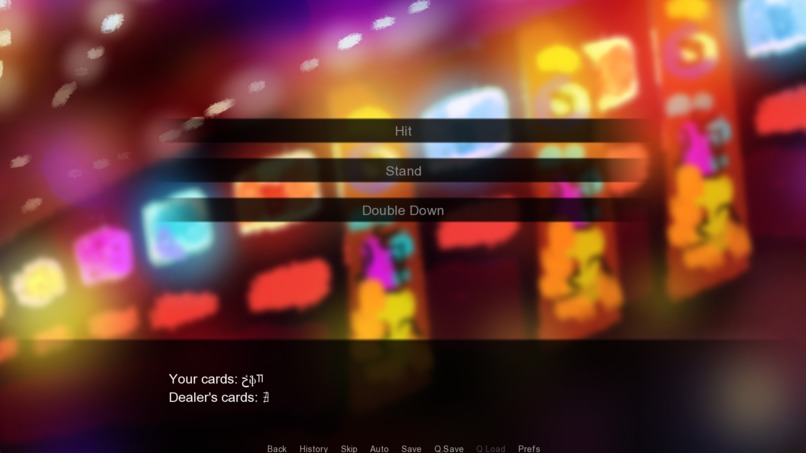
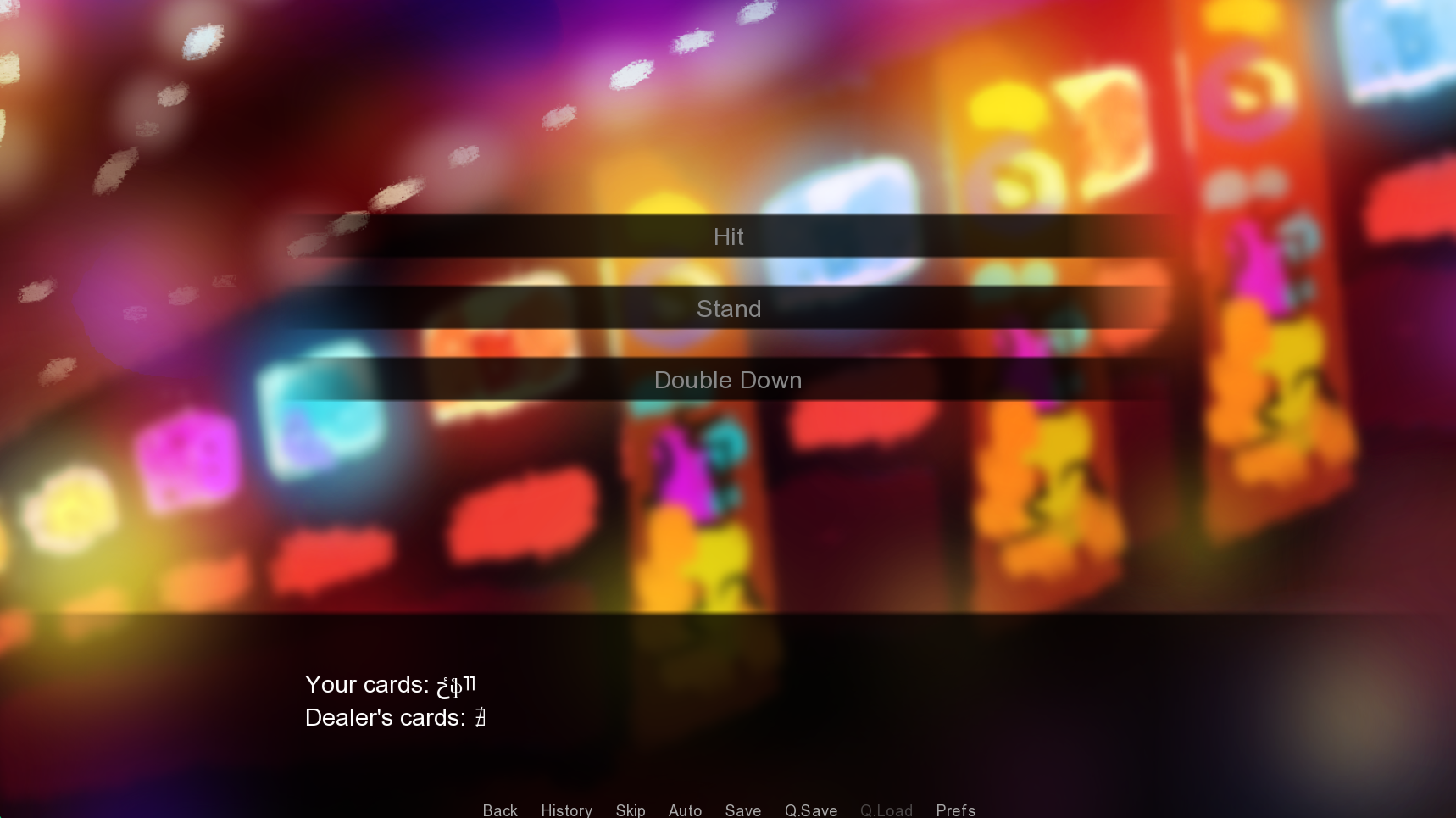
Blackjack minigame to learn numbers on the cards
-
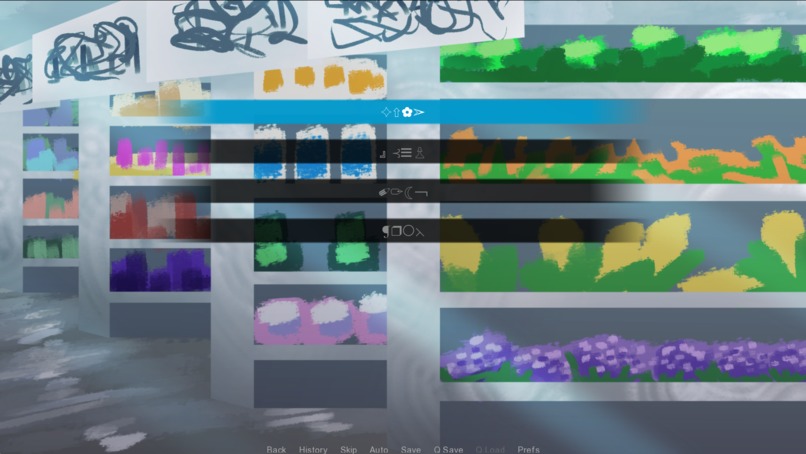
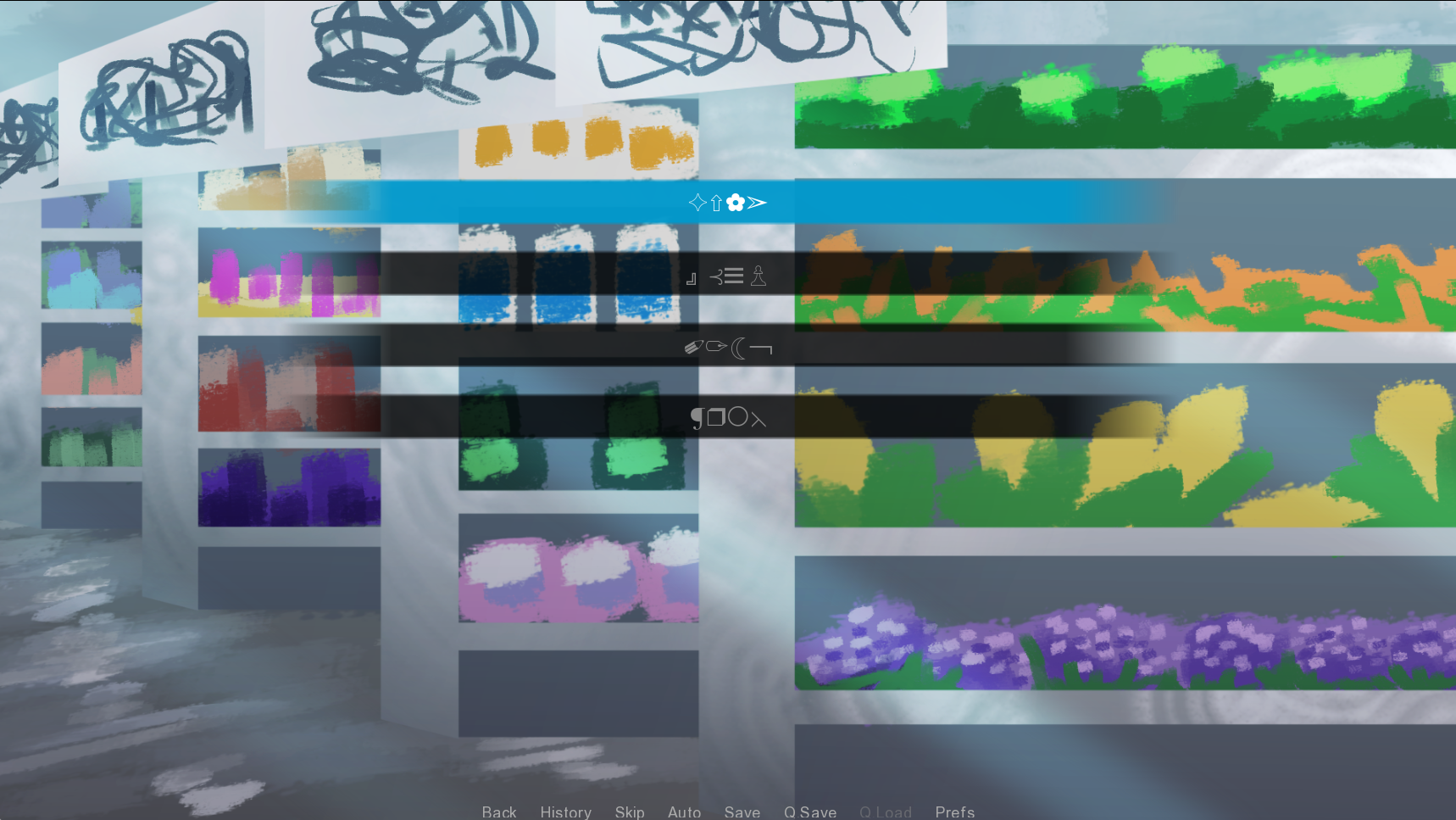
Playing the grocery minigame
-
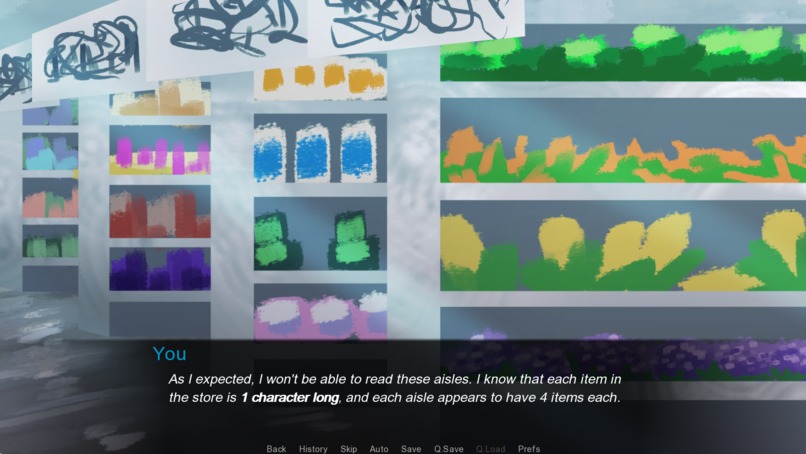
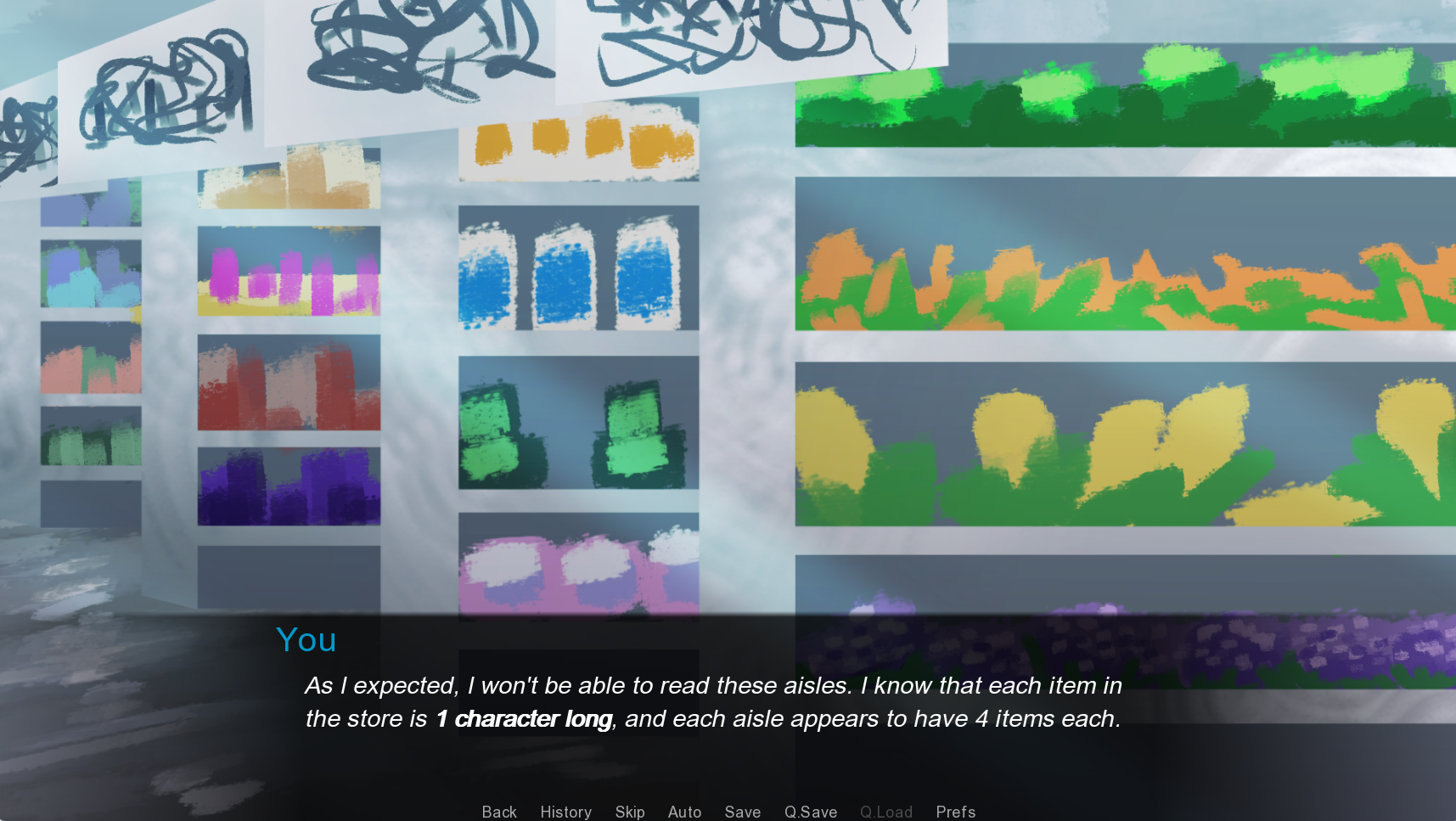
Grocery minigame tutorial
-
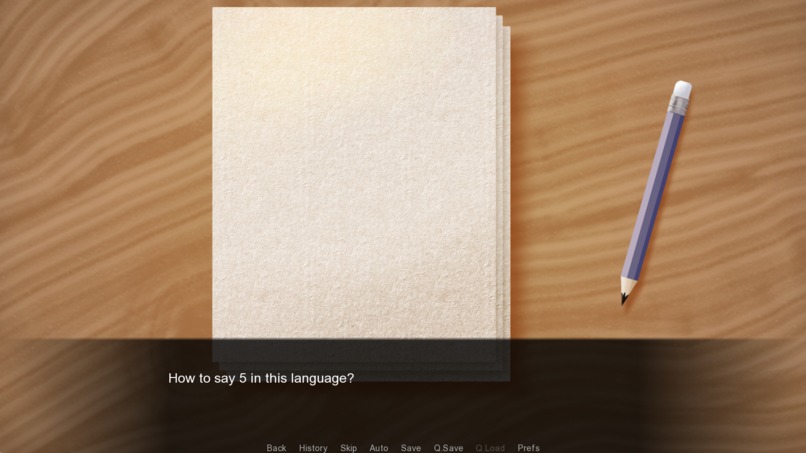
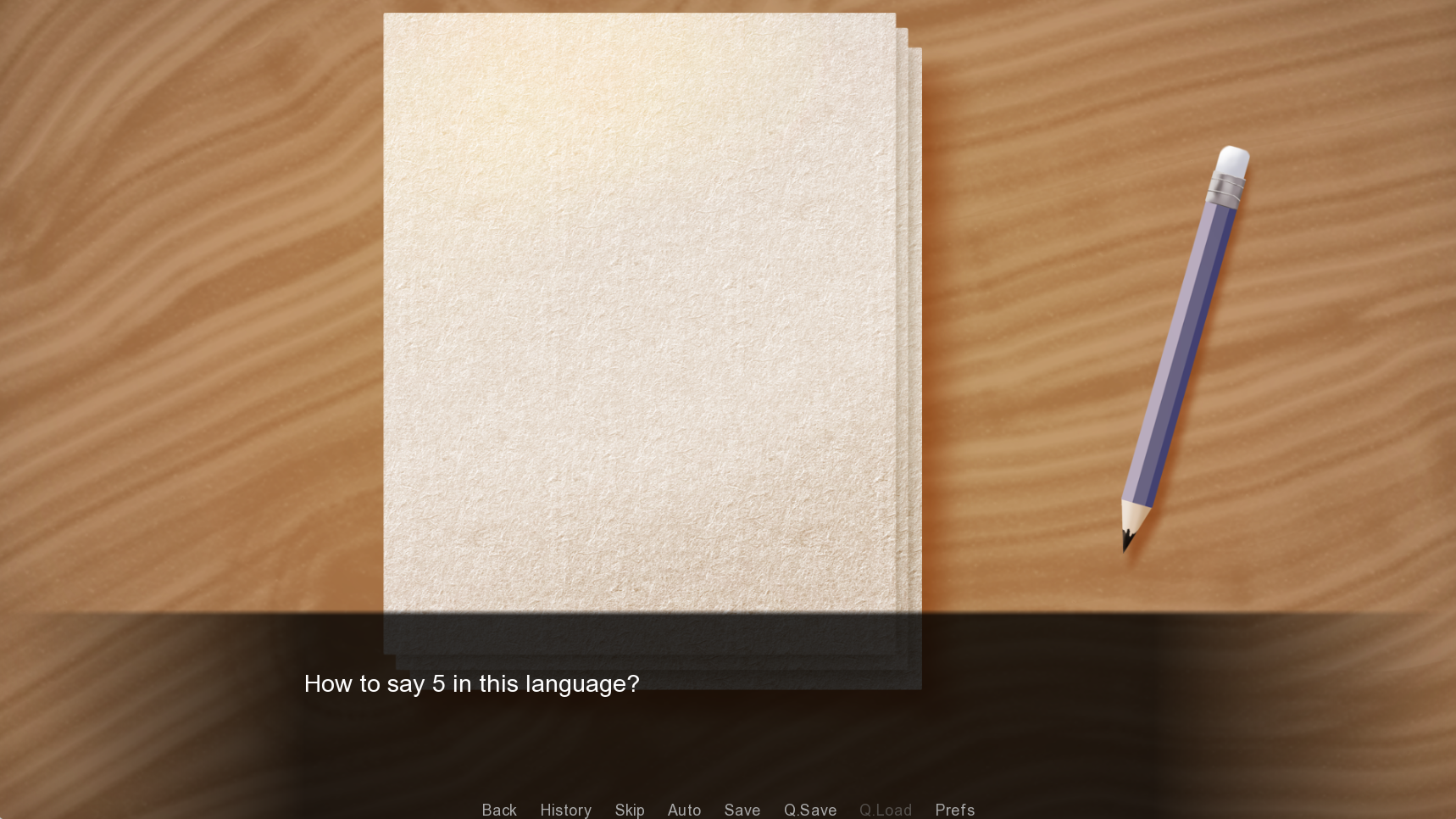
Language proficiency exam question
Inspiration
This project was inspired by the experience of living in a place where the language is completely unfamilliar to you, and the fact that many monolingual people do not totally understand the barrier that this can be.
What it does
This is a Visual Novel type game (meaning that the player reads dialogue boxes and interacts with the world through dialogue choices), centered around the player who has moved to a foreign country and does not understand the native language (represented by Unicode characters). The player must then learn the language through interacting with the world and talking with people, eventually becoming comfortable enough to pass the language proficiency exam.
The words that the player can learn are the numbers 1-10 and 6 food items, each represented by a single consistent Unicode character. The player can learn the numbers by playing blackjack, and can learn the food items by going to the grocery store. In blackjack, the player will not be able to understand the numbers, only being able to see if they win or lose, and must go through trial and error over many days to decipher all 10 numbers. Meanwhile, in the grocery store, the player goes through a similar trial and error situation, where they must choose to check various shelves based on the aisle labels, without knowing which of the aisle labels could correspond to the right object. As both of these minigames are designed intentionally difficult to somewhat recreate the actual experience, it is recommended that players use an external notepad to write notes to help decipher the language.
Additionally, they have the option to test their theories about the number characters by talking to a tutor at home in exchange for some money, which they can use to confirm their knowledge and get closer to taking the exam. The language proficiency exam is the final challenge of the game, costing a hefty amount of money, and requires a perfect score and knowledge of the language in order to complete it.
We feel that this project portrays the struggles of someone in an unknown land, and the efforts many people go through to understand not only a new language, but a new culture. We hope that this game can serve as a tool give people who have only grown up in one country the experience of trying to learn the ins and outs of another language.
How we built it
This project was built using Ren'Py, a visual novel engine. This engine was chosen because it allowed us to focus on the critical sections of the project, such as the story and the unicode text mechanic. The work was split evenly between all five of us, with 4 of us tackling the main programming while 1 person handled the story and art for the game.
Challenges we ran into
We often got stuck on the ideas for the minigames, as we had to balance the difficulty of the minigame to recreate the real life struggles while also keeping the game enjoyable. This involved many reworks of the grocery store minigame, bouncing between a simple memory game, a spot the difference game, and the current aisle selection game.
Accomplishments that we're proud of
We were able to create a complete, enjoyable visual novel in 48 hours, which uses a unique mechanic that as far as we are aware, has never been created. While we were skeptical of how this idea would turn out, as the 48 hours progressed, we slowly started to enjoy the game as more mechanics were introduced, which culminated in this final product that none of us thought that we could accomplish.
What we learned
While most mechanics were implemented in a functional way, there were many instances of not using Ren'Py to its fullest potential, such as inefficient code, no use of a custom graphical user interface, and more. From this project, not only did we all obtain a base understanding of how to code with Ren'Py, but we also learned that it could be better to study the language that we plan to use prior to the start of the hackathon, so that we can save time and put more effort into the extra features that we want.
What's next for Dora
Some features that we would have liked to include are detailed tutorials for the two minigames, more language options to allow non-english speakers to play the game, and more UI elements to clearly communicate game info to the player, like the current day.
If we were to expand the content of this project, there are many different avenues we could explore just by adding more chapters to the visual novel. Some ideas include having the story go over the experience of dating through a language barrier, learning even more word categories aside from numbers and food, and incorporating an actual made up language with its own grammar rules for the player to learn, just to immerse the player further in a world where they do not understand the language.
Built With
- python
- renpy

Log in or sign up for Devpost to join the conversation.