-
-
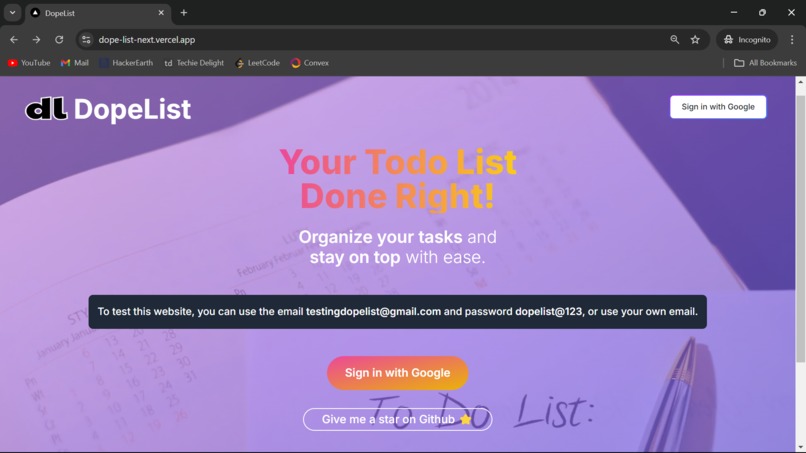
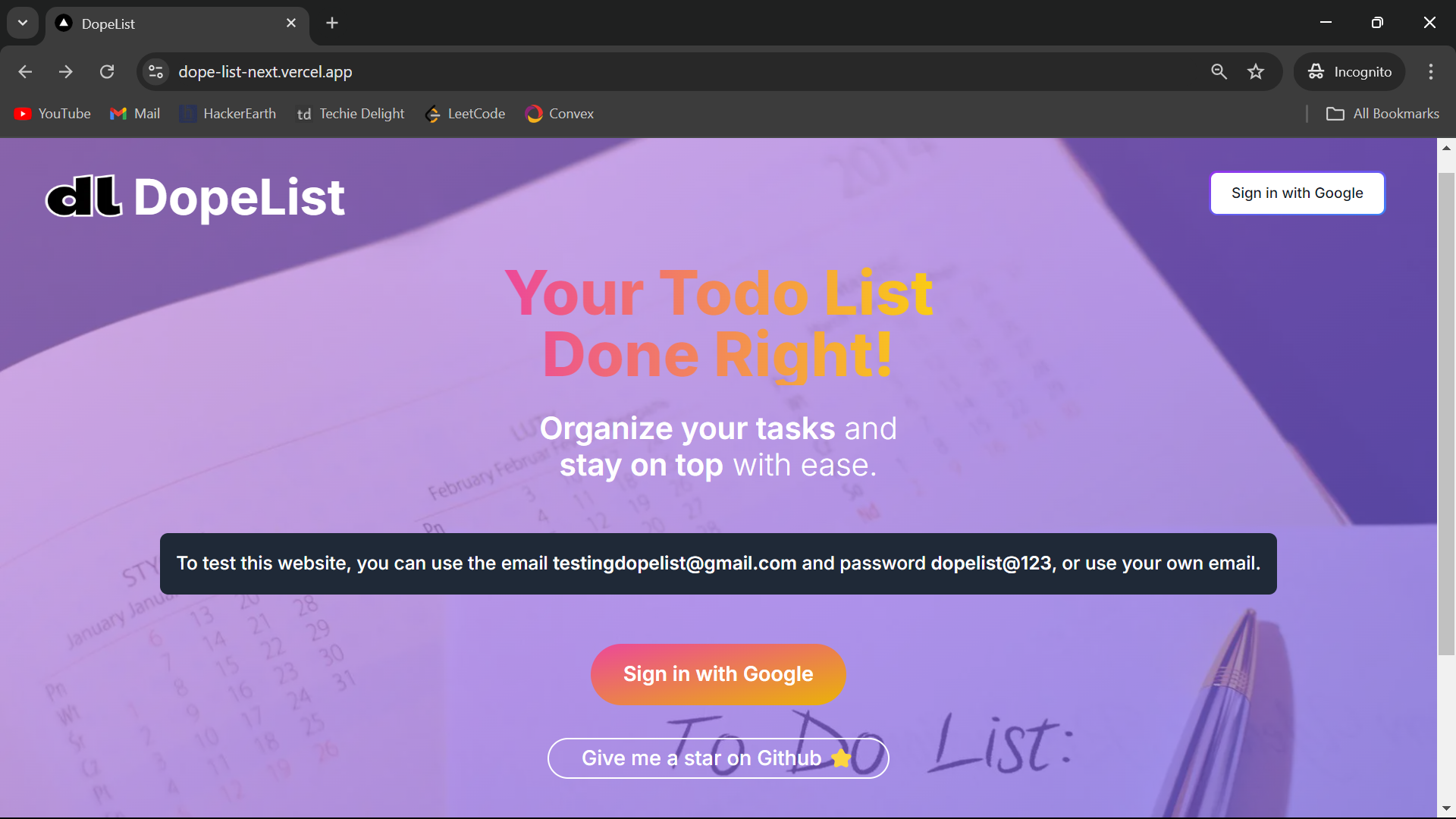
Homepage
-
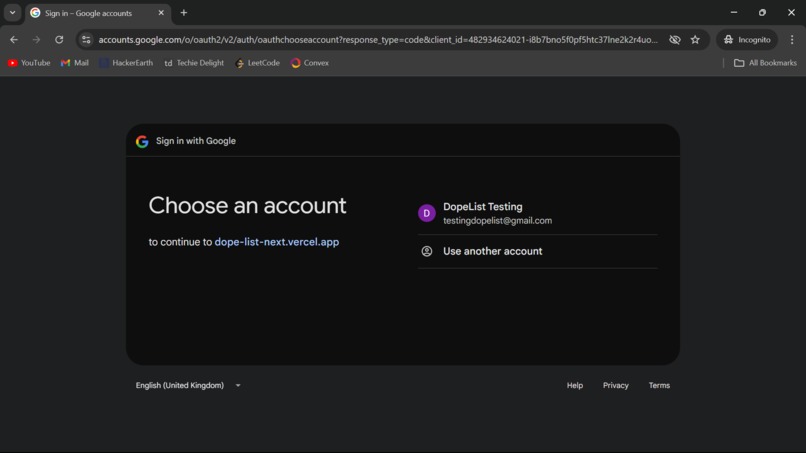
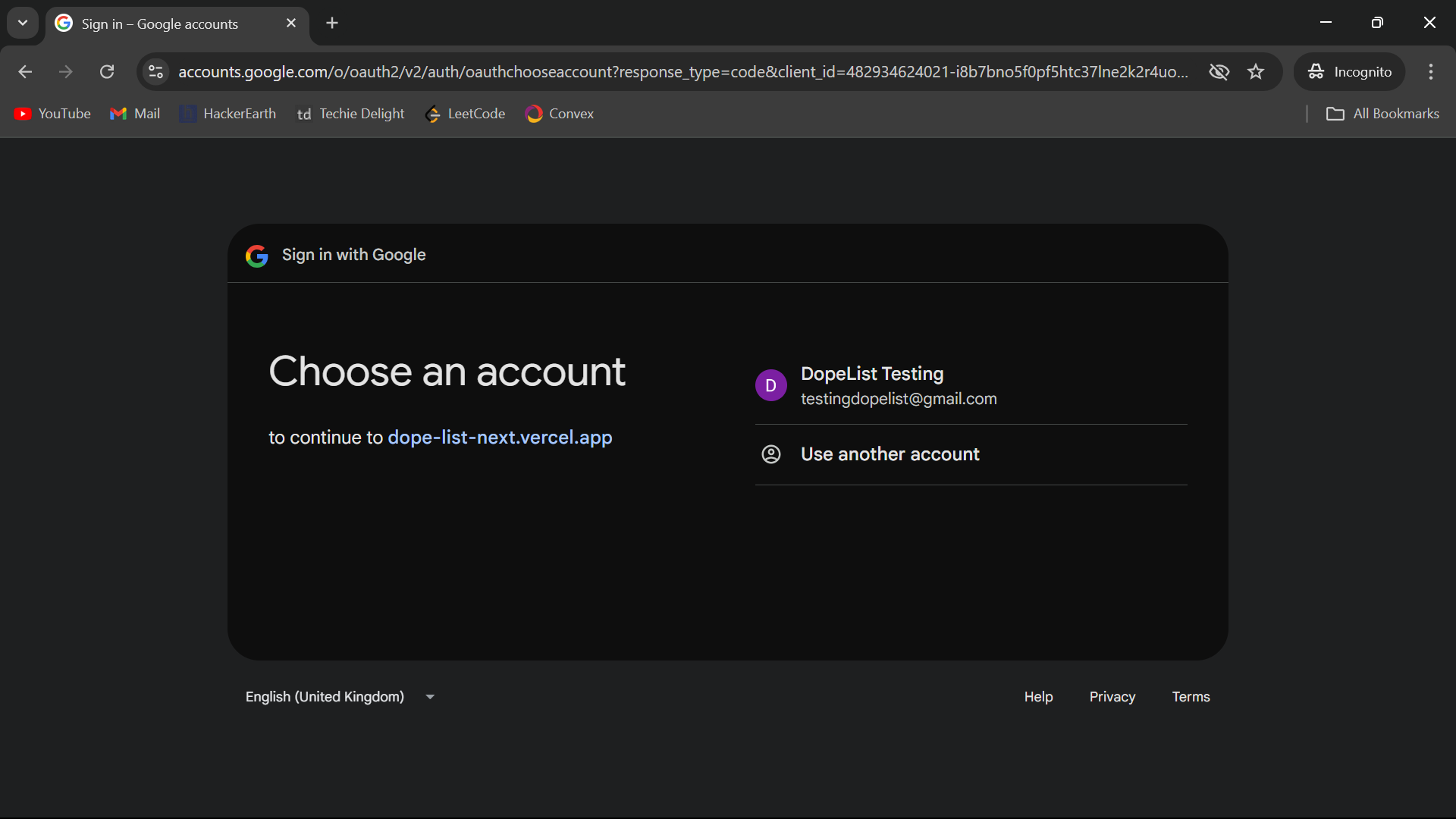
User authentication
-
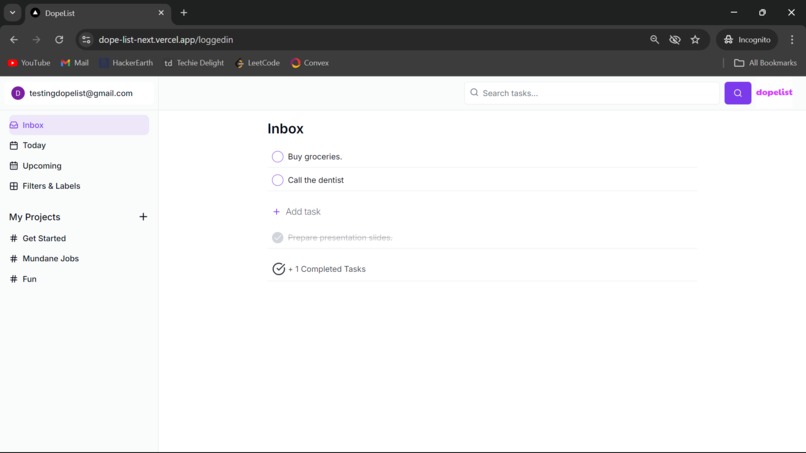
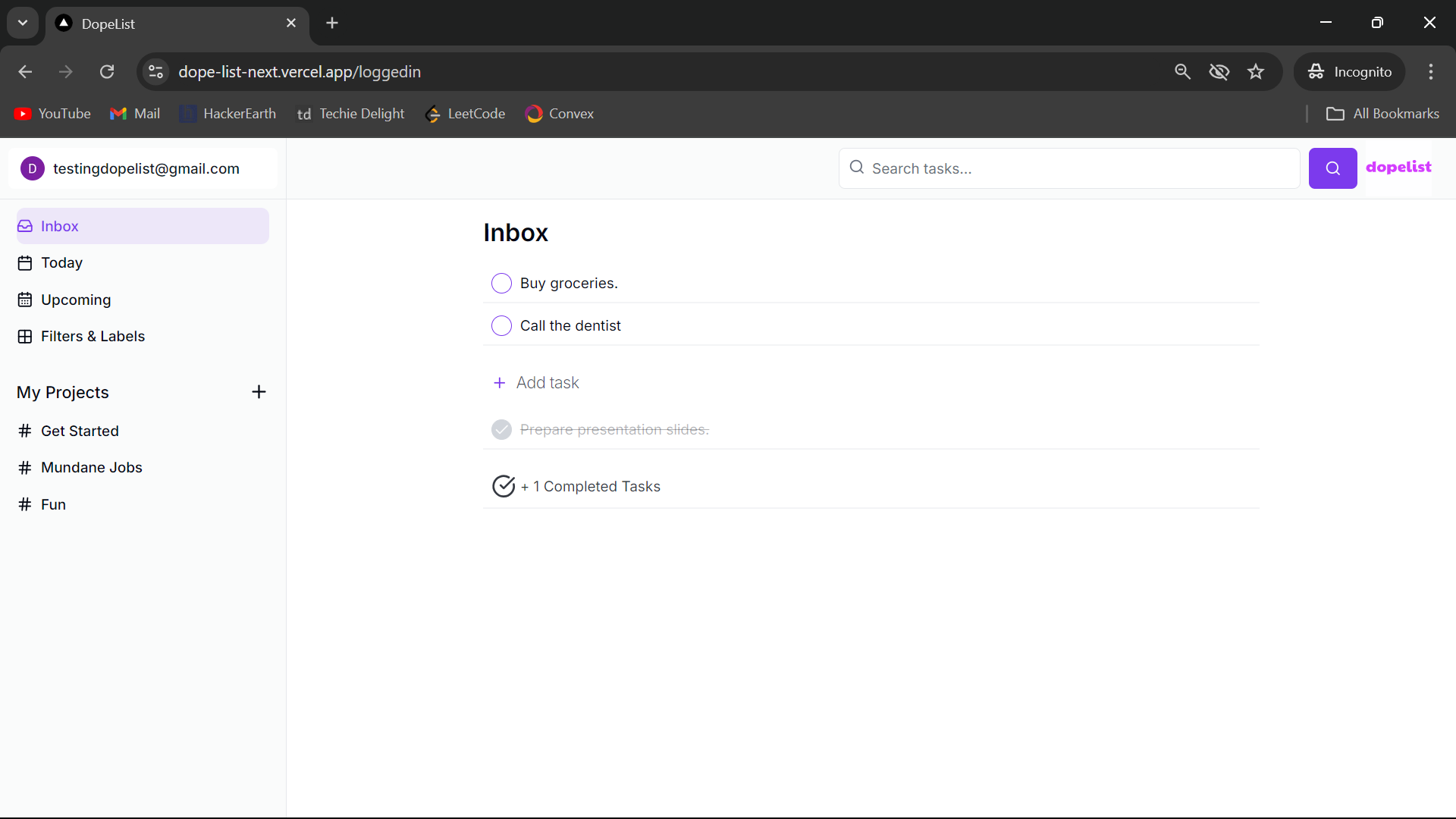
Inbox page
-
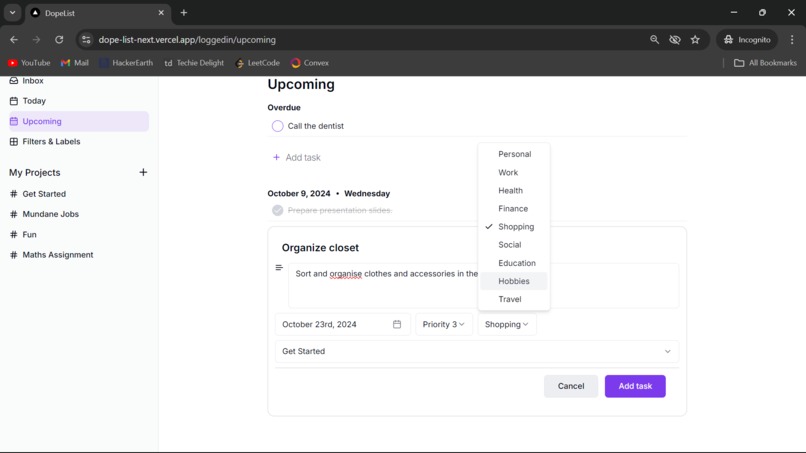
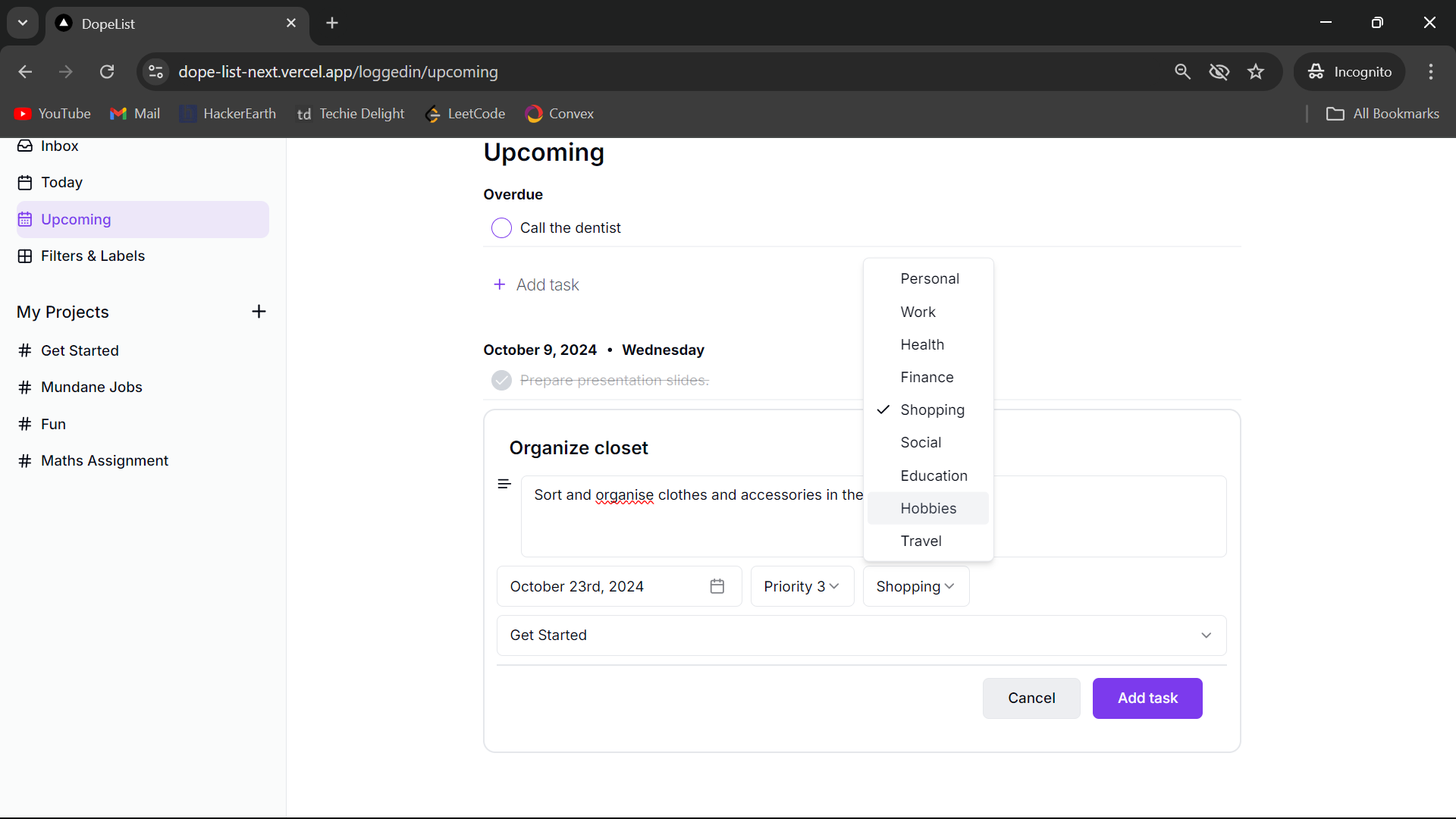
Add task dialog
-
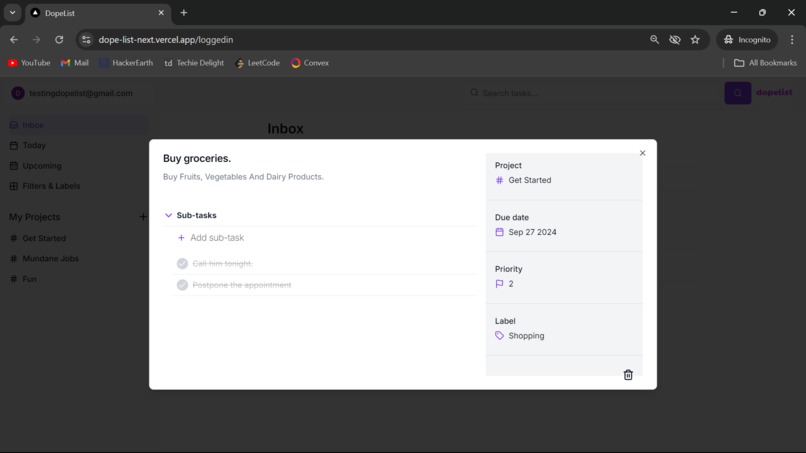
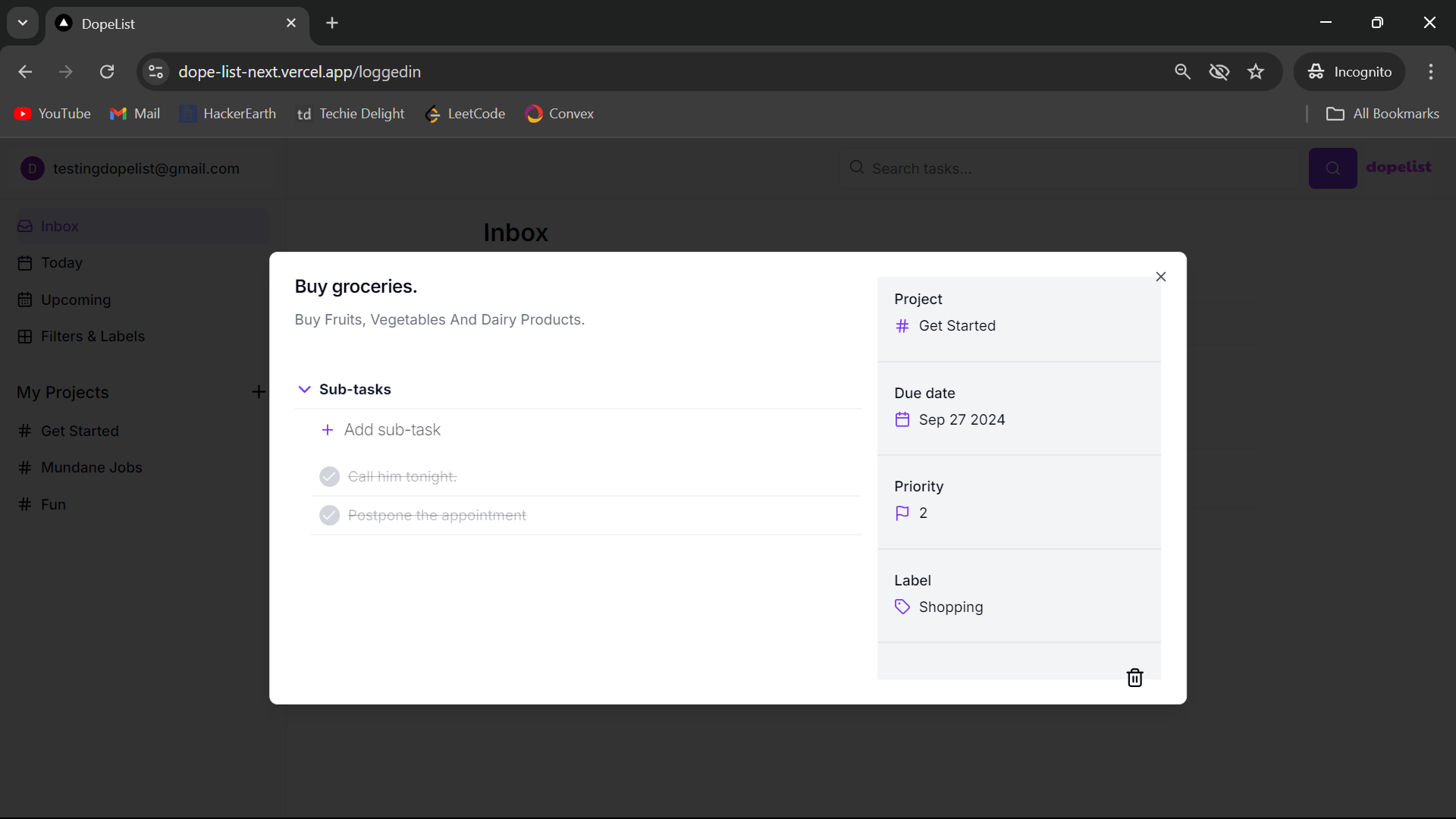
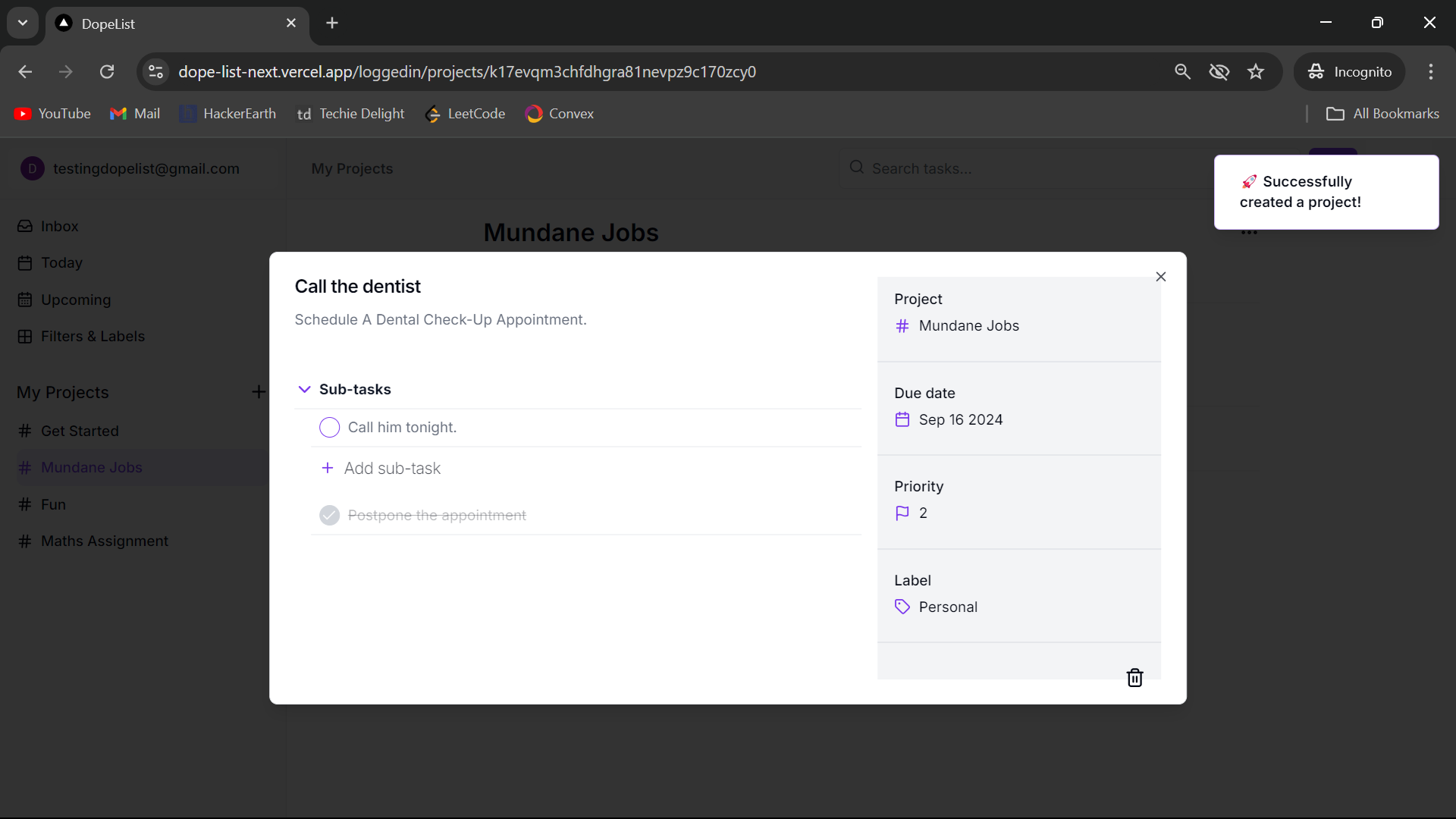
View task dialog
-
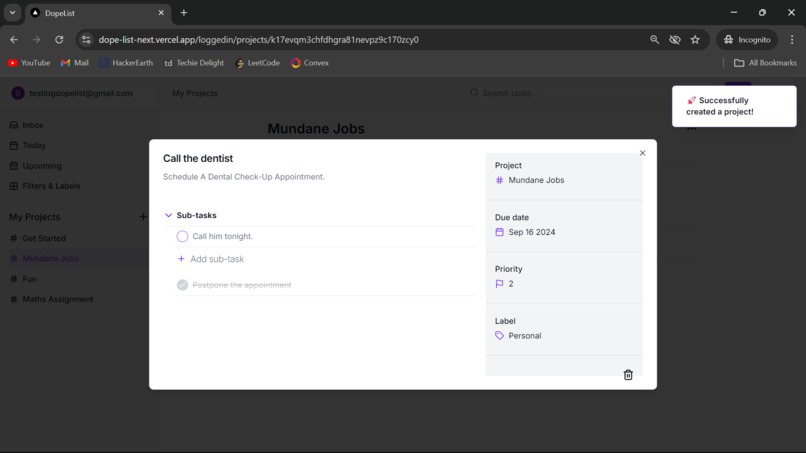
Adding subtasks
-
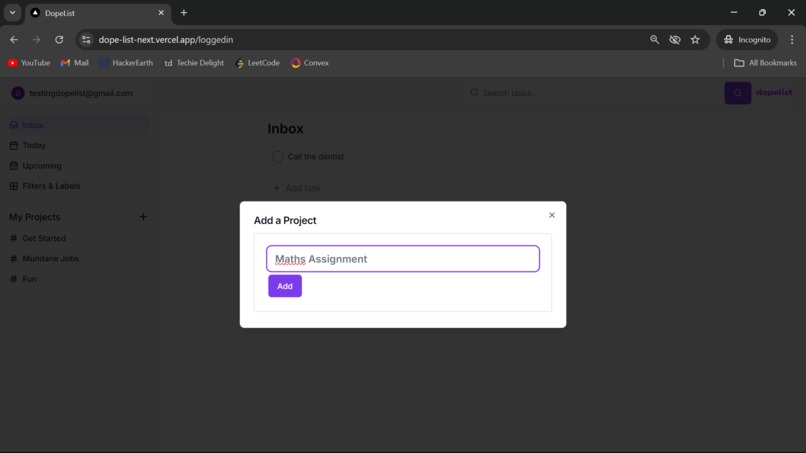
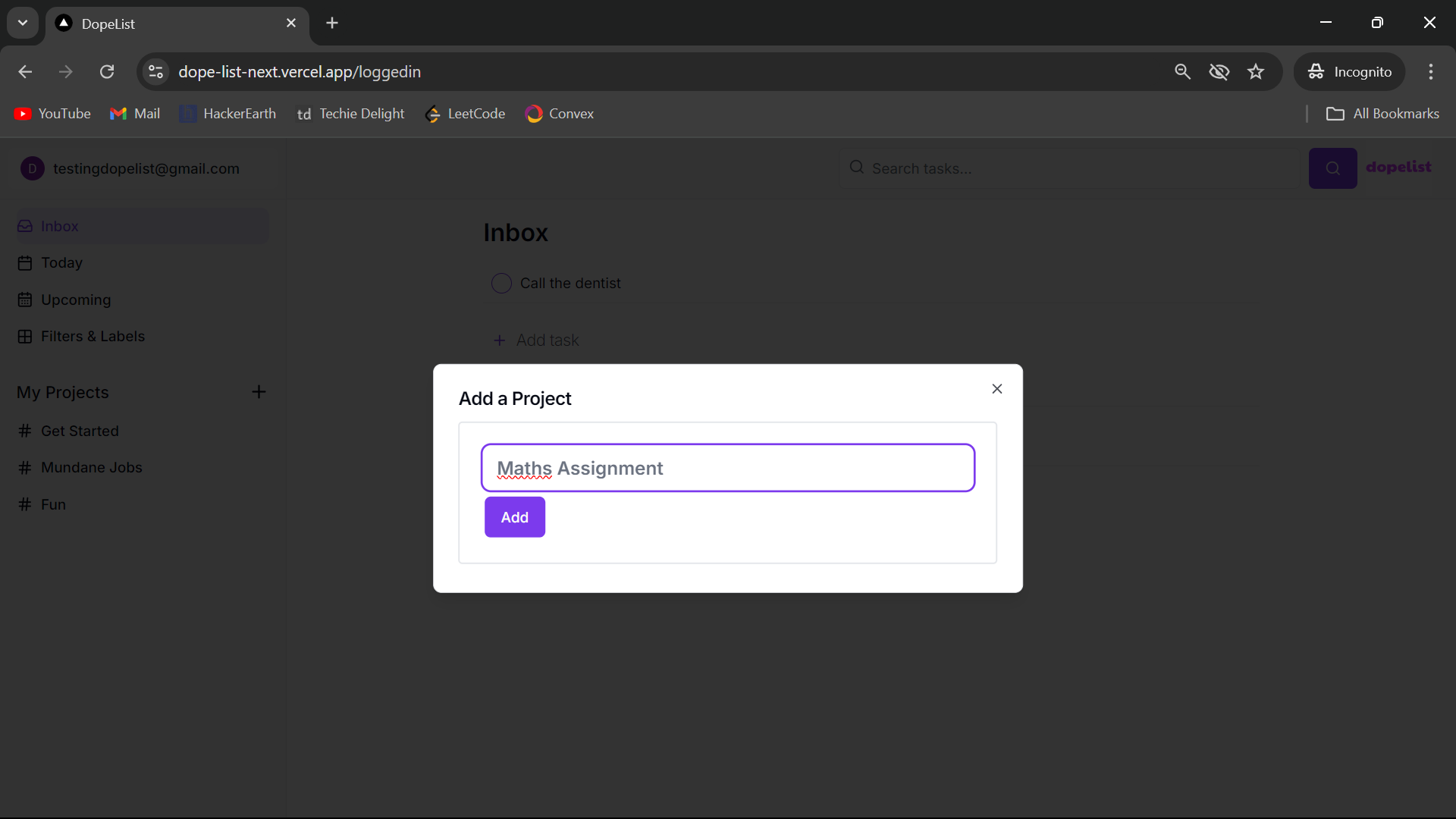
Add project dialog
-
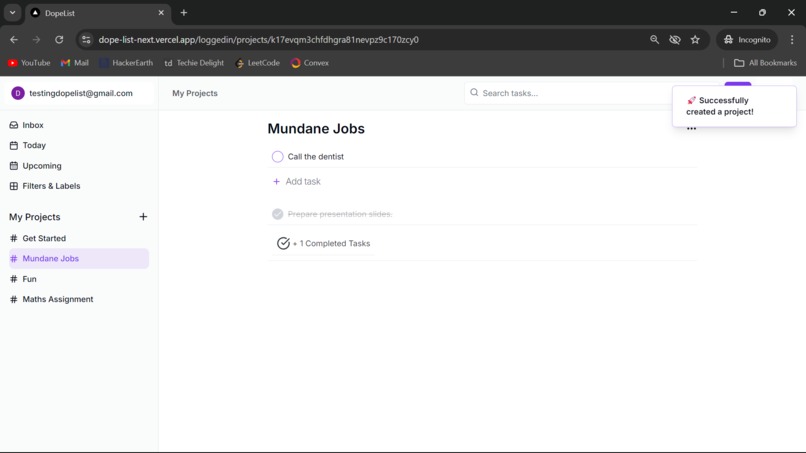
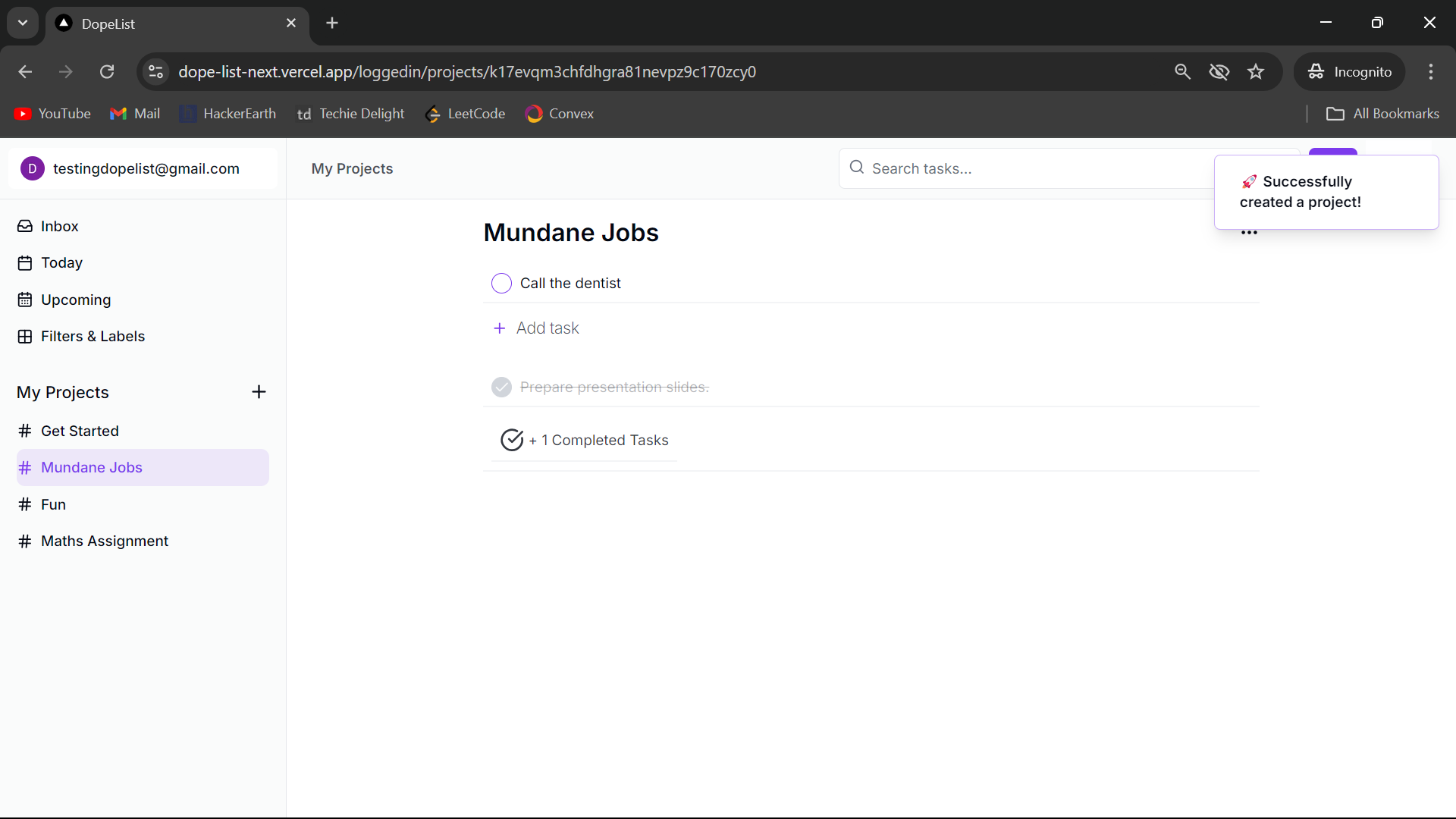
Project page
-
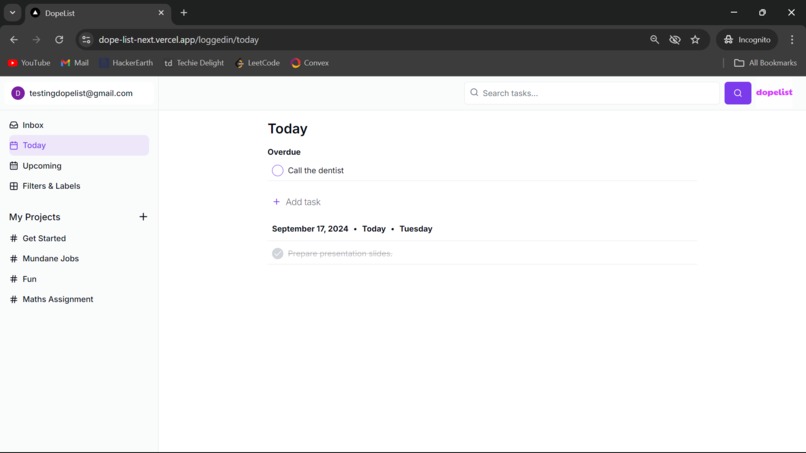
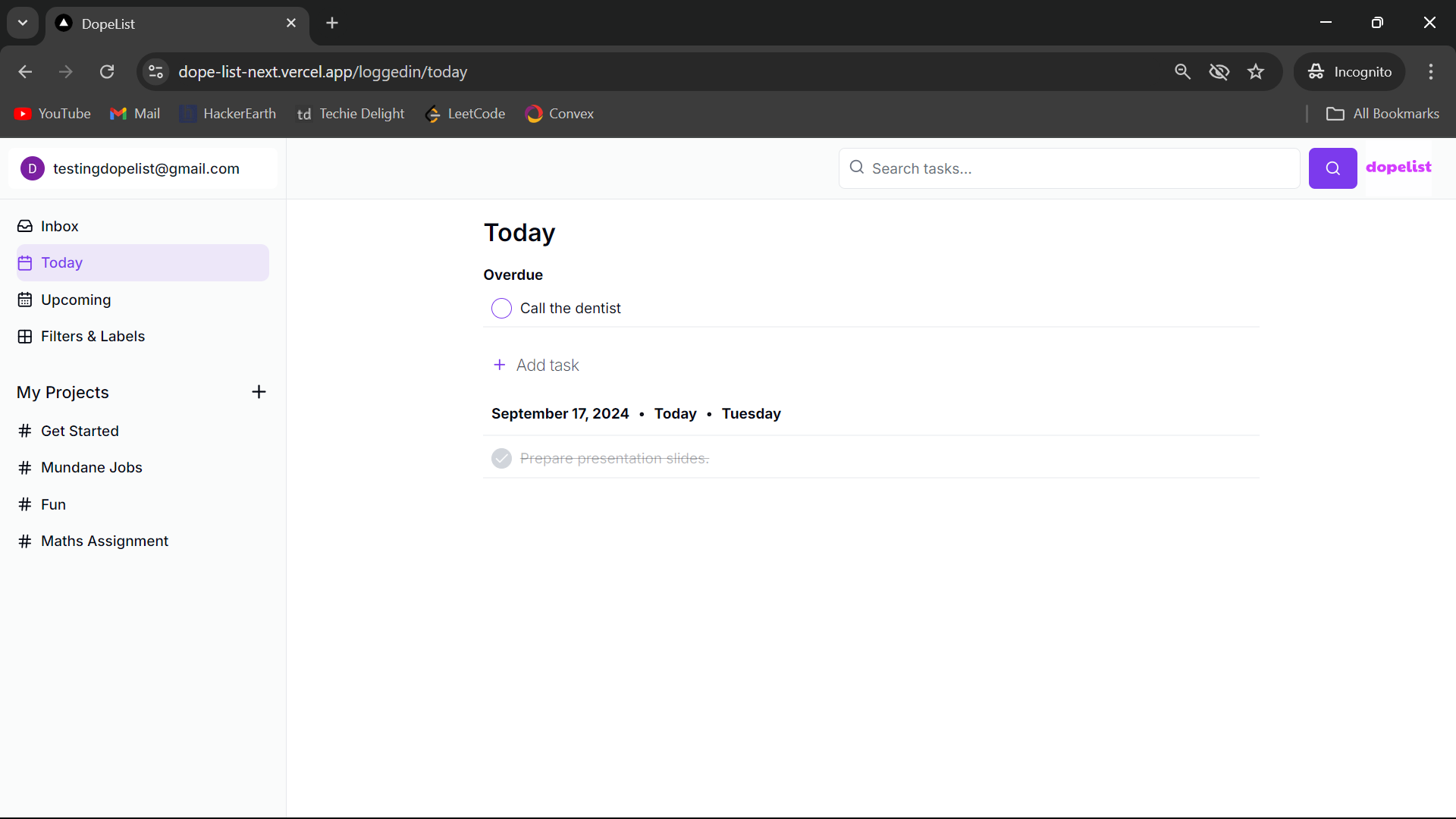
Today page
-
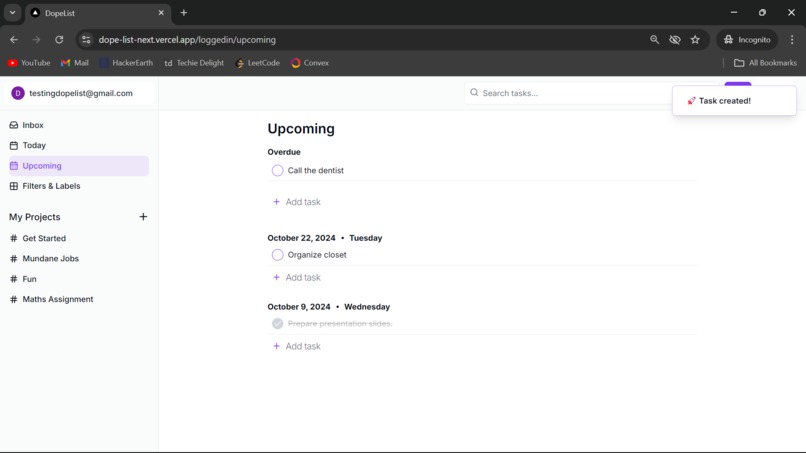
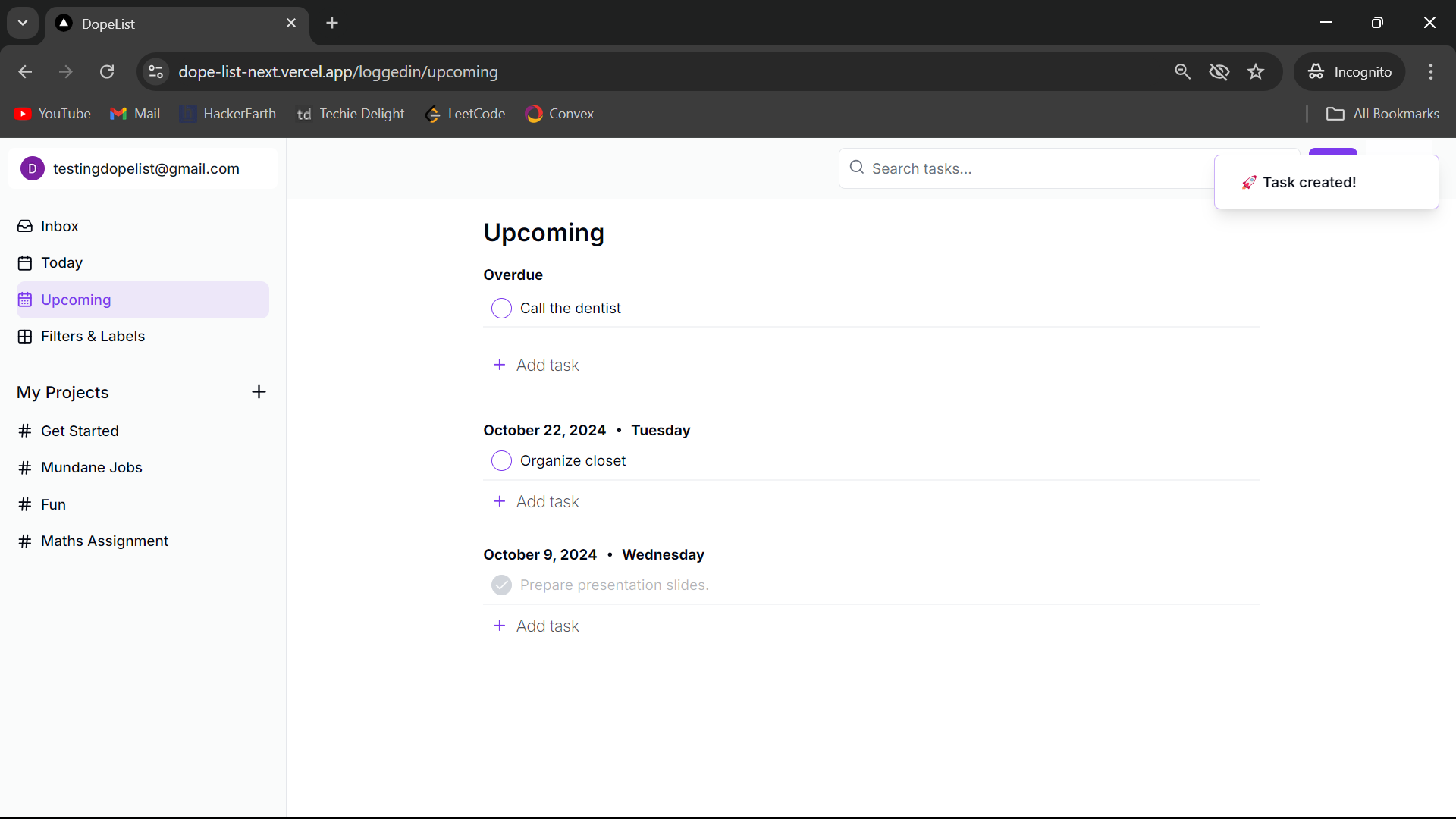
Upcoming page
-
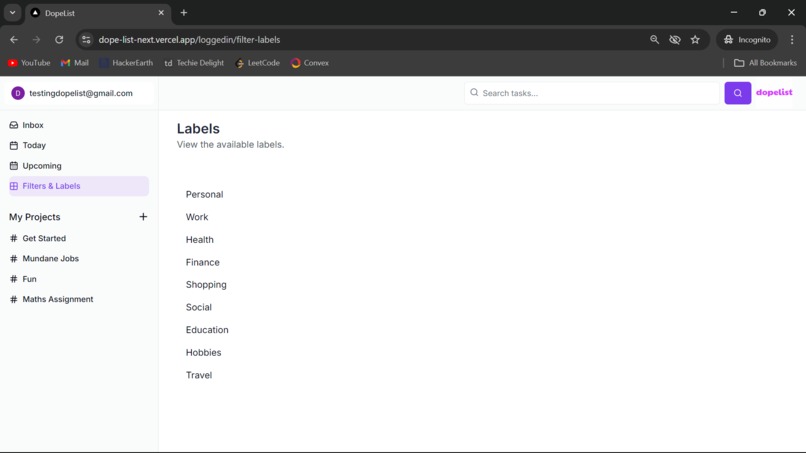
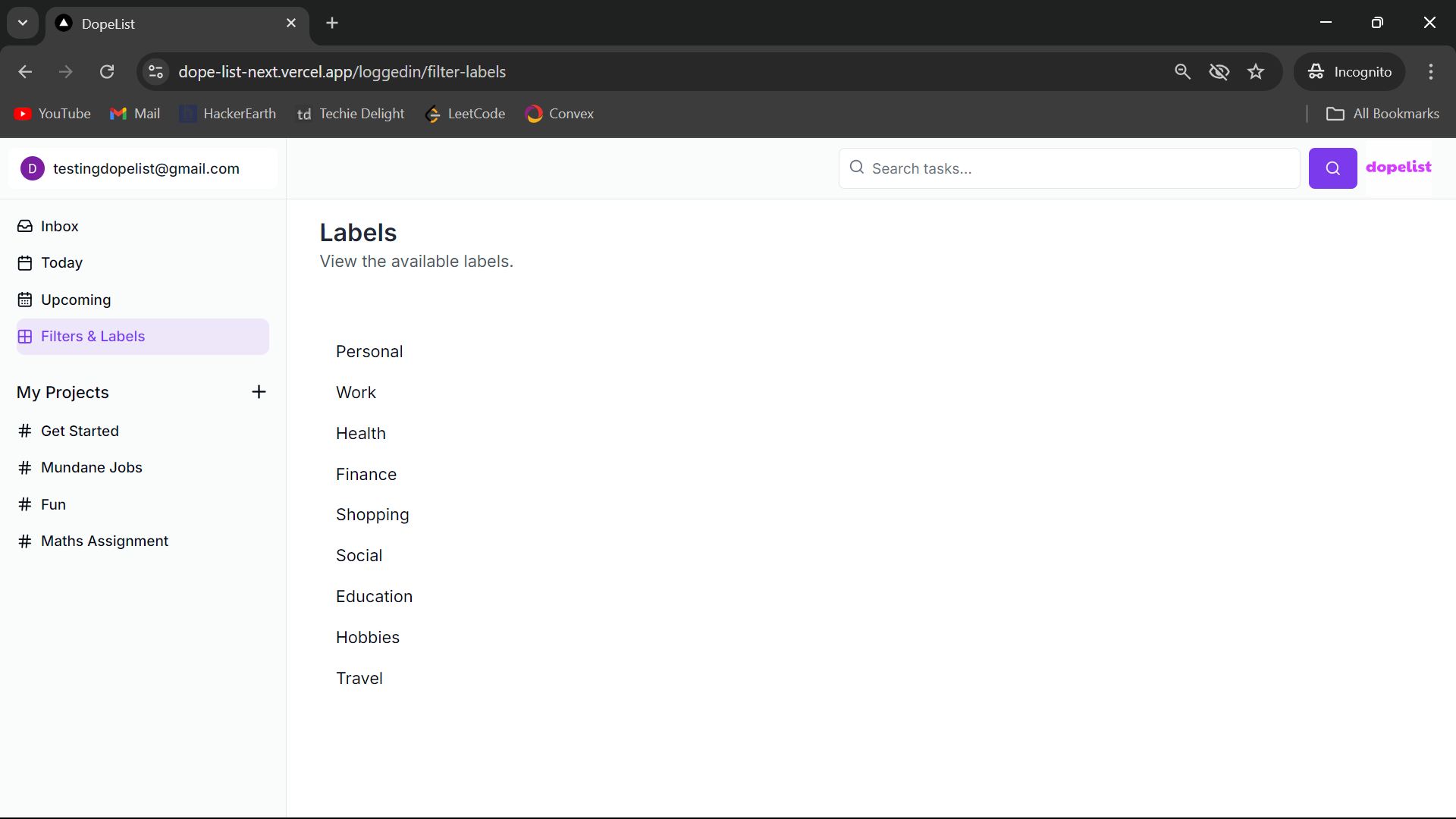
Filters and labels page
-
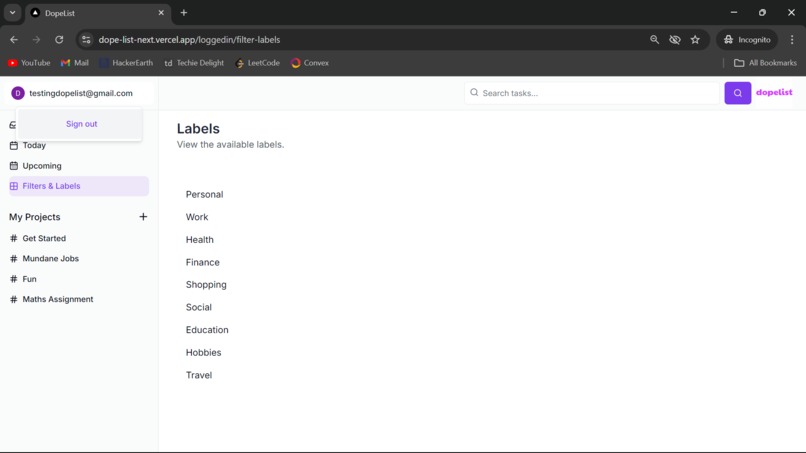
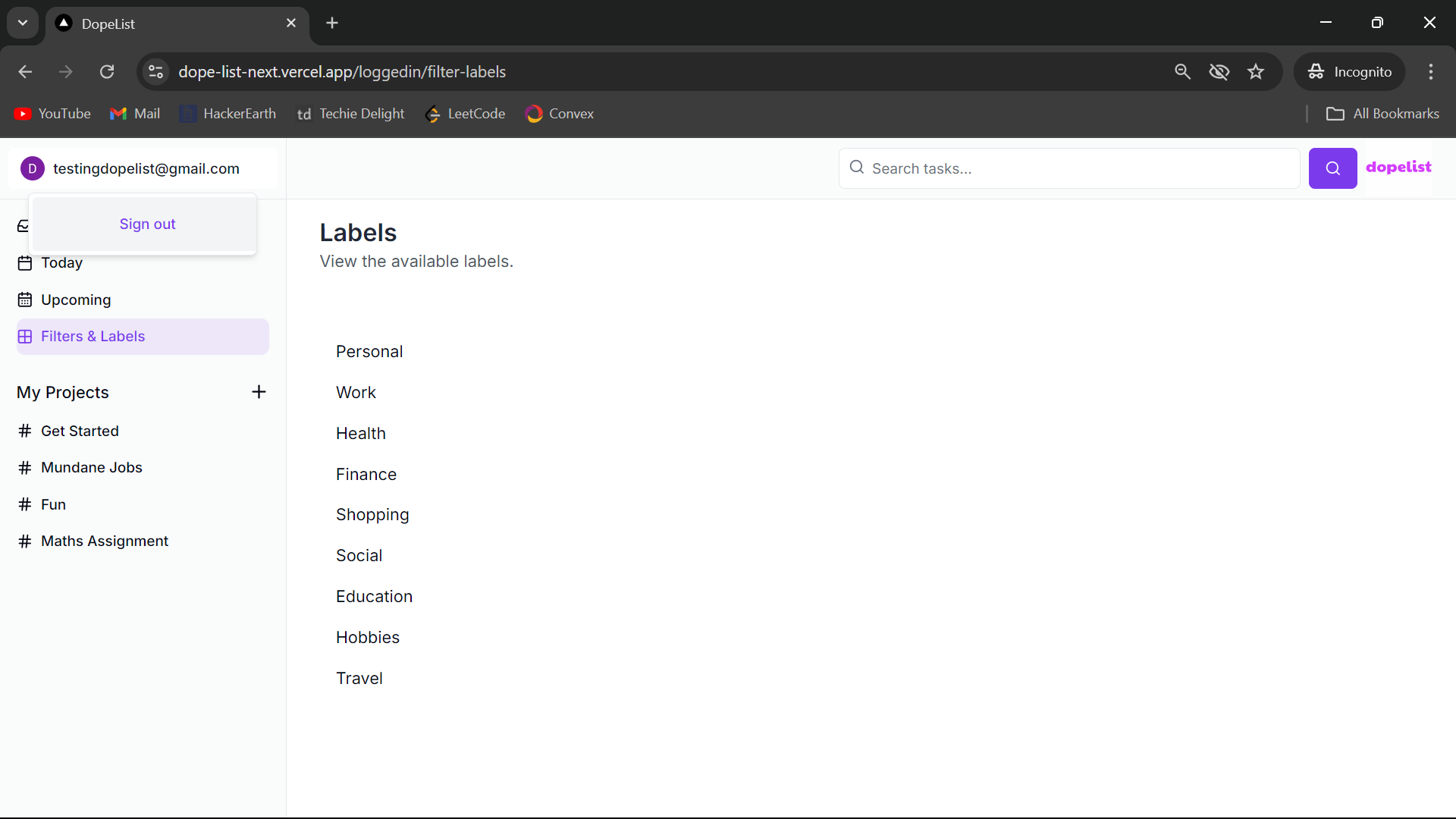
Sign out button
Inspiration
The inspiration for DopeList came from the need for a more intuitive and customizable to-do application. I aimed to create a tool that not only helps users manage their tasks but also adapts to their unique needs and preferences. The goal was to combine functionality with a user-friendly design to enhance productivity and organization.
What it does
DopeList is a comprehensive to-do list app that allows users to:
- Create and manage tasks with detailed attributes such as name, description, due date, priority, and labels.
- Organize tasks into projects, with the ability to create and delete projects.
- View tasks across four main pages: Inbox (lists all tasks), Today (lists overdue and today's tasks), Upcoming (lists overdue, today's, and future tasks), and Filters and Labels (lists all labels).
- Create subtasks under main tasks and mark tasks as completed, which strikes them out for easy tracking.
How I built it
I built DopeList using a combination of cutting-edge technologies to ensure a robust and seamless user experience. Convex was employed for backend operations, utilizing its queries and mutations to manage tasks, subtasks, and projects. The frontend was crafted using Next.js and React, providing a clean and user-friendly interface. We integrated Next.js Auth V5 (Auth.js) for secure authentication, including Google Sign-In. The app leverages the ShadCN UI library and TailwindCSS for a modern, responsive design, while React Hook Form simplifies form handling. Zod was used for schema validation, and TypeScript provided type safety throughout the application.
Challenges I ran into
- Integrating Convex with the Frontend: Ensuring smooth interaction between Convex and Next.js/React was challenging, especially for managing complex task relationships and real-time updates.
- Schema Validation: Using Zod for schema validation required meticulous setup to ensure data consistency across the app.
- Authentication: Implementing Next.js Auth V5 (Auth.js) and Google Sign-In involved overcoming challenges related to secure user authentication and session management.
- UI Design: Balancing functionality and simplicity while integrating ShadCN UI and TailwindCSS was difficult. The UI needed to be both feature-rich and user-friendly.
- Performance: Managing performance and scalability as tasks and projects grew required optimizing React components and state management with Convex.
- Form Handling: Configuring React Hook Form to handle dynamic fields and validation presented challenges in ensuring accurate data entry and processing.
Accomplishments that I am proud of
I am proud of several aspects of DopeList:
- The seamless integration of Convex for robust backend management.
- The intuitive design that makes task and project management straightforward and efficient.
- The ability to handle a wide range of user needs, from basic task management to complex project organization.
What I learned
Throughout the development process, I learned valuable lessons about:
- The intricacies of backend integration with modern frameworks like Convex.
- The importance of user-centered design in creating an effective and engaging application.
- Strategies for overcoming technical challenges and ensuring a smooth user experience.
What's next for DopeList
Moving forward, I plan to enhance DopeList with new features such as AI-powered task suggestions, collaborative project management, and vector search. I am also exploring ways to integrate time tracking and voice commands to further improve productivity and user experience.
Built With
- authjs
- convex
- nextjs
- react
- reacthookform
- shadcn
- tailwindcss
- typescript
- zod


Log in or sign up for Devpost to join the conversation.