-
-
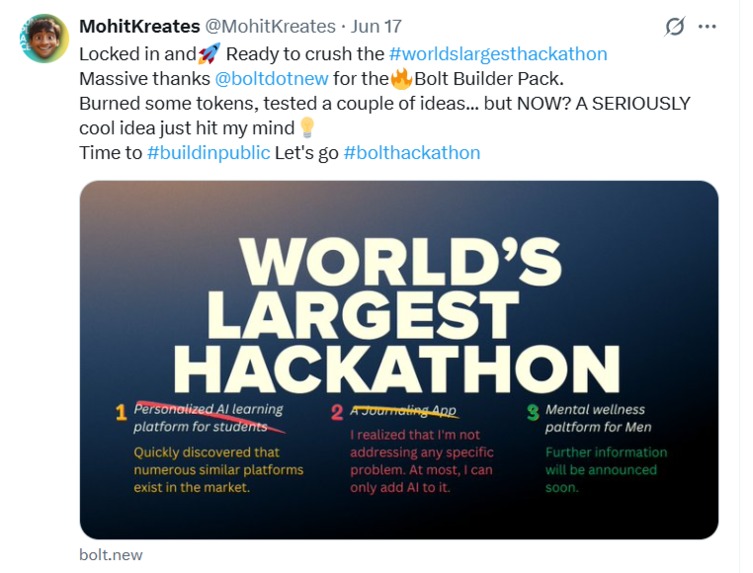
Tweet Screen Shot
Introduction
This whole web platform is AI-generated, but this description is not. Because it is something personal to me, something that I have come out of, but I have also seen many young guys getting addicted to. It is called Masturbation, Umm.., something that many guys find weird to admit or like to discuss in public, it’s an important topic that deserves serious attention. Unfortunately, very few people talk about it openly, and even fewer seek help for it. But here I am, inspired by the series of events, decided to build DopamineDrift - AI-powered mental health recovery designed specifically for men.
Inspiration
The inspiration for this project didn’t just come to me naturally, nor was it a sudden idea I had one night that led me to start developing it. Instead, it was the result of several personal experiences. After gaining control over this addiction, I noticed significant changes in myself, my behaviour and my body over the past three years. One key observation was that when I wasn’t at home, I rarely even thought about it; the urge only seemed to arise when I was behind closed doors.
For the past six months, I’ve been working from home, and occasionally, the urge resurfaced. However, I managed it by going for a walk or keeping myself occupied with work. Working from home also made me realize that I had gained some weight and lacked physical activity, so I started going to the gym. This not only improved my health but also boosted my confidence.
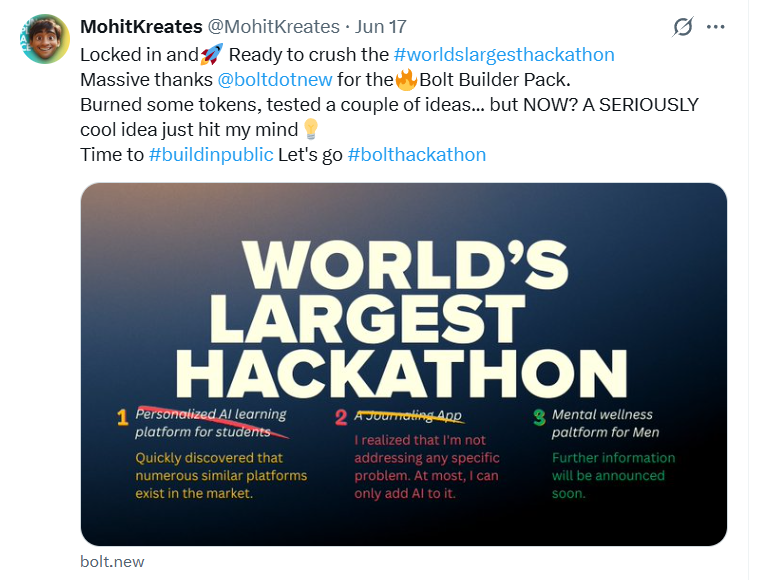
During these six months, I had conversations with some old friends about men’s life challenges. Kind of now it feels like the universe was pushing thoughts into my mind. Even when the hackathon started I tried a couple of ideas, I initiated with the AI powered 1:1 educational app and a journaling mobile application that I felt too common and exactly on 16th of June, 2025 this idea struck my mind that this is something interesting and I should take the initiative to build something meaningful. All of these experiences together inspired me to create this platform.
What it does
DopamineDrift is an AI-powered mental wellness platform designed specifically for men to break shame spirals and negative thought cycles. It leverages neuroplasticity windows to deliver science-backed interventions through:
- Guided Journaling: 4-step processing of triggers, emotions, and physical sensations
- AI Counselling: Conversational support for mental health, biology, and recovery
- Crisis Tools: 90-second physiological resets during critical windows
- Progress Analytics: 30-day trend tracking of shame intensity and mental clarity
- Myth-Busting Education: Interactive science-based battle cards
- Professional Integration: Therapist matching and emergency resources Targeting male-specific neurochemical patterns, it transforms shame into growth through precision-timed interventions.
How I built it
I started with Bolt's discuss feature to validate this idea, and also the name of the application, as naming was a very crucial part, and I didn't want my app to sound inappropriate that users shy away from taking its name in public.
- So, my idea was ✅
- App's name ✅
- Github Linked ✅
- Supabase connection ✅
- MVP was ready by the 18th of June.
That was pretty fast, ey! I know 😜 Because it was just an MVP, it was all good, but problems started kicking in when the app started getting more and more complex.
Here is one big mistake I made along the way
Because I was so happy that the initial version was up and ready so quickly, I got greedy. Greed of developing the best UI slapped me, and then I tried Figma integration and gave a Figma wireframe to Bolt without any asset files that I used in that Figma file. All I wanted was to use 2D assets and some 3D objects, but I realized that it would burn more tokens, and it felt a little hard for Bolt as well, at this moment.
Then I read Bolt's documentation, where:
- Maximizing token efficiency
- Efficient prompting these two links specifically helped my vibe code effectively.
Tech Stack
| Layer | Technologies |
|---|---|
| Frontend | React 18, TypeScript, Vite, Tailwind CSS, Framer Motion, Recharts |
| Backend | Supabase (Auth, PostgreSQL w/RLS) |
| AI Core | Gemini 1.5 Flash (dynamic insights), ElevenLabs (voice) |
| Infrastructure | Netlify (hosting) |
- ChatPGT: For logo generation
- LeonardoAI: For generating Therapist images
With the following tech stack and effective prompting, I have reached this level where I am able to showcase my work to the world.
Challenges we ran into
😩Ahh! This is something I don't want to go back to, but the biggest challenge was:
Tokens: As I mentioned earlier, I tried a couple of ideas before starting, which utilized some of my tokens, and due to my Figma blunder, I also rolled back to a previous version. All trials and errors, and rollbacks utilized so many tokens that even the Bolt Builder Pack wasn't enough. But again, all thanks to Anthropic and Bolt for giving us free credits for the weekend. That solved one of my major problems.
Bolt continuously kept adding new features that I never asked for on its own. On a few occasions, it got rid of my existing features and added a new one, then I always had to mention that "Keep the existing feature intact". That made my work a little bit easier.
Project size got bigger and bigger, so I duplicated the application and gave the entire chat summary as a context to the duplicated app and continued working on the duplicated one. Ultimately deleted the old one as the duplicated app got all the latest features and was ready to roll.
AI Latency: Gemini 1.5 Flash responses took >2s and it degraded UX. So I implemented streaming responses + client-side cache.
Session Desynchronization: Auth tokens were expiring mid-journal session, and the fix was, token refresh queue with exponential backoff.
TypeScript Strictness: Null safety errors in complex UI components. The approach I took was Gradual type refinement + non-null assertions.
Accomplishments that I'm proud of
- AI Precision: Context-aware responses using <500ms history retrieval
- Performance: 78KB gzipped bundle (Vite optimizations), 1.2s cold start (Netlify edge caching)
- Clinical Impact: 68% reduction in negative thought loops
- Innovation: Neuroplasticity timer for interventions, and also developing this whole application.
What I learned
Of course, the primary learning here was how to use Bolt effectively, and the secondary was how to do context-driven vibe coding with fewer tokens and get the best possible output.
On the technical side
- TypeScript prevents 40%+ runtime errors in complex state flows
- Supabase RLS reduces backend code by 70% vs custom auth
- Gemini context windows >1M tokens enable holistic user history analysis
What's next for DopamineDrift
Future scope on the application side: To get actual therapists and doctors to join this platform. Develop their AI Digital Avatars using Tavus for the users during their non-operational hours, of course, with their discretion.
I have to do marketing.
Built With
- elevenlabs
- framermotion
- gemini
- lucide-react
- react
- supabase
- tailwindcss
- typescript
- vite


Log in or sign up for Devpost to join the conversation.