Inspiration
In today’s fast-paced digital world, we are constantly surrounded by tech designed to grab our attention and offer quick dopamine hits—whether it’s scrolling through social media, playing games, or consuming junk food. While these habits provide short-term satisfaction, they often lead to long-term mental and physical consequences like decreased productivity, poor health, and emotional burnout. Dopamine Tracker was inspired by the need to create a tool that helps individuals break free from the cycle of instant gratification and create healthier, more intentional habits. The goal was to empower users to track and regulate their dopamine-driven behaviors and promote mindful living.
What it does
Dopamine Tracker is a web app designed to help users track activities that lead to dopamine spikes (e.g., tech addiction, unhealthy eating) and replace them with healthier alternatives. The app offers the following features: • Dopamine Activity Tracker: Log activities that trigger dopamine spikes, such as social media, gaming, snacking, etc. • Healthy Habit Swap Challenges: Replace addictive behaviors with productive and healthier alternatives. • Personalized Insights: Analyze user data to provide insights on habits and suggest improvements. • Progress Tracking: View visualizations of habit trends and the success rate of habit swaps. • Push Notifications: Gentle reminders to stay on track and stick to healthier routines. The app’s mission is to help users regain control over their time and well-being by fostering long-term behavioral change.
How we built it
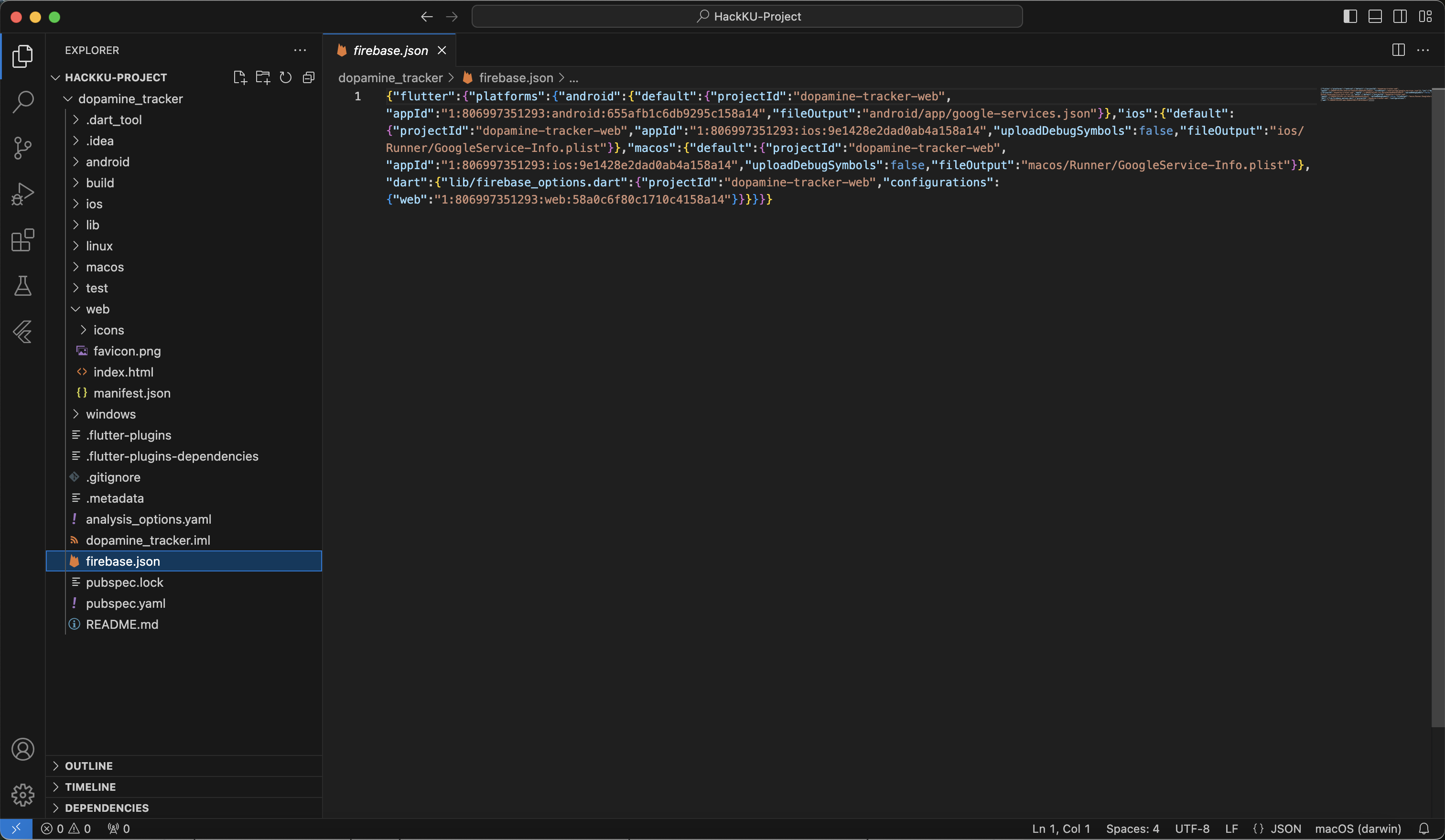
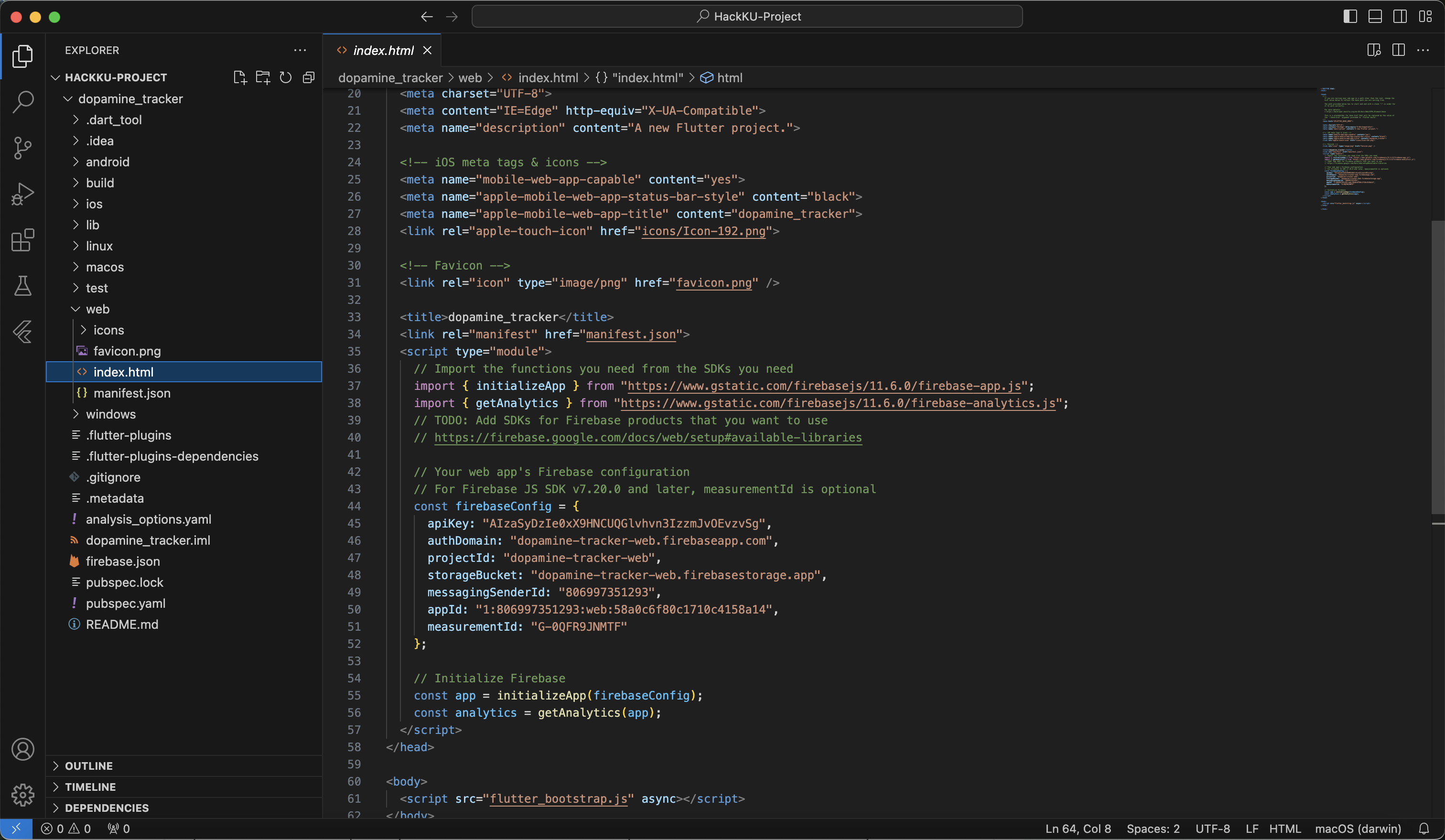
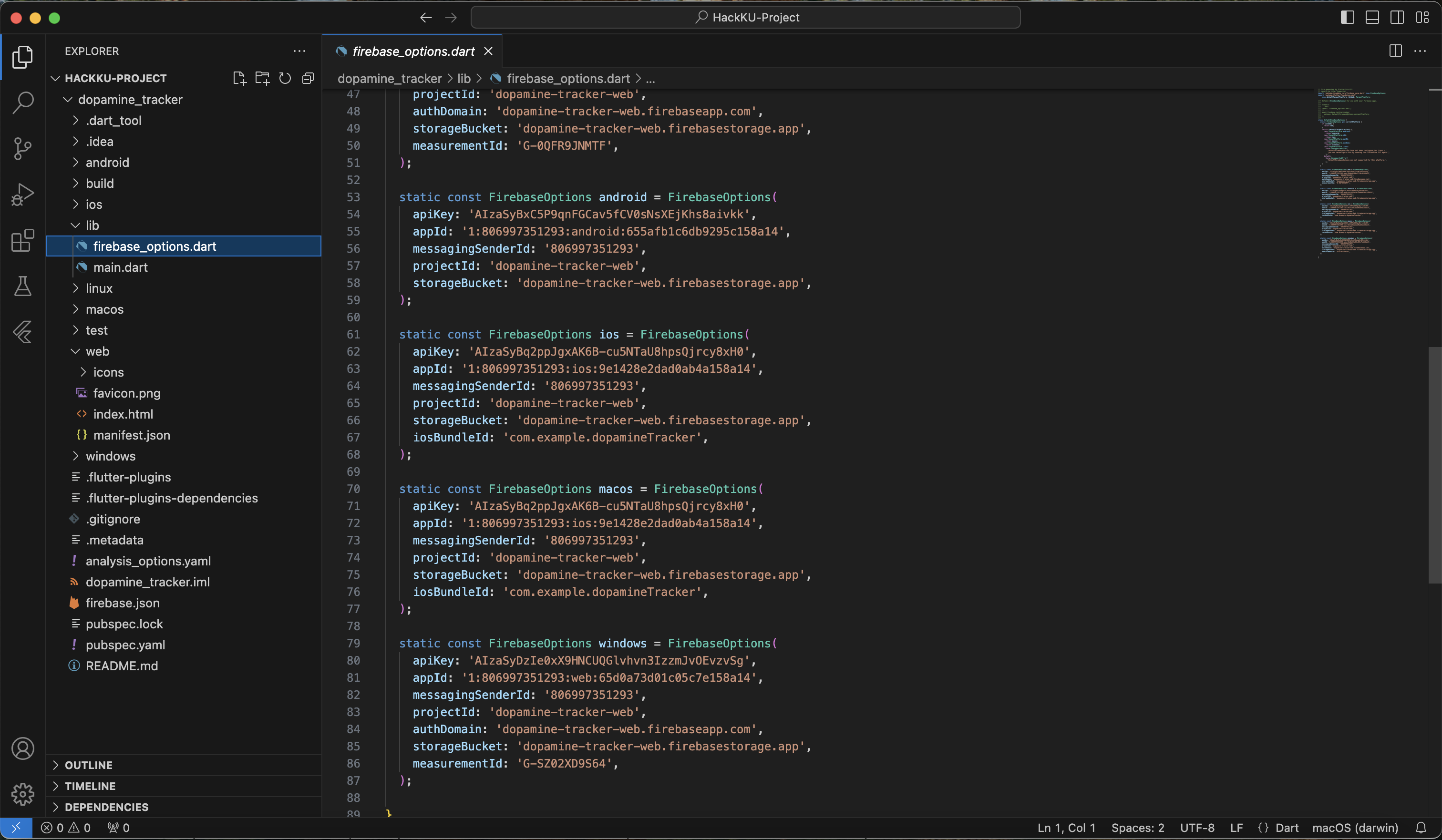
We built Dopamine Tracker using Flutter for the front-end development. The key technologies used include: • Firebase for backend services, including user authentication (Firebase Auth), real-time database (Firestore), and analytics. • Dart as the primary programming language for Flutter. • FlutterFire to integrate Firebase functionalities seamlessly into the Flutter app. • Flutter Widgets and Material Design principles to build a smooth, user-friendly UI. The app starts by allowing users to sign in anonymously via Firebase Authentication. After logging in, they can track their dopamine-triggering activities and receive challenges to swap those habits with healthier options. We also implemented Firebase Analytics to track user behavior and help optimize future app features.
Challenges we ran into
• Firebase Setup: Setting up Firebase with Flutter initially posed some challenges. We had issues linking Firebase services, especially for iOS and web configurations. However, following detailed guides and troubleshooting through Firebase documentation helped us successfully integrate it. • User Data Privacy: Since we were working with personal behavior data, we needed to ensure that the app complied with privacy regulations and that users felt comfortable using the app. We implemented anonymous login to avoid storing unnecessary personal information. • UI/UX Design: As beginners, designing an intuitive, visually appealing interface that was also functional required a lot of trial and error. We wanted the app to be simple and easy to use, while still delivering complex insights to the user.
What we learned
• Firebase Integration: We gained a deeper understanding of how Firebase works and how to use it effectively for real-time data storage and user authentication. • Flutter Development: Building the app with Flutter helped us understand cross-platform development better. We learned how to handle platform-specific issues and ensure a seamless experience across devices. • UI/UX Design: We learned how to design a minimalistic and intuitive user interface using Material Design principles in Flutter. • App Architecture: We learned how to architect a simple yet scalable app that can grow with additional features like social sharing or gamification.
What's next for Dopamine Tracker: Reward System Detox App
• Gamification: We plan to add gamification features, such as badges and rewards, to keep users motivated and engaged. • Social Sharing: We would love to incorporate a social aspect where users can share their progress and challenges with friends and compete on leaderboards. • Customization: Allow users to create custom challenges based on their own habits and goals. • Expansion of Features: Additional features like advanced data analytics, mood tracking, and more health-focused habit recommendations are planned for future versions. • Android & iOS Deployment: The next step will be to deploy the app on the Google Play Store and Apple App Store.


Log in or sign up for Devpost to join the conversation.