-
-
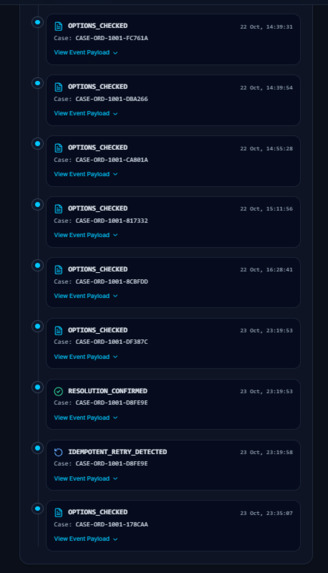
Auditable Decisions and Idempotency
-
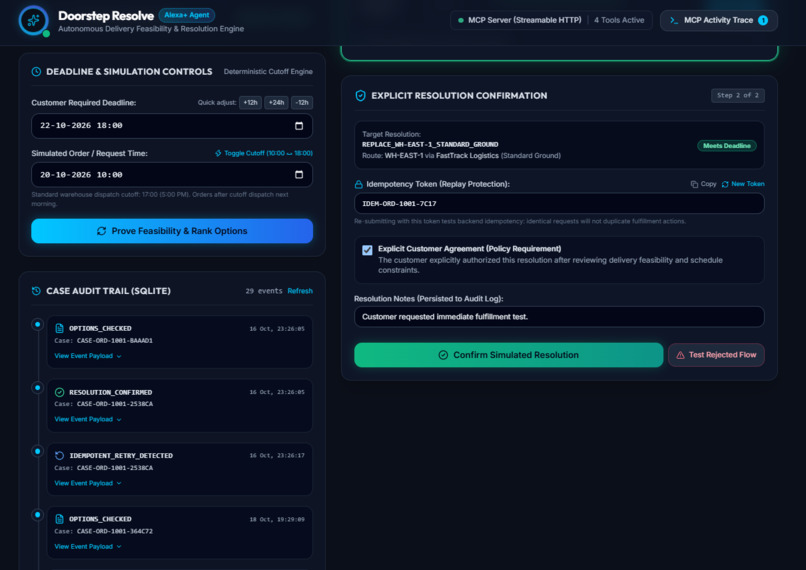
Human-Confirmed Fulfillment
-
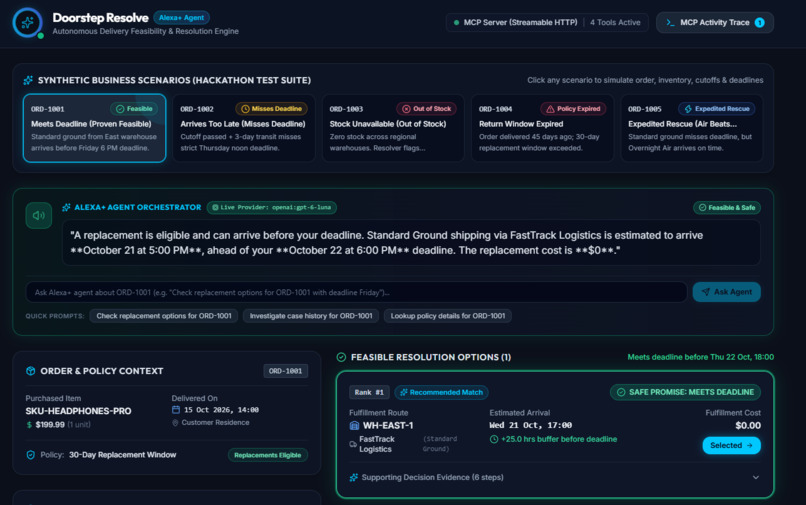
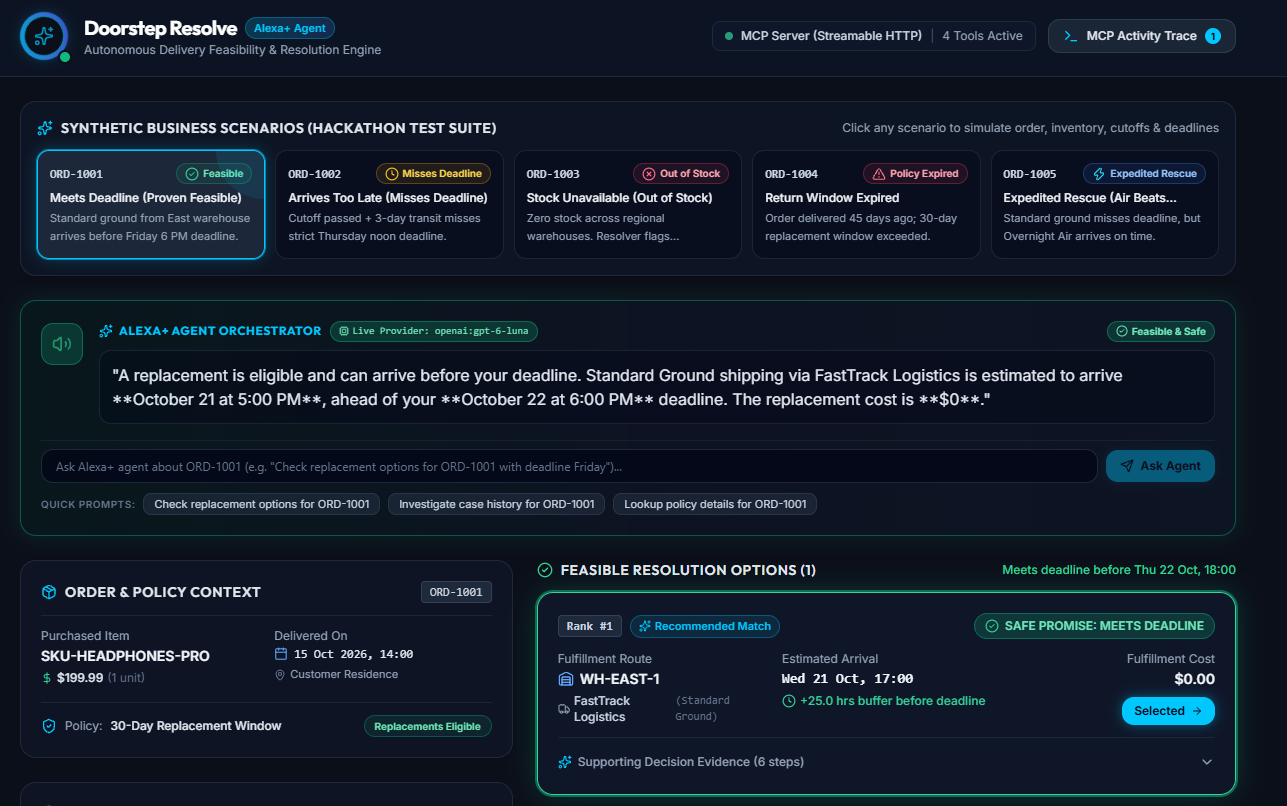
AI-Powered Replacement Feasibility
Inspiration
I built Doorstep Resolve to address a critical logistics problem: a delivery route may be available but still fail to meet the customer's promised deadline. I wanted to create an AI-powered decision-support system that evaluates actual inventory, dispatch cutoffs, delivery estimates, and customer deadlines before recommending a replacement.
What it does
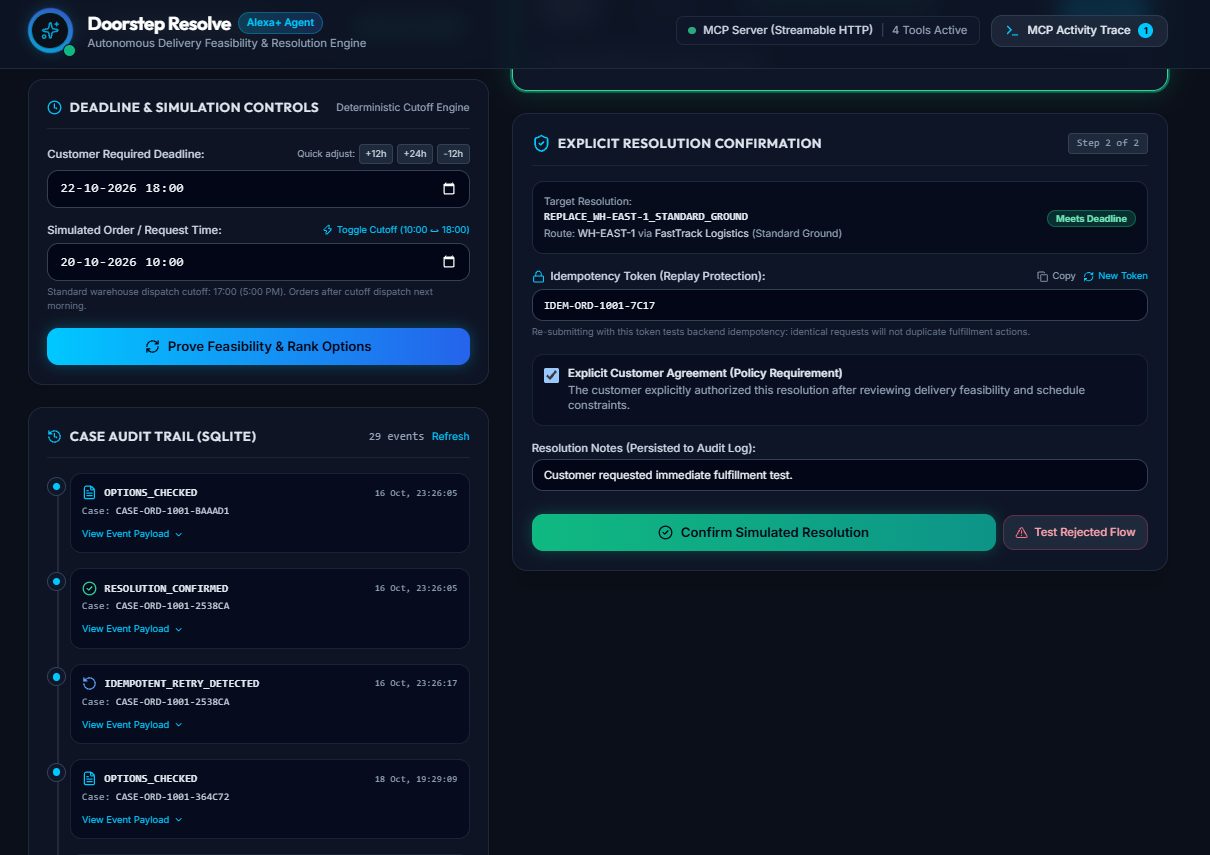
Doorstep Resolve helps logistics operations teams evaluate replacement delivery options. It checks inventory availability and replacement policy eligibility, calculates estimated arrival times, and ranks routes based on whether they meet the customer's deadline.
When no route meets the deadline, it identifies the risk and presents alternatives as late fallbacks rather than safe recommendations. It also provides supporting decision evidence, maintains an audit trail, and requires explicit human confirmation before simulated fulfillment actions.
How we built it
I built Doorstep Resolve using a Python backend, a React frontend, and an AI agent powered by OpenAI. I integrated the agent with the backend through the Model Context Protocol (MCP), exposing tools to retrieve order details, check replacement options, and investigate case history.
A key architectural decision was to keep business-critical decisions deterministic. The backend remains authoritative for policy eligibility, inventory, dispatch cutoffs, delivery estimates, and route rankings. The language model interprets requests and explains results rather than independently deciding whether a delivery promise is feasible.
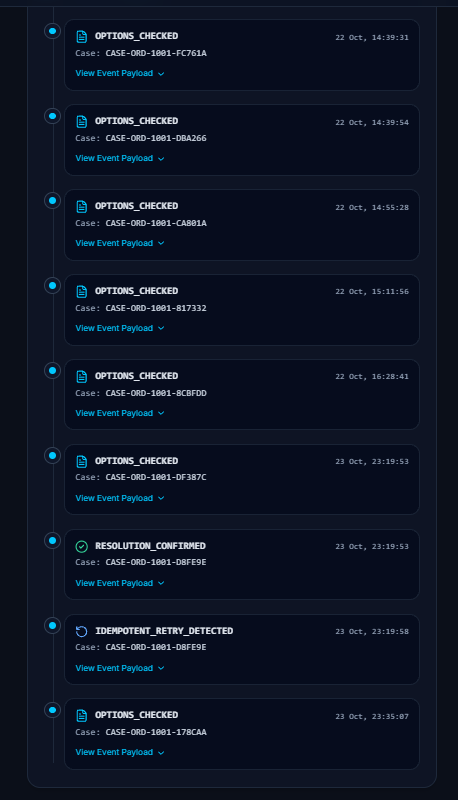
I also implemented safeguards around human confirmation, idempotency, and audit logging to prevent accidental or duplicate fulfillment actions.
Challenges we ran into
As a solo developer, I had to handle both the AI integration and the operational logic behind the application. One of the biggest challenges was ensuring that the agent's explanations matched the backend's actual calculations.
I also encountered edge cases involving expired replacement windows, unavailable inventory, missed deadlines, inconsistent simulation times, and stale state when switching between orders. Addressing these required tracing requests across the frontend, agent, MCP tools, and backend, then adding validation and regression tests.
Accomplishments that we're proud of
I'm proud to have built an end-to-end MCP-powered logistics decision-support system rather than a chatbot that simply generates recommendations.
Doorstep Resolve distinguishes between routes that meet the deadline and routes that arrive late, explains why a replacement may be blocked, and provides evidence supporting its decisions. I also implemented explicit human confirmation and idempotency safeguards for simulated fulfillment actions.
What we learned
Building this project taught me that reliable AI agents need more than a capable language model. They need well-defined tools, deterministic business rules, validated inputs, traceable decisions, and clear boundaries around actions.
I gained practical experience integrating an LLM with MCP, debugging multi-layer workflows, handling edge cases, and testing the interaction between AI-generated explanations and authoritative backend results.
What's next for Doorstep Resolve
My next steps are to improve the operations dashboard, strengthen scenario coverage, and make the system easier to configure for different logistics policies and fulfillment networks.
I'd also like to connect it to real logistics data sources and operational systems, while preserving deterministic validation, auditability, and human approval for consequential actions. The long-term goal is to make Doorstep Resolve a reliable decision-support tool for logistics teams managing time-sensitive replacement deliveries.
Built With
- ai
- fastapi
- javascript
- llm
- mcp
- nodes.js
- openai
- pytest
- python
- react
