-
-
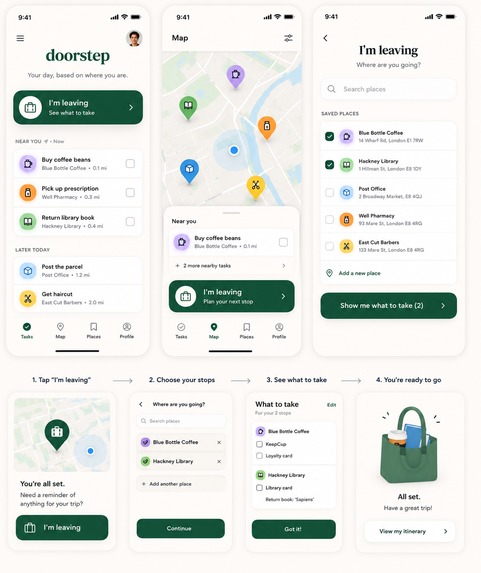
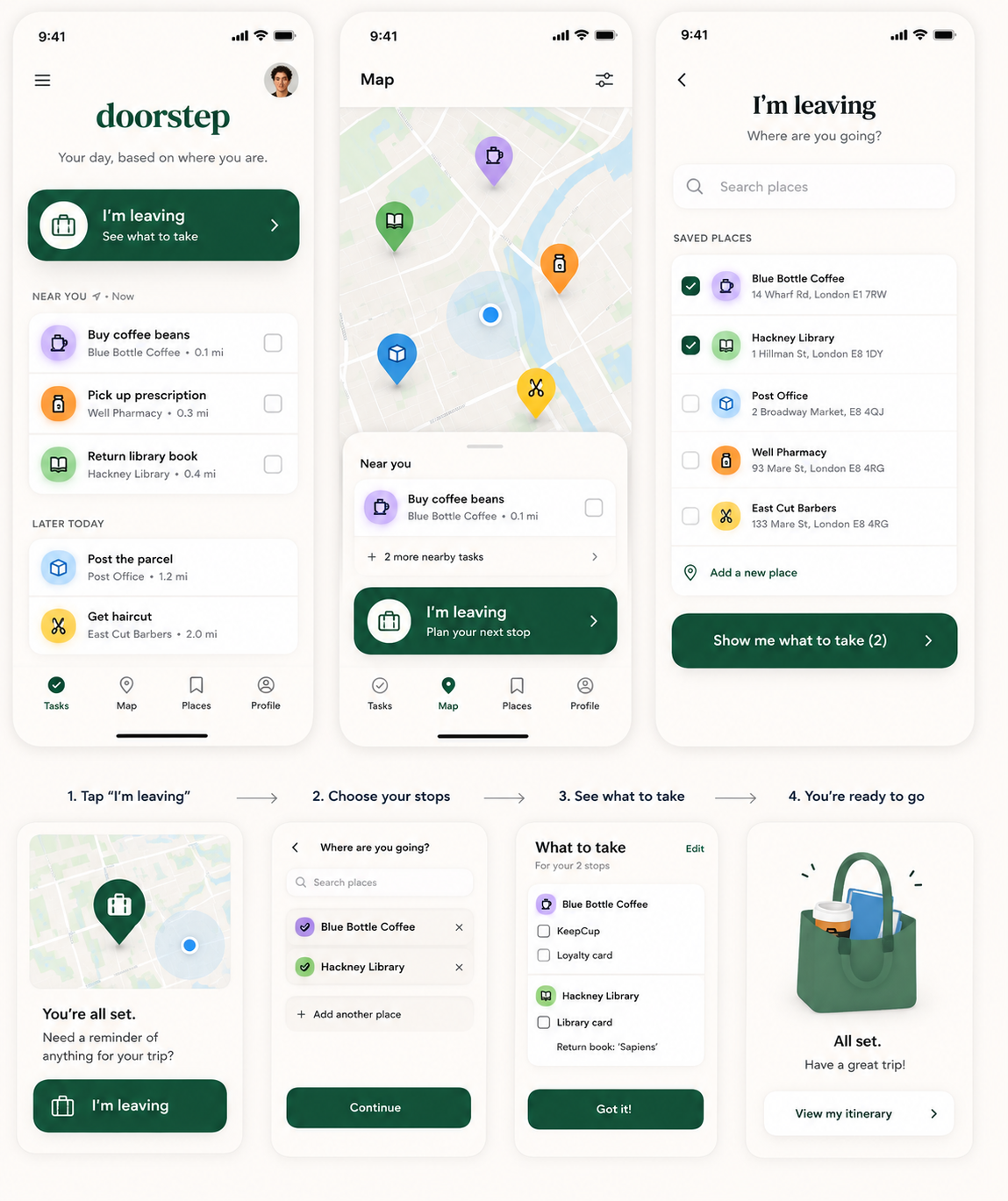
Initial designs generated with ChatGPT
-
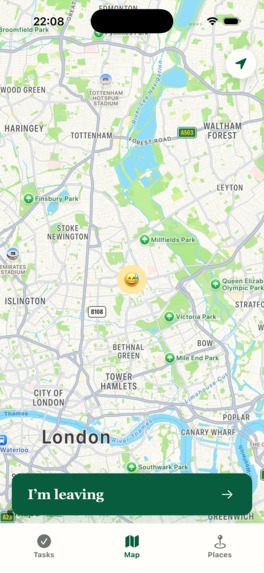
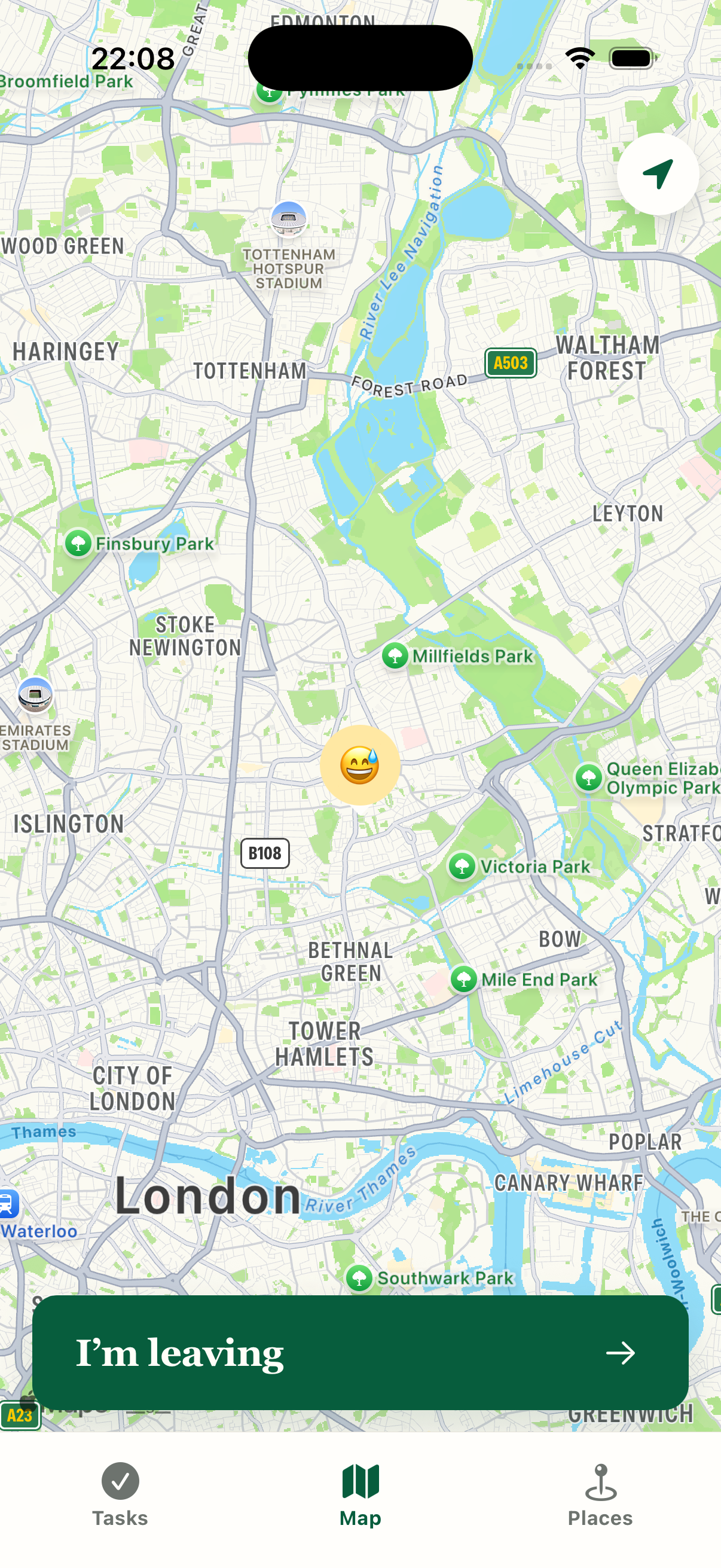
Map view
-
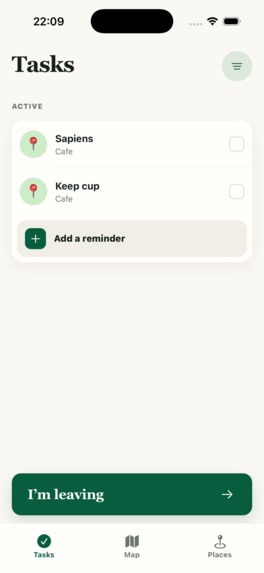
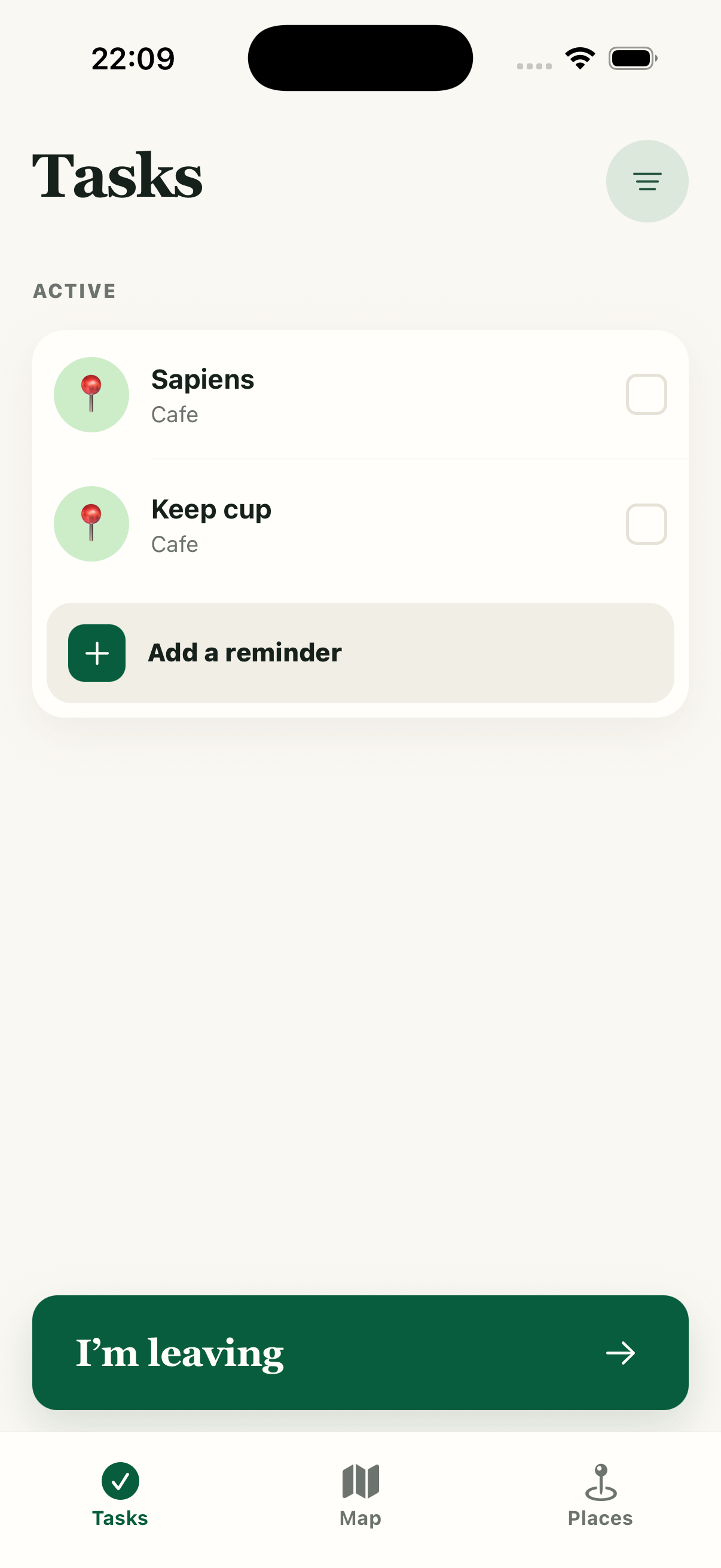
Task view
-
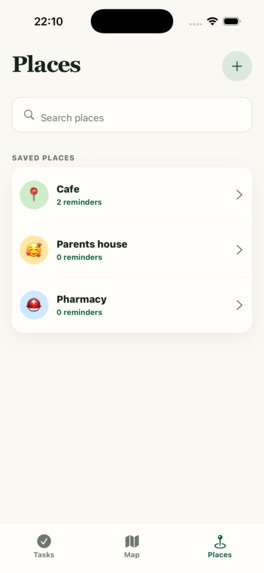
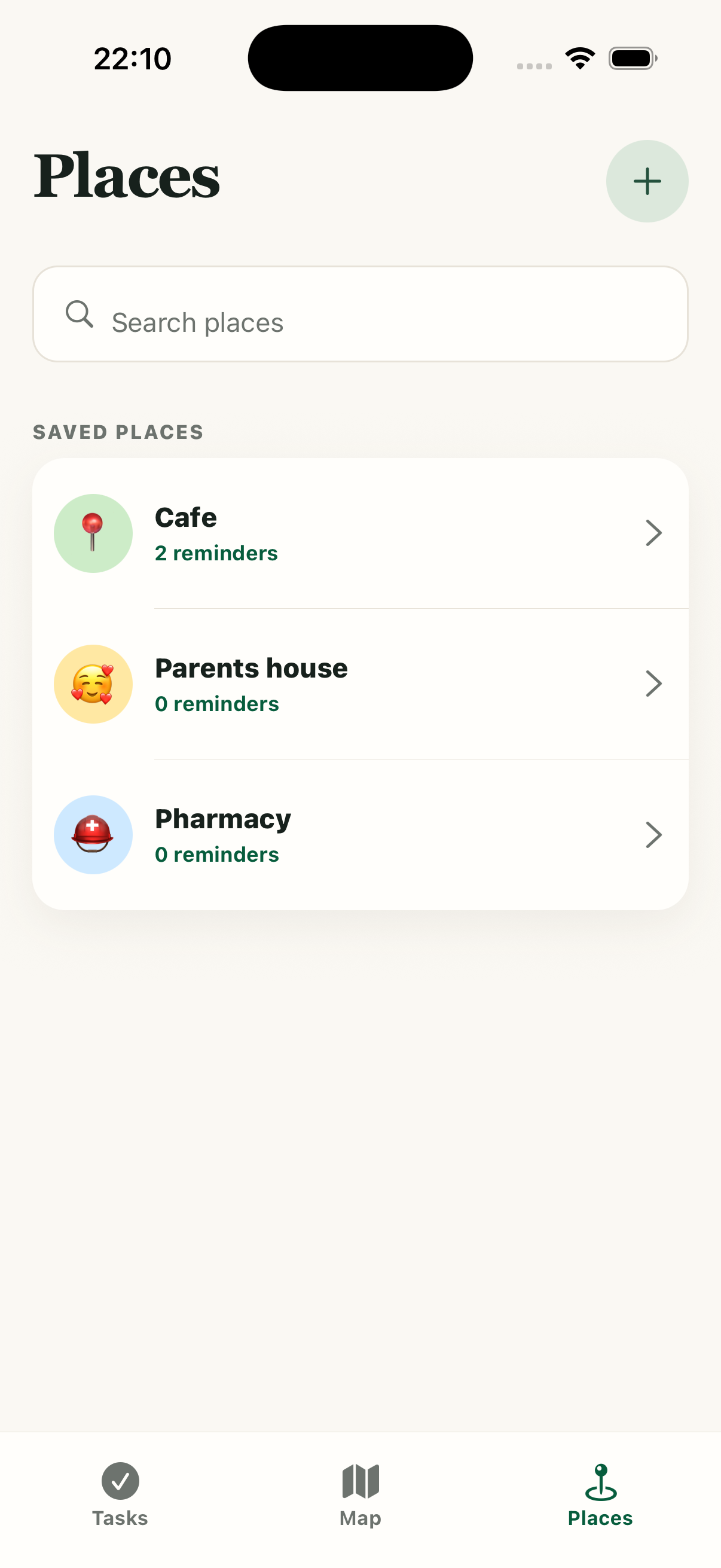
Place view
-
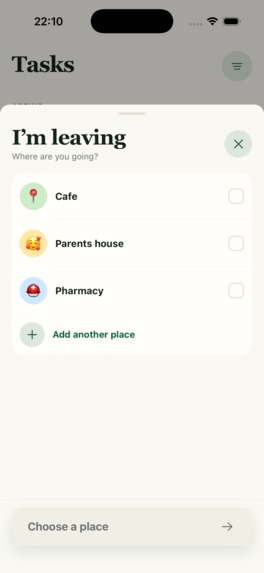
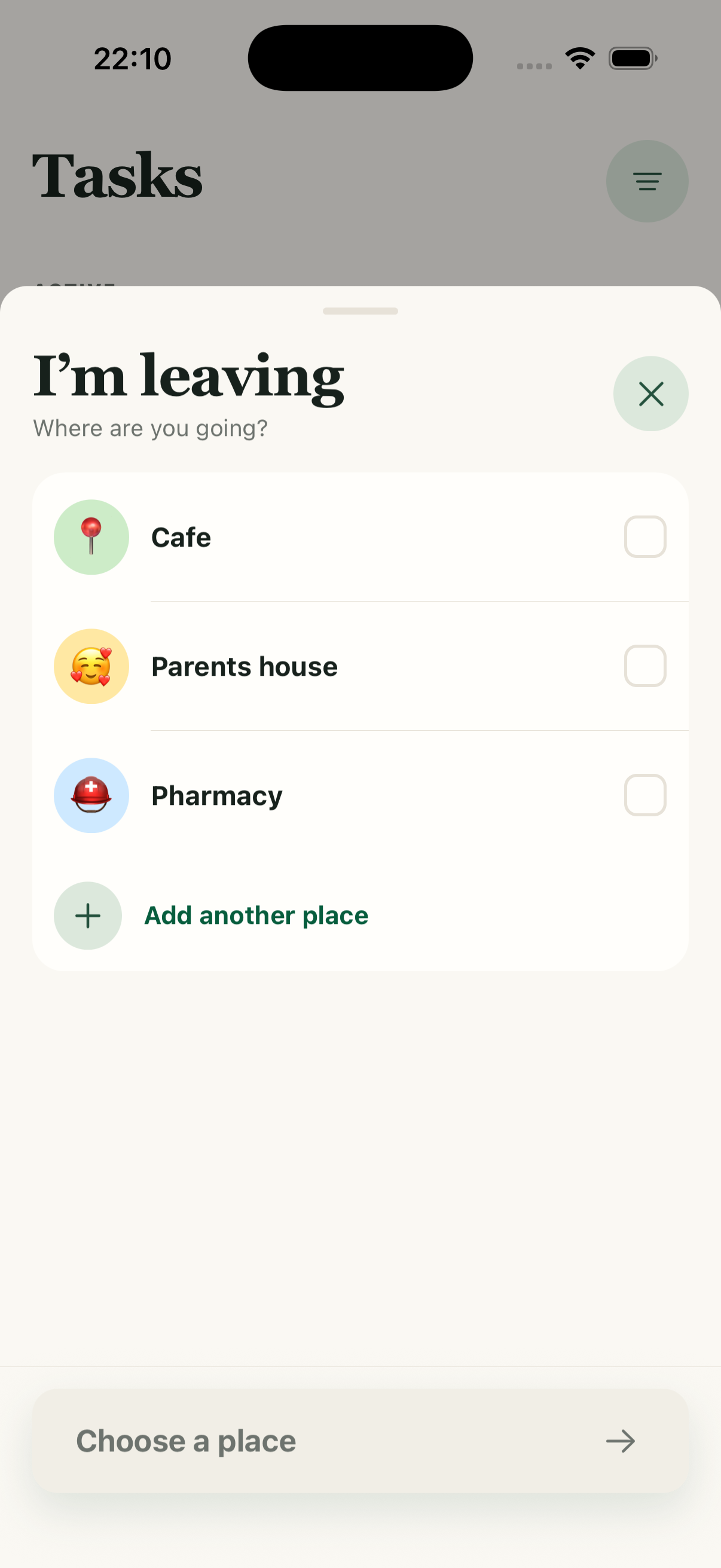
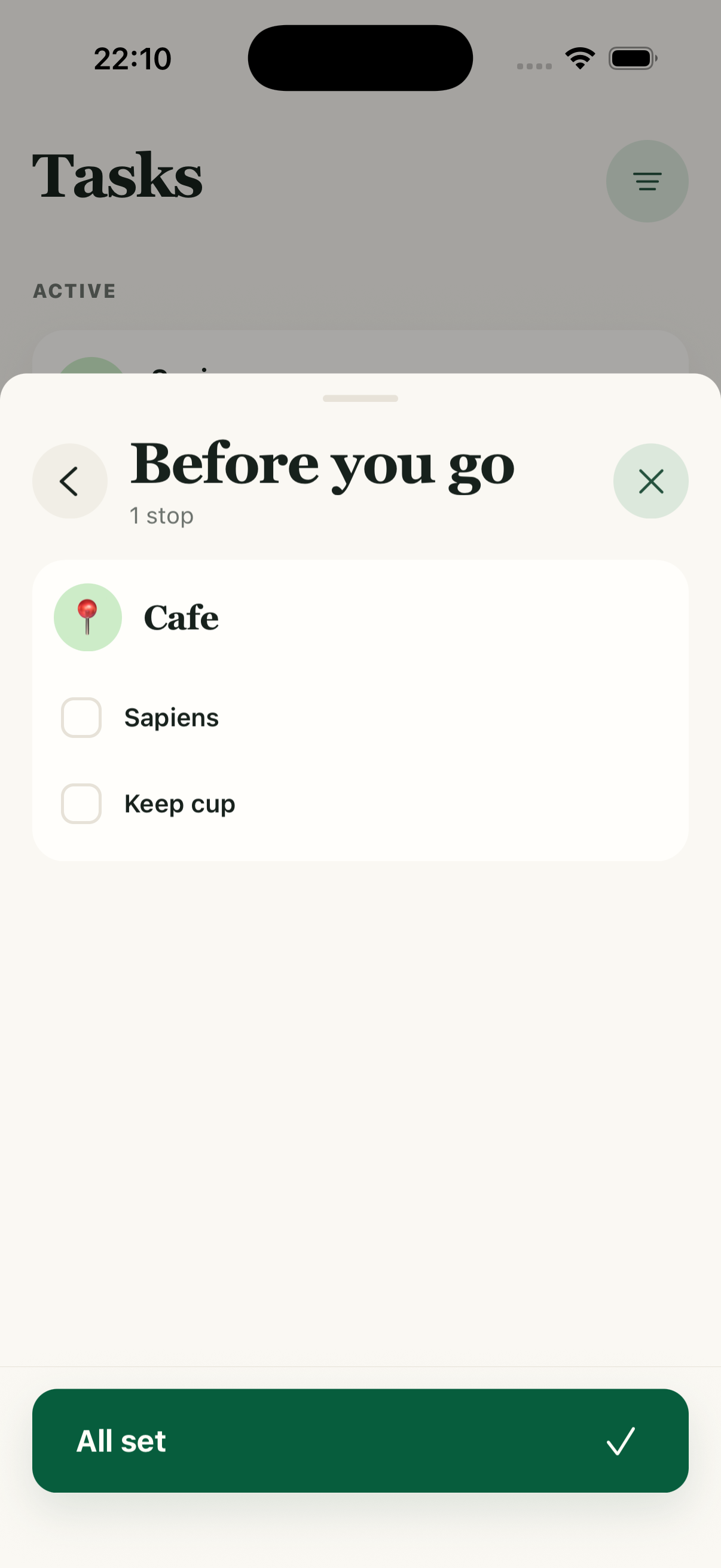
I'm leaving
-
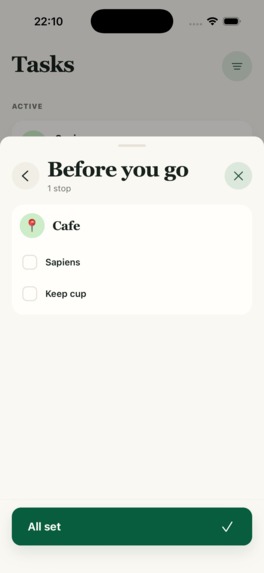
Location aware todo list!
Inspiration
As a busy person managing ADHD, I have plenty of lists, but none of them solve the last-minute gap between knowing what I need to do and remembering what I need for the trip I am about to take. Doorstep is designed for that moment.
What it does
Doorstep is a place-based departure assistant - a fancy way of saying: location based to-do list. People save the places they visit and connect tasks or belongings to one or more destinations.
When someone taps I'm leaving, Doorstep asks where they are going, combines the relevant reminders for the entire multi-stop trip, and presents a short checklist before confirming they are ready to go.
Doorstep also shows saved places on a native map, supports optional map pins and current-place suggestions, and includes native geofencing and notifications for exit reminders. The core experience works without an account, network service, or location permission.
How we built it
Doorstep is built with Expo, React Native, Expo Router, and TypeScript. AsyncStorage keeps places, reminders, and completion state on the device. Expo Location handles geocoding, proximity checks, and geofencing; Expo Notifications and Task Manager support native exit alerts; react-native-maps provides the spatial view.
The app was built during OpenAI Build Week with Codex and GPT-5.6. Codex helped translate the product concept into an React components designed with Expo in mind. It helped build the notification path, diagnose interaction problems, and validate the final submission.
I leveraged various different plugins/skills/MCPs to rapidly iterate on the project. I used Matt Pocock's Grill skill and Codex Goal plugin in tandem with fresh agents to validate plans and use cheaper models to execute plans whist using 5.6 to be the orchestrator.
Key decisions
The product and design choices remained human-directed: departure is the primary action, destinations are selected before reminders are shown, multi-stop trips are supported, location access is optional, prototype data stays on the device, and the visual language is calm rather than urgent.
Challenges
The most difficult part of this is the UX hierarchy between adding tasks and the main "I'm leaving" feature. During iterations, I never felt Codex really understood the hierarchy, so I spent a lot of time building wireframes with pen and paper - uploading versions to chatGPT to eventually implement the final version.
Managing location permissions is also tough, as iOS want their users protected - so the question is: How do we ensure the app is useful without the need for location services.
What we learned
Location features work best as progressive enhancement. Doorstep remains a useful manual checklist first, while maps, proximity suggestions, geofencing, and notifications add context when the user chooses to enable them.
What's next
Future work could add secure cross-device sync and reusable routines, while preserving the fast, private departure flow that makes Doorstep useful.
Built With
- codex
- expo.io
- gpt-5.6
- react-native
- typescript

Log in or sign up for Devpost to join the conversation.