Inspiration
Every doorbell ring or motion notification represents an event, but not every event requires the same level of attention. For elderly individuals, people with accessibility needs, and caregivers, receiving multiple alerts without clear context can be overwhelming.
We created DoorBridge-Ring-AI to transform traditional smart-doorbell notifications into a more accessible, understandable, and actionable home-monitoring experience.
Our vision is to help people understand what is happening at their doorstep, prioritize important events, and respond with greater confidence.
What it does
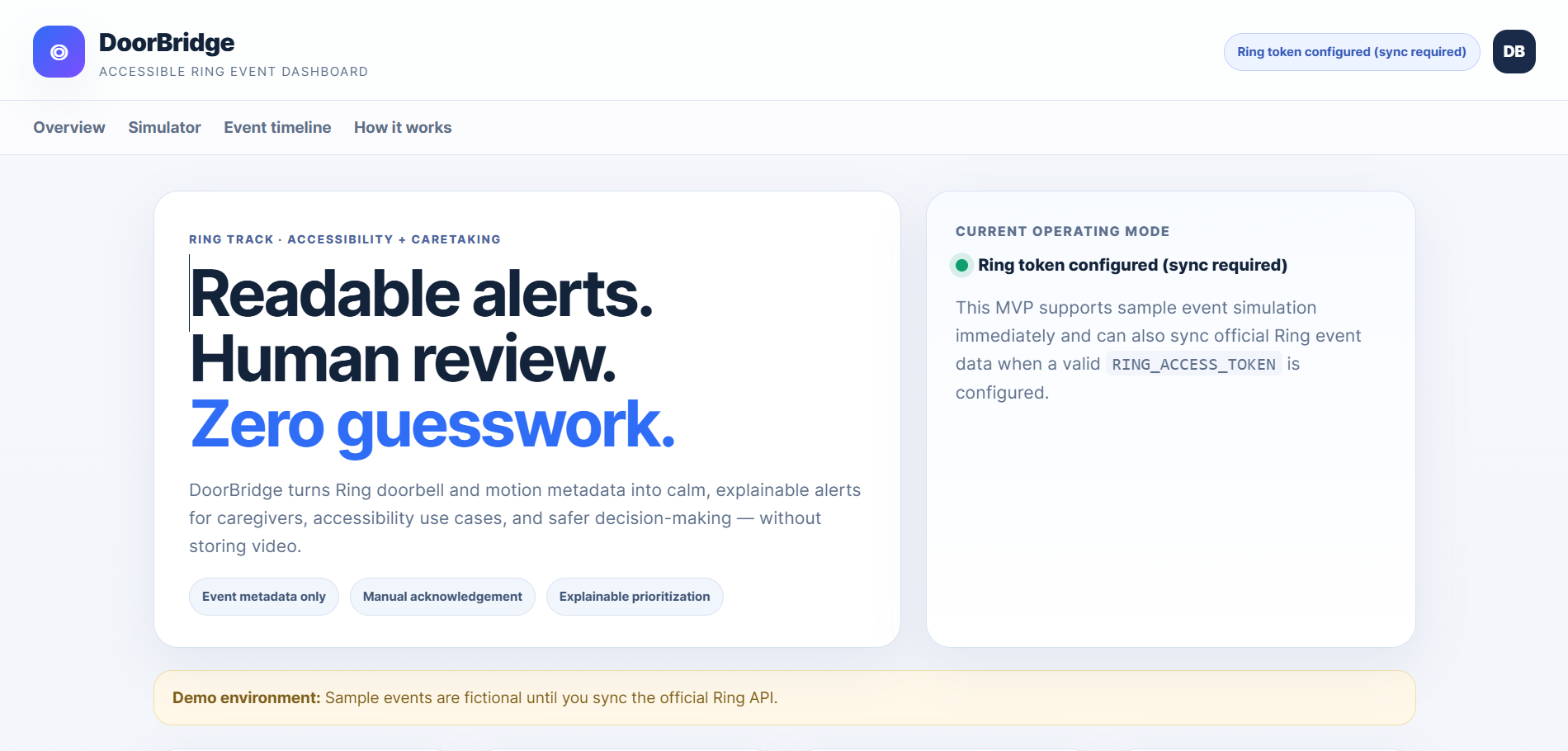
DoorBridge-Ring-AI is an intelligent, accessibility-focused Ring event monitoring dashboard that organizes doorbell and motion activity into a clear, prioritized interface.
The application provides:
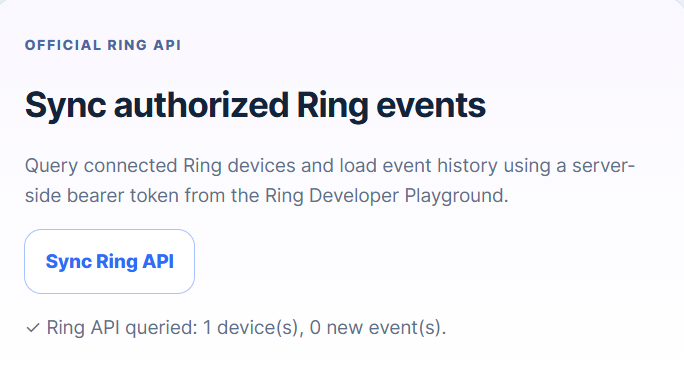
- Ring API integration: Connects to Ring device information and retrieves supported event metadata.
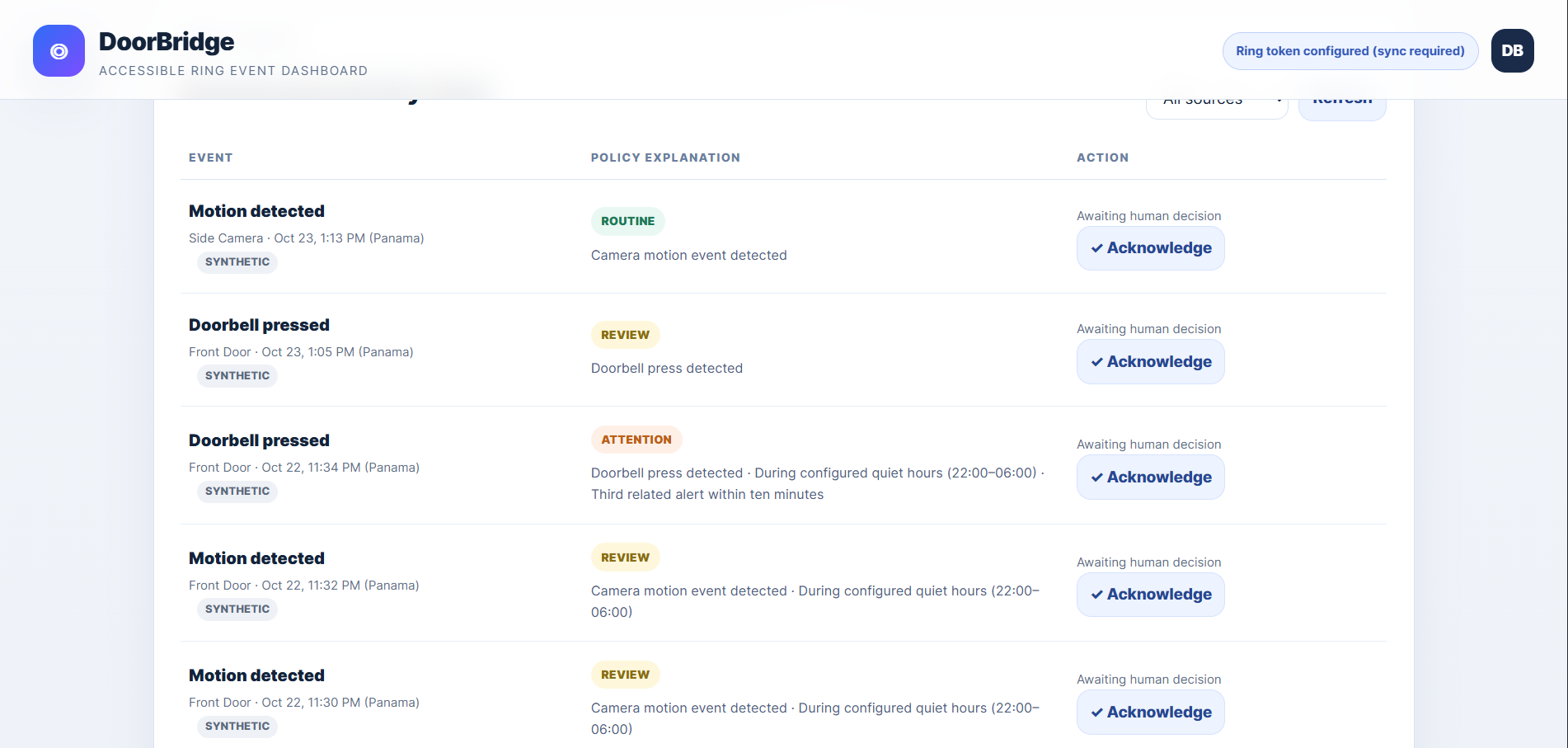
- Intelligent event prioritization: Classifies activity based on event type, time of day, and repeated motion patterns.
- Accessible dashboard: Presents information through a clean, responsive interface with readable notifications.
- Contextual explanations: Helps users understand why certain events deserve greater attention.
- Event acknowledgment: Allows users to acknowledge notifications and track their status.
- Activity timeline: Maintains a structured record of events for easier monitoring.
- Interactive demonstrations: Simulates realistic doorbell and motion scenarios without requiring continuous live activity.
The system clearly separates simulated demonstration events from information retrieved through the Ring integration.
How we built it
We developed DoorBridge-Ring-AI using Python and FastAPI for the application backend, with SQLite for lightweight event storage.
We implemented a Ring API integration layer to retrieve device information and available event metadata. The incoming information is normalized and processed by a local decision engine.
Our event classification system evaluates factors such as event type, timing, and repeated activity to assign attention levels and generate understandable explanations.
We also developed a responsive web dashboard focused on accessibility and simplicity. The application includes demonstration endpoints that allow users and judges to experience different notification scenarios.
For reliability, we created automated tests using Pytest and validated the application's core functionality, event handling, and prioritization rules.
Challenges we ran into
One of our biggest challenges was integrating Ring services while handling authentication requirements, API responses, and situations where no recent events were available.
Another challenge was designing a prioritization system that distinguishes ordinary doorbell activity from potentially more important patterns without overwhelming users with unnecessary alerts.
We also encountered environment-specific timezone dependency issues during local testing. After troubleshooting and correcting the configuration, we successfully executed our automated test suite.
Finally, we worked to balance functionality with accessibility, ensuring that important information could be communicated clearly without creating an unnecessarily complicated interface.
Accomplishments that we're proud of
We are particularly proud of transforming a simple idea into a functional, testable application.
Our accomplishments include:
- Building a working web-based monitoring dashboard.
- Successfully connecting to the Ring API and retrieving device information.
- Implementing a contextual event-prioritization engine.
- Designing an accessible notification and event-management interface.
- Creating realistic simulations for reliable demonstrations.
- Successfully passing all 10 automated tests in our final local test run.
Most importantly, we created a foundation for a smarter and more inclusive way to interact with home security information.
What we learned
This project strengthened our understanding of API integration, backend development, event-driven applications, automated testing, and accessible user-interface design.
We learned that smarter home monitoring is not simply about generating more notifications. It is about delivering useful information at the right time and presenting it in a way people can understand.
We also gained practical experience debugging authentication, handling missing event data, and improving software reliability through testing.
What's next for DoorBridge-Ring-AI
Our next goal is to expand DoorBridge into a more advanced accessibility and caregiver-support platform.
Planned improvements include:
- More sophisticated AI-assisted event interpretation.
- Personalized notification preferences and alert thresholds.
- Optional caregiver notifications and escalation workflows.
- Expanded Ring device and event support.
- Improved mobile accessibility and multilingual interfaces.
- More comprehensive security, privacy, and authentication controls.
- Cloud deployment for authorized remote access.
Our long-term vision is to make smart-home technology more inclusive, helping individuals and caregivers stay informed without unnecessary complexity.
DoorBridge-Ring-AI: Making every alert more meaningful, accessible, and actionable.
Built With
- css
- fastapi
- html
- javascript
- pytest
- python
- ring-api
- sqlite
- uvicorn

Log in or sign up for Devpost to join the conversation.