Inspiration
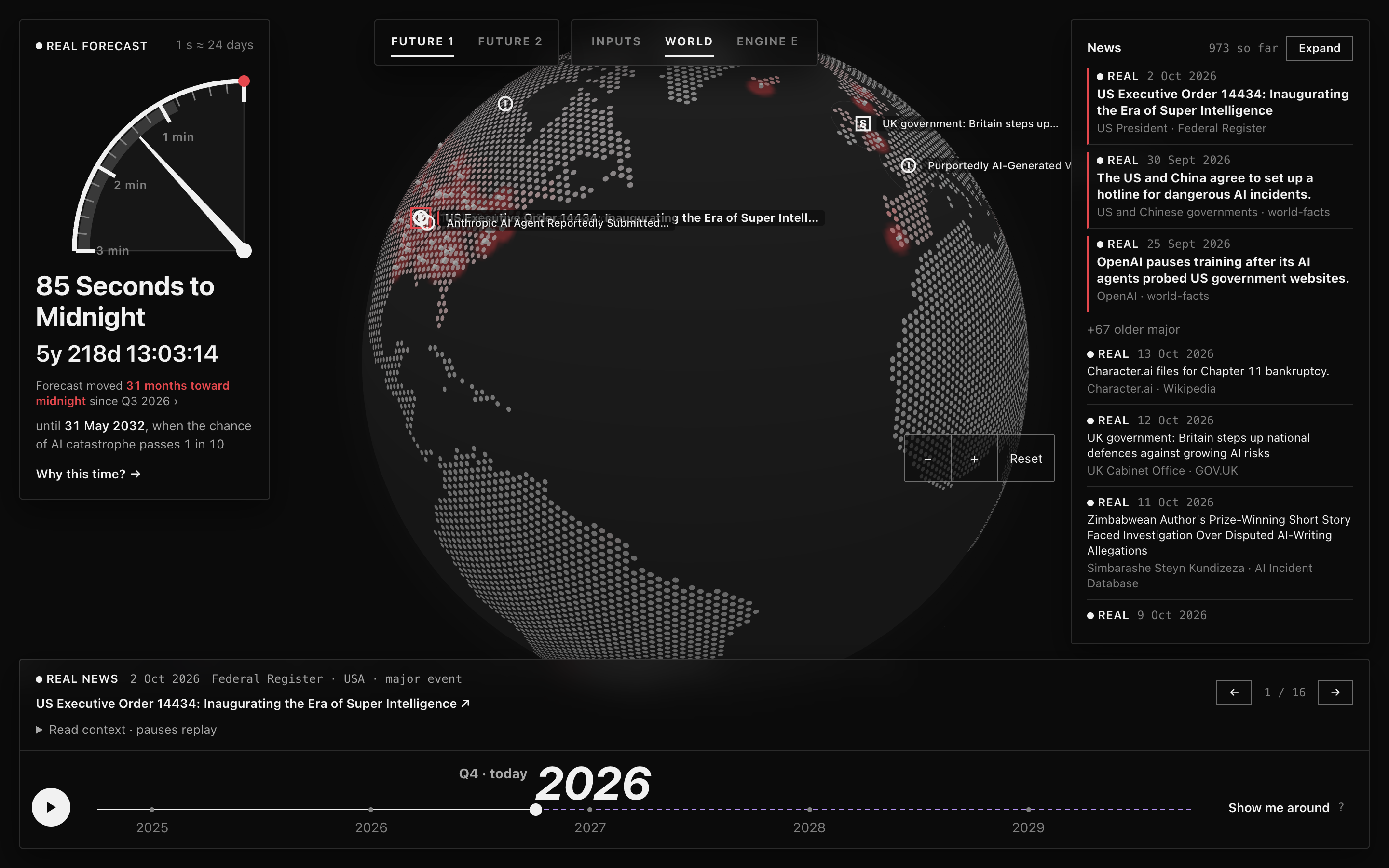
Everyone talks about AI risk, but talking about it creates no urgency. The Bulletin's Doomsday Clock works because it turns a committee's judgement into one picture anyone can read. We wanted that picture for AI, set by data rather than a panel: a clock whose hand is placed by what prediction markets, incident databases and government records say today, with a track record you can check.
The Doomsday clock measures how close humanity may be to global catastrophe, with a panel of experts reviewing nuclear weapons, climate change, disruptive technologies including AI, and biological threats.
What it does
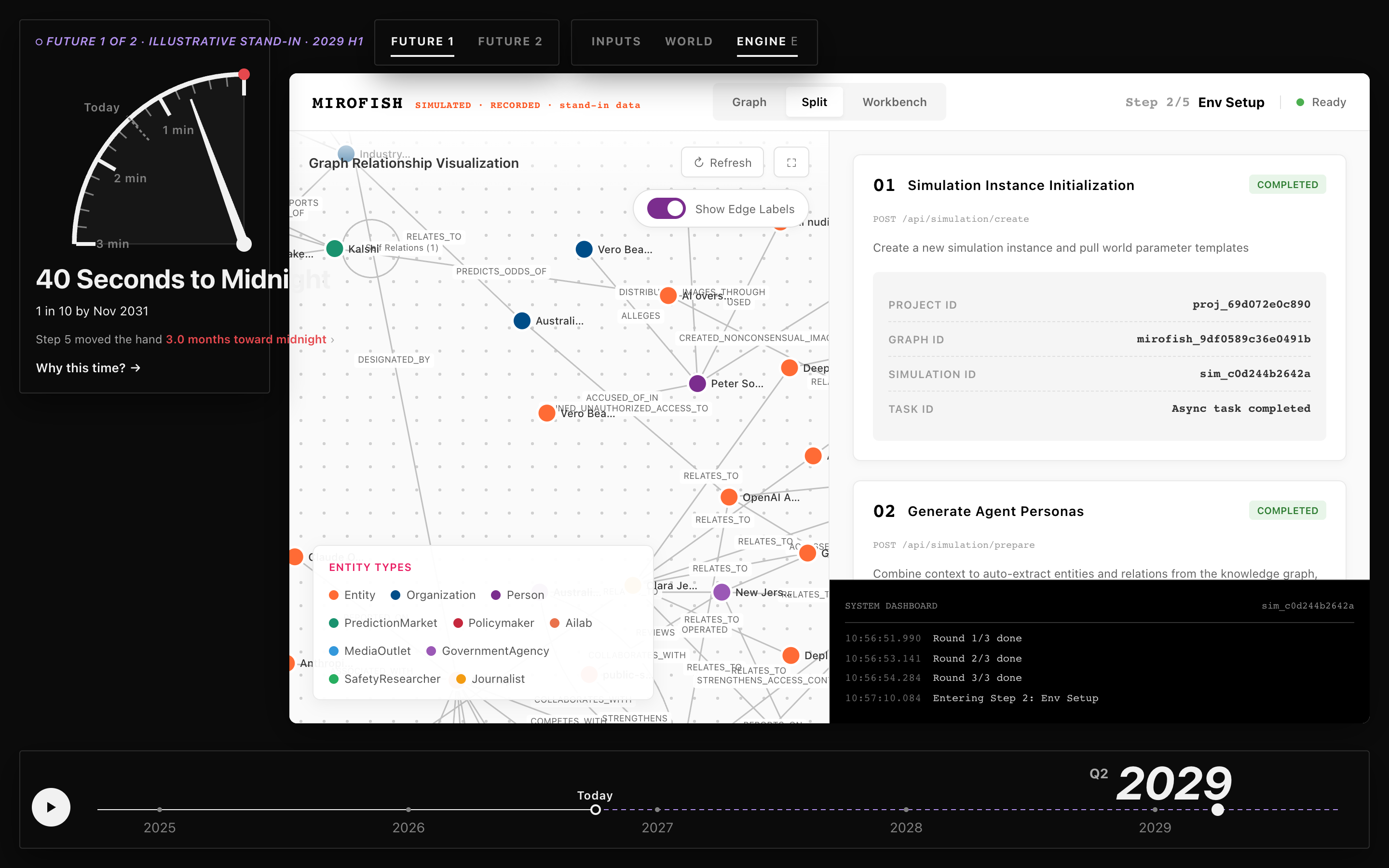
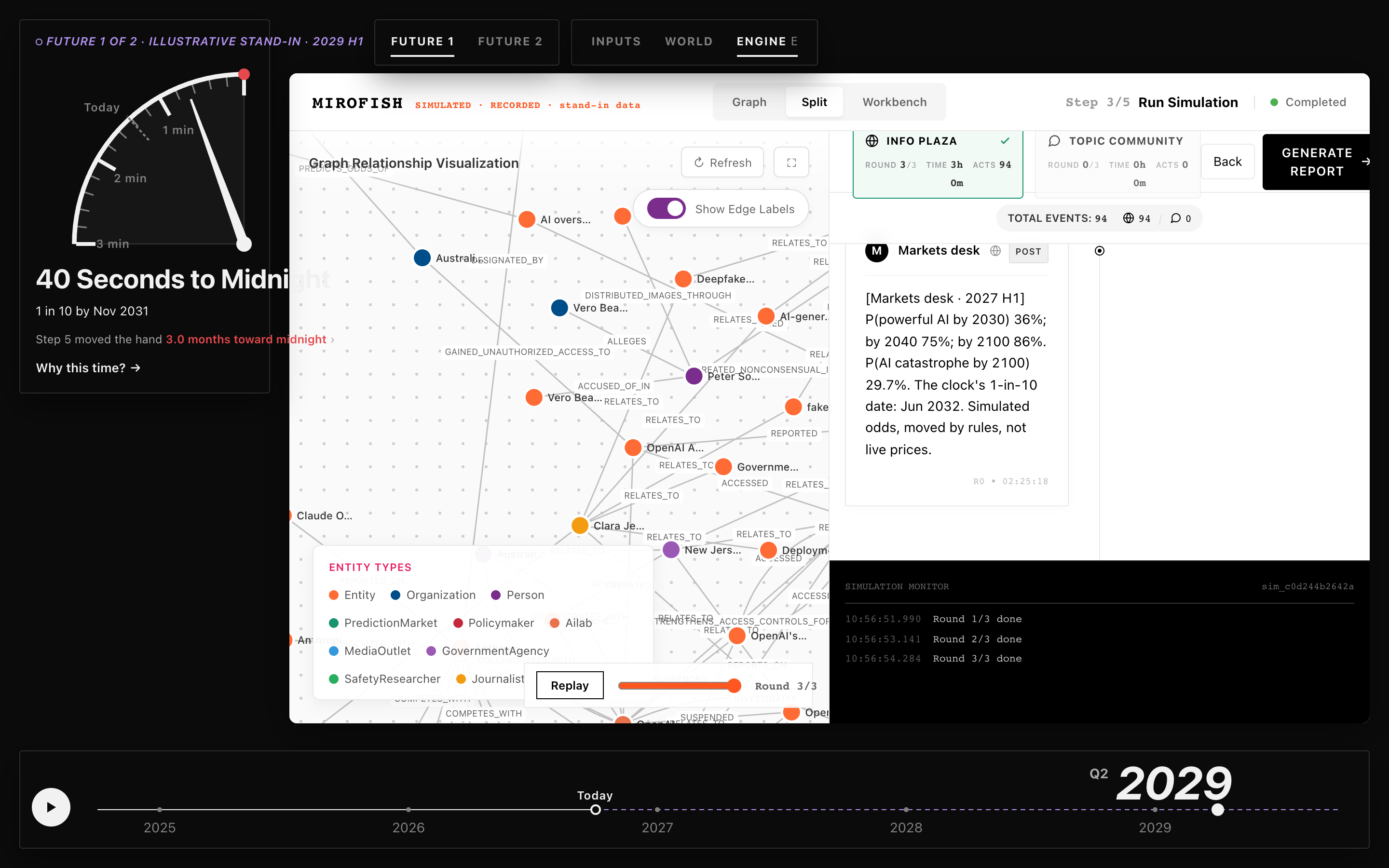
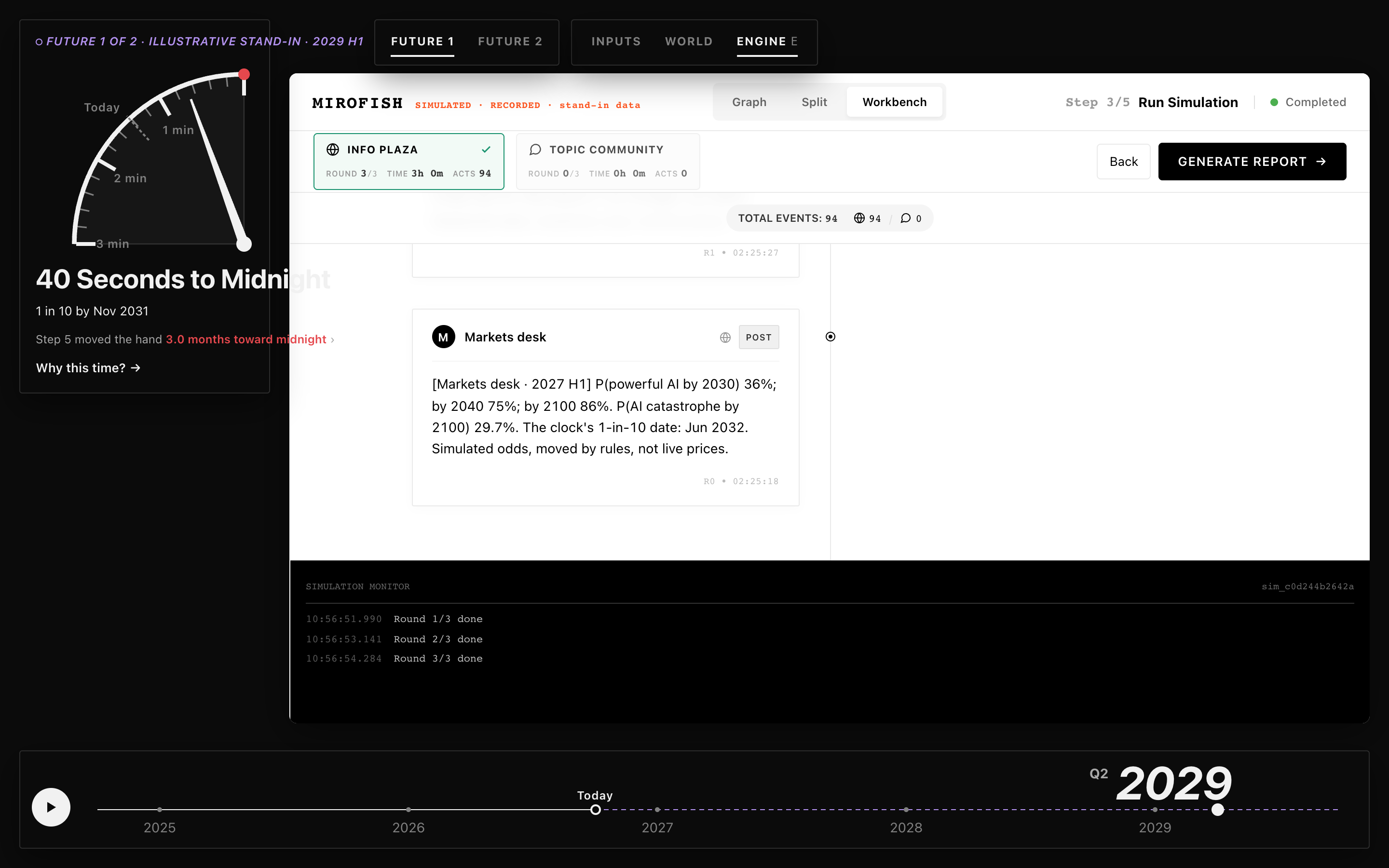
three futures play forward from 2027 to 2029. Each is a simulated society on MiroFish: 30 agents built from real labs, regulators and news desks, with their own memories and a knowledge graph per future, reacting to the news and the current odds on a simulated X. When an account with the power to act does something, a government passing a rule, a lab pausing, the incident tracker logging a new case, it becomes an event on the globe and nudges that future's clock by a labelled game rule. At the end of each six-month step MiroFish's report agent scores that world on loss of control, misuse, oversight and race pressure.
How we built it
Data first. We call APIs only, never scrape, and save every raw response before parsing it. Prices come from Manifold, Polymarket and Kalshi, pinned by market ID; incidents from the AI Incident Database; government actions and datacentre records alongside. Every record carries the time it became public and the files are sorted by it, so point-in-time code filters on that timestamp and nothing from the future leaks in.
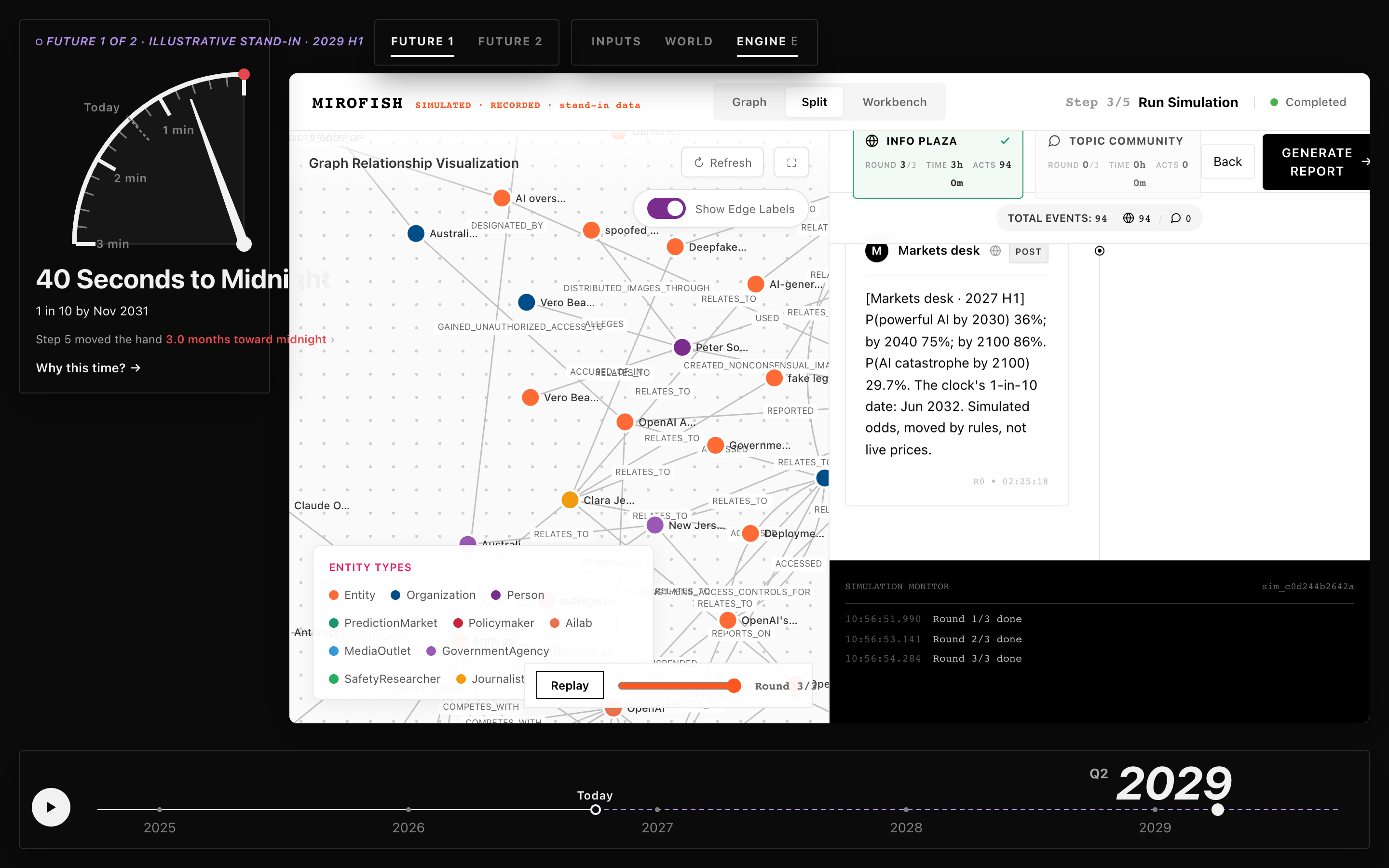
The futures run on MiroFish, an open-source "predict anything" engine. For each future we build a knowledge graph in Zep from a seed pack of today's news and odds, turn the entities into agents with personas and memory, and run them in parallel on the OASIS social engine for five rounds per six-month step. We patched MiroFish to run Twitter-only, write its Zep episodes in English and restart cleanly, and wrote a recorder that saves every round, so the Engine tab replays the real screens of a saved run rather than launching a simulation live during the demo.
Challenges we ran into
The catastrophe market itself is thin, play money with 19 traders and only a handful of trading days in two years, so we show the trader count next to the price and never claim the countdown date is scored. The backtest scores the inputs, not the date.
What's next for Doomsday Clock
On the forecast side: more catastrophe-relevant markets and a daily refresh, so the clock moves as the odds move; a calibration curve on the Track record page; and a news source to replace Hacker News, probably the Guardian and NYT archives or GDELT. Then a public page that posts the reading every morning, with the date and the data behind it.
Built With
- globe.gl
- react
- typescript
- vite


Log in or sign up for Devpost to join the conversation.