-
-
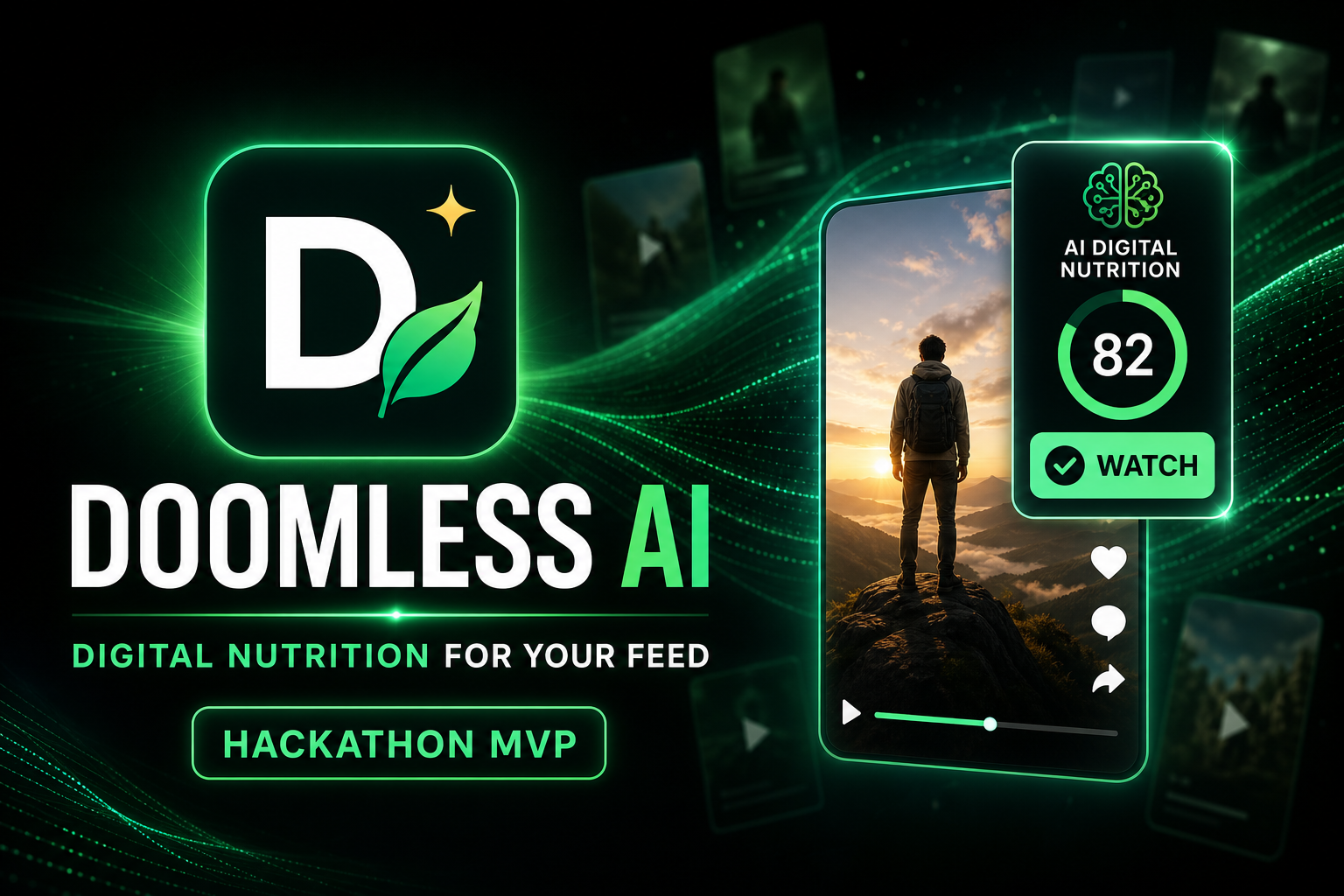
DoomLess AI
-
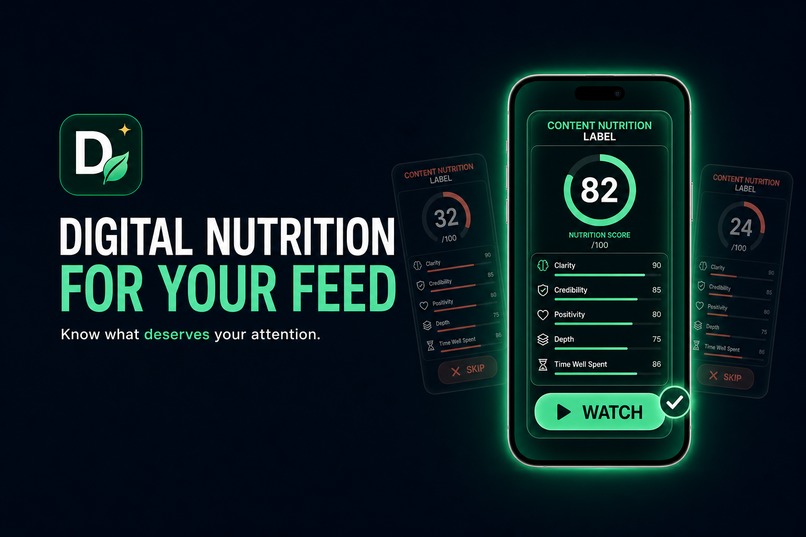
Digital Nutrition for Your Feed
-
Analytics
-
!!!
-
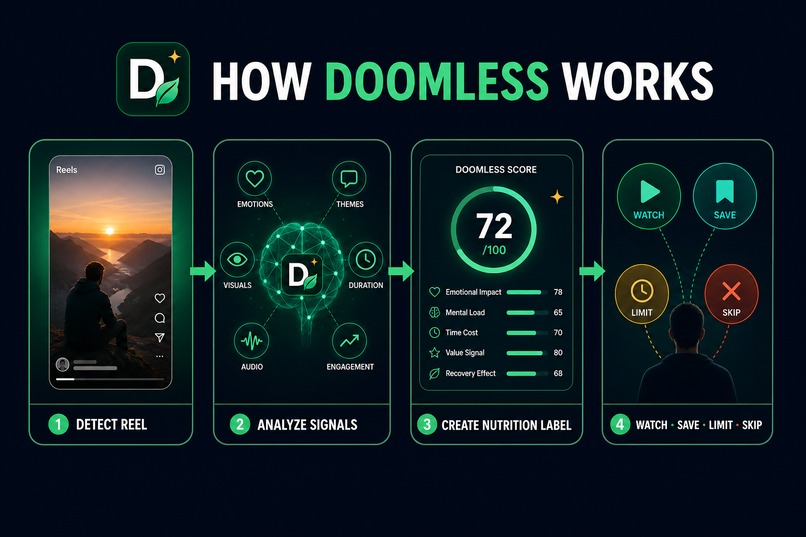
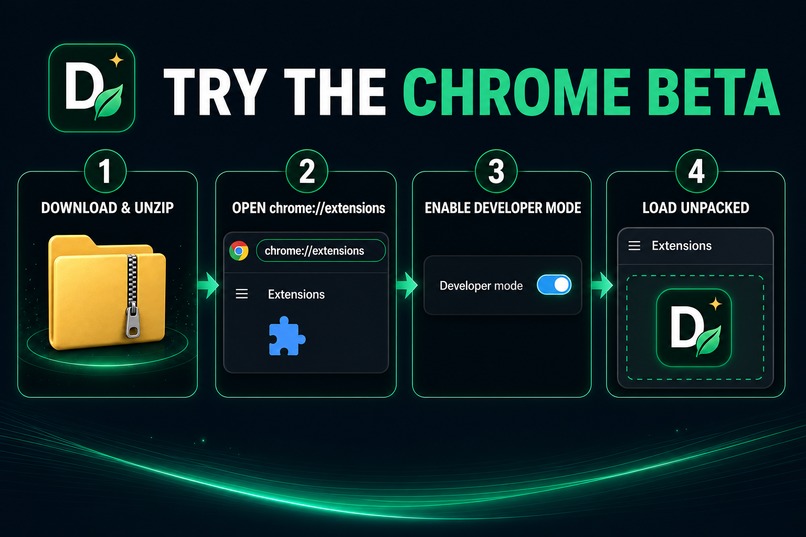
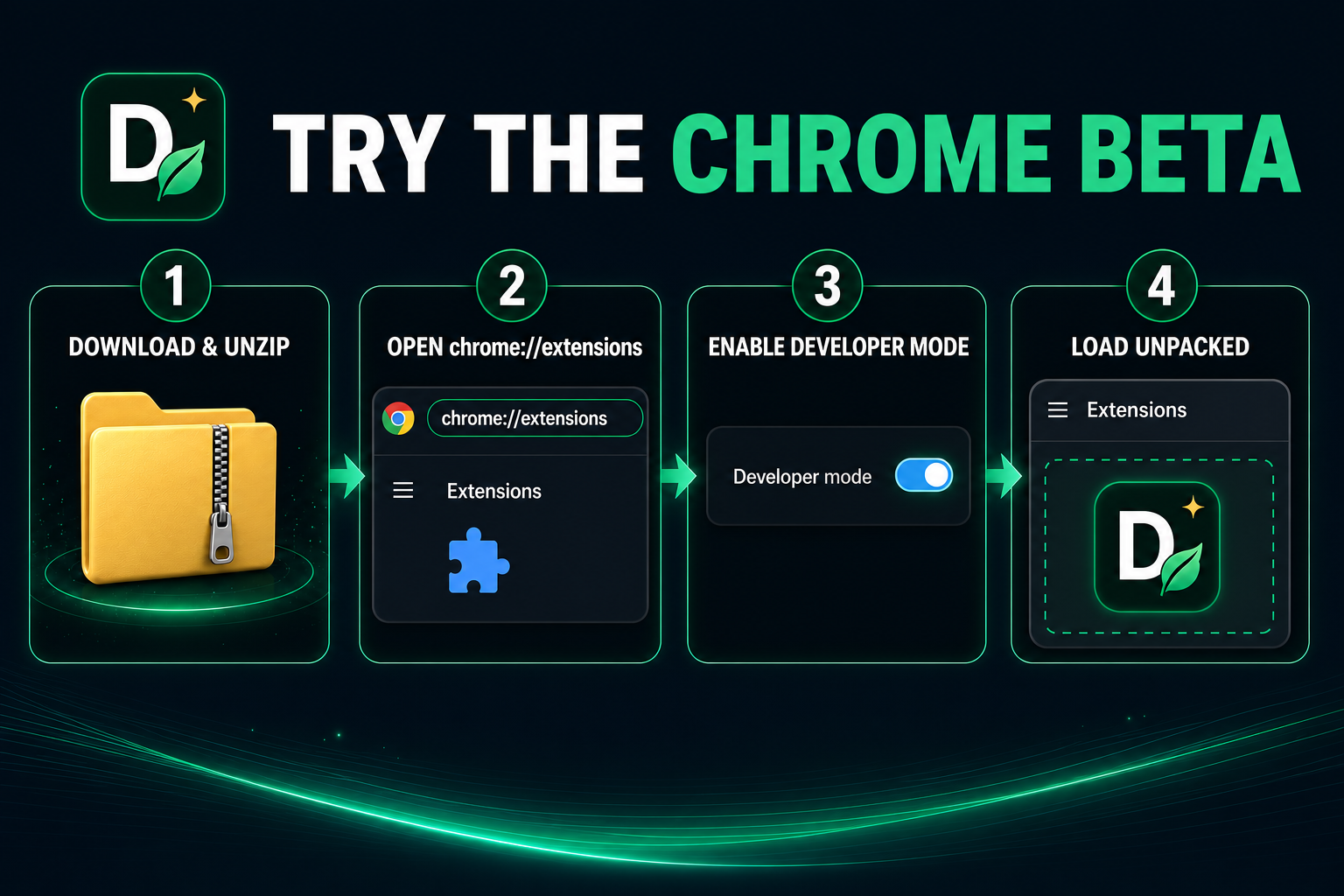
How to Install the Chrome Beta
-
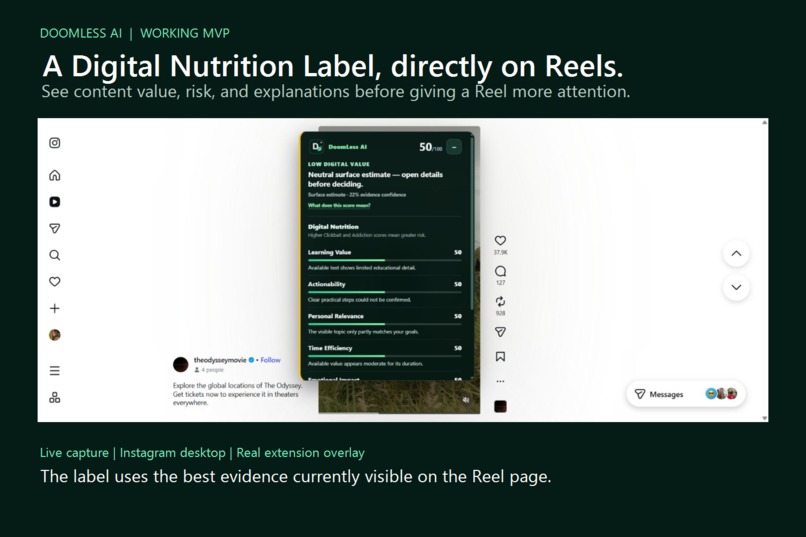
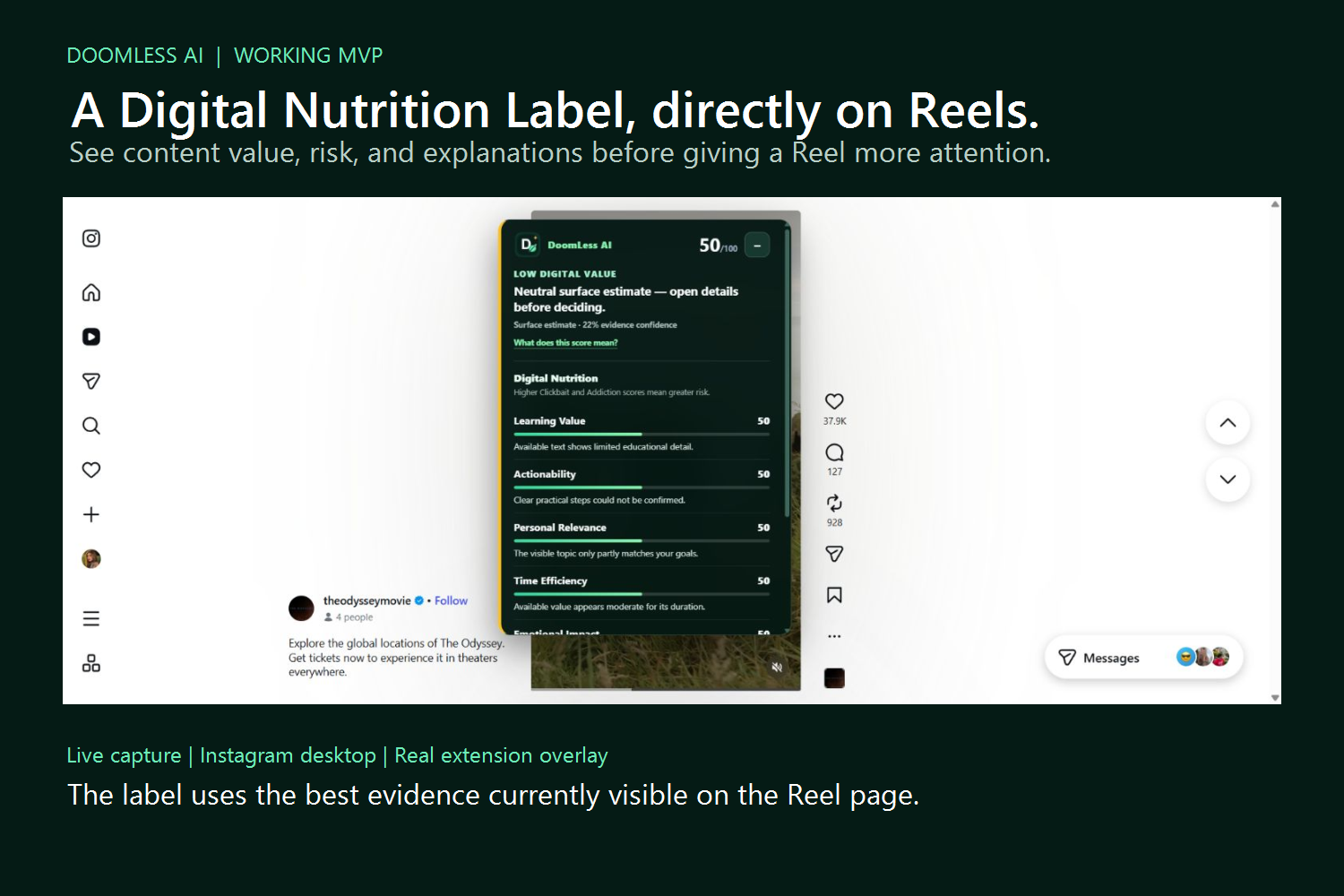
Live Instagram extension overlay
-
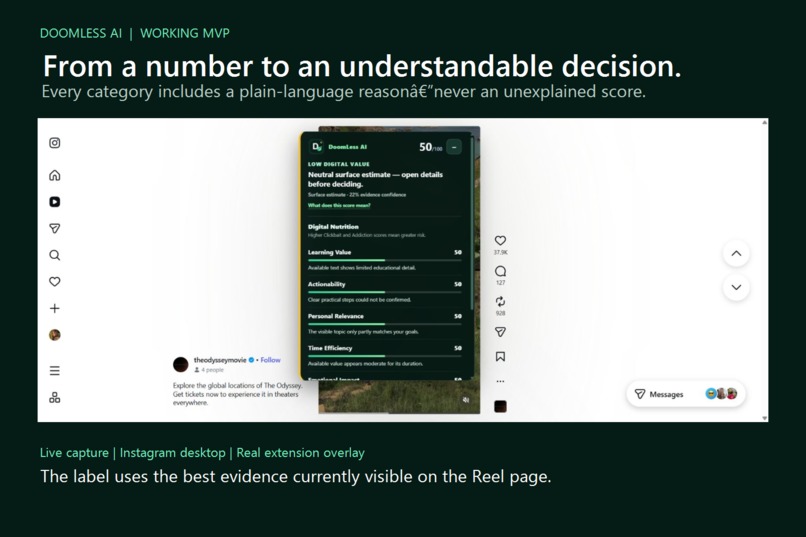
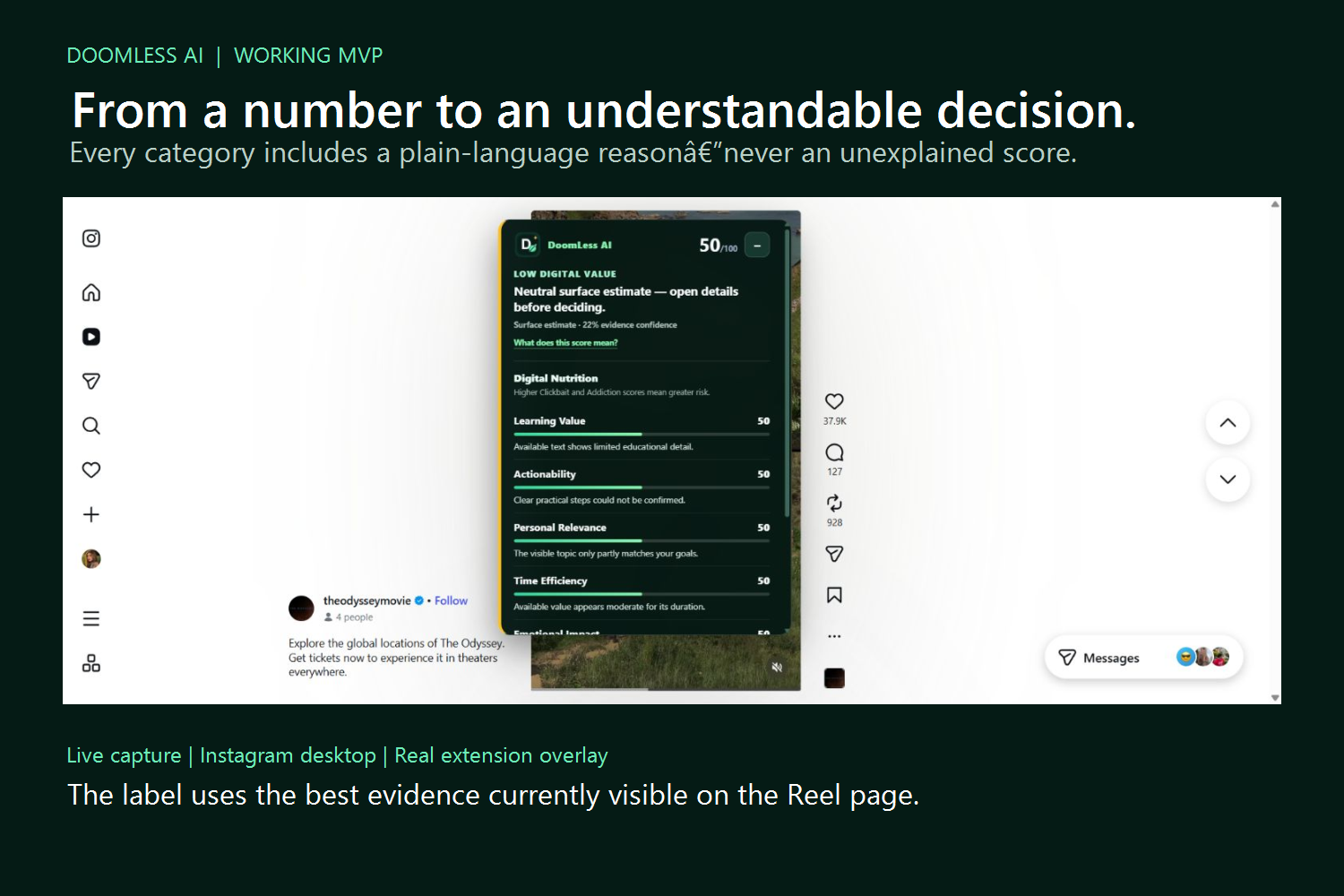
Live Instagram extension overlay
-
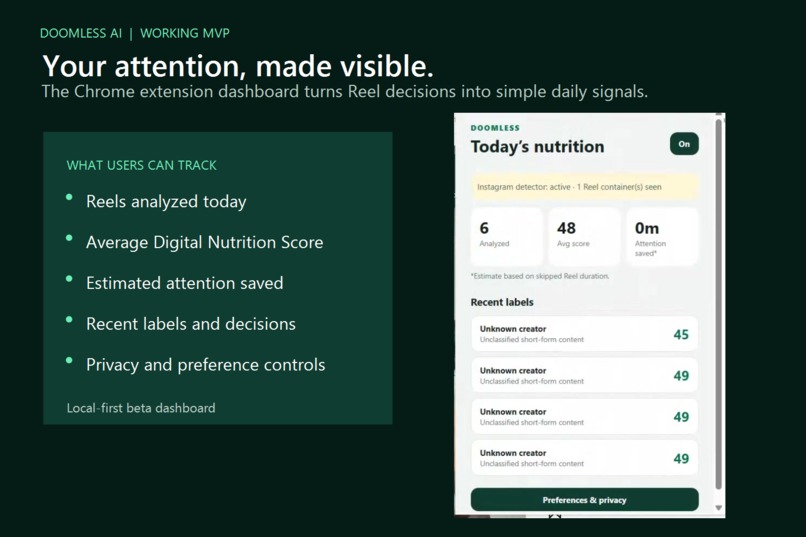
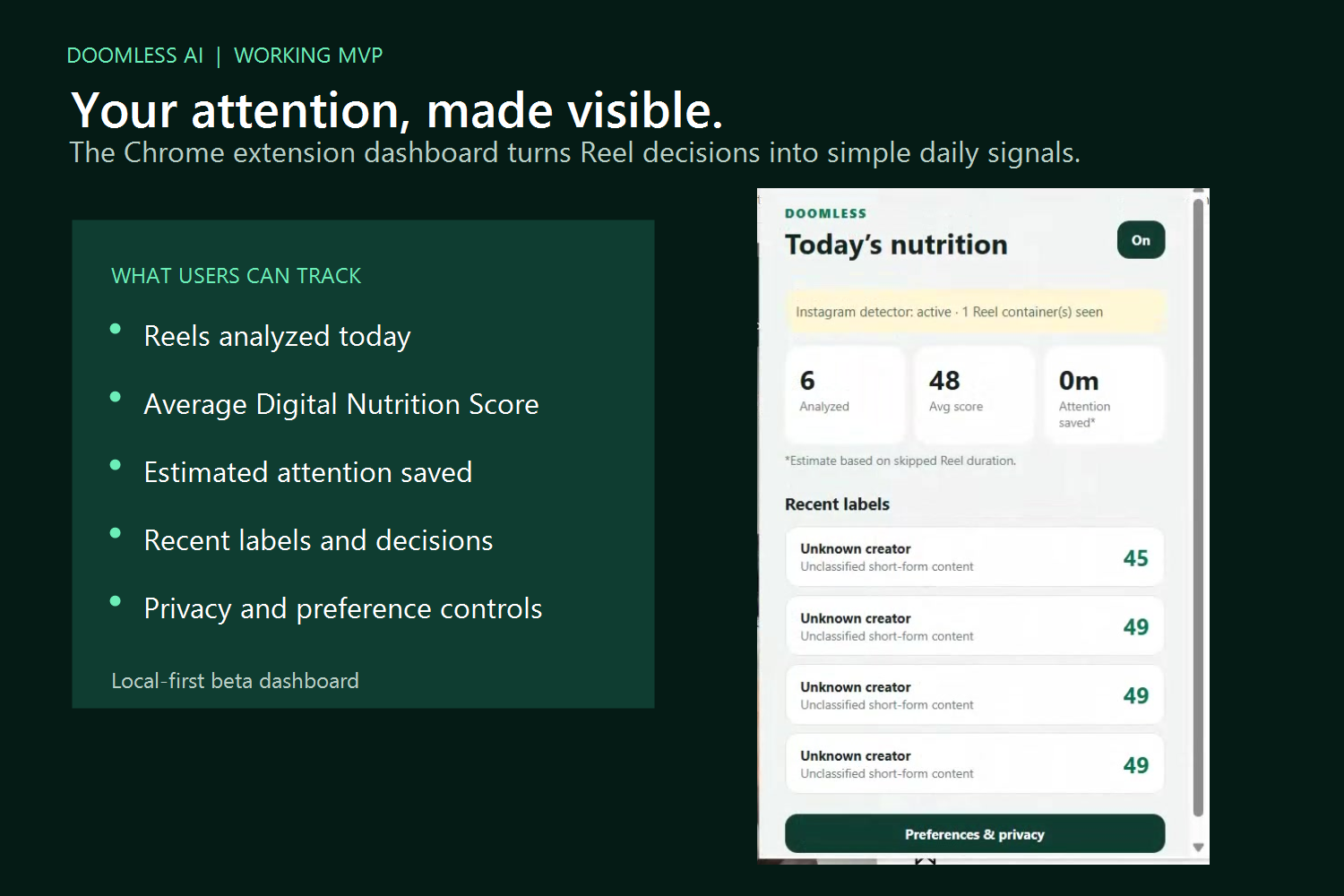
Extension attention dashboard
-
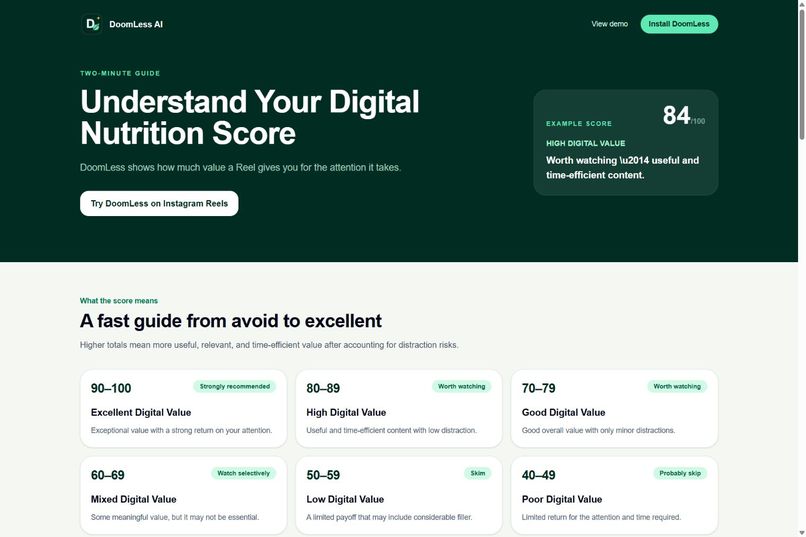
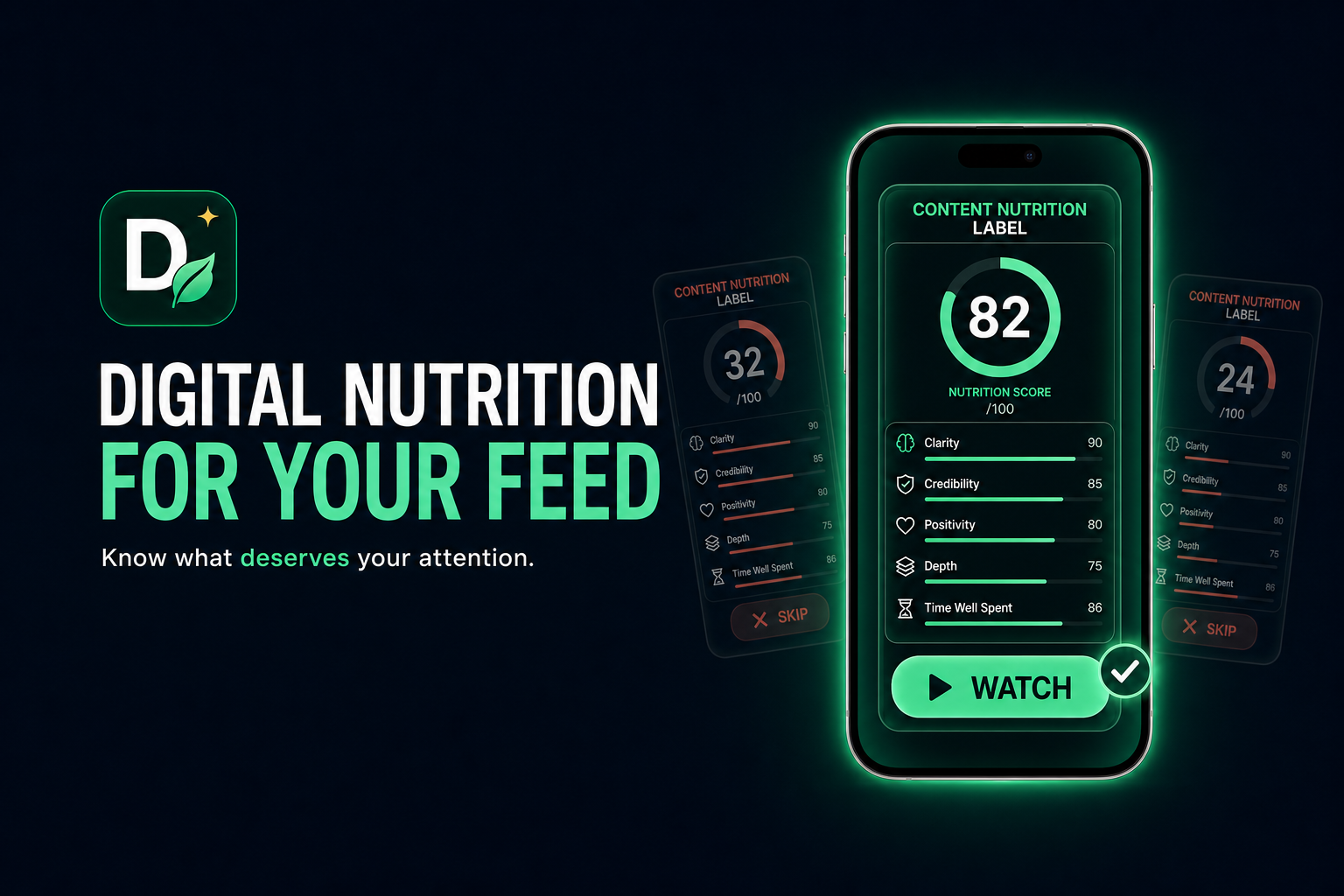
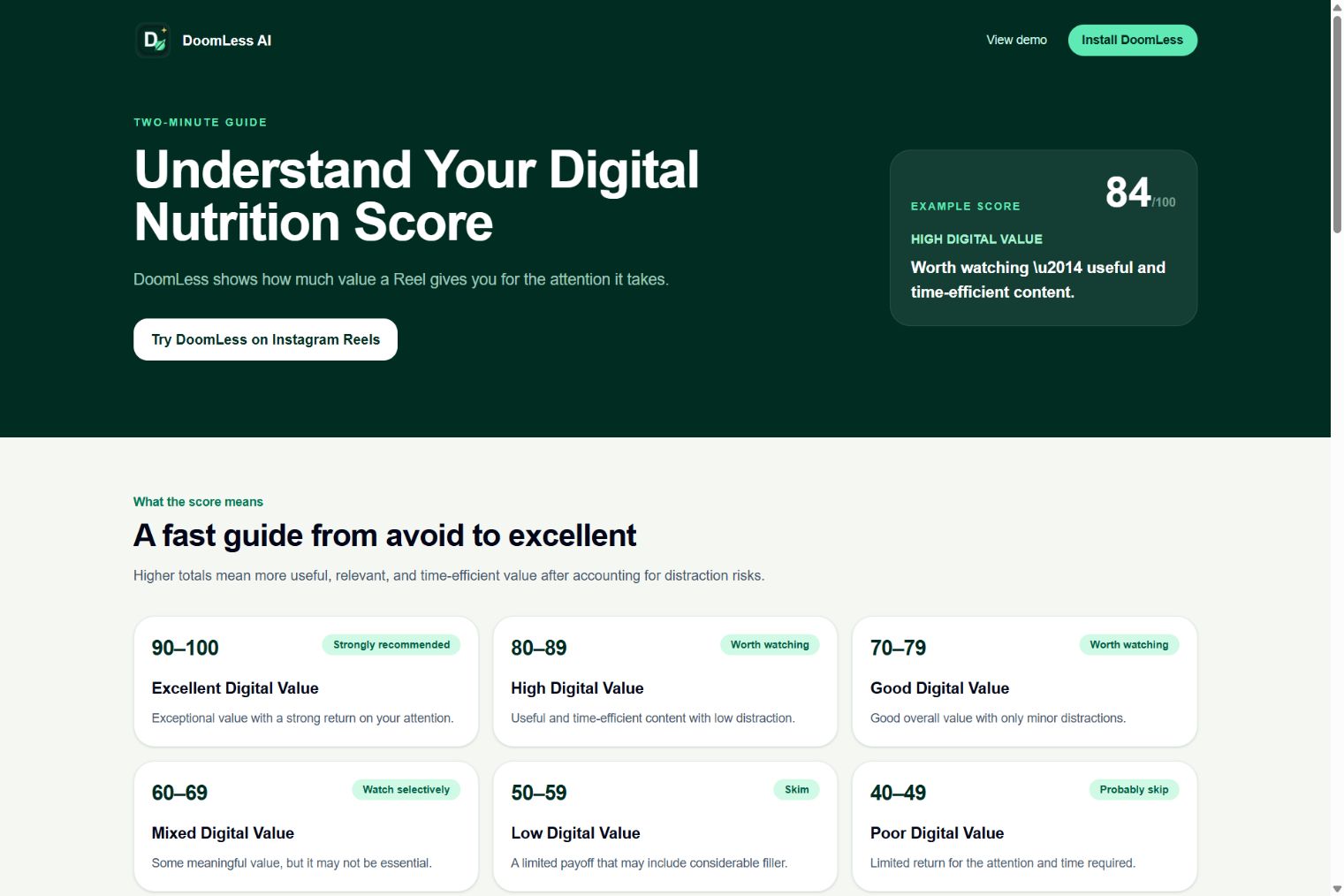
Explained Digital Nutrition score
-
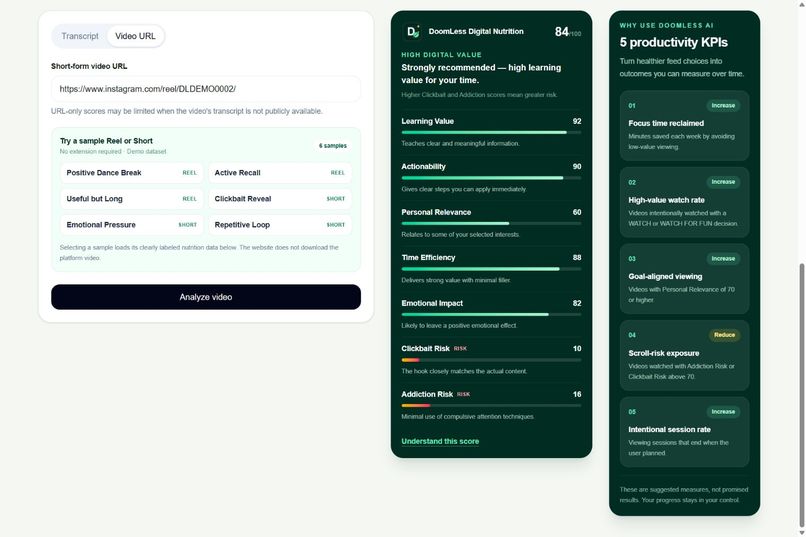
Try it for yourself
-
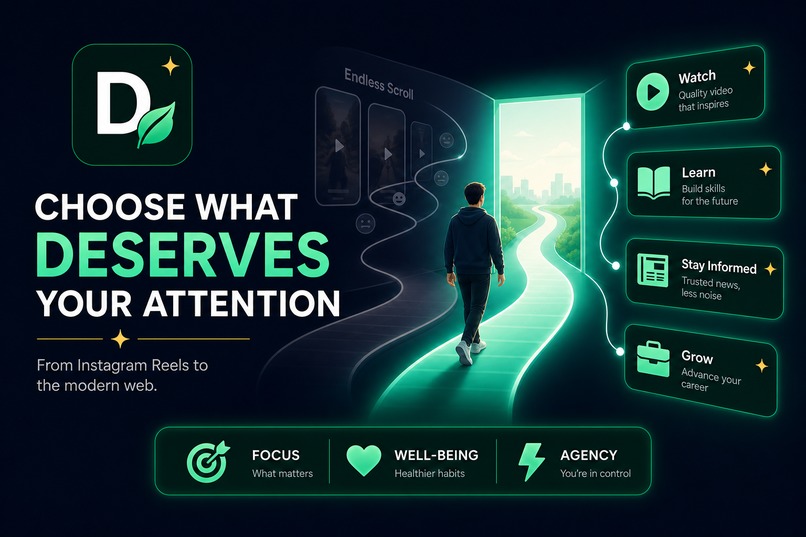
Attention >>
-
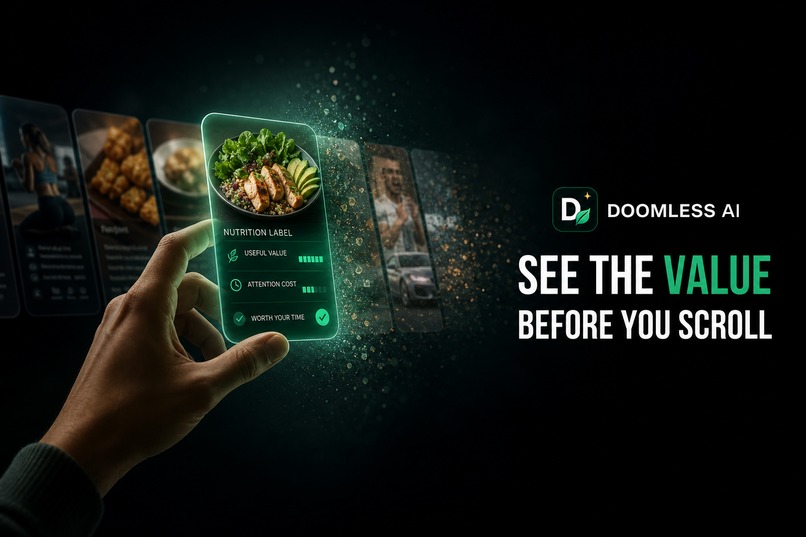
Thank you!!
DoomLess AI: Digital Nutrition for the Modern Web
Executive Summary
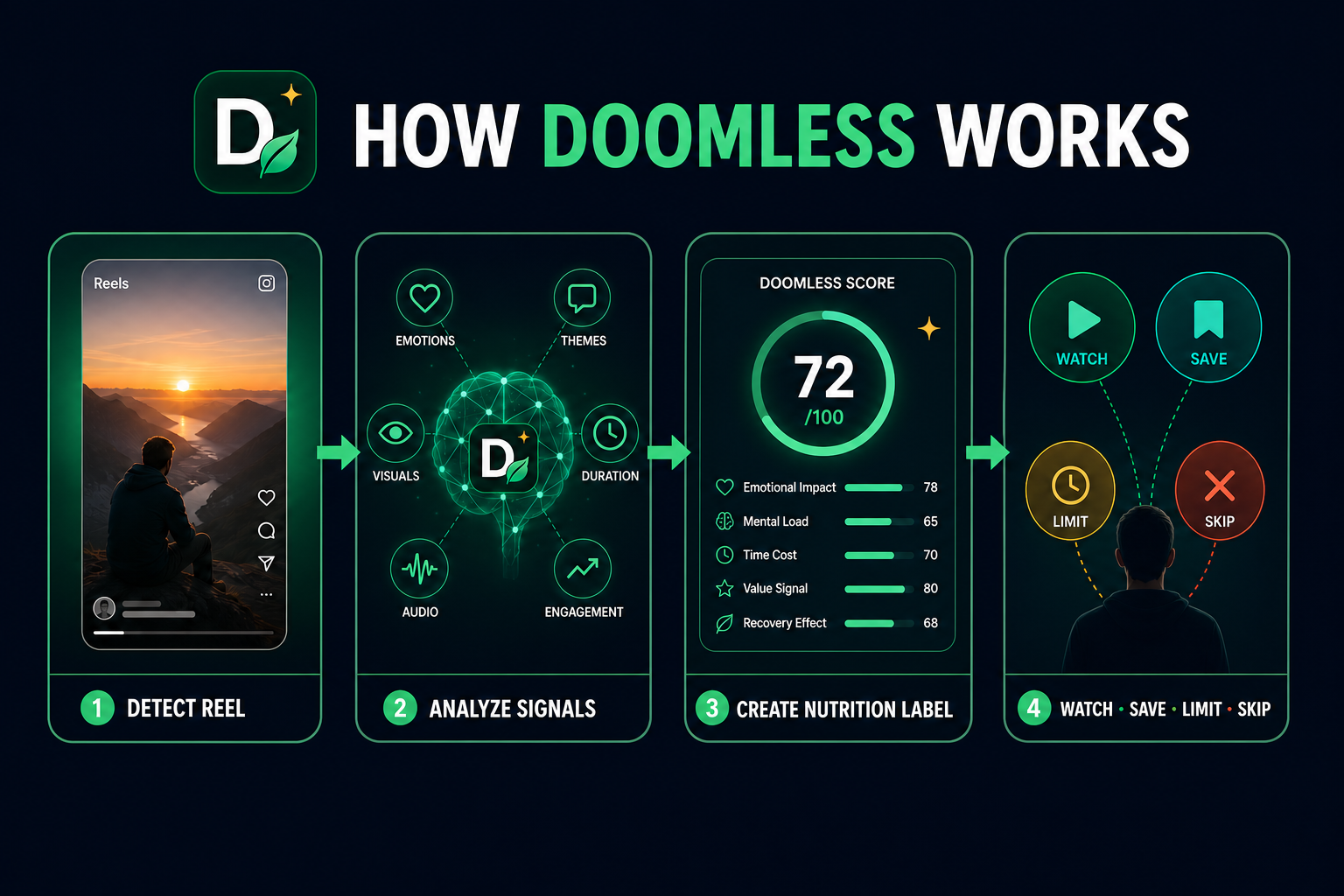
DoomLess AI is an AI-powered Digital Nutrition platform that helps people evaluate short-form content before investing their attention.
Unlike tools that block applications or report screen time afterward, DoomLess evaluates individual content while the user browses.
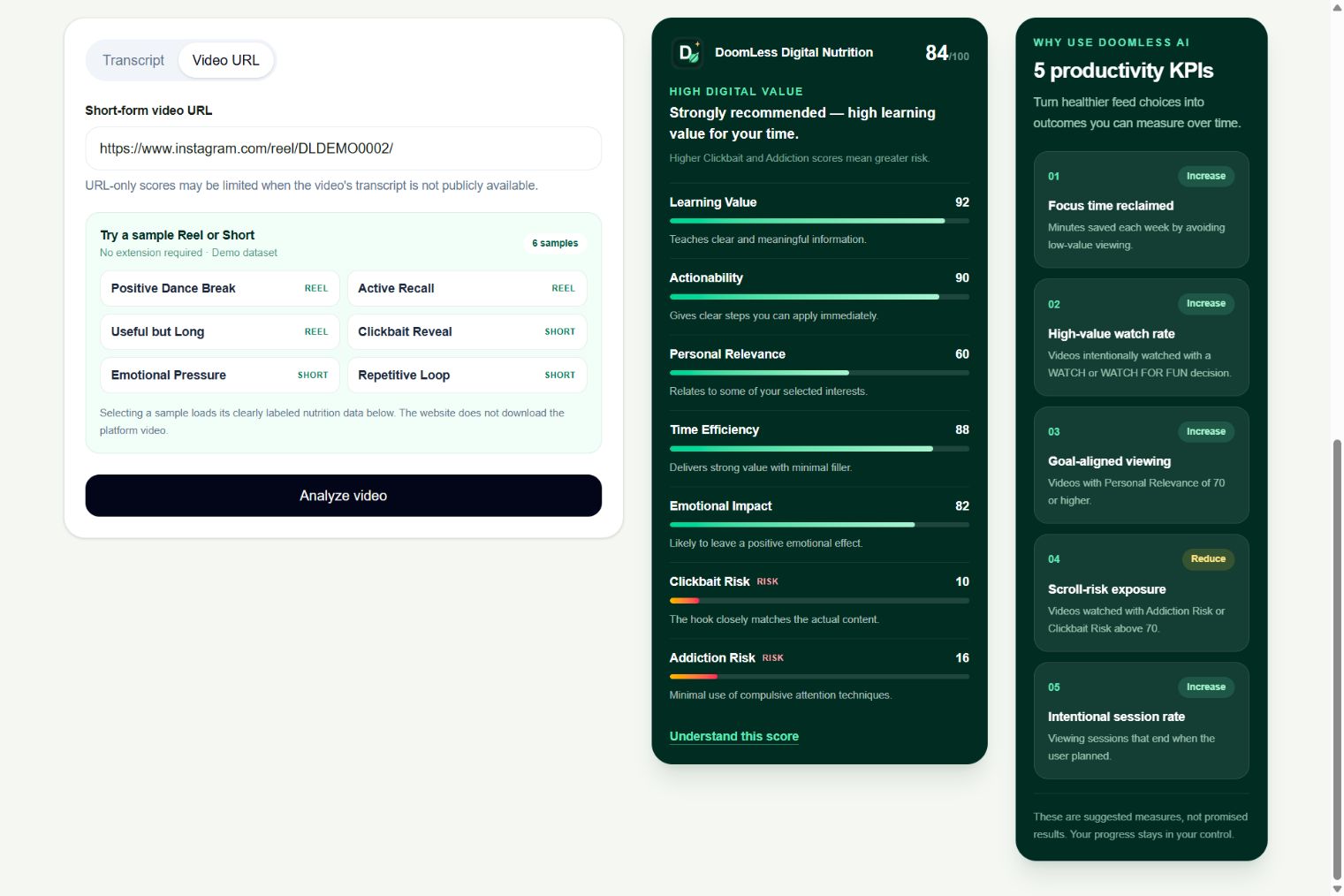
The working MVP is a privacy-first Chrome extension for Instagram Reels on desktop. It detects the active Reel, analyzes available evidence, and displays an explainable Digital Nutrition Label.
Each label provides:
- A 0–100 Digital Nutrition Score
- Seven explained content metrics
- Content classification and evidence confidence
- Attention-cost and Return on Attention estimates
- Positive signals, warnings, and missing information
- A recommendation: Watch, Save, Entertainment, Limit, or Skip
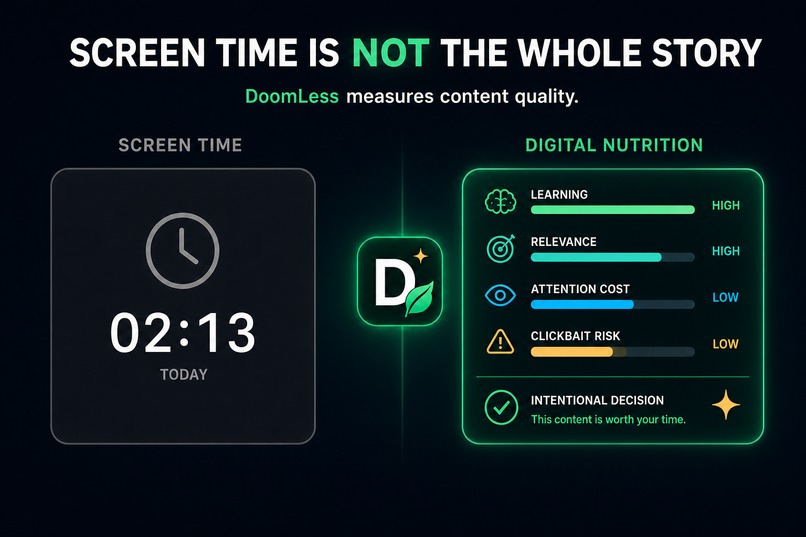
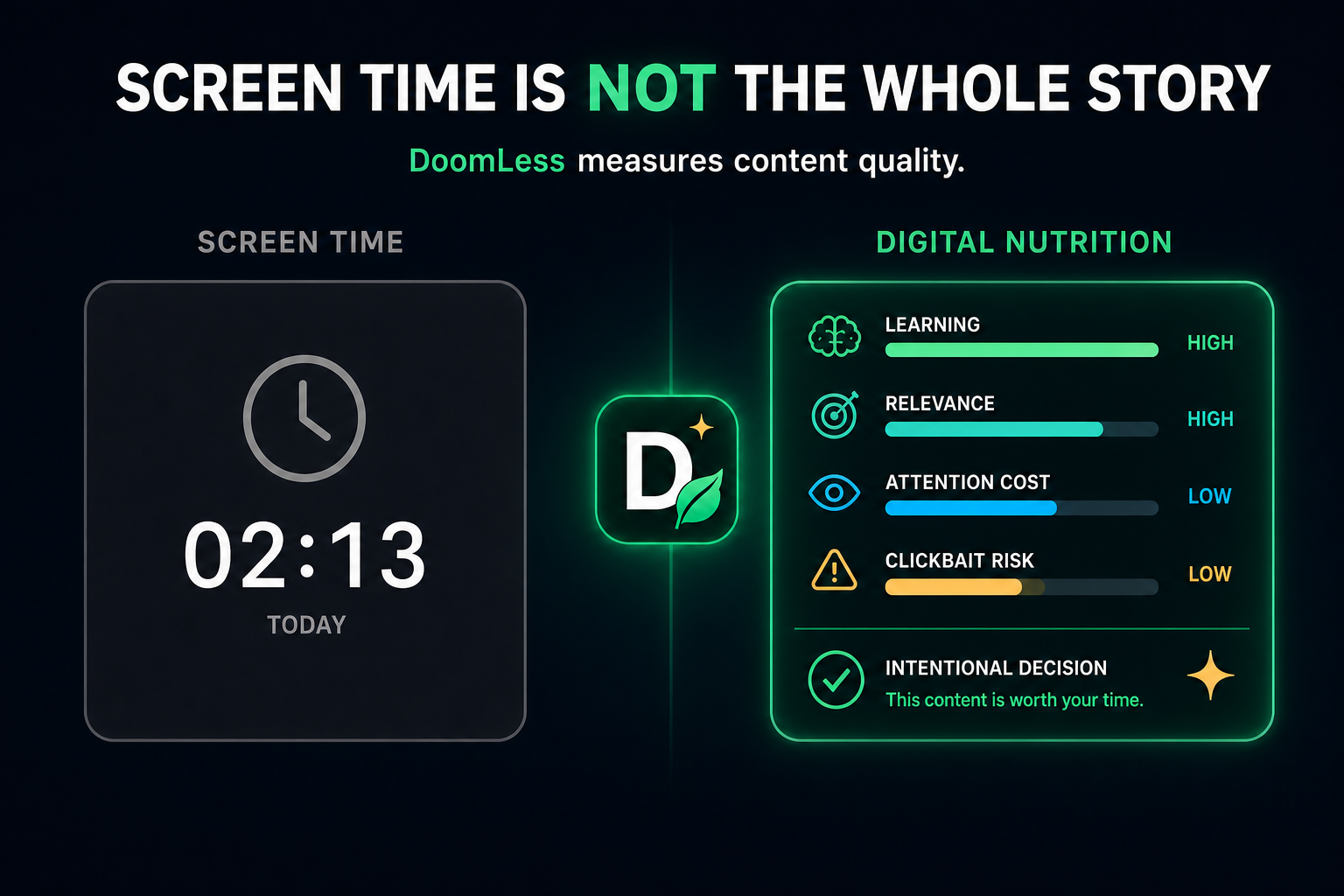
Existing tools measure screen time. DoomLess measures content quality.
| Category | DoomLess AI |
|---|---|
| Problem | Screen-time totals cannot distinguish useful learning from repetitive or manipulative content. |
| Solution | Explainable Digital Nutrition Labels for individual Instagram Reels. |
| MVP | Chrome extension, secure AI pipeline, fallback scoring, personalization, caching, history, and dashboard. |
| Innovation | Evaluates content quality before or during consumption instead of only restricting time afterward. |
| Vision | A Digital Nutrition Layer for the modern web. |
Inspiration and Problem
DoomLess began with a familiar experience: opening Instagram for one useful Reel and unintentionally entering a long scrolling session.
Short-form feeds place education, entertainment, advertising, repetition, and clickbait inside the same frictionless interface. Likes and comments indicate popularity, but they do not explain usefulness, credibility, relevance, emotional effect, or attention cost.
Twenty minutes of intentional learning and twenty minutes of scroll bait therefore appear identical in a screen-time report.
| Typical wellbeing tools | DoomLess AI |
|---|---|
| Measure application-level time | Evaluates individual content |
| Block access or limit sessions | Supports decisions while browsing |
| Focus on reducing usage | Focuses on improving attention quality |
| Treat content inside an application similarly | Separates learning, entertainment, relevance, and risk |
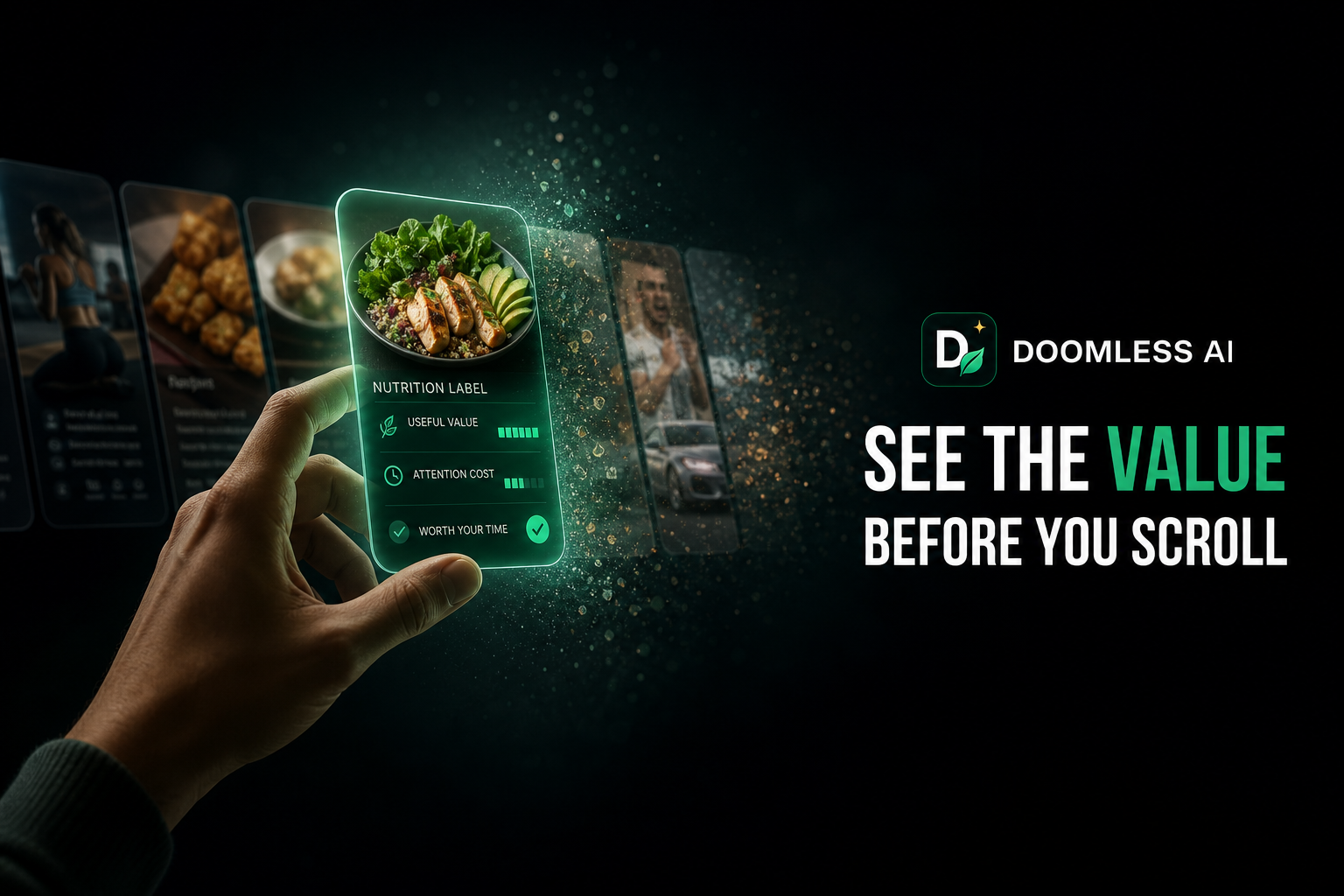
The idea follows a familiar analogy: food labels reveal nutritional qualities before eating; Digital Nutrition Labels reveal likely content value before watching.
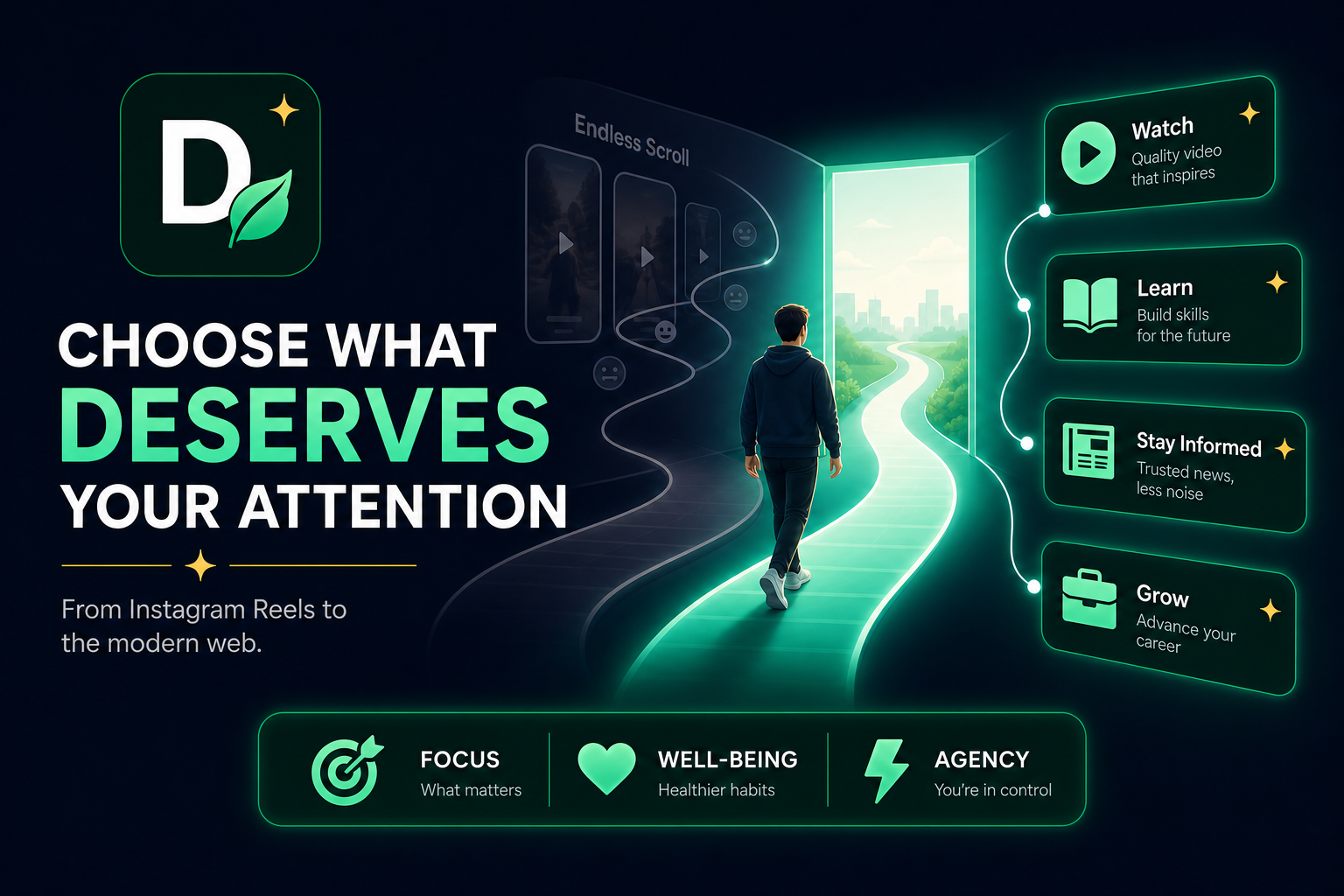
The goal is not to block social media. It is to transform passive scrolling into informed choice.
The Solution
When a supported Instagram Reel becomes active, DoomLess extracts only available surface evidence, including:
- Caption
- Creator
- Hashtags
- Visible text
- Accessibility labels
- Duration
- Displayed metadata
It evaluates seven Digital Nutrition dimensions:
- Learning Value — Knowledge, context, insight, or skill gained.
- Actionability — Useful steps, advice, frameworks, or decisions.
- Personal Relevance — Alignment with local interests, goals, profession, and avoided topics.
- Time Efficiency — Useful value relative to duration and filler.
- Emotional Impact — Constructive, neutral, stressful, or manipulative framing without diagnosis.
- Clickbait Risk — Exaggerated hooks, misleading claims, urgency, or weak delivery.
- Addiction Risk — Repetition, looping, overstimulation, urgency, or compulsive engagement patterns.
The interface converts these signals into a score, classification, confidence level, Return on Attention estimate, supporting evidence, and one recommendation:
- Watch — Worth immediate attention.
- Save — Useful, but better consumed later.
- Entertainment — Intentional comedy, dance, creativity, music, or relaxation.
- Limit — Mixed value; consume selectively.
- Skip — Weak, repetitive, or misleading content.
Personalization affects Personal Relevance without changing intrinsic quality or hiding behavioral risks. Repeated low-value viewing can trigger a gentle pause rather than blocking Instagram.
Transparent Scoring
Let:
- (L) = Learning Value
- (A) = Actionability
- (R) = Personal Relevance
- (T) = Time Efficiency
- (E) = Emotional Impact
- (C) = Clickbait Risk
- (D) = Addiction Risk
Positive Value is:
$$ P = 0.25L + 0.20A + 0.20R + 0.20T + 0.15E $$
Risk Penalty is:
$$ Q = 0.10C + 0.15D $$
The raw score is:
$$ S_{\mathrm{raw}} = P - Q $$
The raw range of (-25) to (100) is normalized to a published score from (0) to (100).
Initial recommendation bands are:
- (80–100): Watch
- (65–79): Save
- (45–64): Limit
- (0–44): Skip
Evidence confidence, content classification, Return on Attention, and explicit risk rules can override the initial band. For example, very high Addiction Risk combined with low Learning Value can force a Skip recommendation.
The score is a transparent product heuristic—not a scientific, medical, or psychological measurement.
How We Built It
Chrome Extension
The Manifest V3 extension uses TypeScript, React, Vite, and Tailwind CSS.
A MutationObserver detects dynamically loaded Reel containers, while an IntersectionObserver identifies the active Reel.
Analysis runs only when:
- A Reel becomes actively visible
- The user hovers for at least 800 milliseconds
- The user explicitly selects Analyze
Defensive metadata extraction avoids depending on protected media URLs. Stable hashing, request deduplication, caching, cleanup logic, and an isolated Shadow DOM overlay improve performance and resilience.
Service Worker and Backend
The background service worker checks:
- User consent
- Private-content restrictions
- Versioned cached results
- Existing in-flight requests
- Timeout state
The secure Next.js/Vinext backend validates inputs with Zod, keeps API keys server-side, sends supported evidence to GPT-5.6, requires strict structured output, validates the response, and applies deterministic TypeScript scoring rules.
AI proposes structured analysis; validated application policy owns the published decision.
Reliability and Fallbacks
If evidence is limited, the API fails, the request times out, or the returned output is invalid, DoomLess uses a cautious local surface scorer.
The interface explicitly identifies missing transcripts, frames, audio, pacing, or looping evidence rather than pretending full-video analysis occurred.
Demo mode follows the same schema, scoring policy, overlay, caching, and user-interface pipeline as the live experience.
Local Data and Dashboard
Consent, preferences, cached analyses, history, and user actions remain in Chrome local storage by default.
The dashboard reports:
- Reels analyzed
- Average Digital Nutrition Score
- Useful versus skipped content
- Saved content
- Clickbait and addiction-risk exposure
- Viewing trends
- Estimated attention reclaimed
- Recent decisions
Building with Codex
Codex acted as an end-to-end engineering partner across:
- Product architecture
- Reel detection
- Defensive DOM extraction
- Shared schemas
- Scoring policy
- React interfaces
- Fallback analysis
- Personalization
- Caching
- Dashboard analytics
- Testing and accessibility
- Documentation and deployment
- GitHub and hackathon preparation
During live-browser debugging, Codex helped trace inconsistent Instagram metadata, strengthen selectors, replace unhelpful “unknown content” states, align the extension with the beta website, and document honest evidence limitations.
The experience showed that AI-assisted development is most powerful as a continuous engineering partnership—not only as isolated code generation.
Challenges and Responses
| Challenge | Response |
|---|---|
| Dynamic Instagram DOM | Layered detection, defensive selectors, observer cleanup, stable identifiers, and demo mode. |
| Incomplete evidence | Evidence-aware local estimates, confidence labels, and explicit missing-data disclosures. |
| Explainability | Score bands, classifications, reasons, strongest signals, attention-cost language, and “Why This Score?” |
| Performance and cost | Active-Reel gating, hover delay, duplicate prevention, timeouts, hashing, and caching. |
| Privacy | Opt-in analysis, local storage, server-side credentials, excluded private data, and deletion controls. |
| Non-moralizing design | Entertainment is recognized as legitimate value while clickbait and addiction risks remain visible. |
Accomplishments and Learnings
The working MVP can:
- Detect live Instagram Reels
- Extract available surface evidence
- Generate structured AI analysis
- Display an interactive Digital Nutrition Label
- Explain every score
- Cache results and prevent duplicate requests
- Store user actions
- Personalize relevance
- Support a reliable demo mode
- Detect repeated low-value viewing
- Summarize behavior through a dashboard
We learned that confidence must be visible, personalization must remain separate from intrinsic quality and behavioral risk, and human-centered wellbeing should preserve autonomy instead of relying on shame or blanket blocking.
Novelty
DoomLess introduces Digital Nutrition: a content-level language for value, relevance, emotional effect, behavioral risk, and attention cost.
Its novelty includes:
- Evaluating individual content instead of entire applications
- Measuring content quality rather than only time
- Supporting decisions before or during consumption
- Separating intrinsic quality, personal relevance, and behavioral risk
- Recognizing intentional entertainment as legitimate value
- Explaining every recommendation
- Making attention cost visible
- Interrupting low-value scrolling loops without blocking the platform
Future Vision
Instagram Reels are the current proving ground. The same Digital Nutrition framework could later support:
- Other short-form feeds
- Articles and news
- Podcasts
- Educational and professional media
- Creator-quality tools
- Family and student experiences
- Browser-level content evaluation
Future development could add permission-based multimodal analysis, legitimate transcript ingestion, multilingual labels, privacy-preserving on-device analysis, better-content replacement, and a public Digital Nutrition API or standard.
Closing
Food consumption changed when nutrition information became visible. DoomLess applies that principle to the digital information diet while preserving the user’s final choice.
The future of digital wellbeing is not only about spending fewer minutes online—it is about making those minutes more meaningful.
Built With
- appsforyourlife
- chrome-extension-manifest-v3
- chrome-storage-api
- codex
- css3
- digitalnutrition
- github
- html5
- indexeddb
- instagram-reels
- intersectionobserver
- javascript
- json-schema
- mindfulscrolling
- mutationobserver
- node.js
- openai-api
- openai-gpt-5.6
- react
- rest-api
- tailwind-css
- typescript
- vite
- zod


Log in or sign up for Devpost to join the conversation.