-
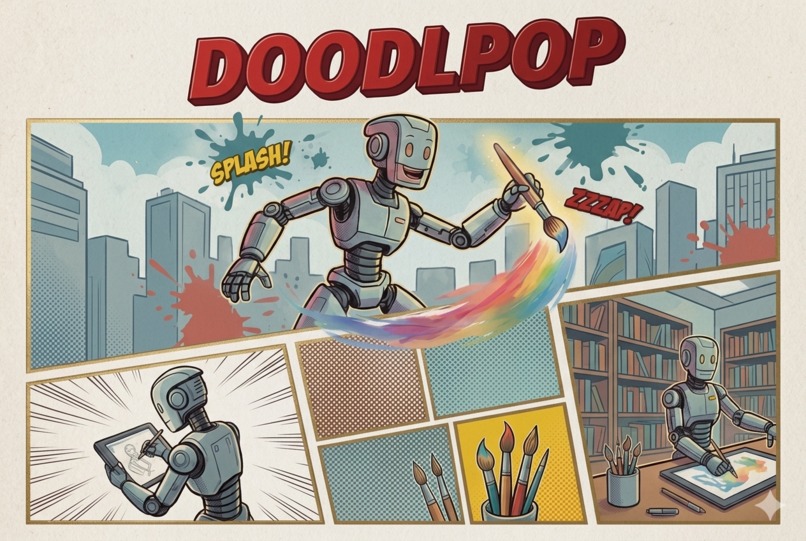
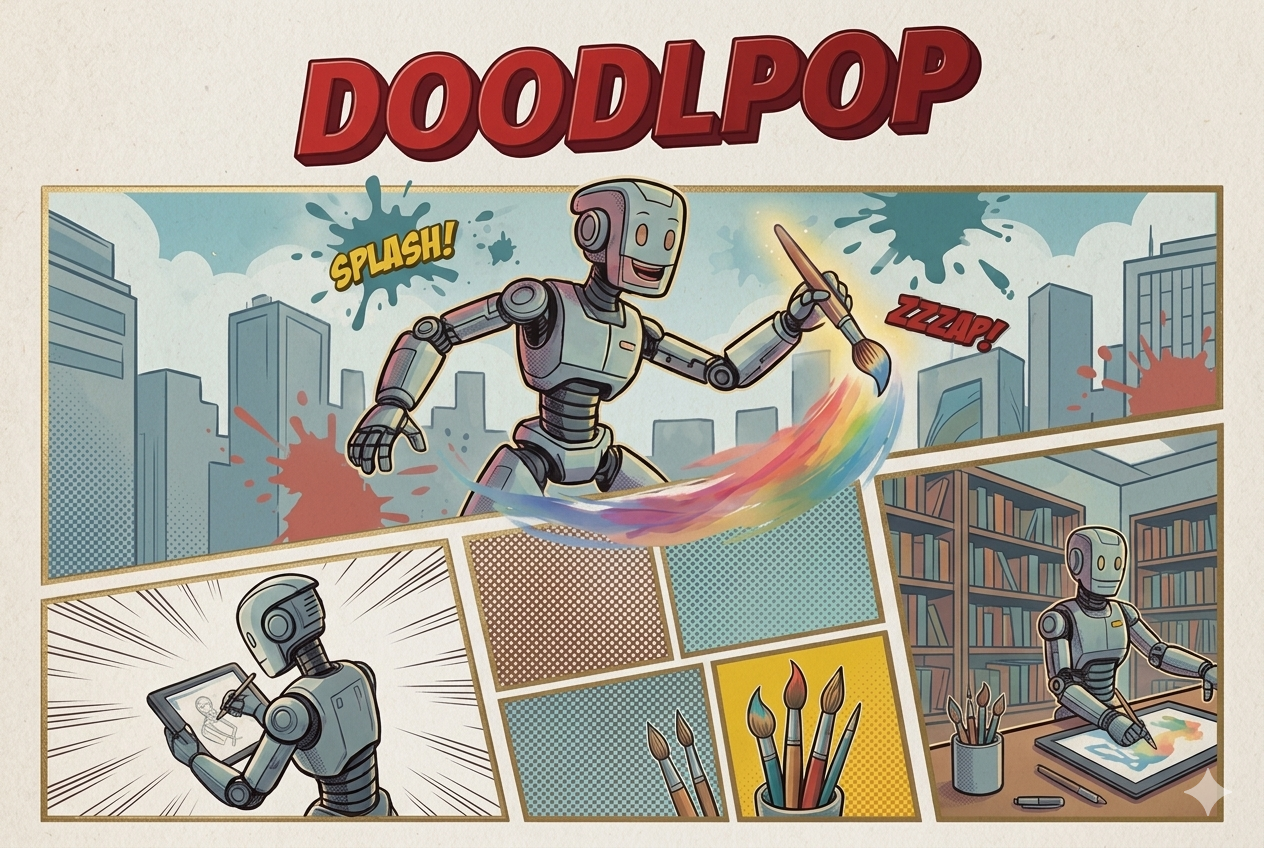
AI assisted comic strip generator
Inspiration
We've all had a funny idea or a story we've been meaning to tell — with no way to get it out of our heads and onto the page. Drawing takes years of practice. Hiring an illustrator takes money and time. We wanted to close that gap. The spark for Doodlpop came from a simple question: what if anyone could make a real comic book, start to finish, in the time it takes to drink a coffee? Not a generic image dump — a proper storyboarded narrative with a script, consistent characters, and illustrated panels that follow the story beat by beat.
What it does
Doodlpop takes you from a one-line idea to a fully illustrated, exportable comic in minutes. Describe your idea, answer a few AI-generated clarifying questions, review and edit the script, then generate. You can go fully automated or supervised — approving each page one at a time with per-panel editing. When you're done, download a PDF or share via QR code.
How we built it
Single Next.js 15 repo split into three layers: routing, backend AI pipeline, and frontend components. Two developers owned one side each, with a shared types.ts as the contract between them. Text generation uses Gemini gemini-2.5-flash for scripting and follow-up questions. Image generation uses Nano Banana Pro at 2:3 / 1K resolution, sequentially — one page at a time — keeping rate limits manageable while streaming live progress to the user. Before any page is generated, we produce a character reference sheet and inject it into every subsequent prompt to improve consistency. Storage is abstracted into two swappable backends — memory for local dev, Upstash Redis + Vercel Blob for production. PDFs are assembled server-side with pdf-lib and encoded into a QR code via qrcode.react.
Challenges we ran into
Character consistency across independently generated images was the hardest problem. The reference sheet approach helped significantly, but prompt engineering for it took the most iteration of anything we built. We also had to solve streaming progress across Vercel's serverless time limits — solved by saving state to KV after every page and polling from the frontend.
Accomplishments that we're proud of
1) A Complete Creative Pipeline, End to End 2) The supervised mode - editing specific panels instead of the entire image.
What we learned
Prompt engineering is product engineering — output quality lives or dies by how well you structure context and constraints. Sequential beats parallel for generative pipelines under rate limits and timeouts. Anchor your characters — injecting a reference sheet into every prompt (borrowed from how human storyboard artists work) made a real difference.
What's next for Doodlpop
1) Community Library 2) Longer Comics and Chapter Support 3) Dialogue and Caption Editing
Built With
- google-gemini
- jspdf
- nano-banana-pro
- next.js-15
- pdf-lib
- pnpm
- qrcode.react
- react-19
- tailwind-css-4
- typescript
- upstash-redis
- vercel
- vercel-blob

Log in or sign up for Devpost to join the conversation.