-
-
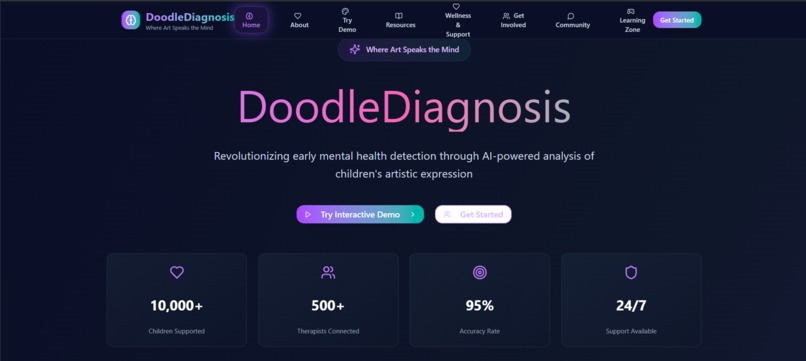
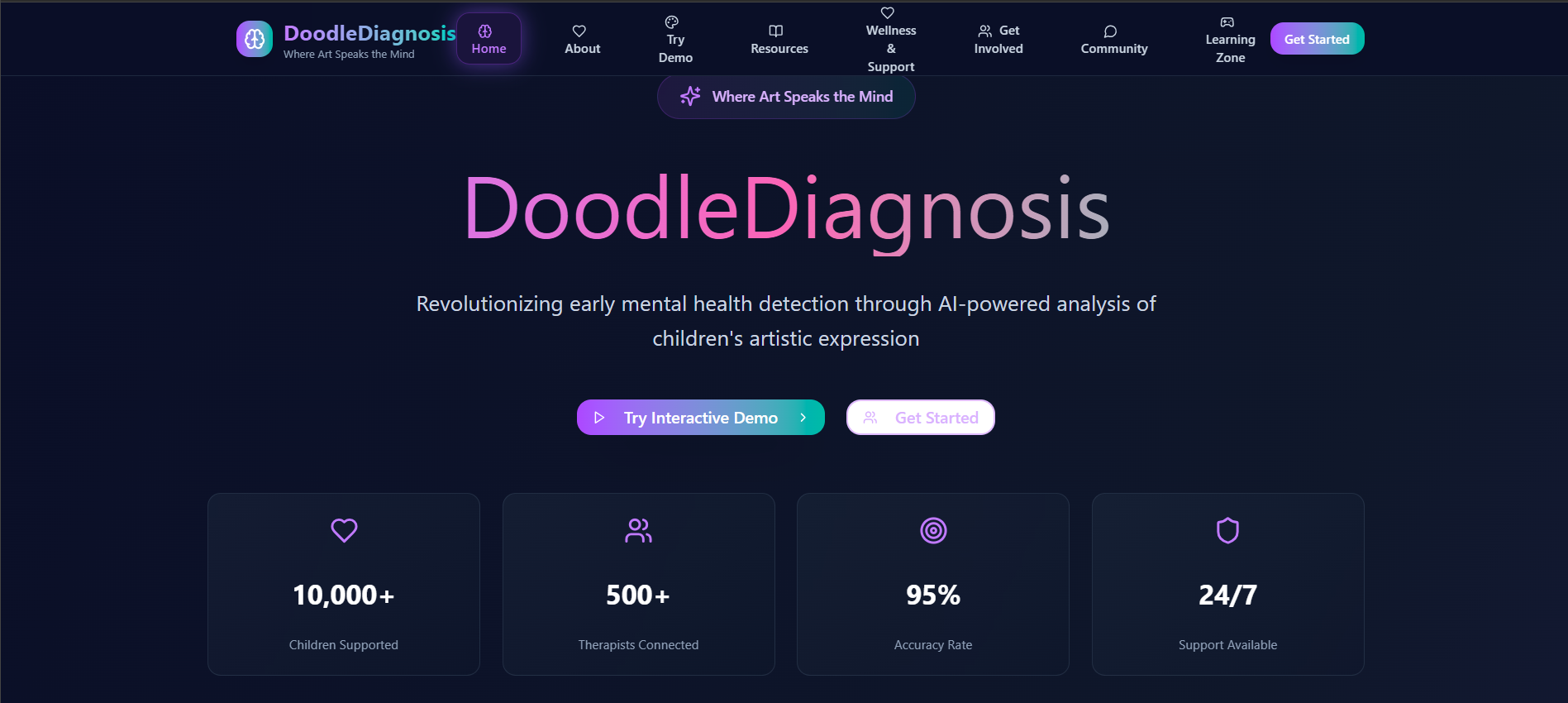
HOME PAGE
-
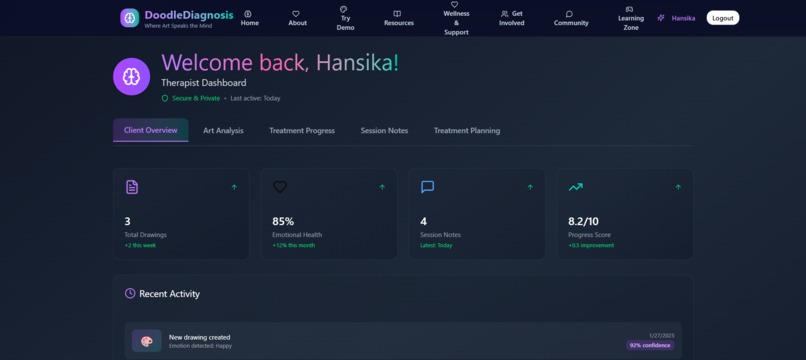
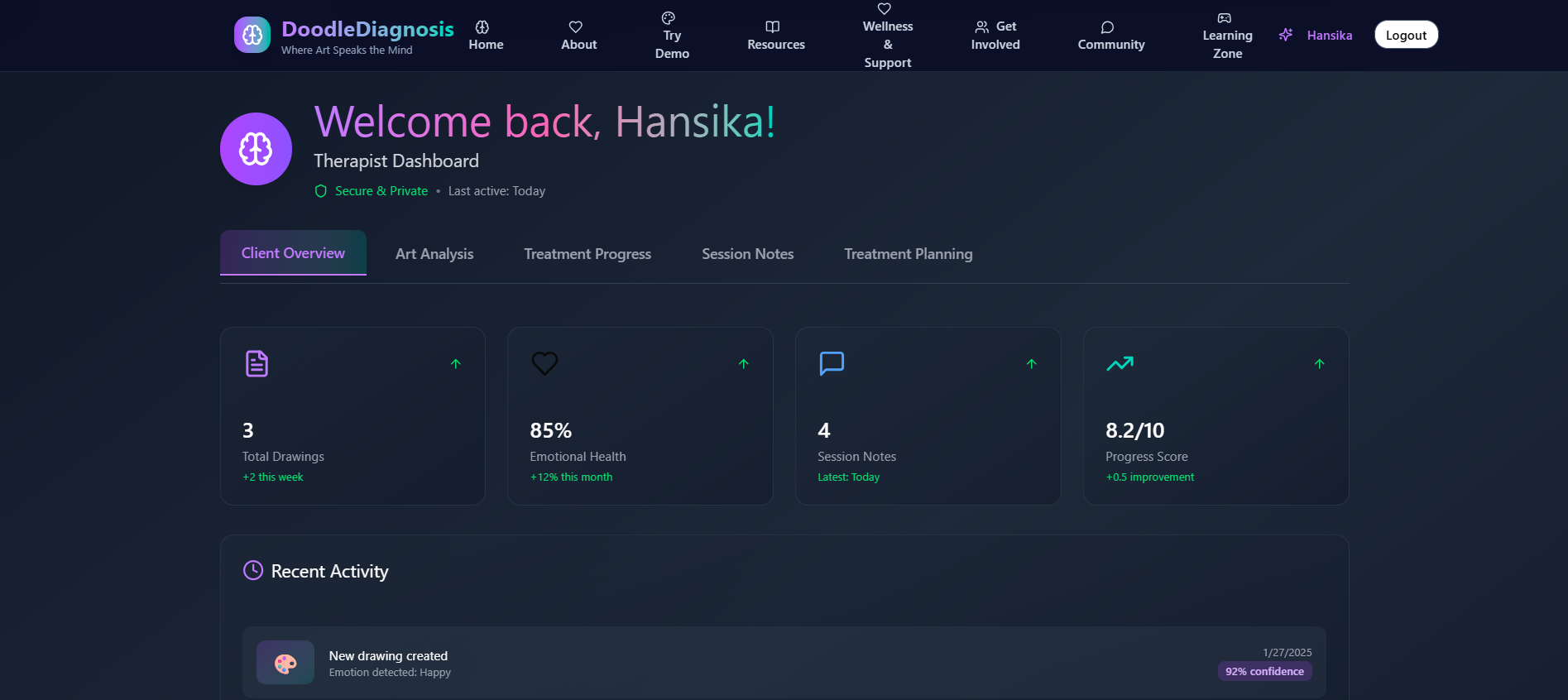
LOGIN PAGE
-
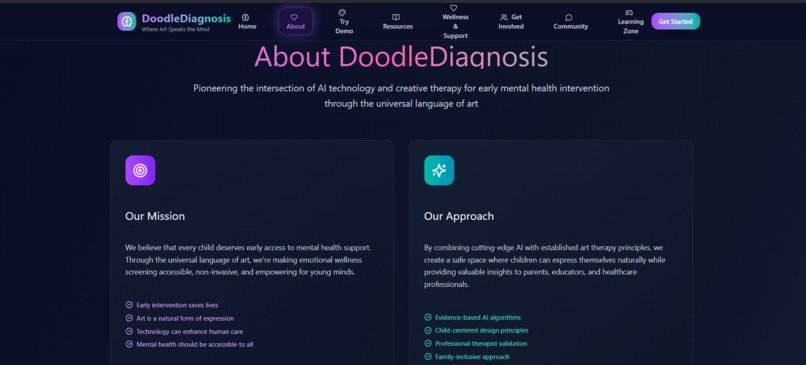
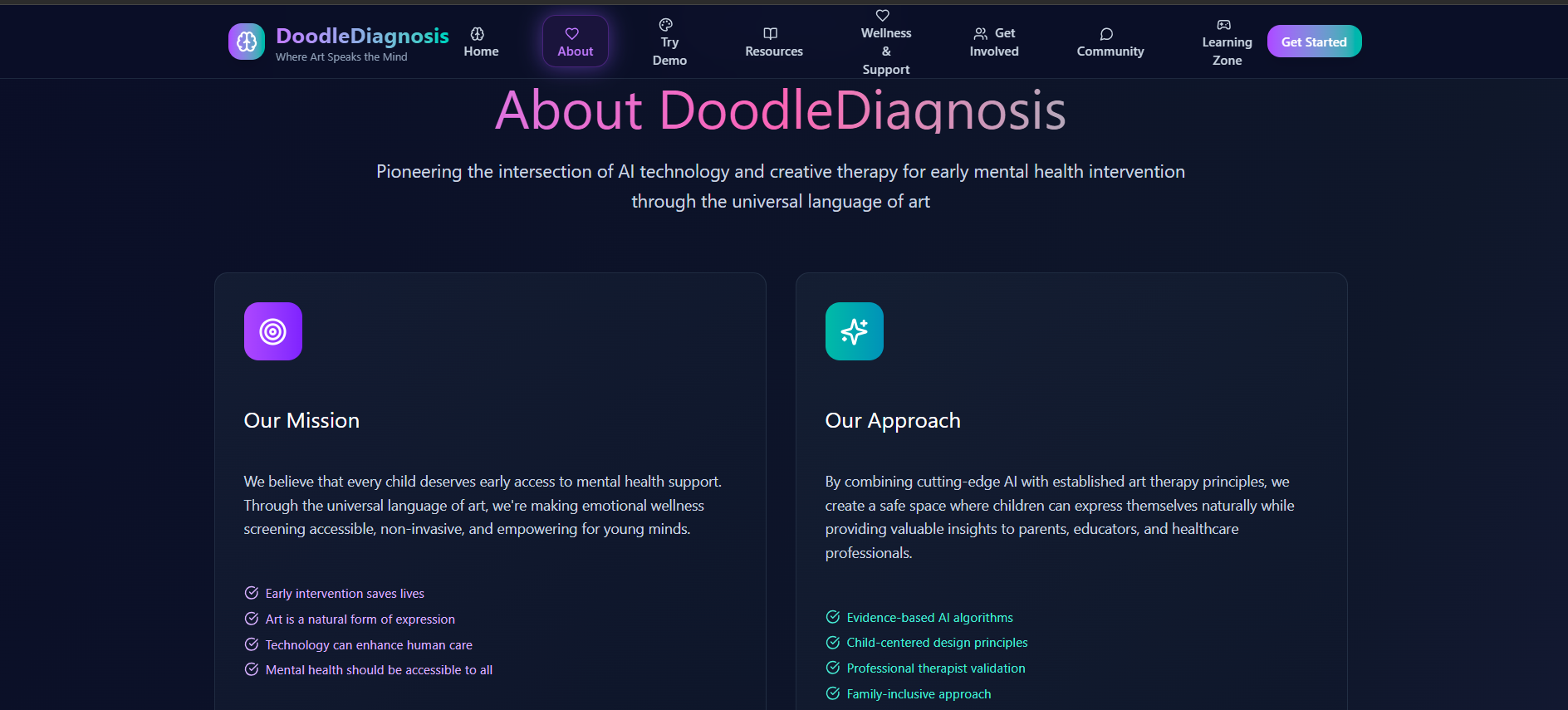
ABOUT US
-
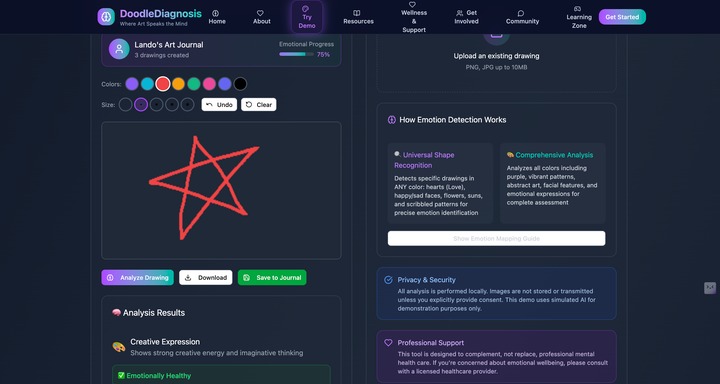
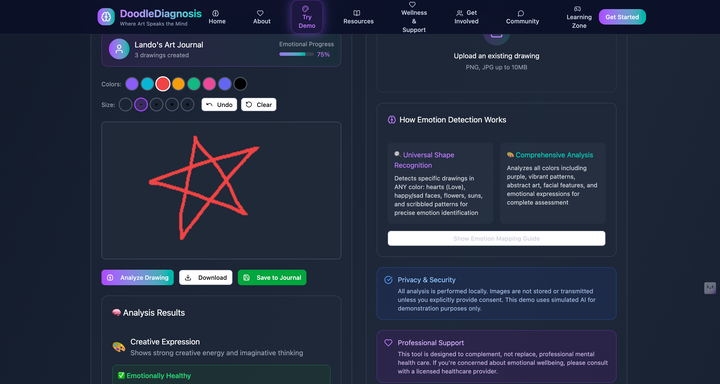
TRY DEMO
-
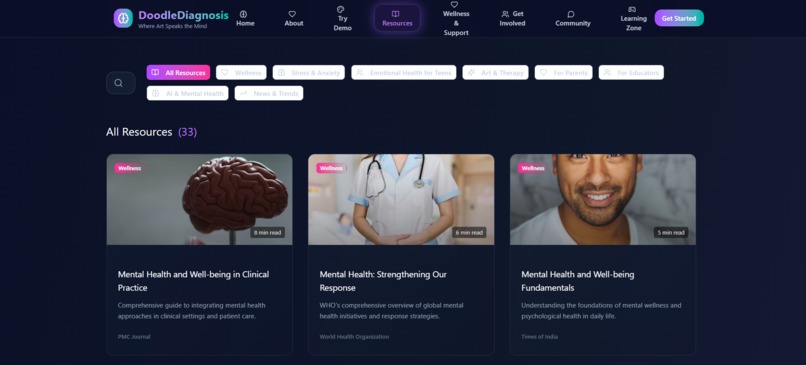
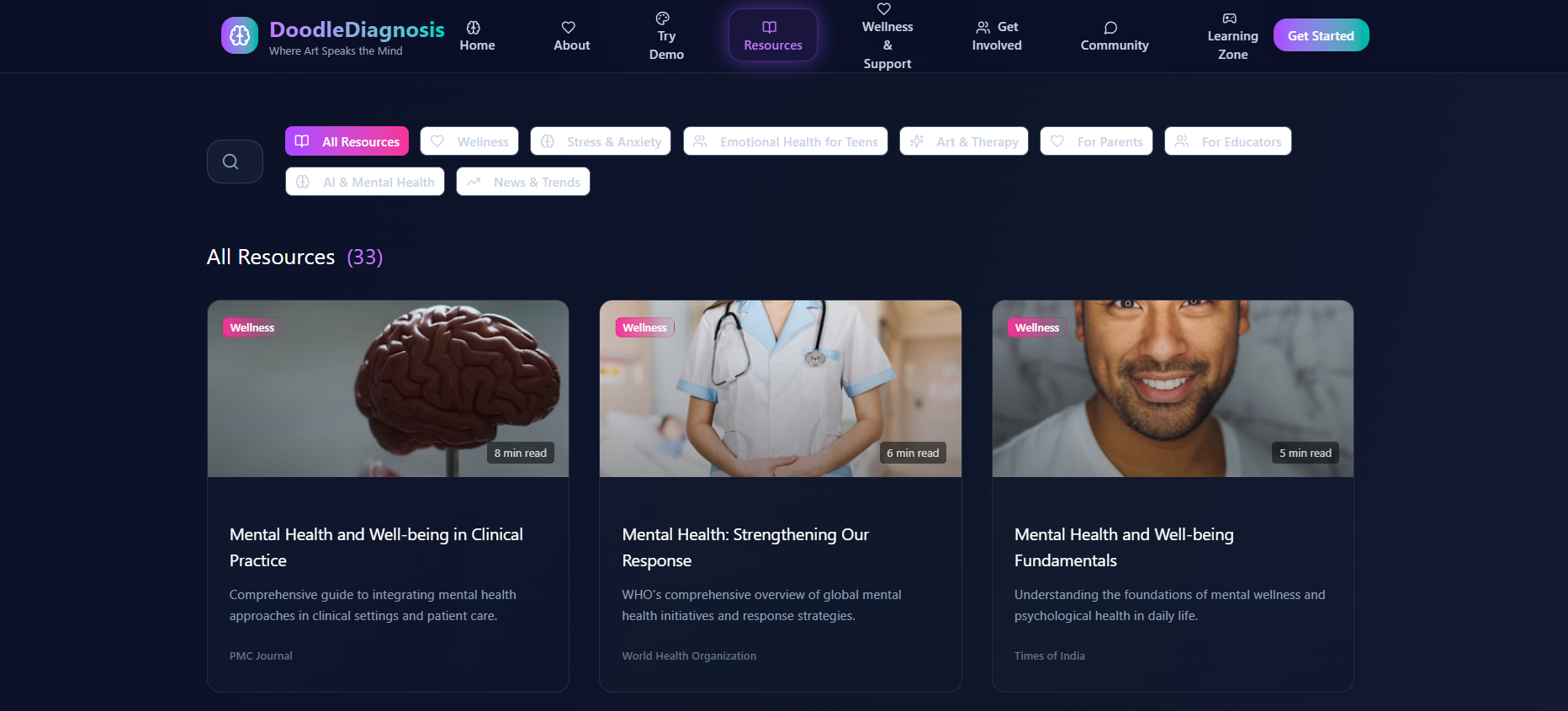
RESOURCES
-
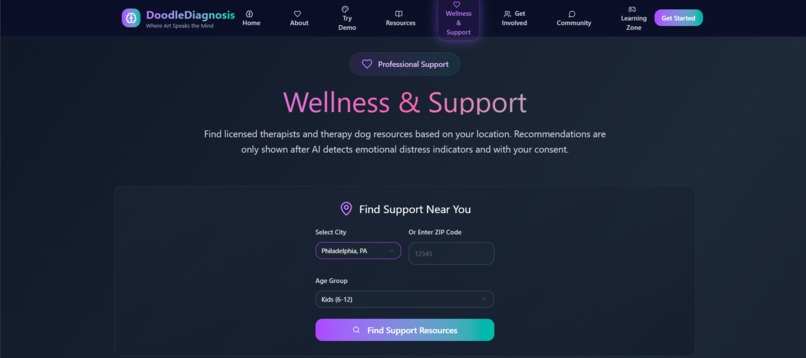
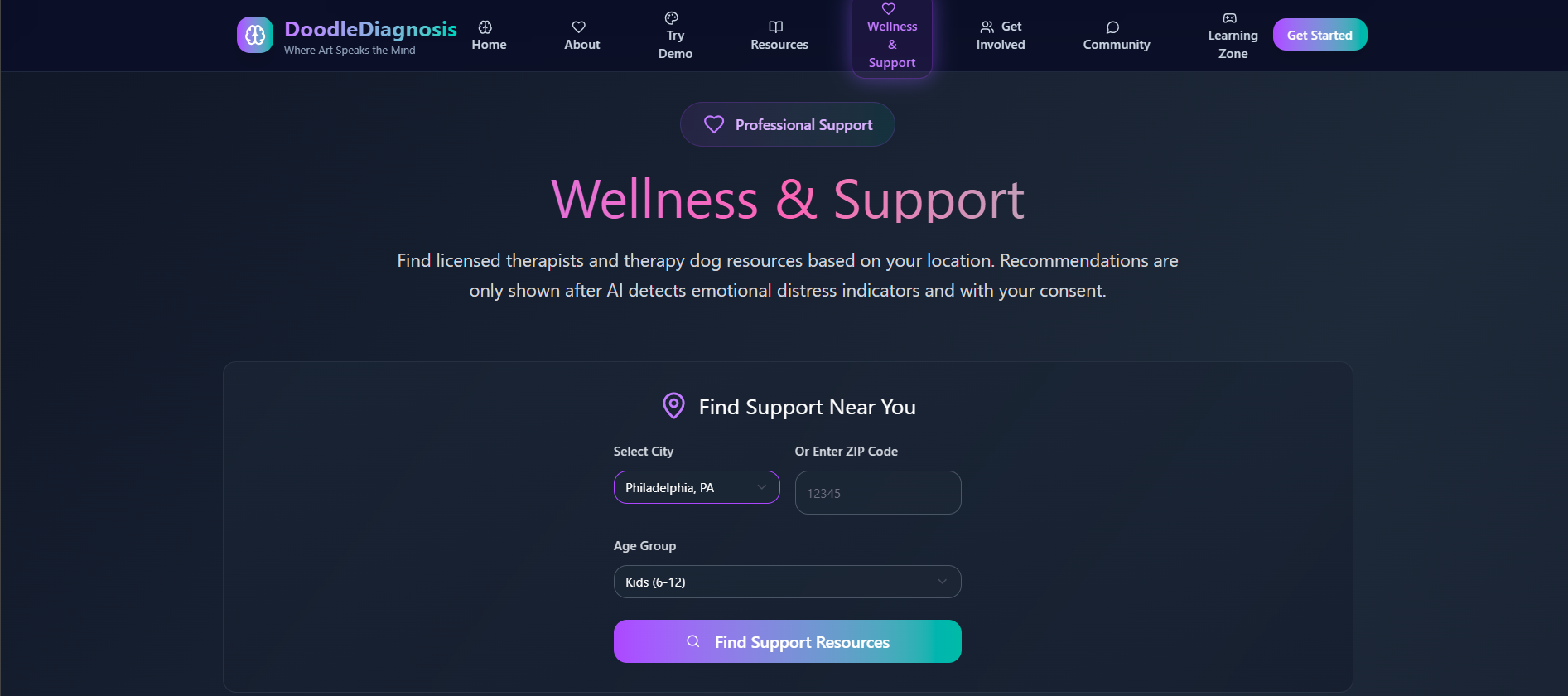
WELLNESS AND SUPPORT
-
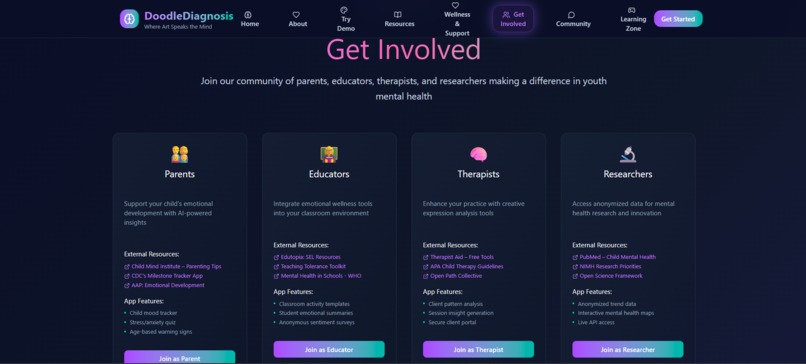
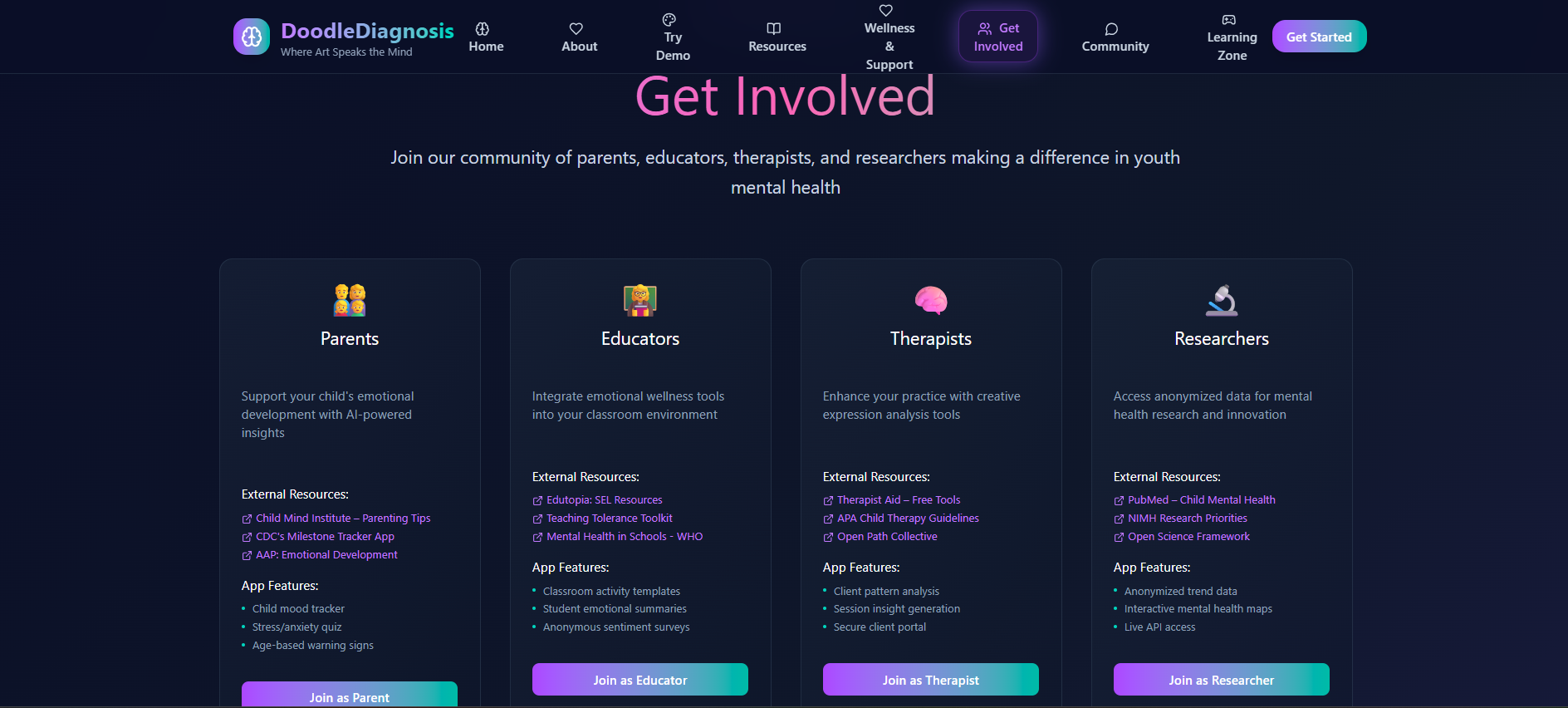
GET INVOLVED
-
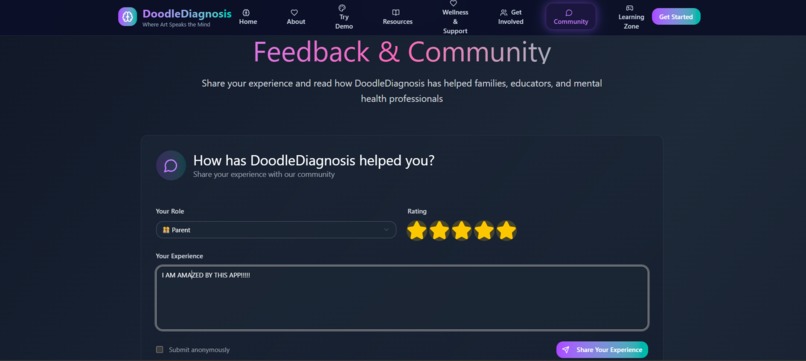
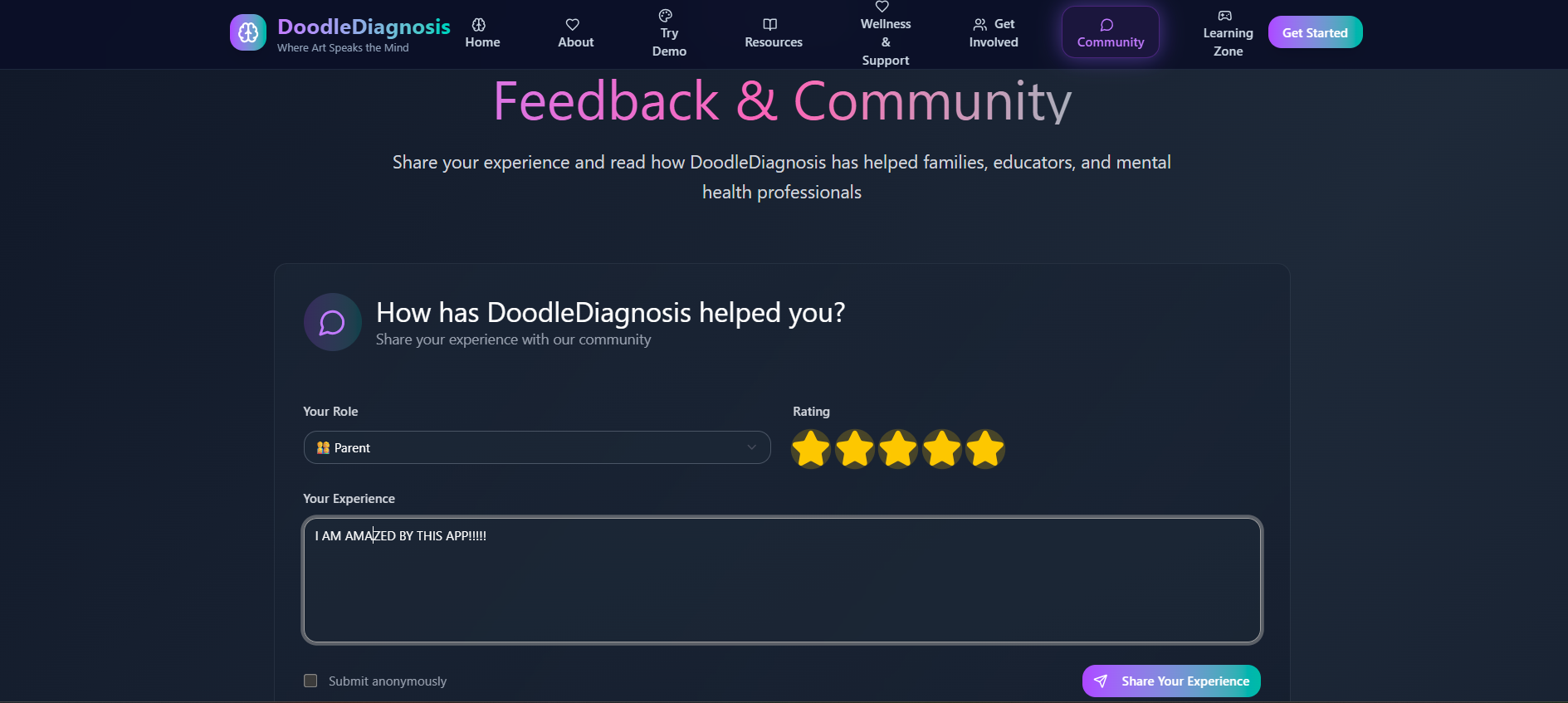
FEEDBACK AND COMMUNITY
-
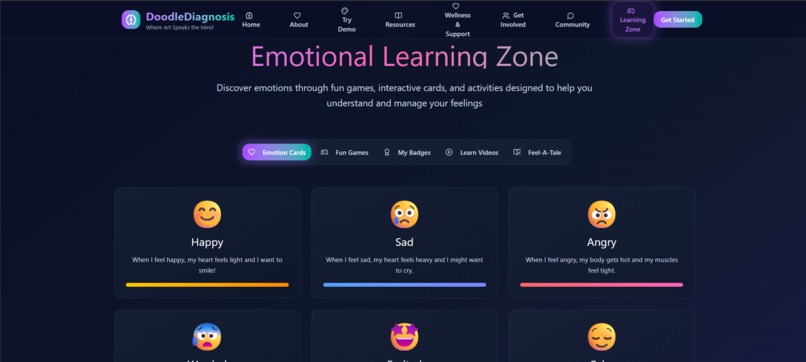
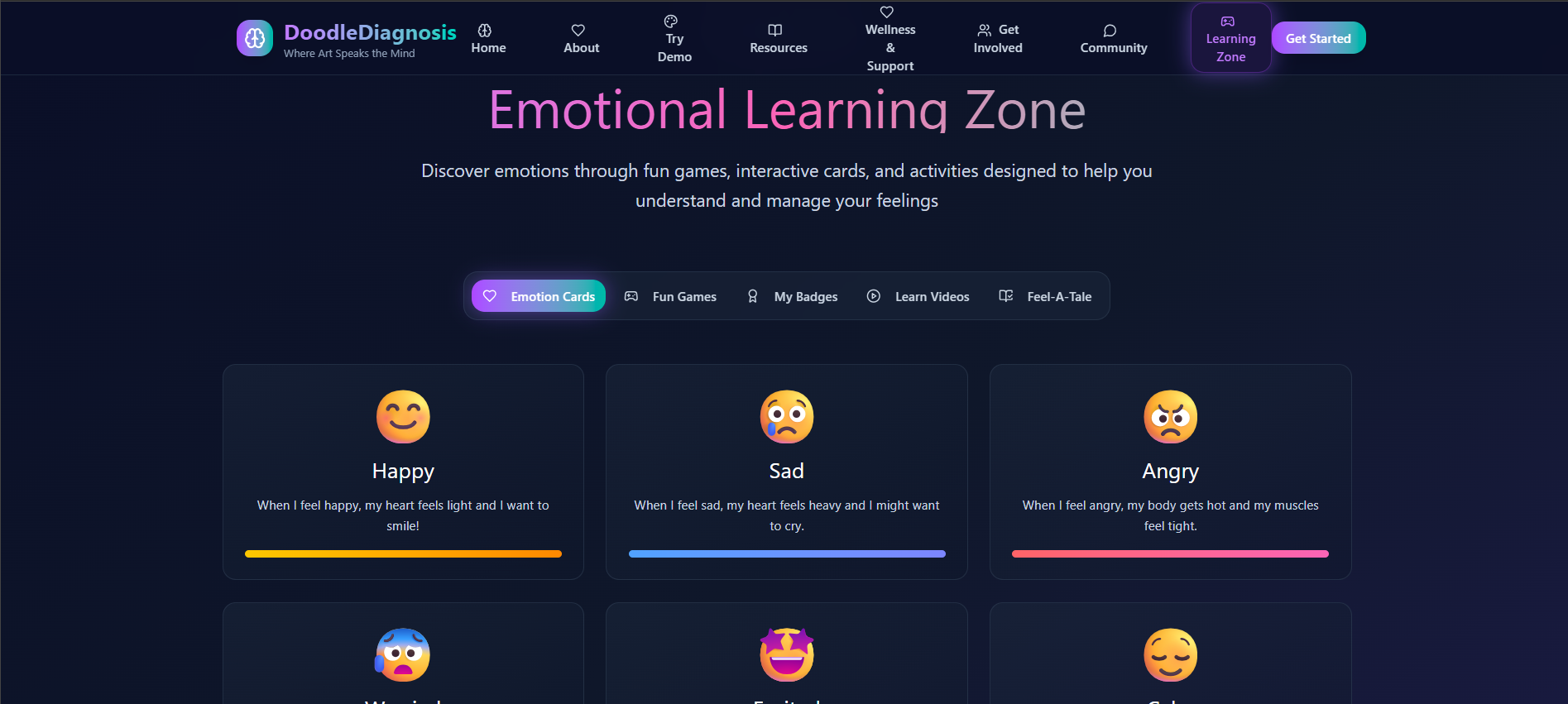
EMOTIONAL LEARNING ZONE
Inspiration
We were inspired by a simple, powerful truth:
“When kids can’t say it, they draw it.”
Children often struggle to express their feelings with words , but their doodles, scribbles, and sketches can communicate what they cannot. With mental health challenges on the rise, especially among youth, early emotional support can make all the difference. We envisioned a tool that listens not with ears, but with empathy and AI — one that bridges art and awareness.
We were also driven by our own experiences. As students and creators juggling hectic schedules, we realized how difficult it can be to access mental wellness tools — even for ourselves. We wanted to build something simple, intuitive, and emotionally intelligent: a resource that supports children and empowers families, teachers, and therapists to connect and care more effectively.
What It Does
DoodleDiagnosis is a web-based tool that transforms children’s drawings into emotional insights using AI-powered analysis.
Children can freely doodle happy faces, broken hearts, rain clouds, sunshine, and more. Our system interprets these visual cues to recognize basic emotional states (e.g., happy, sad, angry, anxious) and connects them with interactive learning resources.
Key Features:
- Interactive Drawing Demo — Real-time emotion prediction from doodles
- Emotional Learning Zone — Games, videos, and stories to help children understand feelings
- Mood Journal — Personalized records for self-reflection and growth
- Role-Based Access — Tailored tools for children, parents/educators, and therapists
- Emma’s Journey — A fictional use-case modeling a child’s emotional growth over time
How We Built It
Tech Stack Highlights:
Design: Figma for UI/UX prototyping and visual design
Frontend: React.js with Tailwind CSS
AI/ML: Emotion classification via image prompt tuning and color/pattern detection
Storage: Firebase for authentication and mood journals
Creative Tools: Final Cut Pro X, Youtube studio.
Process Overview:
Mapped the user journey for three roles: Child, Parent/Educator, Therapist
Designed interactive demo screens and emotional storytelling modules
Created sample profiles (like Emma’s Journey) to illustrate real-life use cases
Scripted flows and microcopy to ensure clarity, warmth, and emotional safety
Challenges We Ran Into
- Mapping emotions from abstract doodles with limited training data
- Designing secure and privacy-conscious emotional record storage
- Supporting multiple user roles without cluttering the experience
- Creating a realistic AI demo without a full backend or live-trained model
Accomplishments We're Proud Of
- Built a clickable, animated prototype with a fully narrated use-case
- Designed a safe, child-friendly interface
- Created an emotion-based drawing classifier using Google’s Teachable Machine
- Told a clear emotional story using visuals, animation, and voiceover
- Balanced AI innovation with deep empathy for mental wellness
What We Learned
- Emotional tech should support, not diagnose — empathy comes first
- Designing for children demands simplicity, trust, and joy
- Visual storytelling is a powerful tool for emotional literacy
- Thoughtful AI can act as a compassionate companion, not just a computational tool
What’s Next for DoodleDiagnosis
- Integrate advanced AI models for more accurate live emotion prediction
- Add voice journaling and emotional tagging
- Partner with child therapists for real-time validation and feedback
- Launch a mobile-first MVP tailored for classrooms and pediatric clinics


Log in or sign up for Devpost to join the conversation.