-
-
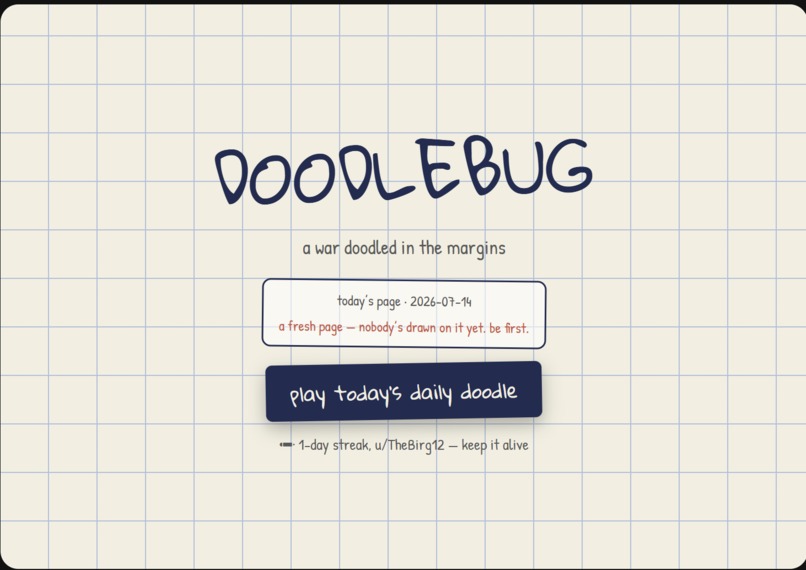
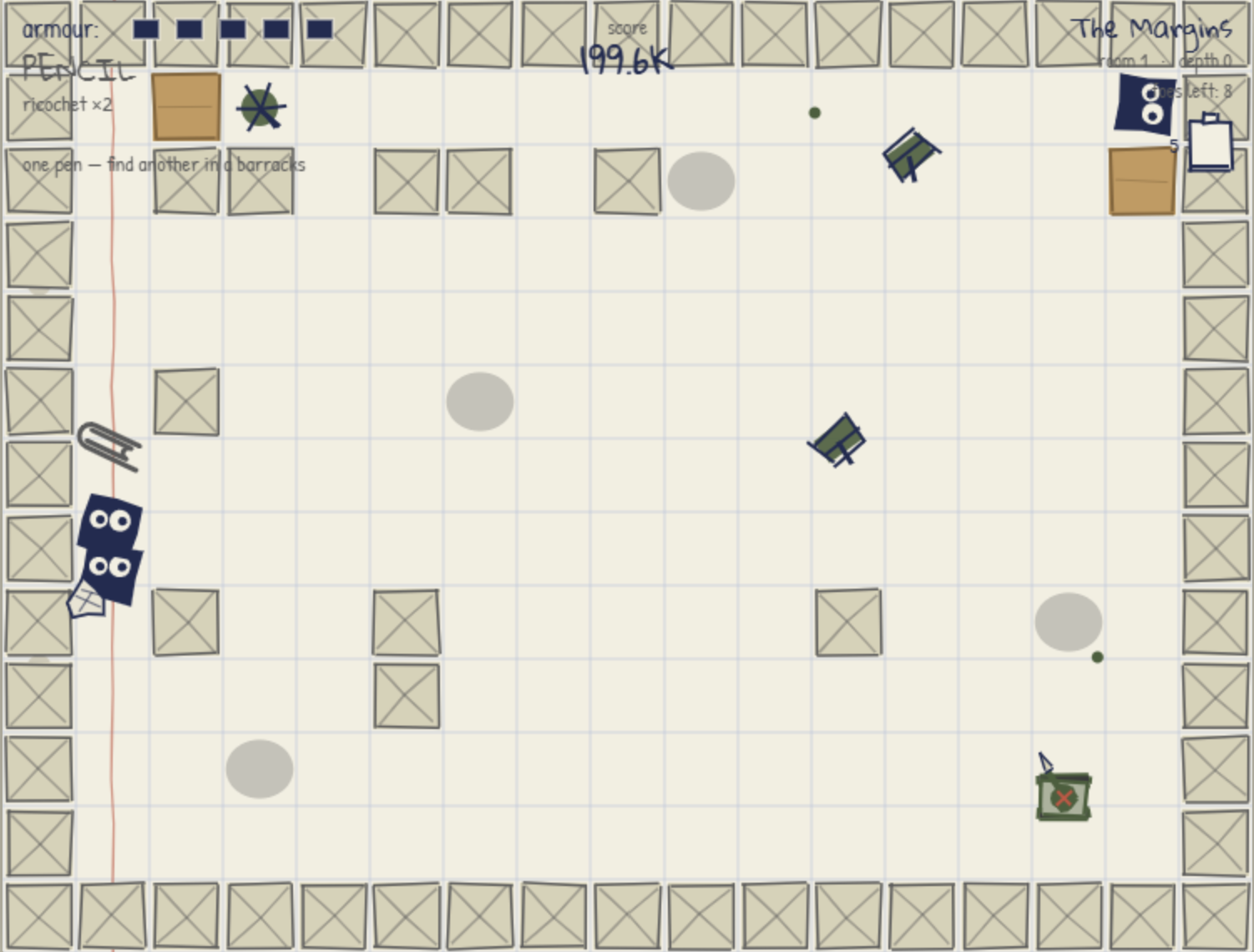
Starter page
-
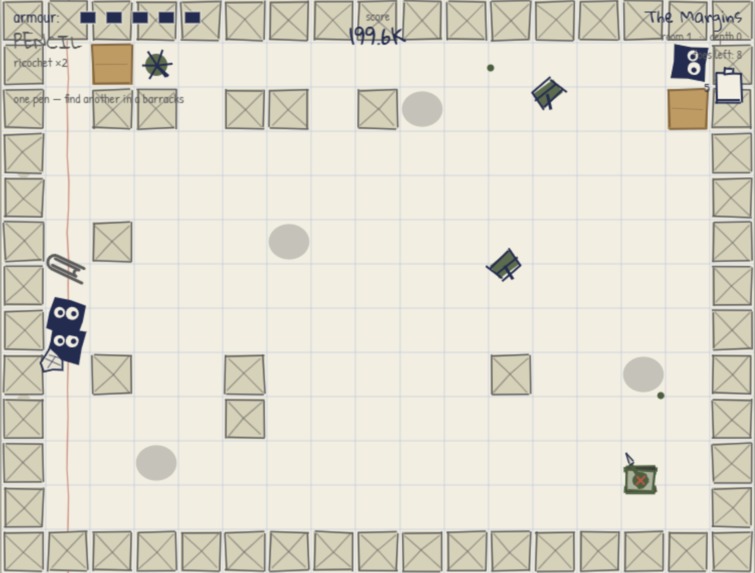
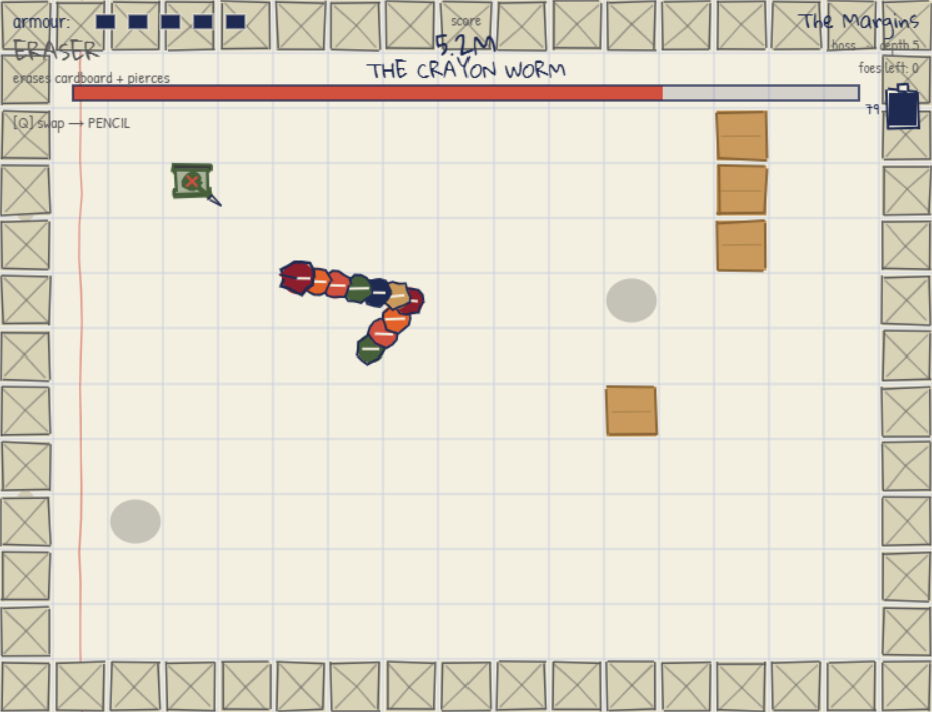
The Margins
-
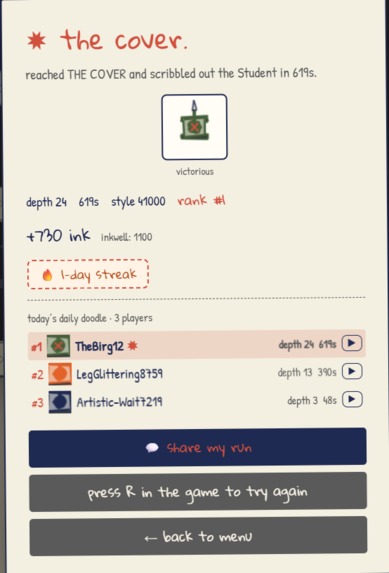
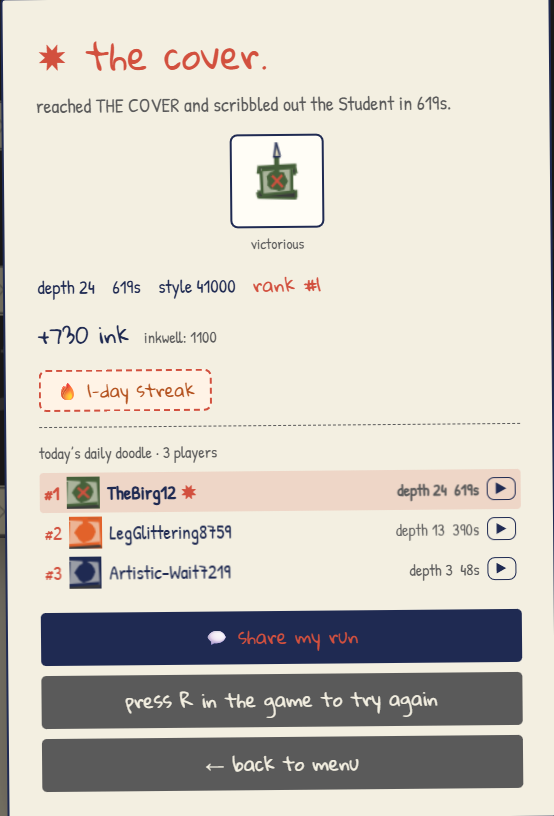
Winning Screen
-
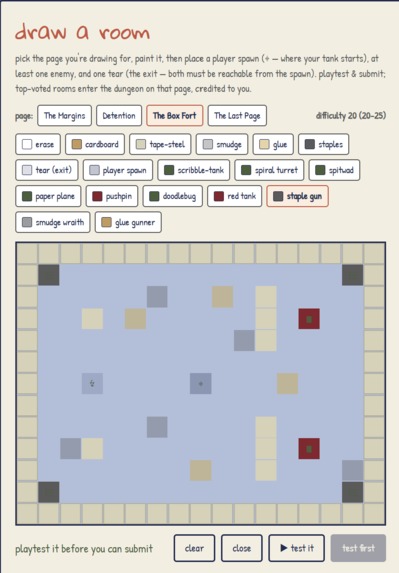
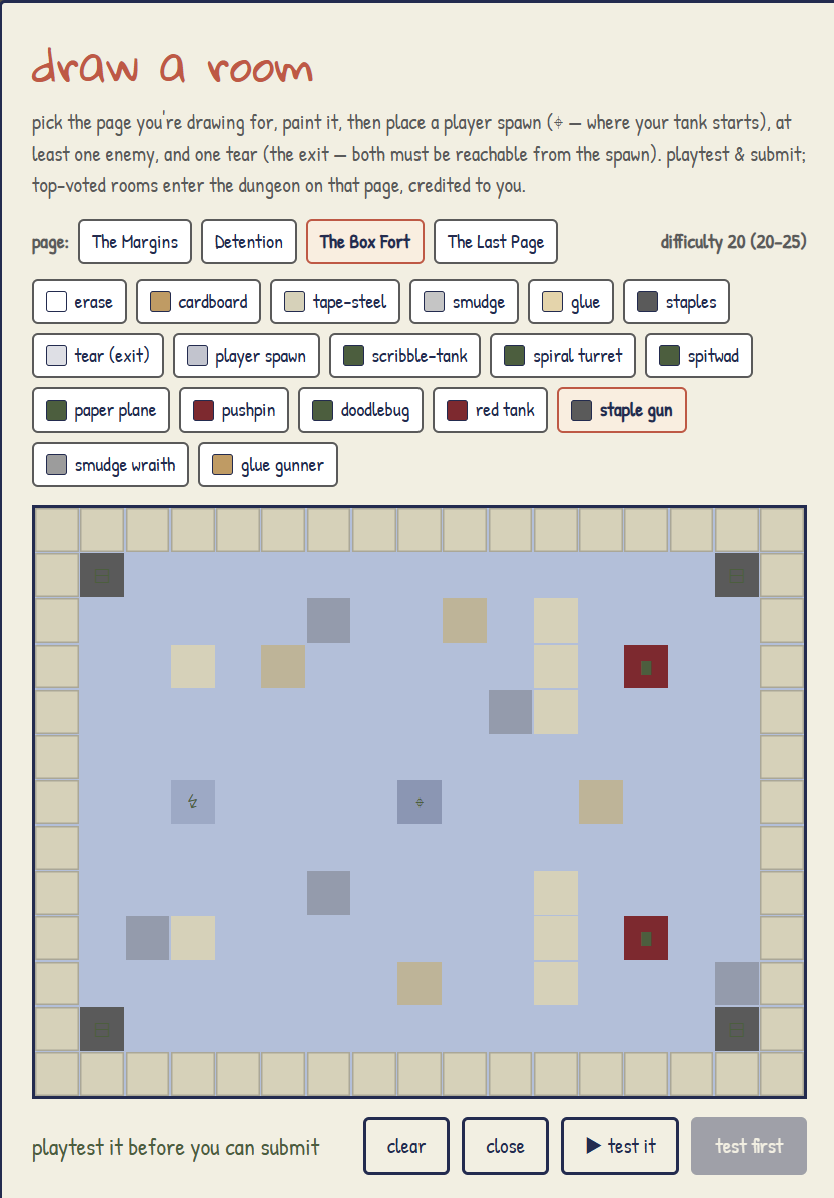
Level builder
-
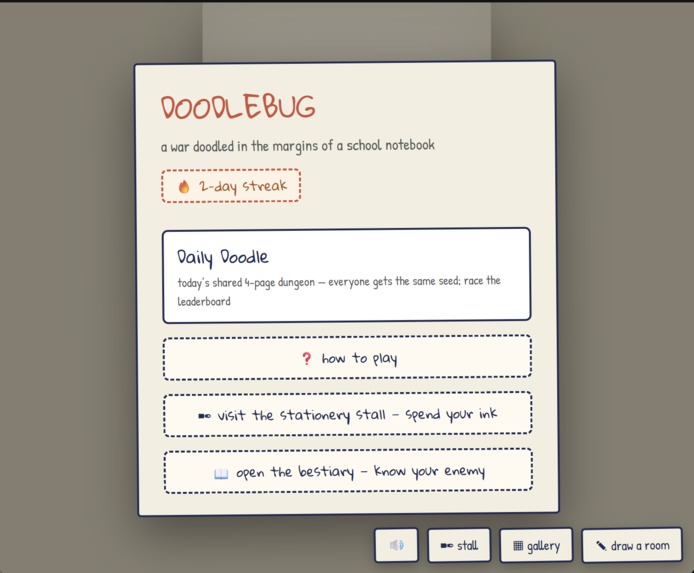
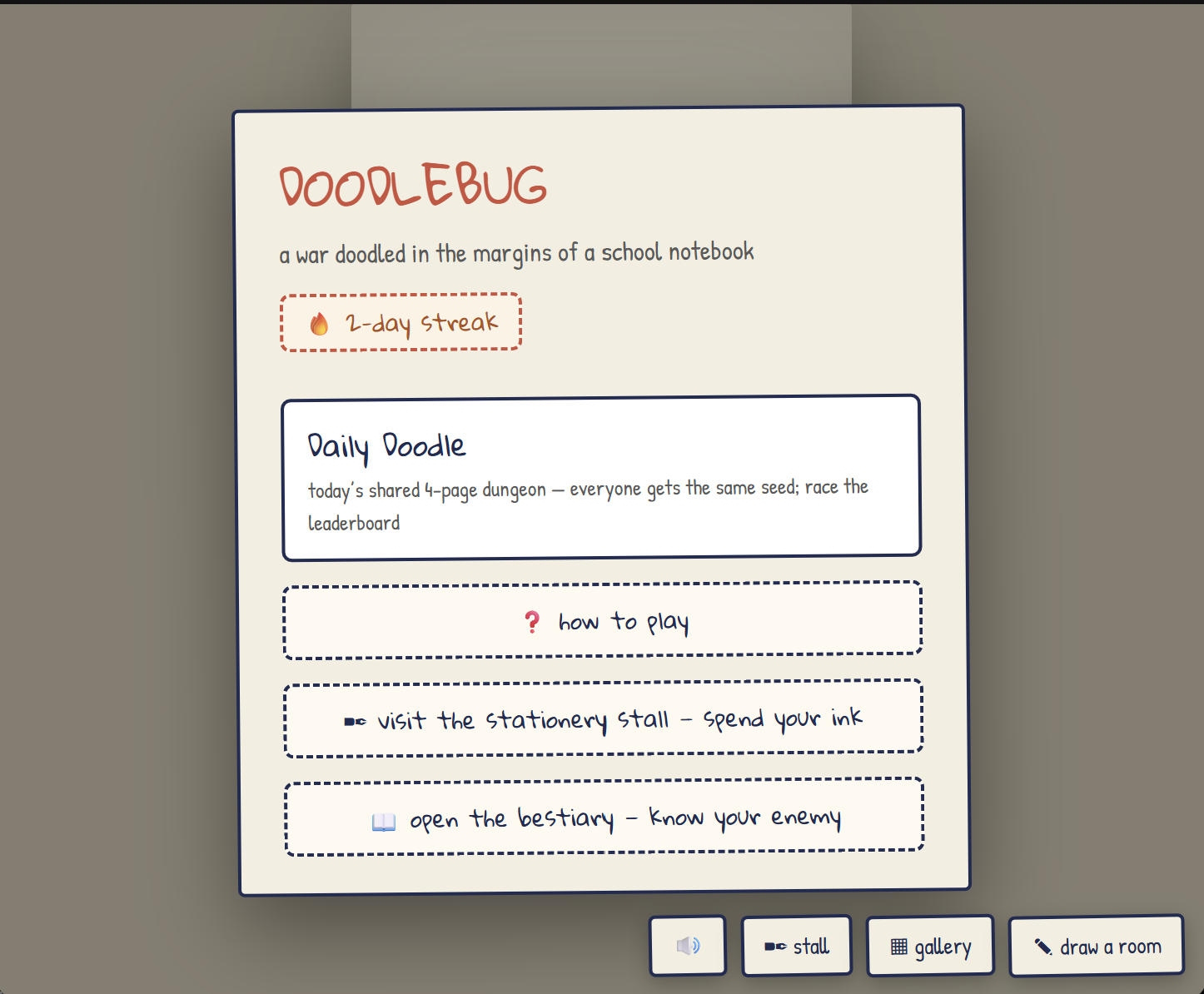
Menu Page
-
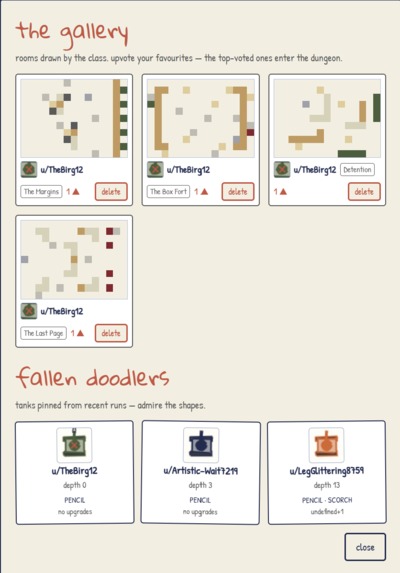
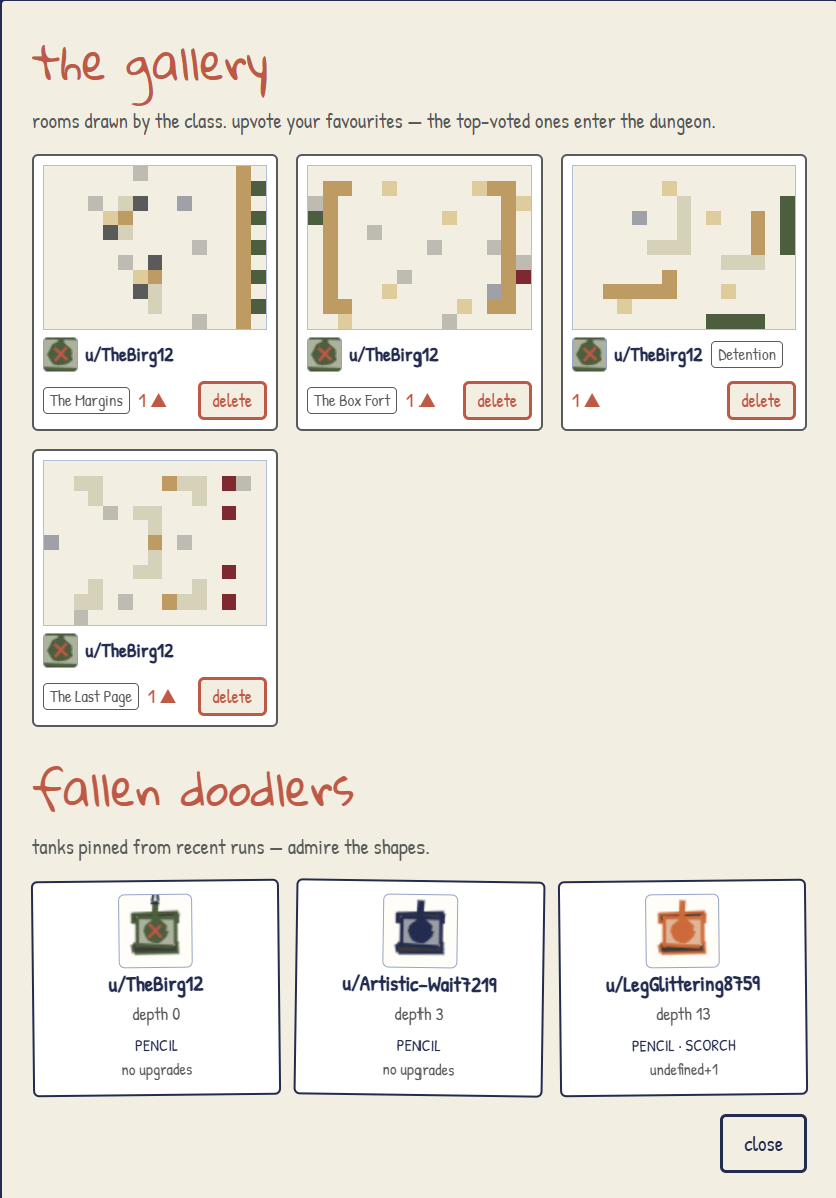
Community room voting
-
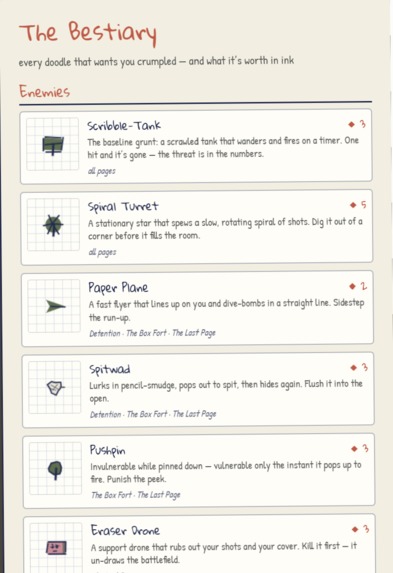
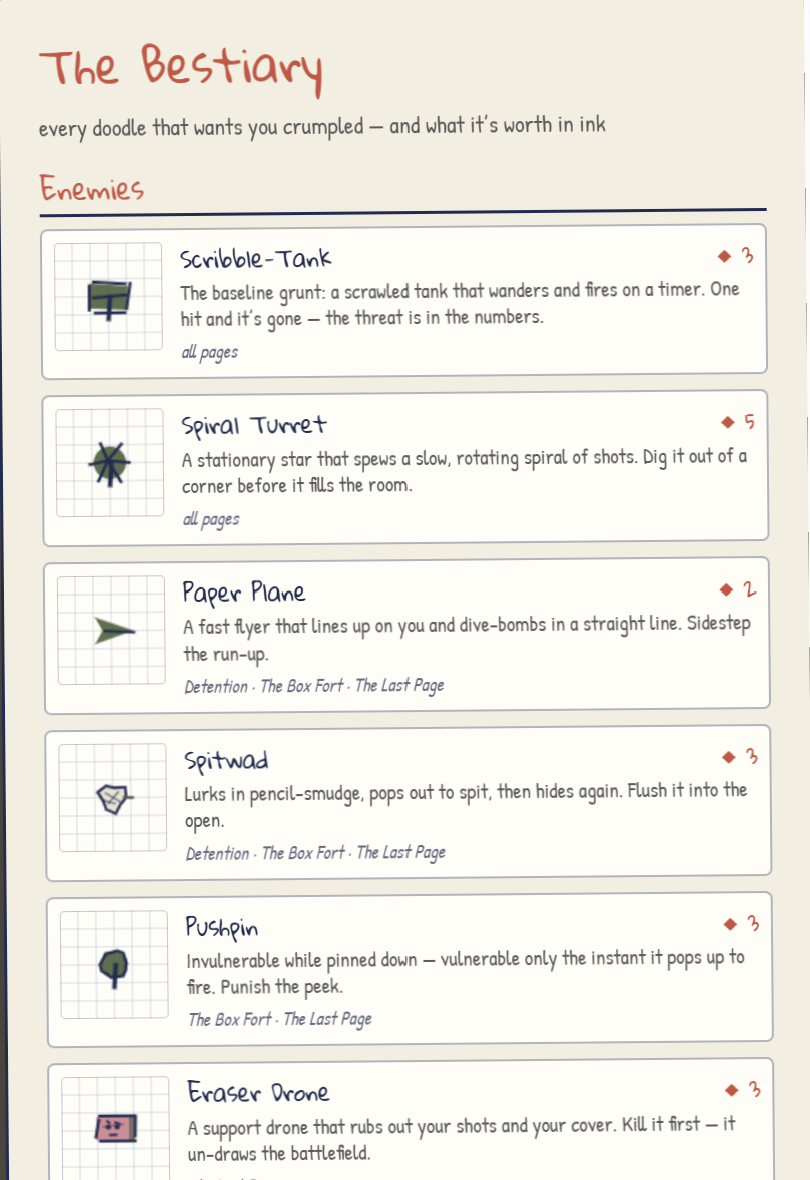
Bestiary
-
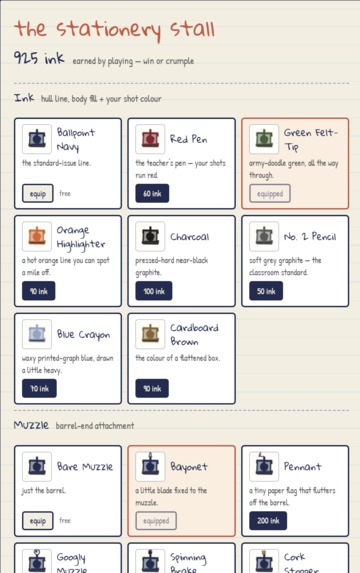
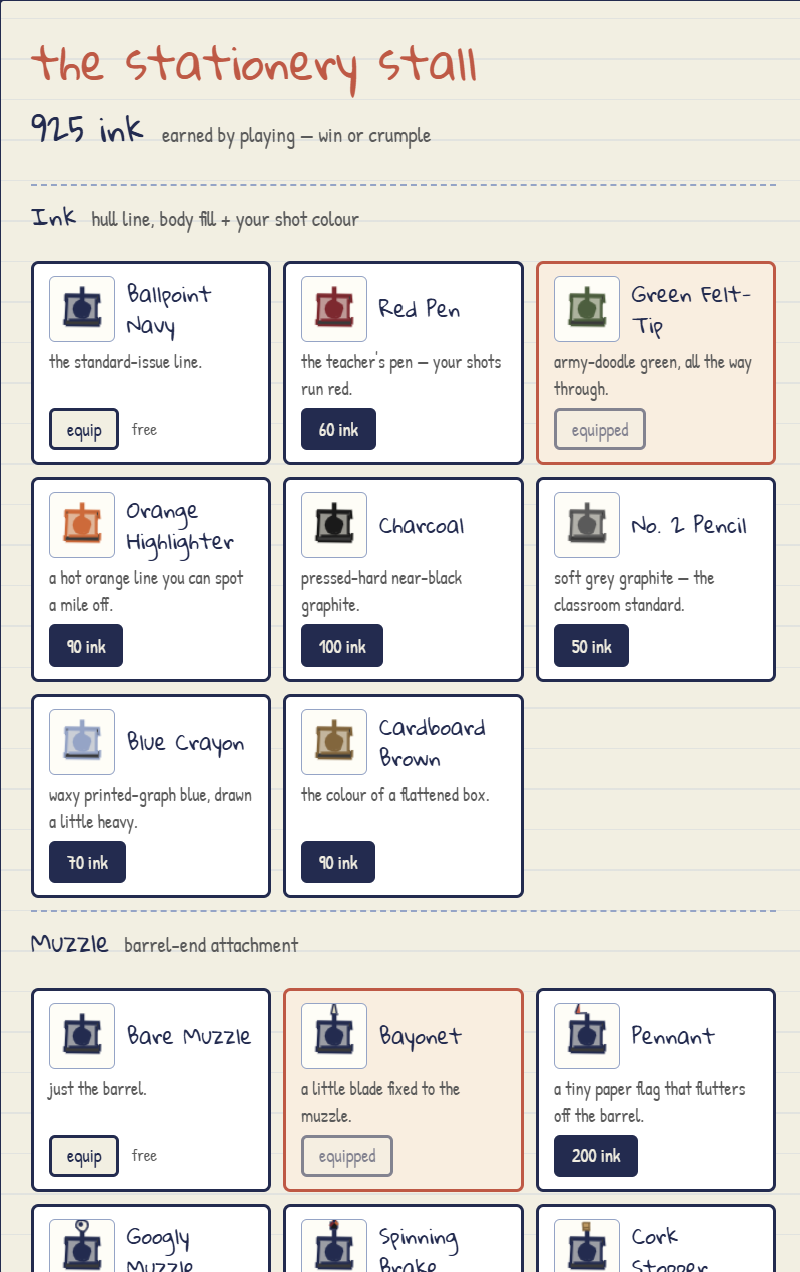
Stationary Stall (Shop)
-
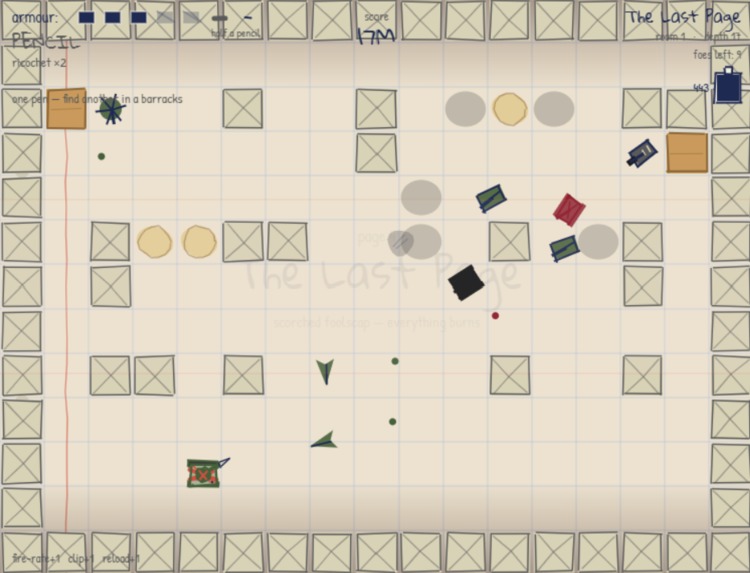
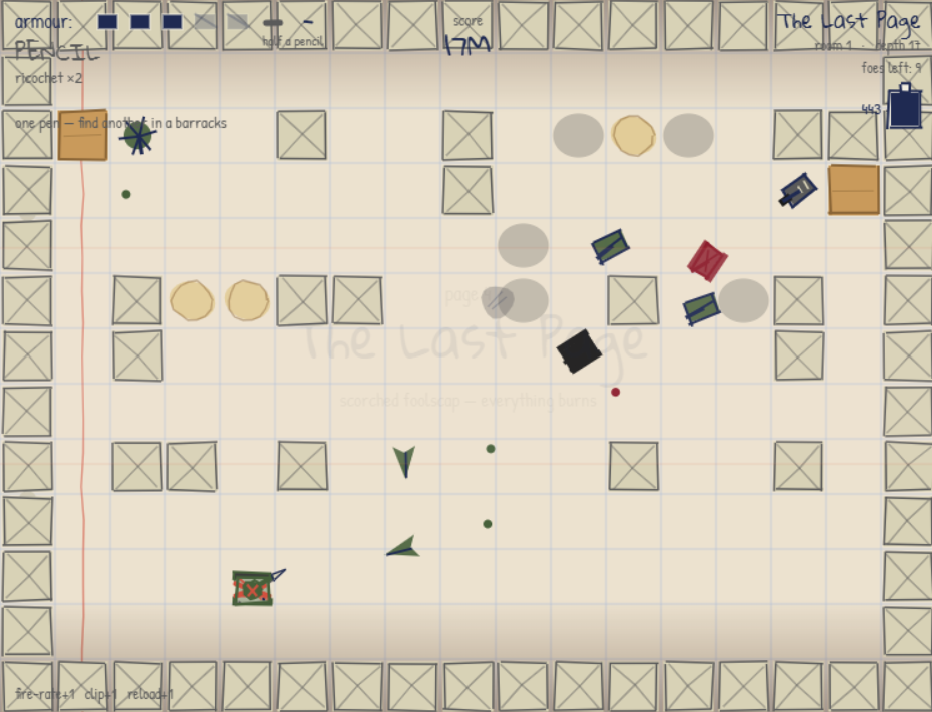
The Last Page
-
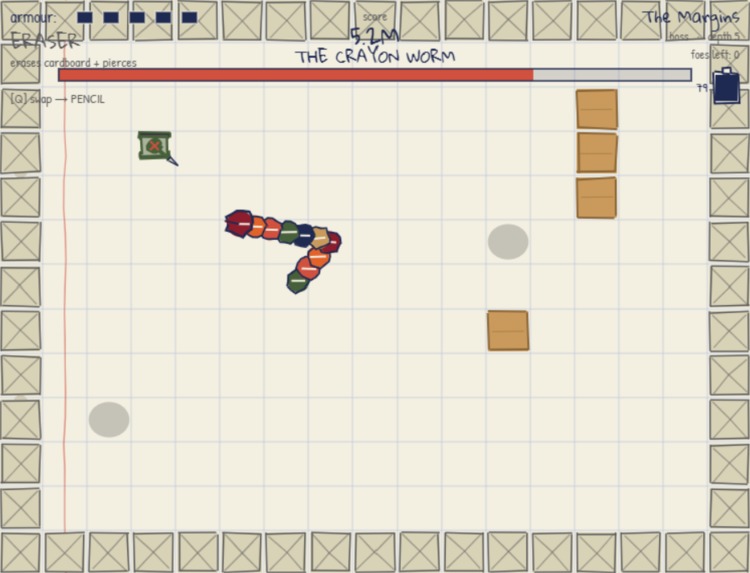
Crayon Worm Boss Fight
-
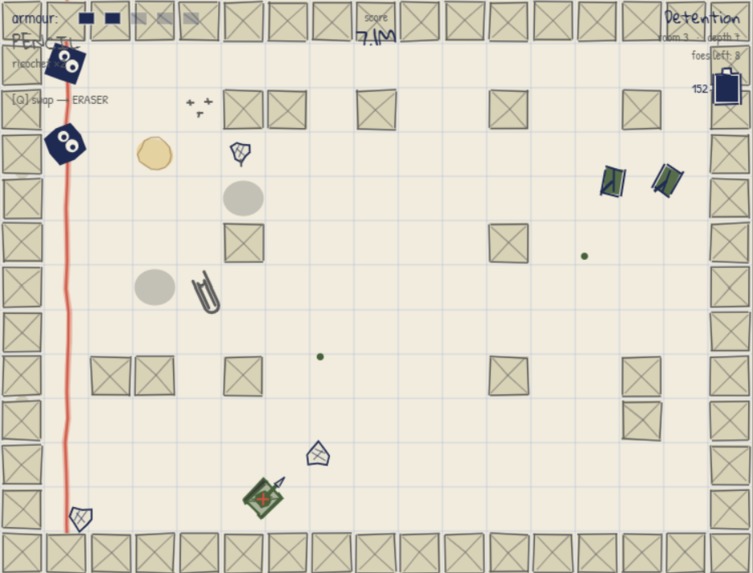
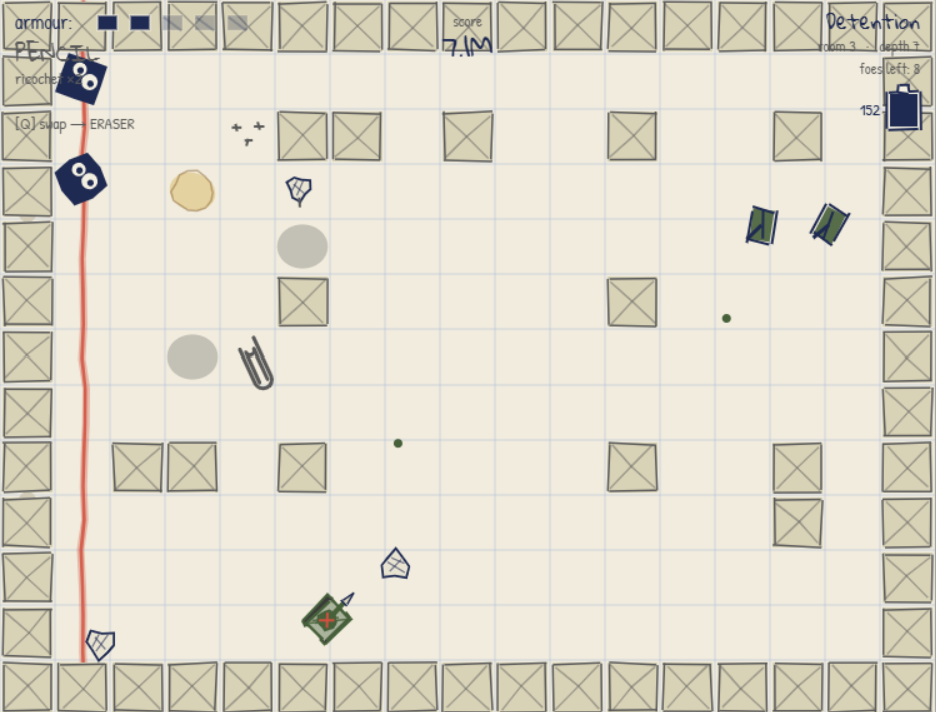
Detention
-
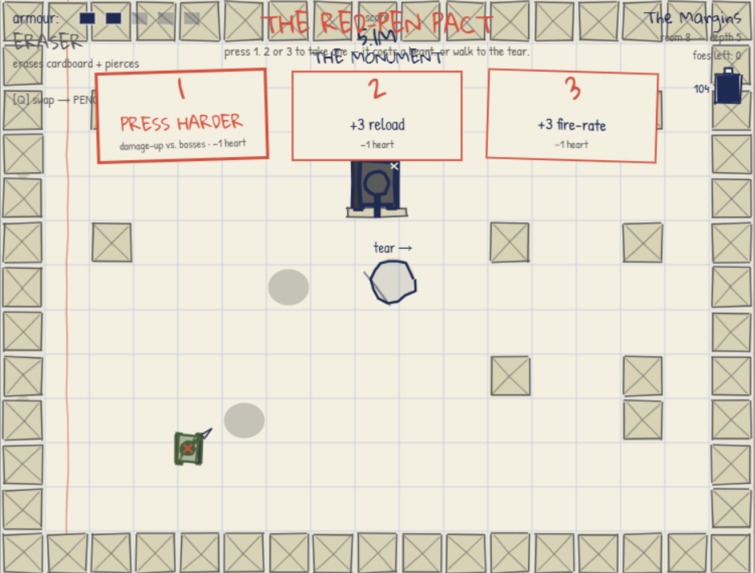
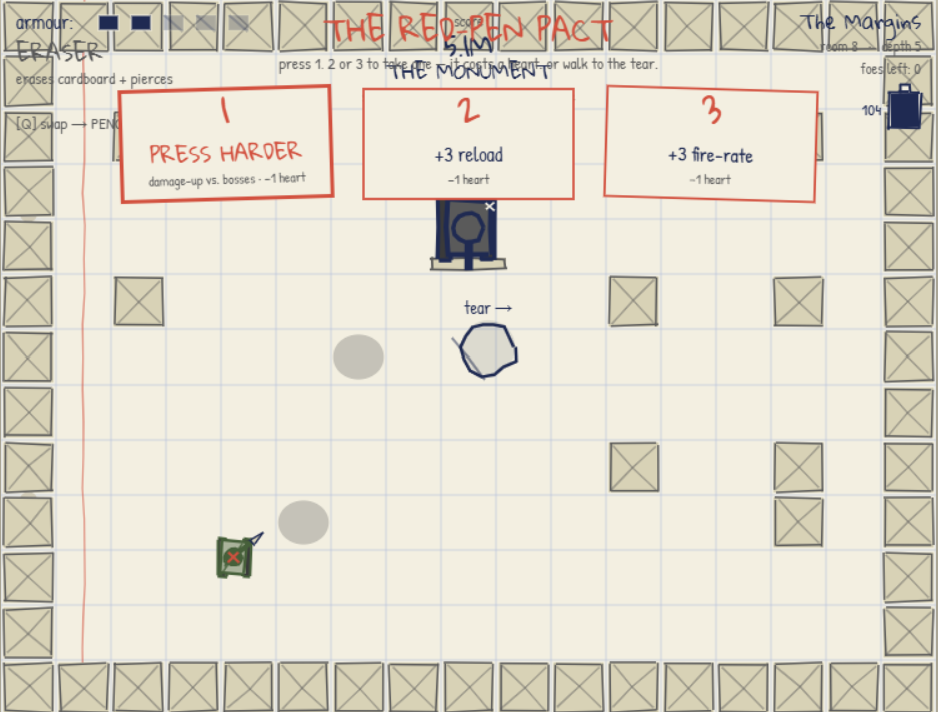
Red Pen Pact
-
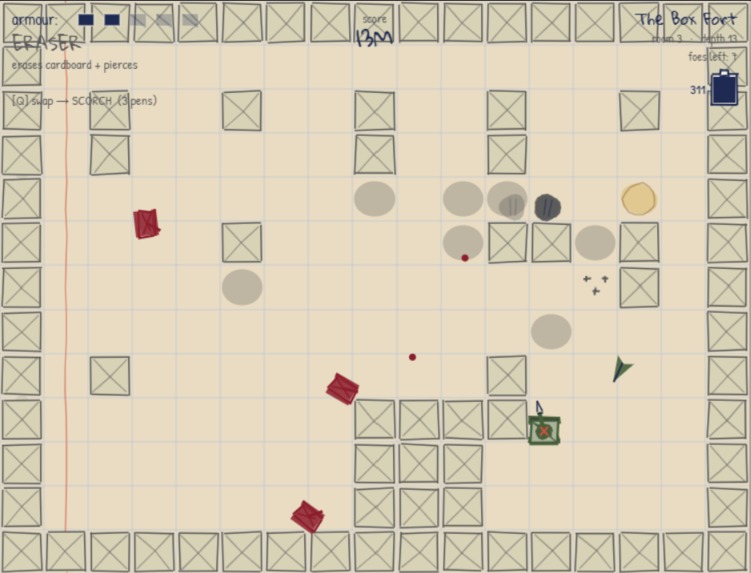
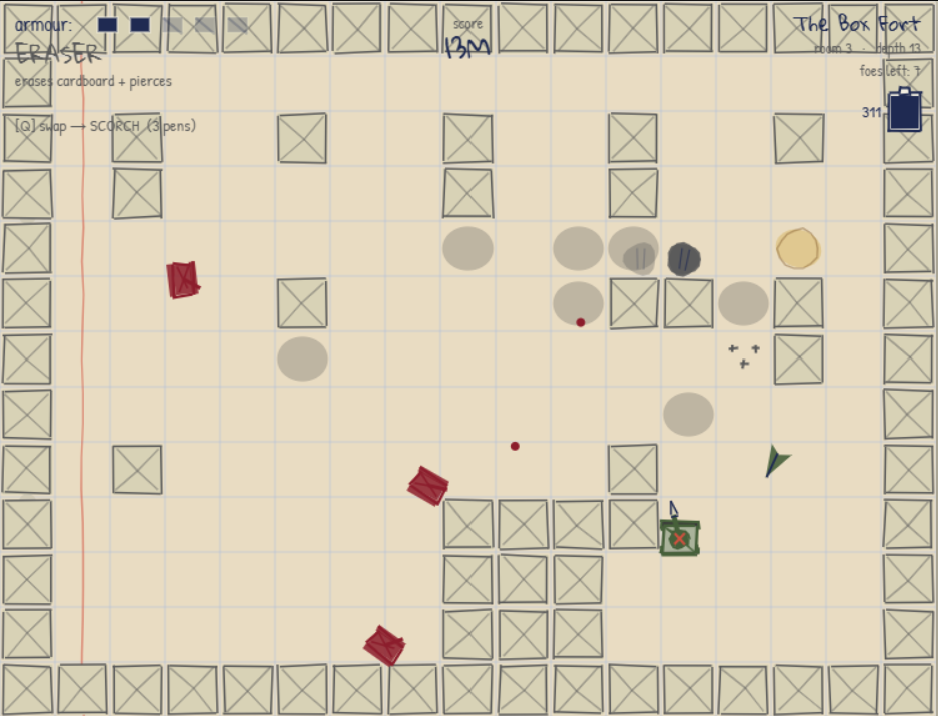
The Box Fort
-
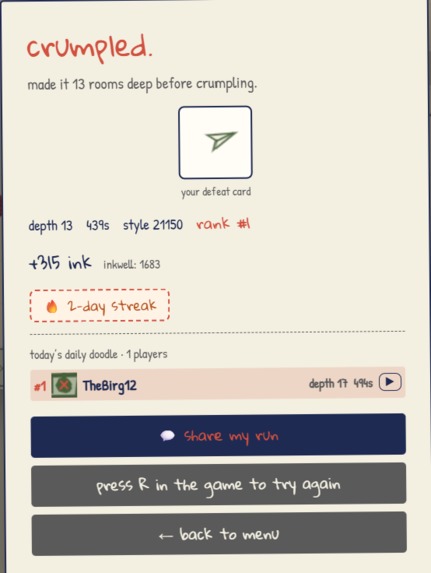
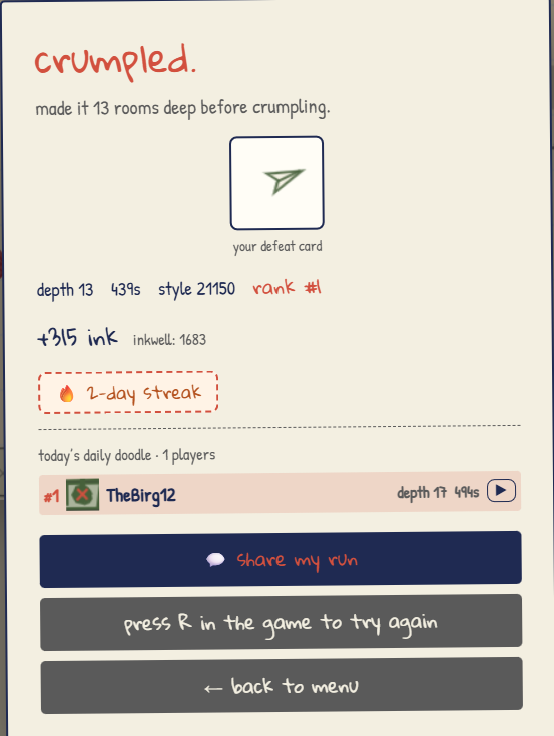
Death Screen
-
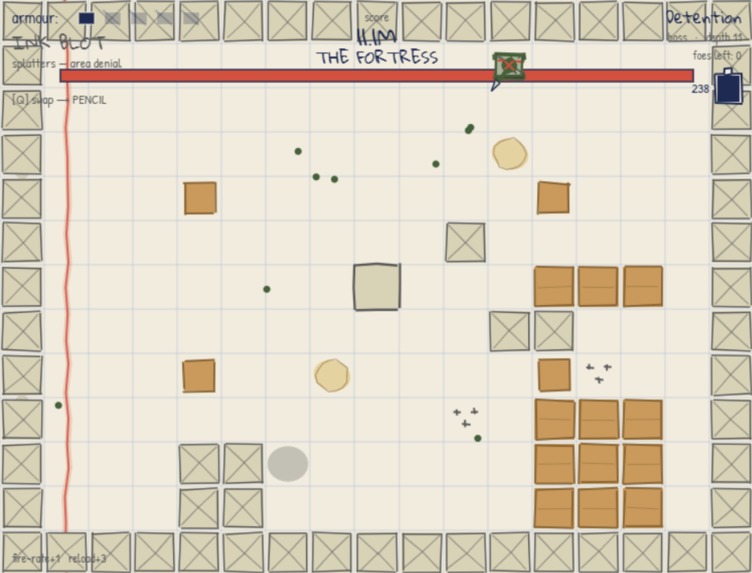
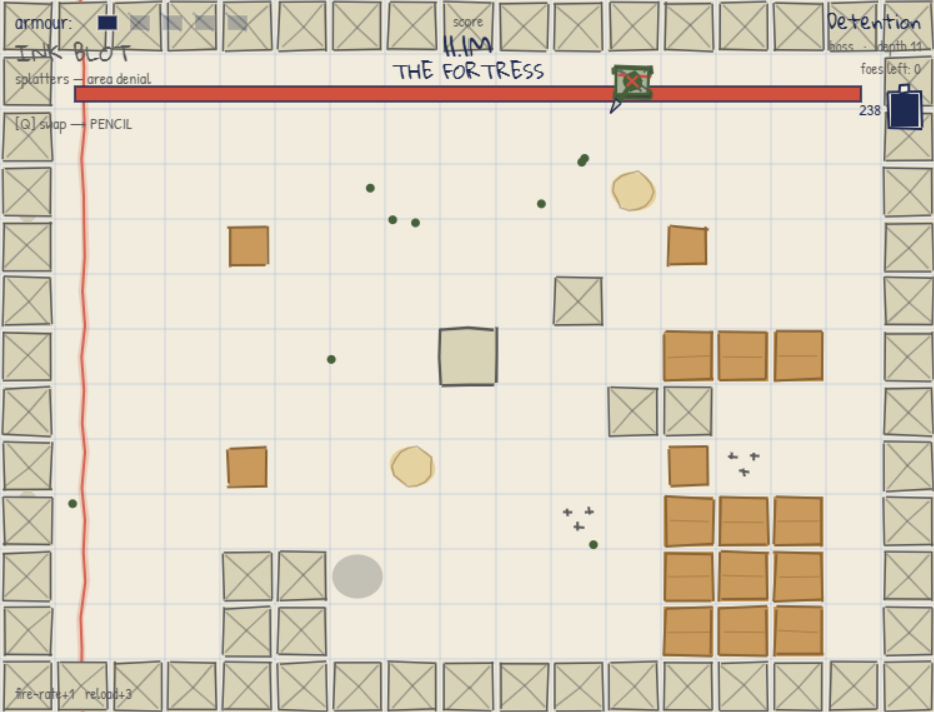
The Fortress Boss Fight
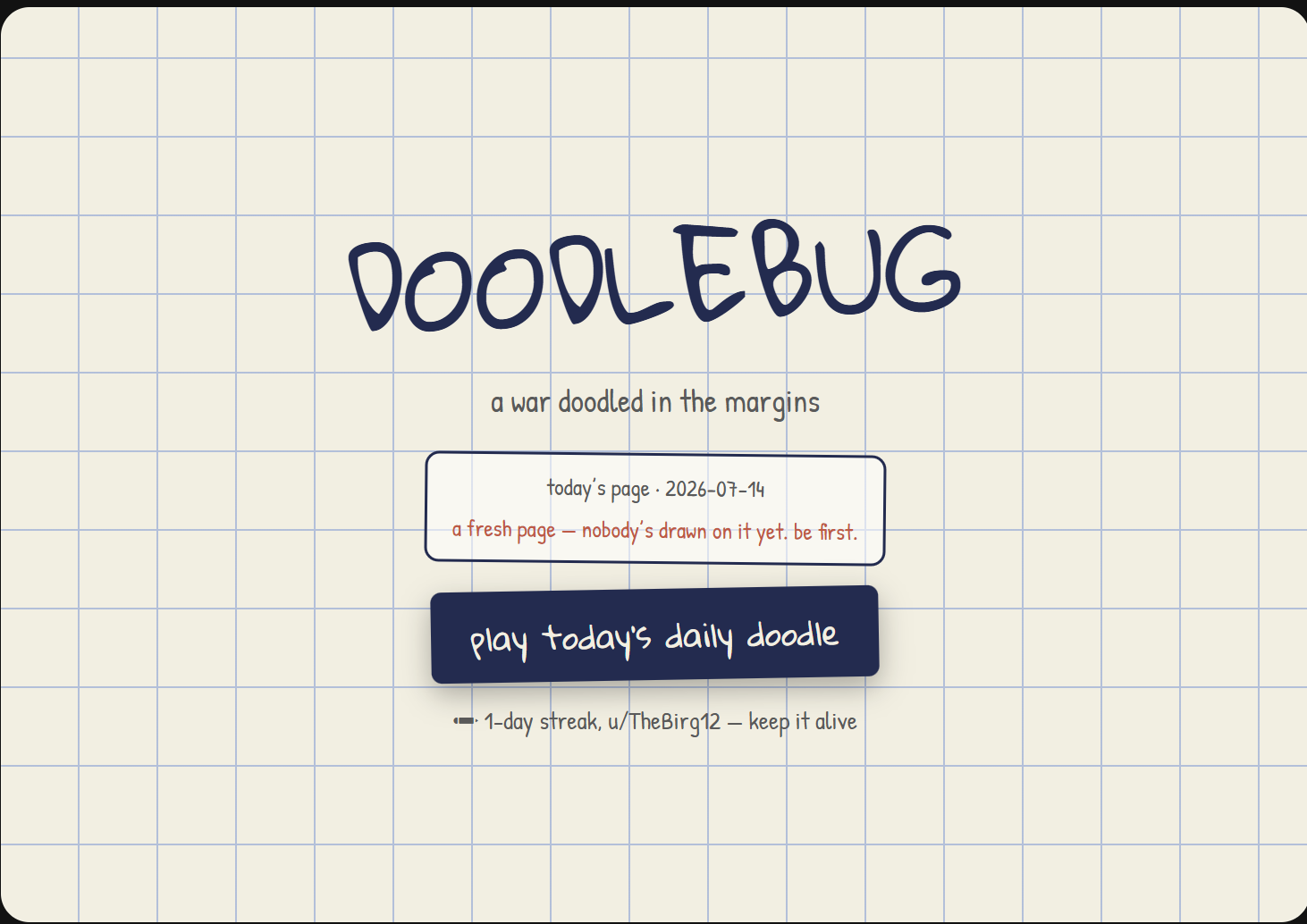
Inspiration
I wanted something that reflected the doodles that I used to draw in my notebook back in elementary and middle school. The rest came from stitching together things I love:
- Classic tank games: the weight of the hull, and bank shots off a wall.
- The Binding of Isaac: the roguelike run structure: item rooms, bosses, devil deals, and secret endings.
- Notebook art: everything is hand-drawn ballpoint on graph paper.
- Super Mario Maker: players having the ability to make unique levels.
- The Game Boy: how the mobile experience was designed The name came last: doodlebug was WWII slang for the V-1 flying bomb, making it both a weapon and a scribble.
What it does
You are a tank doodled in the margins of a bored kid's notebook. The kid keeps drawing enemies while you are fighting them back page by page until you reach the hand holding the pen. The core rule is what a thing is drawn on is what it does. Cardboard burns and fire spreads across the page. Masking tape ricochets your shots. Spilled glue sticks you. A tear in the page is the exit. Every mechanic falls out of the material it's made of, so the world explains itself.
The run
Four sections, each a different sheet of paper with its own rules: graph paper, a ruled notebook with an electrified red margin, a corrugated box fort, and a final scorched page where everything burns. Clear a room of enemies, a tear opens, step through. Each page has a Barracks (peel one of three sticky notes to get either a new pen or a stat upgrade) and a boss that gates the next section. 17 enemies. 5 pens: pencil (ricochets), scorch (a flame stream that lights up the boxes), ink blot, eraser (rubs out walls, pierces enemies), and a laser pointer that marks foes so a killing shot detonates them. Every stat you pick up is drawn onto your tank, so your whole build reads at a glance.
The bosses
The first three sections each flip a coin between two bosses every day. The last page is always The Hand.
The secret ending
After bosses 1 and 3, an Altar page opens. The Red Pen Pact. The teacher's correction pen offers a large stat boost in exchange for a heart of damage, including the game's only damage-up. Beside it stands a graphite tank monument: shoot it five times to wake it, beat it, and it drops half a pencil. Collect both halves and, after The Hand falls, a tear to the front cover opens. Behind it is The Student, drawn huge in a pure bullet-hell. It's the hardest fight in the game and the only route to a maximum score.
The Reddit part
Every day a new run is posted, and everyone plays the exact same dungeon. You compete on a daily leaderboard scored on depth, time, and style (did you land the bouncing shots?). Players draw their own rooms in an in-post graph-paper editor, playtest them, and submit them; the community votes, and top-voted rooms enter everyone's dungeon, credited by username on the wall. Enemies drop Ink, the currency, which buys tank cosmetics that then show up everywhere the community looks: your avatar on the leaderboard, your signature on rooms you author, your defeat card when you crumple. And you can watch anyone's run. Tap play on any leaderboard row and watch that player's day, frame for frame — see exactly how the person above you handled the page that killed you.
How we built it
I knew two things at the start: I wanted tank physics, and I wanted a roguelike. The theme came from my own notebooks. I wrote out the full list of features, enemies, and weapons up front, then built it with Claude Code, repeatedly playtesting and adjusting as I went. It started as a single HTML file. It's now 93 files of TypeScript and React with a headless test suite. The decision everything else rests on was making the simulation completely deterministic and completely separate from rendering. The sim is a pure fixed-timestep update(game, input). No DOM, no Reddit APIs, same seed and same inputs always produce identical frames, and it's covered by 260+ headless tests. That one constraint paid for four features at once:
- The Daily Doodle: one seed means everyone genuinely plays the same dungeon.
- A cheat-proof leaderboard: the client never sends a score. It sends the run's input replay, and the server re-simulates the entire run from the seed to verify it.
- Un-fakeable currency: ink is recomputed by that same server-side re-simulation, so a hacked client can't mint it.
- Ghost playback: once you're storing replays and the sim is deterministic, watching anyone's run back is nearly free. It fell out of the architecture rather than being built. Cosmetics live strictly on the render side and never touch the sim, so the determinism contract, and everything built on it, stays intact.
Challenges we ran into
Balance
The hardest problem by far, and there's no clever trick for it — just a lot of back-and-forth on room generation, enemy tuning, and how strong the tank should feel. I stopped generating rooms randomly and started filling them to a difficulty budget per page, placing enemies deliberately (turrets dug into corners behind cover, ambushers waiting in pencil-smudge, packs on patrol). The goal I settled on: the game should get easier the more you play, not because it gets softer, but because you get better at reading it.
Mobile
My first version put floating joysticks over the play area, and it was miserable — your thumbs constantly covered your own tank and the enemy about to shoot you. I tried tuning it and it stayed bad, because the problem wasn't tuning, it was layout. The fix was to stop treating a phone like a small desktop and copy the Game Boy: board on the top half, controls on the bottom half, fixed pads that never wander. It went from unplayable to genuinely fun.
Anti-cheat
A public leaderboard with a currency attached is an invitation to fake scores. Trusting the client was never an option, so the replay-verification system above became load-bearing, which in turn meant the sim could never be allowed to drift into the renderer. Holding that line for the whole project was a discipline problem more than a coding one.
Accomplishments that we're proud of
- 17 distinct enemies, each with real behavior — a paper wad that ricochets like a bullet, a wraith that's untouchable while it stands in pencil shading, a dive-bomber you have to watch out for, a black tank that leads its shots and kites you.
- Room generation that composes to a difficulty budget instead of rolling dice.
- The room editor where players are building content that ships into everyone else's runs.
- Replay verification and ghost playback, which make the daily competition actually mean something.
- Tank feel. The hull eases into its turn while the turret answers instantly. The core game mechanic needed to be perfect.
What we learned
- Character design through behavior. An enemy is memorable because of what it does, not what it looks like. The best ones came from a single verb: this one hides, this one splits, this one dives.
- Balancing is iteration, not intuition. Every instinct I had about difficulty was wrong until I play-tested it.
- Constraints generate design. "Everything is drawn on paper" decided the entire mechanic set for me — fire, ricochets, glue, tears. I never had to invent a system in a vacuum.
- Determinism is a superpower. Committing to a pure simulation early cost me some convenience and repaid it several times over.
- A phone is not a small monitor. Design for the hands, not the screen.
What's next for Doodlebug
- Bugfixes
- More weapons, more enemies, and more bosses in the coin-flip pool.
- New room features and terrain to widen what the community editor can express.
- Improved animation throughout.
- Growing the room-authoring loop. The strongest thing in the game is other players' rooms showing up in your run with their name on the wall, and I want to lean all the way into it.
Built With
- claude
- react
- typescript

