Inspiration
I love VR, but the people I want to play with don't own headsets. Very few games let the headset player and the people on the couch actually play together — not take turns, not spectate. I wanted a game night that needs just one Quest and the phones already in the room.
What it does
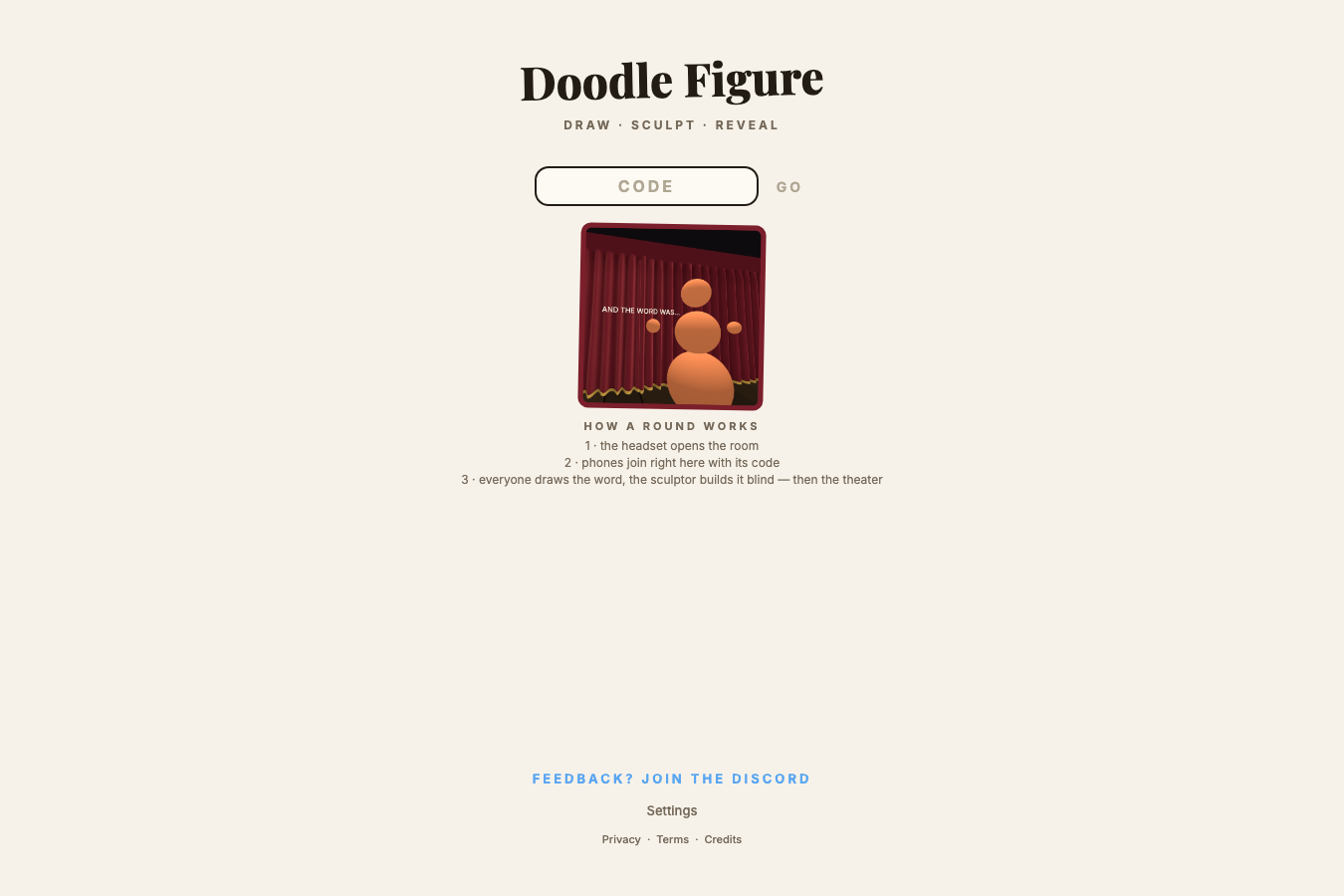
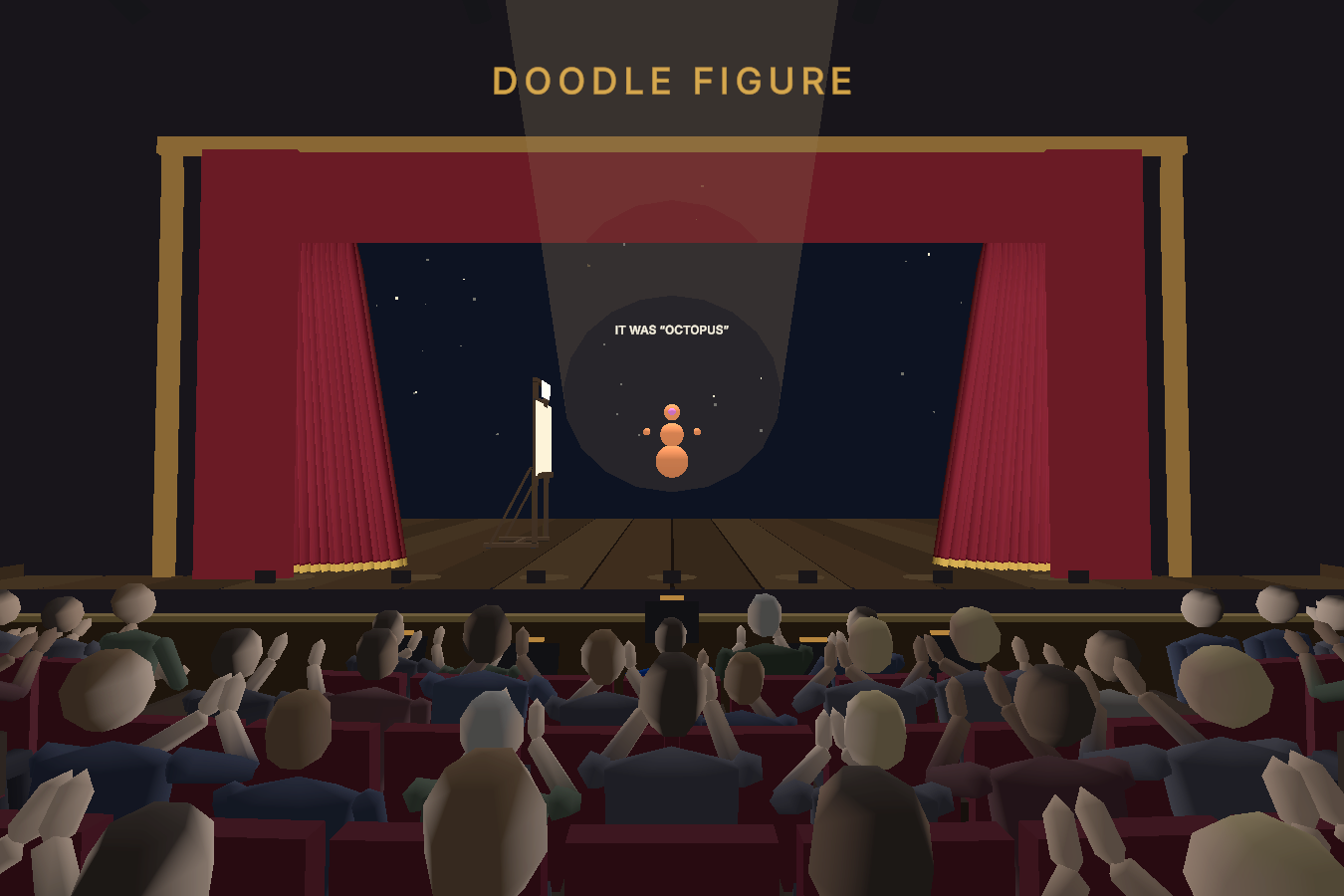
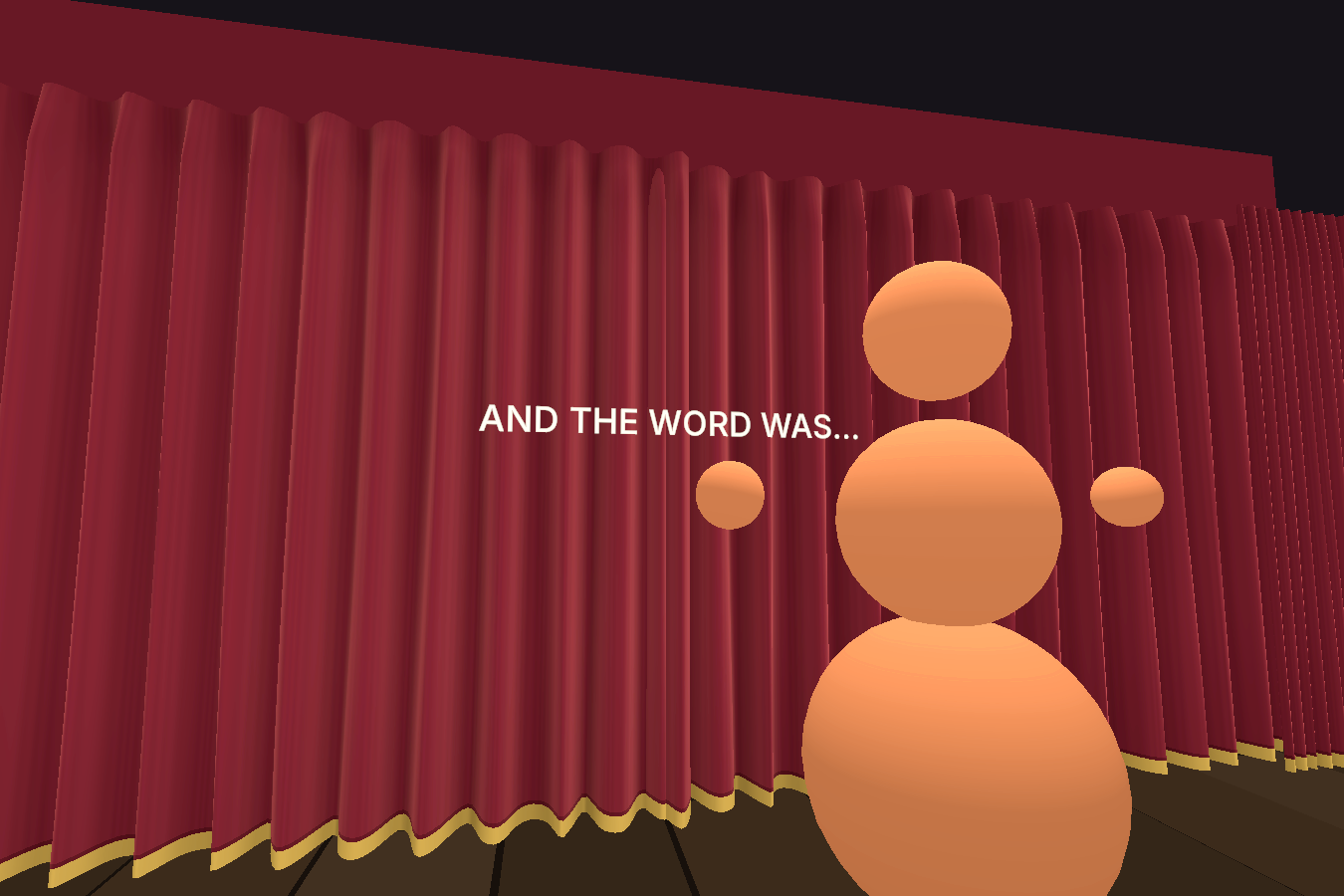
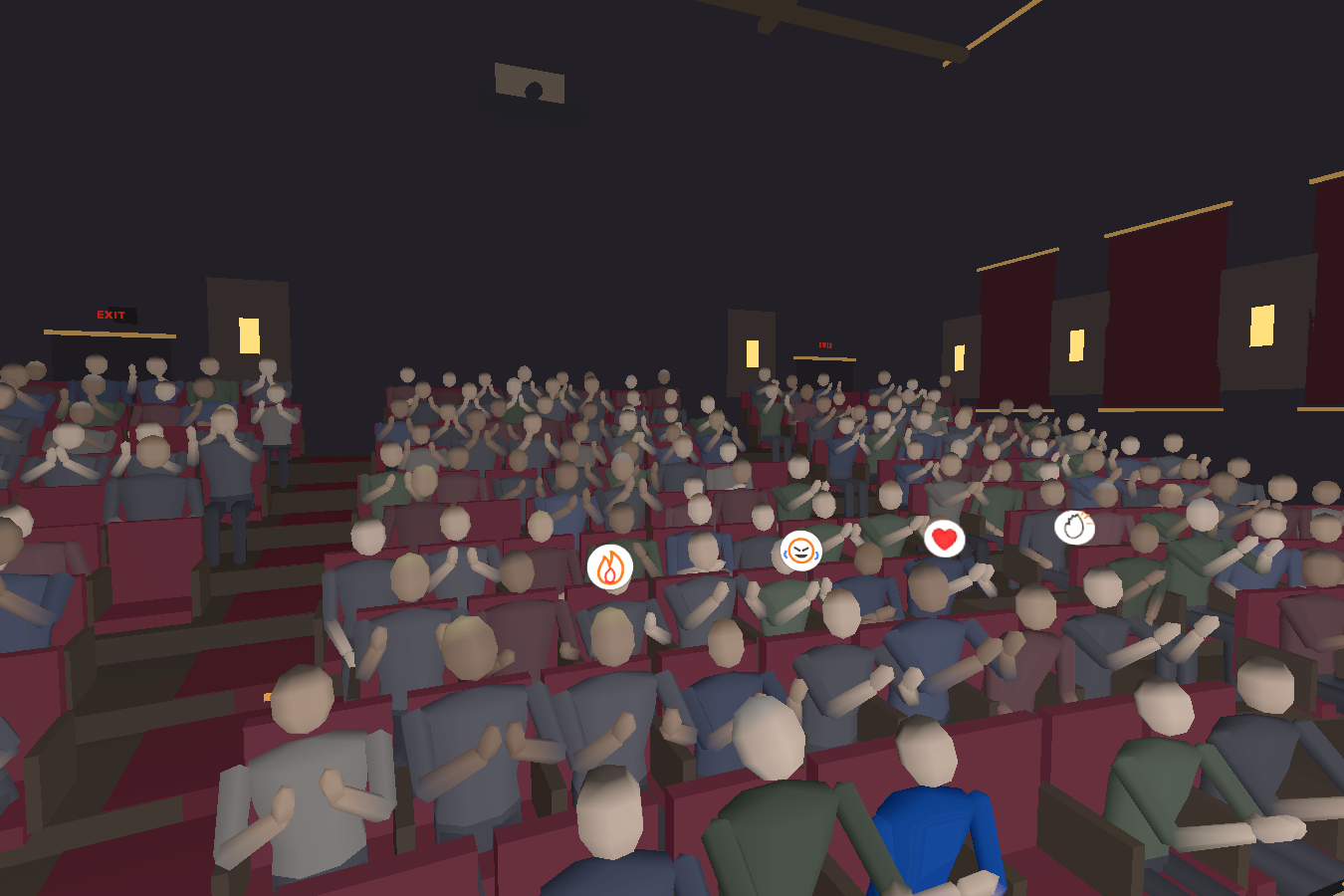
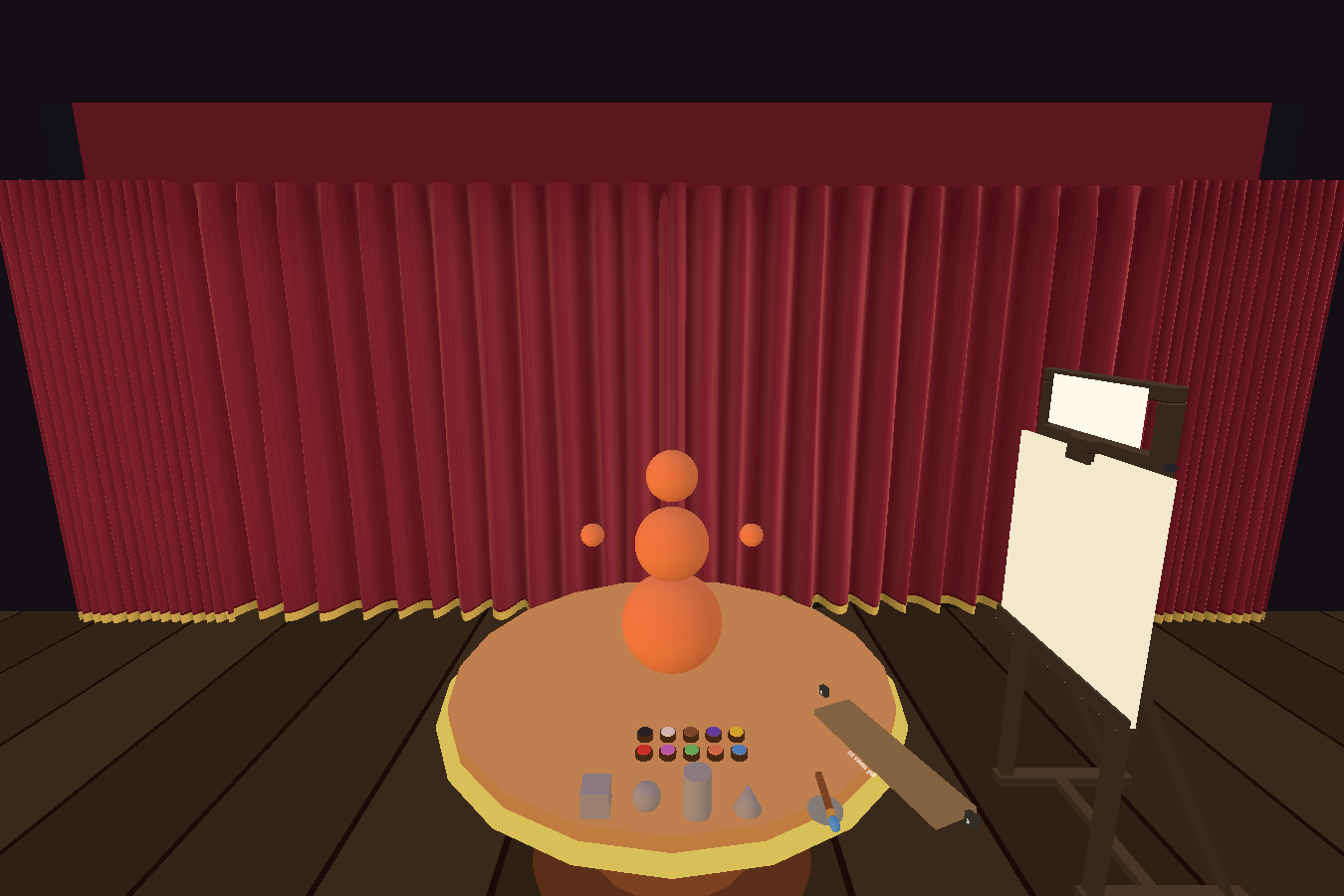
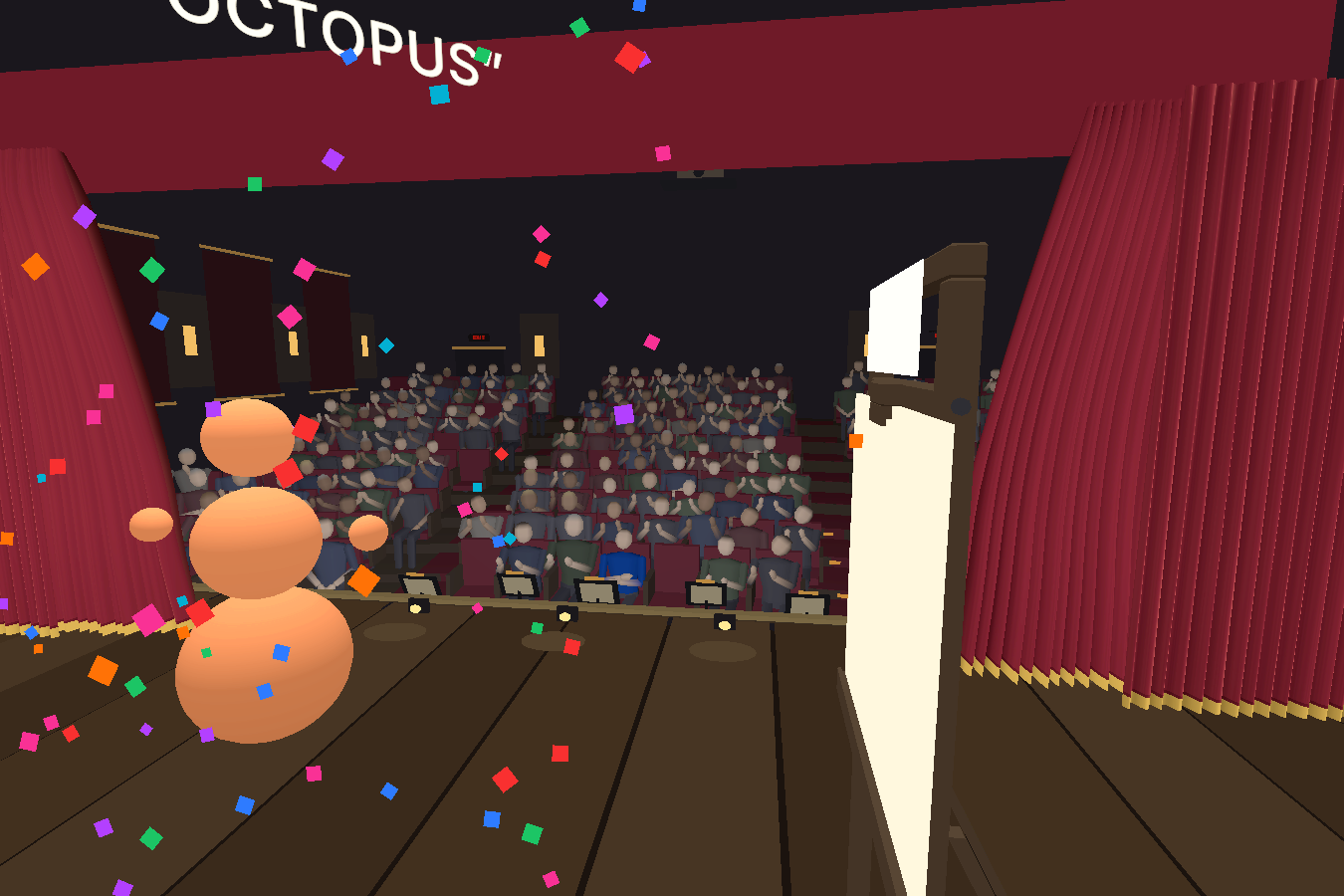
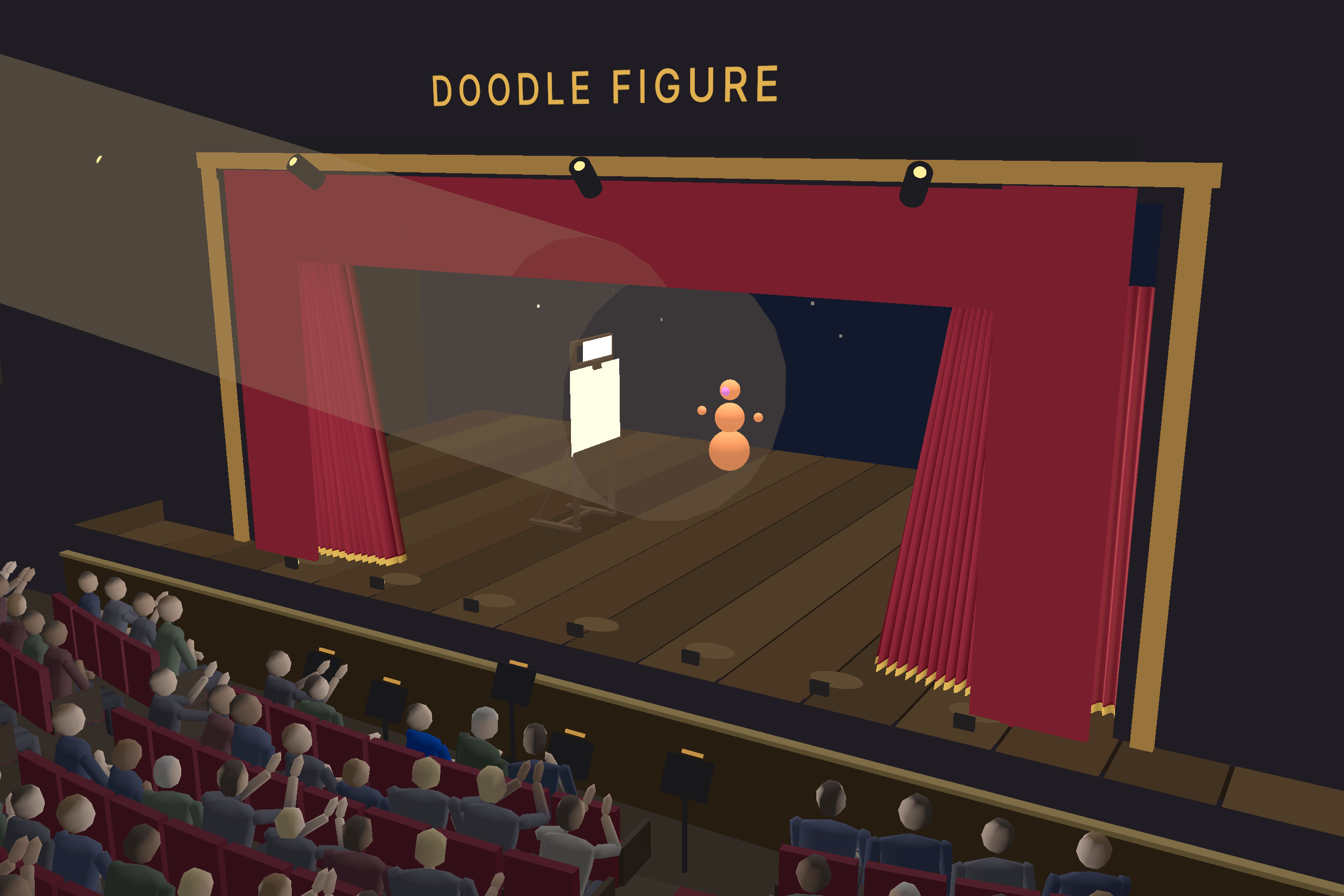
Doodle Figure is reverse Pictionary across devices. Friends open doodlefigure.com in a browser — no app, no account, just a room code — get a secret word, and doodle it. In the headset, the sculptor never sees the word: the doodles stream in live, and they build their best guess in 3D with bare hands. Then the theater takes over — lights drop, a followspot finds the sculpture, the curtains part, and everyone finds out together. The audience doesn’t just watch — wave and they wave back, bow and the applause swells, raise both hands and the whole theater erupts. Phones receive the playbill and cast photo as keepsakes, and bots can fill empty seats so it plays solo too.
How I built it
- Headset: Unity on Quest, hand tracking only — no controllers anywhere.
- Phones: a React web app. Joining is a room code in a browser.
- Networking: Photon Realtime bridging a C# client and a JavaScript client. The message format only grows additively, so headset updates never broke the phones.
- Bots run inside the headset, replaying real human sketches from Google's Quick, Draw! dataset (CC BY 4.0).
- The reveal is photographed in-scene (a playbill, a cast photo) and sent to every phone. Announcer voice: ElevenLabs.
Challenges I ran into
- The ending. The loop worked — draw, sculpt, guess — then just stopped. Anticlimactic. The fix was rebuilding the whole setting around the reveal: a night theater, a followspot, velvet, an audience of doodle figures.
- Cutting, not adding. I cut a meadow with butterflies that landed on your sculpture — weeks of work, wrong mood for a loud party game. Also cut: phone-side host controls (two people fighting over who starts a round is not a party) and a reveal easel testers didn't understand.
- Cross-platform networking. Two SDKs, one wire; headsets that sleep mid-round and come back; phones that join late. Hardest part of the project — and once it held, everything else got easier.
Accomplishments that we're proud of
- Zero-friction join. Nobody at the table installs anything: phone browser, room code, drawing in under a minute.
- Hands-only VR that holds up. No controllers anywhere, and buttons that fire on real touch — not on hovering near one.
- A headset you can take off. Sleep mid-round, rejoin, and the show comes back — state, curtains, bots, buttons. Tested hard on device.
- The reveal. Rounds used to just stop; now every round ends with curtains, a spotlight, and an ovation.
What I learned
Letting go is a skill. I walked away from longer-running projects and kept only what was worth reusing — this game's VR-to-phone networking and live-tuning tools came from those. Inside a project, same rule: player experience beats sunk cost.
What's next
Phone-side host tools that can't start a fight over who runs the round, a bigger word list, and more people in the theater.
Built With
- c#
- elevenlabs
- expo.io
- google-quick-draw
- hand-tracking
- javascript
- meta-quest
- openxr
- photon
- react
- react-native
- typescript
- unity
- vercel
- websockets

