-
-
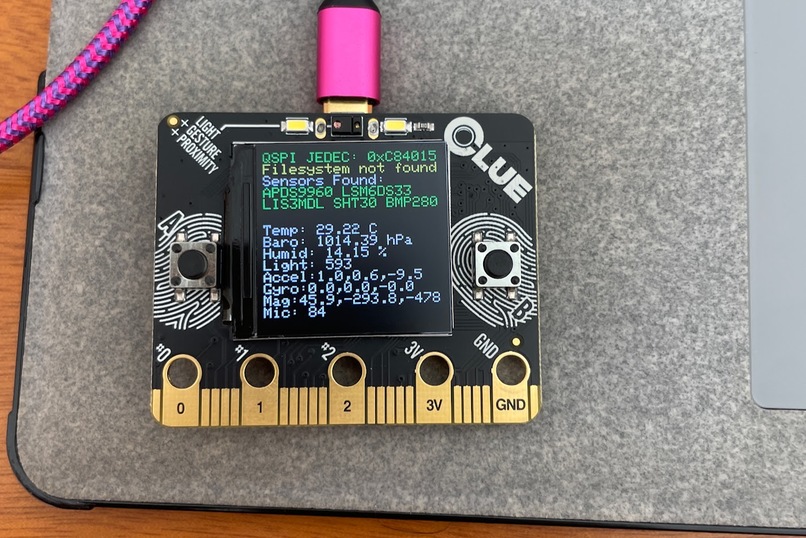
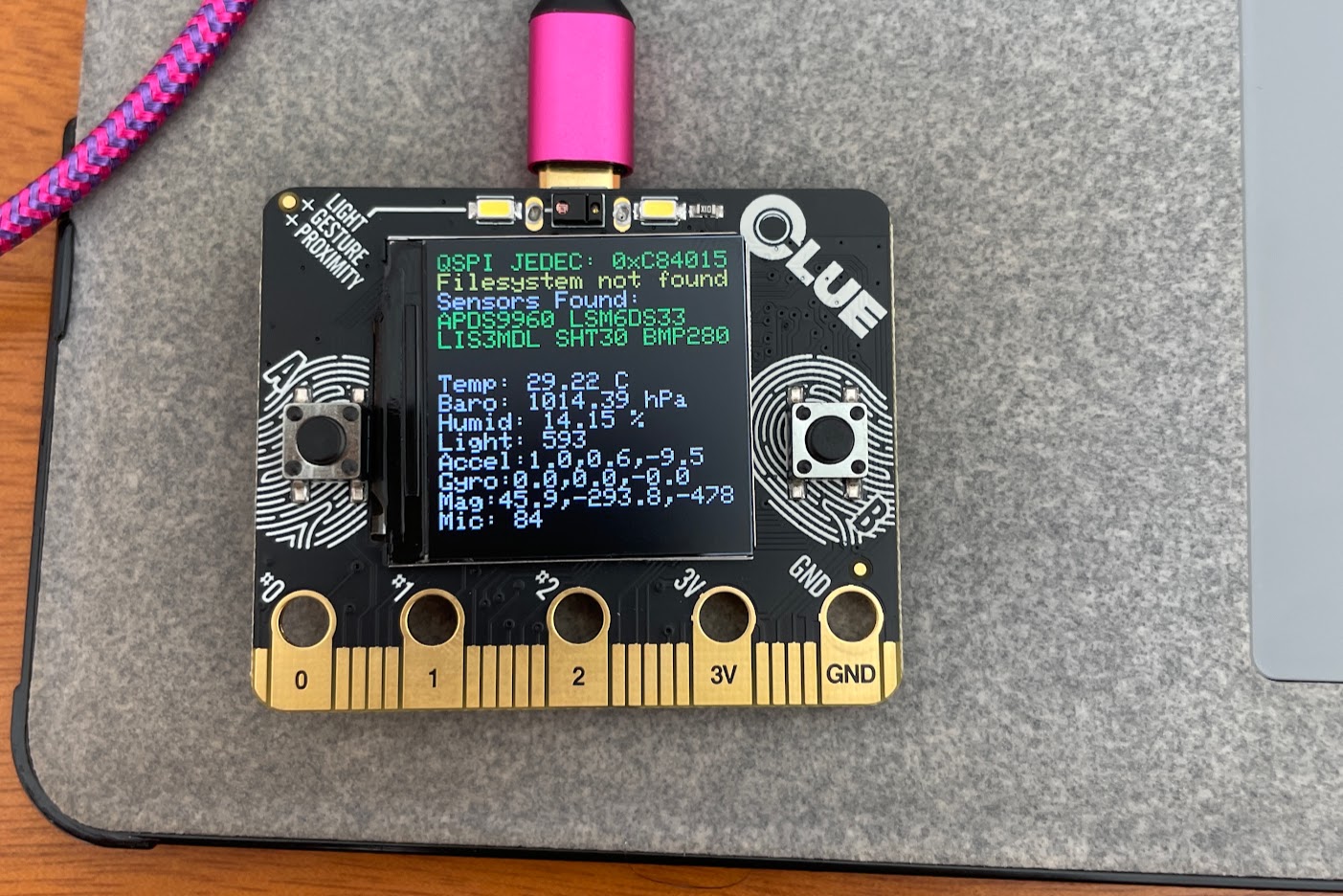
An Adafruit CLUE, the backbone of our buoy, reading out sensor data.
-
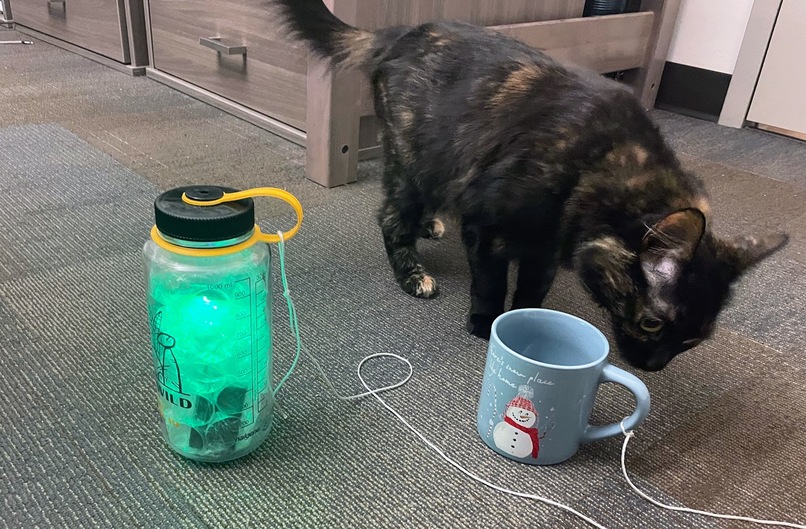
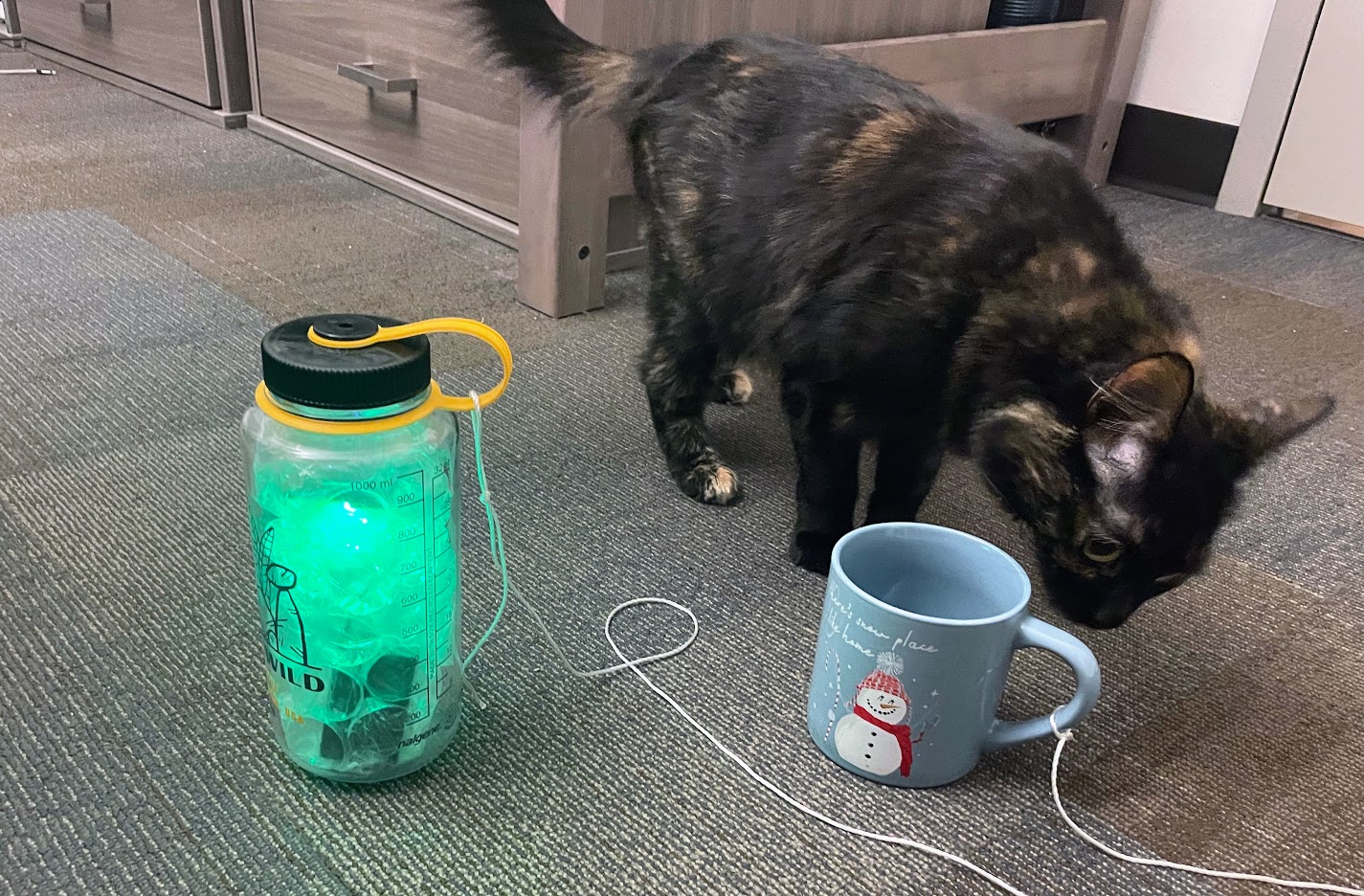
Our buoy consists of a water bottle containing the electronics, and a mug attached to a string to act as an anchor. Also featuring a cat.
-
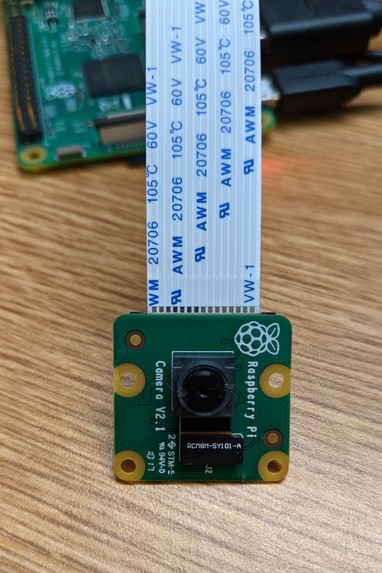
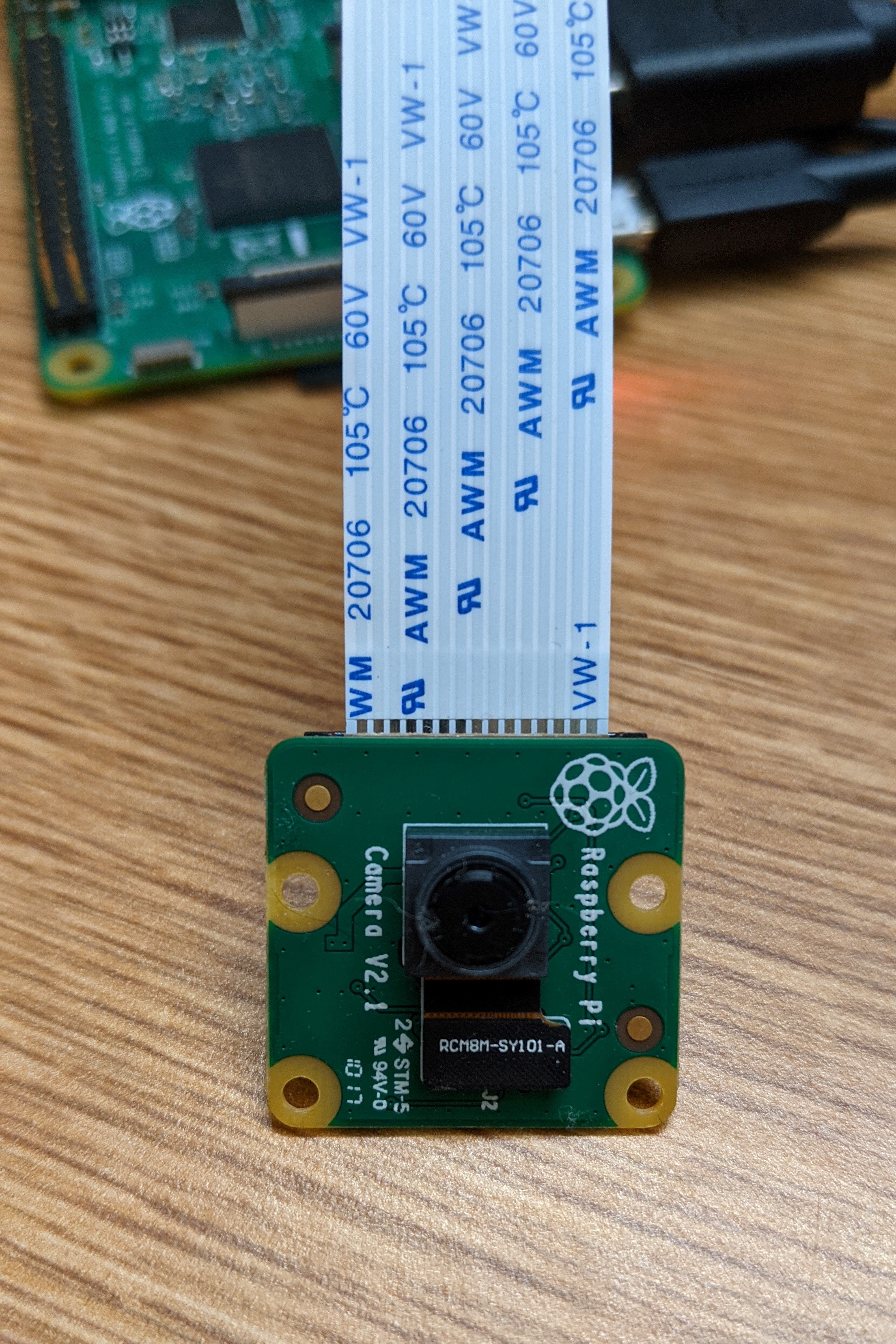
The Raspberry Pi camera module, which, on bluetooth signal from the CLUE, takes and uploads a picture of the wake-creators to firebase.
Inspiration
When boats reach too extensive of speeds, they can create large wakes which, when reaching the shore, can erode soil and ruin the fragile ecosystem of the shoreline. There are rules about when and where boats can make big wakes, typically when the boat is at least 100 ft away from any person or shoreline, however, it is challenging to enforce. That is where our project comes in!
What it does
Our product takes on a similar function to modern red-light cameras on traffic lights. When a boat’s speed reaches a certain point where the wake it leaves behind becomes large enough to cause erosion to the surrounding shore, the device will automatically take a snapshot of the boat which had caused the wave. The snapshot can be sent to authorities to delegate some kind of consequence to the driver of the boat.
How we built it
(Don't) Wake Me Up Inside consists of two parts, a buoy, and a camera. The buoy consists of an Adafruit Clue inside of a water bottle. The camera is made of a Raspberry pi 3b and a camera module. When the clue detects intense motion, it sends a Bluetooth packet to the Raspberry Pi which takes a picture. Ideally, the camera and buoy are spread apart enough so that the clue detects the wave before the boat reaches the camera. The image is then sent to the cloud using firebase on the Raspberry Pi.
Challenges we ran into
The hardest part of the project was establishing a connection between our Raspberry Pi and the Adafruit CLUE. None of us had much experience doing this and the documentation for Bluetooth connections between the two was limited so we had to just cobble things together, as is the way of programming.
Accomplishments that we're proud of
This is the first time for any of us at working with an Adafruit Clue and Circuit python. We learned a lot in a short amount of time and are excited to do more with the technology in the future!
What's next for (Don't) Wake Me Up Inside
Envisioning the future of “(Don't) Wake Me Up Inside” we see the product being applicable to homeowners and municipalities with properties that are at risk of damage due to erosion as well as parks and preserves with habitats that are at risk of damage due to uncontrolled wakes. The buoy could also function as an all-around smart buoy, and do things such as monitoring the water for things like ph, temperature, and turbidity.
Built With
- adafruit-clue
- circuitpython
- firebase
- google-cloud
- python
- raspberry-pi


Log in or sign up for Devpost to join the conversation.