-
-
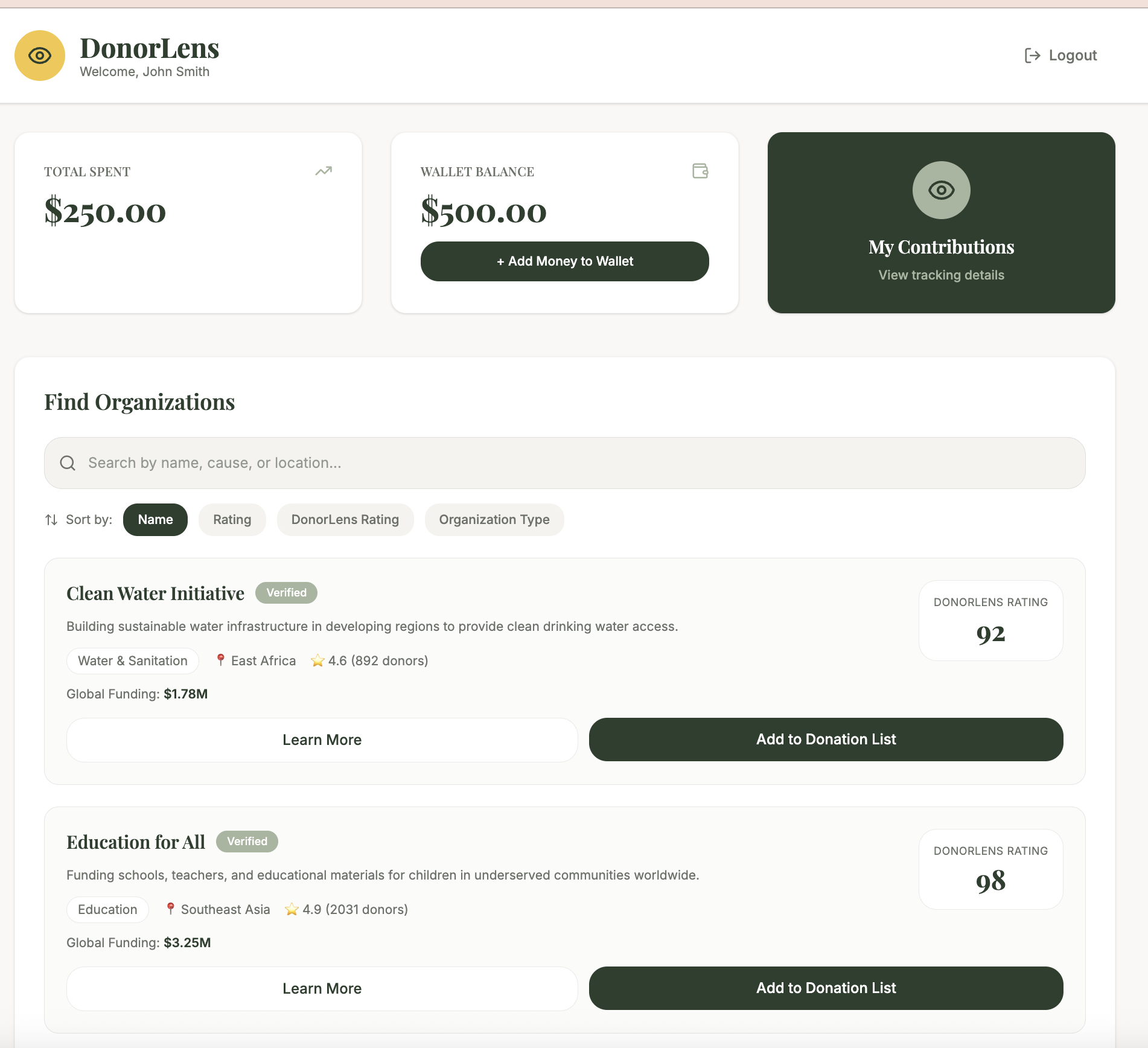
User Dashboard
-
Inspiration
As a student in Los Angeles, there are plenty of organizations on college campus asking for donations in support towards an impactful cause. Student or not, when you make these generous donations, you want to be able to see where this money is going.
When we looked at how people donate to causes around the world we realized there's a fundamental trust problem. Donors have no way to verify where their money actually goes, and organizations have no easy way to prove their legitimacy. With billions of dollars flowing through charitable channels each year, the lack of transparency is a serious issue. We wanted to build something that makes the entire donation journey visible, verifiable, and trustworthy for everyone involved.
What it does
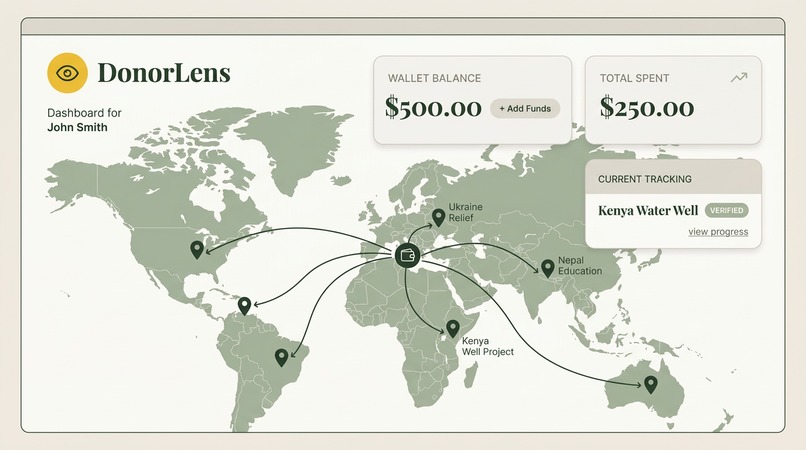
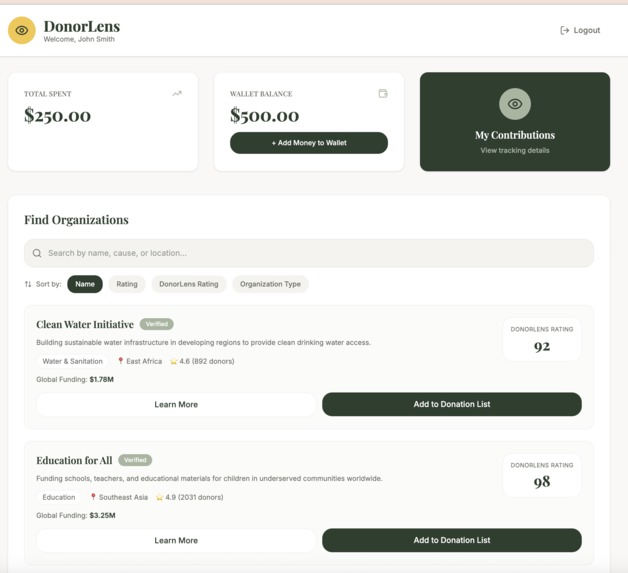
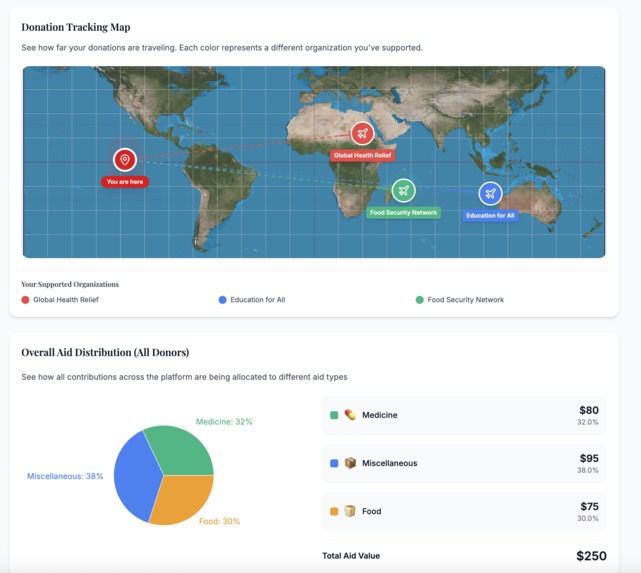
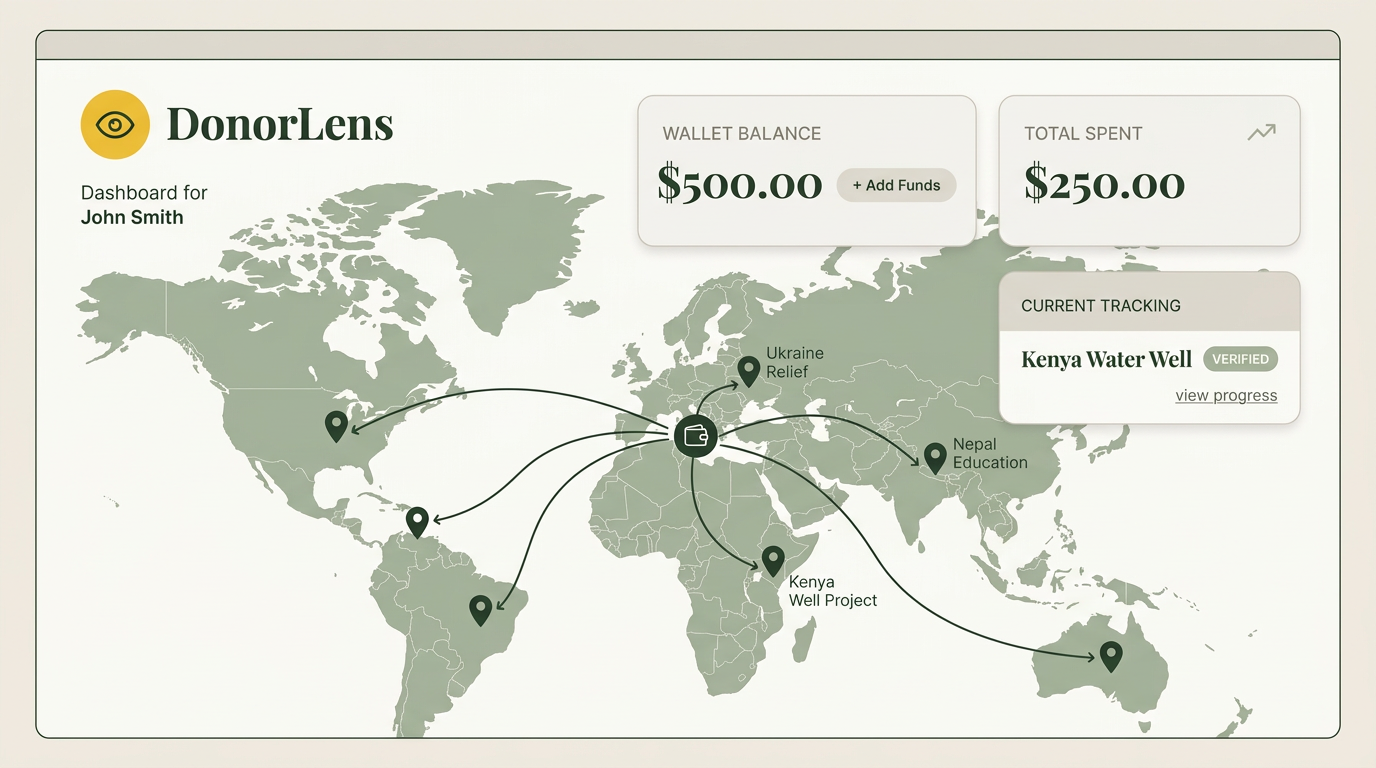
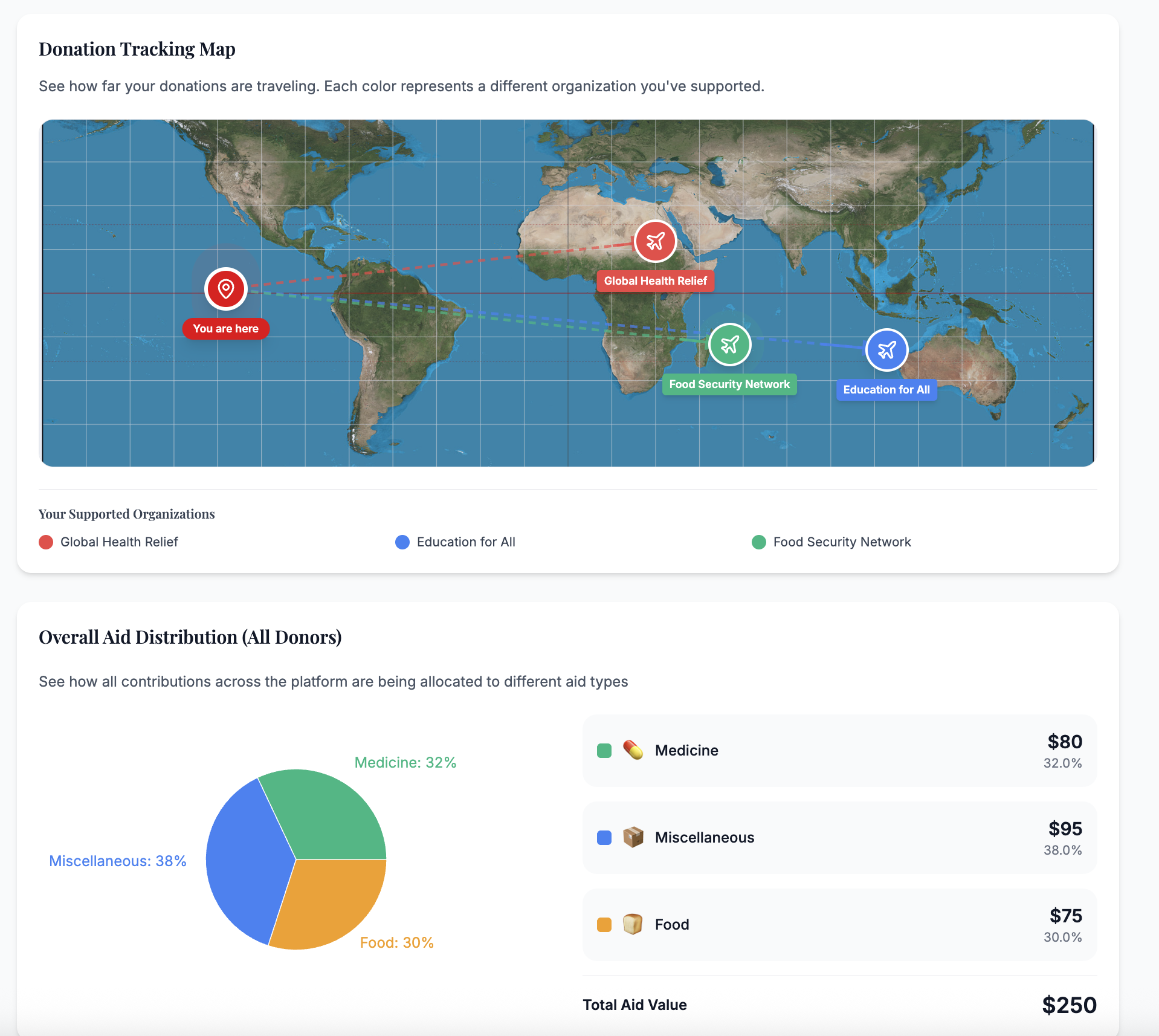
DonorLens is a donation transparency platform with two core user roles. Donors can track exactly where their contributions go via an interactive map that shows fund flow to specific geographic locations (e.g., a relief effort in Ukraine), along with precise breakdowns of how much was spent and on what. Organizations can upload expense receipts, travel bills, and other financial documents to prove that funds were used legitimately.
How we built it
We built DonorLens as a full-stack web application. The frontend was designed in Figma and implemented using TypeScript, React, and Vite, with Tailwind CSS for user interactive interface. The interactive map visualizes fund flow geographically, pinning verified expenditures to their real-world locations.
Challenges we ran into
The two biggest challenges were OCR accuracy and map integration. Getting OCR to reliably extract structured financial data from messy, real-world receipts (which is still work in progress) was significantly harder than expected. On the frontend side, integrating the map to meaningfully reflect donation flows and fund destinations required careful data modeling to ensure what was shown was accurate and intuitive.
Accomplishments that we're proud of
Using Claude and Figma to create a map visualization, which makes the abstract concept of "where does my money go?" feel tangible and real. Seeing a donation pinned to a location with a verified expense breakdown is exactly the kind of trust signal we set out to build.
What we learned
We learned how to sharpen a broad social-good idea into a clear problem: donors lack visibility into where their money goes, and nonprofits struggle to show it.
We used Claude as more than a coder. It helped power real features like receipt verification and impact summaries.
What's next for DonorLens
Our OCR system automatically processes these documents, extracts financial data, and calculates totals in real time. The result is a fully auditable trail from the donor's wallet to the final destination displayed clearly on the map.
Built With
- claude
- cursor
- figma
- ocr
- react
- shadcn/ui
- tailwind-css
- typescript
- vite

Log in or sign up for Devpost to join the conversation.