Inspiration
We were inspired by charities like the African Wildlife Fund that help donors actually visualize their contribution, inspiring them to build real connections with a non-profit and continue donating! We saw problems in the connections between donators and donees when it came to donation drop-offs at many non-profits. We hope that through our project, visualizing contributions can help people concretely think about how their donations make a positive difference in other people's lives, and encourages them to keep donating!
What it does
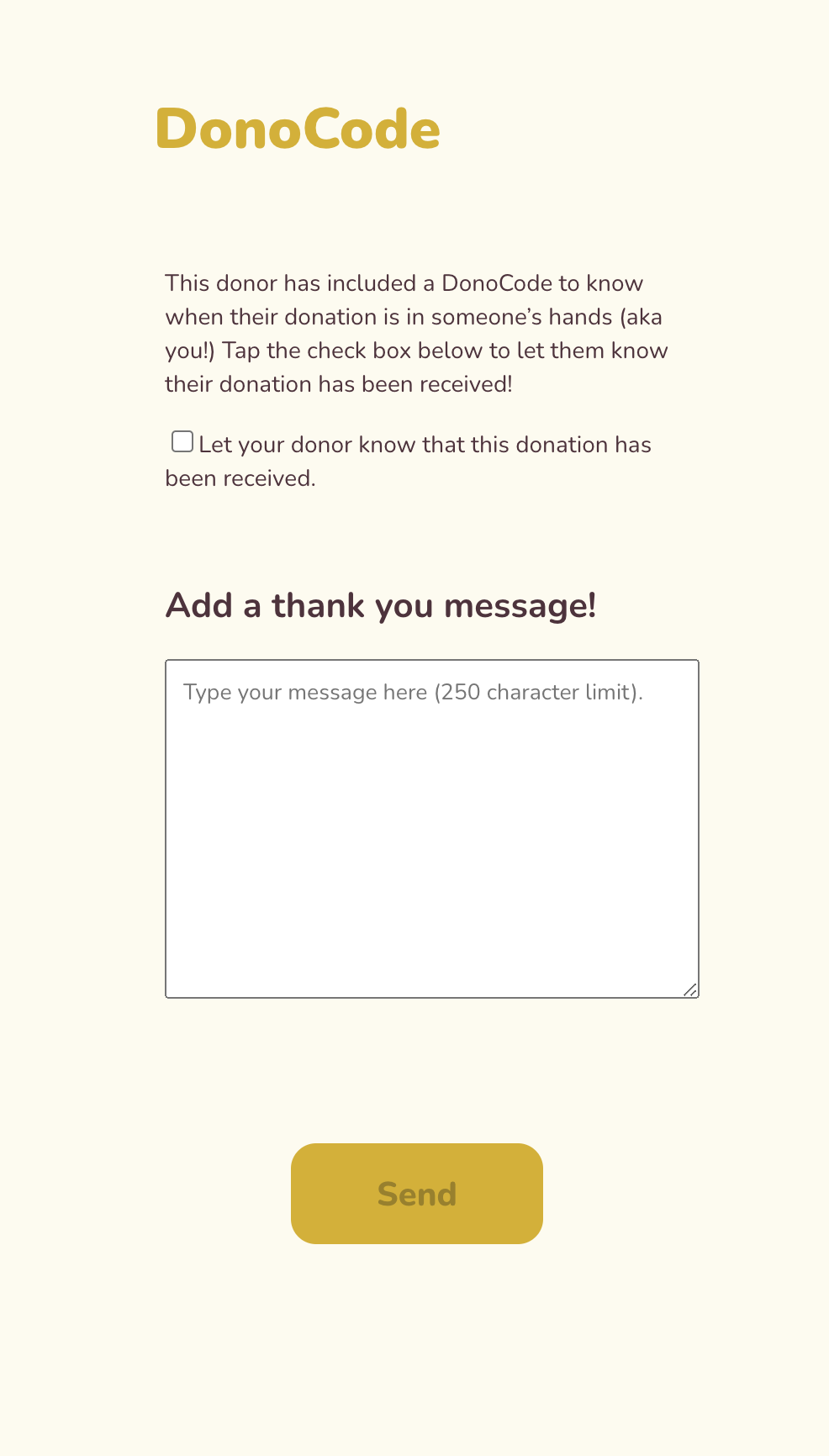
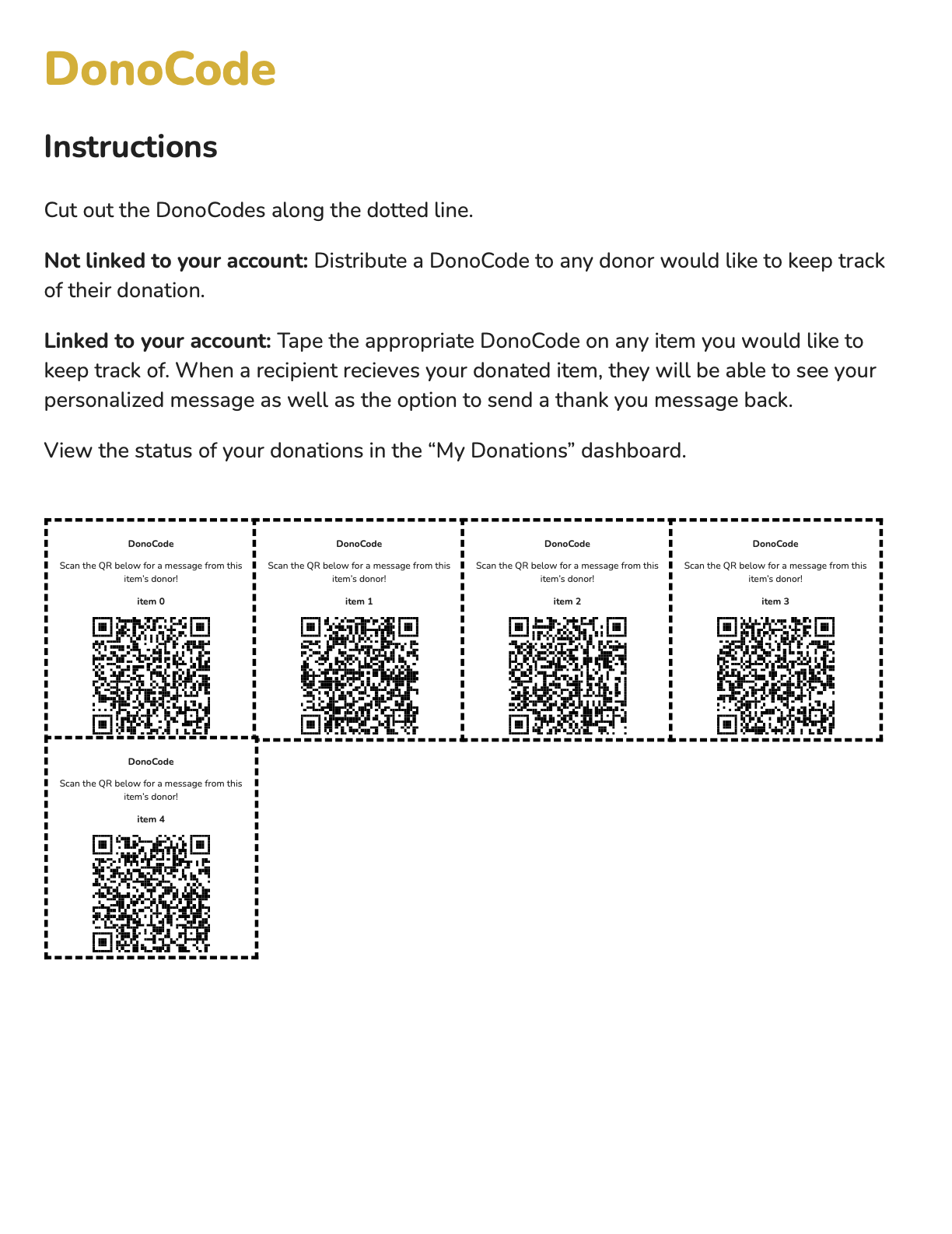
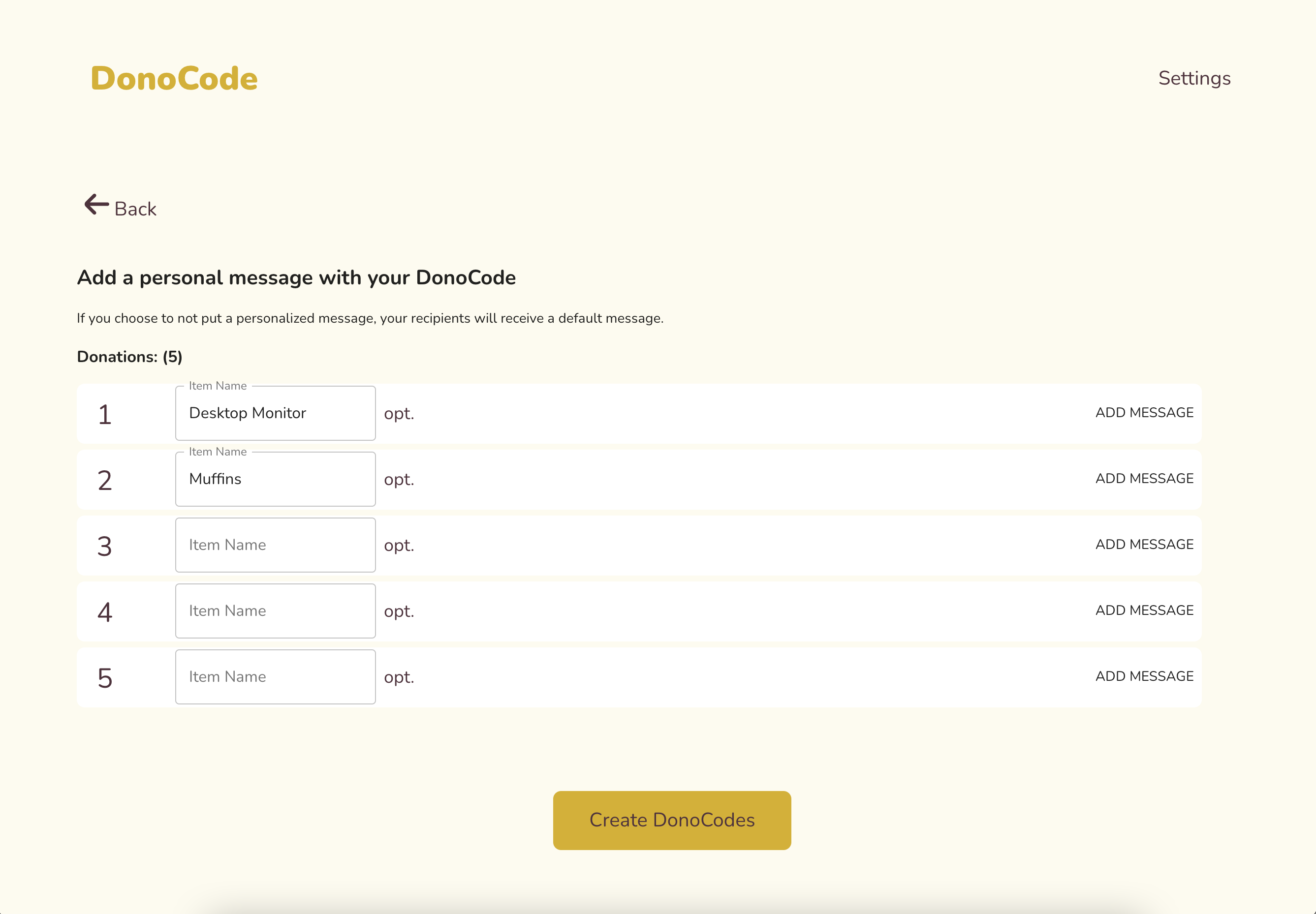
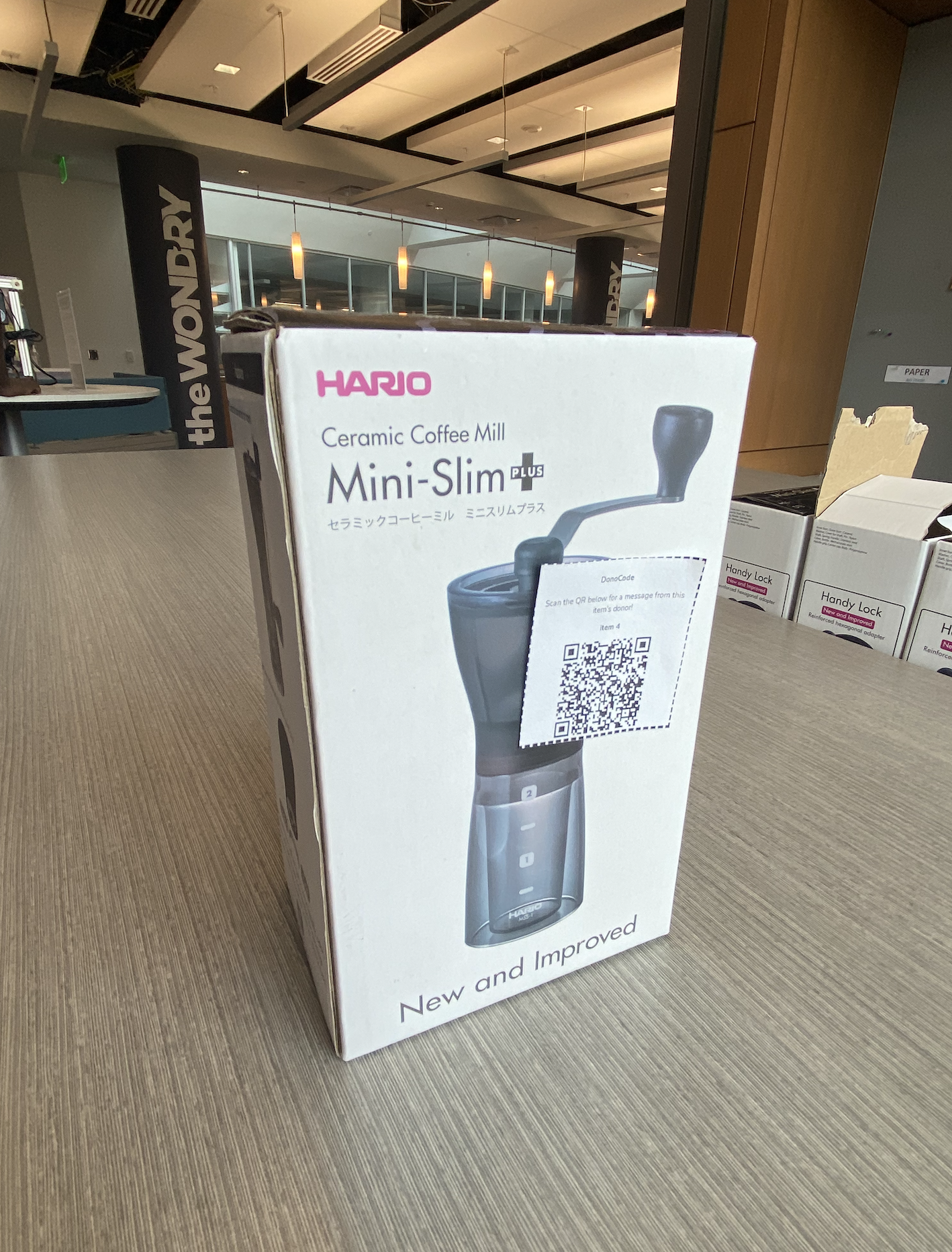
Our project makes the experience of donating more personal. Donating can be an easily forgettable experience by just dropping your donations at the front of a food bank or GoodWill. Our platform provides a way for people to see the real world impact of their donations and bring a human aspect to donations with real impact. We have two different types of primary users: non-profit organizations and their contributors. Either user could print out a list of QR codes and place them on donation items. Organizations can print out QR codes and adhere them to people's donations. Donees can also choose to add these QR codes for their own donations if they want to do so.
How we built it
We tried to follow a mini Agile-like development process. The first hour or so of our hackathon was spent talking about tasks, timelines, and API interaction/database schemas while our designer put together low fidelity wireframes. We split our team into front-end/UI (Grace and Kevin), database (Berke), deployment and backend (Salomon), and front-back end integration (Intiser), but still helped each other in other places we were knowledgable. Our tech stack included using React and Material-UI on the Front-end, and Express.js and Node.js on the backend. We used a SQLite database to get things up and going quickly and deployed our backend to Google Cloud and our front end to Netlify with a domain registered on Domain.com.
Challenges we ran into
Printing out a pdf of the QR codes and syncing this with the backend was incredibly difficult. This challenge took one of our members around 5 hours to work out correctly. Another huge challenge we ran into was with authentication and getting that to sync up and work with our database. We definitely overindulged ourself on the front-end and UI design as well which took away time from building a high quality product in terms of functionality. And, naturally, the final challenge was sleep deprivation :)
Accomplishments that we're proud of
We are super proud of what we were able to accomplish within 24 hours. The designs for the website were incredible and a lot of the code we wrote was modular allowing us to build things quickly. Of course in the last 6 hours of a hackathon there's a huge rush to simply finish the project, but we were proud of how well we were able to execute our designs.
What we learned
This was the first hackathon for a couple of us, so it was really exciting to build a real-world product in such a short time and discuss how we wanted to implement it. Technology-wise, we learned new technologies such as Twilio and Google Cloud that helped us bring our idea to life much easier. We also learned how fun and gratifying it is to code for good, and will definitely look for such opportunities in the future!
What's next for DonoPals
There were some features we wanted to implement but did not have time to do within 24 hours. Ideally, we would like to use a database other than SQLite and also spend some time writing tests for our code. More than that, however, there were some features we considered adding to our app but did not end up having time for. While they were all fairly small things, it would be interesting to pursue in the future.



Log in or sign up for Devpost to join the conversation.