-
-
Donkey: a hands-only party game for mixed reality and VR.
-
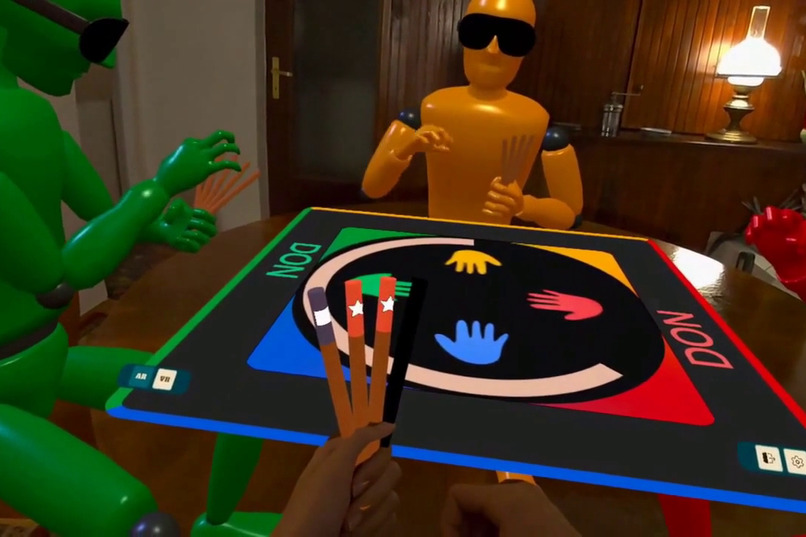
Join a running match and take over a bot's seat. Hands only, no controllers.
-
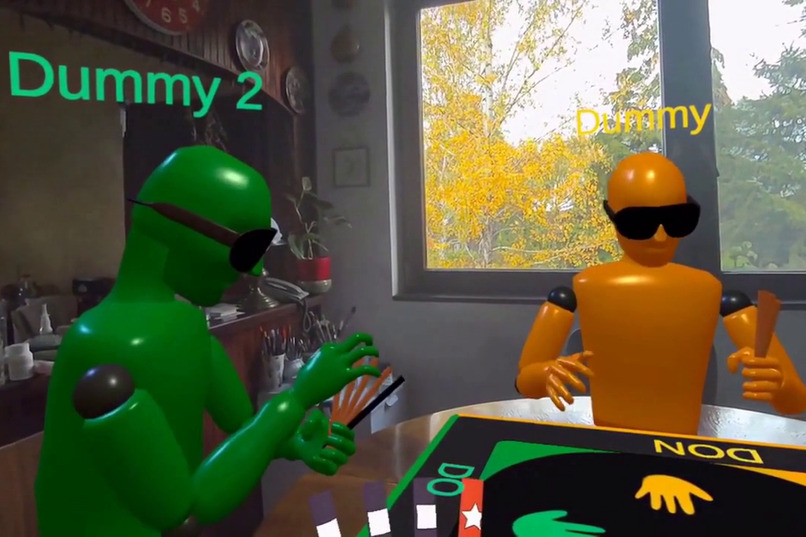
Pass sticks to the right and match four, with bots at the empty seats
-
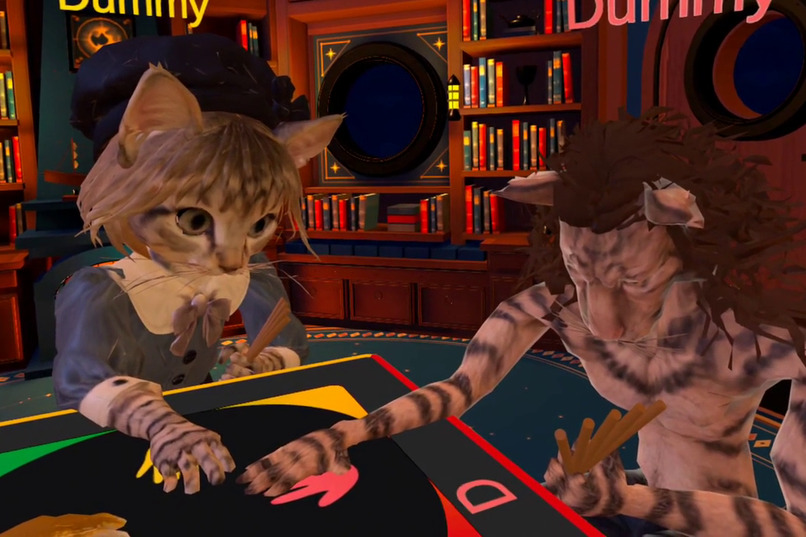
Slap the pile first. The last hand gets a letter of D-O-N-K-E-Y.
-
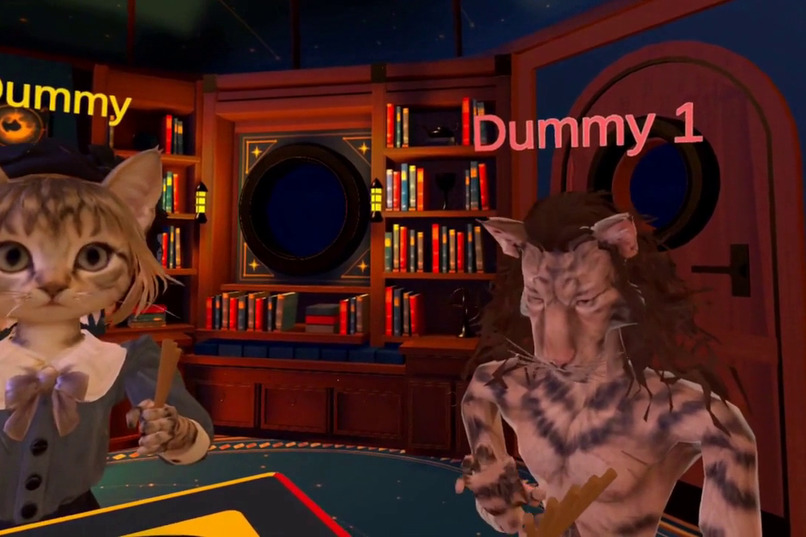
Press VR and the table moves into another world.
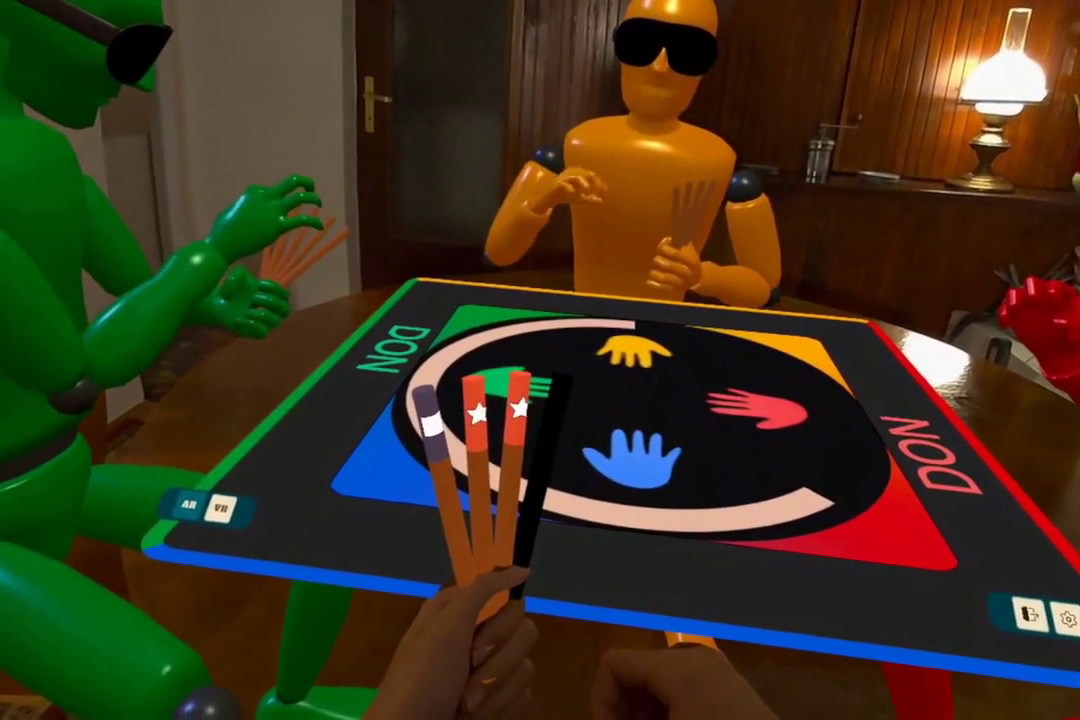
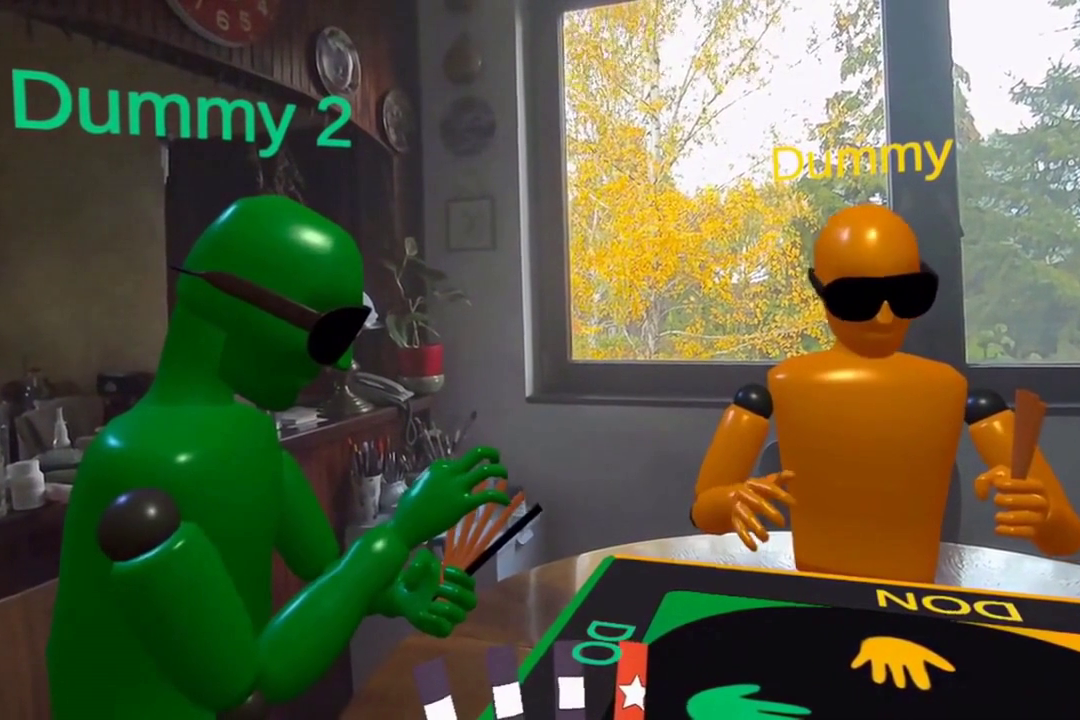
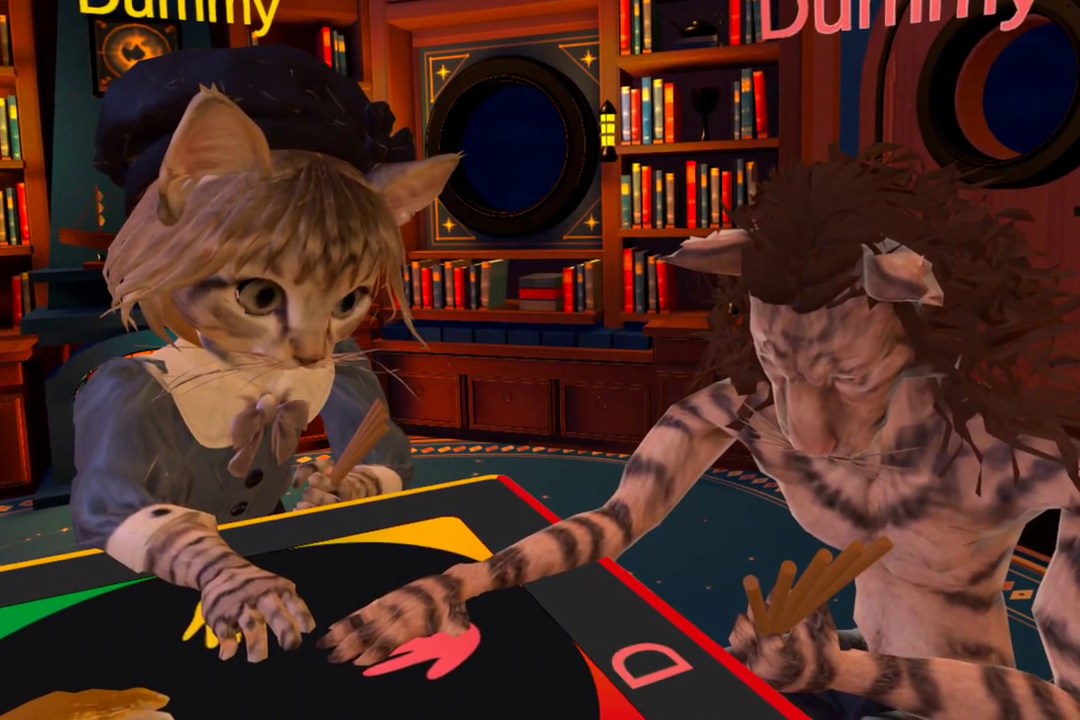
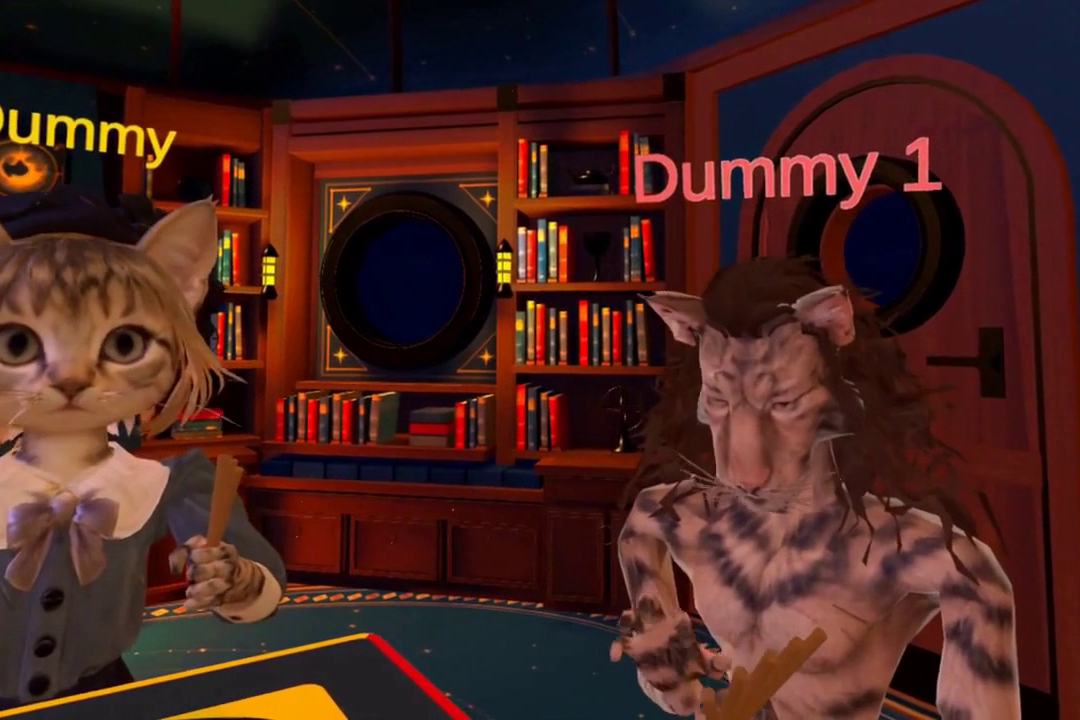
DONKEY isn't a game where you use your hands to control a virtual world. It's a game where the virtual world makes your real hands move.
Inspiration
Donkey ("Magarac") is a traditional table game from the Balkans. As a child in my village I played it with the other kids, with cards, crowded around one table, shouting and slapping. I wanted to bring back that feeling of friends around a table, and to see whether it still works when your friends are far away, or are not people at all.
I rebuilt it with sticks, because sticks can be held, passed and pinched with tracked hands. It is a game of hands: you hold a fan of sticks in one hand, pass with the other, watch your neighbors, and slap the table at the right moment. Nothing in it needs a button, which made it a natural fit for a hands-first, seated headset game.
What it does
Four players sit around one table, pass sticks to the right and race to collect four of a kind. Whoever has four slaps the center first, everyone else piles their hand on top, and the last hand gets a letter. Collect all six letters of D-O-N-K-E-Y and you get the donkey head and a bray.
- Hands only. Grabbing the bundle, pulling a single stick, handing it over, pinching and slapping are all done with tracked hands. There is no controller mode.
- Your own table. You place the game by resting both palms where you want the table: on a real desk, or in the air in front of your armchair. A spatial anchor keeps it in place after you take the headset off. Press VR and you are in another world, press AR to come home.
- You never wait for friends. Empty seats are filled by bots. Join a running match and you take over a bot's seat; leave, and a bot takes yours. The game goes on.
- Bots that move like people. Their reaching, passing and slapping are recordings of real people playing in a headset, adapted to each character so the hand always arrives at the real stick. Each bot has a temperament, a voice and a memory of the sticks it has honestly seen.
- A tutorial that is the game. The bots at the table explain each rule in one short spoken line at the moment it matters.
How we built it
Unity 6 with OpenXR, XR Interaction Toolkit and XR Hands for Meta Quest, Netcode for GameObjects for multiplayer, started from Unity's MR Multiplayer Tabletop template. The game, its rules, bots, table placement and menus are built on top of it.
- Server-authoritative rules. The host owns the sticks, turns, clocks and letters. Bots run only on the host and every client replays the same bot state.
- A motion pipeline. A recorder in the headset captures head, hands and fingers during real matches and cuts them into takes. An editor tool lets me review, approve and group the takes into a motion set per performer. Editor preview and game use the same playback code.
- Any Humanoid body. The system measures a body once and adapts the recorded motion to it, so a new bot character is a configuration task, not a coding task.
- Bot decisions in a Unity Behavior graph, with temperament values that change timing, talkativeness and attention.
- More than 1,100 EditMode tests cover the rules, clocks, bots and retargeting. The game runs at about 72 fps on Quest, and multiplayer has been played on three headsets at once.
Challenges we ran into
- Handing a thin stick from hand to hand with hand tracking only, between a person and a bot and between two people over the network, without it ever falling or teleporting.
- Making recorded motion land on a live target. A recording knows where the stick was, not where it is now. The recording gives the shape and tempo of the reach, and the destination always comes from the live game.
- One body system for very different characters, without tuning code for each.
- Keeping bots fair. A bot knows only what a person in that seat could have seen.
Accomplishments that we're proud of
- A complete match, from start to rematch, can be played without ever touching a controller.
- Bots and people follow exactly the same rules, clocks and penalties.
- The bots' movement comes from real players, which makes an empty seat feel occupied.
What we learned
Most of the work went into two things: making bots that move like people, and making a networked game feel the same for everyone at the table. I also learned how much of a physical game survives when you strip away every button and keep only the hands.
What's next for Donkey
Bots that bluff with the black stick, production art and voice actors for the store release, player choice of environment and characters, lip sync and facial expressions, and progress between sessions. Target launch on the Meta VR Store: early 2027.
Join the Community
Join the official DONKEY Discord server for development updates, feedback, and to meet other players.

