

Inspiration
This project came from a very human fear:
“Did I really do that… or am I just hoping I did?”
For people with ADHD or anxiety, forgetting whether they locked the door or turned off the stove can trigger exhausting reassurance loops checking again and again, even when nothing is wrong.
For people with memory loss or early Alzheimer’s, the stakes are higher. Wandering outside familiar areas can become dangerous, and caregivers often find out too late.
We wanted to build something small, calm, and respectful not a productivity app, not a surveillance system — but a tool that provides evidence, reassurance, and safety when memory can’t be trusted.
What We Built
Done & Safe is a web-based companion with two gentle modes:
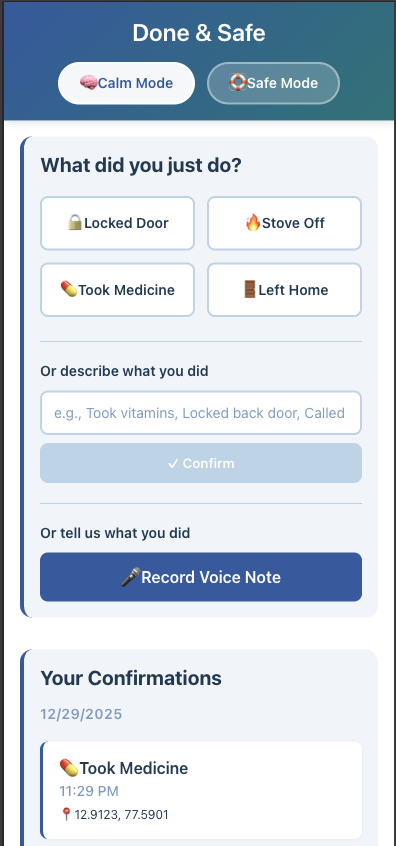
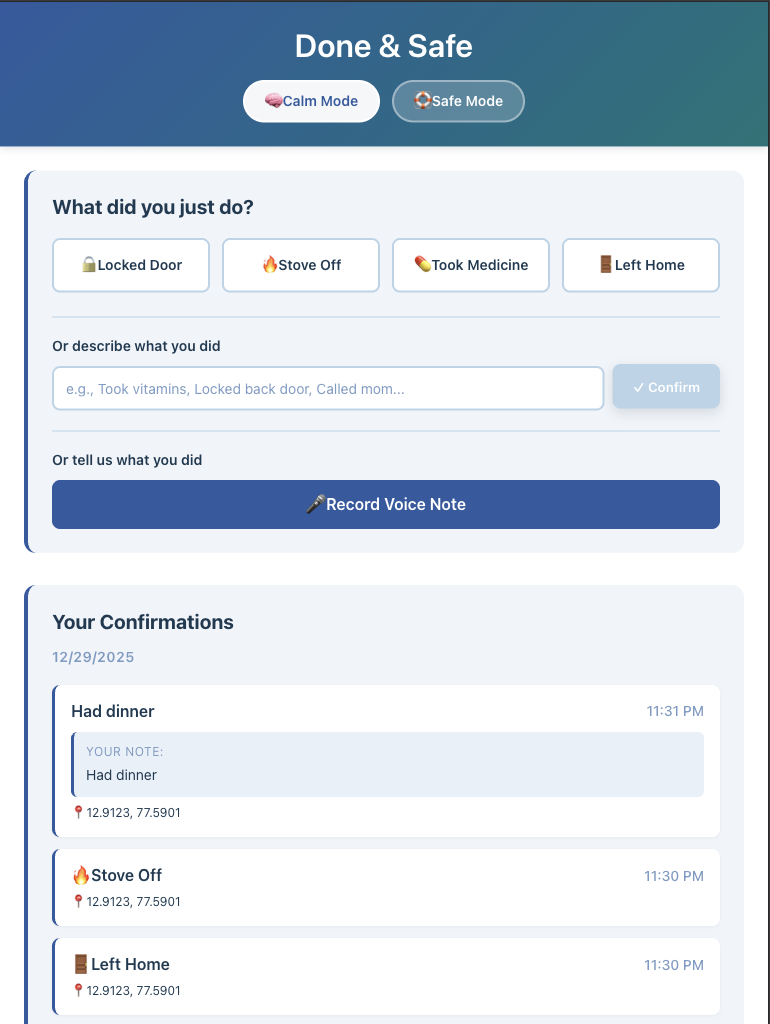
🧠 Calm Mode
Designed for ADHD and anxiety.
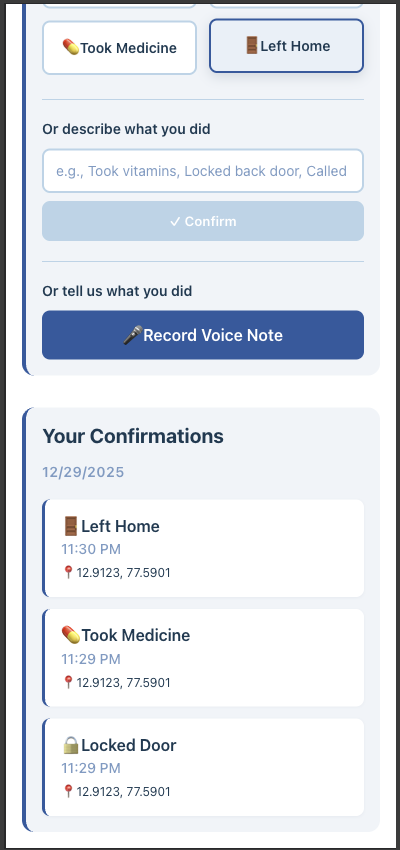
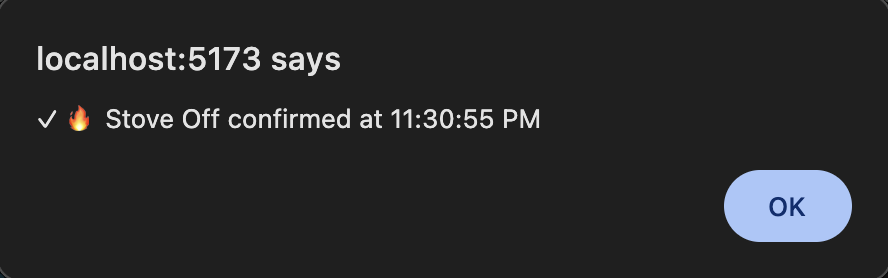
- One-tap confirmation of everyday actions (locked door, stove off, took medicine)
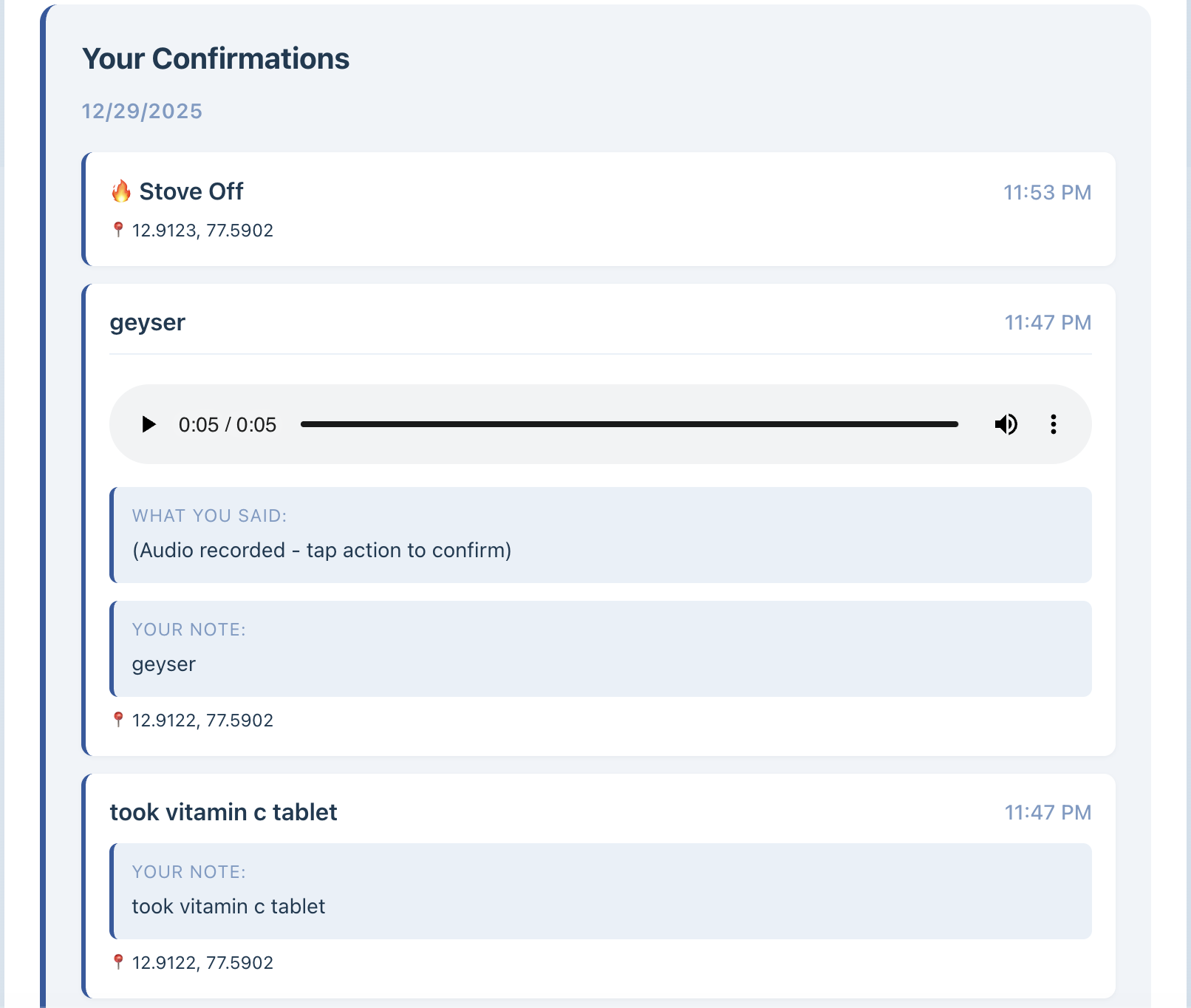
- Automatic timestamps and location
- Optional voice notes for reassurance
- A clear, calming history timeline
- No alarms, no red warnings, no judgment
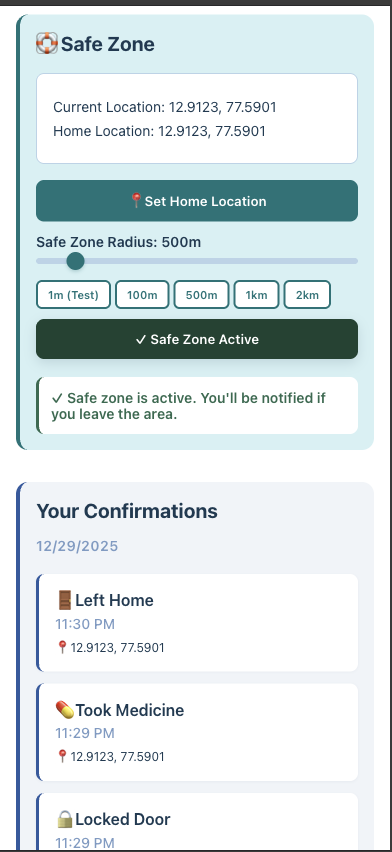
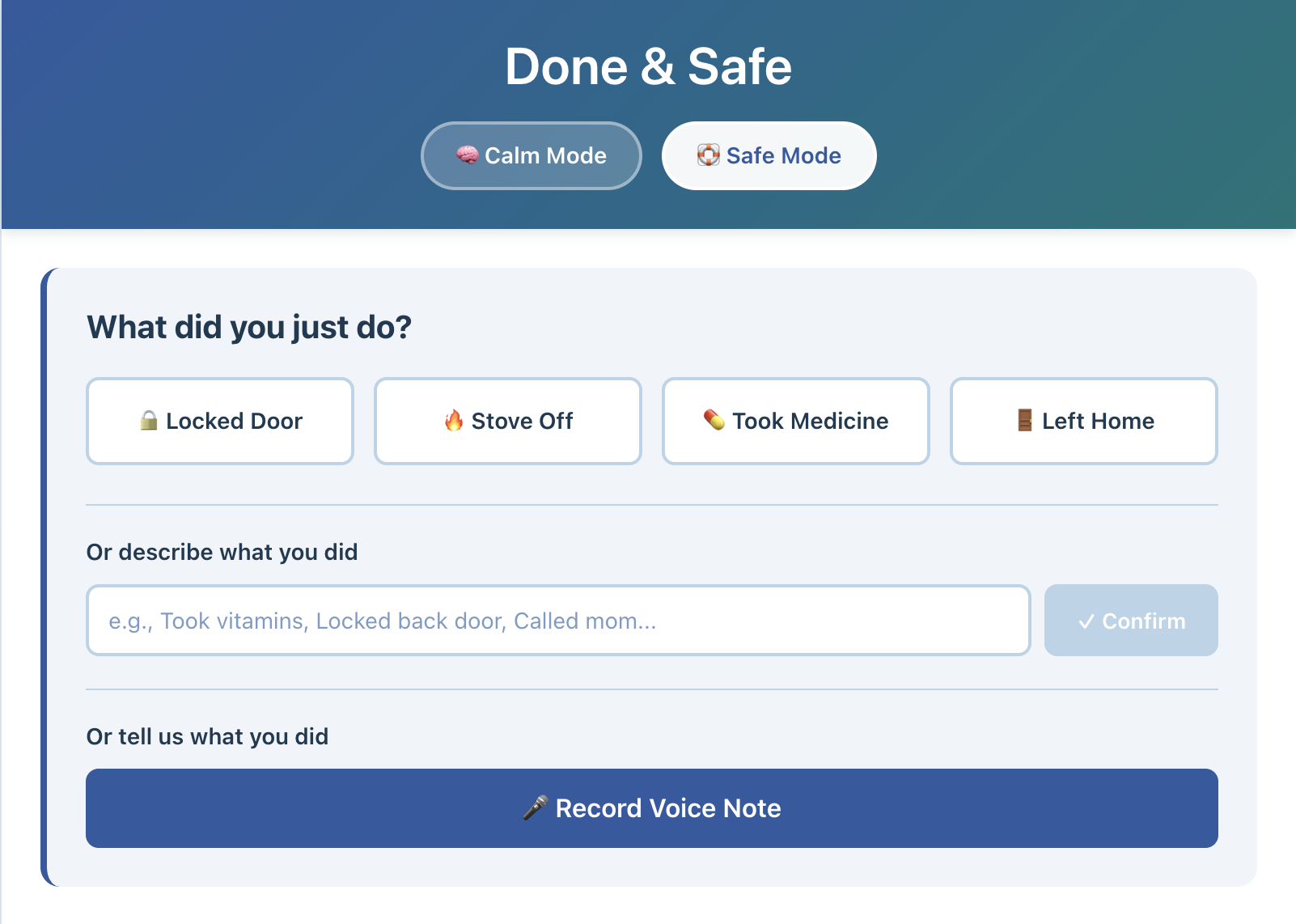
🛟 Safe Mode
Designed for memory loss and Alzheimer’s support.
- Set a trusted home location and radius
- Gentle notification when the user leaves the safe zone
- Caregiver alert if the notification is ignored
- Event-based location tracking (not continuous monitoring)
Both modes share the same core idea:
replace doubt with confirmation, and fear with clarity.
Why This Matters
Most tools focus on optimization or tracking.
Done & Safe focuses on peace of mind.
- It reduces anxiety-driven checking behaviors
- It preserves dignity for people with memory challenges
- It gives caregivers reassurance without constant surveillance
- It respects consent, autonomy, and accessibility
This isn’t about doing more.
It’s about worrying less.
How We Built It
We built Done & Safe as a lightweight web demo focused on clarity and accessibility:
- Action confirmations stored locally with timestamps
- Browser-based geolocation for safe zone detection
- Web Audio API for simple voice recording
- A calm, minimal UI with large tap targets and soft language
- Mode-based behavior without feature overload
We intentionally avoided unnecessary complexity to keep the experience gentle and understandable.
Challenges & Learnings
- Designing alerts without inducing panic
- Balancing safety with autonomy
- Keeping the interface simple enough for cognitive accessibility
- Resisting the urge to overbuild features
The biggest lesson was that accessibility is emotional as much as it is technical. Small design decisions can reduce real stress.
What’s Next
In a production version, we would add:
- Real SMS/email caregiver alerts
- Secure backend persistence
- Optional caregiver dashboards
- Multi-location safe zones
But even in its current form, Done & Safe proves that calm, respectful design can solve real problems.
Demo Video
Built With
- browser
- browser-geolocation-api
- css3
- javascript
- node.js
- react
- vite


Log in or sign up for Devpost to join the conversation.