Inspiration
Donations have always been a way for the well-to-do to give to the impoverished to improve their quality of living, reducing poverty and the inequalities between them. However, item donations have always seemed distant and inconvenient to the general public where publicity for these donation campaigns came from infrequent flyers advertising door-to-door pickup services for donation packages. This leads to a situation where the general public are unaware of ongoing donation campaigns and organisations also have a hard time trying to garner support for these campaigns. This situation is further aggravated by how busy potential donors are that they do not actively seek for donation campaigns to participate. Additionally, donation campaigns generally do not have much transparency and frequent updates on what happens during the campaign and what the donated items are exactly used for, which discourages potential donors from supporting the campaign. Thus, we were inspired to develop a one-stop solution to connect donors and organisations and provide transparency and frequent campaign updates to bring increased support to these donation campaigns.
What it does
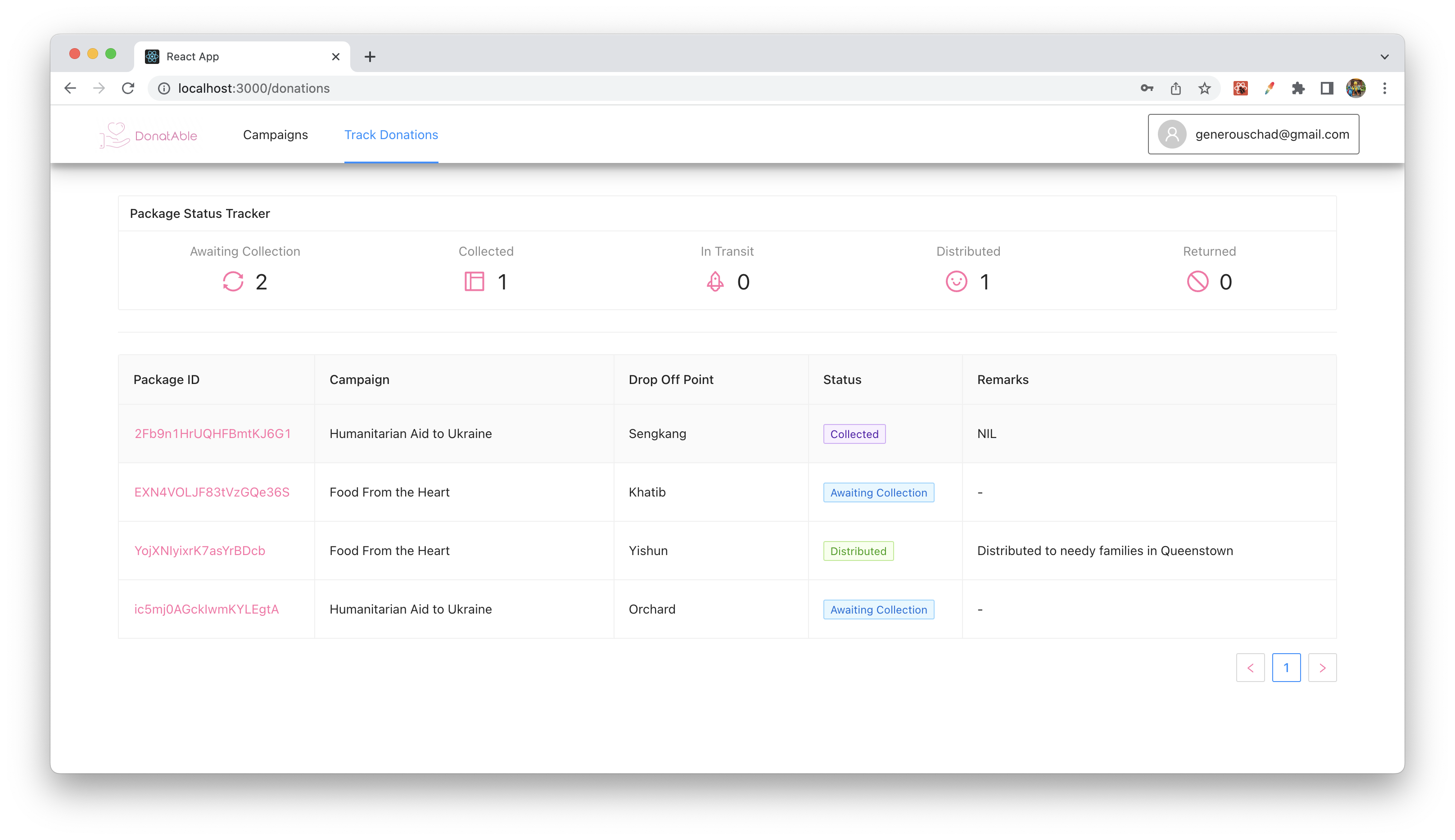
DonatAble provides transparency in how donors are able to track the items they donated. A major driving factor that our group identified as to why donors donate is because they want to feel like they are part of something meaningful. DonatAble does this by tracking the journey of the items every donor has donated from the time of donation to the moment the item is being used, which my group believes will create a sense of inclusion in the donation journey. Donors can select the campaigns they are interested in and create a package with items they want to donate. Subsequently, they can track the journey of all the packages they have donated previously across all campaigns.
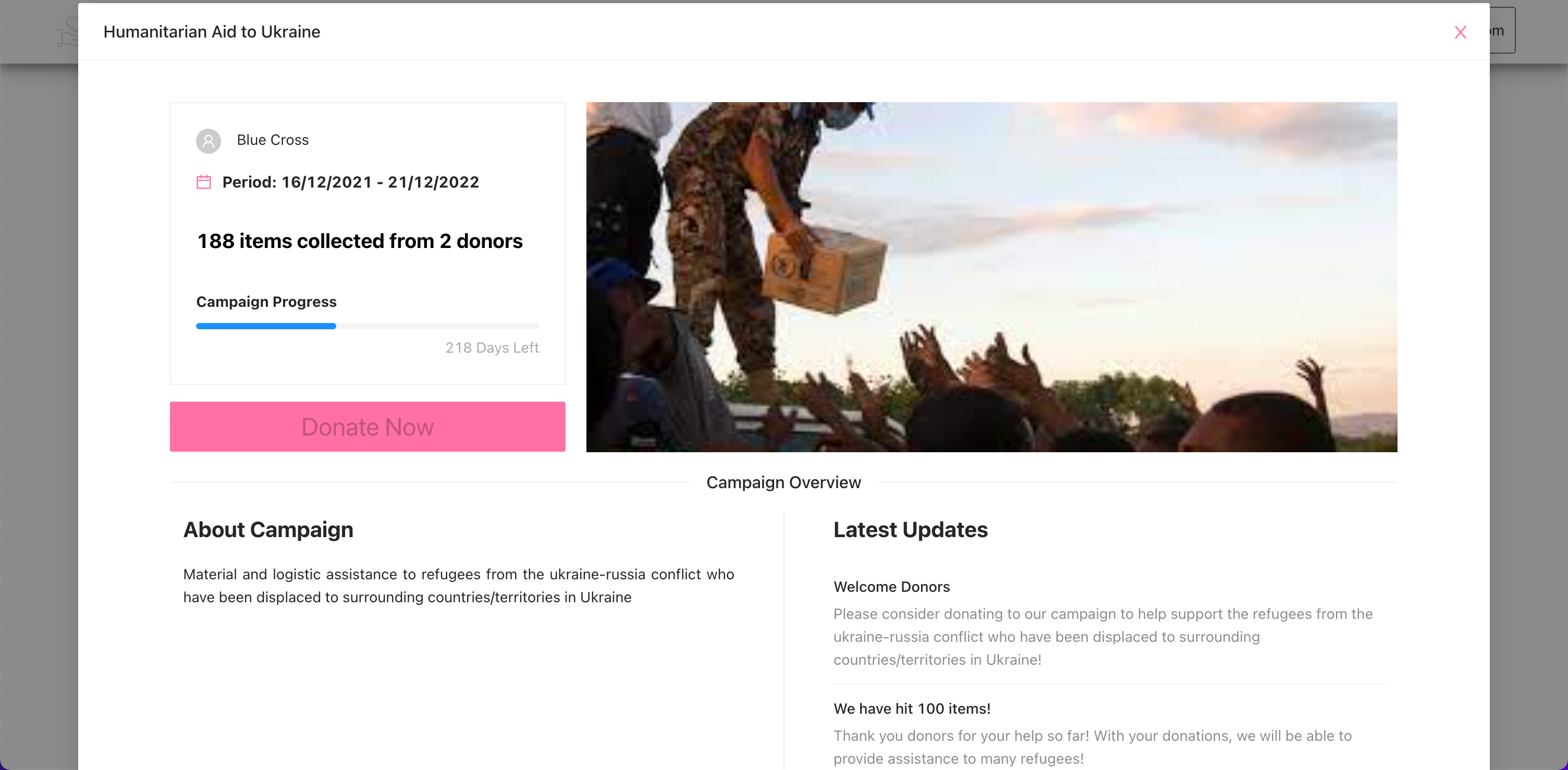
On the flip side, organisations are able to create campaigns which donors can donate to, which are subjected to the approval of moderators on our team. They are able to decide on the campaign details, such as name, duration, categories of items to be donated and collection points. The fields they have decided on will be reflected on the dashboard of donors
How we built it
Our team utilises Figma for creating our low fidelity prototype. We utilise React and Ant Design library for frontend development, and Firebase for database and managing user authentication.
Challenges we ran into
- Developing a User Friendly interface
- Understanding the documentations provided by different library and stringing them into a single coherent product
Accomplishments that we're proud of
- Successfully creating a working prototype with a functional backend in less than a week, while having entire group working full time internship
What we learned
- Using Firebase to store data and perform authentication
- Incorporating design libraries (e.g. Ant Design) for rapid prototype development
What's next for DonatAble
- Enable cross-platform with mobile support with React-Native
- Liaising with multiple charitable organisations for collaboration
- Implement more robust tracking of donated items through the use of blockchain technology
- Allowing the option for organisers to upload images as part of updating the package status
- Extendable to global donation campaigns/disaster relief campaigns
- Judicial check and balances to ensure the authenticity of campaigns created

Log in or sign up for Devpost to join the conversation.