-
-
Logotype DonaChain x Near
-
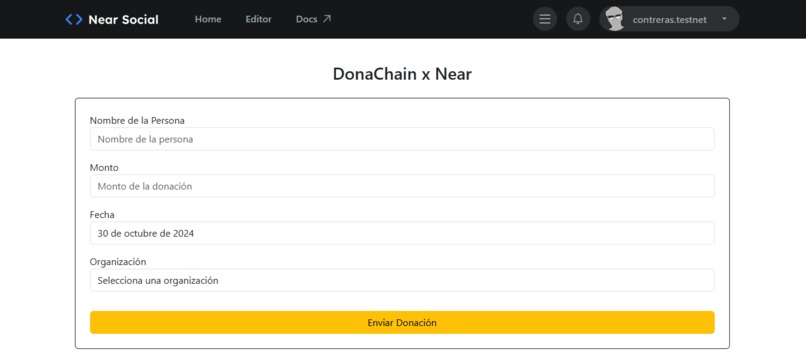
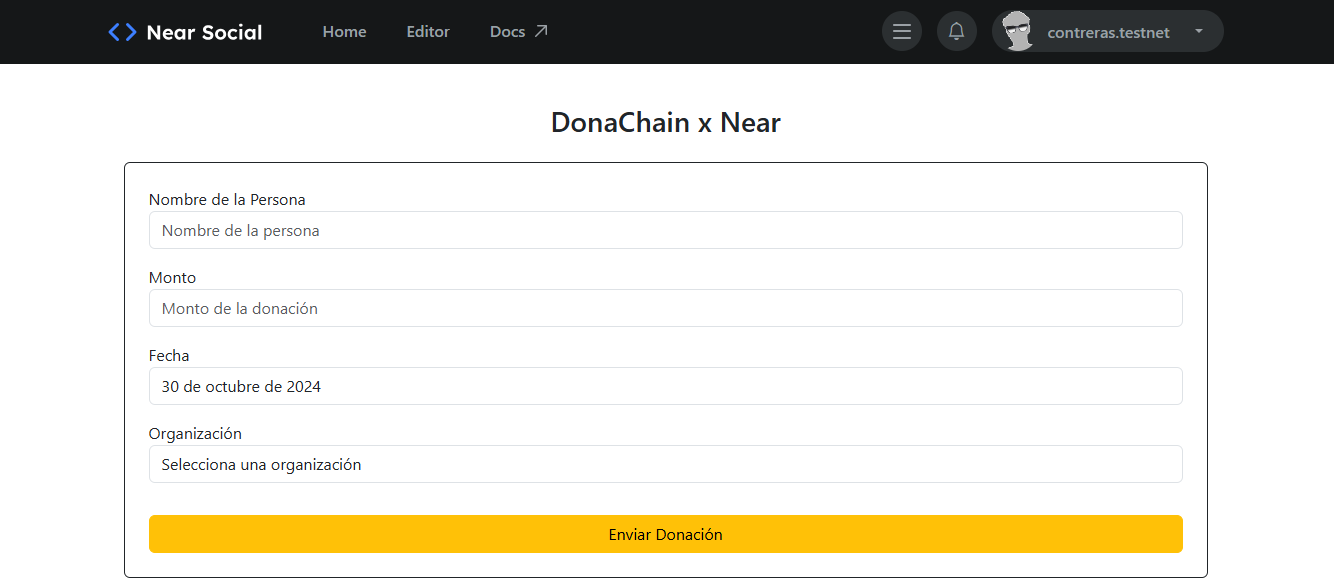
Form
-
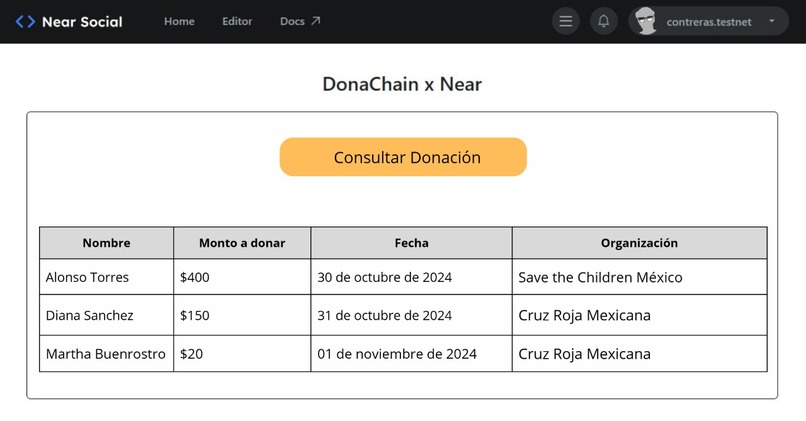
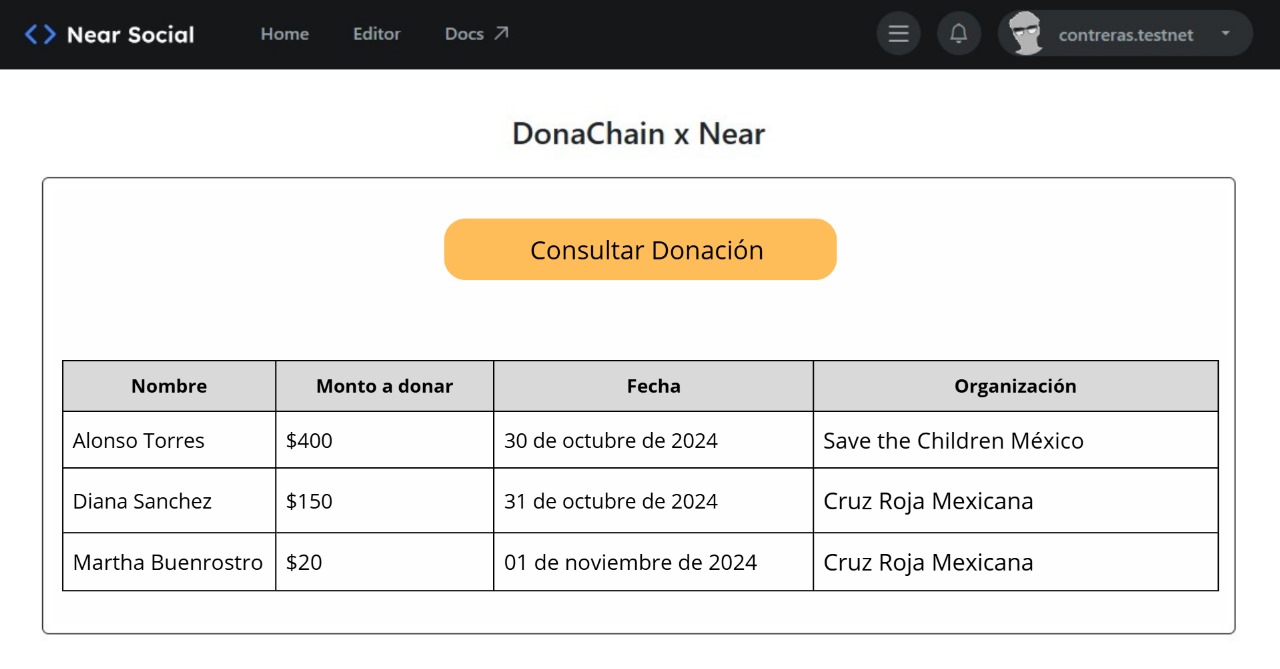
consult
-
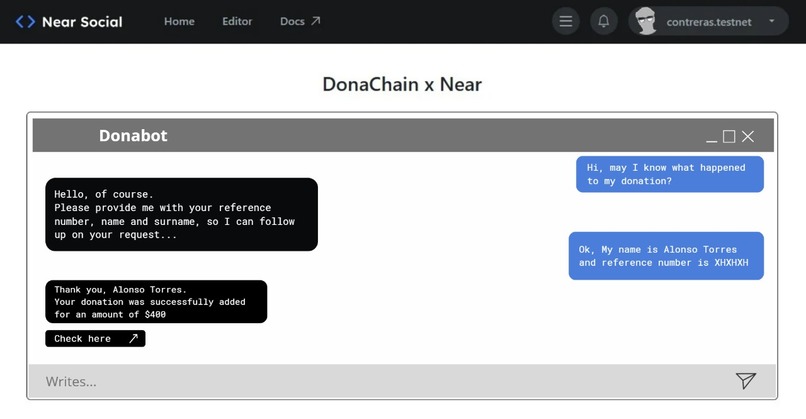
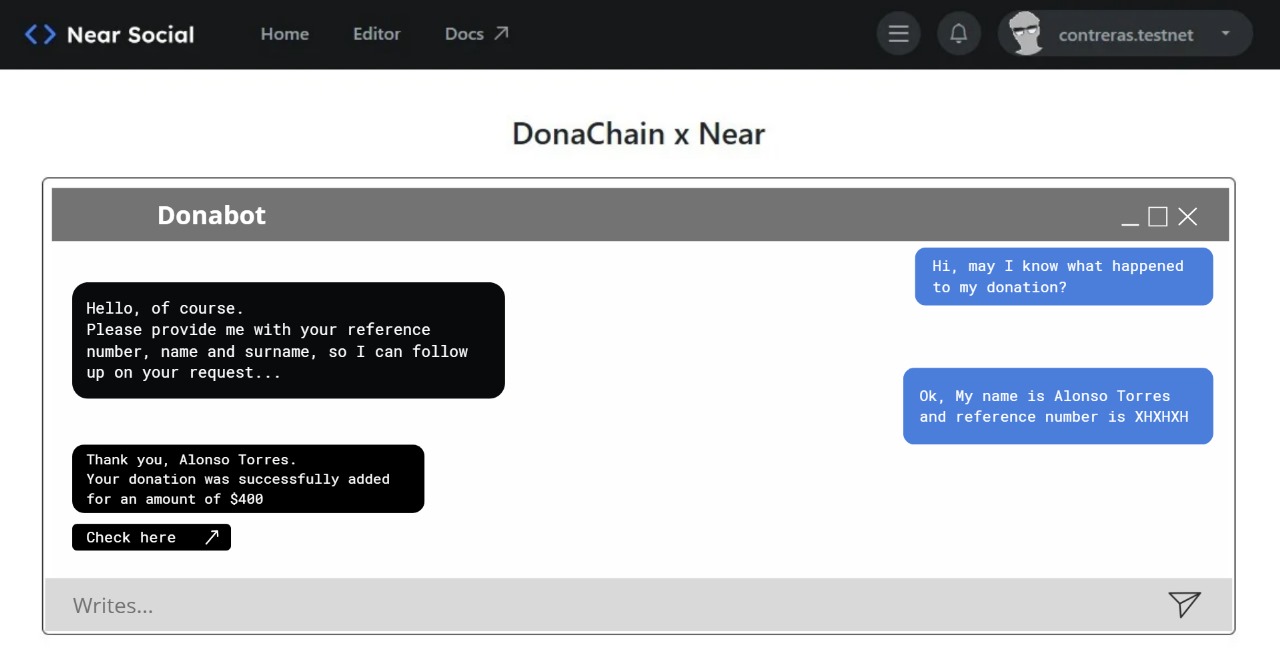
ChatBot
-
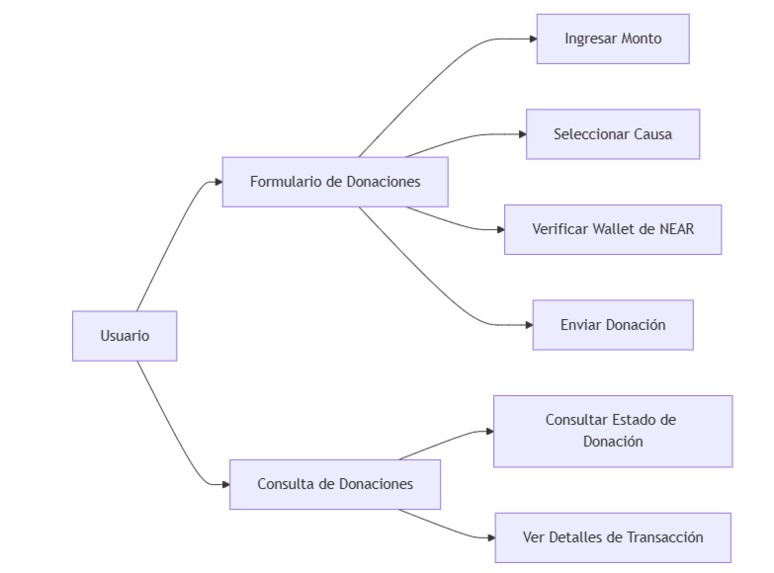
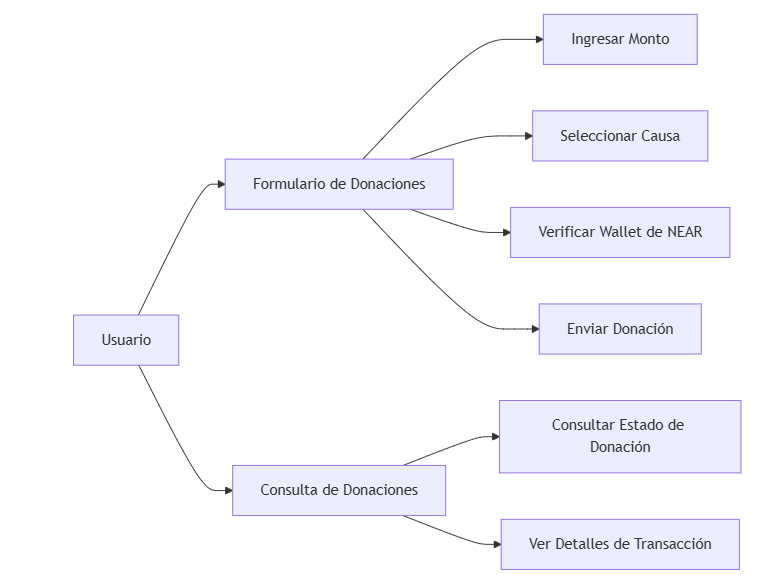
User Interface Diagram
-
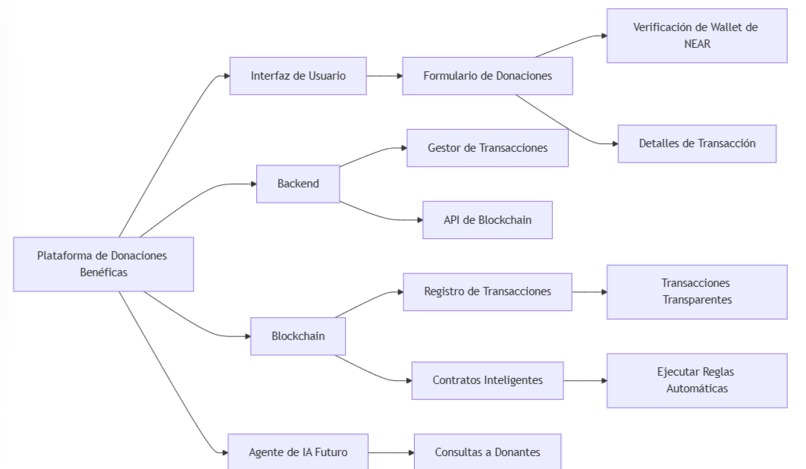
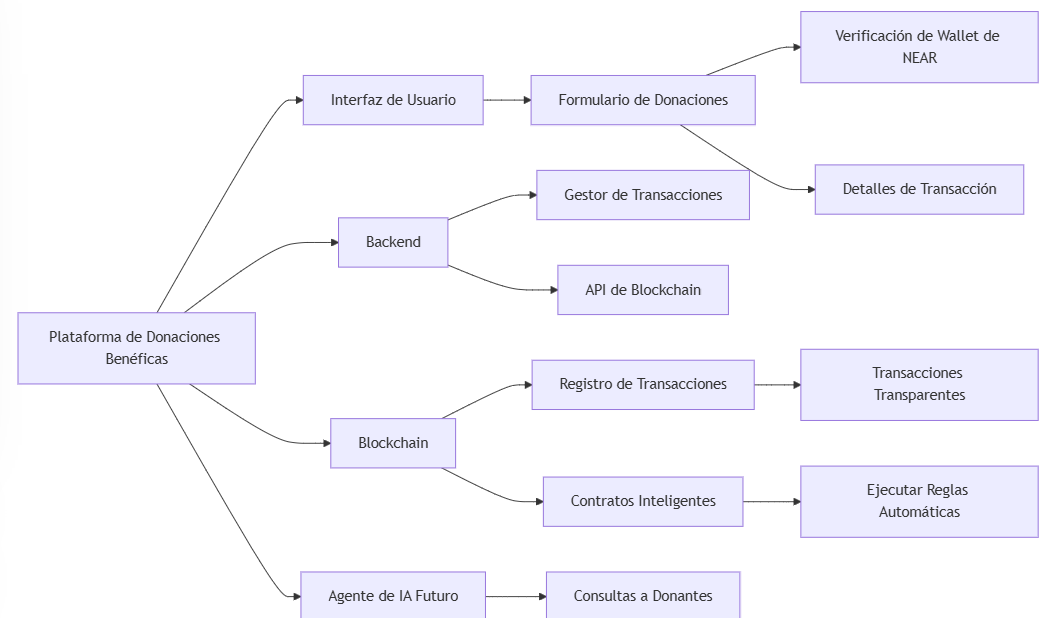
Full System Diagram
-
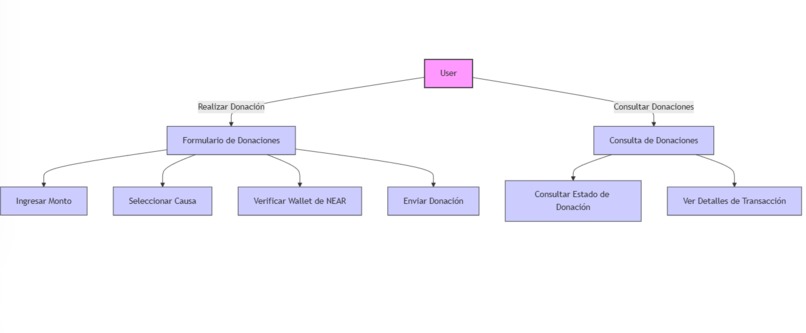
Use Cases
DonaChain x Near
Project Inspiration:
This project was born from a personal observation and a concern I share with many people: the lack of transparency in the field of charitable donations. In conversations with friends and family, I heard that many people genuinely want to help, to make a difference in important causes like education, health, and fighting poverty. However, enthusiasm often fades when people encounter the lack of information and transparency that often surrounds charitable organizations. Concerns about the management of funds and the real destination of contributions become a constant worry.
I wanted to create something that would change this reality, allowing donors to see the direct impact of their contributions, removing unnecessary intermediaries, and ensuring that funds reach those who need them most. This led to the idea of a decentralized donation platform using blockchain and, in the future, an AI agent to streamline the donation process and make it more transparent.
What I Learned Along the Way...
The development of this project was an interesting and challenging learning curve. As I delved into blockchain concepts, I discovered the true potential of distributed ledger technology. I learned that blockchain isn’t just useful for cryptocurrencies but can also revolutionize transparency in sectors where trust is essential, such as donations.
The choice to use NEAR CLI in one of our challenges was crucial for our approach. NEAR CLI provided us with an accessible, cost-effective tool suitable for small donors looking to avoid high transaction fees. Through this experience, I learned the importance of optimizing the verification and security process through a digital wallet. Additionally, I learned how smart contracts can execute agreements automatically, without intermediaries and with zero human error.
Working on the user interface (UI) was also an intriguing part of the project. A decentralized platform can be a powerful tool, but it must be intuitive and user-friendly to build trust and encourage people to use it. This involved studying design patterns that favored a simplified user experience, which helped me improve my skills in UX/UI design.
Project Development
The development of this project followed several structured phases:
Research and Planning. I began with a research phase to gain an in-depth understanding of blockchain's possibilities and limitations and how to integrate it effectively in the donation field.
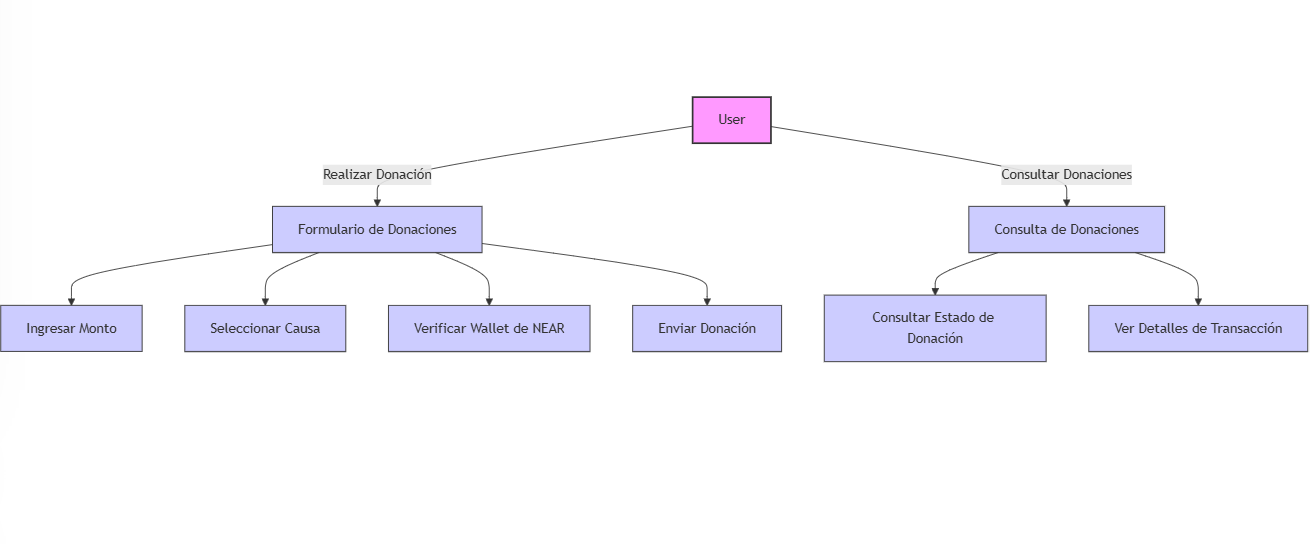
System Design. During the design phase, I created a system architecture map and flow diagrams to ensure all processes were clearly outlined. This included designing the Donation Form, Donation Query, NEAR Wallet Verification, and Real-Time Query of donations made—all with the goal of allowing donors to see how their funds were used without intermediaries.
Backend Development. The backend involved creating smart contracts for each donation. Programming on blockchain was entirely new to me, and learning to write smart contracts was an interesting challenge. These contracts act as unalterable digital agreements that execute when specific conditions are met, eliminating the risk of manipulation or human error.
NEAR Wallet Verification Implementation. One key component for donation authenticity was implementing NEAR wallet verification. This allowed me to integrate a process that validates donors through a wallet, ensuring transaction authenticity and security while streamlining the verification process and reducing potential fraud.
User Interface Creation. The interface is the bridge between donors and the blockchain system. Simplifying the user experience was essential, so even those without blockchain knowledge could use the platform. This meant designing a clear and accessible form with precise steps to guide the donor through selecting a cause, choosing an amount, and verifying their wallet.
Testing and Evaluation. The testing phase was crucial for ensuring system efficiency and transparency. I conducted multiple usability tests with potential users to identify possible improvements and validate that the process was intuitive and secure.
Challenges Faced
The project development was not without challenges:
Technical Challenges in Blockchain and Smart Contracts: Programming on blockchain and implementing smart contracts required advanced, detailed technical knowledge. Initially, it was difficult to grasp smart contract logic and how they function in a decentralized environment. However, after several weeks of learning, I successfully built a contract that executes securely and autonomously.
Transaction Cost Optimization: Another challenge was ensuring the system did not incur high transaction costs, as these could deter donors. I chose to use NEAR Protocol, which has lower fees, and designed a cost optimization system so that end users wouldn’t have to worry about additional expenses.
Security in Wallet Verification: Security is essential in a donation project. Ensuring wallet authenticity and reducing fraud risk was a major challenge. I implemented a series of checks in the form that ensured only valid NEAR wallets were accepted, enhancing security without adding complexity for the user.
Designing an Intuitive Interface: Although it may seem simple, creating an interface that is truly intuitive and accessible was challenging. Users of this system may or may not have experience with blockchain, so I spent time simplifying the donation and transaction query process to make it clear and straightforward.
Scalability and Preparation for AI Integration: Finally, planning for the potential integration of an AI agent in the future requires structuring the system to be scalable and flexible, so that in future versions, an AI agent could interact with donors and answer more specific questions about where their donations go.
Conclusion and Vision for the Future...
This project allowed me to combine my interest in blockchain technology with creating a system that can make a real difference in the world of charitable donations. Transparency is essential to build trust, and this platform aims to be a direct response to this need with cutting-edge technology and a user-focused approach.
In the future, I’d like to expand the platform and add additional features, such as integrating an AI agent that allows donors to ask specific questions about the destination of their donations and the impact they’re having. I believe this project has the potential to change the way people perceive and make donations, increasing trust and willingness to contribute to causes that truly matter.
Built With
- blockchain
- c
- cli
- javascript
- near
- typescript-(.ts)


Log in or sign up for Devpost to join the conversation.