-
Thumbnail
-
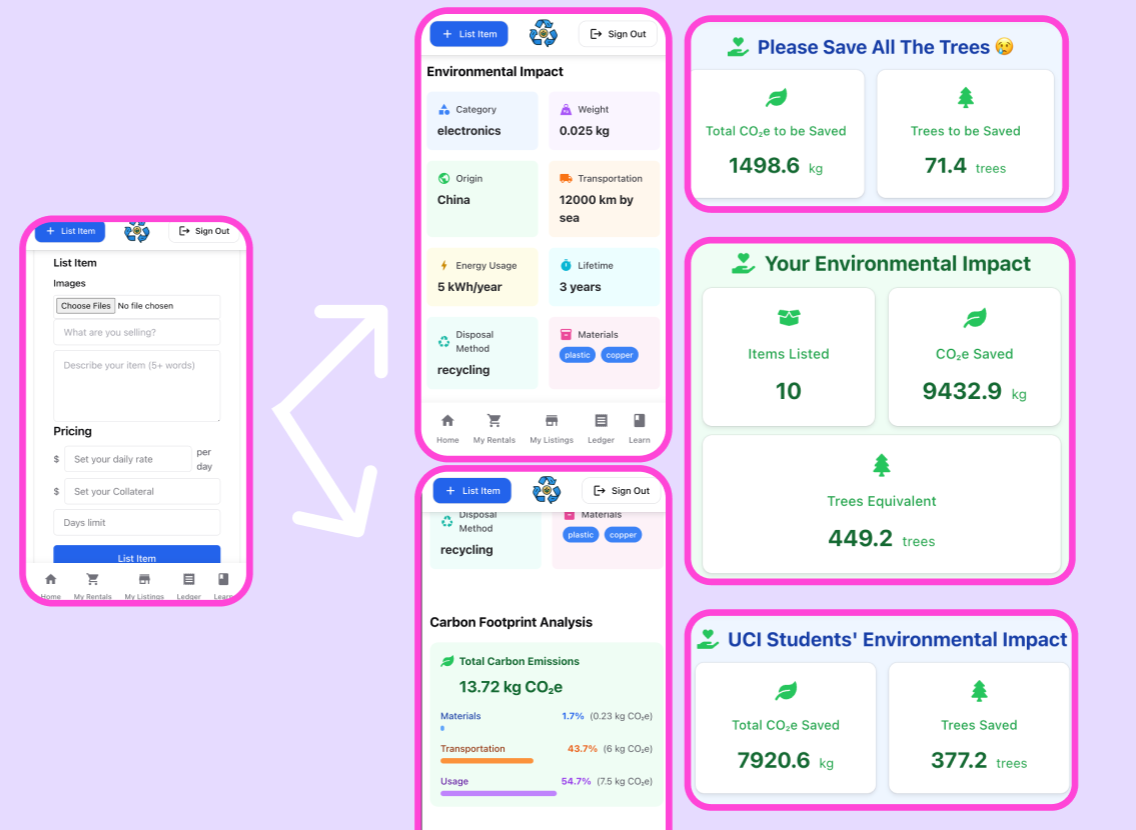
Listing Flow
-
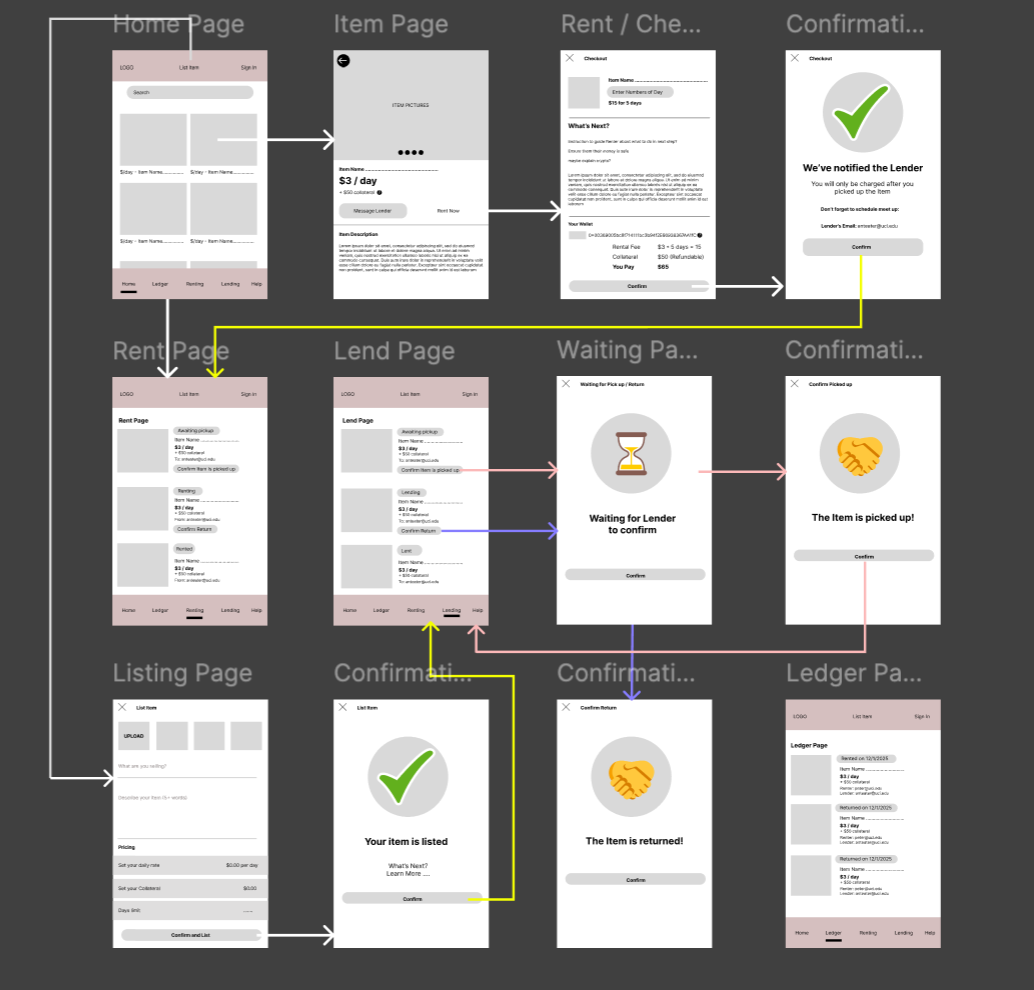
Wireframe
-
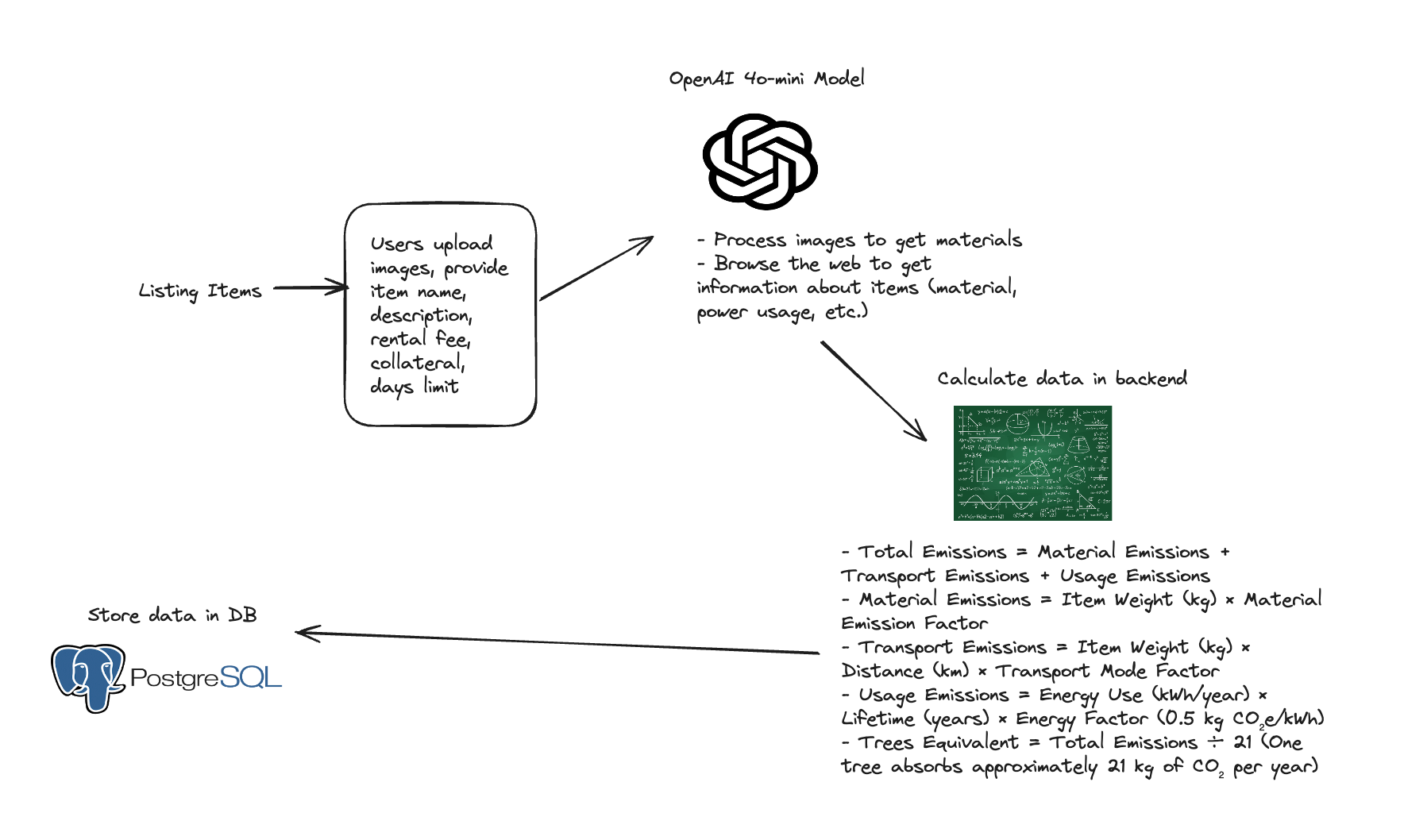
Backend
Inspiration
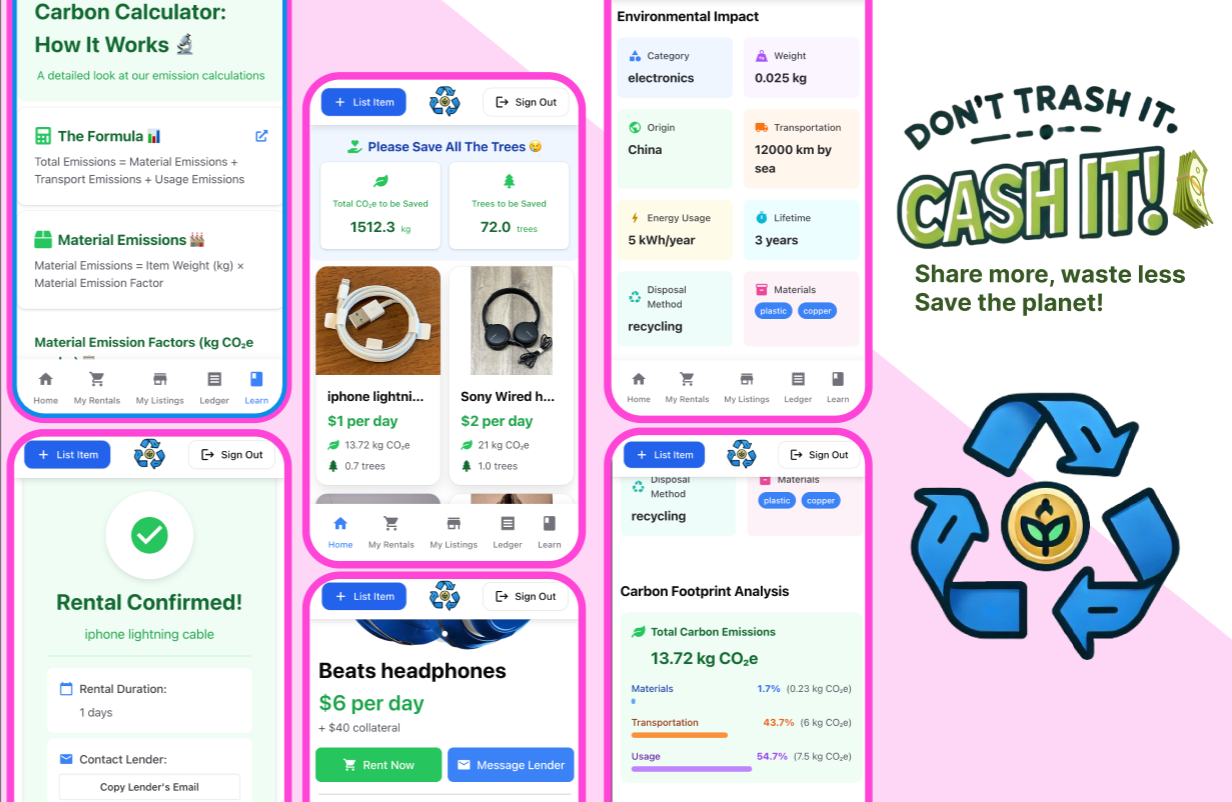
Seeing UCI students throwing out furniture, clothes, and school supplies at the end of each quarter felt incredibly wasteful. I wanted to create a solution where students could lend these items to others, earn money, and simultaneously reduce waste. This platform not only promotes sustainability but also highlights the positive environmental impact of lending and renting instead of disposing of or buying new items.
What it does
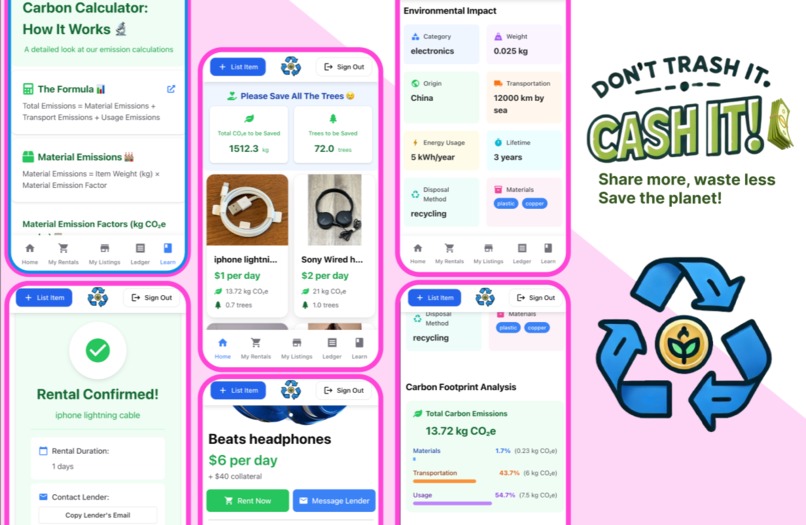
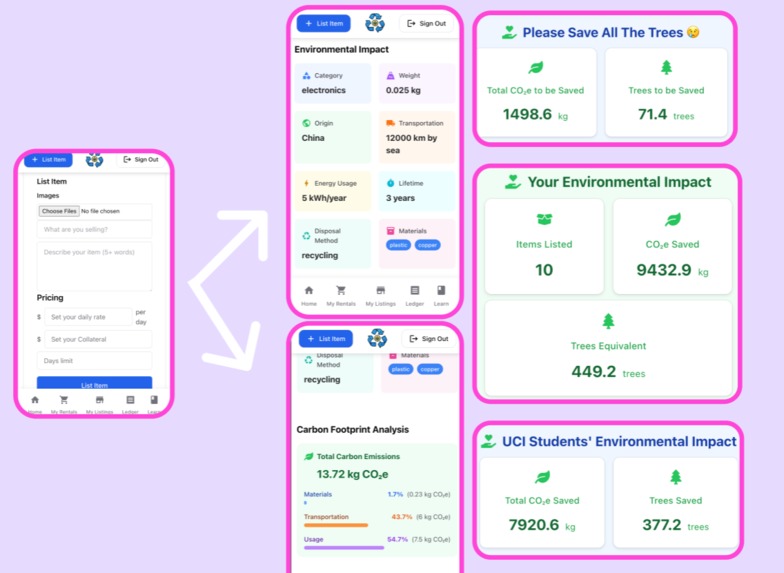
The app allows students to list items they no longer need, such as furniture or supplies, for others to rent or borrow. Users can set pricing, upload item details, and track their environmental impact. The app calculates the CO₂ emissions saved and translates it into tangible metrics like the number of trees saved, making users aware of their contribution to sustainability. It also provides detailed carbon footprint analyses of the items based on their category, transportation, energy usage, and materials.
How I built it
I built this platform using:
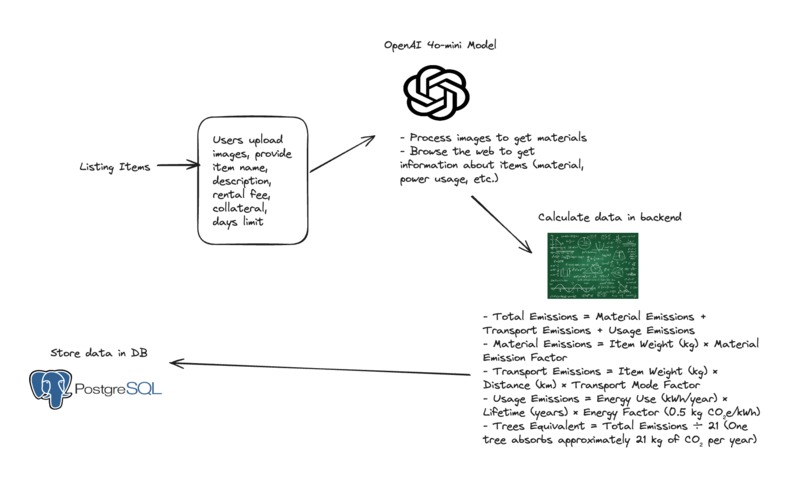
- Frontend: React with ChakraUI for a responsive and visually appealing design.
- Backend: Node.js with Express.js to handle server-side logic.
- AI Integration: OpenAI's GPT Vision API for data analysis and suggestions.
The design is optimized for user-friendliness while providing comprehensive information about environmental impact.
Challenges I ran into
One of the main challenges was calculating and presenting environmental impact data in a way that was both accurate and easy to understand. Ensuring seamless communication between the frontend and backend while keeping the UI responsive for mobile users was another hurdle. Additionally, integrating the OpenAI GPT API for data modeling required significant fine-tuning.
What I learned
I learned a lot about:
- The environmental costs of consumerism, particularly in academic settings.
- Efficient ways to calculate and display carbon footprints.
- How to create user-friendly interfaces while incorporating detailed environmental data.
This project also underscored the importance of raising awareness about sustainability and how even small actions like renting can have a significant impact.
What's next for Don't Trash It, Cash It!
The next step is implementing a peer-to-peer renting system so students can exchange money directly without needing a third-party intermediary. To further the sustainability mission, the app will charge a $1 fee per transaction, which will go toward tree-planting initiatives around the world. This feature will add more transparency and directly contribute to environmental restoration efforts.


Log in or sign up for Devpost to join the conversation.