-
Domus Memoriae Logo
-
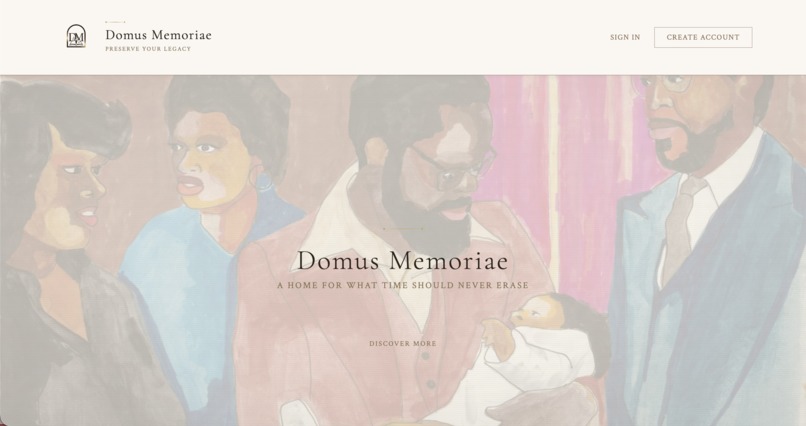
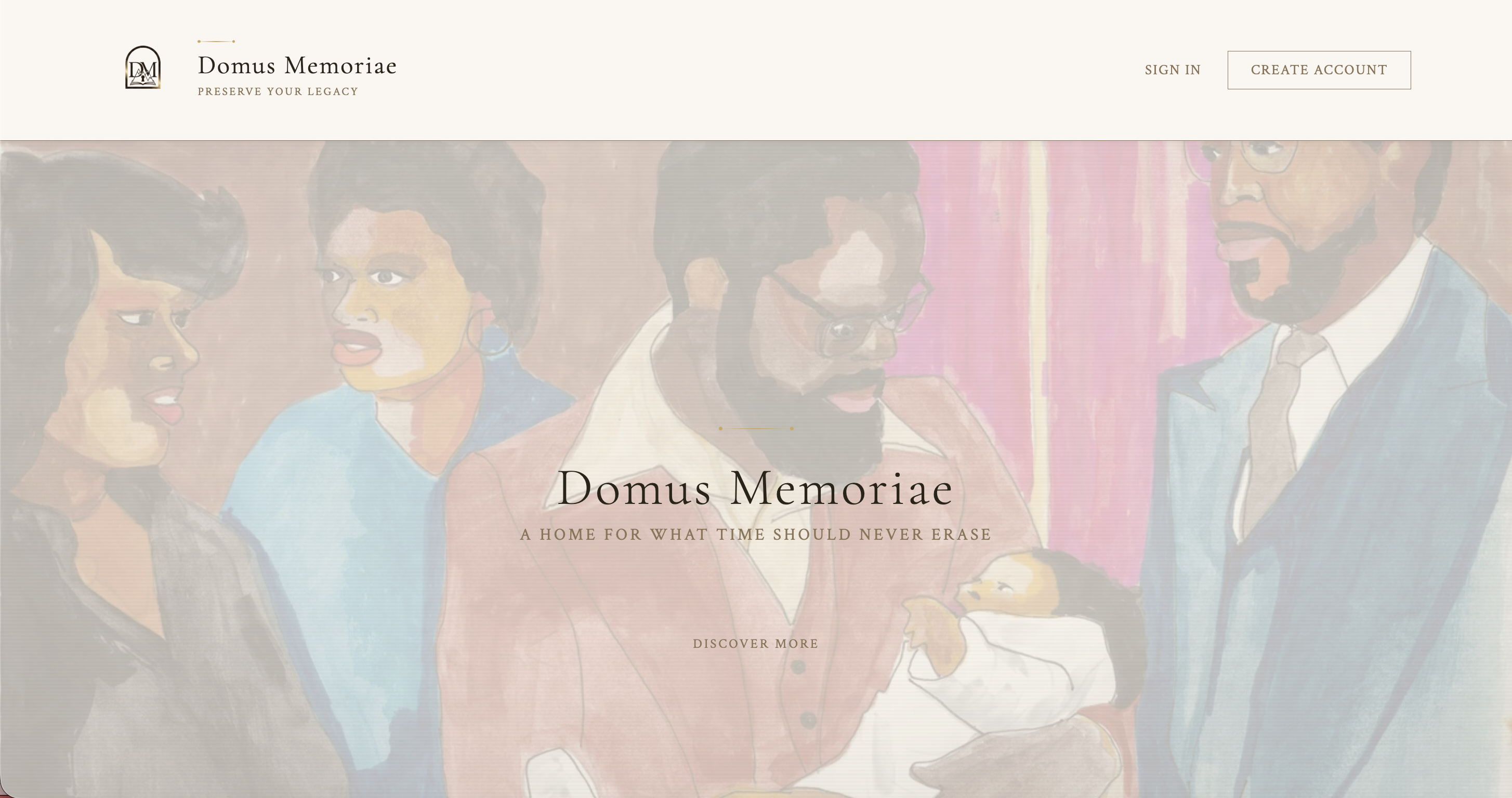
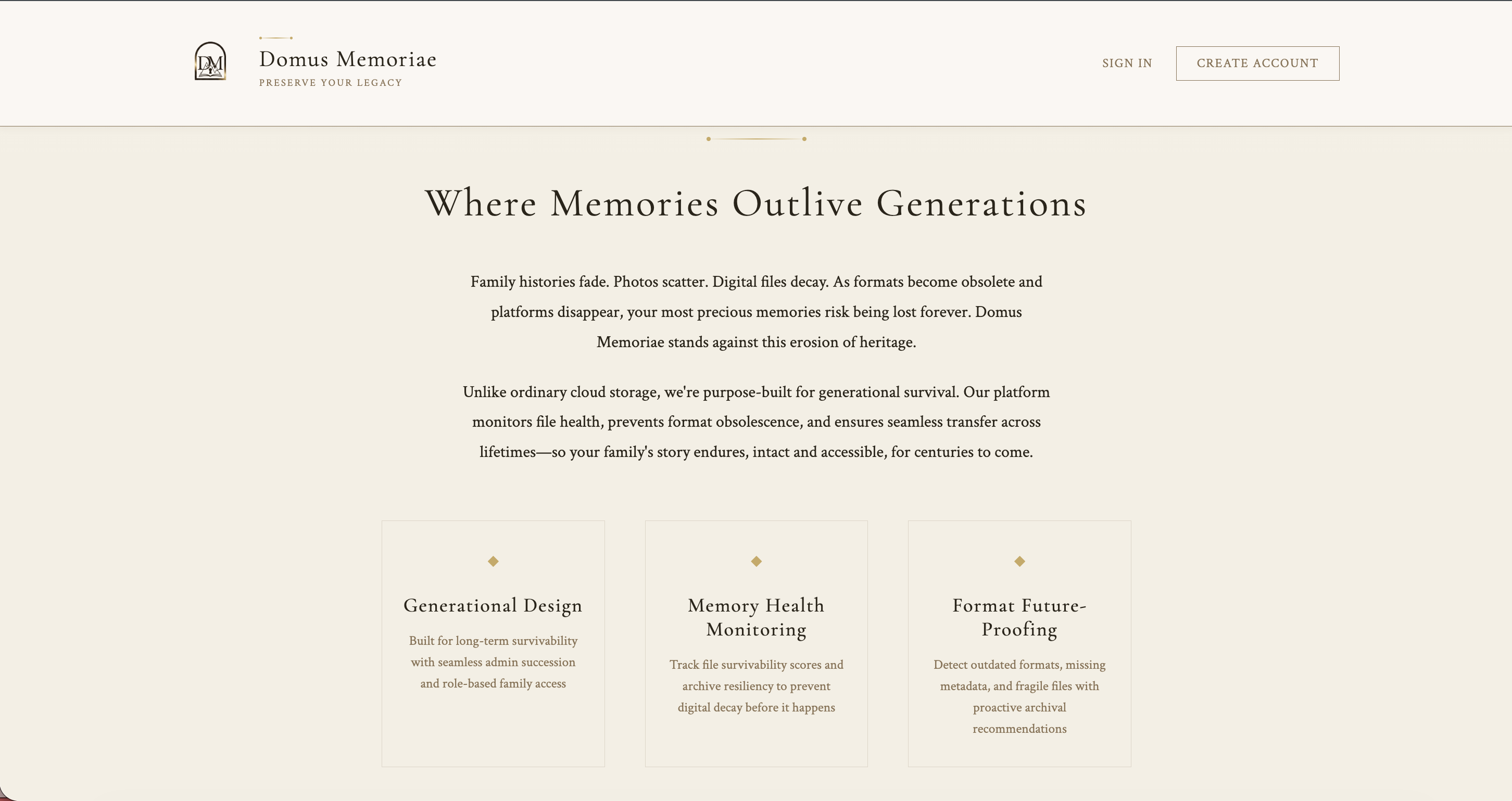
Homepage
-
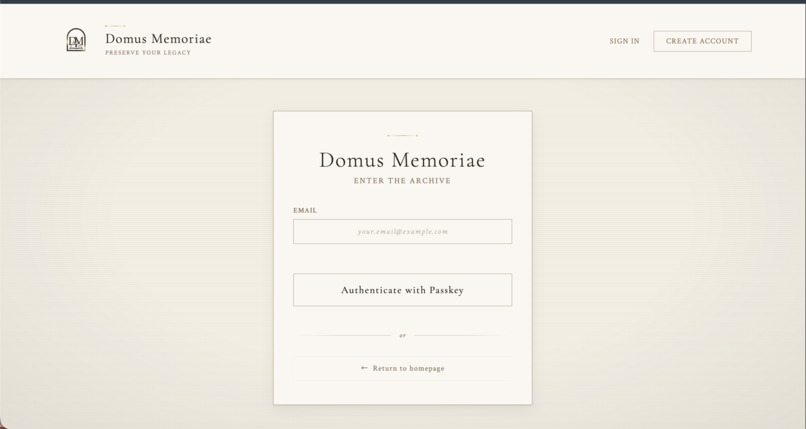
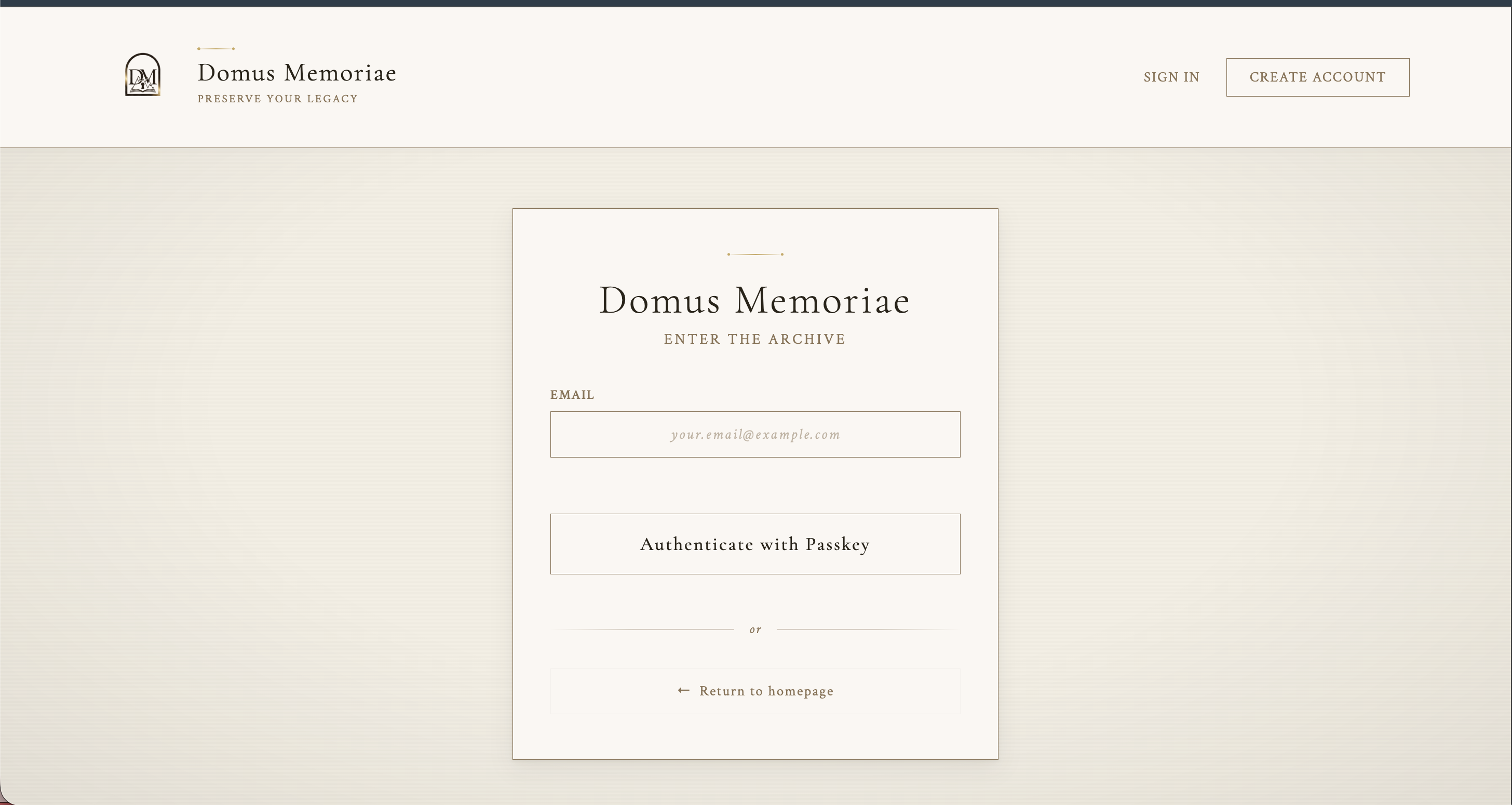
Sign in Page
-
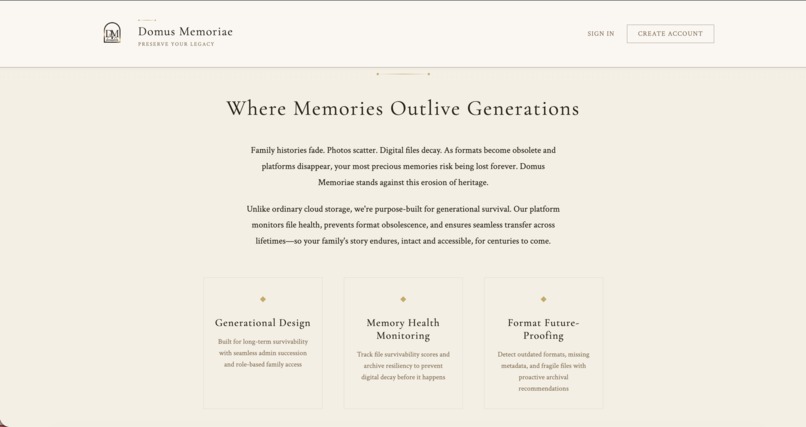
Hero Section
-
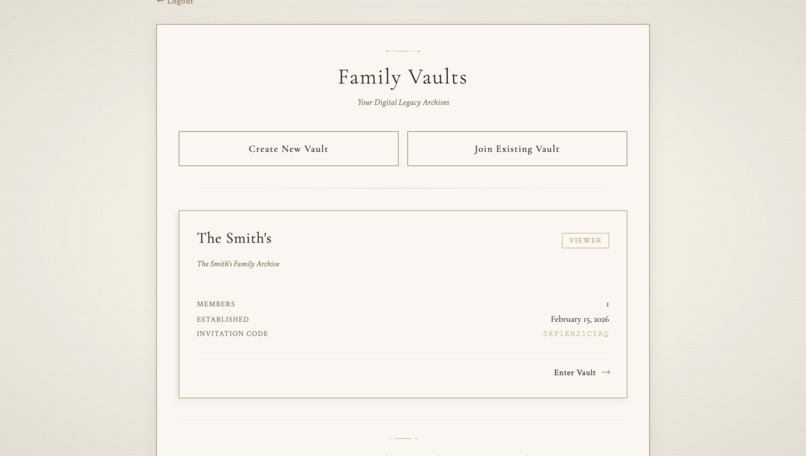
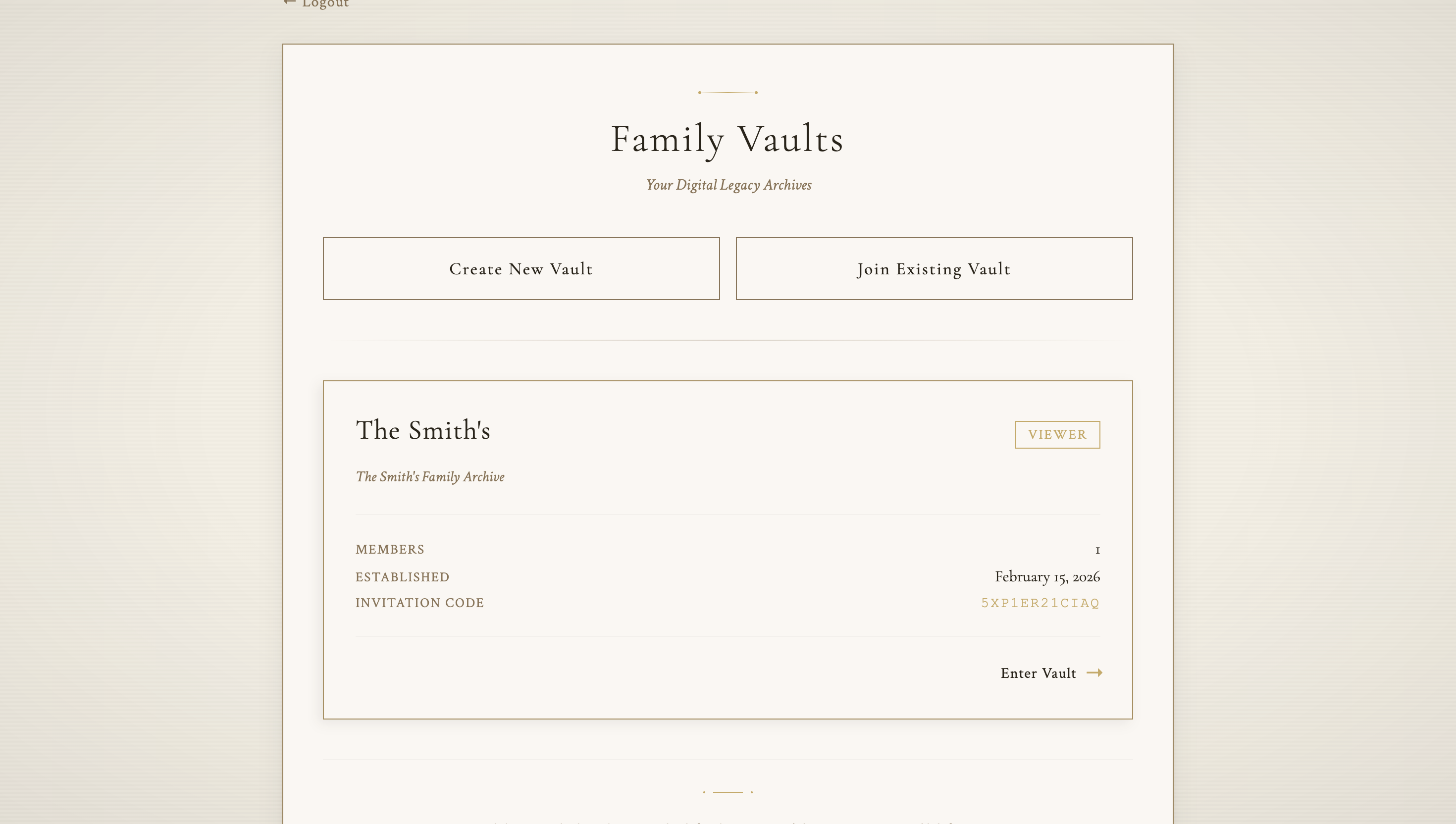
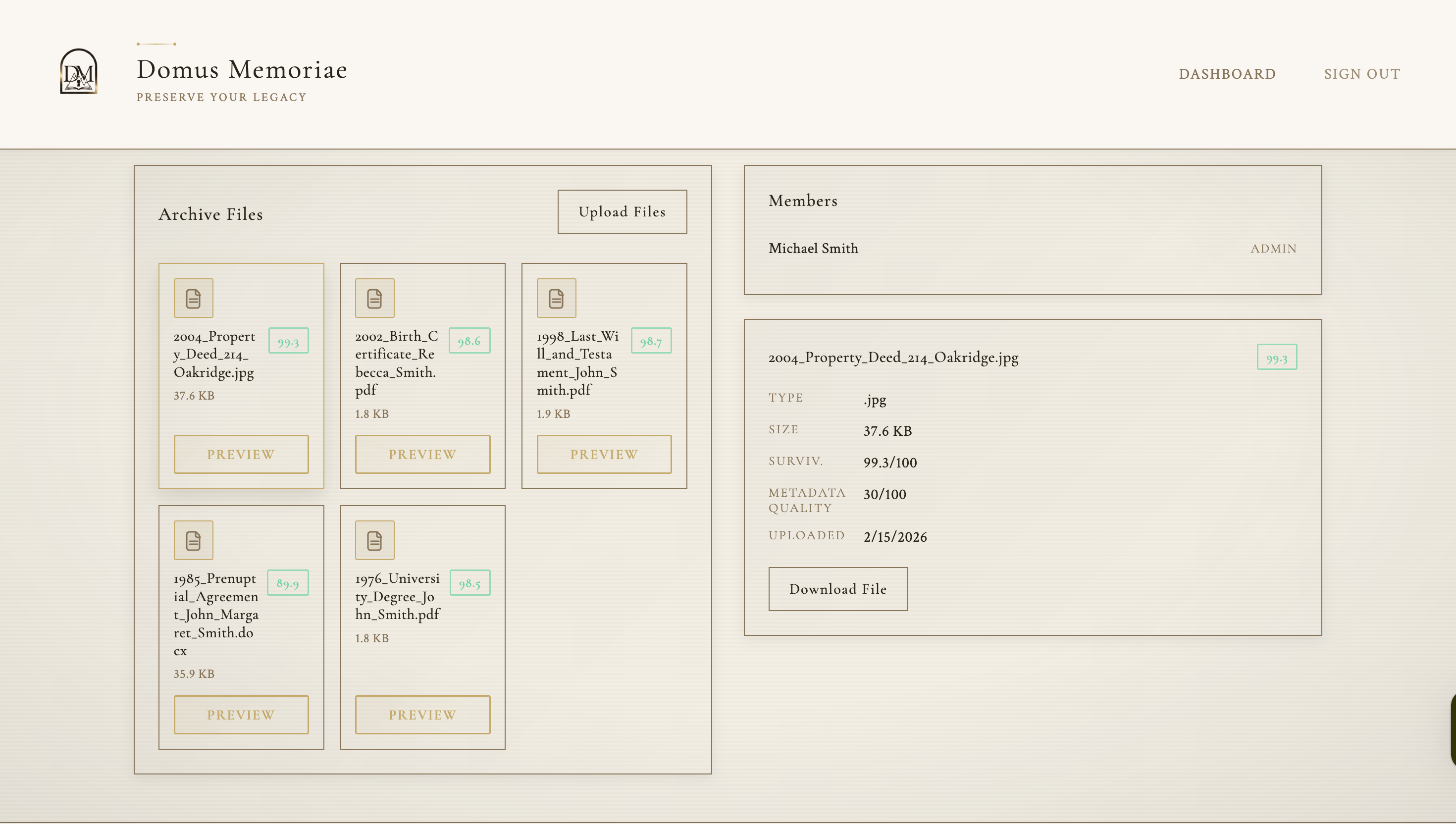
Dashboard
-
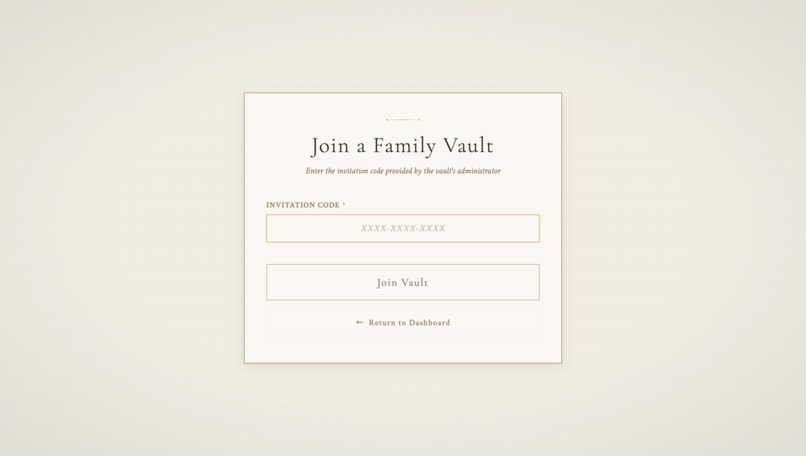
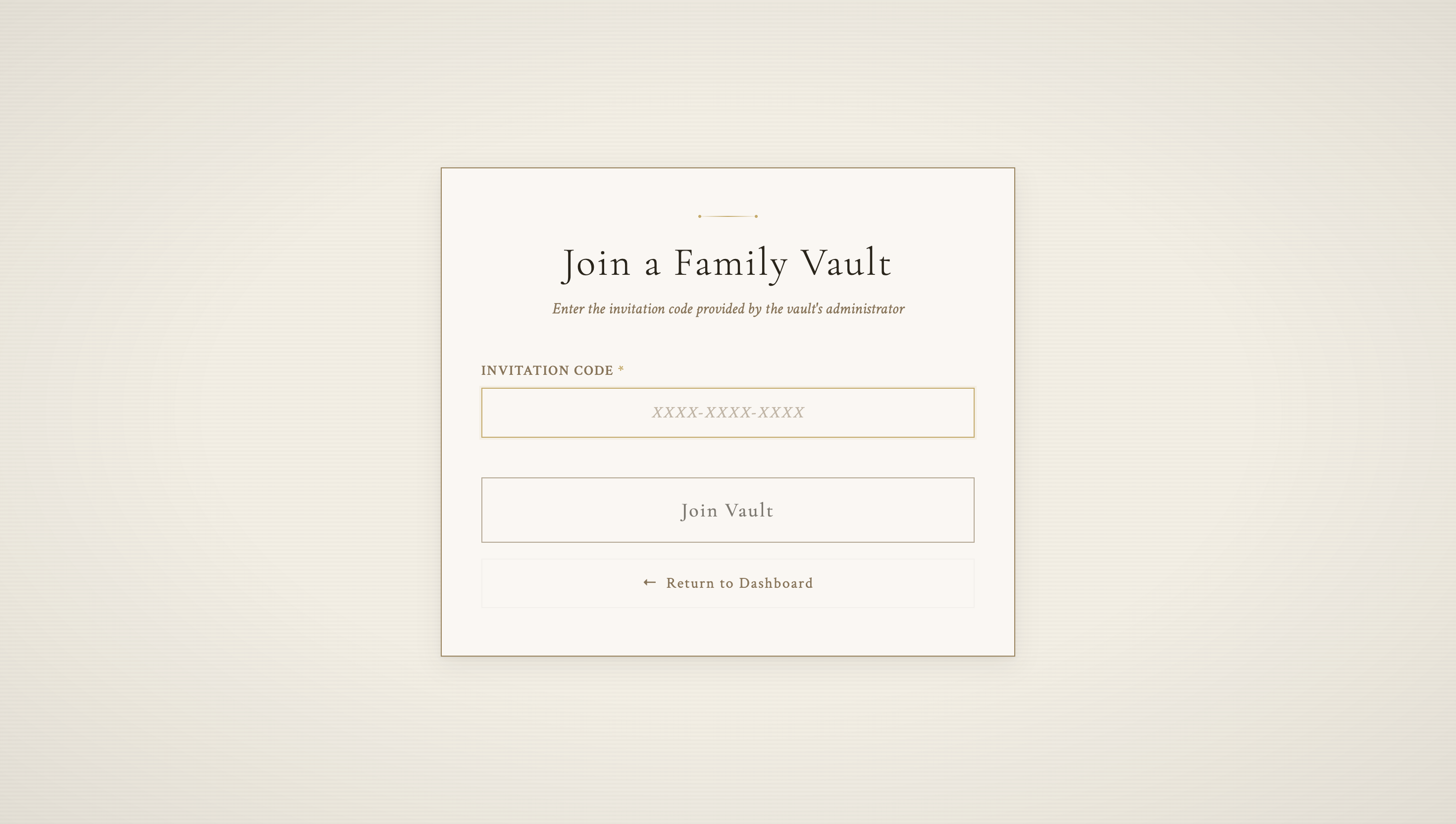
Join Vault
-
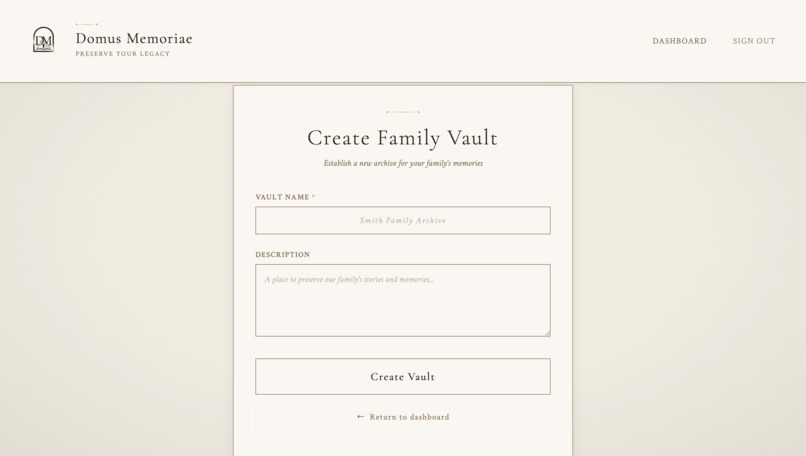
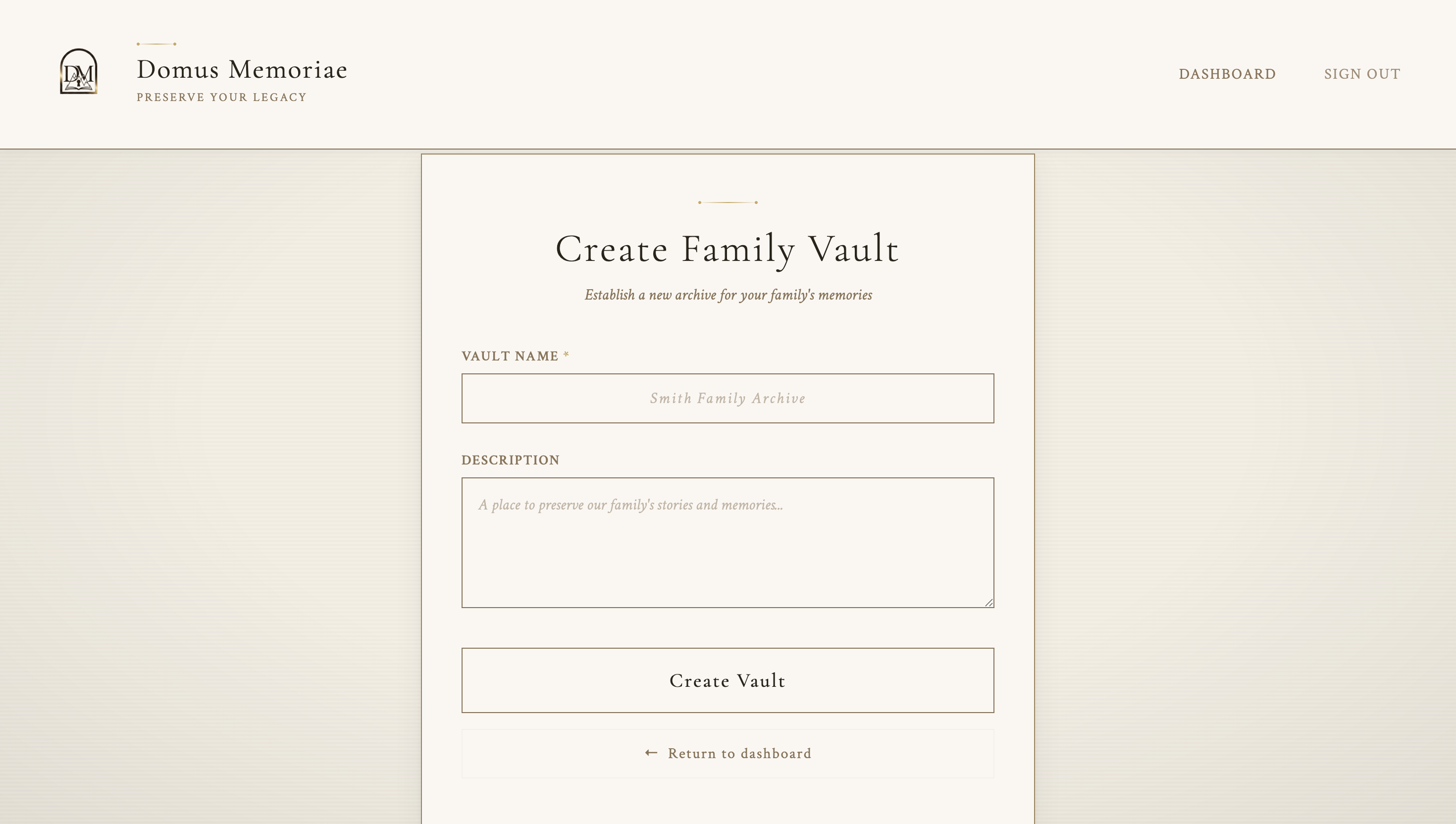
Create Vault
-
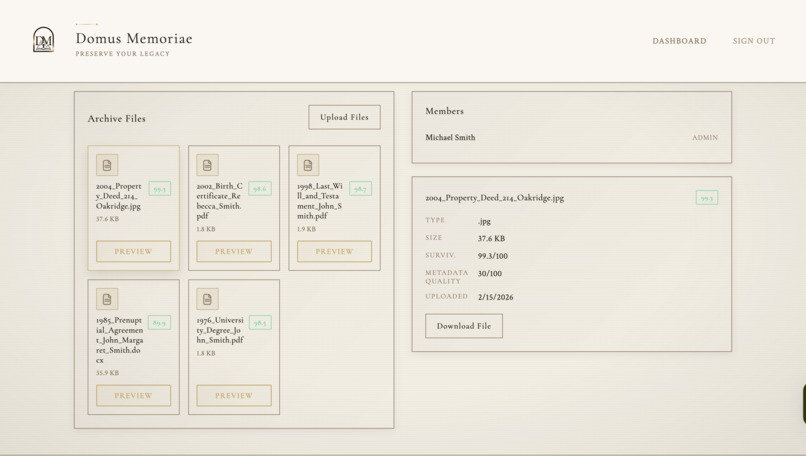
The Vault
-
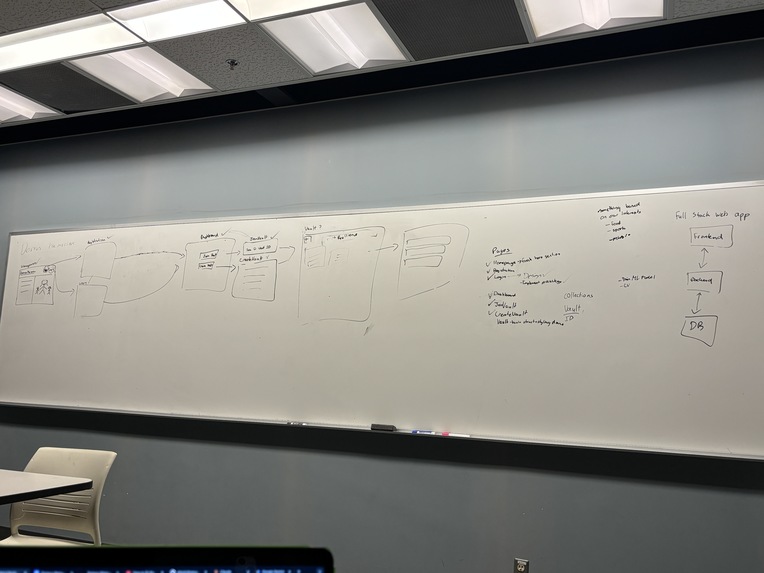
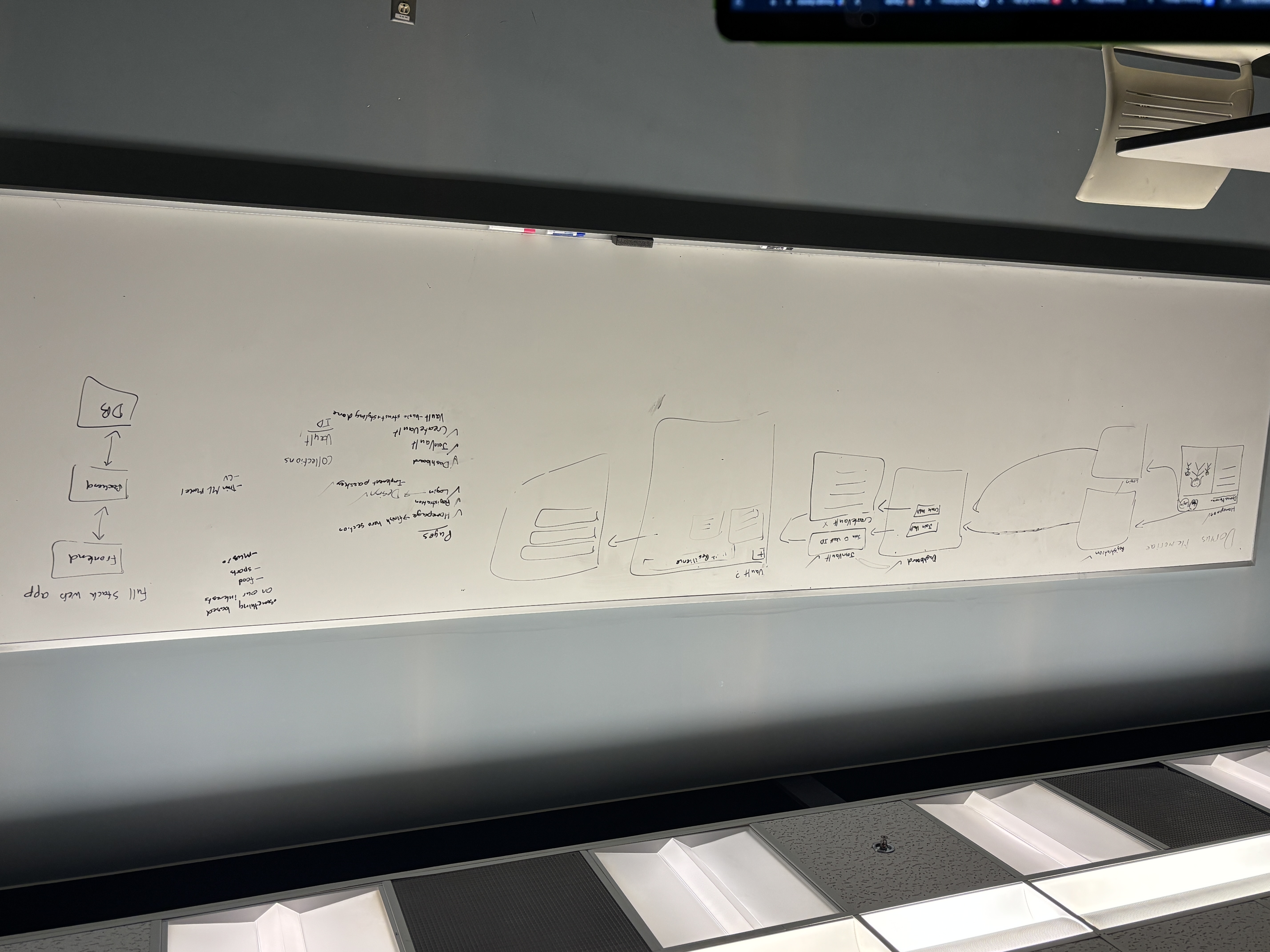
Idea's Board
Inspiration
A simple but powerful realization inspired us: memories are fragile. Across generations, families lose photos stored on old phones, videos trapped on outdated hard drives, letters misplaced during moves, and documents forgotten in email accounts. As time passes, these fragments of history disappear, and with them, pieces of identity, heritage, and belonging. Domus Memoriae (Latin for “House of Memory”) was born from the idea that every family deserves a permanent, living vault of their shared history - one that resists digital decay and keeps cultural identity intact.
What it does
Domus Memoriae is a Family Legacy Preservation Platform built specifically for long-term generational storage.
Unlike traditional cloud storage platforms, it is:
- Structured for family ownership, not individual accounts
- Designed to prevent digital memory decay
- Focused on survivability, not just accessibility
How we built it
Domus Memoriae is designed as a resilience-first system.
We structured the archive around:
- Family Nodes (generations)
- Memory Artifacts (media + documents)
- Metadata Layers (context, relationships, narratives) Every file is stored with contextual metadata to prevent meaning loss over time.
Challenges we ran into
- Translating the abstract idea of “digital decay” into a measurable, explainable Survivability Score.
- Implementing secure passkey authentication with complex cryptographic flows.
- Balancing ambitious ML-driven features with strict hackathon time constraints.
- Ensuring stable deployment and database integration in production.
Accomplishments that we're proud of
Building a preservation-first platform, not just another cloud drive
- Creating a measurable Media Survivability Score
- Designing a governance system for generational continuity
- Addressing digital decay proactively instead of reactively
Most importantly, we built something that treats memory as heritage.
What we learned
Archives are about identity, not storage
- Metadata determines whether memories remain meaningful
- Survivability must be engineered intentionally
- Transparency builds trust in preservation systems
- Designing for future generations changes how you build today
What's next for Domus Memoriae
- Grouping different documents into folders
- Replacing the synthesized data with real data
- Adding more robust permissions for each role


Log in or sign up for Devpost to join the conversation.