-
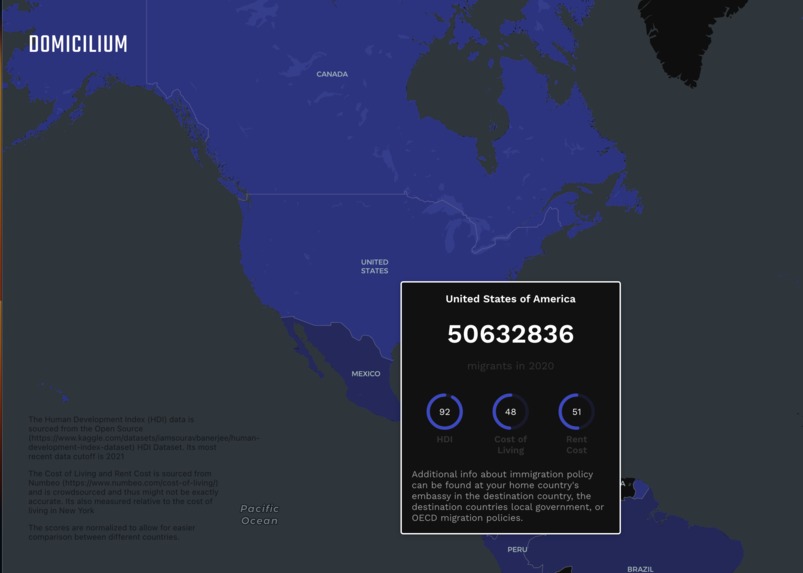
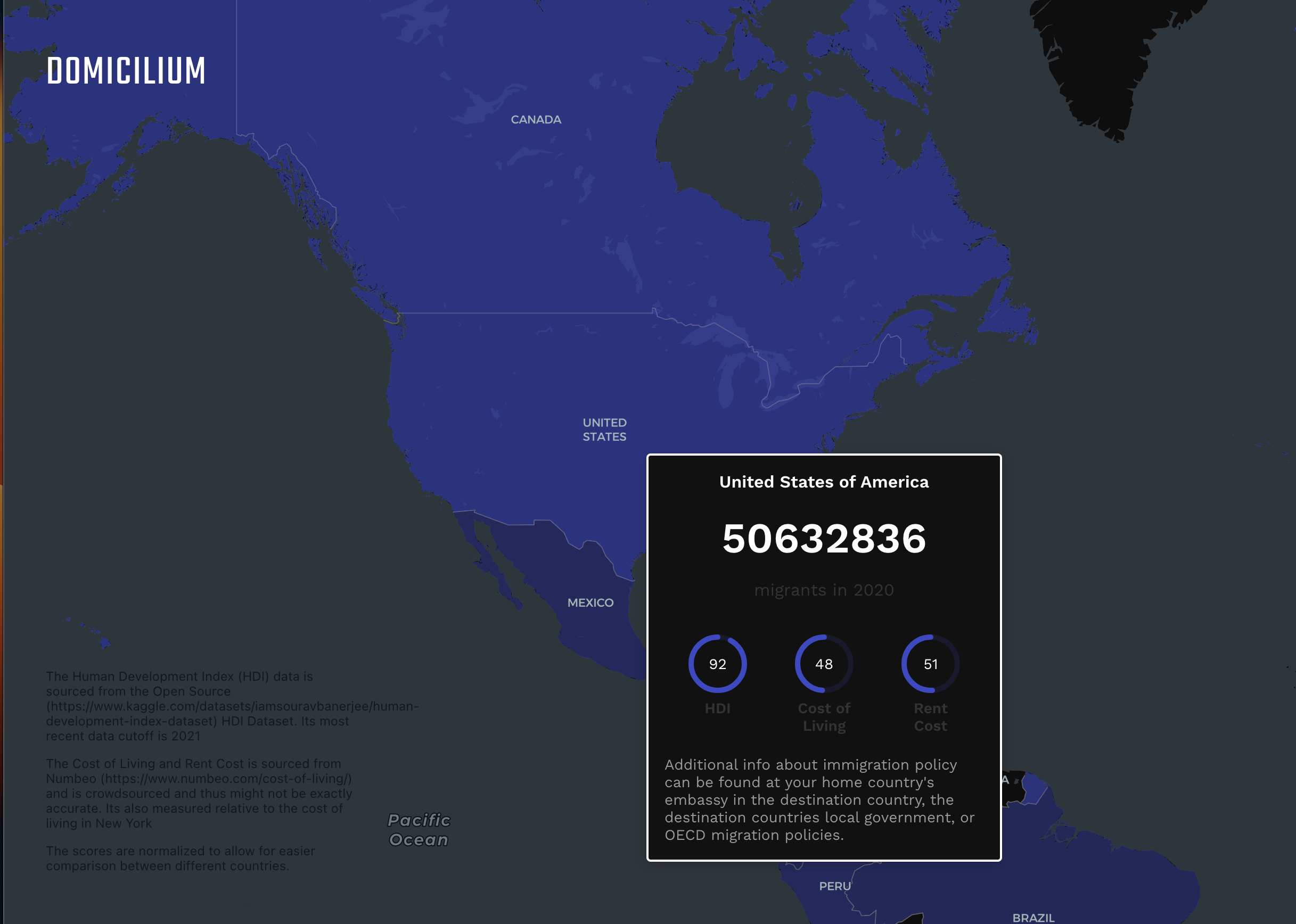
US Quality of Life / Cost of Living Information
-
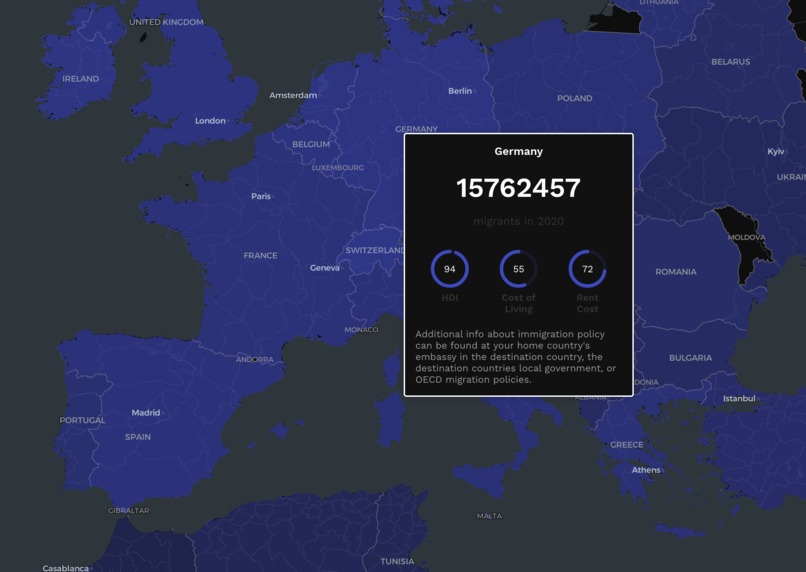
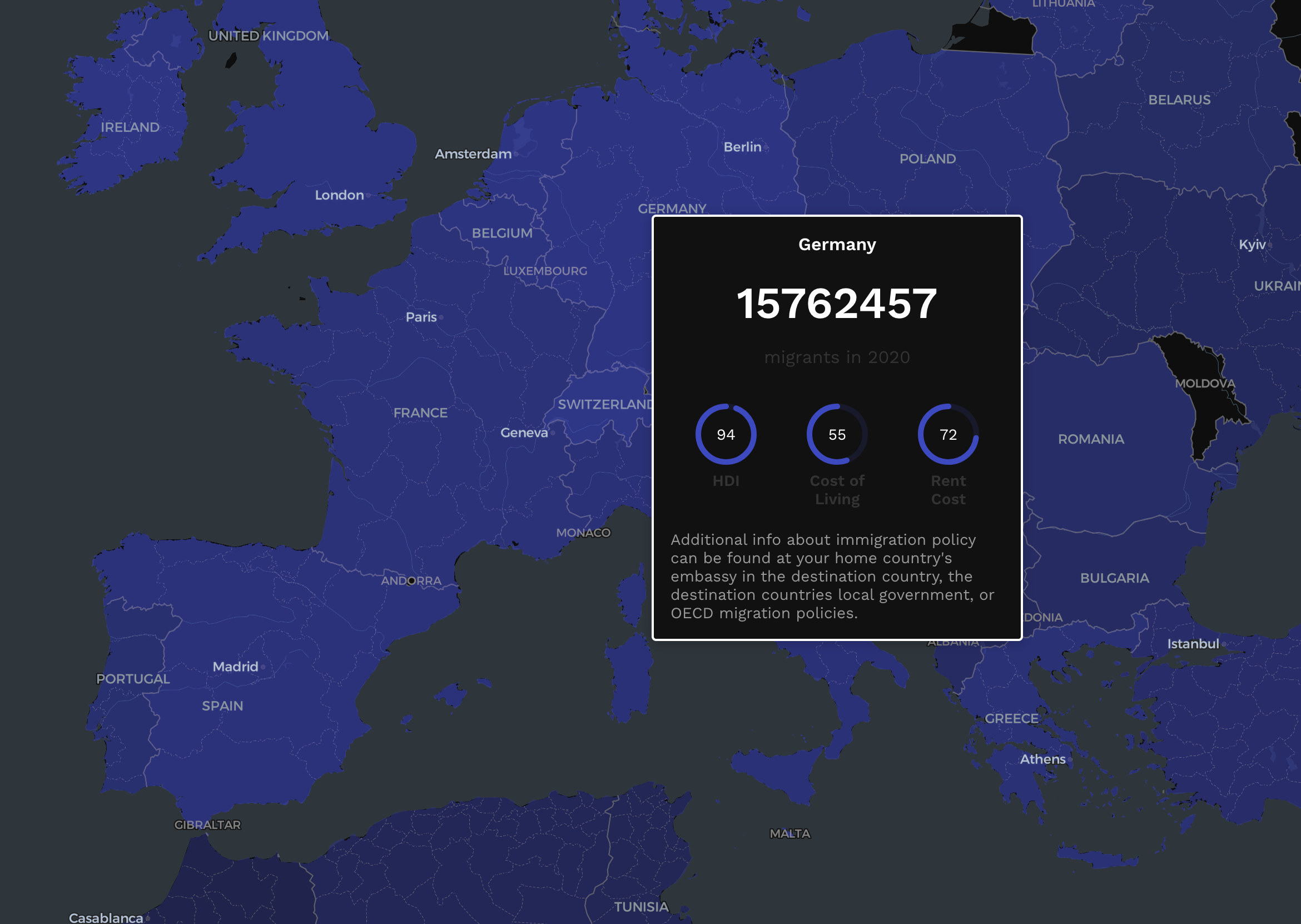
Looking at Europe you can see how its a good migration destination
-
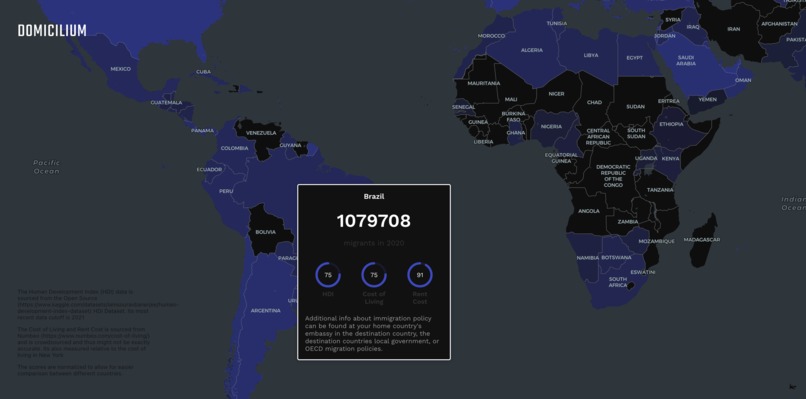
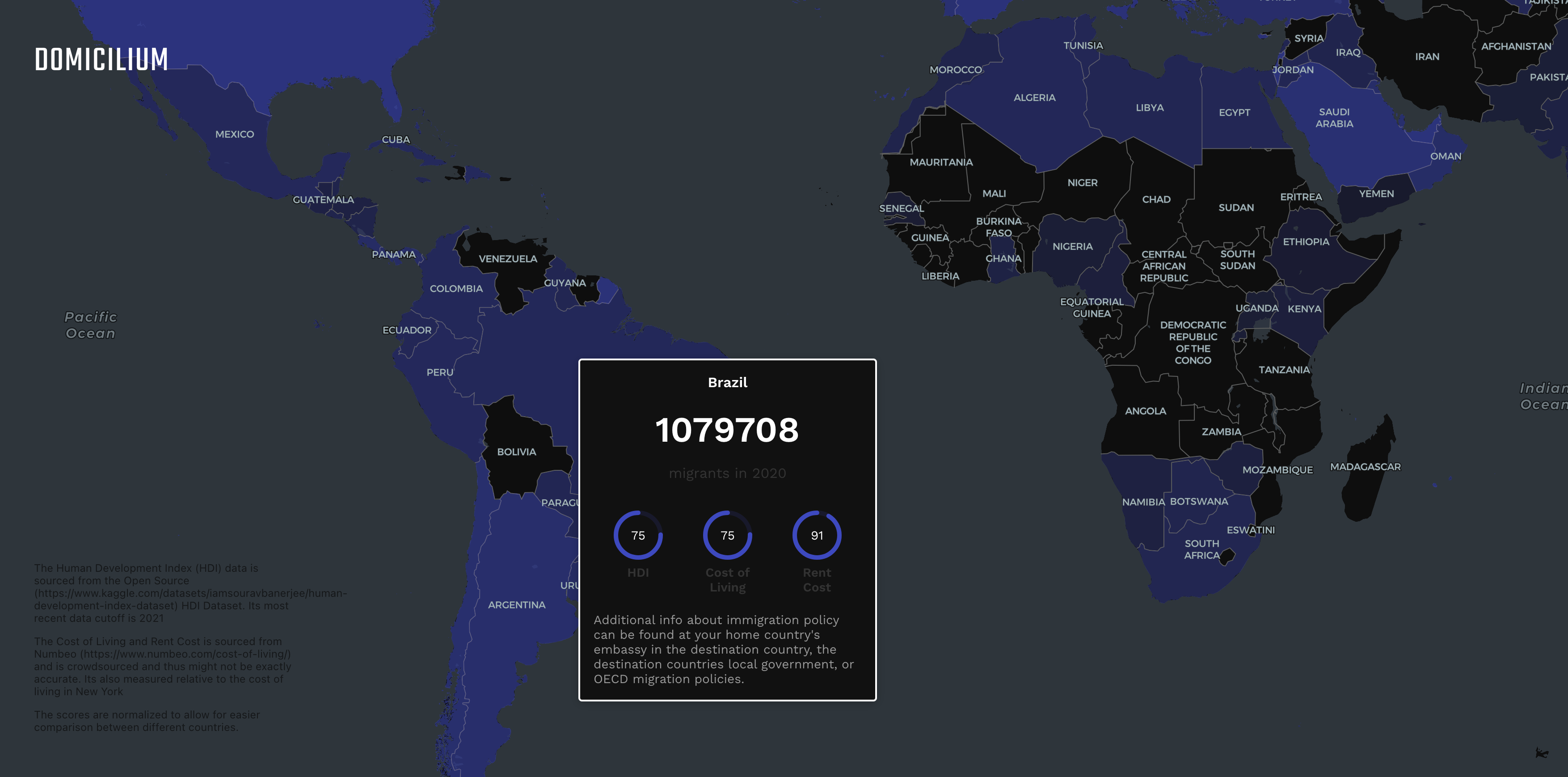
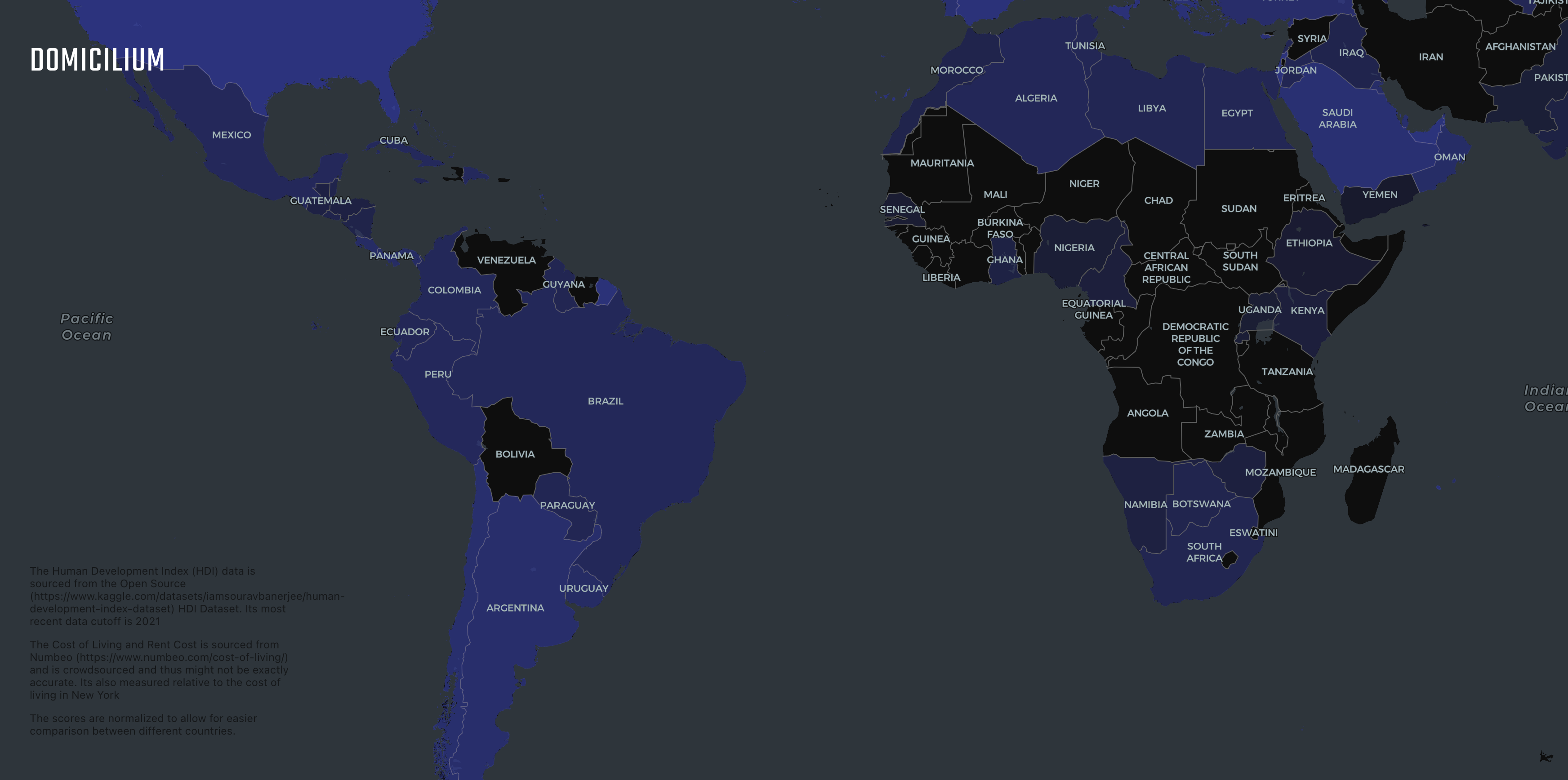
Full view
-
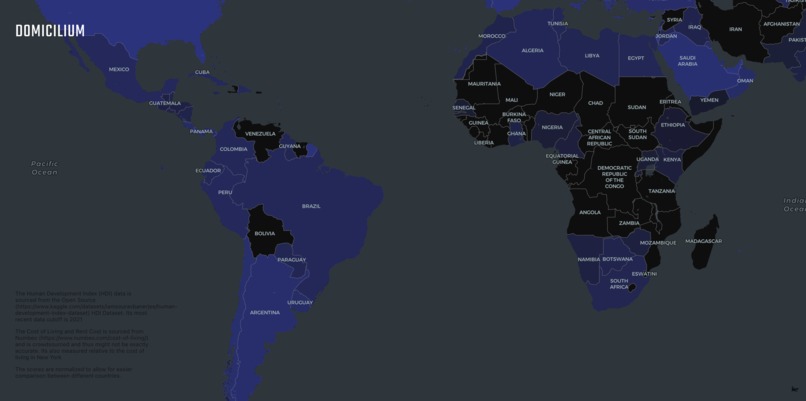
Full page view with the whole map color coded according to the quality of life scores. The darker countries are lower in score
Inspiration
Immigration is already an incredibly tough and challenging process, it doesn't have to be made harder by the complexity of immigration policies and the difficulty of finding the right place to make your new home. As a first generation immigrant, I've always heard stories about the difficulty of dropping everything you know and have to go to a country you know nothing about. Leveraging the power of web technologies I wanted to make an accessible interface for immigrants to figure out which country is the best fit for their new home.
What it does
Our web-app aggregates data from various humanitarian and government sources to present a comprehensive map of common destination countries for migration. It provides those in the process of migrating with information about the quality of life in the country they're moving to, the cost of living, cost of rent, and additional information about who ends up moving there. We also have future plans to add information about country specific immigration policy.
How we built it
Built on top of Deck.gl it uses an Open Source fork of MapBox to help visually render the quality of life scores for countries across the globe. The data itself is sourced from UN sources, the International Organization for Migration, and Numbeo for cost of living estimates.
The data itself had to be processed independently using Pandas and Python in order to get all the information into a consistent format.
Challenges we ran into
The original plan for the project was to have immigration policies for each country available, however that ended up increasing the complexity of the project to the point where we would have been unable to complete it. Each country has its own immigration policy, which sometime may depend on the country that the person is originating from. While we do have plans to add this functionality in the future, it was too complex to add in the time we had available.
Accomplishments that we're proud of
I like how it looks! I was able to get most of the information I wanted to show displaying in a way that was both accessible and easy to read.
What we learned
Deck.GL is an extremely powerful visualization tool, we could definitely leverage it to make even more complex and thorough visualizations in the future. I also learned that there is a lot more public datasets available than I had originally thought
What's next for Domicilium
We want to leverage GPT-4 to help process the immigration policy from countries around the world to make that information simple and accessible for all migrants as well.

Log in or sign up for Devpost to join the conversation.