DomainScan
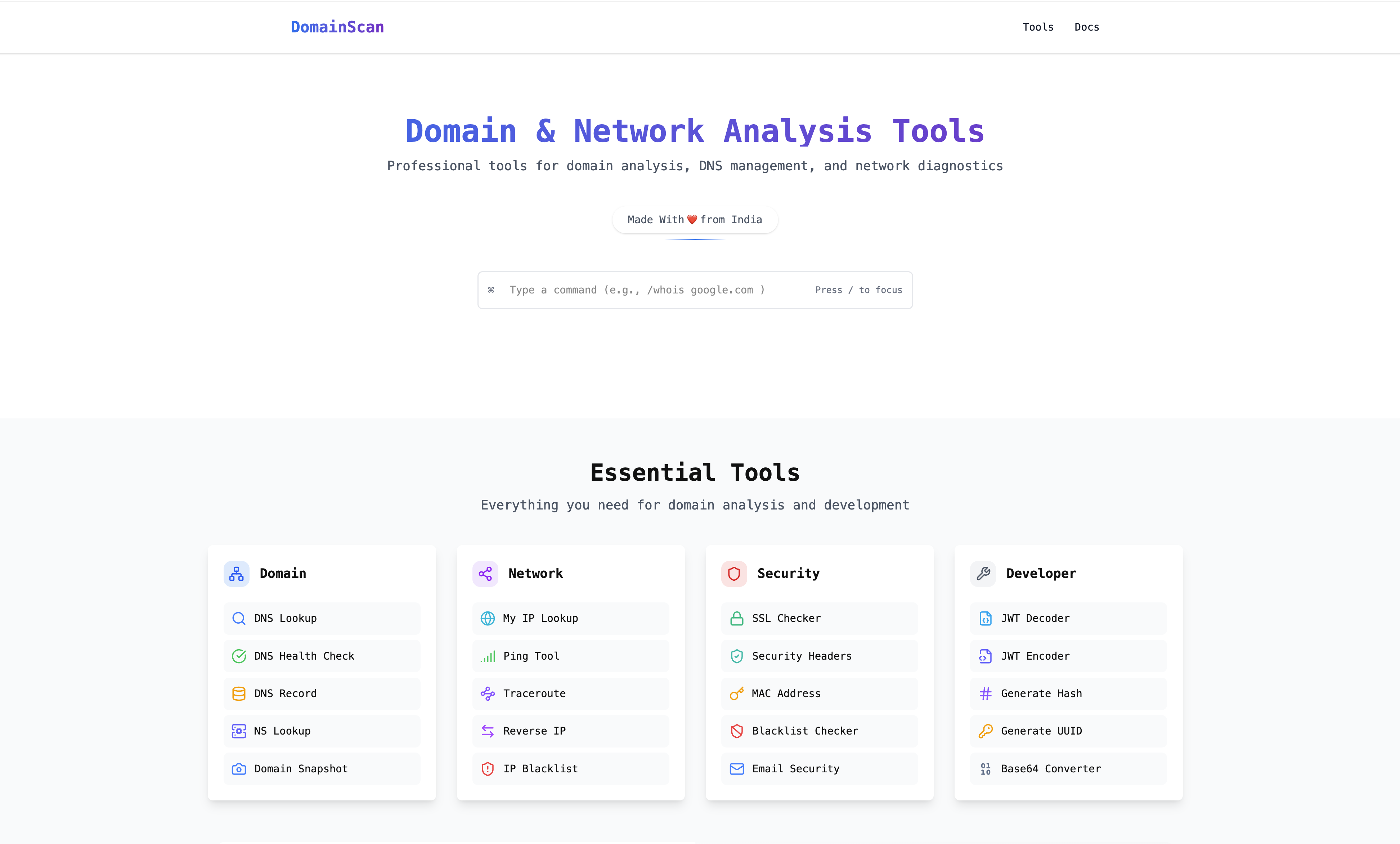
🚀 Inspiration While working on network diagnostics and domain investigations, I found myself juggling multiple outdated or fragmented tools just to gather basic information like WHOIS, DNS records, or IP reputation. This friction inspired me to build DomainScan—a unified, modern toolkit that simplifies domain analysis and security checks in one place.
🔧 How I Built It DomainScan was built using the following stack and architecture:
Frontend: React with Tailwind CSS for a fast, clean, responsive UI.
Backend: Node.js with Express.js to serve APIs and handle async tasks.
Infrastructure: Docker-based deployment on DigitalOcean, with Cloudflare handling DNS and CDN caching.
Core Modules:
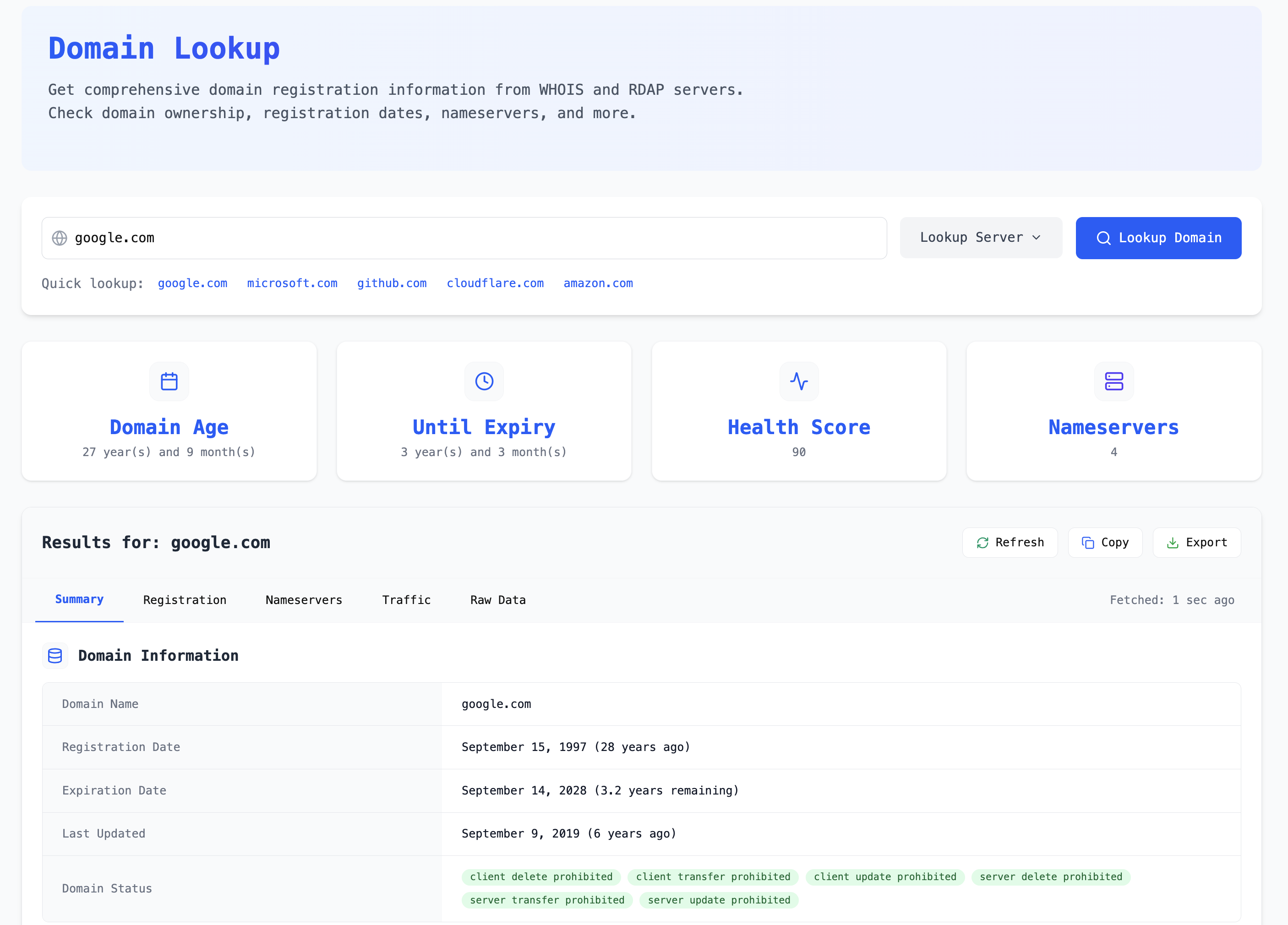
WHOIS & RDAP parsers
DNS record fetchers (A, MX, TXT, etc.)
SSL/TLS certificate analyzer
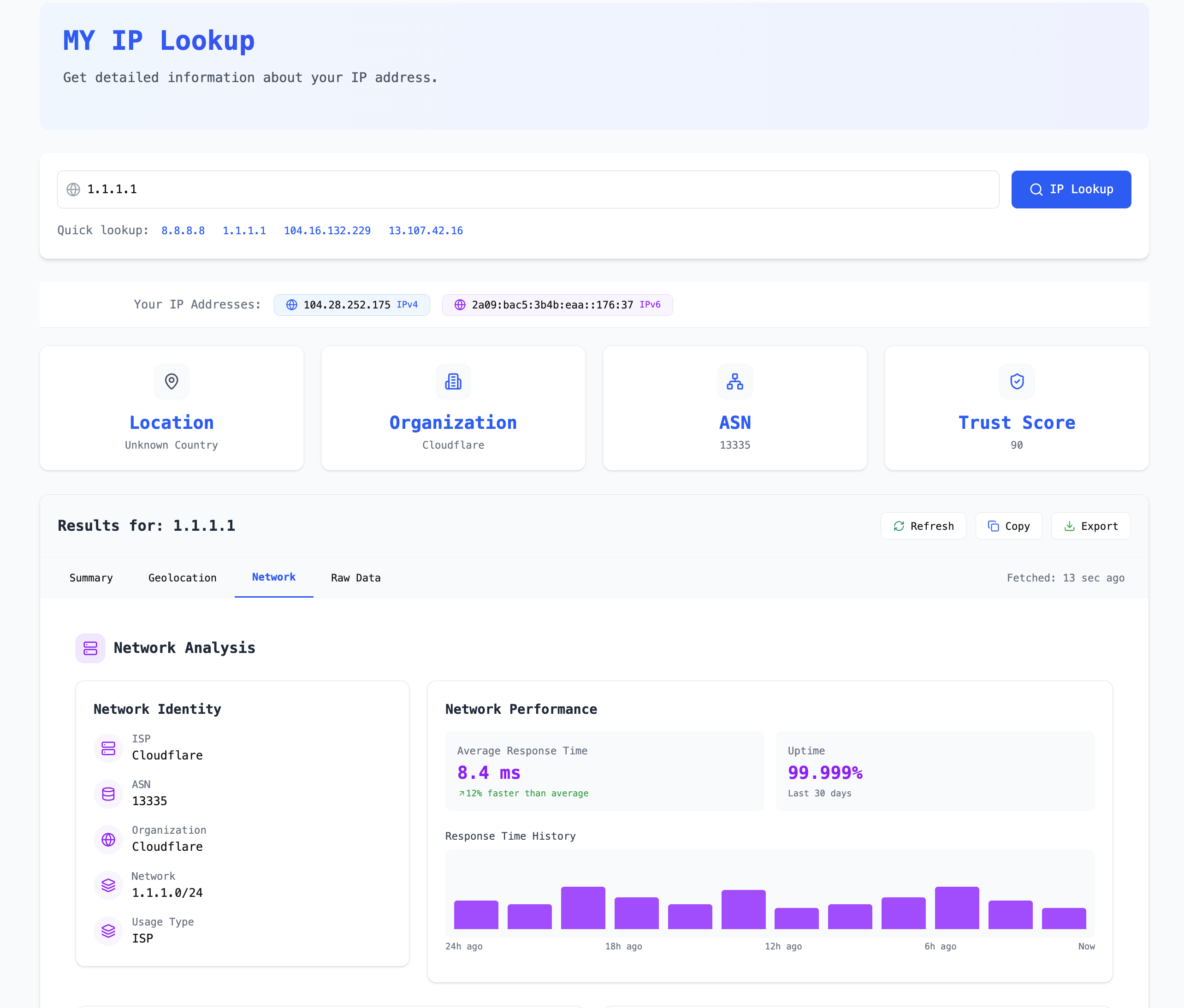
IP geolocation and blacklist checker
Name server and ASN lookup
Design: Modular architecture with components like Gateway, Core Engine, Utils, and Worker Pools for concurrent execution.
🧠 What I Learned Handling real-world WHOIS and RDAP data taught me how messy and inconsistent domain data can be.
I gained experience designing APIs and backend services that are both performant and secure.
Improved my skills in DNS record parsing, IP data analysis, and frontend UX for data-heavy tools.
Learned to manage infrastructure cost-effectively with containerization and CDN-based delivery.
⚠️ Challenges Faced Inconsistent WHOIS formats: Required building adaptive parsers to normalize varied output.
Rate limits & timeouts: Solved with caching, retries, and background workers.
Balancing power and simplicity: Designed the UI to be user-friendly without sacrificing depth.
IPv6 & dual-stack issues: Ensured full support for both IPv4 and IPv6 data across all tools.
💡 What’s Next API access for developers to automate domain scans
Scheduled monitoring and change detection
Email validation tools (SPF, DKIM, DMARC)
Exportable reports and PDF summaries
Local phishing/malware signature detection

Log in or sign up for Devpost to join the conversation.