-
-
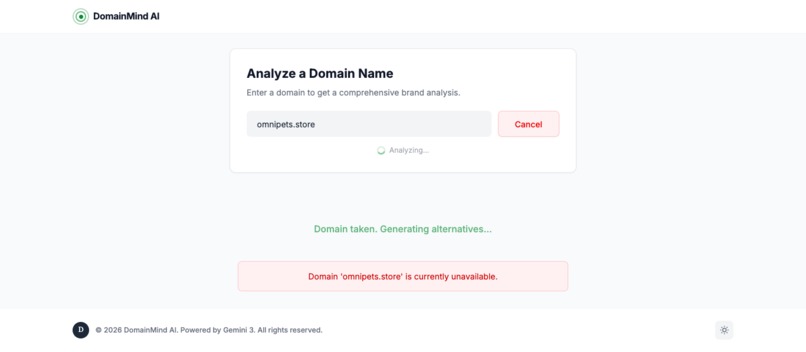
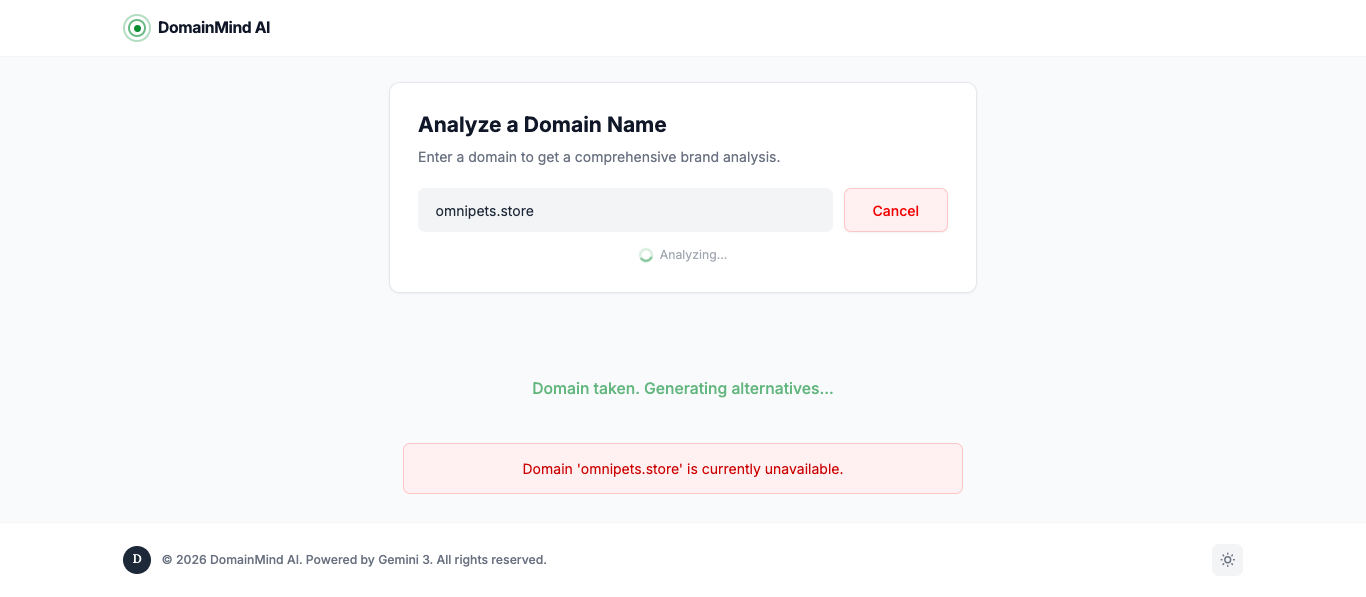
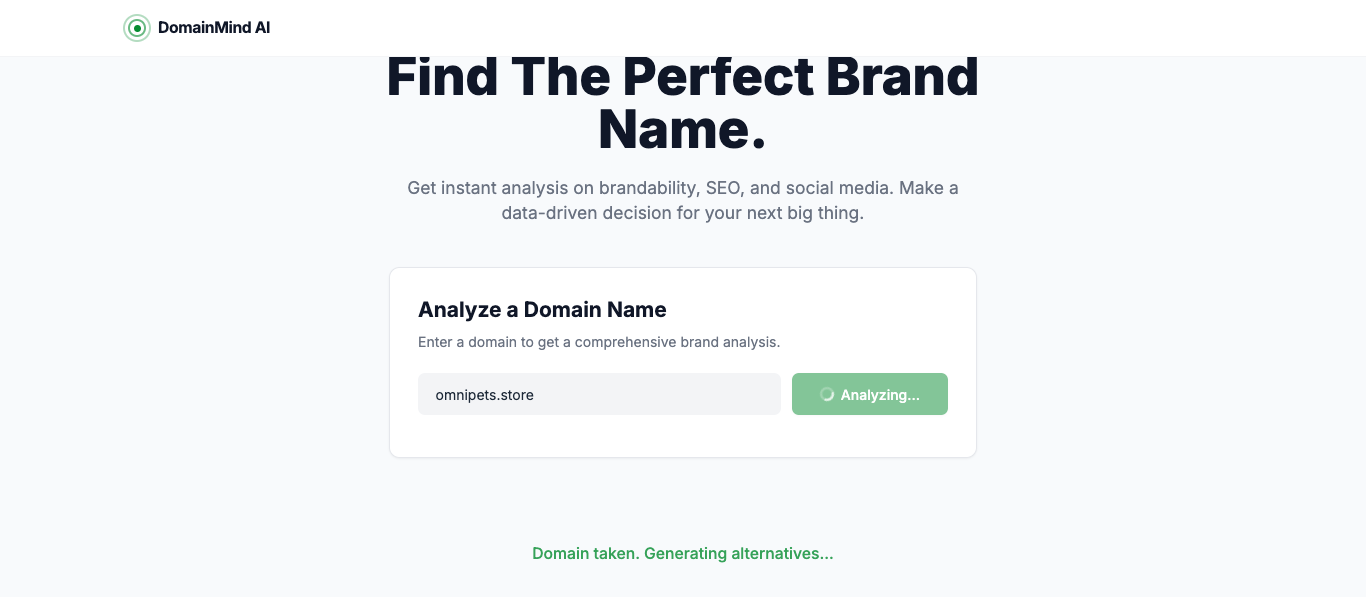
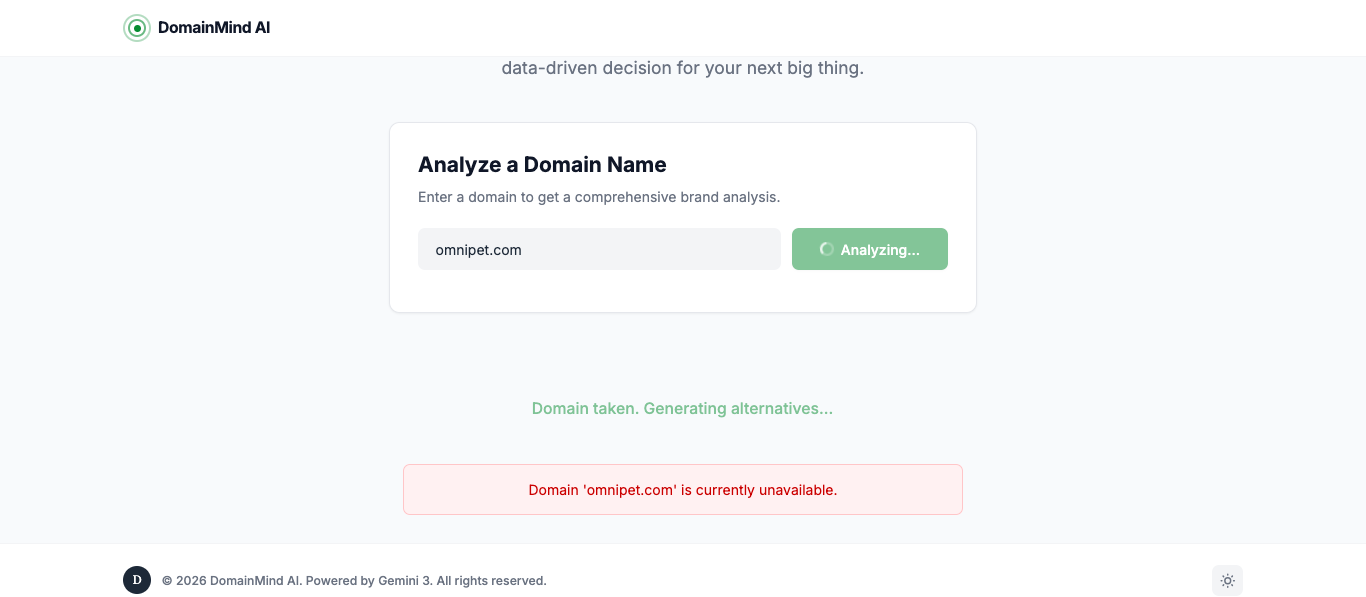
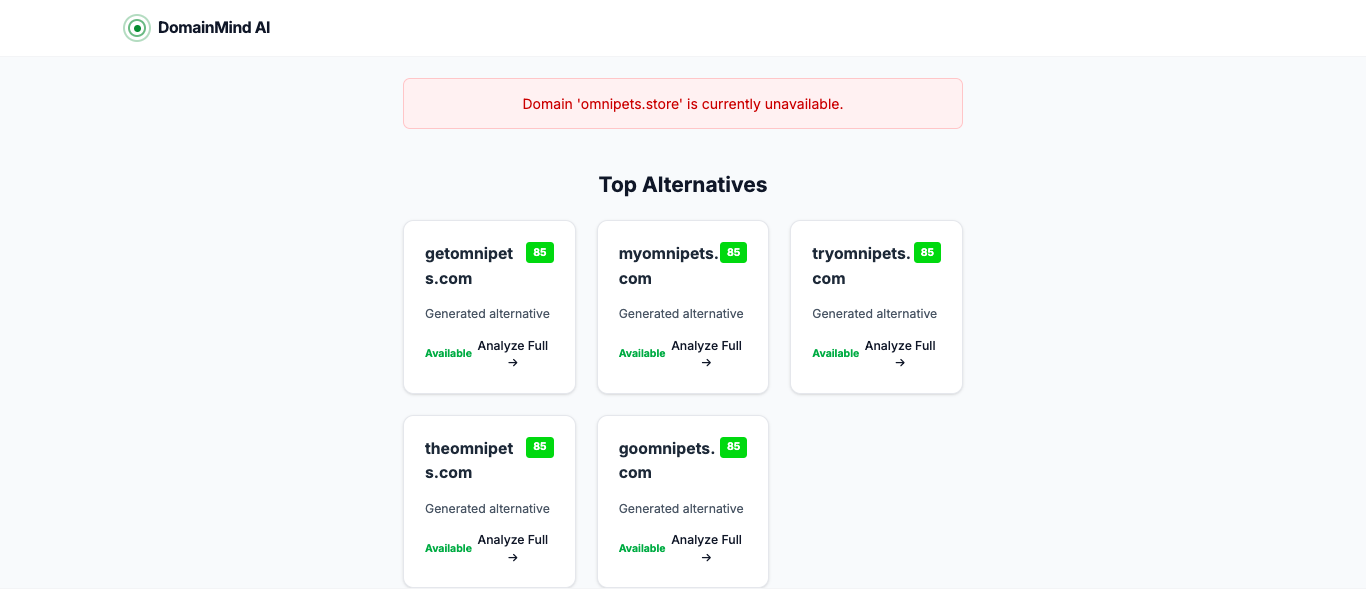
domain not available, generating alternatives
-
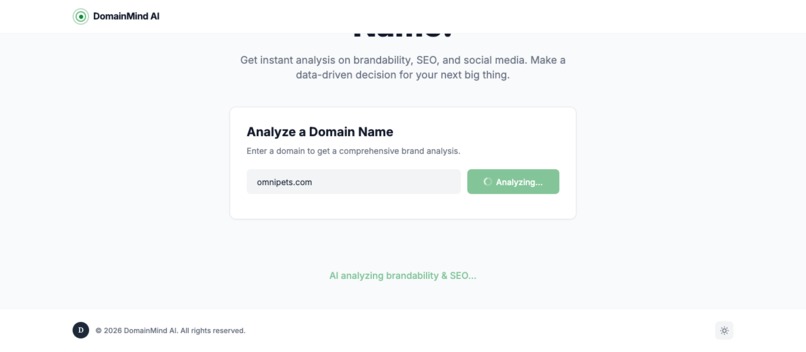
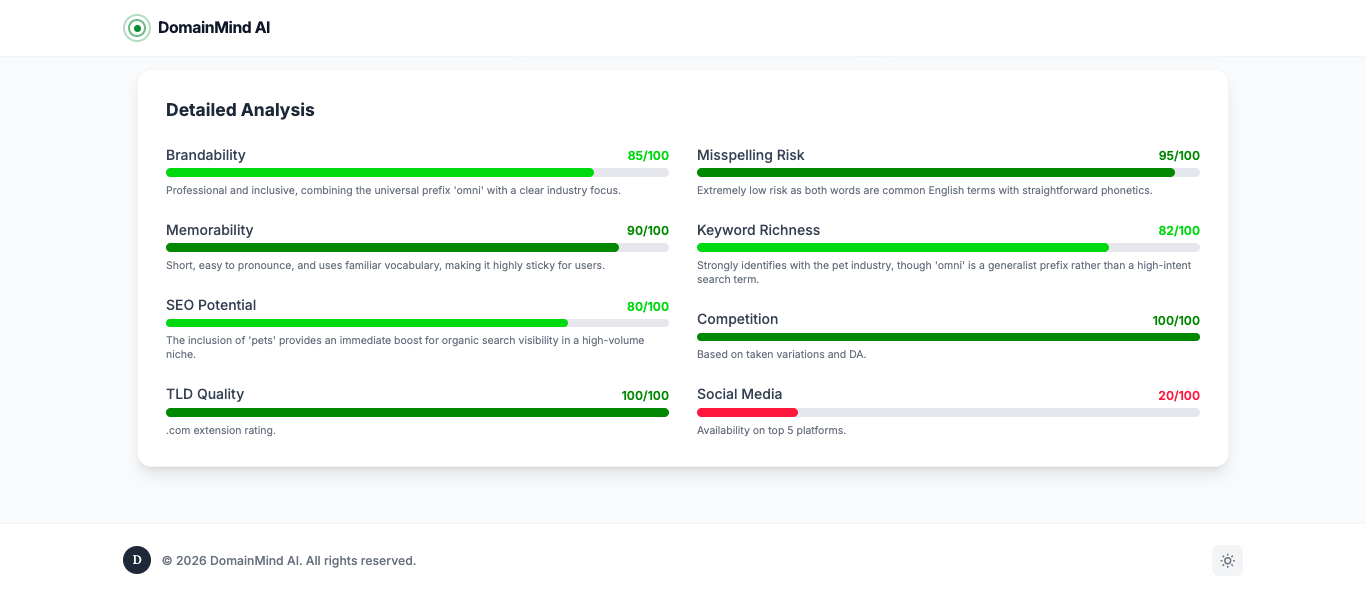
DomainMind AI 2nd test analysis
-
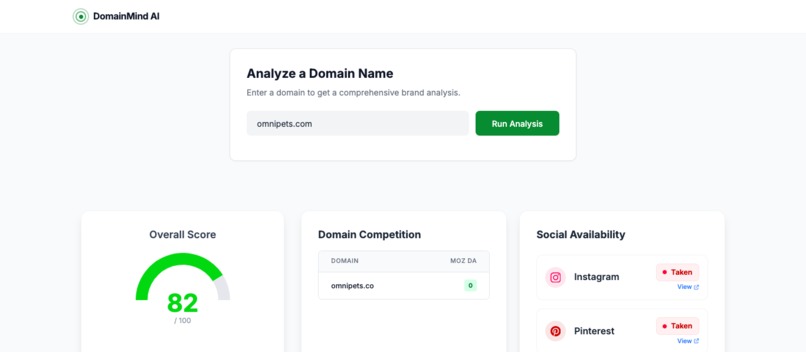
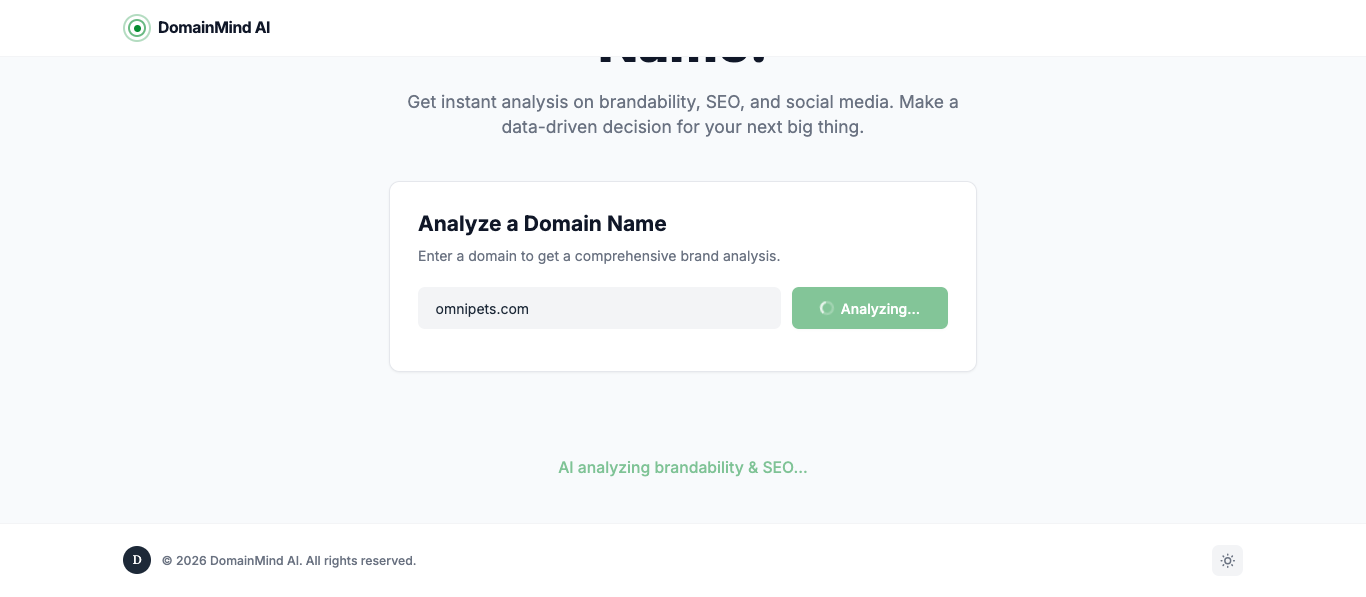
DomainMind AI in action
-
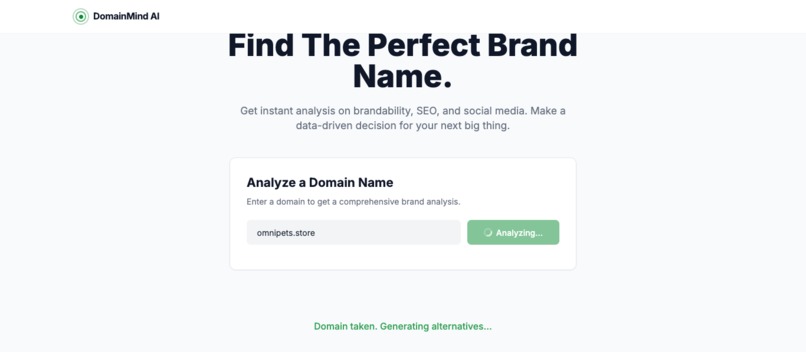
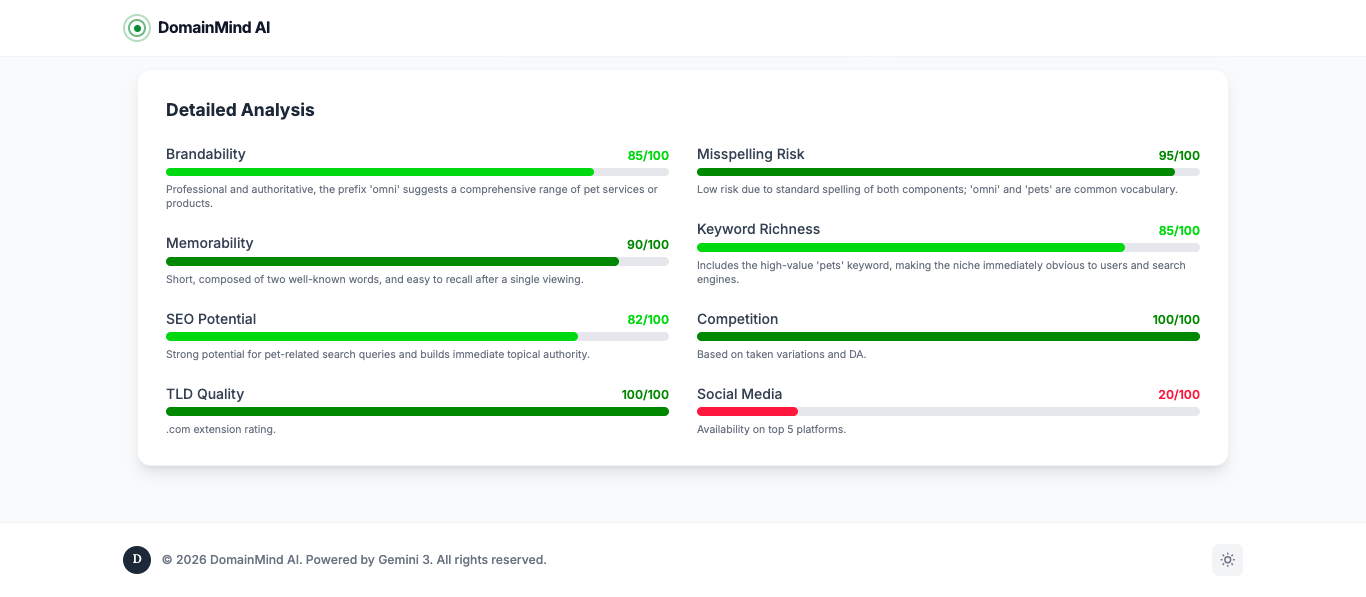
1st analysis of the AI agent
-
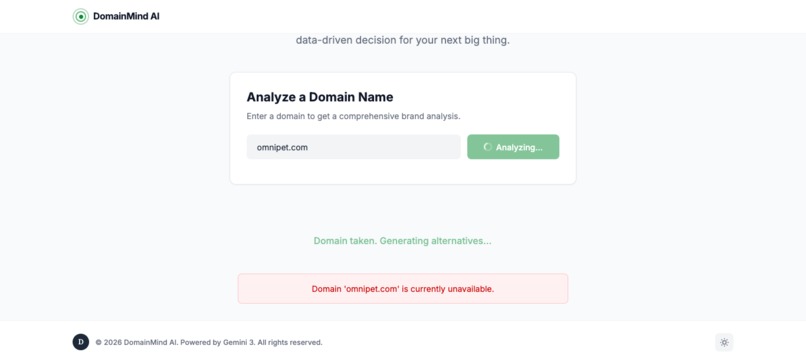
domain name is not available to purchase as it has already been taken by another person
-
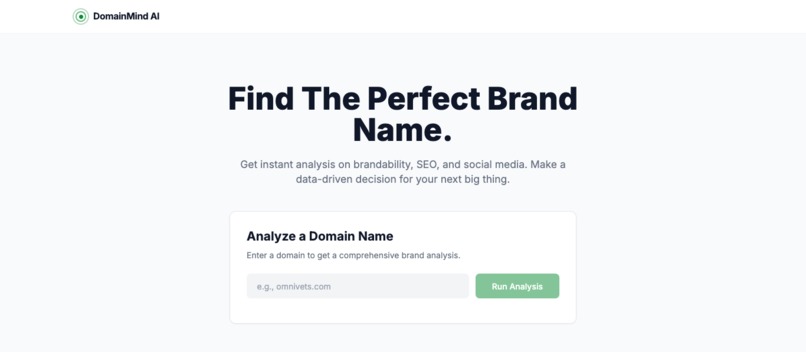
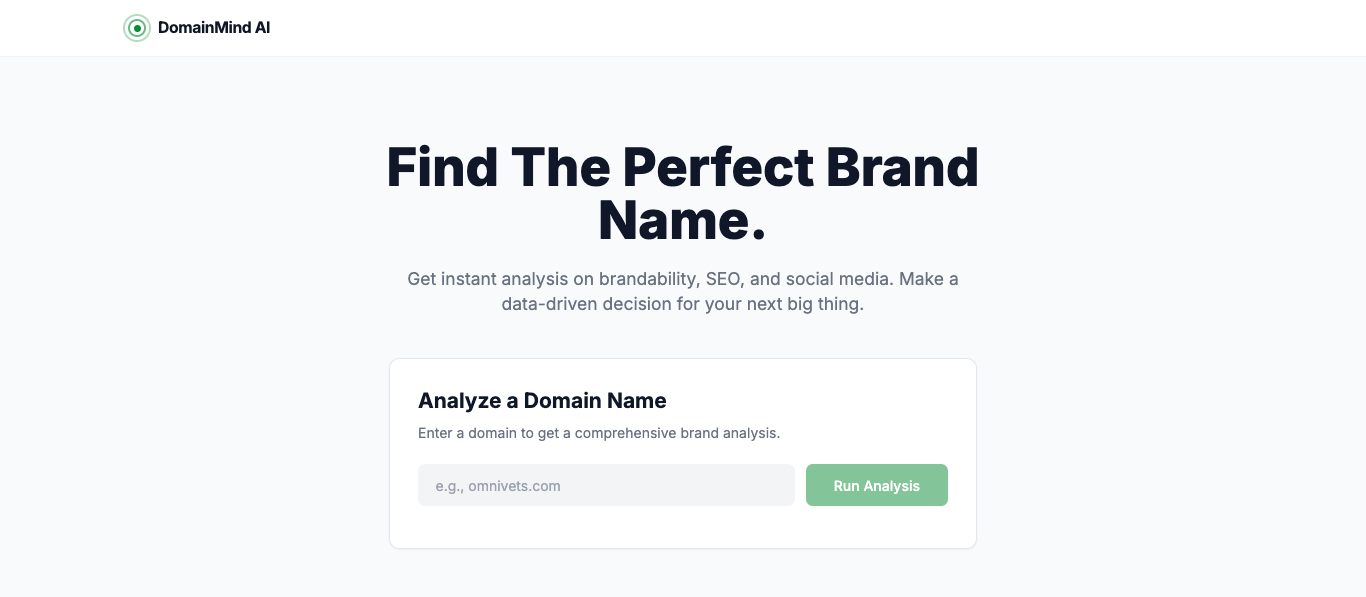
homepage of DomainMind AI
-
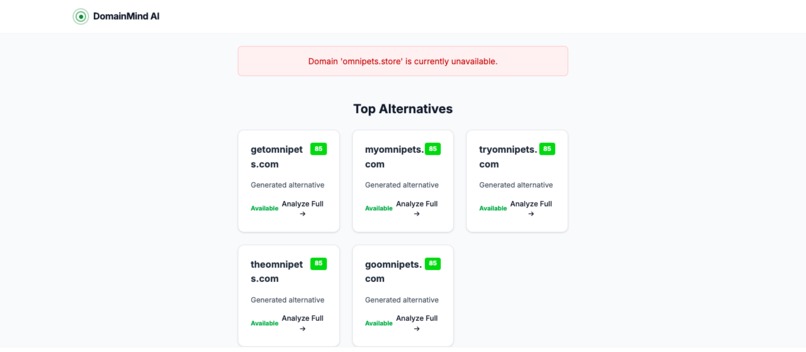
Alternative Domains to a domain that has already been taken
-
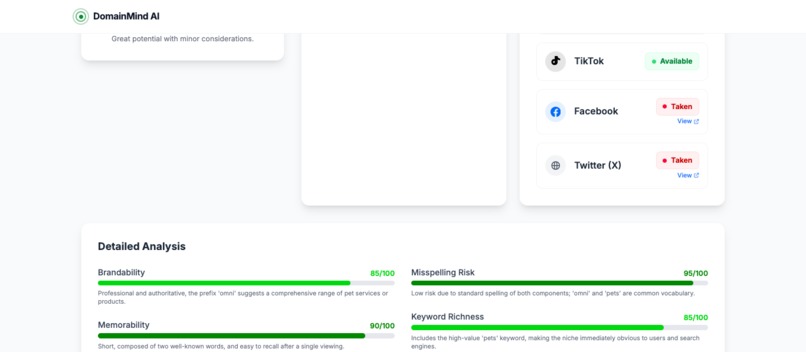
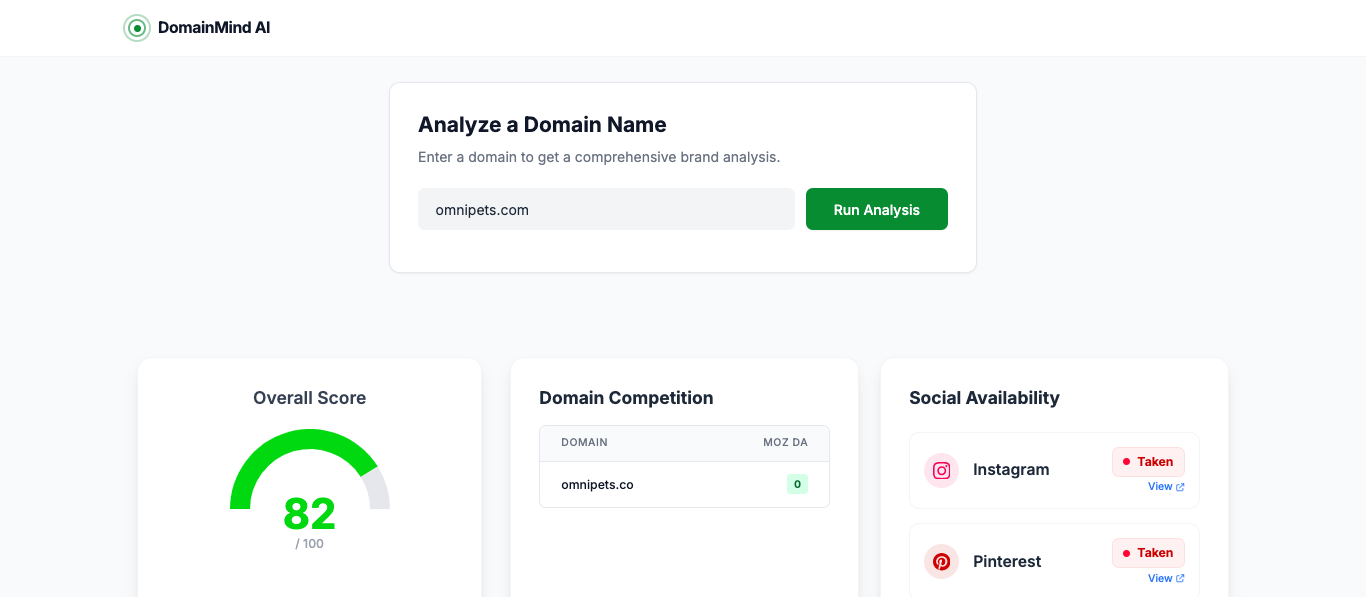
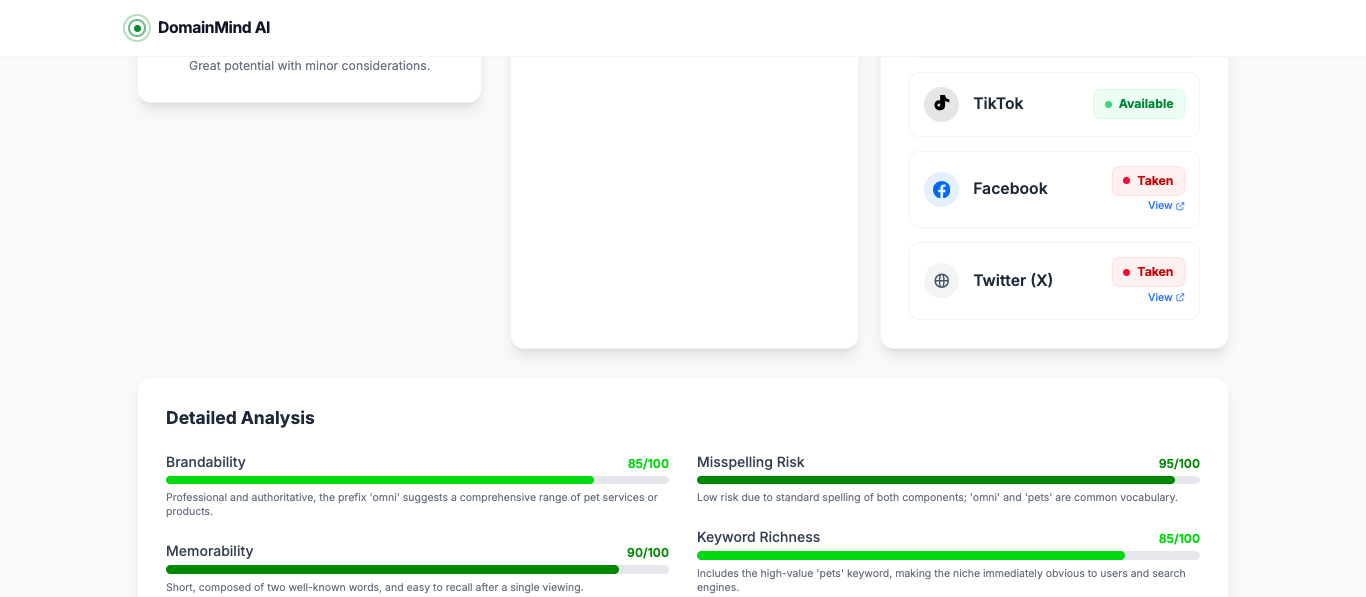
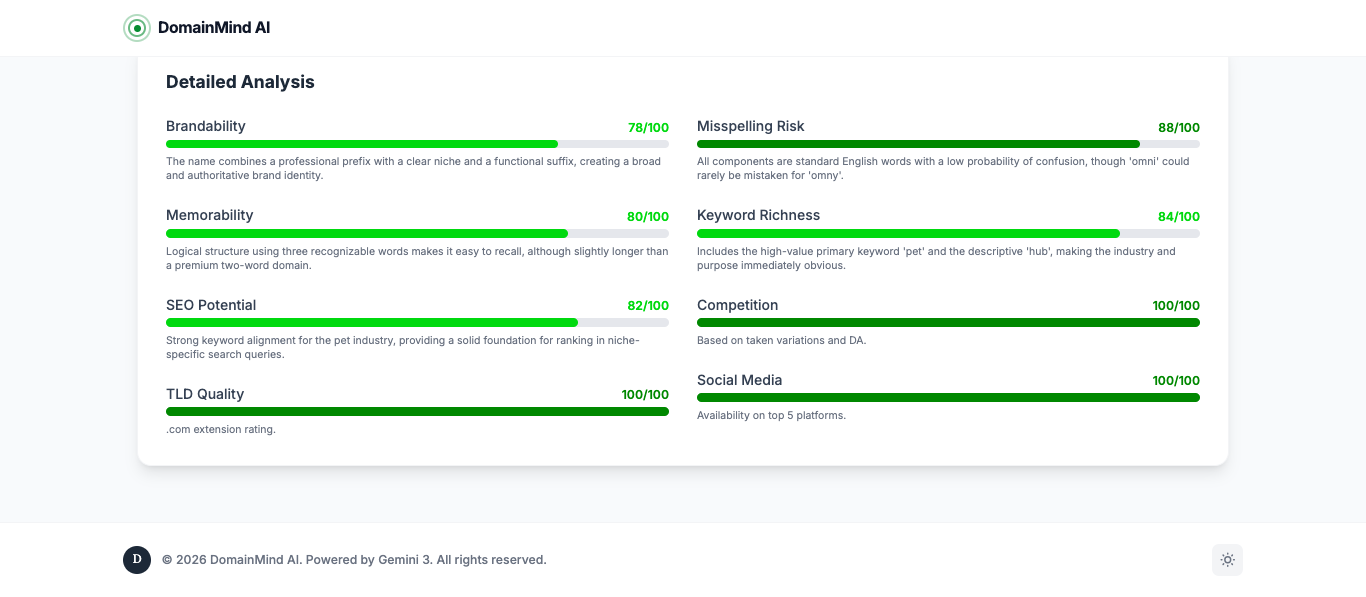
social availability and detailed analysis dashboard
-
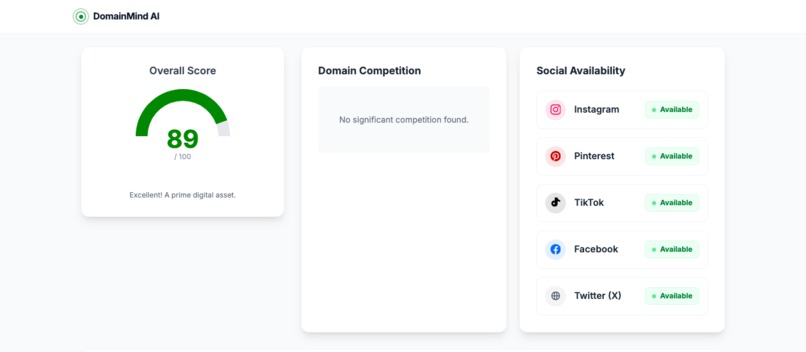
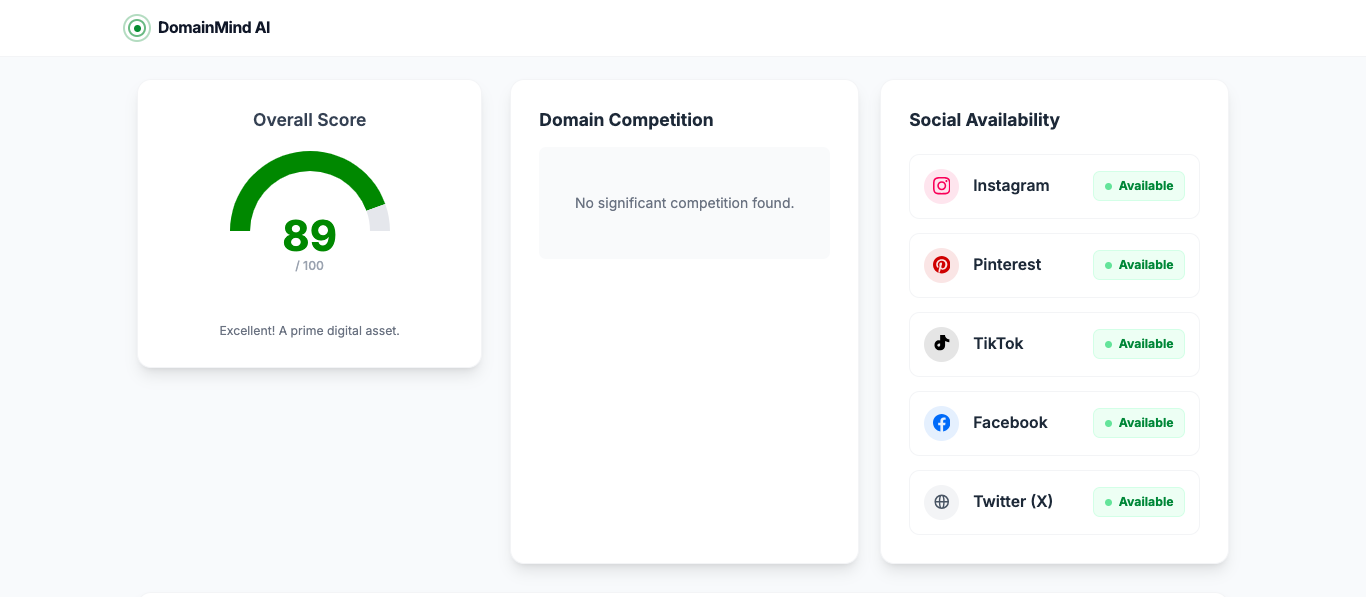
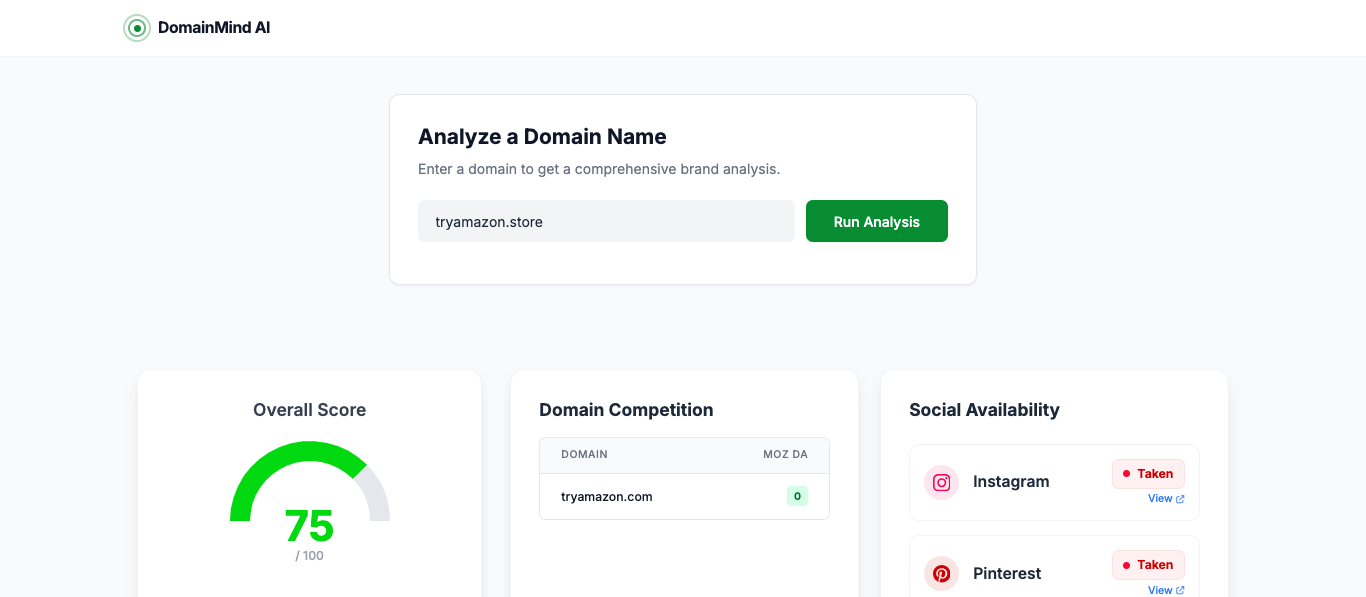
overall score and domain competition, here the domain has no significant competition
-
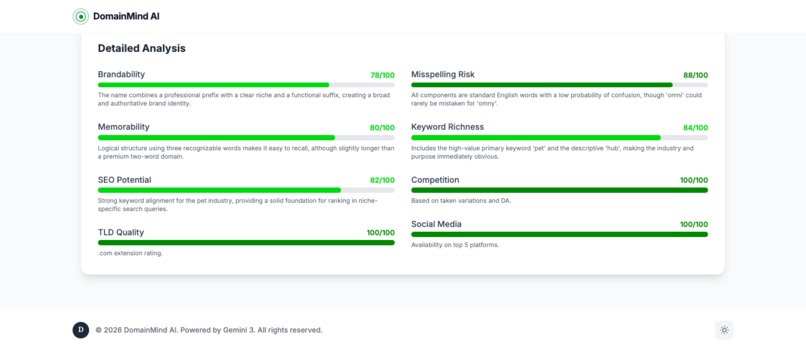
detailed analysis dashboard showing a great domain name and a potentially strong brand
-
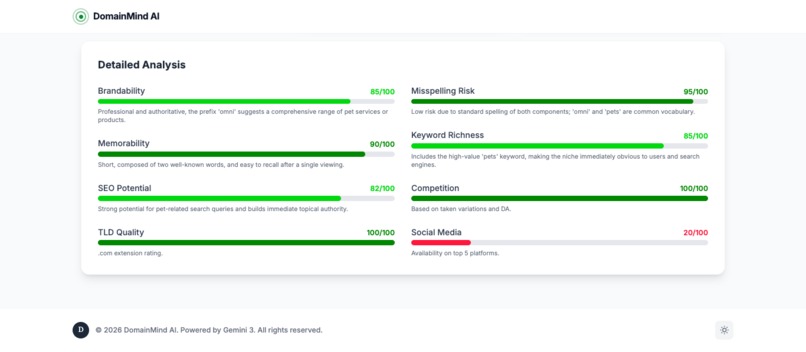
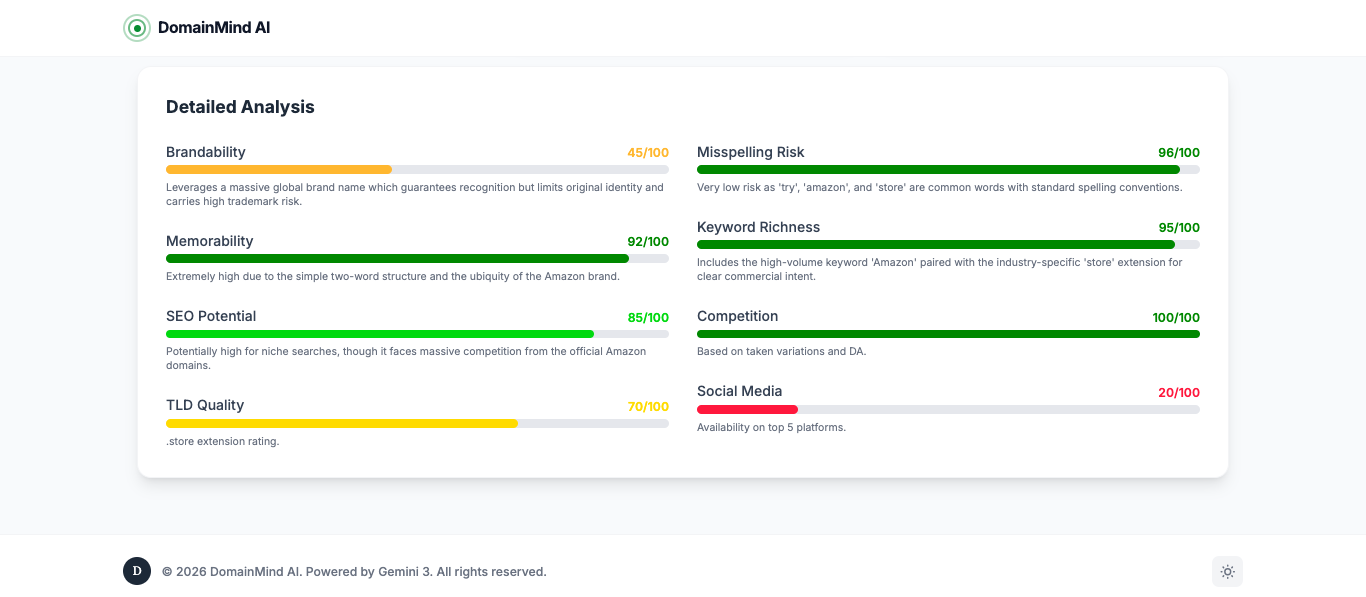
detailed analysis dashboard showing a potentially good domain but poor social media availability
-
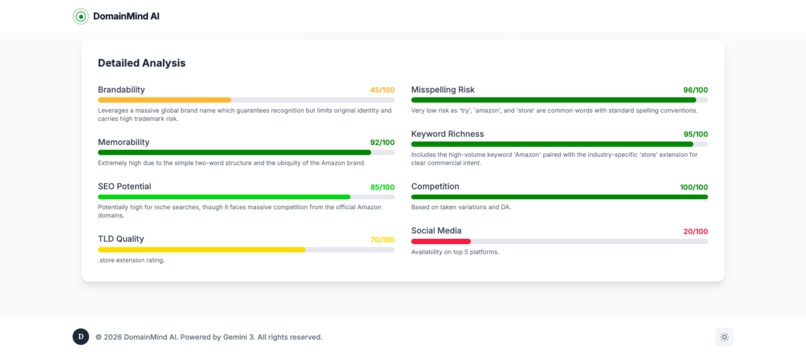
Detailed analysis of "tryamazon.com"
-
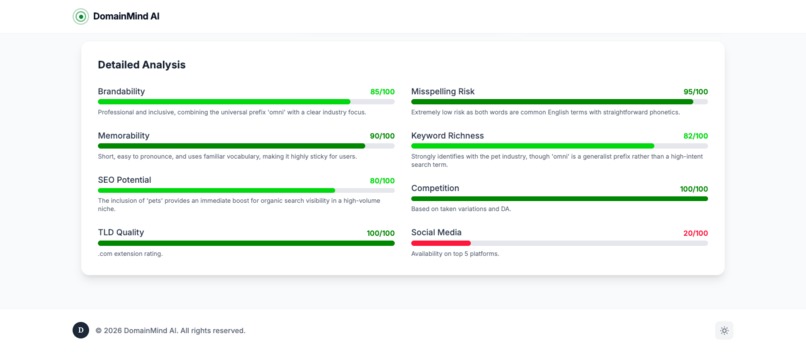
detailed analysis dashboard showing a potentially good domain but poor social media availability
-
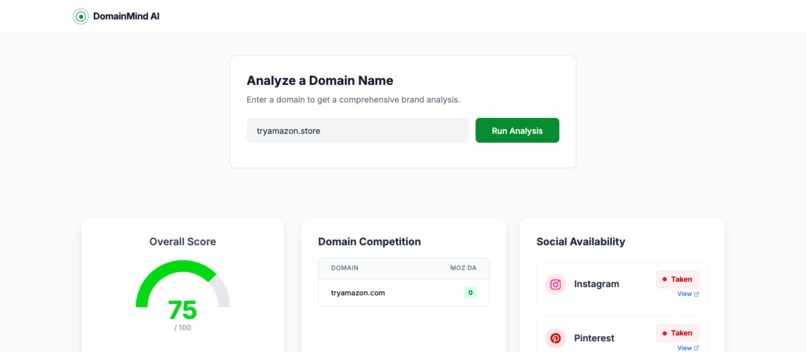
analysis of a domain showing the domain name, overall score and social availability
Inspiration
I spent weeks building my pet supplies brand—created a logo, built inventory, launched my website. Then I received a cease-and-desist letter for trademark infringement I never knew existed. I had to rebrand everything. That mistake cost me $8,000 and 3 months of lost momentum. I built DomainMind AI to prevent entrepreneurs from making the same expensive mistake.
What it does
DomainMind AI is an autonomous brand intelligence agent that prevents costly branding mistakes before you launch. It doesn't just check if a domain is available, it orchestrates a comprehensive competitive analysis that would normally take hours of manual research.
When you enter a domain, Gemini 3 autonomously:
- Analyzes 8 brand viability factors: (brandability, SEO potential, memorability, misspelling risks, TLD quality, keyword richness)
- Maps competitive threats: by identifying similar domains already taken and ranking them by domain authority
- Checks social media availability: across Instagram, Pinterest, TikTok, Facebook, and X using Gemini 3 search
- Generates intelligent alternatives: if your score is below 70, running the full analysis on each suggestion and only recommending domains scoring above 80
This is a self-correcting, multi-step orchestration system not a simple prompt wrapper.
How we built it
Platform: Google AI Studio with Gemini 3 API
Technical Architecture: I built an autonomous orchestrator that coordinates 3 external APIs (WHOIsXML for domain availability, Moz for competitive intelligence, Gemini Search for social media reconnaissance) with Gemini 3's multi-criteria reasoning engine.
The Process:
- Created a comprehensive Product Requirements Document defining all 8 scoring criteria, weighted calculation formulas, API integration logic, and autonomous decision flows
- Used Google AI Studio's Build feature to develop the Gemini 3-powered agent
- Integrated WHOIsXML API to check domain availability and generate competitive variations using Levenshtein distance algorithms
- Integrated Moz API to retrieve domain authority scores for competitive ranking
- Leveraged Gemini 3 search for real-time social media availability checks
- Built the alternative generation system: Gemini 3 uses contextual understanding to create relevant suggestions (not random names), then autonomously re-analyzes each through the complete pipeline and filters by score threshold
Tech Stack: TypeScript, React, HTML/CSS, JSON, Google Gemini 3 API, WHOIsXML API, Moz API, Google AI Studio
Challenges we ran into
Challenge 1: I initially started building without a Product Requirements Document and struggled with inconsistent results. The agent wasn't maintaining quality standards across the analysis pipeline.
Solution: I paused development, researched proper product specification, and created a comprehensive PRD. This explicitly defined scoring criteria, weighted formulas, API call sequences, and autonomous decision logic. Development accelerated dramatically afterward.
Challenge 2: Implementing the competitive analysis flow was complex, generating domain variations algorithmically, checking each against WHOIsXML database, retrieving domain authority from Moz, then ranking by threat level.
Solution: I used Gemini 3 itself to help debug the API call sequences and error handling logic. The model's reasoning capabilities helped me identify where async operations were failing and how to properly chain the API responses.
Challenge 3: Making the alternative generation system truly "intelligent" rather than just keyword substitution.
Solution: Leveraged Gemini 3's semantic understanding to generate contextually relevant suggestions that maintain brand essence while improving scores. The agent understands industry context and creates meaningful variations.
Accomplishments that we're proud of
Built a true Action Era agent: Not a chatbot or prompt wrapper, this is an autonomous system that plans and executes multi-step research workflows without supervision
Real-world impact: Preventing trademark disputes and rebranding costs that can reach $10,000+ for small businesses
Quality orchestration: Successfully coordinated 3 external APIs + Gemini 3 reasoning to maintain consistent quality thresholds (>80 score for suggestions)
Self-correcting system: The agent autonomously generates alternatives, re-analyzes them, and filters by quality, demonstrating true autonomous decision-making
Professional execution: Clean UI, comprehensive analysis, and results delivered in under 30 seconds
What we learned
1. Product Requirements Documents are critical: Explicitly defining logic flows, scoring formulas, and decision trees before coding makes AI agents far more reliable and consistent.
2. Gemini 3's reasoning shines in orchestration: The model excels at coordinating multiple data sources, applying weighted criteria, and making contextual decisions, perfect for autonomous agent workflows.
3. Action Era means autonomous quality control: The real power isn't just calling APIs, it's maintaining quality gates (like the >80 score threshold for suggestions) without human intervention.
4. Semantic understanding creates better UX: Using Gemini 3 for alternative generation produces relevant, industry-appropriate suggestions that keyword-based systems can't match.
What's next for DomainMind AI
Trademark database integration: Automatically check USPTO and international trademark databases to flag potential legal conflicts
Historical trend analysis: Show domain availability history and price trends to help users time their purchase
One-click registration: Partner with domain registrars for seamless purchase flow
Bulk analysis: Allow agencies and investors to analyze multiple domains simultaneously for portfolio decisions
AI-powered naming: Go beyond alternatives, let users describe their business and have Gemini 3 generate original brand name suggestions from scratch
Export reports: Generate PDF reports with complete analysis for team review and decision documentation


Log in or sign up for Devpost to join the conversation.