Inspiration
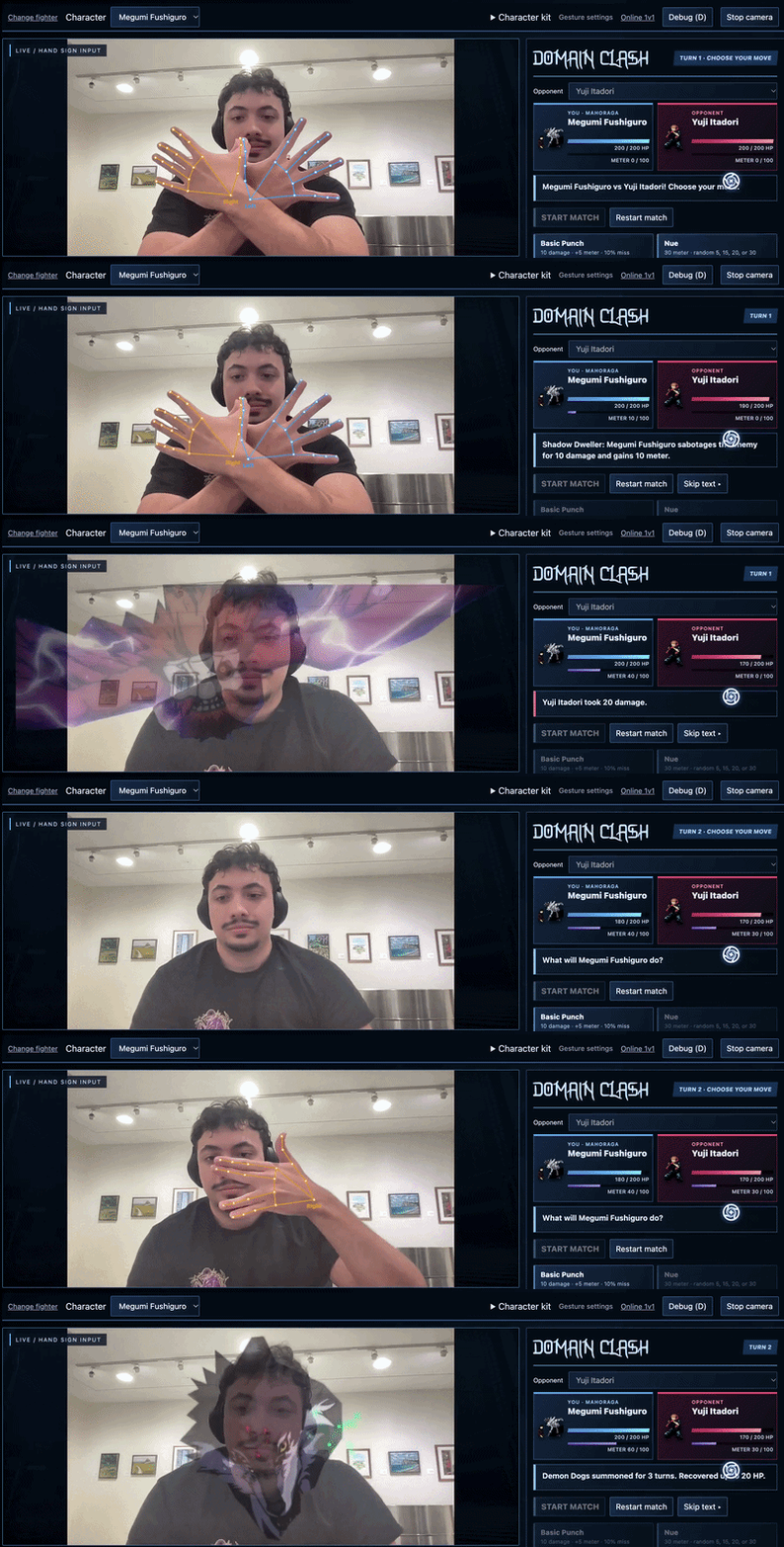
As fans of Jujutsu Kaisen, we wanted to turn its iconic hand signs into something players could actually use. What if performing a gesture in front of your webcam could unleash a technique or activate a Domain Expansion?
That idea became Domain Clash, an unofficial, fan-made browser game combining computer vision with strategic combat. We wanted to capture the excitement of the series while making the experience playable with an ordinary webcam.
What it does
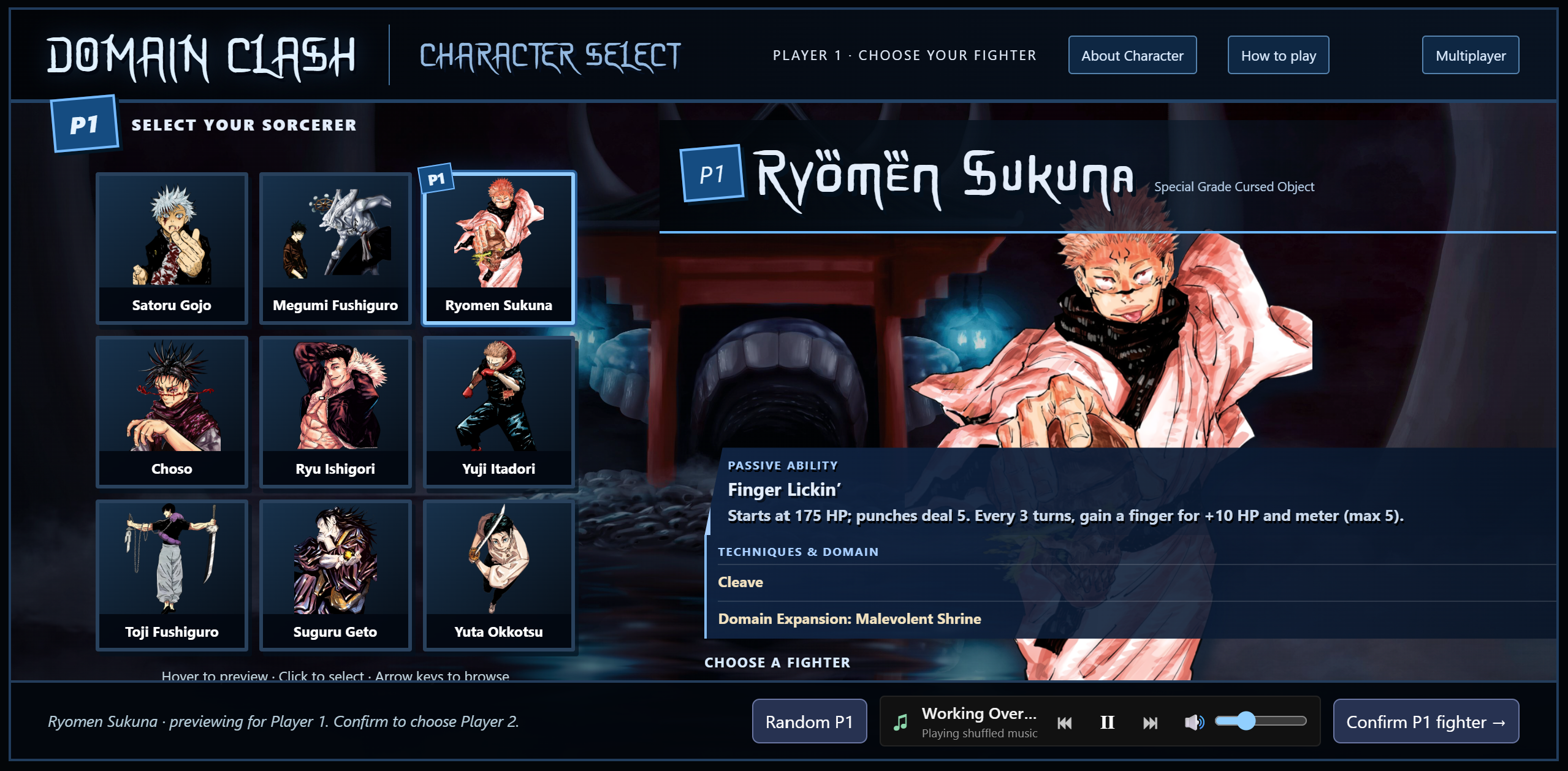
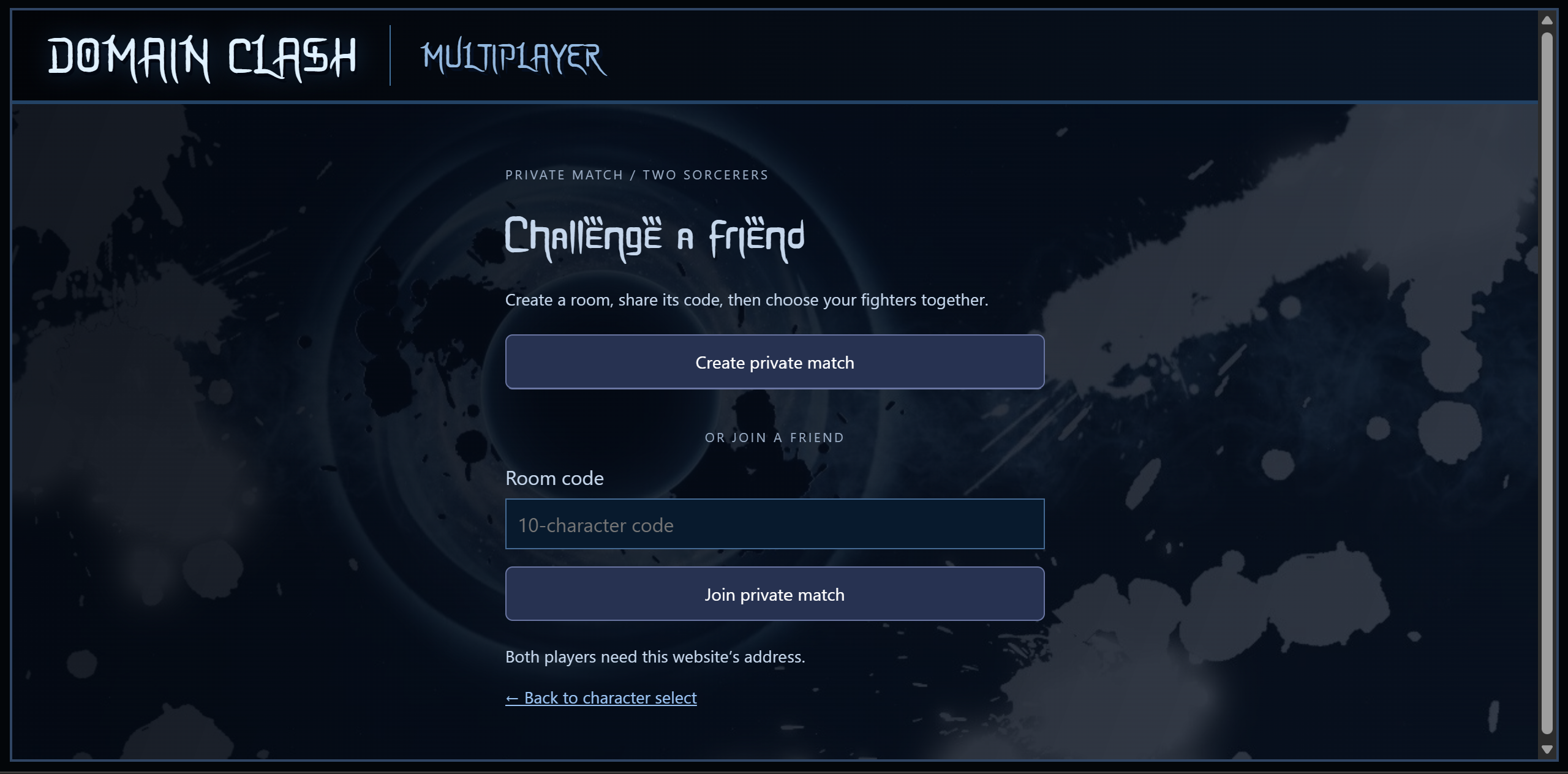
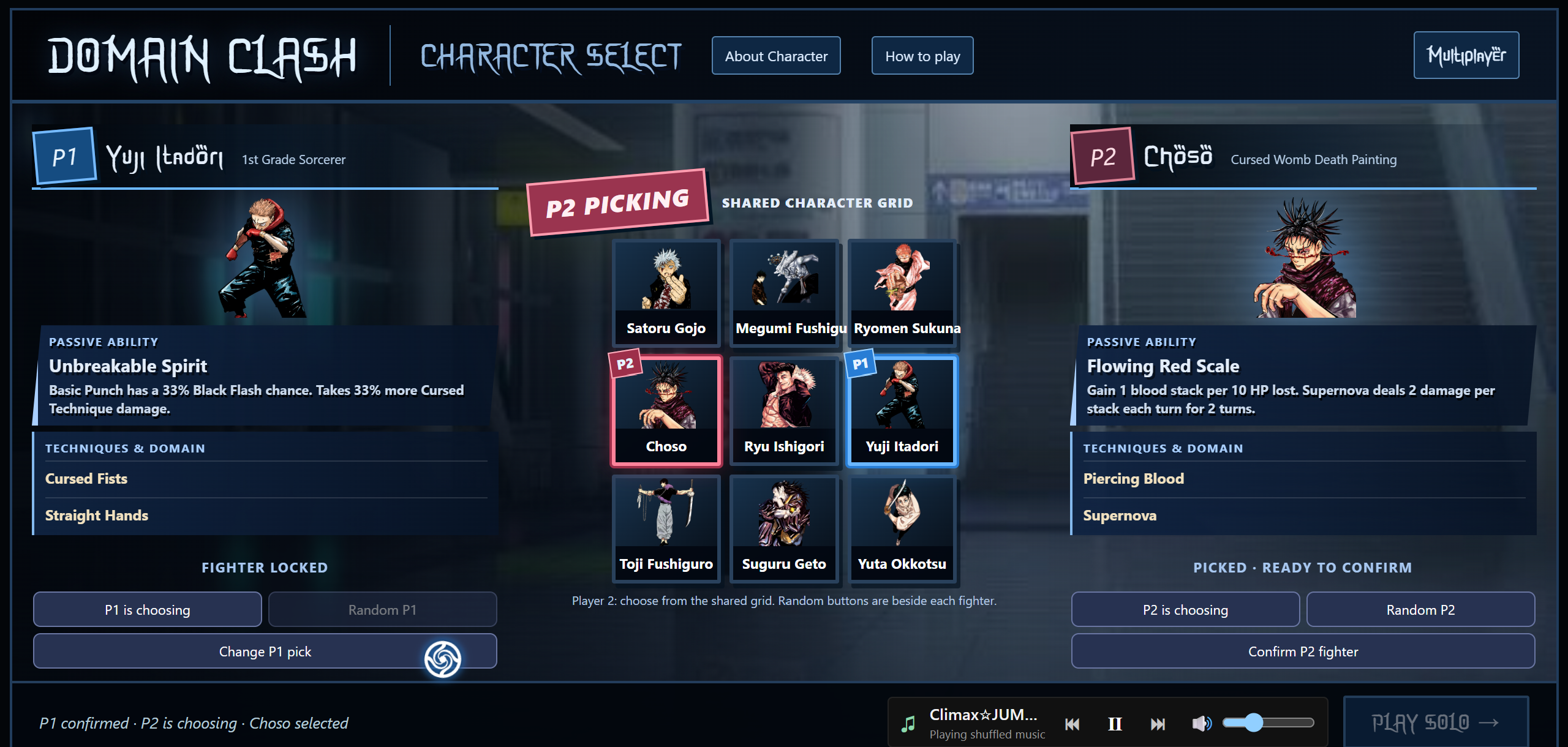
Domain Clash lets players choose from nine Jujutsu Kaisen characters and compete in turn-based battles, either solo against a computer-controlled opponent or online against a friend.
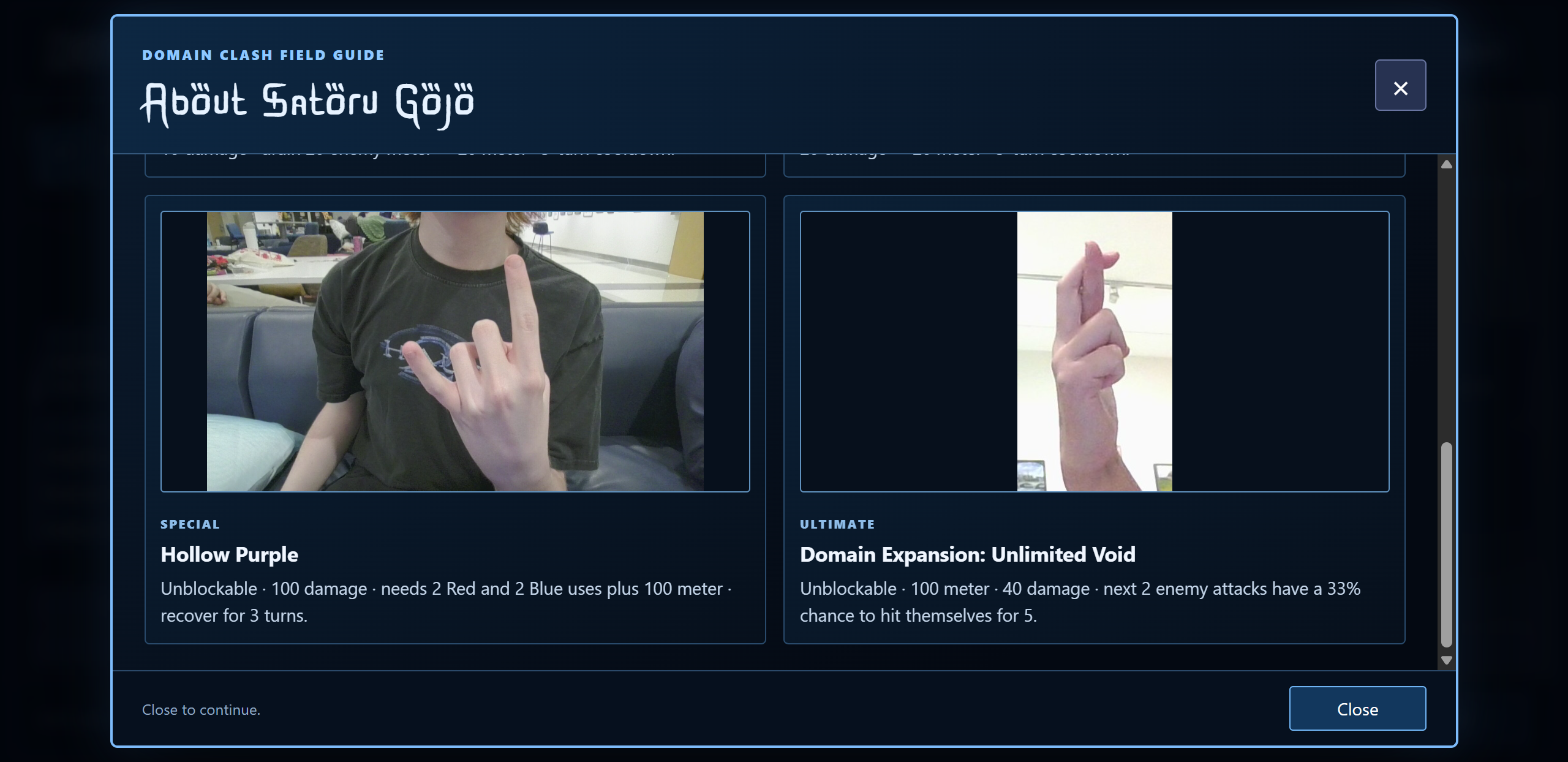
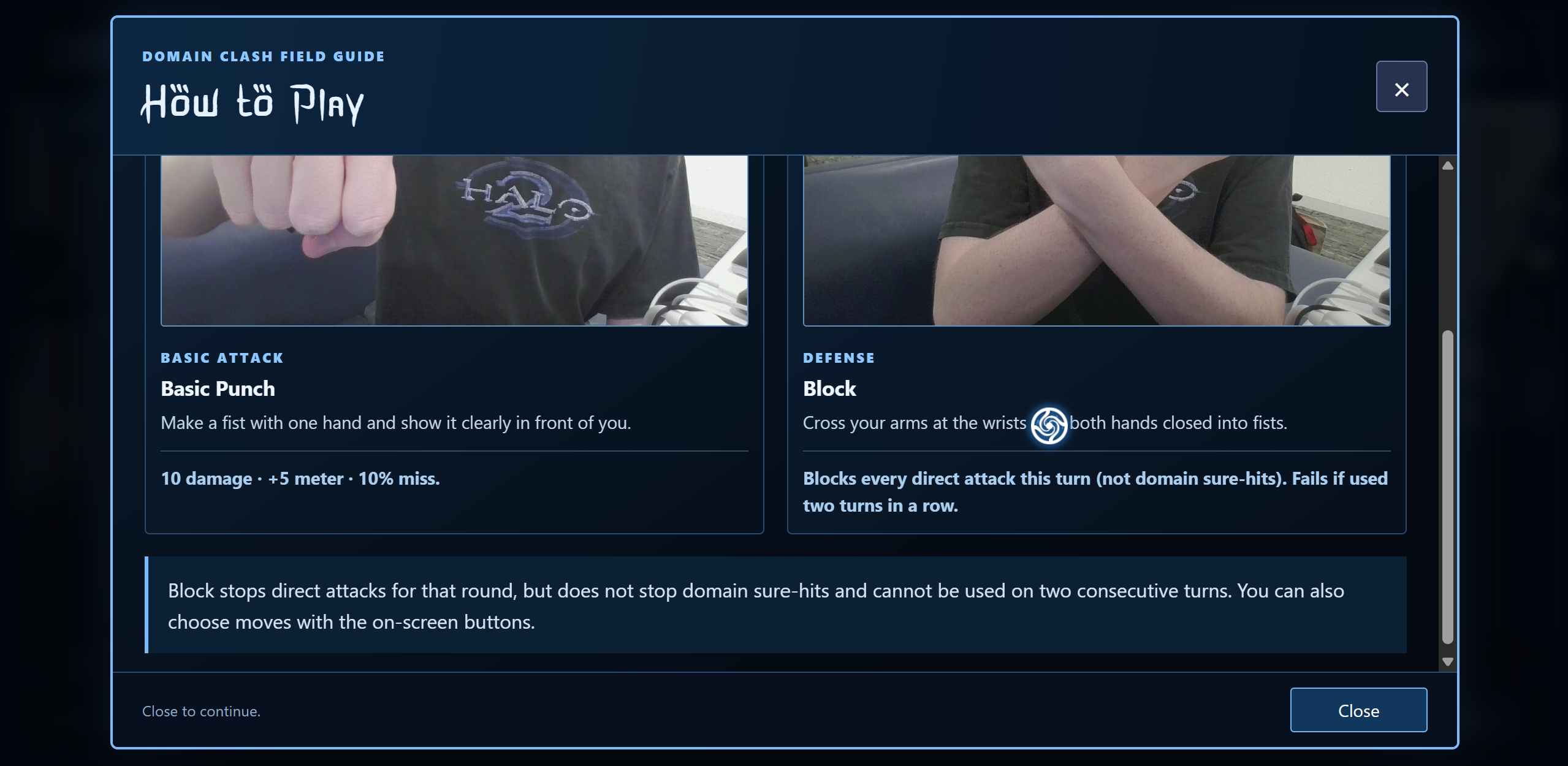
Players can perform supported hand signs through their webcam to activate techniques, manage cursed energy, and time their Domain Expansions. Each character has distinct abilities and passive effects, giving players different ways to approach a fight.
The game also includes:
- Private online rooms with shareable codes.
- Gesture recording tools for teaching additional poses.
- Import and export options for gesture training datasets.
- Buttons and keyboard controls for playing without a camera.
- Character effects, audio, and battle text that bring each action to life.
How we built it
We built the game using TypeScript, HTML, and CSS, with Vite supporting development and production builds.
For hand tracking, we used MediaPipe Tasks Vision to identify landmarks from webcam input. Our gesture recognition system interprets those landmarks using hand geometry, confidence filtering, smoothing, and hold-and-release timing. Players can also record gesture samples to train supported techniques.
The multiplayer backend uses Node.js and WebSockets to manage private rooms and communicate game updates. Solo and online modes share the same battle engine, while the server controls online battle outcomes so both players receive consistent results.
We included automated tests for gesture handling, combat rules, character selection, and multiplayer behavior, along with simulated battles to evaluate character balance.
Challenges we ran into
One of the biggest challenges was making hand signs reliable game controls. Similar poses can be difficult to distinguish, and small changes in hand position or camera angle can affect recognition. We needed to prevent accidental activations while keeping the controls responsive.
Multiplayer introduced another challenge: keeping both players synchronized through move selection, battle updates, results, and rematches. Each player’s chosen move also needed to stay hidden until the turn resolved.
We also had to balance recognizable character abilities with enjoyable gameplay. Powerful techniques needed meaningful costs and limitations so that battles rewarded strategy.
Accomplishments that we're proud of
We are proud of connecting physical hand gestures to a playable battle experience. Seeing a hand sign trigger a technique on screen brings the original idea to life.
Our biggest accomplishments include:
- Building a browser game with solo and online multiplayer modes.
- Creating nine character kits with distinct techniques and passives.
- Integrating webcam tracking with the combat system.
- Adding custom gesture recording and dataset tools.
- Building a complete flow from character selection through battles and rematches.
- Supporting camera-free controls alongside gesture input.
What we learned
We learned that recognizing a gesture is only part of making it useful in a game. The system also needs to understand when the gesture is intentional, when to activate it, and when the player has released it.
We also learned how important a shared battle engine and server-controlled game state are for consistent multiplayer experiences. Automated testing helped us check interactions that would be difficult to verify through manual play alone.
On the design side, we learned that clear feedback matters. Players need to understand whether their gesture registered, what their move did, and how the battle changed before choosing their next action.
What's next for Domain Clash
We want to improve gesture recognition across different lighting conditions, hand positions, and camera setups. Better tutorials and a smoother gesture training process would also help new players get into the game faster.
Future improvements could include additional characters, expanded techniques, more polished battle effects, and further balance adjustments based on player feedback. We also want to test online play across more devices and connections.
Our goal is to keep making Domain Clash a more responsive, accessible, and enjoyable fan-made experience.
Domain Clash is an unofficial, fan-made game inspired by Jujutsu Kaisen and is not affiliated with or endorsed by its creators or rights holders.
Built With
- css
- html
- javascript
- mediapipe
- node.js
- typescript
- vite
- websockets


Log in or sign up for Devpost to join the conversation.