Inspiration
We were inspired by Alice in Wonderland, specifically when she shrinks and is able to enter Wonderland afterward. We thought it would be an interesting concept to apply to a VR project where you could teleport into a small house that you could only previously see the bones of - our version of a digital twin.
When it comes to the social side of things, playing VR can be a rather isolating experience. A systematic review titled "A Best-Fit Framework and Systematic Review of Asymmetric Multiplayer Virtual Reality Games" (https://www.frontiersin.org/journals/virtual-reality/articles/10.3389/frvir.2021.694660/full?utm_source=chatgpt.com) examined various studies involving VR and non-VR users. The review’s conclusion highlighted that integrating non-VR participants can increase social interaction and reduce the isolation often associated with VR. We set out to try to bridge that gap through blending together physical and VR experiences.
What It Does
We are using XR to connect physical and the digital realities so that people both with and without VR headsets can interact in the same experience together.
Basic Functionality
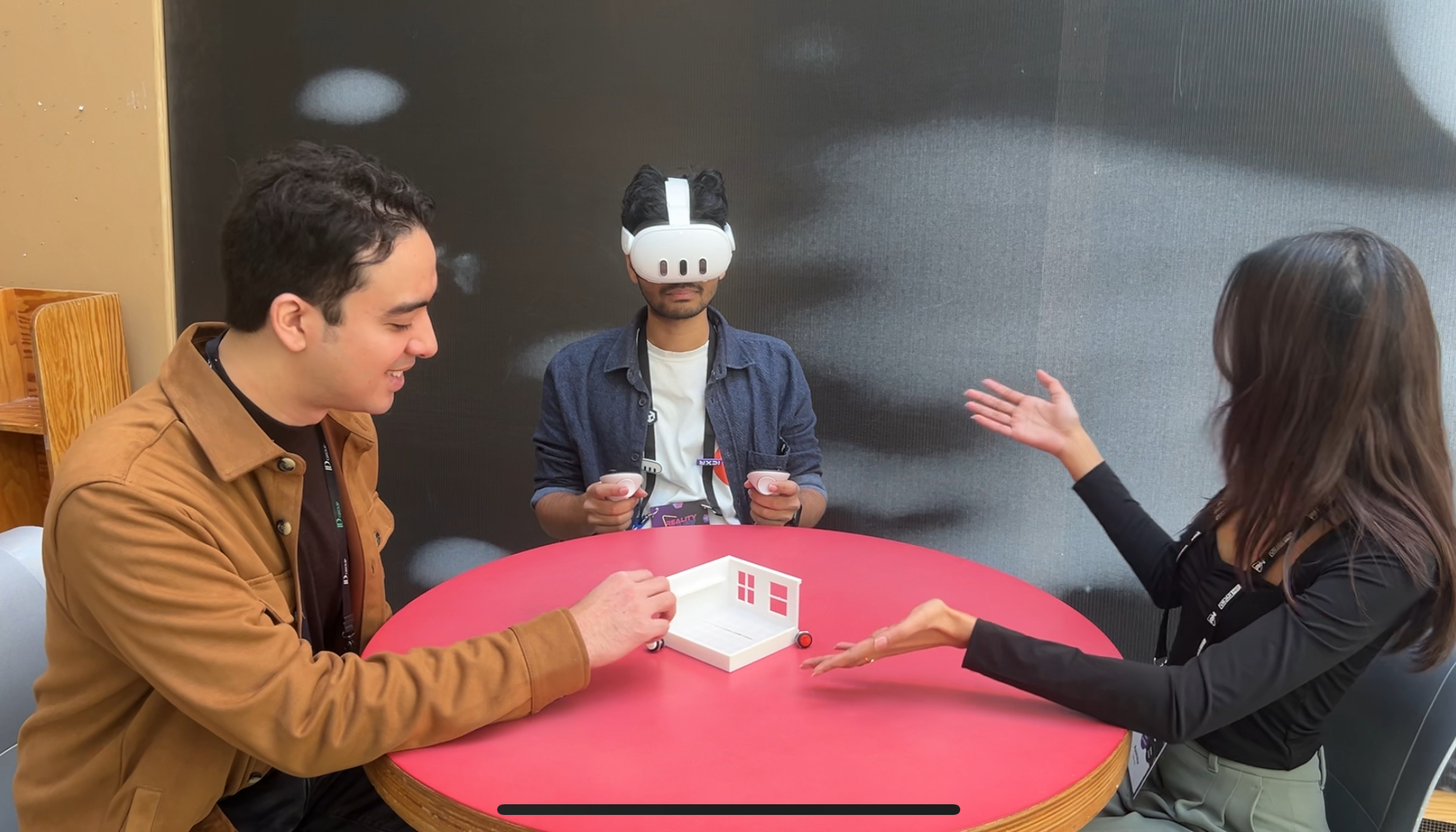
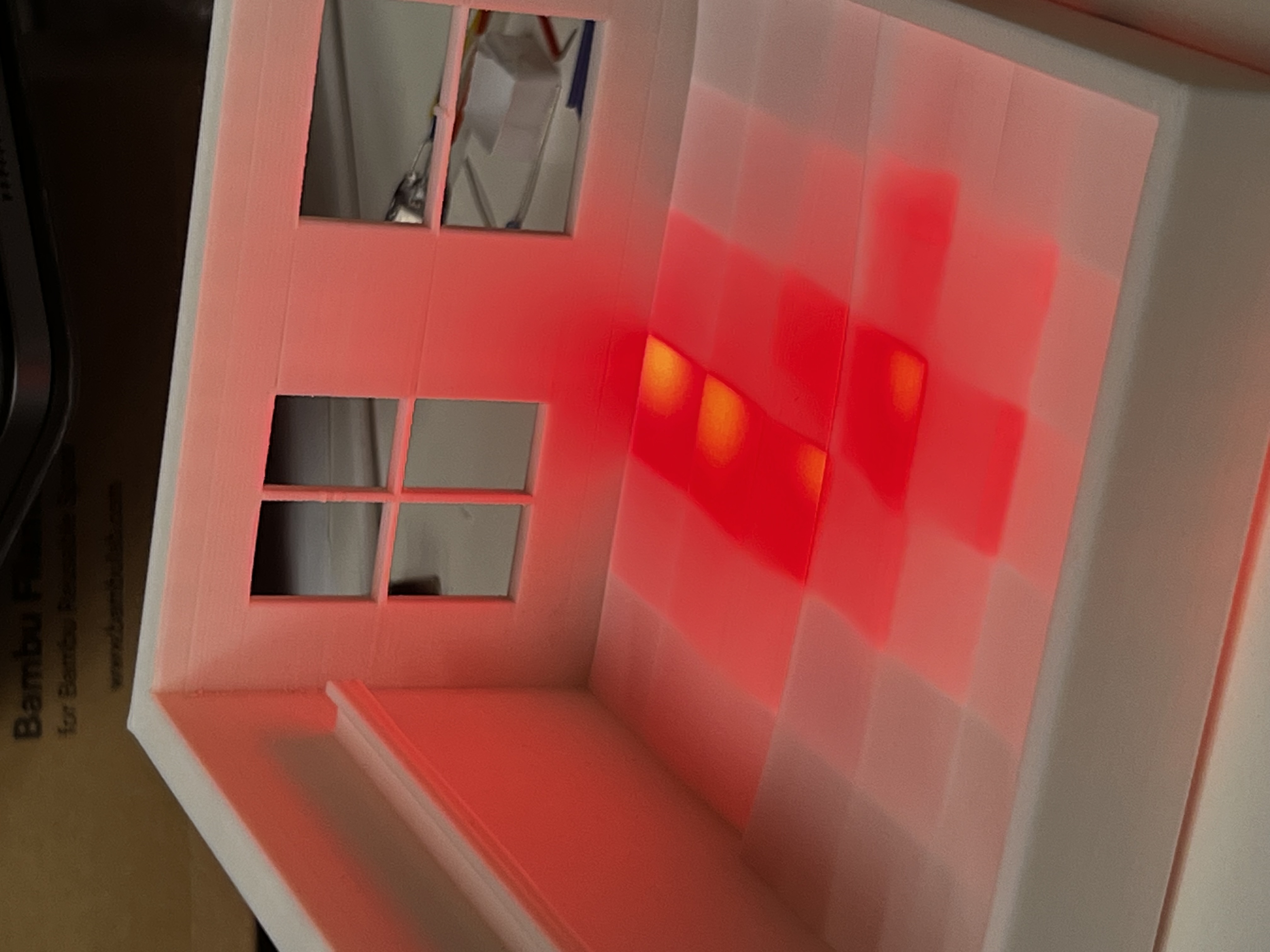
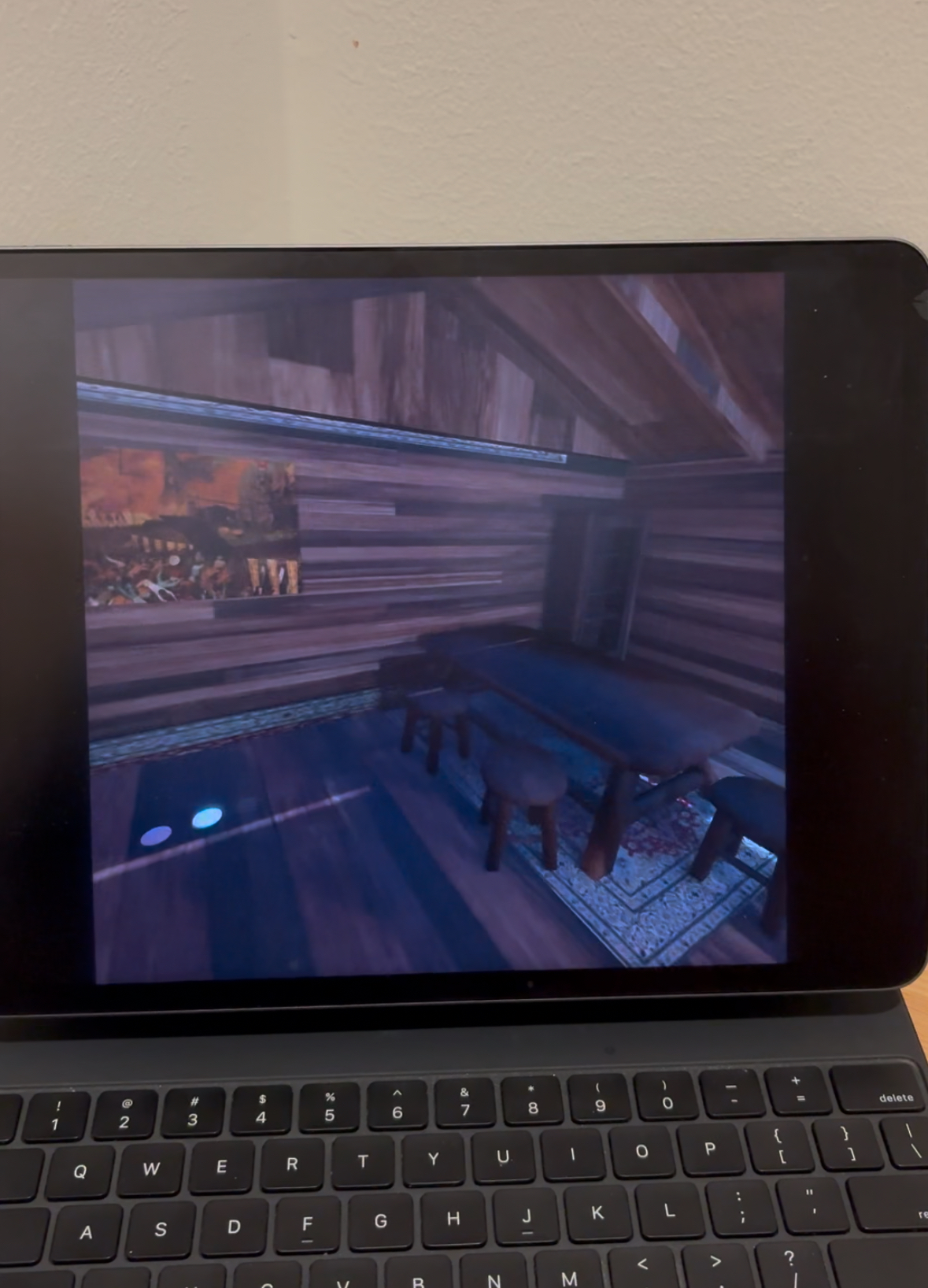
This three-person experience surrounds a physical 3D printed doll house that sits upon a 6x6 grid. The person wearing the VR set (our “Explorer”) is immersed into the inside of the house in a VR doll house, which looks like a vintage Victorian house with lots of foliage inside of it. The Explorer is able to move around the house across a grid that parallels that of the physical house with joysticks to try to find the exit of the house - with each grid square translation, an LED lights up on the physical house’s grid to show the two players without a VR set where in the house the Explorer is.
The Tricky Twist(s)
The two players without a VR set are titled our “Protagonist” and “Antagonist”, each who have different agendas. There are two exits available to the player - one that belongs to the Protagonist and the other to the Antagonist. As implied by their names, the Protagonist is trying to lead the Explorer to the “correct” exit, where the Explorer and Protagonist win the game. Meanwhile, the Antagonist is trying to lead the Explorer to the “wrong” exit, where the Antagonist wins the game.
The Explorer has 3 minutes to find the correct exit and they do not know who is who between the Protagonist or Antagonist, all while having to rely on the two to open up their two door options for the next room they move into. To do this, the Protagonist and Antagonist use the four buttons surrounding the physical doll house (each representing the cardinal directions of the Explorer’s ability to move between rooms), taking turns to choose a button so the Explorer can choose between the corresponding two doors that open and then move into the next room.
Commentary and Time Constraint
As the 3 minute time constraint passes, the aforementioned foliage in the house starts to darken and wilt. Despite a doll house symbolizing an idyllic place, the secret of the doll house is that it’s a commentary similar to the climate change clock in New York City. As a society, we have many decisions we must make to save our planet in a specific time frame - if we make the wrong decisions, we risk wasting time and facing the death of our planet.
How We Built It
The Virtual Doll House
(Pranav & Hugo)
The Physical Doll House
3D printing was our best friend! Using ___ (Pranav), we made the model and iterated on the wall height and placement for the house - if the walls were too tall, would players be able to see inside?
The Physical Console
Underneath the grid of the physical doll house are a string of LED lights that communicate with (Hamza)
Challenges
Our list of grievances includes: we didn’t have an ESP32 board for the first half of Day 1, figuring out the gameplay made our designers lose their minds for hours, we lost direction as to the “point” of the game was, the 3D prints didn’t fit into each other so a lottt of sanding had to happen (the house has now lovingly/begrudgingly earned the name Sandy), and our developer’s laptop completely died in the evening of Day 2. We persevered though!
Accomplishments
Throughout this entire experience, despite the highs and lows, we have remained consistently so excited about our idea - we count this as a huge victory! Everyone at the MIT Reality Hack is so intelligent and are working on such brilliant projects, so staying confident and excited was an accomplishment in its own right. We put a lot of thought on the user’s movement through the space and relationship between the physical and virtual world, as well as user motivation, so the final result with most of the kinks worked out is also something we are happy with (although we stubbornly feel there is still more work to be done).
What We Learned
We learned a lot of lesson about perseverance - for all of us it's our first hackathon and it came with a lot of unique challenges. At the end of the day, it was a wonderful opportunity to learn from new friends and expand on existing skills in such an amazing environment under a time constraint! All of us feel more confident in our abilities that we used after this.
What's Next
We really wanted to give the non-VR participants the ability to put up walls suddenly and interfere with the VR player, which we would do with weighted sensor, but they were unfortunately not available to us. We believe that that would give the non-VR players much more interaction and incentive to play the game, so that’s very high on our to-do list with developing the experience further afterward.
Acknowledgements
The biggest of thank-you’s to Stanton Nash, Dan Willmott, Christian Gabbianelli, Wes Sonnenreich, and Lucas De Bonet for their mentorship, advice, and support throughout this journey. You guys are the best!!!
Built With
- adobe-creative-suite
- apple-vision-pro
- arduino
- blender
- c#
- esp32
- figma
- meta-vision-pro-3
- singularity
- styly
- unity


Log in or sign up for Devpost to join the conversation.