
Inspiration
We are constantly scrolling. There's real research on what that does to us: cognitive overload, weaker memory, less deep thinking. Even handwriting, something tied to memory and focus, is quietly disappearing as we type and swipe instead.
Kids have no shortage of games built to exercise memory and imagination. Adults have almost nothing in that space. We wanted something for ourselves first: a few free minutes off the phone that still felt like play, not homework, while doing something good for the mind.
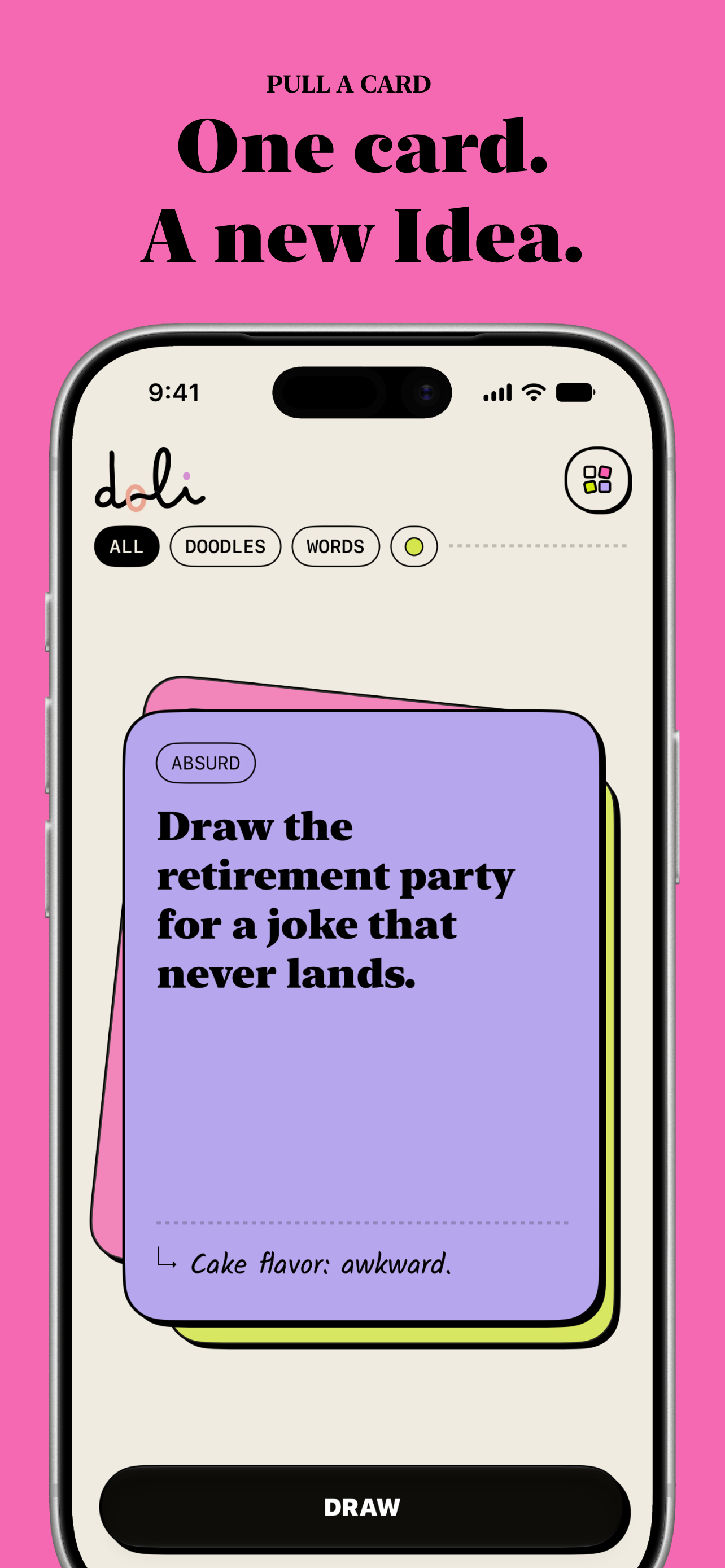
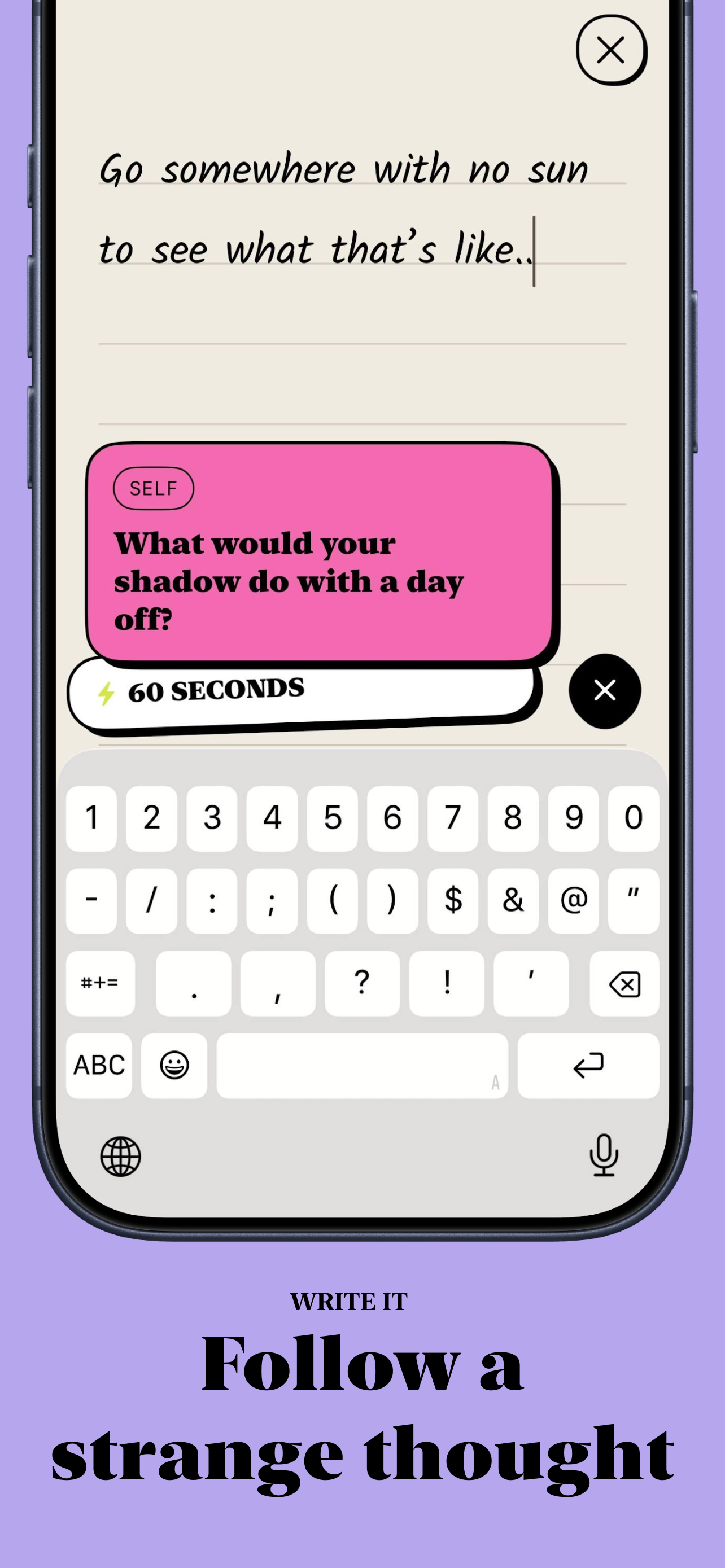
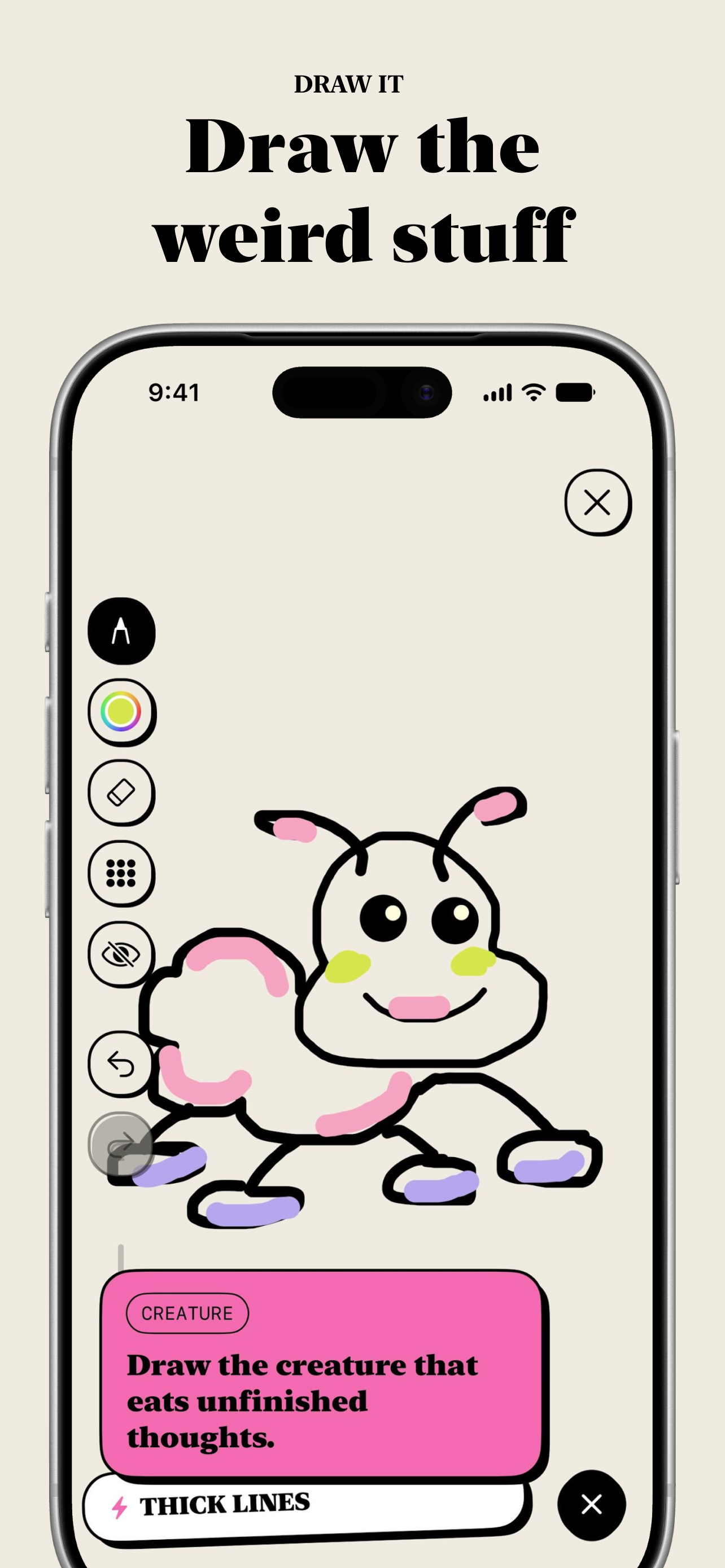
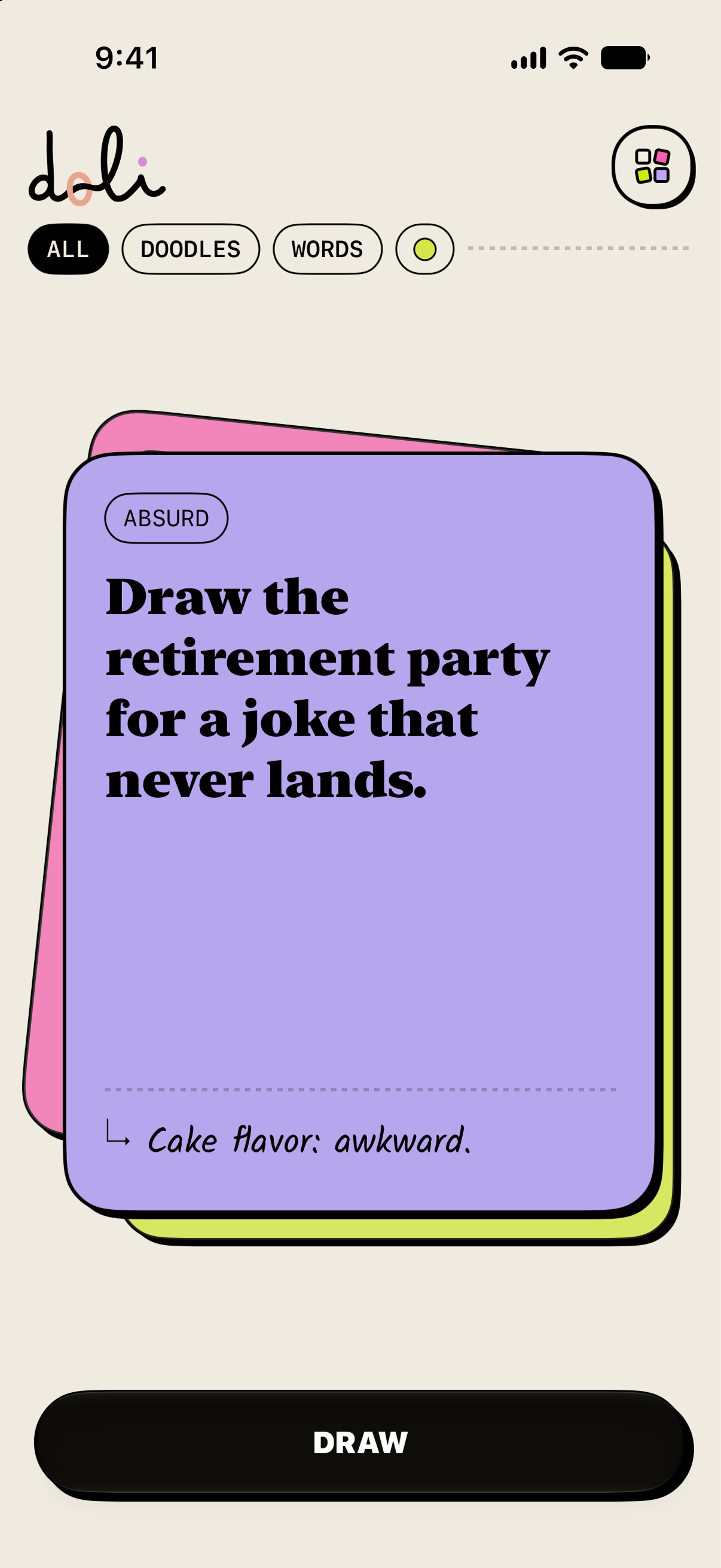
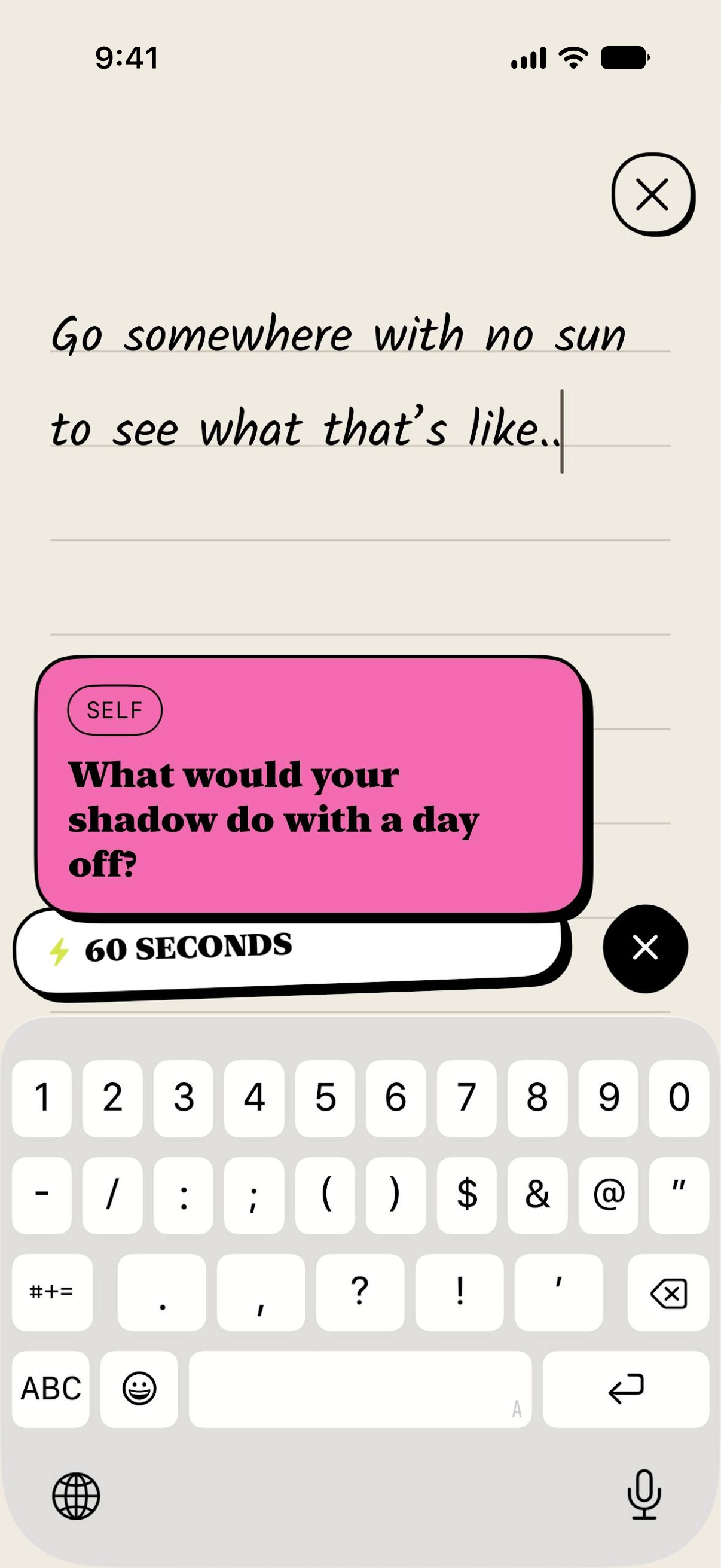
That's where Doli came from. A deck of strange little cards ("Invent a vegetable that lies.") that you draw or write your way through. No right answer, no skill required, nothing to finish. The name comes from dot and line, the two smallest things you need to make anything at all.
What it does
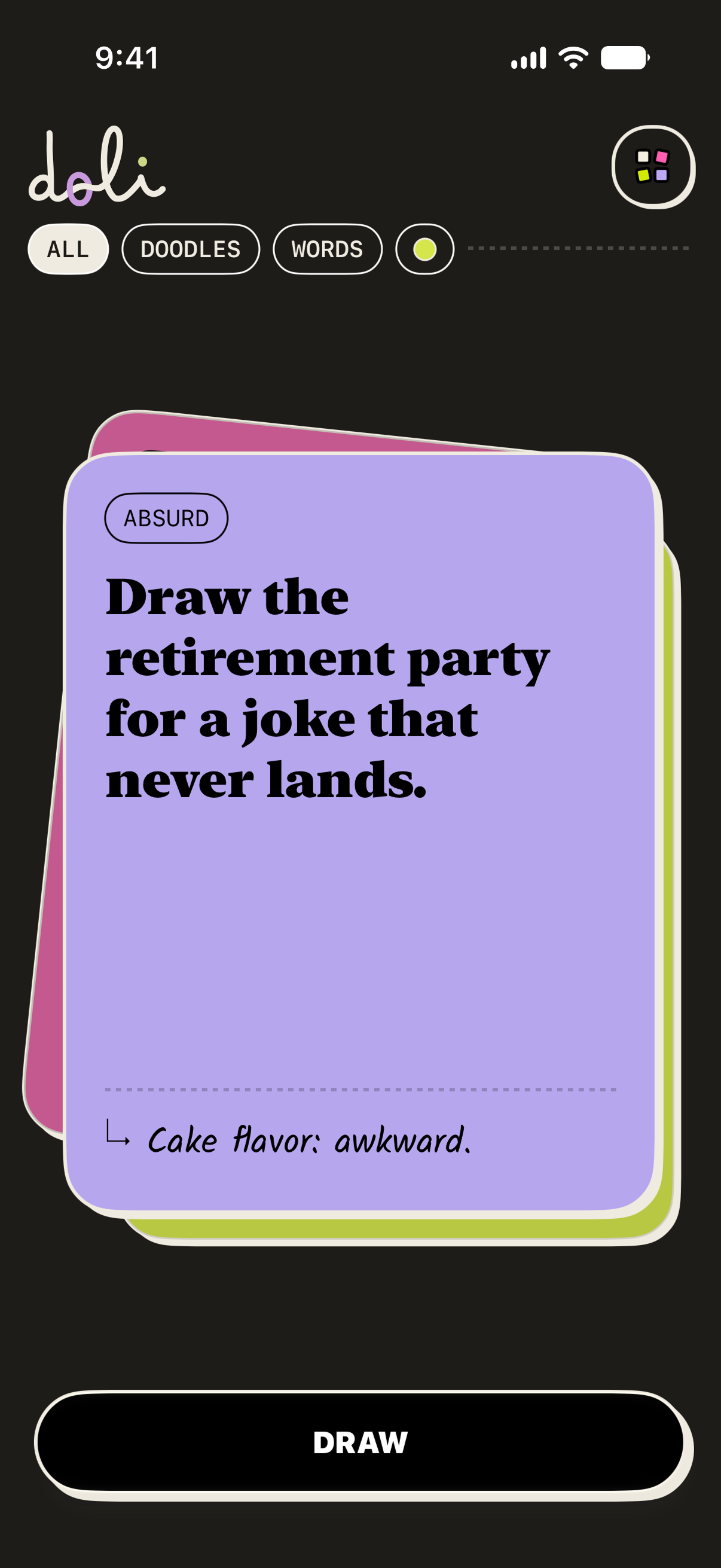
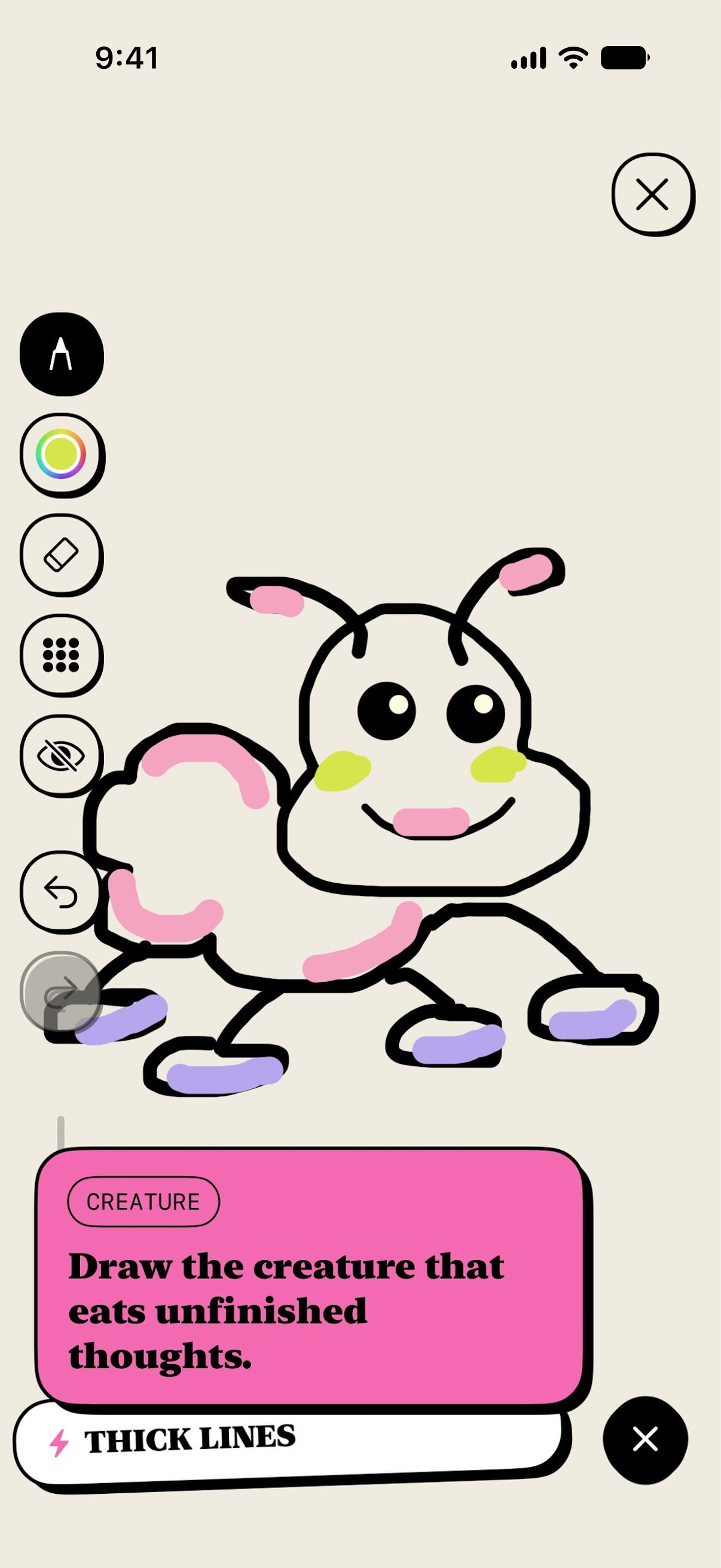
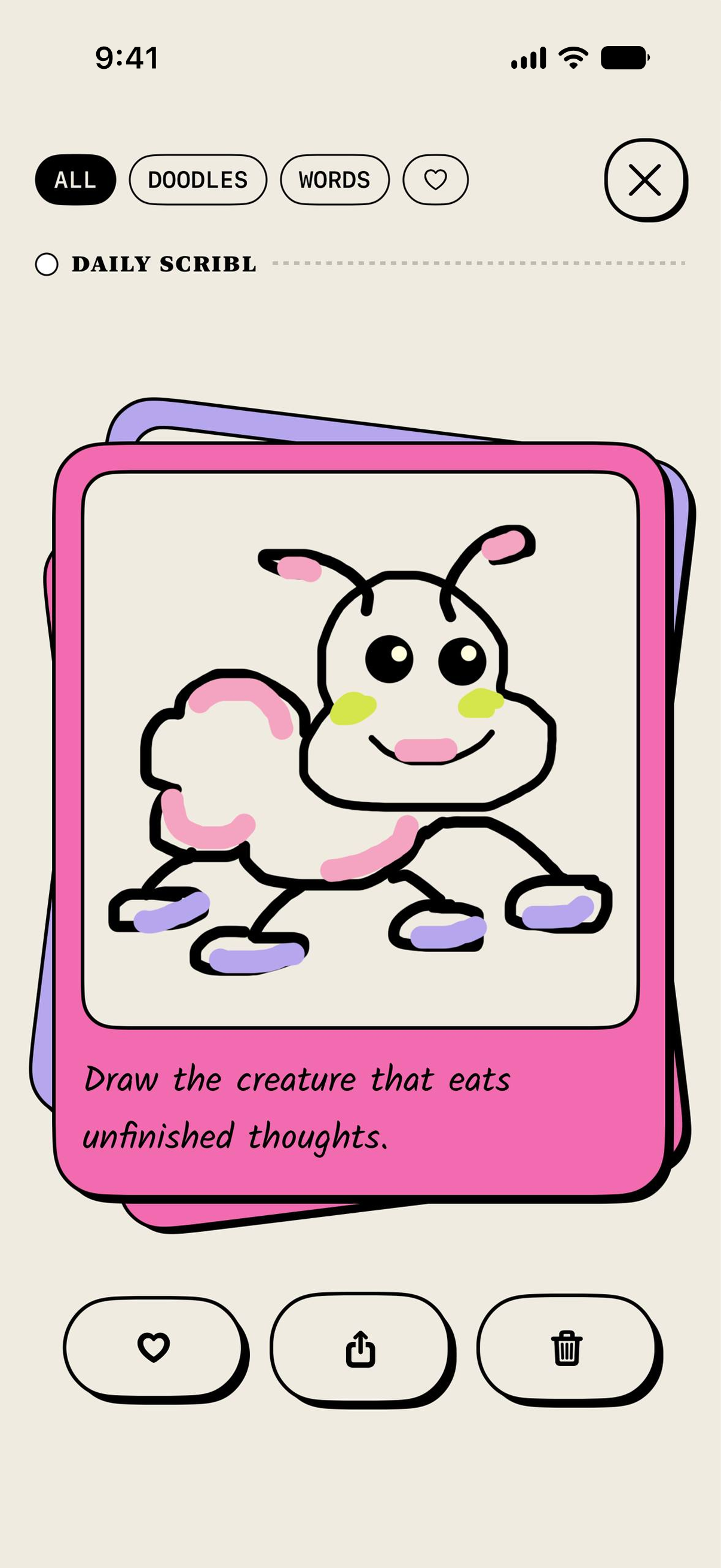
Pull a card, make something, toss it. Every card has a hint underneath to nudge you without steering you.
- A free starter deck of 69 cards
- Five themed packs of 50 cards, unlocked individually or all at once: Absolute Absurdity, Cosmic Bureaucracy, Forgotten Childhoods, Domestic Mischief, Impossible Biology
- Every card is quietly built on real cognitive science — episodic memory, emotional granularity, divergent thinking, theory of mind, anomaly detection — but you never see any of it. No "brain training" branding, no lecture. The thinking happens in the background, the way a good game teaches without calling itself a lesson.
Challenges
- Hiding the science. Every card had to feel fun first. If the mechanism showed through, the joke died.
- Making the prompts inclusive. For example, Forgotten Childhoods, we reviewed every single card by hand to strip out anything tied to one specific culture, family shape, or upbringing. A prompt like "the yellow school bus you rode every morning" means nothing if you grew up walking to school or taking a tram — so we rewrote toward the underlying feeling (a route you knew by heart, a ritual only your house had) instead of one country's specific version of it. A memory prompt has to land for someone whose childhood didn't look like ours.
- Balancing AI and human judgment. We used AI to brainstorm and rework hundreds of cards, but every single one was reviewed by hand: for the joke to actually land, for the theme to hold, and for the underlying mechanism to be grounded in real, published cognitive science.
- A paywall that doesn't feel like one. Each pack screen shows one real card, three short bullets, two buttons. The card does the selling, not the copy.
- PencilKit is still the only framework for sketching that does not require the system tool picker, and allows us to use custom tool buttons.
What we learned
- The best way to get someone to think is to not ask them to.
- A paywall works better as a taste of the product than a pitch for it.
What's next for Doli
- Dive deeper. Pull a card, create and then the app hands you a another one that picks up exactly where the first left off, still just as fun, absurd, and weird. Instead of one idea and done, you end up with a small, strange little story you built one card at a time.
Built With
- pencilkit
- revenuecat
- sqlite-data
- swiftui
- uikit

Log in or sign up for Devpost to join the conversation.