-
-
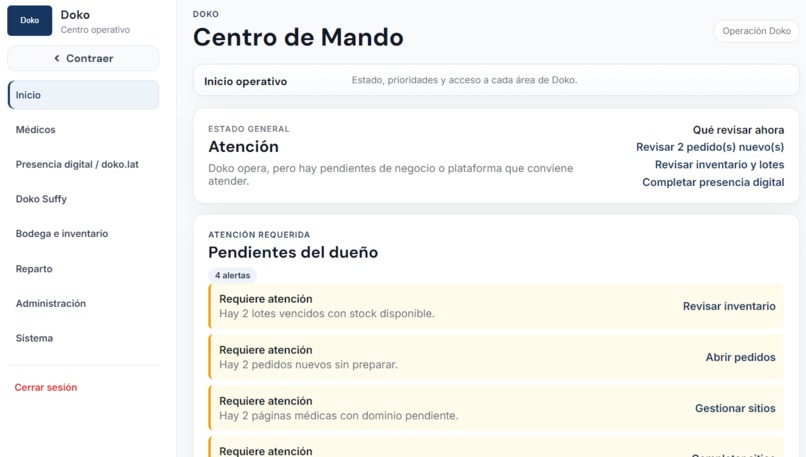
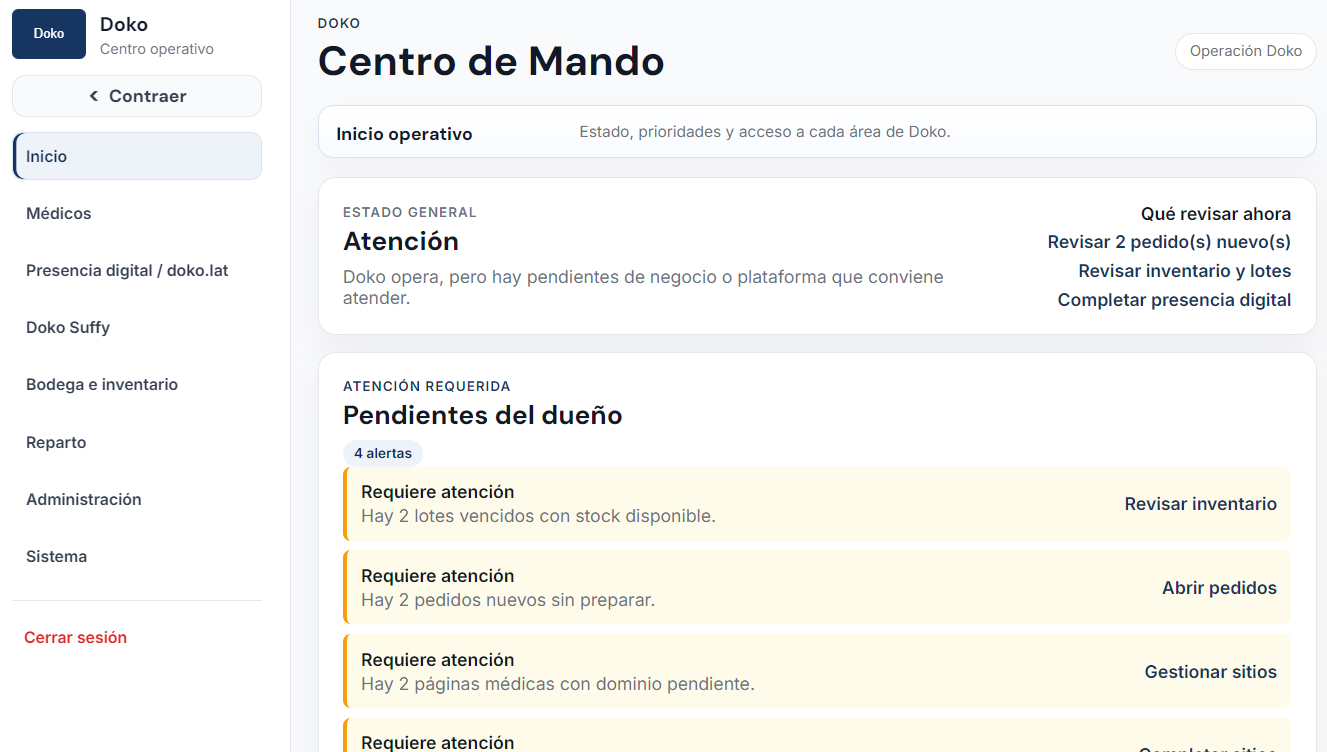
Mi Centro is the operating layer behind the business, bringing priorities, clinic operations and services into one management environment.
-
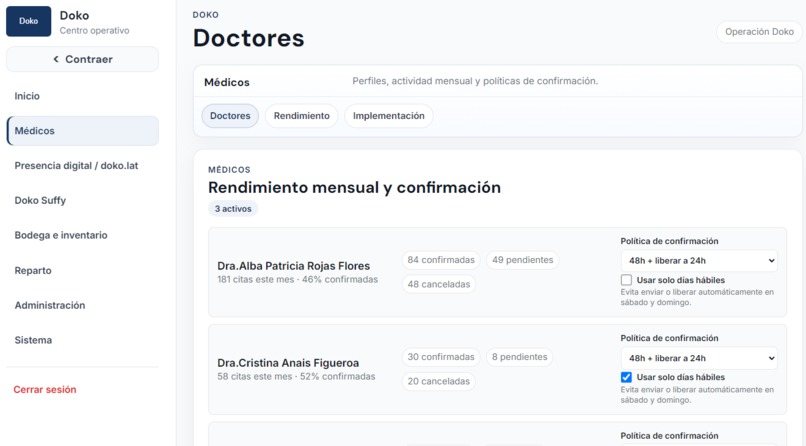
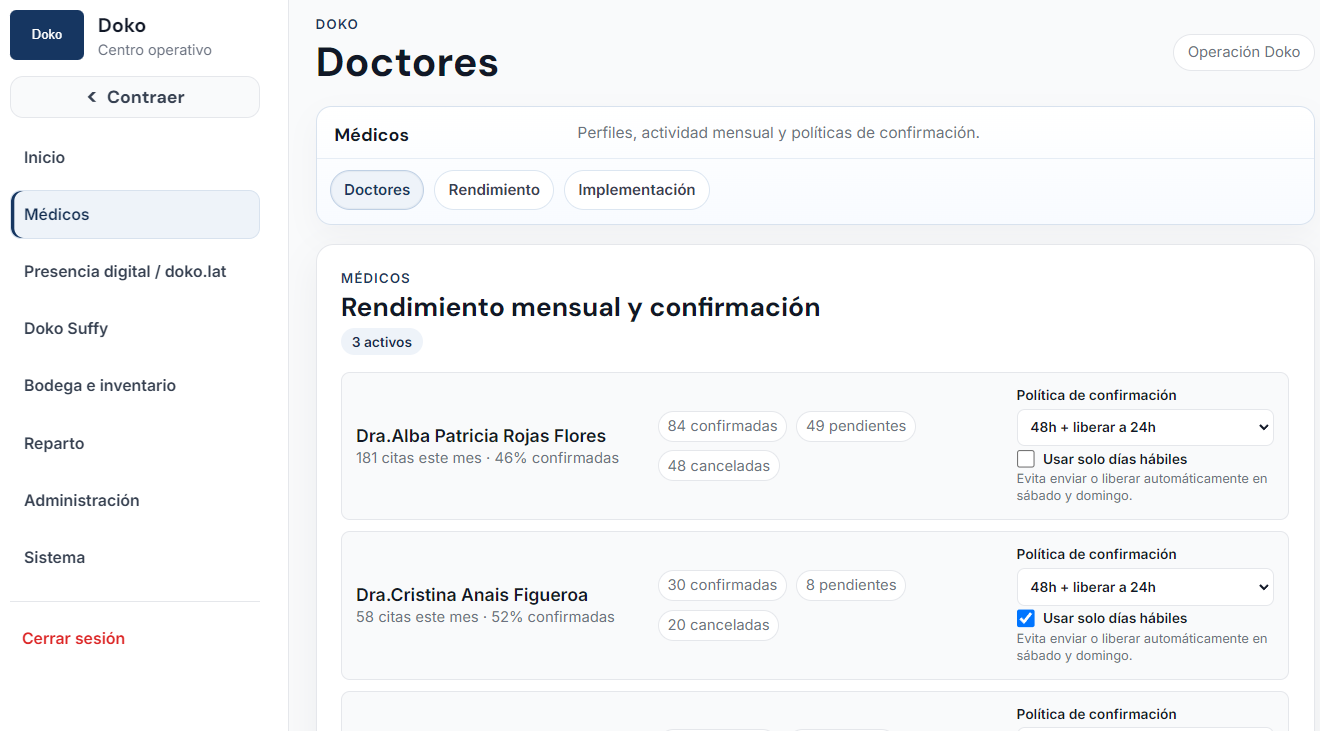
Each medical practice keeps its own operating policies while Mi Centro provides a shared management foundation
-
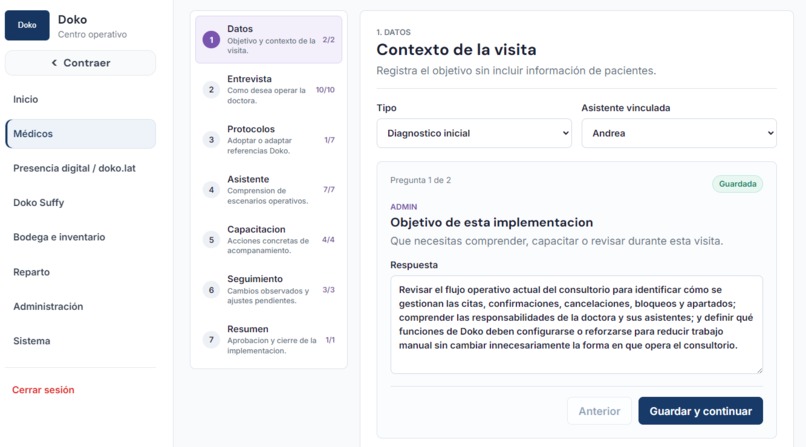
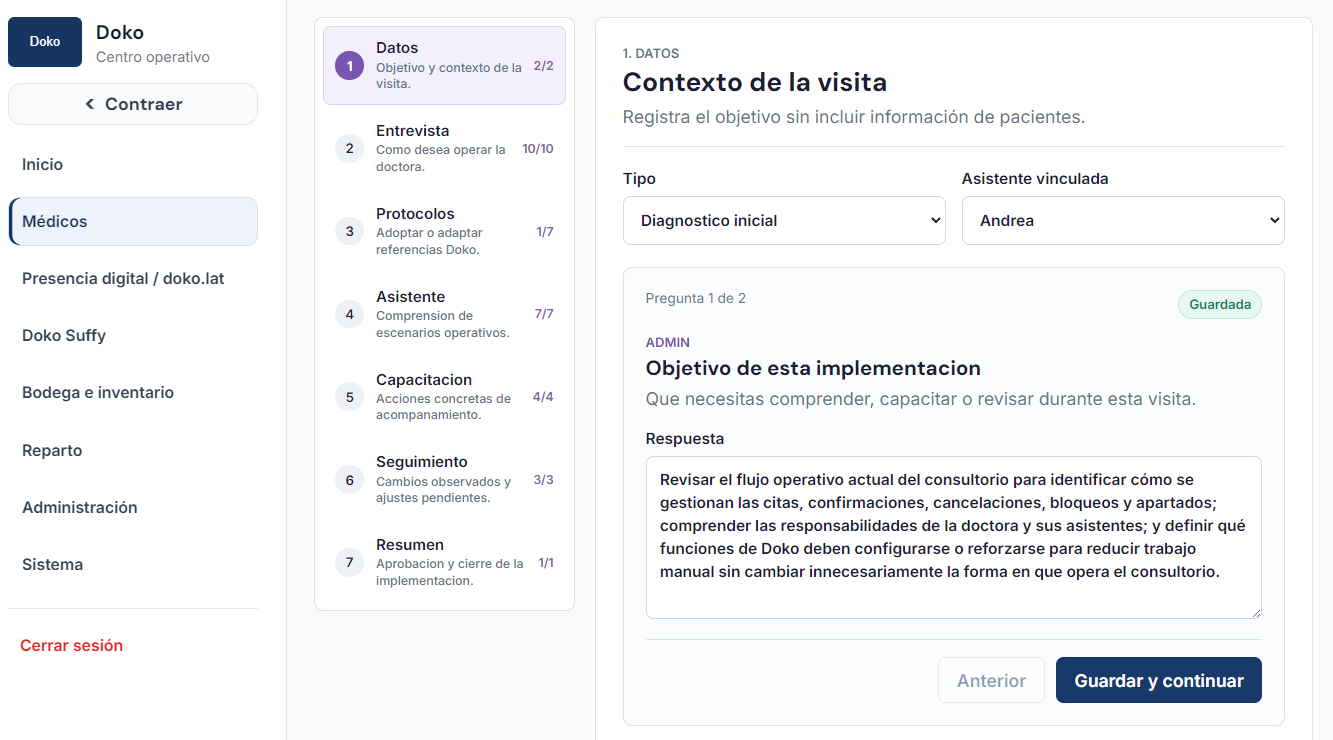
Real clinic workflows are translated into structured implementation, training and operating protocols.
-
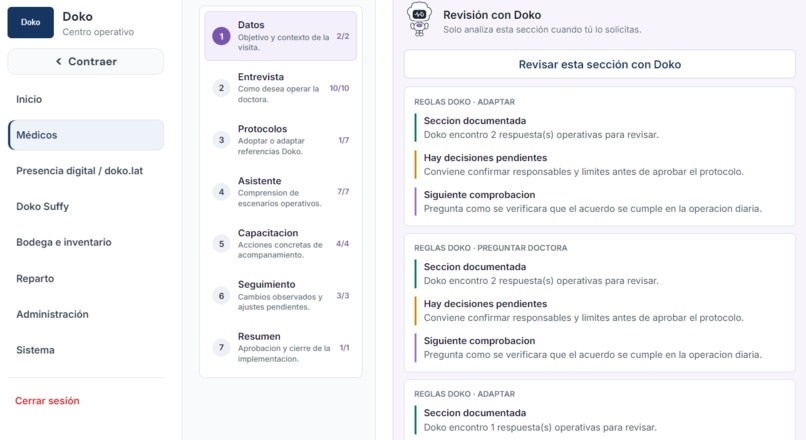
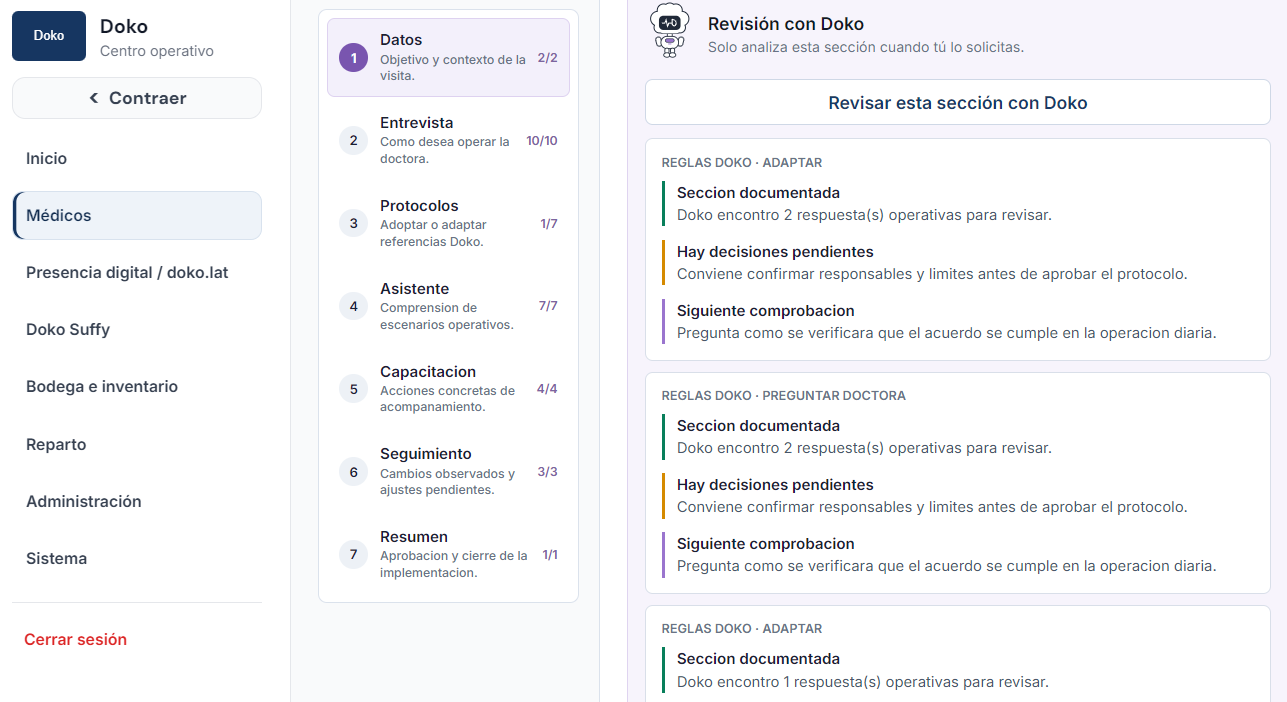
Doko can review sanitized implementation sections to surface gaps and follow-up questions for human validation.
-
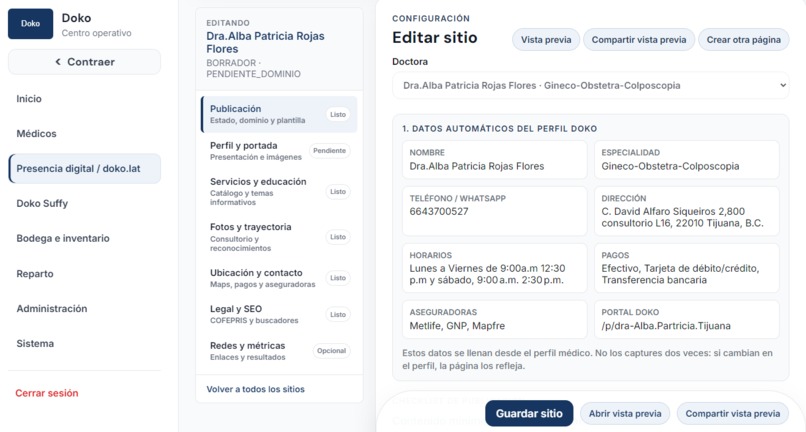
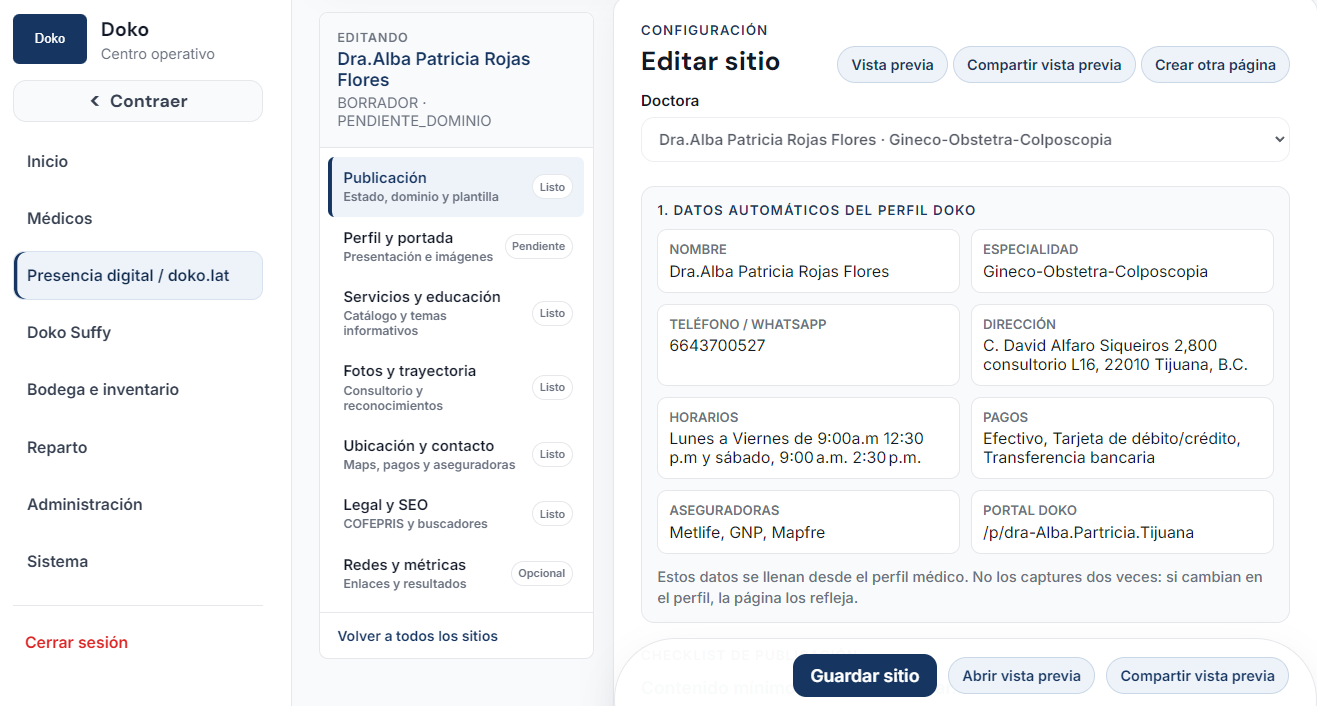
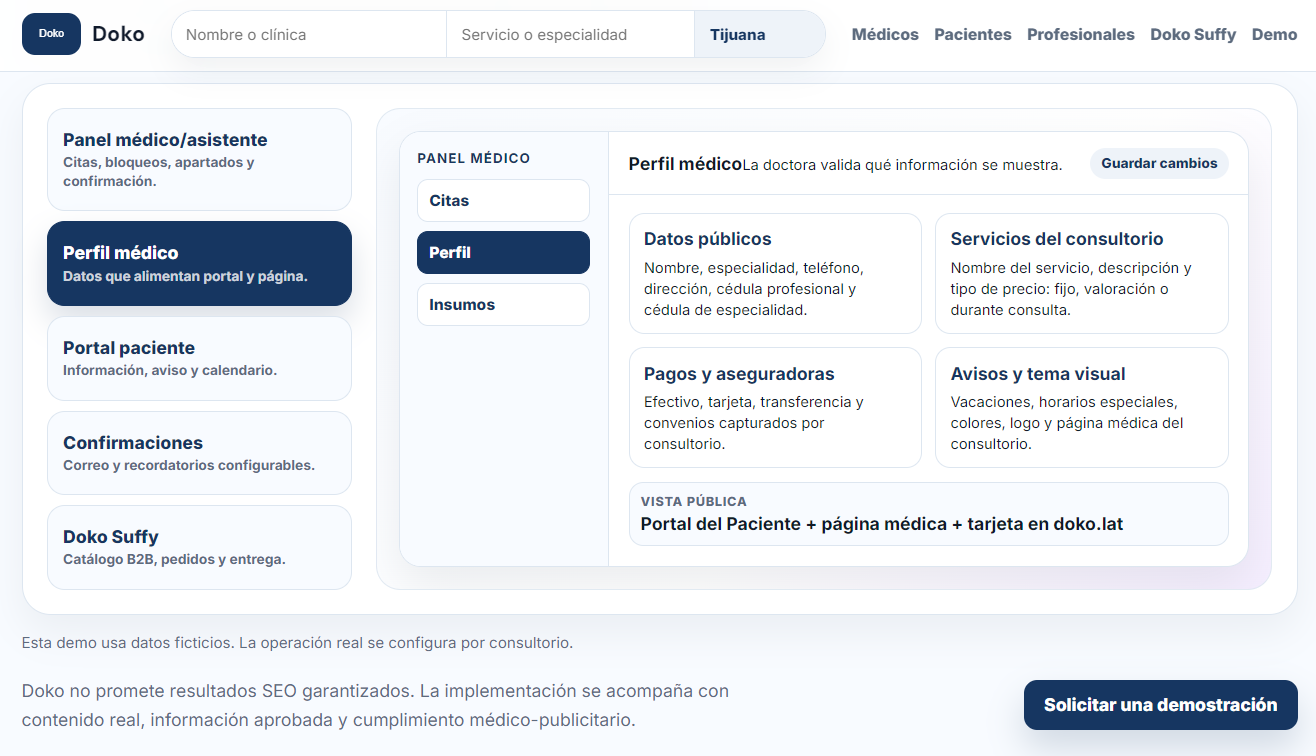
Clinic profile data flows into public digital experiences, reducing duplicate setup and keeping information consistent.
-
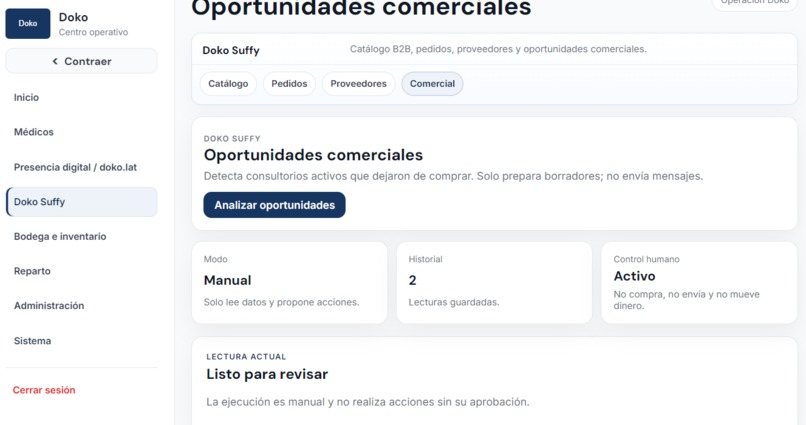
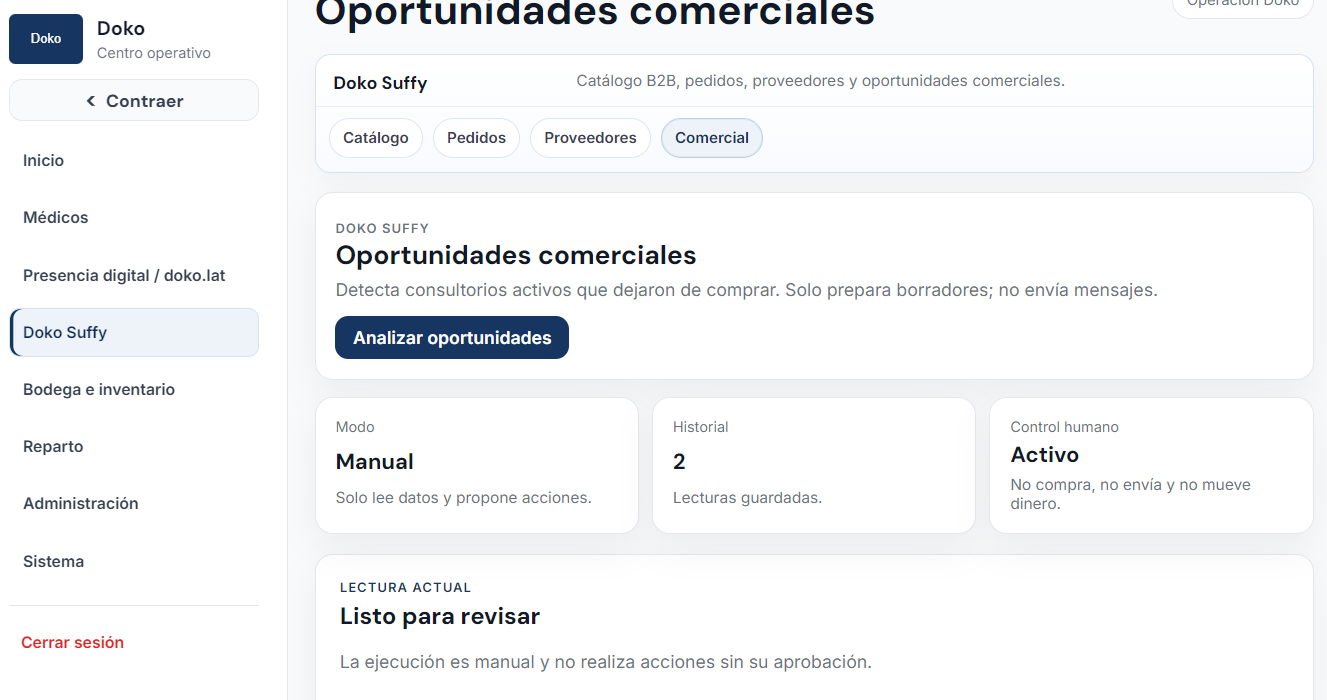
Gemini helps interpret commercial opportunities and prepare contextual actions while execution remains under human approval.
-
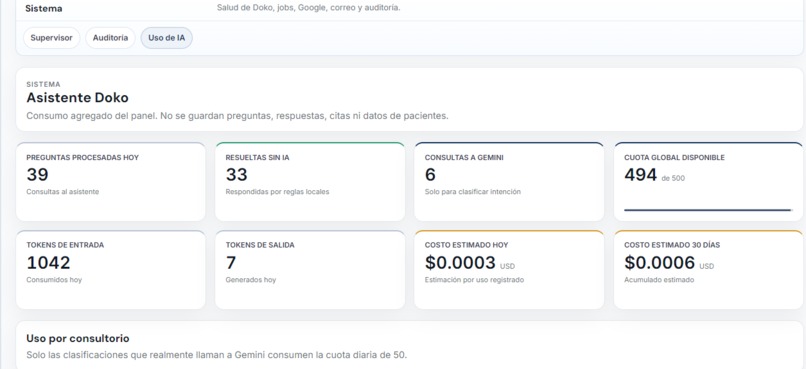
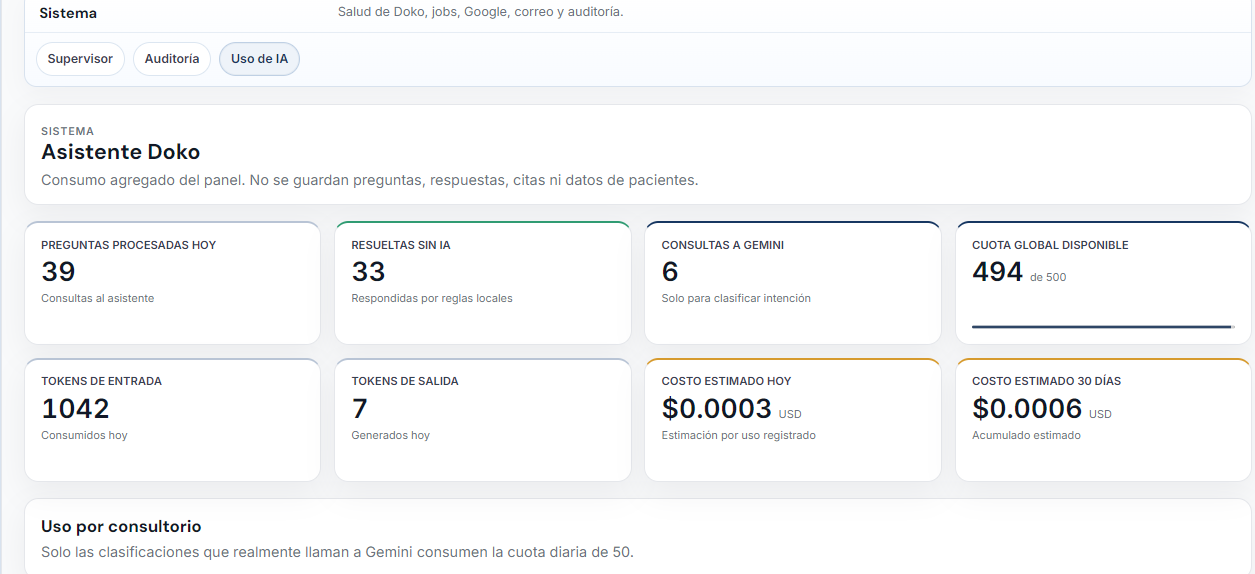
Doko uses Gemini selectively: in this daily snapshot, 33 of 39 requests were resolved locally and only 6 required Gemini.
-
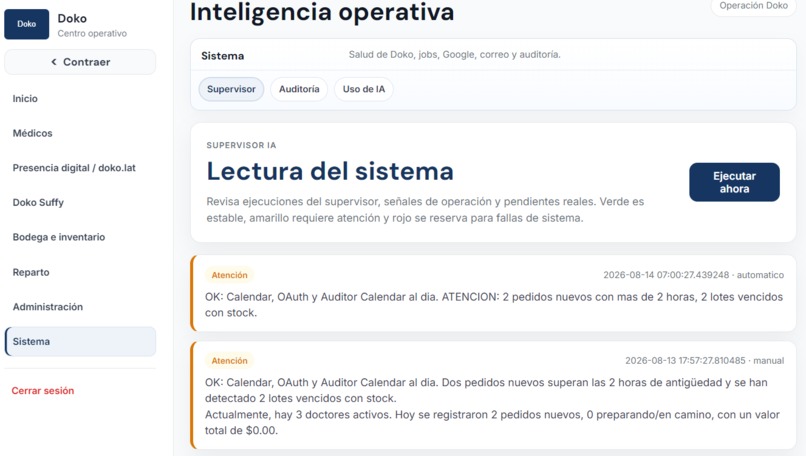
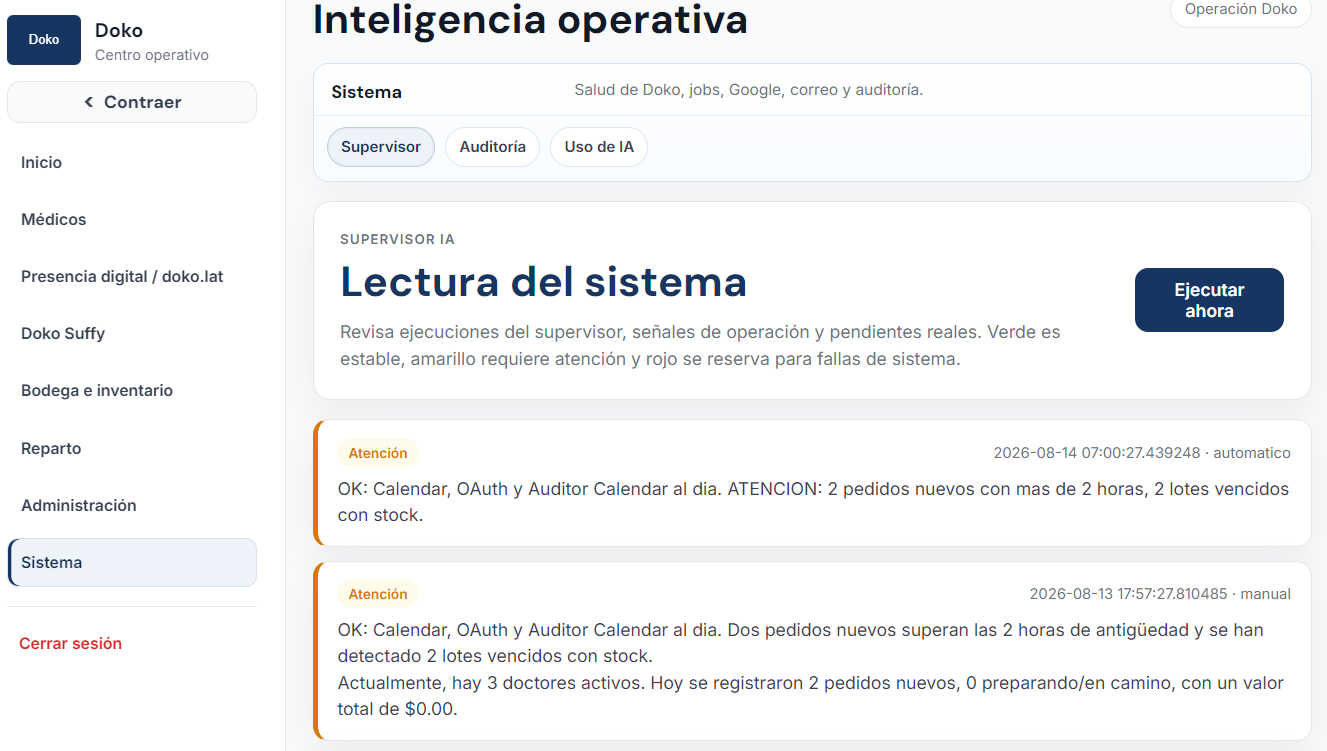
Mi Centro consolidates operational signals and scheduled processes into a single supervisory view of the business.
-
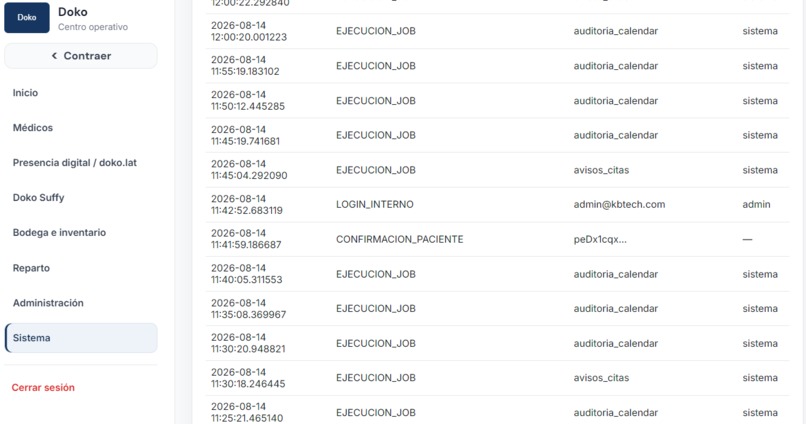
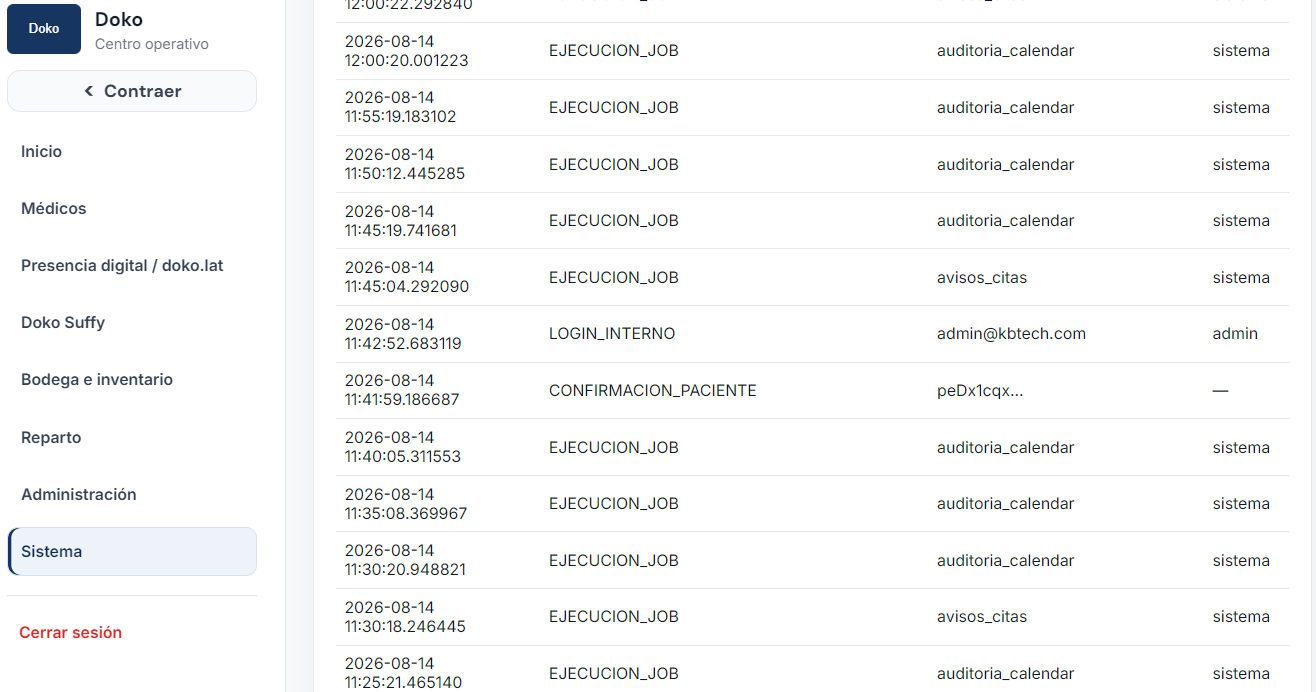
An auditable trail records scheduled jobs, internal access and patient workflow events as the system operates.
-
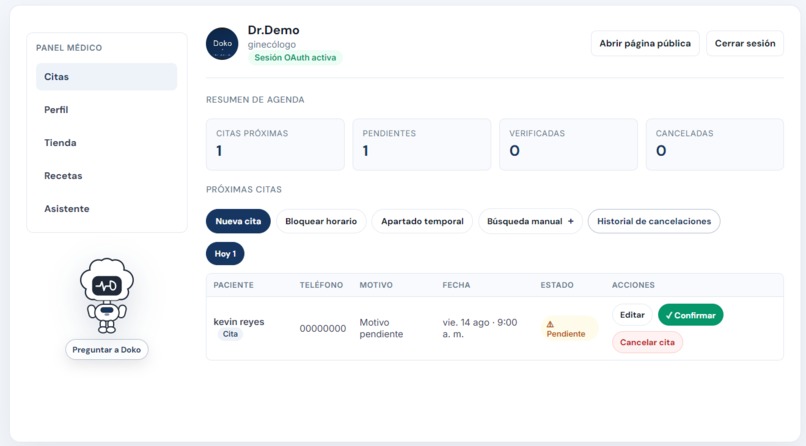
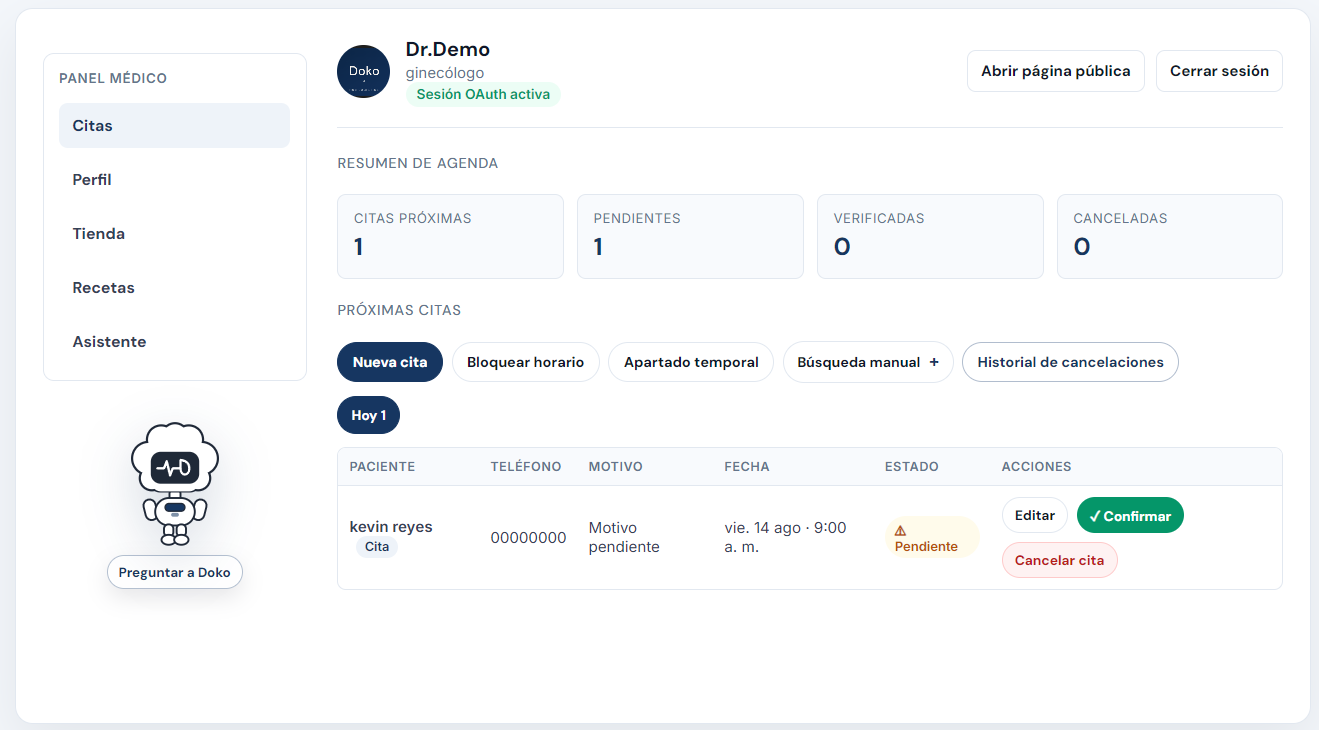
Doctors and assistants manage appointments, confirmations, blocks and temporary holds from one daily operating workspace
-
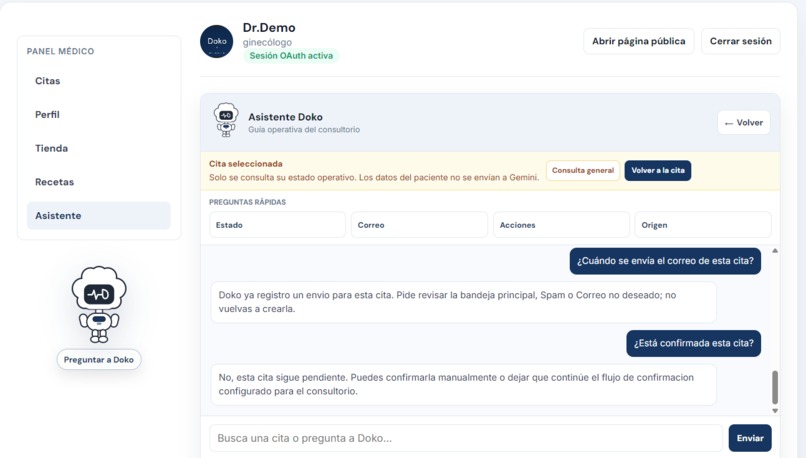
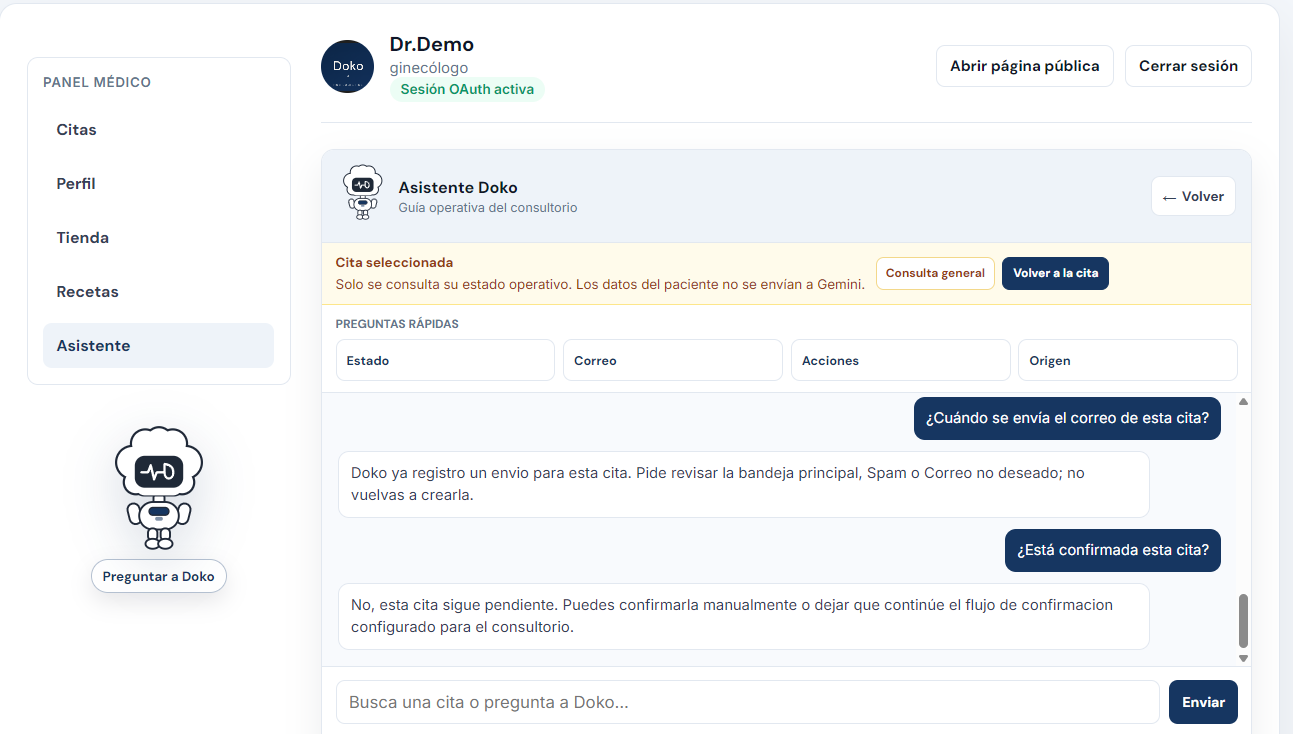
Context-aware assistance explains appointment status, email workflows and next actions without sending patient data to Gemini.
-
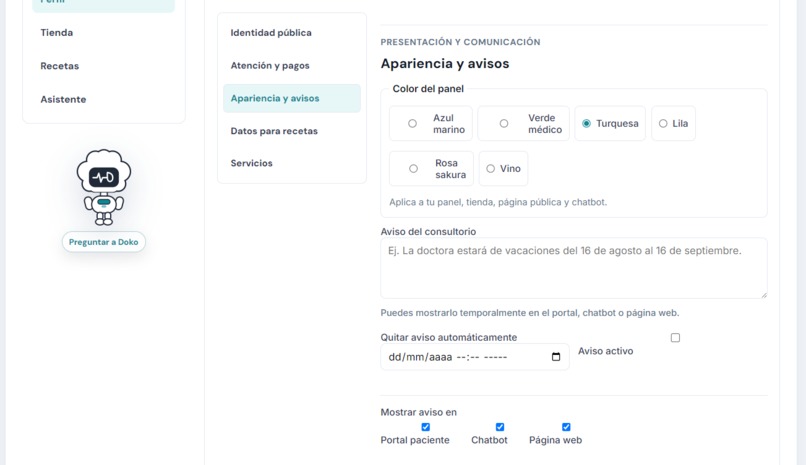
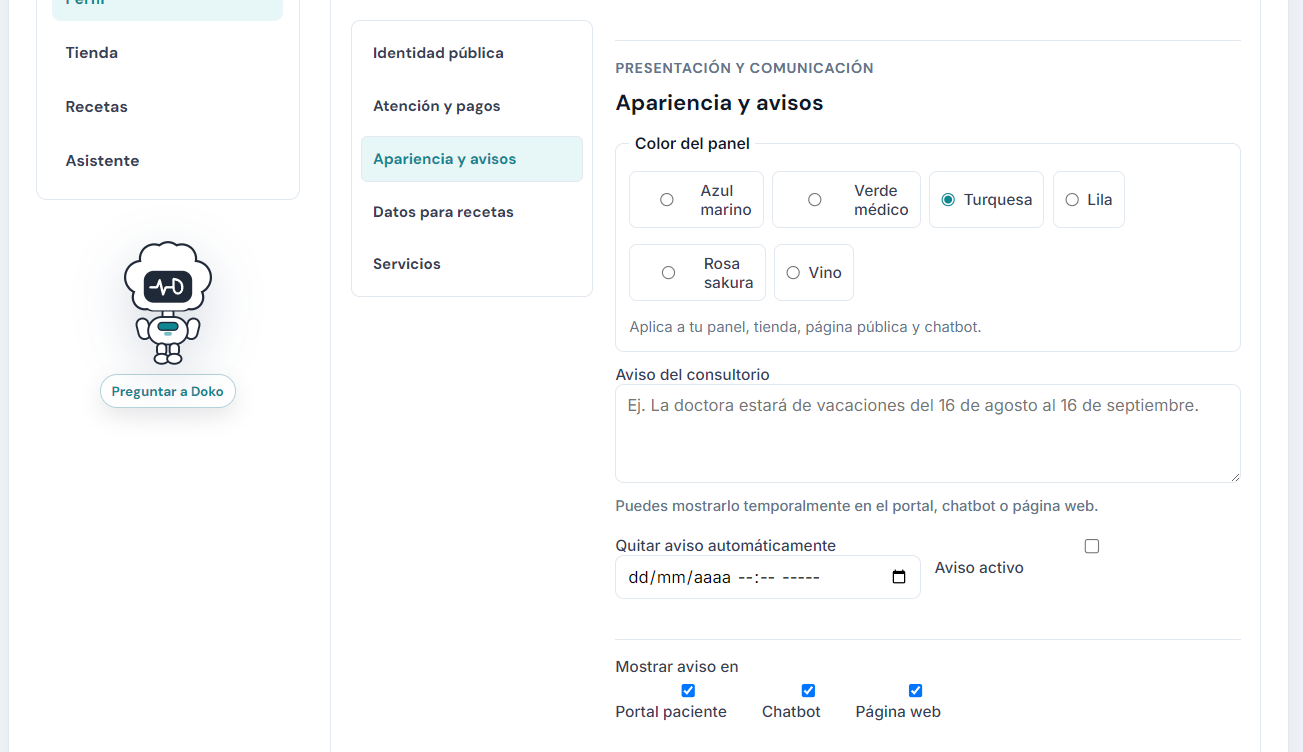
One clinic update can be distributed across the patient portal, assistant and public page while the practice controls where it appears.
-
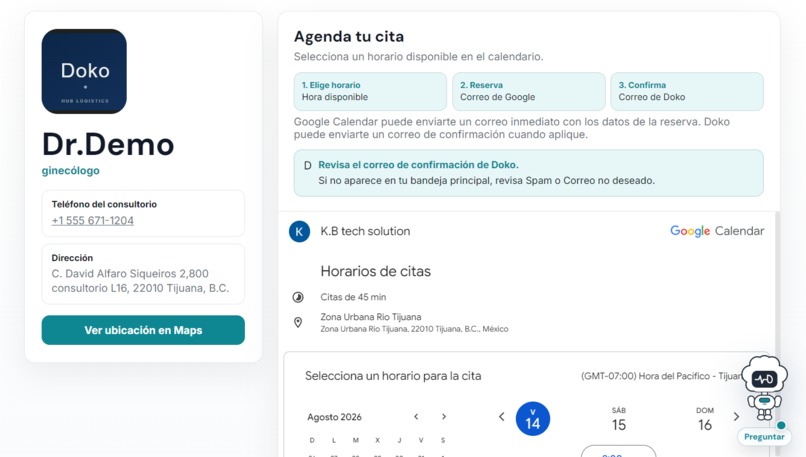
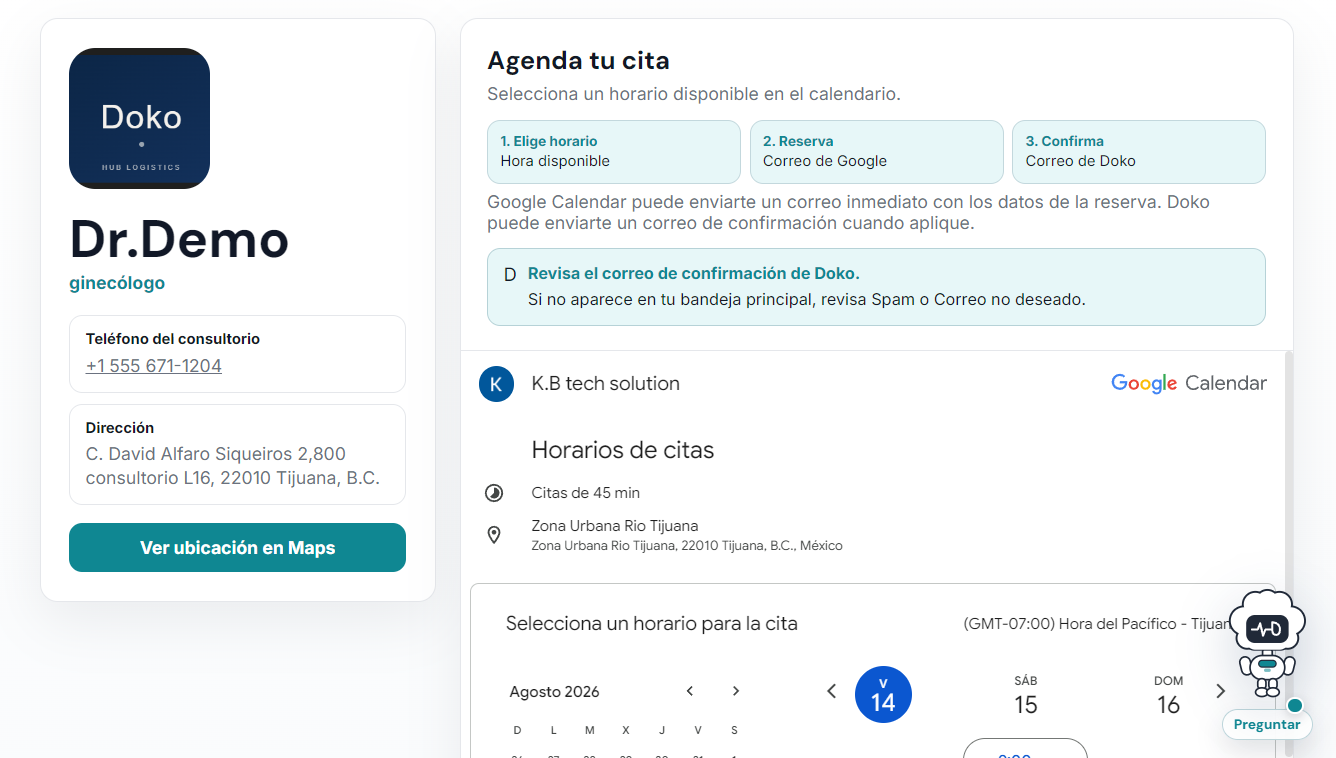
Patients access clinic information and book through the practice's existing Google Calendar workflow inside the Doko patient experience.
-
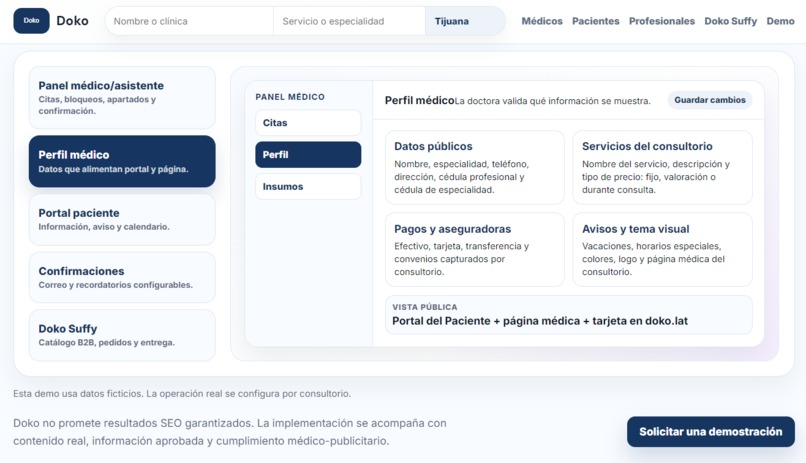
The interactive walkthrough shows how one clinic profile connects operations, public presence and the patient experience across Doko.
-
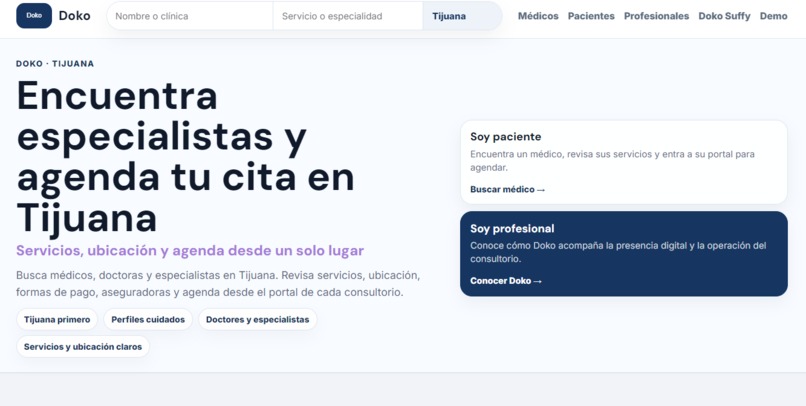
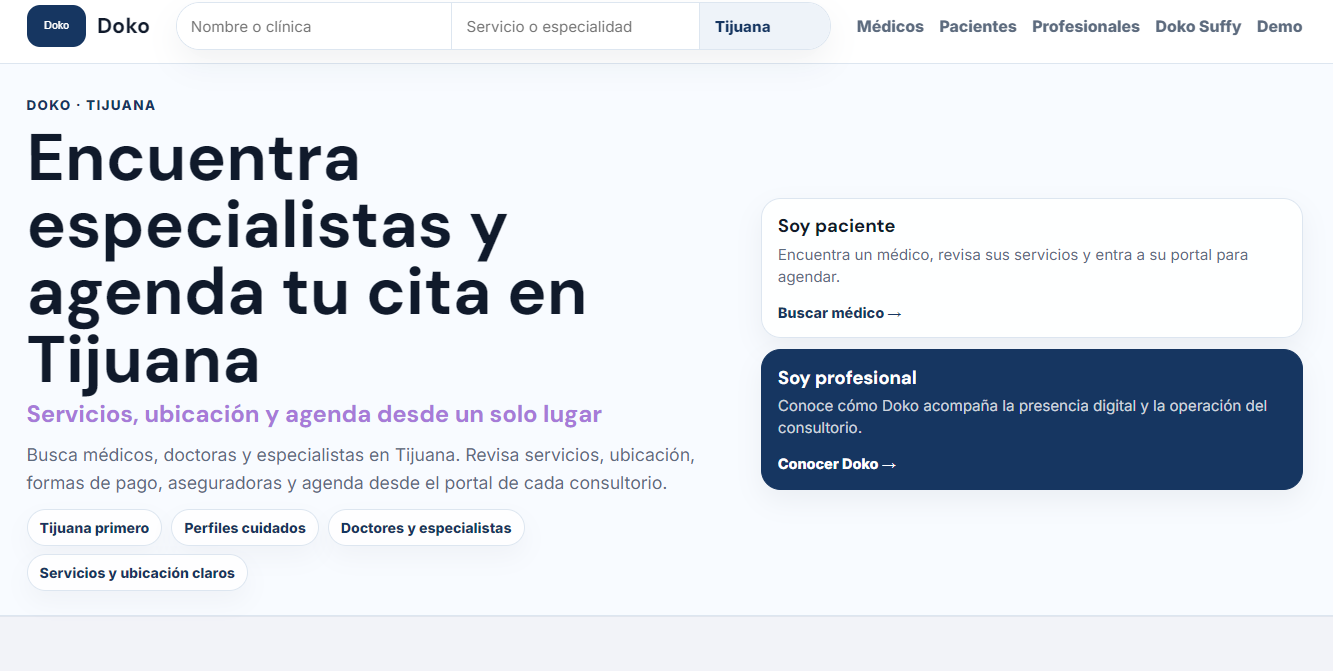
Doko Salud connects patients with medical practices while giving professionals access to services built for clinic operations.
Inspiration
I entered 2026 with several years of practical experience in logistics, warehouse operations, inventory control, shipping and receiving, and, most recently, hospital operations involving medical supplies, replenishment, vendors, invoices, and surgical-kit preparation.
I did not come from software engineering. After losing my hospital job, I began experimenting with AI-assisted software development in February 2026. Those early experiments were unsuccessful and are not part of this submission, but they taught me how much I still needed to learn.
Before the program, I also provided limited independent operational support to a medical practice. Together with my hospital and logistics background, that gave me a starting point for understanding clinic operations. Once the program began, direct observation became much more important. I watched how doctors and assistants handled appointments, confirmations, cancellations, patient questions, supplies, digital presence, and the small operational problems that accumulate throughout the day.
I realized the problem was not simply the absence of another scheduling application. Clinics already had calendars and familiar tools. The opportunity was to build an operating layer around those tools and adapt it to the way each clinic actually works.
I wanted to create a real, sustainable service that could grow through validation, low operating costs, and paying customers while I continued learning.
For me, that goal is also personal: I want to build a stable and honest future for myself and my daughter.
What it does
Doko is an adaptable operating ecosystem for independent medical practices. It connects the daily work of doctors, assistants, patients, and the business operator without trying to replace the tools or people that already perform those jobs well.
Google Calendar remains Doko's scheduling foundation. Around it, doctors and assistants work from a clinic-specific operating panel for appointments, confirmations, cancellations, blocks, temporary holds, and daily coordination. Patients can review clinic information and access booking through the Doko patient experience.
Mi Centro supports the operation behind the product. It brings together physician setup, clinic implementation, digital presence, operating protocols, system visibility, and administrative tools. A physician profile can feed multiple approved public and operational surfaces without requiring the same information to be configured repeatedly.
Gemini 2.5 Flash is used in production where language interpretation adds value. It can answer bounded administrative questions, interpret sanitized operational intent, improve controlled summaries, and assist with implementation review. Doko deliberately does not give Gemini authority over appointment state, permissions, incident severity, financial actions, inventory actions, or protected clinic operations. Deterministic application rules and verified records remain authoritative.
This hybrid approach is visible throughout the product: AI is used where interpretation is useful, while explicit rules remain in control where consequences matter. The repository documents the deeper architecture, AI-operation boundaries, privacy controls, testing, production evidence, and project evolution.
Doko also includes doko.lat for physician digital presence and local discovery, versioned implementation protocols that translate real clinic workflows into repeatable processes, and Doko Suffy, an emerging medical-supply sourcing and fulfillment capability.
How we built it
I built Doko as a solo founder using AI tools for learning, design, implementation, review, and verification. I supplied the operational knowledge, clinic observation, product decisions, safety boundaries, testing, customer support, and accountability for the final service. AI tools helped me understand unfamiliar technical concepts and turn those decisions into working software.
Drawing became part of my development process. When I could see a workflow but did not yet know the technical vocabulary to describe it, I used diagrams to represent the relationships and then used documentation and AI tools to learn the underlying concepts.
Doko runs on Google Cloud and integrates Google Calendar and Gmail through per-doctor OAuth authorization. Google's API OAuth Verification team approved Doko's OAuth App Verification request in July 2026.
Rather than rebuilding mature infrastructure, I focused on the layer where Doko could add value: clinic-specific coordination, implementation, visibility, bounded AI assistance, and repeatable operating processes.
Challenges we ran into
The first challenge was learning software engineering while building and supporting a production service. I had to understand authentication, databases, cloud deployment, OAuth, privacy, testing, auditability, and failure states while still learning the fundamentals behind them.
Reliability was another challenge. A failed Google connection cannot silently disrupt a clinic, so Doko exposes operational problems instead of pretending everything succeeded.
Scope was equally important. Early experiments considered medical files, laboratory results, and broader clinical AI. I removed those directions because they increased privacy, regulatory, and safety complexity without first proving that they solved the operational problems I was observing.
Direct clinic use repeatedly changed the product. Assistants needed temporary holds, manual confirmation, released-slot handling, conversational appointment search, clearer training, and other capabilities that were difficult to predict from a desk. That experience pushed Doko away from a fixed template and toward an adaptable core where new capabilities are introduced only when a real workflow justifies them.
Accomplishments that we're proud of
Doko is a deployed product used in real clinic operations, not only a recorded prototype.
Initial production validation includes five active operational users: two paying gynecologists and three clinic assistants assigned to their practices.
A point-in-time operational snapshot captured on July 27 showed approximately 330 appointment records for one physician and 87 for another. These numbers describe operational volume being managed in the environment; they are not claims that Doko acquired those patients.
I am proud that Doko progressed from experiments and drawings into a service that real doctors and assistants can use, completed Google's OAuth review process, and established boundaries that allow AI to assist without becoming the authority over clinic operations.
What we learned
I learned that software alone does not improve a clinic. Improvement happens when technology, responsibilities, training, feedback, and real operational needs become one repeatable process.
I also learned that AI does not need authority over everything to be useful. Gemini is valuable where language interpretation and summarization reduce friction, while explicit rules are better for permissions, scheduling state, confirmations, safety boundaries, and protected actions.
I learned that existing tools do not need to be rebuilt simply because I can build software. Google Calendar is already a mature scheduling engine, so Doko uses it as a foundation and focuses on the operating layer around it.
Most importantly, direct observation taught me that assistants are not a problem to automate away. They carry essential operational knowledge and keep clinics functioning. Doko should reduce unnecessary friction, give them better tools, and help turn what they know into clearer and more repeatable processes.
What's next for Doko
The next stage is careful expansion beyond the initial gynecology users into additional specialties. Additional founding physicians will help distinguish what is common across practices, what is specialty-specific, what should remain optional, and what is genuinely worth solving with software.
Doko will continue strengthening implementation, assistant training, digital presence, operational evidence, and adaptable capabilities.
Doko Suffy will progress alongside the software business, beginning with medical-supply sourcing and fulfillment and expanding only as validated demand, regulatory requirements, operating capacity, and available capital support it.
Future AI capabilities may receive more operational responsibility only after workflow, permissions, deterministic safeguards, auditability, and human authorization requirements are understood and validated.
The long-term goal is to build Doko into a stable ecosystem that helps small medical practices gain operational control, access useful technology, improve sourcing, and adopt capabilities that fit the way they actually work.
Growth will remain gradual and bootstrapped, with revenue reinvested into Doko's technology, support, sourcing, and logistics.
Built With
- ai-agents
- calendar-api
- cloud-run
- cloud-scheduler
- cloud-sql
- cloud-storage
- css3
- flask
- gemini
- generative-ai
- gmail-api
- google-cloud
- html5
- javascript
- jinja
- oauth2
- postgresql
- pwa
- python
- rest-api

Log in or sign up for Devpost to join the conversation.