

Inspiration
In Texas, the average doctor's visit costs between $170 - $250. For many parents, it hard to decide whether or not to ensure their child is healthy even at the steep costs. Minor or temporary symptoms may not require professional care, yet the fear of overlooking something serious often pushes families towards expensive visits.
At the same time, diagnosing a child at home can also prove to be difficult. Parents juggle with busy schedules, and children may struggle to properly describe what they're feeling. Some kids are shy and may not speak the whole truth, while others lack the vocabulary to explain their symptoms accurately. This communication gap makes it frustrating for parents to make informed decisions about their child's health.
What it does
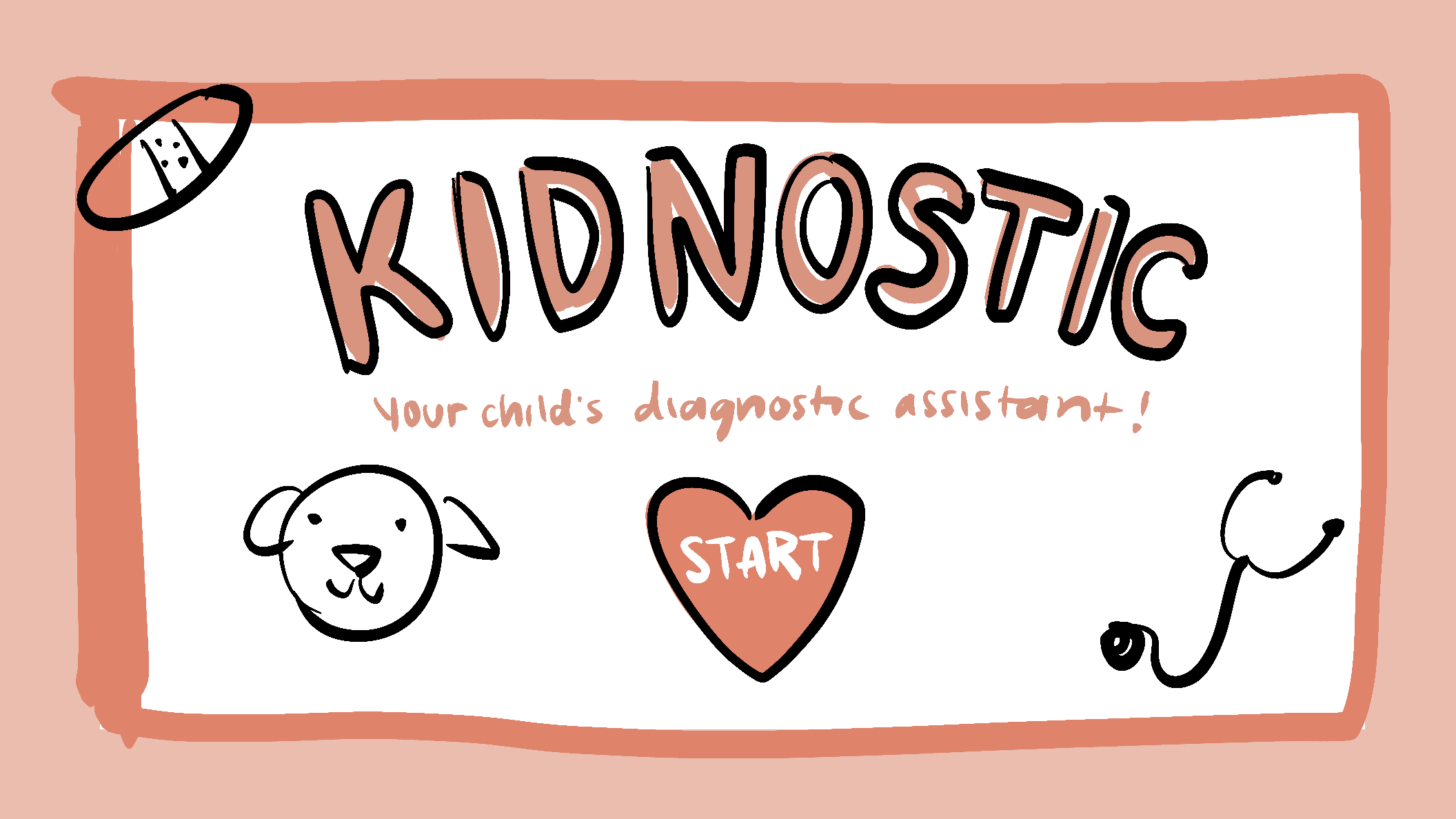
Kidnostic is designed to help parents and children determine whether a doctor's visit is necessary. Our project implements an AI-powered health assistant, named "Dogtor". While it does not replace a medical professional, it supports families in deciding when seeking medical care may be appropriate.
The process begins with a pre-screening questionnaire given to the parent to gather necessary background information. Then, the child can interact directly with the application through:
- An interactive visual body diagram to pinpoint areas of discomfort
- A one-to-one conversation with Dogtor that guides and helps children describe their symptoms in a comfortable, low-pressure way.
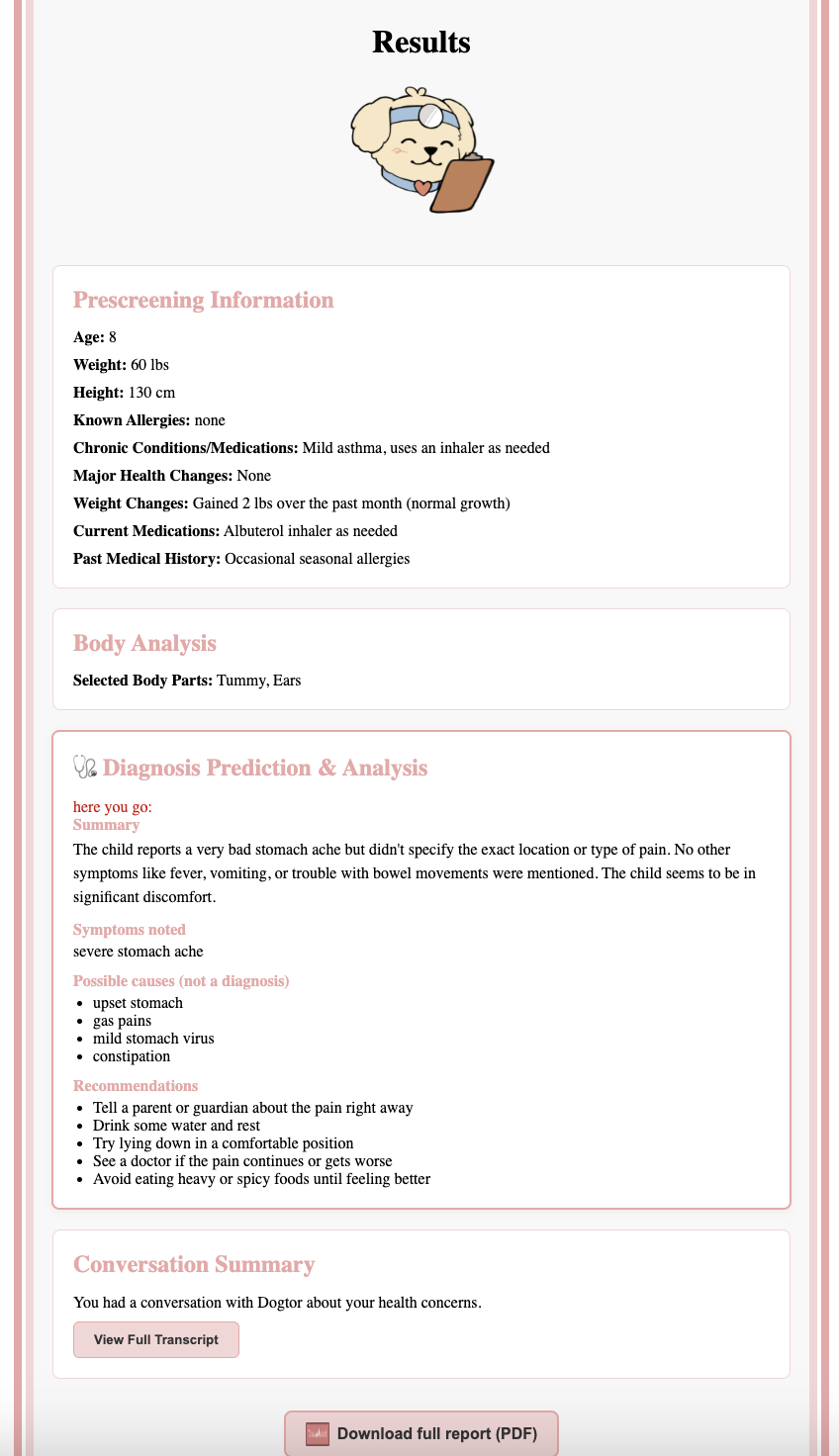
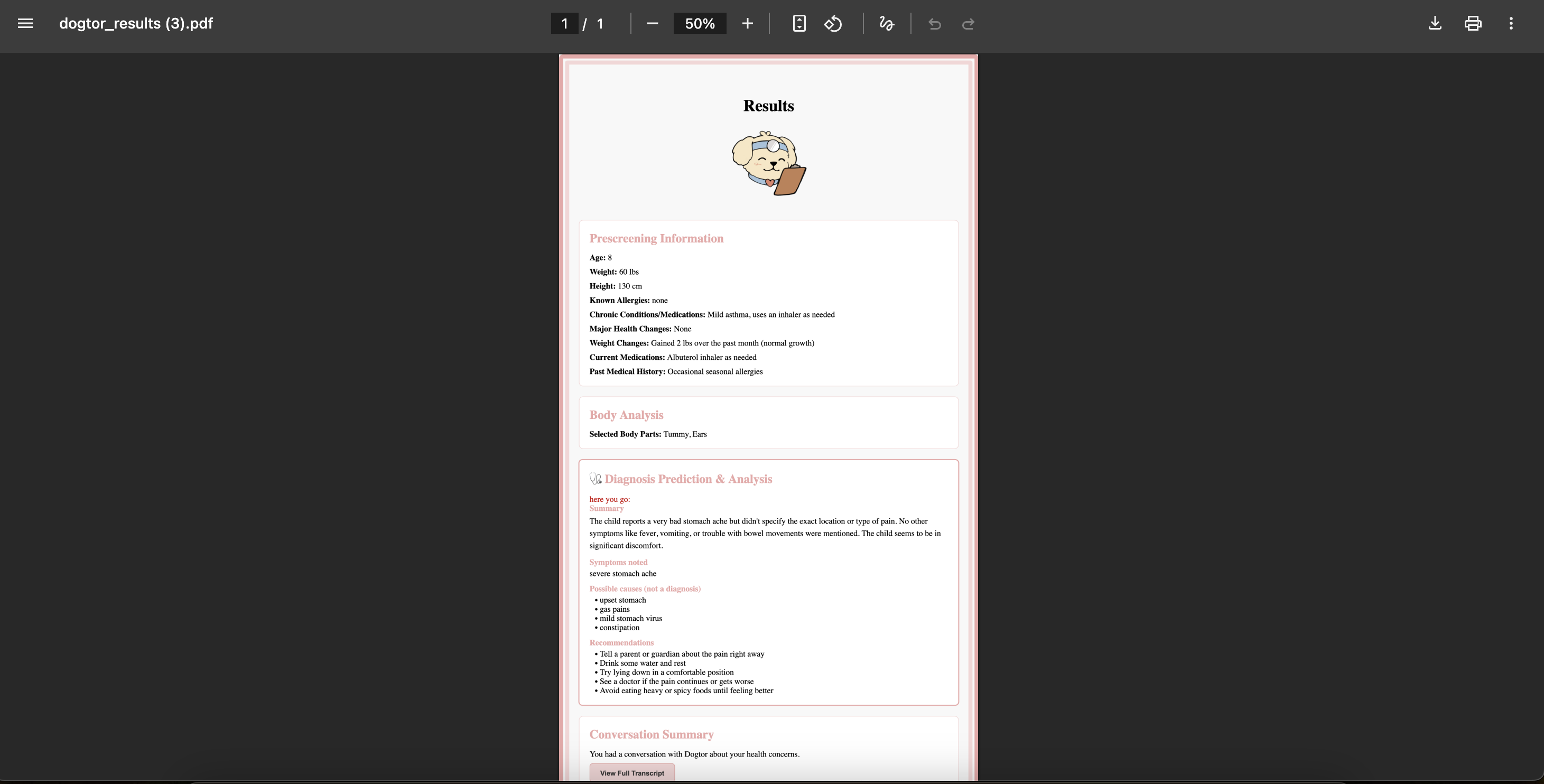
Based off the information provided, the system then provides a general conclusion on whether or not these symptoms require medical attention, along with a report that the parent may download.
How we built it
- Backend: Node.js + Express.js handles routing and API endpoints, communication between the frontend and the AI service, and structuring symptom data into an organized report.
- Frontend: React for structuring the application into reusable components for maintainability.
- AI Integration: Featherless AI for a conversational and informative health assistant.
- Design and Visuals: Visual assets drawn using Procreate to provide a clean and friendly user interface.
Challenges we ran into
One of the biggest challenges we ran into was integrating the AI assistant with a speech-to-text function. Ensuring that spoken input, no matter the accent or intonation, was accurately transcribed and correctly interpreted by the AI took countless tests and refining. Children may speak to the AI in incomplete sentences or use non-medical terms, so it was equally as important to ensure the AI could accurately interpret such phrasing. We also had to strike a careful balance between technical accuracy and child-friendliness.
Another major challenge was developing the interactive body diagram. It was difficult to design a visual system that was intuitive, responsive to precisely capture meaningful symptom data. We ran into issues when attempting to use a hand drawn visual aid with a mapping system, so we ended up implementing the visual entirely through software.
Accomplishments that we're proud of
We're especially proud of with the overall user interface. We wanted to be able to make the application approachable and easy to navigate for both parents and children. We successfully created a design that was both simple and visually engaging, while also collecting structured and useful health information.
What we learned
For one of our team members, this was their first hackathon experience. Collaborating under tight time constraints was both challenging and rewarding. It tested our communication and problem-solving skills across the duration of this event.
As a team, we gained experience on integrating Featherless AI as our medical assistant AI. Implementing this AI system helped us better understand prompt design, speech-to-text processing, and how to structure user input to generate more accurate responses.
What's next for Kidnostic?
We want to implement a structured medical database for children to improve the accuracy and consistency of our application's diagnoses. However we must take into consideration the privacy risks we would have to solve when adding a database.


Log in or sign up for Devpost to join the conversation.