-
-

The uncropped App icon
-
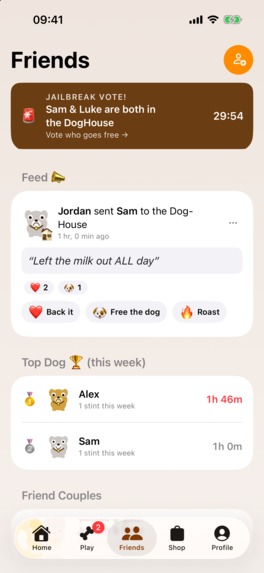
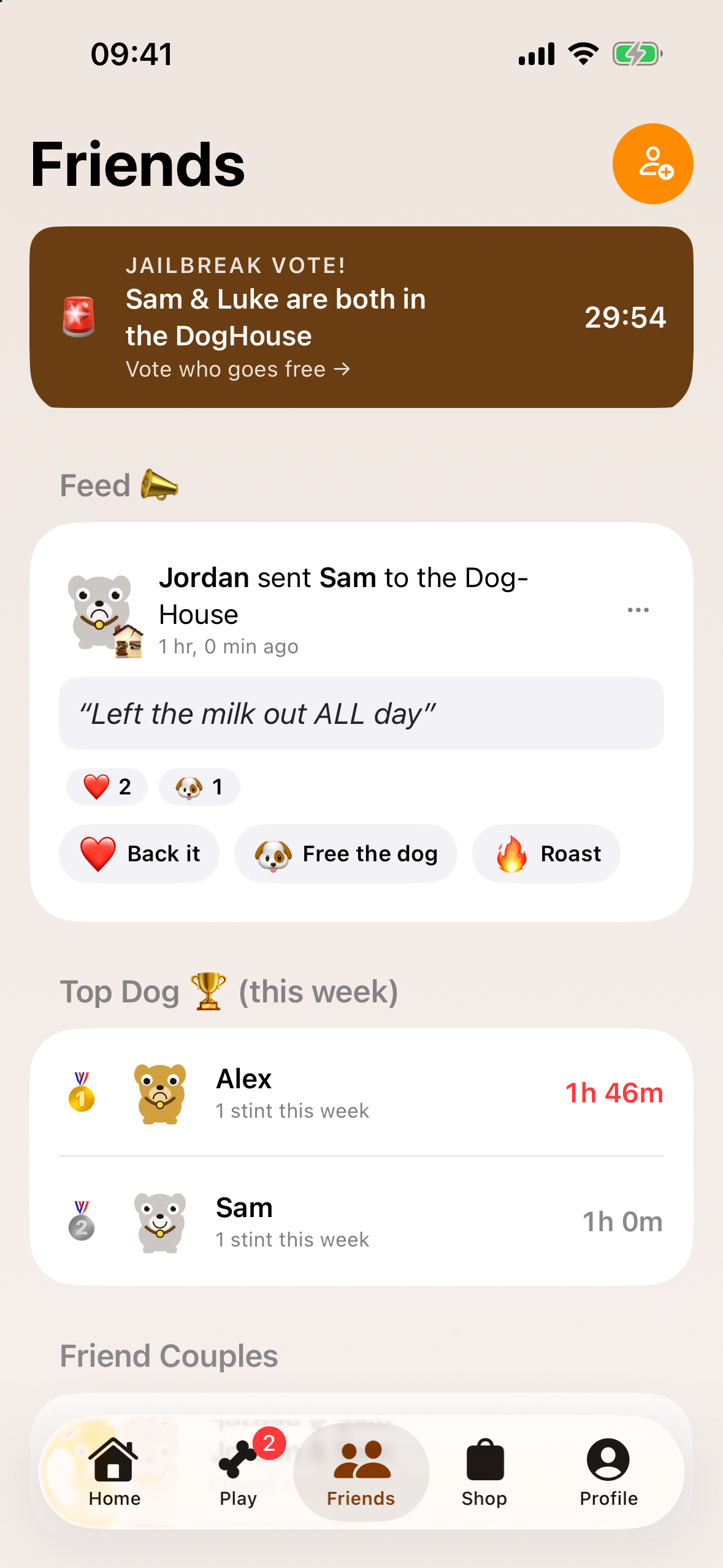
Frameless Friends View
-
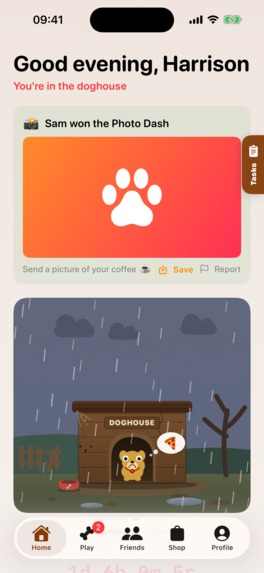
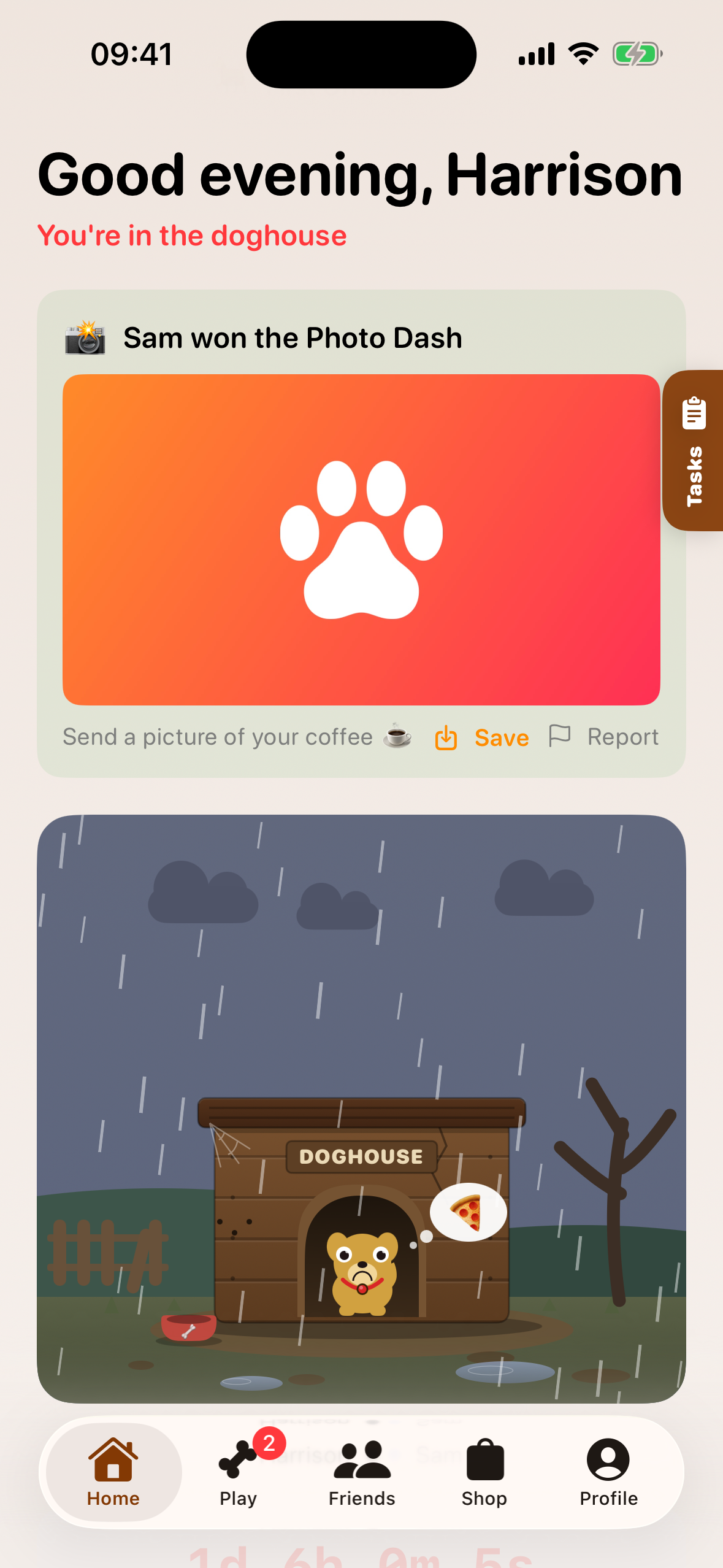
Frameless Home view DogHouse
-
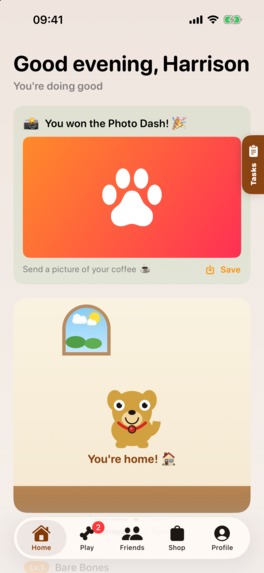
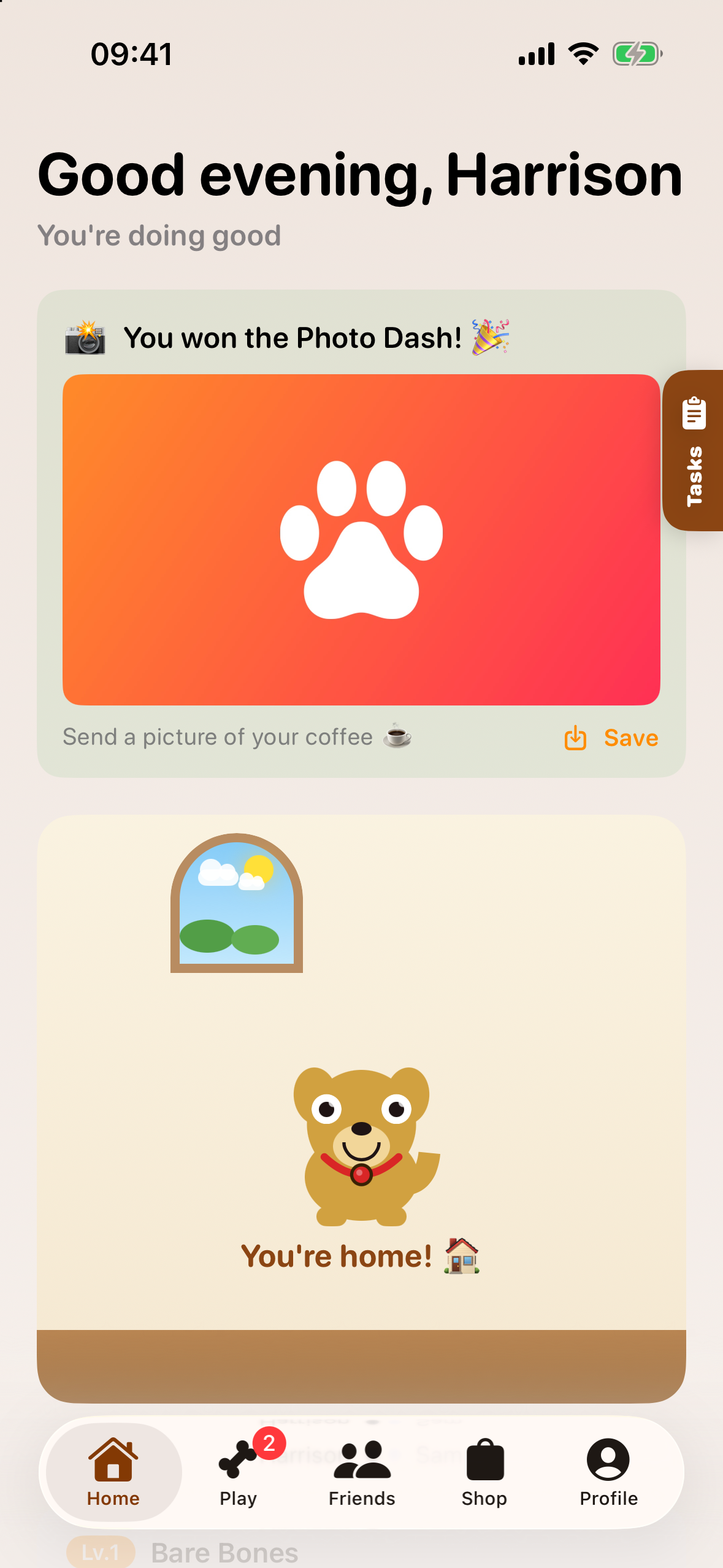
Frameless Home view NormalHouse
-
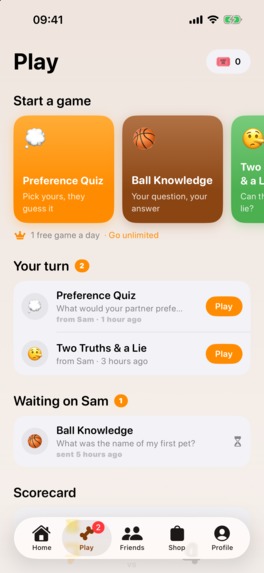
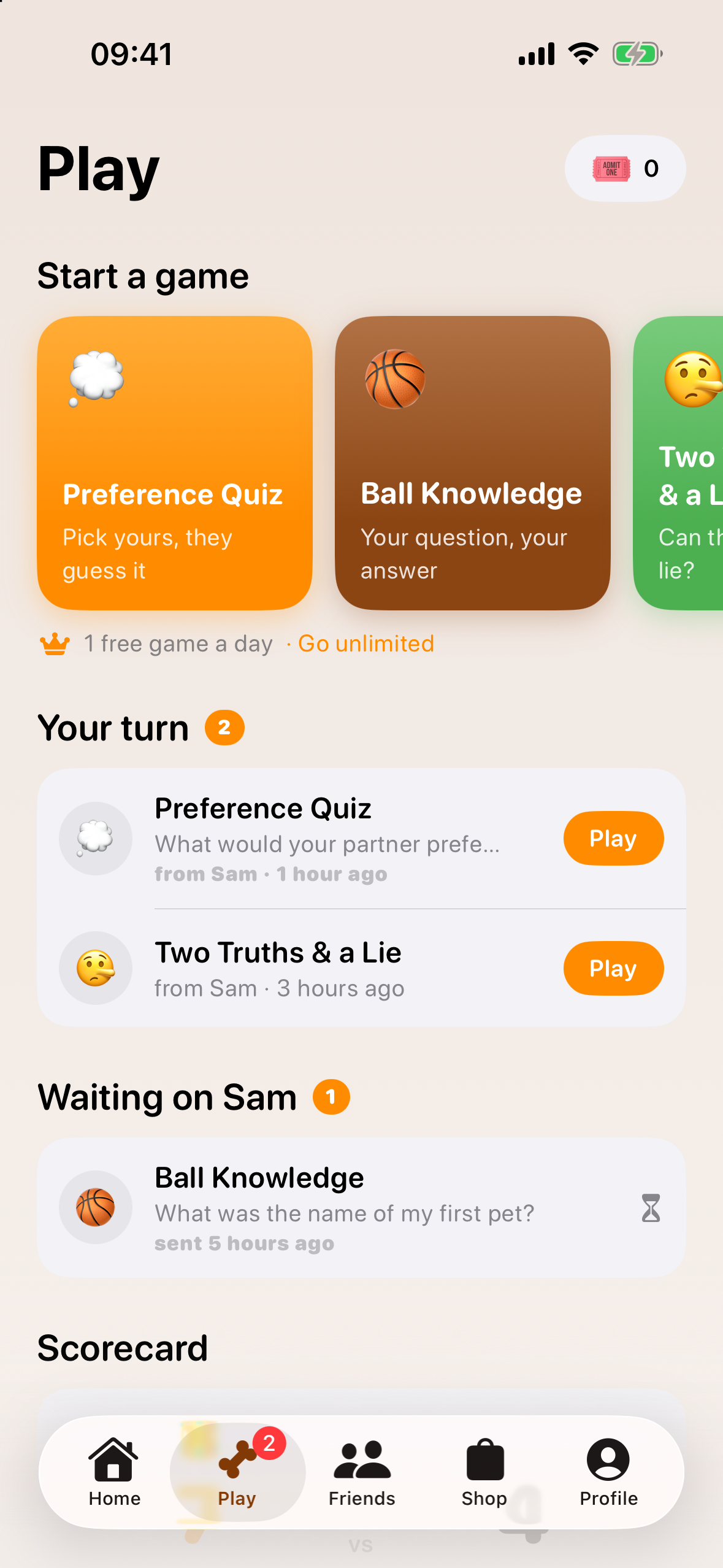
Games Section
-
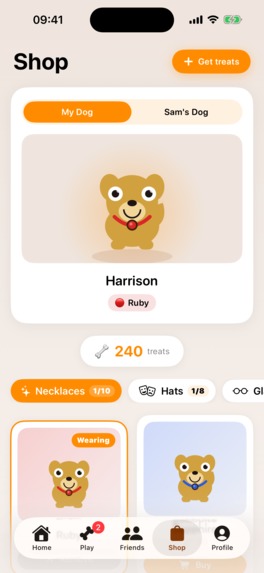
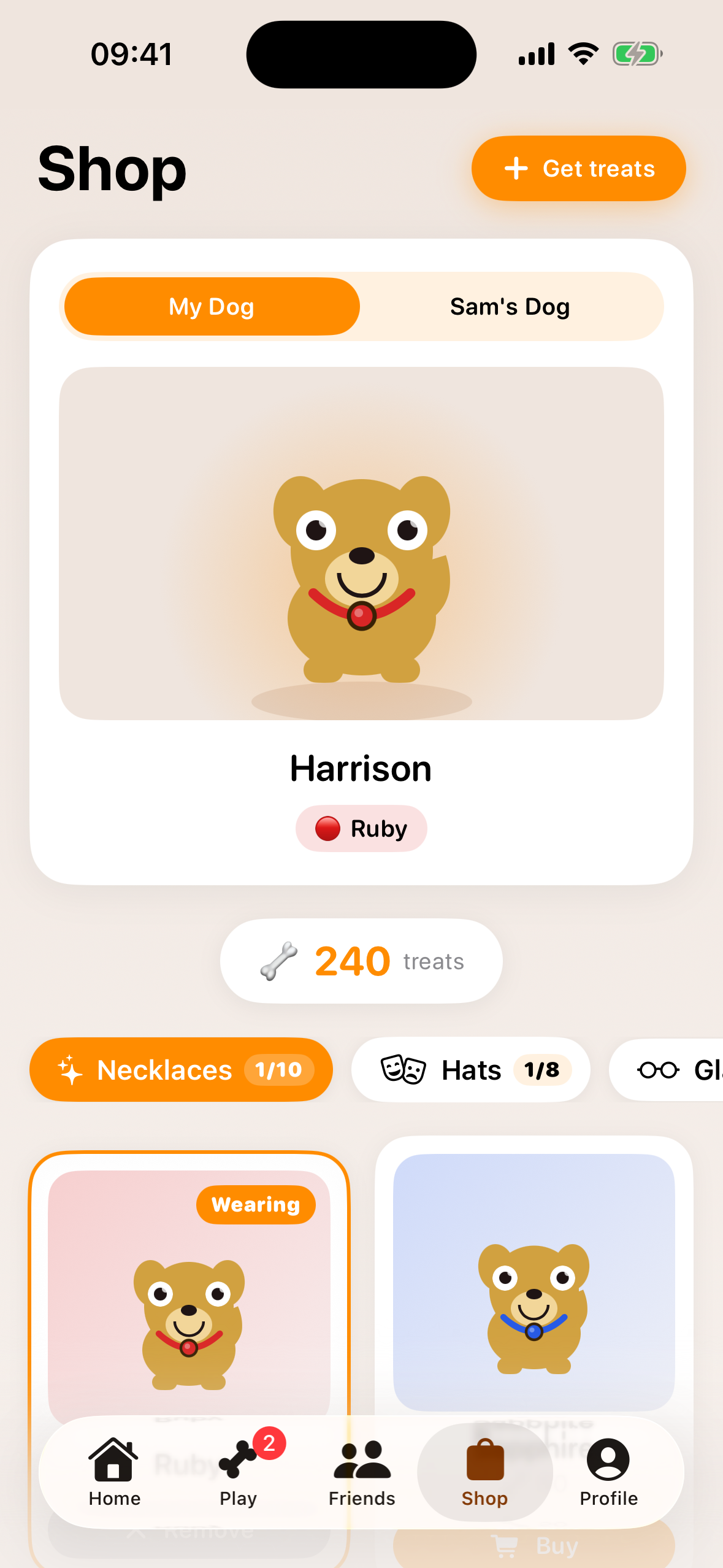
Shop

Inspiration
Relationships are becoming more digital and more dynamic. Both partners are often studying, working, commuting, travelling, or even doing long-distance for periods of time. You might only properly see each other in the morning and again at night.
At the same time, couples already communicate digitally all day long. We send each other reels and memes, FaceTime, text “I love you,” and use apps to share memories or stay connected.
But there is still no good digital language for the small everyday annoyances that every relationship has.
Someone forgets to do the dishes, leaves the rubbish out, doesn’t reply for hours, or promises to do something and forgets. Usually, the issue itself is tiny. The problem is what happens afterwards: either it gets ignored and quietly builds up, or it gets brought up in a way that feels much more serious than the original problem.
That is where DogHouse came from.
The expression “you’re in the doghouse” has been used for decades as a humorous way of saying that one partner has annoyed the other. I wanted to take that familiar, lighthearted idea and bring it into the digital space.
Instead of pretending couples never annoy each other, DogHouse embraces the fact that they do — and gives them a playful way to communicate those little frustrations before they grow into something bigger.
What it does
DogHouse gives couples a third option between saying nothing and turning a tiny annoyance into a serious relationship conversation.
When your partner annoys you, you can put them in the DogHouse. You explain what happened, set what they can do to make it right, and send it.
Your partner receives a notification, sees exactly why they are there and what they need to do to get out. Their normal home turns into a sad, rainy DogHouse, and their progress is disrupted until the situation is resolved.
The app is deliberately designed not to become a relationship scorekeeper. Sends are limited, putting your partner in the DogHouse creates consequences for both people, and every DogHouse has a clear way out.
Around that core loop, DogHouse includes a wider relationship ecosystem. Couples can customize their dogs and homes, earn treats, complete quizzes and photo challenges, and send small signs of affection such as belly rubs or flowers.
There is also a social layer. Couples can connect with other couples, share DogHouse moments, and let friends back or flame a send. If people from two different couples land in the DogHouse at the same time, a jailbreak vote can open and their friends decide who deserves parole.
The goal is simple: make small conflicts easier to communicate, easier to laugh about, and easier to move past.
How I built it
I built DogHouse using a mix of traditional development tools and AI-assisted development.
The backend is built with Firebase, which handles the core data, authentication, user states, permissions, and the logic behind many of the interactions between partners.
For development, I used tools such as Claude Code and Codex extensively. They helped me structure features, write and refactor code, debug issues, think through edge cases, and move faster in areas where I had less technical experience.
But the project also taught me very quickly that AI does not remove the need to understand the system you are building. As DogHouse became more complex, I had to think carefully about backend architecture, database structure, state management, notifications, permissions, and the rules governing what users can and cannot do.
What started as one relatively simple interaction gradually became a much larger product system with relationship logic, social features, progression, customization, and multiple interconnected states.
I also ran a number of small user tests throughout development. I used these to see how people naturally interacted with the app, which features they understood immediately, where they got confused, and what they felt was missing. Some ideas became much stronger through that feedback, while others turned out to be unnecessary and were removed or deprioritized.
The build process was therefore very iterative: design something, build it, test it, get feedback, break it, understand why it broke, and rebuild it better.
Challenges I ran into
The biggest challenge was making sure DogHouse stayed playful without becoming toxic.
The core idea is intentionally provocative: you are literally “punishing” your partner for annoying you. If that mechanic were designed badly, it could very quickly become the opposite of what I wanted the app to be. Unlimited sends, permanent scores, or rewards for constantly putting your partner in the DogHouse could encourage nagging, retaliation, or scorekeeping.
A lot of the product design therefore became about creating guardrails around the joke.
That led me to introduce limited sends, shared consequences for both partners, immunity after release, and clear repair mechanics so that every DogHouse has an ending. The goal was to make sure the app encourages users to pick their battles, communicate the annoyance, and then move on.
Scope was closely connected to that challenge. DogHouse naturally creates a lot of ideas for additional features, but every new mechanic had to be tested against the same question: does this strengthen the core experience, or does it make the app more complicated, more competitive, or less lighthearted?
Finding that balance between fun, engagement, and healthy behavior was probably the most important product challenge in the entire build.
Accomplishments that I'm proud of
I am proud that DogHouse evolved from a funny concept into a coherent product.
What began as a simple joke around the phrase “you’re in the doghouse” became a much broader system for playful communication, relationship progression, social interaction, and repair.
I am especially proud of the fact that the mechanics support the philosophy of the app. Limited sends force users to pick their battles. Shared consequences remove the incentive to constantly punish a partner. Clear release conditions make sure every conflict has an ending.
I am also proud of the social features, particularly the jailbreak mechanic, because they turn relationship friction into something communal and lighthearted rather than private and heavy.
Another accomplishment I am really proud of is the visual identity. DogHouse has a strong recognizability factor, and the design helps keep the whole concept lighthearted without losing the underlying message.
The dog avatar is a good example of that. It is intentionally simple and playful, so the app never feels too serious, but still cute and expressive enough that users can build some attachment to it. That emotional connection matters, because seeing your own dog sitting in the rainy DogHouse should feel just meaningful enough to make the mechanic work.
Most importantly, DogHouse now feels like more than a feature. It feels like a distinct product with its own tone, visual identity, relationship logic, and reason to exist.
What I learned
The biggest lesson was that building an app is not just about building features.
You need to think about the entire system around them: why users come back, how they behave, what incentives you create, what happens when users misuse a feature, how the business model fits the experience, and how all of that is supported technically.
I also learned how important backend design and product rules are. Some of the most important parts of DogHouse are invisible to the user: when a send is allowed, how states change, what happens to both partners after a send, and how the system prevents abuse.
Another major learning was that playful products can still solve meaningful problems.
At the beginning, I saw DogHouse mainly as a funny gimmick. As I developed it, I realized that the lightheartedness is actually the core of the solution. Small annoyances often feel too insignificant for a serious conversation but too frustrating to ignore. DogHouse works precisely because it treats them with the level of seriousness they deserve.
What's next for DogHouse
The next step is to keep strengthening the core loop while making DogHouse feel like a richer shared space for couples.
I want to expand customization, progression, social mechanics, and the ways couples can interact positively between DogHouse moments.
I also want to continue refining the balance between fun and healthy behavior, especially around sends, consequences, immunity, and release mechanics.
On the product side, I see a lot of potential in making the home and dog feel increasingly personal, so that users build real attachment to their shared space over time.
Longer term, the ambition is for DogHouse to become a lightweight relationship layer that fits naturally into the way younger couples already communicate digitally: playful, social, visual, and constant.
The central idea will remain the same.
Couples will always annoy each other.
DogHouse just gives them a better way to deal with it.
Built With
- cloud-firestore
- cloud-functions
- firebase
- firebase-analytics
- firebase-auth
- firebase-cloud-messaging
- firebase-crashlytics
- firebase-emulator-suite
- google-cloud
- google-sign-in
- in-app-purchases
- in-app-subscriptions
- ios
- node.js
- revenuecat
- sign-in-with-apple
- storekit
- swift
- swiftui
- typescript
- widgetkit
- xcode
- xctest
- xcuitest

Log in or sign up for Devpost to join the conversation.