-
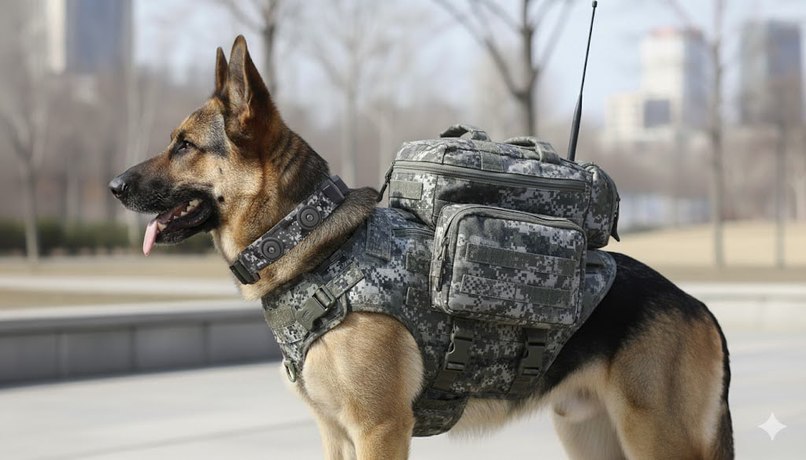
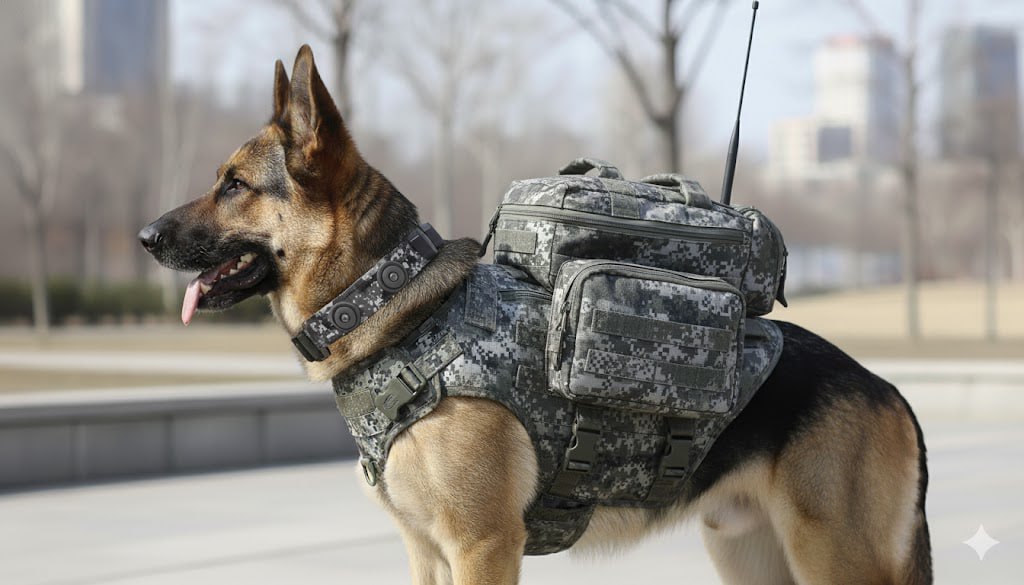
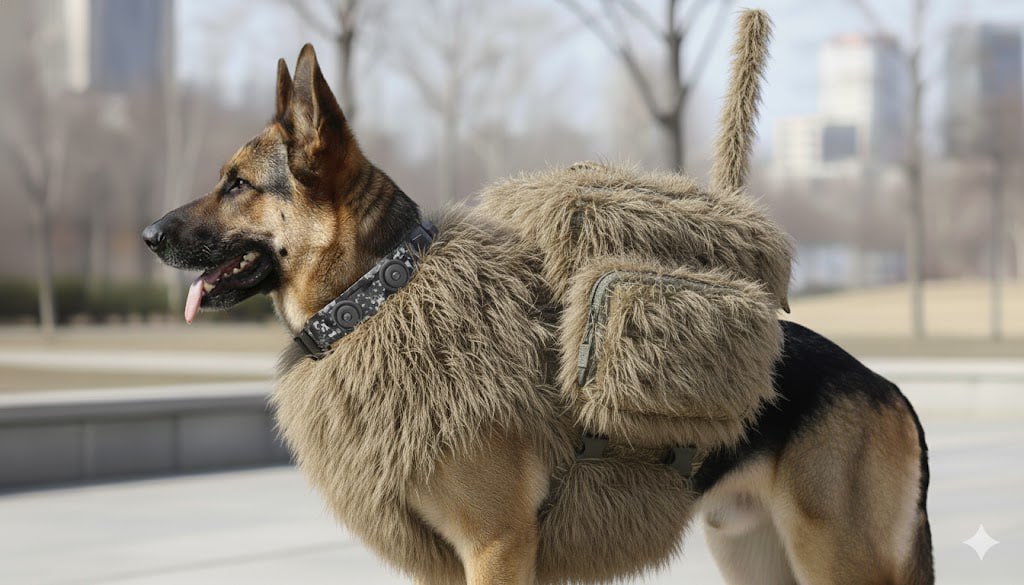
Delivery dog with navigation system collar in full equipment
-
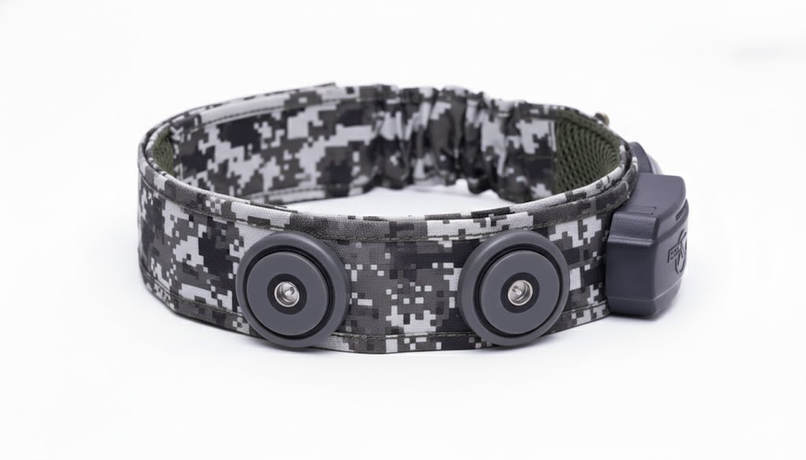
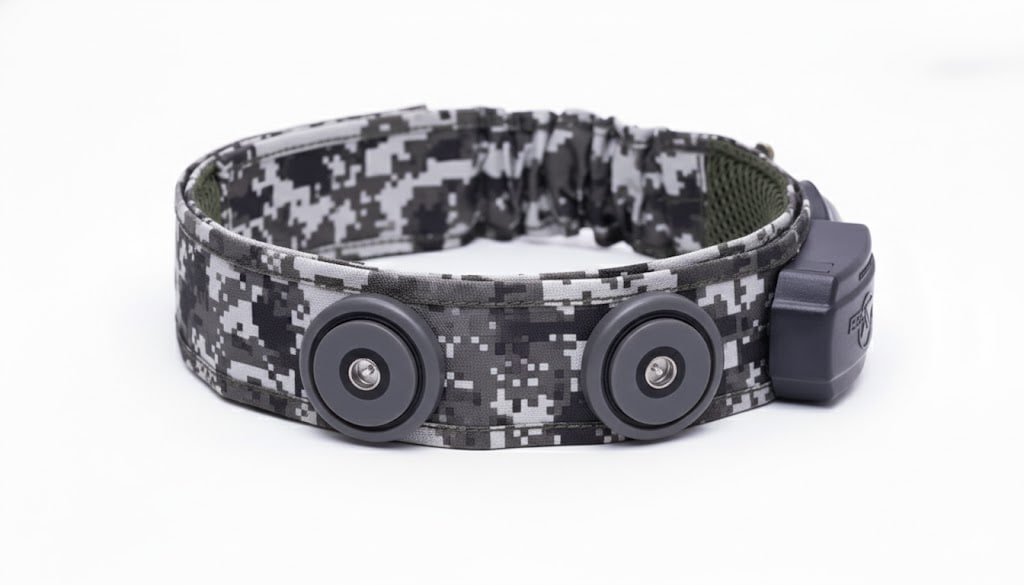
Collar with built-in autonomous navigation. Works without operator. Suggest paths via vibration signals
-
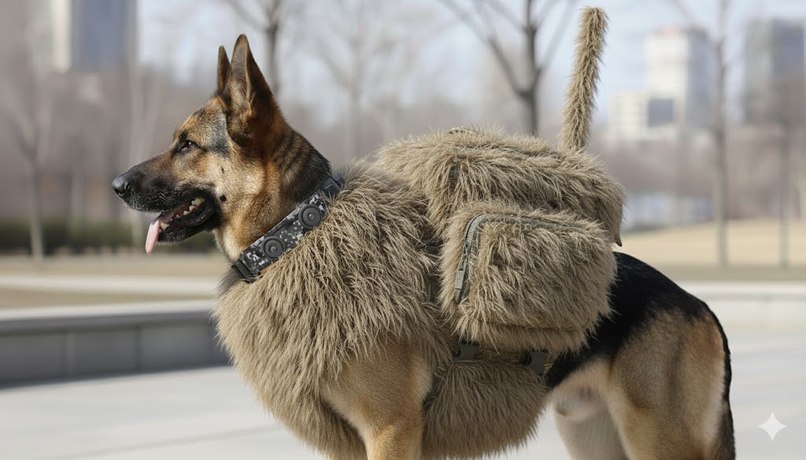
Possible modification with artificial fur to disguise delivery dogs
Inspiration
We were inspired by a simple idea: dogs have long and selflessly helped people — from patrols and guide dogs to search-and-rescue and medical tasks. We decided to develop this idea in a practical, reliable, and humane direction — to create a collar that uses vibrations to gently guide a dog along a route, like a compass, without relying on GPS. This approach allows the animal to navigate difficult terrain and deliver medicine, food, and other supplies in situations where drones or ground vehicles are either ineffective or unavailable. Our goal is to combine the natural abilities of dogs with simple technology to increase the efficiency of assistance in field and emergency conditions.
What It Does
Our collar uses tactile vibration signals to transmit movement directions to a specially trained dog — without using GPS, communication links, or tracking, making its route completely hidden and secure. The dog, guided by the signals, delivers the attached cargo — medical supplies, food, or other essential items — to a designated area. Upon arrival, the bags detach automatically, and the device guides the dog back along the same route. This system combines reliability, autonomy, and stealth, enabling missions in conditions where other delivery methods fail. One of the main features is a pre-wipe mechanism: if the dog dies or a third party attempts to tamper with the system, the collar automatically erases all stored data and keys, preventing the enemy from accessing any sensitive information or technology.
How We Created It
We used existing technologies such as tactile vibro-actuators for signal transmission, inertial sensors — gyroscopes and accelerometers combined with an electronic compass for orientation without GPS, energy-efficient microcontrollers and secure key storage for safe pairing, as well as reliable mechanical locks for automatic cargo release. These proven components were carefully integrated into a single module — a compact, waterproof collar with ergonomics designed for the dog’s comfort. The architecture is simple and reliable: vibration signals convey general movement direction, built-in sensors maintain course tracking and memorize route points, and the cargo-release mechanism activates upon reaching the target zone. All control and logic are implemented in firmware focused on energy efficiency, fault tolerance, and safety — ensuring the device operates autonomously and predictably in field conditions. As a result, we created not just a set of technologies, but an integrated solution — a collar that reliably and gently guides a trained dog along a route, provides cargo delivery and return, while remaining practical, scalable, and suitable for military or rescue missions.
Challenges We Faced
The first and most notable challenge was determining the optimal form of the device. We considered many options — from helmets to ear devices and chest harnesses — but the collar format proved to be the most convenient, humane for the animal, and technically effective. It does not restrict the dog’s movement, ensures secure sensor placement, and maintains natural behavior during tasks. The second major challenge was finding the right method to transmit commands to the dog. We tested various approaches — sound, light, and mixed methods — but many were unsuitable: they distracted the dog, compromised stealth, or caused discomfort. The final choice of tactile vibration signals was made after studying several scientific papers and experiments confirming the safety and effectiveness of this method. The last but equally important difficulty was structuring all the collected information: technical data, scientific articles, sketches, and ideas. Organizing this material into a coherent system required time and focus, but it allowed us to turn a collection of ideas into a complete, well-thought-out project.
Achievements We Are Proud Of
First of all — humanity. We found a way to communicate with the dog that causes no discomfort, does not restrict movement, and preserves its natural behavior in any environment. Second — low cost. We managed to build the device using affordable components and existing technologies, combining them into a new system that is simple and economical to produce. Third — stealth and autonomy. Our collar does not use GPS or emit detectable signals, remaining completely safe and reliable in situations where invisibility and silence are crucial. Beside that the advantage of using dogs is that they are not robots, and in unforeseen situations they can move autonomously, due to instincts. They can also surpass humans in sense of smell, endurance, instincts, and their small size makes them less noticeable in field conditions. Additionally, we are proud of its technical versatility — the device can be adapted for various purposes, not only military but also civilian applications.
What We Learned
First, we learned how to combine different technologies — from sensors to microcontrollers — into one functional device. Second, we studied the principles of microcontrollers and sensor systems — gyroscopes, accelerometers, and compasses — that enable navigation without GPS. Third, we discovered a lot of new information about how dogs have served people, both now and in the past. Dogs are intelligent animals and have often become heroes. We also learned much about canine psychology and training methods.
Future Plans
In the future, our development can be improved by adding more precise sensors and a route-learning system using artificial intelligence. We also plan to integrate secure communication channels and expand functionality for search-and-rescue and humanitarian missions. Last but not least, some features, that will make dogs more comfortable for long route walking, like concentrated food and water on the chest. There is also potential for civilian applications — such as self-walking systems or remote dog control.
Built With
- project

Log in or sign up for Devpost to join the conversation.